
30 settembre 1612, muore Federico Barocci: il pittore che trasformò la dolcezza in arte
Il 30 settembre 1612 moriva a Urbino Federico Barocci, uno dei protagonisti più originali della pittura italiana della seconda metà del Cinquecento. Aveva 77 anni e aveva trascorso gran parte della sua vita nella città natale, nonostante la sua fama avesse ormai superato i confini del Ducato di Urbino.
Pittore, disegnatore e incisore, Federico Barocci occupa una posizione particolare nella storia dell’arte: formato nella grande tradizione del Rinascimento, seppe sviluppare un linguaggio nuovo, fatto di colori luminosi, gesti delicati, espressioni profondamente umane e una religiosità capace di coinvolgere emotivamente chi osserva.
Non è un caso che la sua pittura venga spesso considerata un importante passaggio fra il tardo Rinascimento e il Barocco.
Chi era Federico Barocci
Federico Fiori, conosciuto come Federico Barocci, nacque a Urbino nel 1535 circa, in un ambiente particolarmente favorevole alla formazione artistica. La città era infatti ancora profondamente legata alla straordinaria eredità della corte dei Montefeltro e soprattutto alla memoria di Raffaello, nato proprio a Urbino.
La tradizione artistica urbinate ebbe un ruolo importante nella formazione di Barocci, ma il pittore non rimase semplicemente ancorato ai modelli del passato.
Nel corso della sua carriera guardò a maestri diversi, assimilando suggestioni provenienti dalla pittura dell’Italia centrale e settentrionale. Tra i riferimenti più importanti della sua ricerca ci furono Raffaello, Correggio e Tiziano, ma il risultato fu un linguaggio assolutamente personale.
Barocci riuscì infatti a combinare la grazia del disegno rinascimentale con una pittura più emotiva, luminosa e partecipata.
Le sue Madonne, i suoi santi e i suoi personaggi sacri non appaiono distanti o idealizzati. Sono figure che comunicano sentimenti, affetti, tenerezza e partecipazione.
Ed è proprio questa capacità di rendere umana la dimensione sacra a rendere ancora oggi così particolare la sua pittura.

Una vita appartata a Urbino
A differenza di molti grandi artisti del suo tempo, Barocci scelse progressivamente di rimanere legato a Urbino.
La sua carriera, tuttavia, fu tutt’altro che provinciale.
L’artista lavorò anche a Roma e ricevette commissioni prestigiose, entrando in contatto con alcuni degli ambienti artistici più importanti del suo tempo. La sua fama si diffuse rapidamente e le sue opere furono richieste da committenti appartenenti a importanti famiglie e istituzioni religiose.
Eppure Urbino rimase il centro della sua esistenza.
Qui Barocci sviluppò una bottega e continuò a lavorare, producendo dipinti, disegni e incisioni che contribuirono alla diffusione del suo stile.
Il suo rapporto con il disegno fu particolarmente importante. Barocci realizzò infatti una grande quantità di studi preparatori, nei quali analizzava attentamente pose, espressioni, mani, panneggi e movimenti.
Questa attenzione alla fase progettuale permetteva all’artista di costruire composizioni estremamente studiate, nelle quali ogni gesto sembra avere un preciso significato.

Una pittura fatta di luce, colore ed emozione
Guardando un dipinto di Barocci è difficile non accorgersi immediatamente della sua particolare tavolozza.
I colori sono luminosi, spesso delicati e accostati con grande raffinatezza.
A questo si aggiunge una caratteristica fondamentale della sua pittura: la capacità di utilizzare la luce per costruire atmosfere intime e coinvolgenti.
Le figure sembrano spesso avvolte da una luminosità morbida. I panneggi hanno movimenti sinuosi, i volti sono caratterizzati da espressioni dolci e i gesti costruiscono una narrazione che non ha bisogno di essere spettacolare per risultare intensa.
Questa sensibilità contribuì alla fortuna di Barocci presso la committenza religiosa della seconda metà del Cinquecento, in un momento nel quale la Chiesa chiedeva agli artisti immagini sacre capaci di comunicare con immediatezza e chiarezza.
La sua pittura, però, non è semplicemente una risposta alle esigenze della Controriforma.
C’è qualcosa di profondamente personale nel modo in cui Barocci racconta gli episodi religiosi: la dimensione divina entra nella quotidianità e i sentimenti diventano parte integrante della narrazione.
Il Riposo durante la Fuga in Egitto, la celebre Madonna delle ciliegie
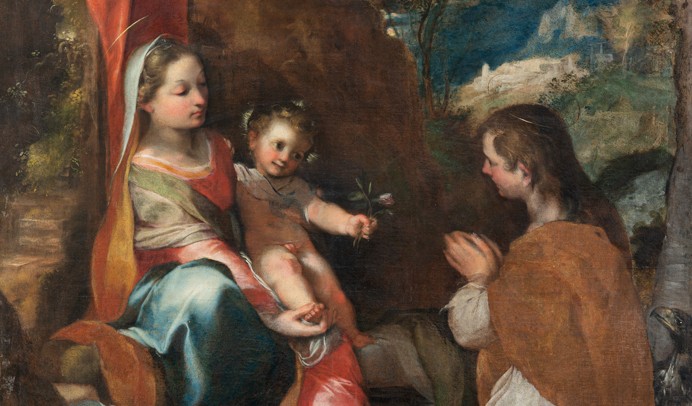
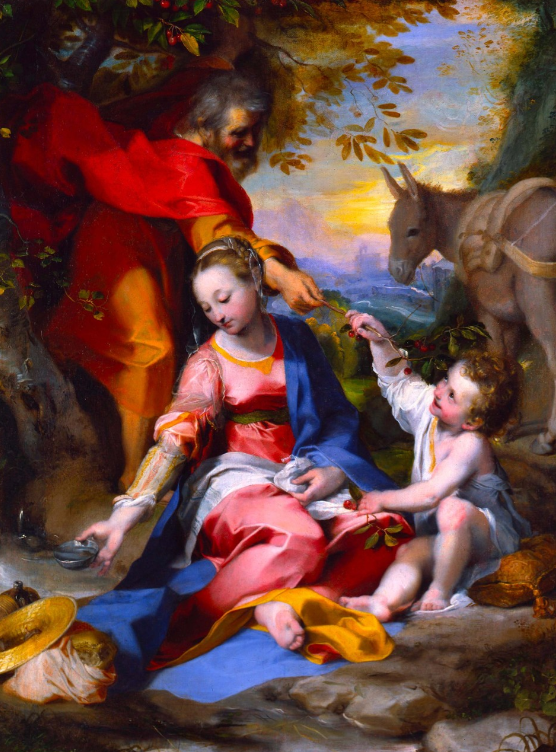
Tra le opere di Barocci che più mi affascinano c’è Il Riposo durante la Fuga in Egitto, dipinto conosciuto anche come Madonna delle ciliegie.
L’opera fu commissionata intorno al 1573 da Simonetto Anastagi di Perugia, amico dell’artista, e fu realizzata proprio in quegli anni.
Il soggetto rappresenta un episodio che non compare nei Vangeli canonici ma appartiene alla tradizione iconografica del Riposo durante la Fuga in Egitto: Maria, Giuseppe e il piccolo Gesù si fermano durante il viaggio verso l’Egitto.
La presenza della natura, dei colori luminosi e dei gesti delicati contribuisce a creare un’atmosfera serena. Poi ci sono le ciliegie, elemento che ha contribuito alla fortuna del soprannome dell’opera.
Un dettaglio ricco di significati all’interno della scena che contribuisce a rendere ancora più concreta e quotidiana la presenza della famiglia.
L’influenza di Correggio
Nella composizione della Madonna delle ciliegie sono state riconosciute suggestioni della pittura di Correggio, soprattutto nella morbidezza dei passaggi, nella dolcezza delle figure e nella capacità di costruire una scena sacra attraverso una dimensione affettiva.
Barocci rielabora però il modello attraverso la sua sensibilità.
Le figure sono caratterizzate da una particolare eleganza dei movimenti, mentre i panneggi accompagnano lo sguardo attraverso la composizione.
Il risultato è una scena nella quale sacro e quotidiano convivono senza entrare in contrasto.
L’importanza di Barocci nella storia dell’arte
La posizione di Barocci nella storia dell’arte italiana è interessante. Da una parte troviamo la grande tradizione rinascimentale, con l’attenzione al disegno, alla composizione e alla bellezza ideale.
Dall’altra emerge una pittura più emotiva, dinamica e coinvolgente che troverà pieno sviluppo nel Seicento.
Per questo Barocci viene spesso considerato uno degli artisti che prepararono il terreno alla sensibilità barocca.
La sua influenza si avverte nella pittura di diversi artisti delle generazioni successive, soprattutto per la capacità di costruire immagini religiose capaci di coinvolgere emotivamente lo spettatore. Il suo modo di utilizzare il colore, la luce e i gesti anticipa infatti alcune delle soluzioni che diventeranno centrali nella pittura del Seicento.
Il 30 settembre 1612 muore Barocci
Il 30 settembre 1612 Federico Barocci morì a Urbino.
Aveva dedicato gran parte della propria esistenza alla pittura e alla sua città, costruendo nel corso dei decenni una reputazione che aveva ormai raggiunto i principali centri artistici italiani.
La sua morte non cancellò la sua influenza. Al contrario, le sue opere continuarono a essere studiate, ammirate e imitate, mentre il suo particolare linguaggio contribuì alla trasformazione della pittura italiana tra Cinquecento e Seicento.
Oggi, guardando una tela di Barocci, possiamo ancora riconoscere quella straordinaria combinazione di colore, luce, dolcezza e partecipazione emotiva che rende immediatamente riconoscibile la sua pittura.
Per il momento il sempre vostro Michelangelo Buonarroti vi saluta dandovi appuntamento ai prossimi post e sui social.

September 30, 1612: Death of Federico Barocci in Urbino, the painter who foreshadowed the Baroque
On September 30, 1612, Federico Barocci—one of the most original figures in Italian painting during the second half of the 16th century—died in Urbino. He was 77 years old and had spent most of his life in his hometown, even though his fame had long since extended beyond the borders of the Duchy of Urbino.
A painter, draftsman, and printmaker, Federico Barocci holds a unique place in art history: trained in the great Renaissance tradition, he developed a new artistic language characterized by luminous colors, delicate gestures, deeply human expressions, and a spirituality capable of emotionally engaging the viewer.
It is no coincidence that his work is often viewed as a crucial bridge between the late Renaissance and the Baroque.
Who was Federico Barocci?
Federico Fiori—known as Federico Barocci—was born in Urbino around 1535, in an environment particularly conducive to artistic training. The city remained deeply connected to the extraordinary legacy of the Montefeltro court and, above all, to the memory of Raphael, who had been born there.
The artistic tradition of Urbino played a significant role in Barocci’s development, yet he did not remain merely anchored to the models of the past.
Throughout his career, he looked to various masters, assimilating influences from the painting styles of both central and northern Italy. Key points of reference for his work included Raphael, Correggio, and Titian, yet the result was a style that was entirely his own.
Barocci succeeded in combining the grace of Renaissance draftsmanship with a painting style that was more emotional, luminous, and deeply felt. His Madonnas, saints, and sacred figures do not appear distant or idealized; rather, they are figures that convey feelings, affection, tenderness, and a sense of shared humanity.
It is precisely this ability to humanize the sacred realm that makes his painting so distinctive even today.
A secluded life in Urbino
Unlike many great artists of his time, Barocci increasingly chose to remain based in Urbino.
His career, however, was anything but provincial.
The artist also worked in Rome and received prestigious commissions, coming into contact with some of the most important artistic circles of the day. His fame spread rapidly, and his works were sought after by patrons from prominent families and religious institutions.
Yet, Urbino remained the center of his life.
It was there that Barocci established a workshop and continued to work, producing paintings, drawings, and engravings that helped disseminate his style.
His relationship with drawing was particularly significant. Barocci created a vast number of preparatory studies in which he meticulously analyzed poses, expressions, hands, drapery, and movement.
This focus on the planning stage allowed the artist to construct highly deliberate compositions, in which every gesture seems to carry a specific meaning.
Painting defined by light, color, and emotion
When looking at a painting by Barocci, it is impossible not to immediately notice his distinctive palette.
The colors are luminous—often delicate—and combined with great refinement.
Added to this is a fundamental characteristic of his work: the ability to use light to create intimate, immersive atmospheres.
His figures often appear bathed in a soft glow. The drapery flows in sinuous lines, the faces are marked by gentle expressions, and the gestures construct a narrative that need not be spectacular to be intense.
This sensibility contributed to Barocci’s success among religious patrons in the second half of the sixteenth century—a time when the Church was calling upon artists to create sacred images capable of communicating with immediacy and clarity.
His painting, however, is not merely a response to the demands of the Counter-Reformation.
There is something deeply personal in the way Barocci depicts religious episodes: the divine realm enters into everyday life, and emotions become an integral part of the narrative.
Rest on the Flight into Egypt, the famous Madonna of the Cherries
Among Barocci’s works that fascinate me most is Rest on the Flight into Egypt, a painting also known as the Madonna of the Cherries.
The work was commissioned around 1573 by Simonetto Anastagi of Perugia—a friend of the artist—and was executed during that same period.
The subject depicts an episode that does not appear in the canonical Gospels but belongs to the iconographic tradition of the Rest on the Flight into Egypt: Mary, Joseph, and the infant Jesus pausing during their journey to Egypt.
The presence of nature, luminous colors, and delicate gestures helps create a serene atmosphere. Then there are the cherries—an element that contributed to the work’s popular nickname.
This detail is rich in meaning within the scene, helping to make the family’s presence feel all the more tangible and grounded in everyday life.
The influence of Correggio
Echoes of Correggio’s painting style can be detected in the composition of the Madonna of the Cherries—particularly in the soft transitions, the gentle nature of the figures, and the ability to construct a sacred scene through an emotional dimension.
However, Barocci reinterprets this model through his own unique sensibility.
The figures are characterized by a distinctive elegance of movement, while the drapery guides the viewer’s gaze across the composition.
The result is a scene where the sacred and the everyday coexist harmoniously.
Barocci’s importance in art history
Barocci occupies an interesting position in the history of Italian art. On one hand, there is the great Renaissance tradition, with its focus on drawing, composition, and ideal beauty.
On the other, a more emotional, dynamic, and engaging style of painting emerges—one that would fully flourish in the seventeenth century.
For this reason, Barocci is often regarded as an artist who paved the way for the Baroque sensibility.
His influence is evident in the work of artists from subsequent generations, particularly in his ability to create religious images that emotionally engage the viewer. Indeed, his use of color, light, and gesture anticipates techniques that would become central to seventeenth-century painting.
Barocci’s death on September 30, 1612
Federico Barocci died in Urbino on September 30, 1612.
He had dedicated much of his life to painting and to his city, building a reputation over the decades that had reached the major centers of Italian art. His death did not erase his influence. On the contrary, his works continued to be studied, admired, and imitated, while his distinctive style contributed to the transformation of Italian painting between the sixteenth and seventeenth centuries.
Today, when looking at a canvas by Barocci, we can still recognize that extraordinary combination of color, light, tenderness, and emotional engagement that makes his painting instantly recognizable.
For now, your ever-faithful Michelangelo Buonarroti bids you farewell and looks forward to seeing you in future posts and on social media.

Sostienici – Support Us
Se questo blog ti piace e ti appassiona, puoi aiutarci a farlo crescere sempre più sostenendoci in modo concreto condividendo i post, seguendo le pagine social e con un contributo che ci aiuta ad andare avanti con il nostro lavoro di divulgazione. . ENGLISH: If you like and are passionate about this blog, you can help us make it grow more and more by supporting us in a concrete way by sharing posts, following social pages and with a contribution that helps us to move forward with our dissemination work.
10,00 €
-
Dopo un secolo lontano dal pubblico, il Banchetto di Psiche torna a vivere: al via il restauro
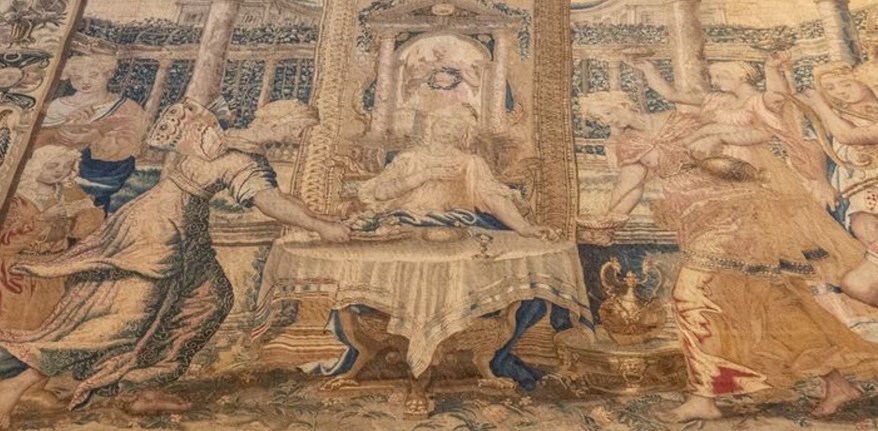
🇮🇹Al via a Firenze il restauro del Banchetto di Psiche, l’arazzo seicentesco del Bargello rimasto nei depositi per un secolo. L’intervento durerà 30 mesi… 🇬🇧Restoration work has begun in Florence on *The Banquet of Psyche*, a 17th-century tapestry from the Bargello that had remained in storage for a century. The project will last 30 months…
-
Artemisia Gentileschi, Giuditta e l’ancella con la testa di Oloferne: il dramma biblico
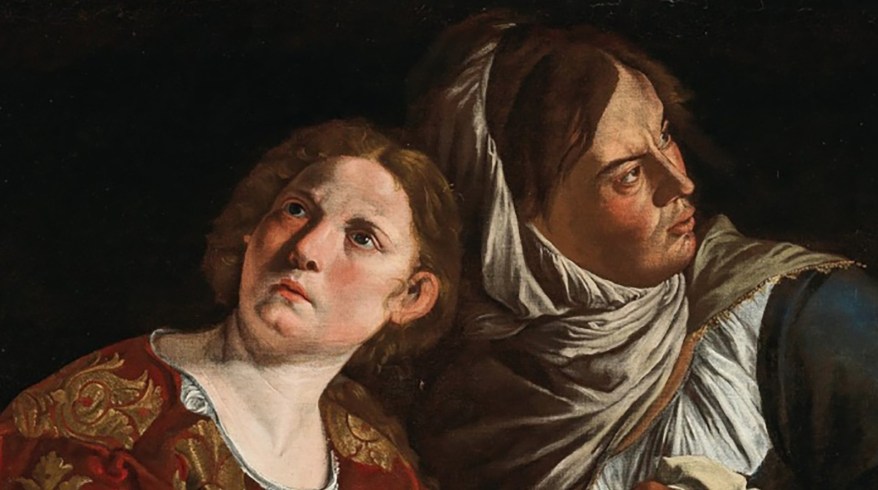
🇮🇹Giuditta e l’ancella con la testa di Oloferne di Artemisia Gentileschi è in mostra al Museo degli Innocenti di Firenze: storia, dettagli e confronti con Orazio Gentileschi… 🇬🇧Judith and Her Maidservant with the Head of Holofernes* by Artemisia Gentileschi is on display at the Museo degli Innocenti in Florence: history, details, and comparisons with Orazio…
-
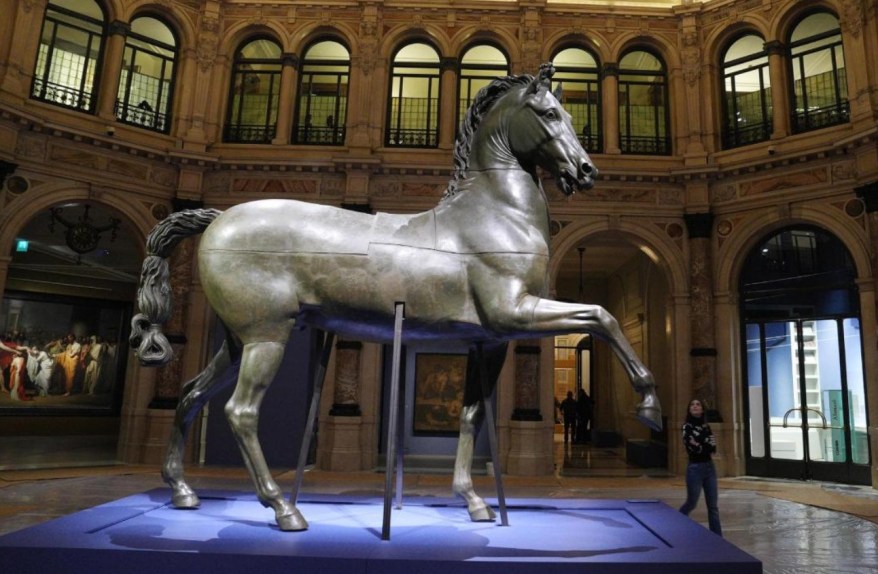
Il Cavallo colossale di Canova torna a casa in 10 casse: ecco quando si potrà ammirare
🇮🇹Il Cavallo colossale di Antonio Canova torna a Bassano il 27 ottobre 2026. Dopo il restauro, sarà visibile al Museo Civico dal 12 dicembre… 🇬🇧Antonio Canova’s colossal horse returns to Bassano on October 27, 2026. Following its restoration, it will be on display at the Civic Museum starting December 12…
Condividi:


Questo sono io




sostienici

Sostienici – Support Us
Se questo blog ti piace e ti appassiona, puoi aiutarci a farlo crescere sempre più sostenendoci in modo concreto condividendo i post, seguendo le pagine social e con un contributo che ci aiuta ad andare avanti con il nostro lavoro di divulgazione. . ENGLISH: If you like and are passionate about this blog, you can help us make it grow more and more by supporting us in a concrete way by sharing posts, following social pages and with a contribution that helps us to move forward with our dissemination work.
€10,00


