

Il disegno del giorno: Cristo dà l’addio alla Madre di Schaufelein
L’opera del giorno che vi propongo oggi è un disegno realizzato dall’artista tedesco Hans Schàuflein nel 1510 che ha per tema Cristo che dà l’addio alla Madre, tracciato a penna e inchiostro marrone scuro su tracce di matita nera.
Schàufelein fu un abile pittore e disegnatore di xilografie ed ebbe modo di lavorare presso la bottega di Durer a Norimberga fra il 1503 e il 1516.

Era solito firmare le sue opere con le proprie iniziali, accompagnate dal disegno di una piccola pala che in tedesco si chiama schàufelein. Fu da questa sua caratteristica che acquisì il soprannome con il quale tutt’oggi l’artista è conosciuto.
Dovete sapere che nel Nuovo Testamento non viene raccontato il momento in cui Cristo saluta per sempre la Madre ma se ne trova traccia in fonti letterarie sacre del tardo Medioevo.
In quei testi la Vergine, sostenuta da Marta e Maria Maddalena, chiede in ginocchio al figlio di non partire da Betania. Già sapeva cosa sarebbe accaduto a Gerusalemme dove sarebbe stato tradito e poi crocifisso.
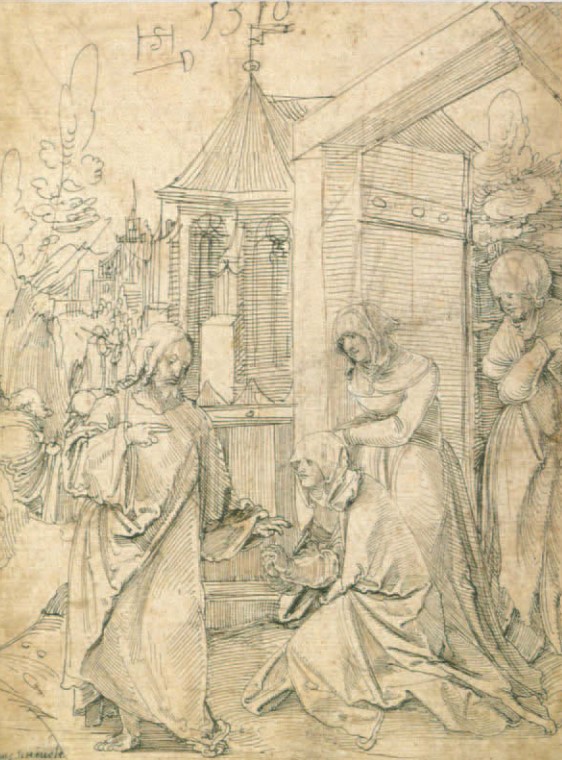
Cristo non può sottrarsi alla sua missione e risponde alla Madre che deve partire per salvare l’intera umanità. La benedice e parte dicendole che salirà con Lui nel regno dei cieli.
L’artista Schàufelein disegna proprio il momento della benedizione. Nella parte sinistra del foglio si vede un nugolo di fedeli che si sta incamminando verso Gerusalemme per celebrare la pasqua ebraica mentre al centro, alle spalle del gruppo principale, si nota la presenza di una chiesa in stile gotico.
La chiesa evoca Maria in quanto all’epoca si riteneva fosse la raffigurazione sulla terra della Madonna.
Per il momento il sempre vostro Michelangelo Buonarroti vi saluta dandovi appuntamento ai prossimi post e sui social.


Drawing of the day: Christ bids farewell to the Mother of Schaufelein
The work of the day that I propose to you today is a drawing created by the German artist Hans Schàuflein in 1510 which has as its theme Christ bidding farewell to his Mother, traced in pen and dark brown ink on traces of black pencil.
Schàufelein was a skilled painter and designer of woodcuts who also had the opportunity to work in Durer’s workshop in Nuremberg between 1503 and 1516.
He used to sign his works with his initials accompanied by the drawing of a small shovel which in German is called schàufelein. It was from this characteristic that he acquired the nickname by which the artist is still known today.
You should know that in the New Testament the moment in which Christ greets his Mother forever is not told but traces of it can be found in sacred literary sources of the late Middle Ages.
In those texts the Virgin, supported by Martha and Mary Magdalene, asks her son on her knees not to leave Bethany. He already knew what would happen in Jerusalem where he would be betrayed and then crucified.
Christ cannot escape his mission and responds to the Mother that he must leave to save all humanity. She blesses her and tells her that she will ascend with Him into the kingdom of heaven.
The artist Schàufelein draws precisely the moment of the blessing. On the left side of the sheet you can see a cloud of faithful who are walking towards Jerusalem to celebrate the Jewish Passover while in the centre, behind the main group, you can see the presence of a Gothic style church.
The church evokes Mary as at the time it was believed to be the representation of the Madonna on earth.
For the moment, your always Michelangelo Buonarroti greets you and will meet you in the next posts and on social media.

Sostienici – Support Us
Se questo blog ti piace e ti appassiona, puoi aiutarci a farlo crescere sempre più sostenendoci in modo concreto condividendo i post, seguendo le pagine social e con un contributo che ci aiuta ad andare avanti con il nostro lavoro di divulgazione. . ENGLISH: If you like and are passionate about this blog, you can help us make it grow more and more by supporting us in a concrete way by sharing posts, following social pages and with a contribution that helps us to move forward with our dissemination work.
8,00 €
-
Il tormento del mio marmo ha stregato il Novecento: la nuova mostra a Firenze
🇮🇹Dal 15 dicembre 2026 la Galleria dell’Accademia di Firenze ospita “L’anima dei marmi”. Rodin, Bourdelle e i maestri del Simbolismo rileggono il mio genio… 🇬🇧Starting December 15, 2026, the Galleria dell’Accademia in Florence will host “The Soul of Marble.” Rodin, Bourdelle, and the masters of Symbolism reinterpret my genius…
-
18 ottobre 1634: nasce Luca Giordano, il pittore che dipingeva così in fretta da essere chiamato «Luca fa’ presto»
🇮🇹Luca Giordano nacque a Napoli il 18 ottobre 1634. Scopri perché era chiamato «Luca fa’ presto» e i suoi capolavori, dalla Galleria degli Specchi alla corte di Spagna… 🇬🇧Luca Giordano was born in Naples on October 18, 1634. Discover why he was nicknamed “Luca fa’ presto” (“Luca, hurry up!”) and explore his masterpieces—from the Hall…
-
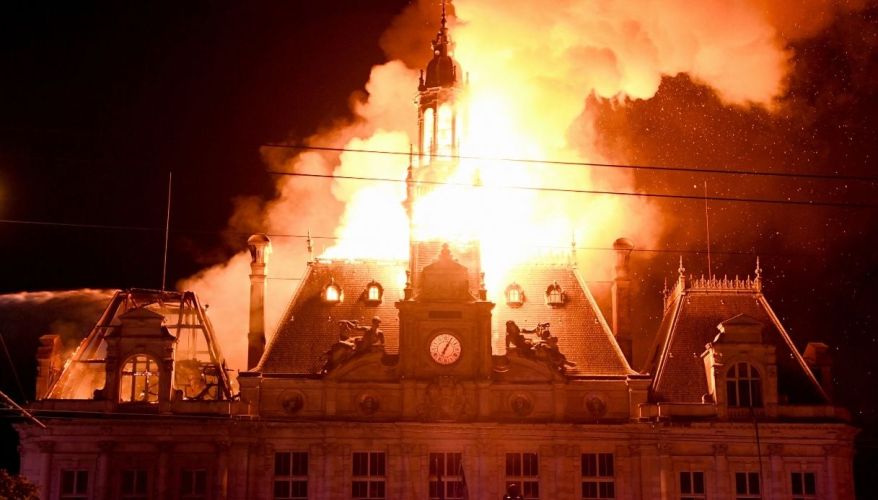
Incendio al municipio di Limoges, crolla la torre dell’orologio: distrutto storico palazzo dell’Ottocento
🇮🇹Incendio a Limoges, il municipio storico è devastato: crollano il tetto e la torre dell’orologio alta 43 metri. Che cosa resta del patrimonio artistico? 🇬🇧Fire in Limoges: the historic town hall is devastated, with its roof and 43-meter-tall clock tower having collapsed. What remains of its artistic heritage?
Condividi:


Questo sono io




sostienici

Sostienici - Support Us
Se questo blog ti piace e ti appassiona, puoi aiutarci a farlo crescere sempre più sostenendoci in modo concreto condividendo i post, seguendo le pagine social e con un contributo che ci aiuta ad andare avanti con il nostro lavoro di divulgazione. . ENGLISH: If you like and are passionate about this blog, you can help us make it grow more and more by supporting us in a concrete way by sharing posts, following social pages and with a contribution that helps us to move forward with our dissemination work.
€10,00


