

Il mosaico di Athena dei Musei Vaticani
Il celebre mosaico di Athena oggi è incastonato nel pavimento della Sala a Croce Greca del Pio Clementino dei Musei Vaticani ma ha alle spalle una storia lunga e travagliata.
La scoperta di questo capolavoro la dobbiamo al padre gesuita di origini croate Giuseppe Ruggero Boscovich. Scienziato e matematico assai apprezzato al suo tempo, nel 1741, rinvenne il mosaico nella zona della Villa della Rufuella presso Tuscolo.

Il prezioso mosaico fu prelevato diversi anni dopo, nel 1776, ma durante le delicate operazioni di stacco subì importanti danni.
Fu portato ai Musei Vaticani e sistemato nella Sala a Croce Greca del Pio Clementino, dove tutt’oggi è possibile ammirarlo. Fu sottoposto a un importante restauro durato due anni, dal 1778 al 1780 con tanto di integrazioni e altri interventi assai invasivi.

La Sala a Croce Greca fu progettata sotto il pontificato di Pio VI, fra il 1775 e il 1799 da Michelangelo Simonetti. Di fatto divenne i vestibolo del Museo Pio Clementino tanto che sul portale di accesso troneggia l’iscrizione Museum Pium. Proprio ai lati del grande portale si vedono i due grandi telamoni in granito rosa scolpiti attorno al I secolo dopo Cristo mentre il centro della scena è occupato per l’appunto dal mosaico di Atena.
Nella medesima sala sono presenti i due sarcofagi in porfido, il ritratto dell’imperatore Augusto Verospi e la scultura che ritrae Gaio Cesare, nipote di Augusto.
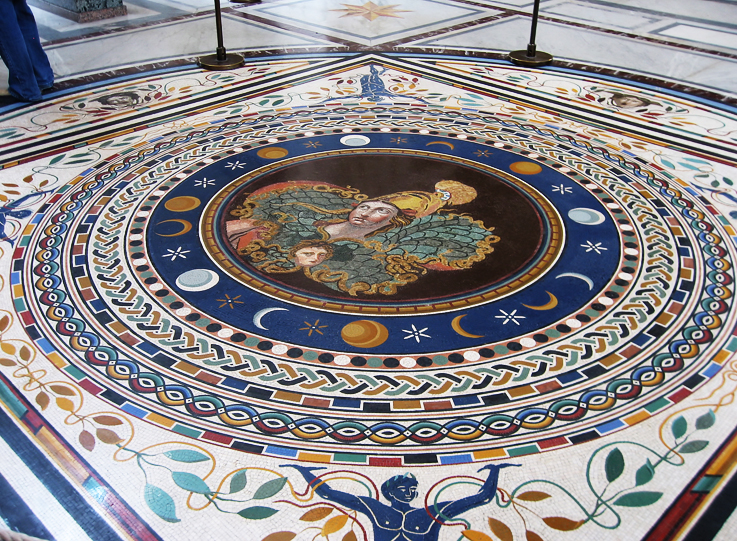
Il mosaico di Athena risale alla metà del I secolo avanti Cristo anche se, come accennato prima, durante la seconda metà del settecento subì pesanti interventi di restauro. Probabilmente in origine era stato realizzato per decorare il pavimento di un’importante sala di un’abitazione lussuosa.
Al centro troneggia Athena con tanto di elmo corinzio crestato mentre tutt’attorno una fascia circolare raffigura la volta celeste con le Pleiadi e le diverse fasi lunari. Ai quattro angolo più esterni del mosaico si vedono i quattro telamoni che con le braccia sollevate sostengono il peso del complesso rotondeggiante e le teste alate di Medusa.
Per il momento il vostro Michelangelo Buonarroti vi saluta dandovi appuntamento ai prossimi post e sui social.
The mosaic of Athena in the Vatican Museums
The famous mosaic of Athena today is set in the floor of the Sala a Croce Greca del Pio Clementino in the Vatican Museums but has a long and troubled history behind it.
The discovery of this masterpiece is due to the Jesuit father of Croatian origins Giuseppe Ruggero Boscovich. Scientist and mathematician much appreciated at his time, in 1741, he found the mosaic in the area of the Villa della Rufuella near Tusculum.
The precious mosaic was taken several years later, in 1776, but during the delicate removal operations it suffered significant damage.
It was brought to the Vatican Museums and placed in the Sala a Croce Greca by Pio Clementino, where it is still possible to admire it today. It underwent a major restoration that lasted two years, from 1778 to 1780, complete with additions and other very invasive interventions.
The Sala a Croce Greca was designed under the pontificate of Pius VI, between 1775 and 1799 by Michelangelo Simonetti. In fact, it became the vestibule of the Pio Clementino Museum, so much so that the inscription Museum Pium dominates the entrance portal. Right on the sides of the large portal you can see the two large pink granite telamons sculpted around the first century AD while the center of the scene is occupied precisely by the mosaic of Athena.
In the same room there are two porphyry sarcophagi, the portrait of the emperor Augustus Verospi and the sculpture depicting Gaius Caesar, grandson of Augustus.
The Athena mosaic dates back to the middle of the first century BC even if, as mentioned above, during the second half of the eighteenth century it underwent heavy restoration work. It was probably originally built to decorate the floor of an important room in a luxurious home.
In the center stands Athena complete with a crested Corinthian helmet while all around a circular band depicts the celestial vault with the Pleiades and the different phases of the moon. At the four outermost corners of the mosaic we see the four telamons that with their arms raised support the weight of the rounded complex and the winged heads of Medusa.
For the moment, your Michelangelo Buonarroti greets you by giving you an appointment at the next posts and on social networks.

Sostienici – Support Us
Se questo blog ti piace e ti appassiona, puoi aiutarci a farlo crescere sempre più sostenendoci in modo concreto condividendo i post, seguendo le pagine social e con un contributo che ci aiuta ad andare avanti con il nostro lavoro di divulgazione. . ENGLISH: If you like and are passionate about this blog, you can help us make it grow more and more by supporting us in a concrete way by sharing posts, following social pages and with a contribution that helps us to move forward with our dissemination work.
5,00 €
ULTIMI ARTICOLI
26 ottobre 1890: muore Carlo Collodi, lo scrittore toscano che inventò Pinocchio
Il 26 ottobre 1890 moriva a Firenze Carlo Collodi, autore di Pinocchio. Dalla prima pubblicazione nel 1881 al successo mondiale del burattino…
I musei meno conosciuti della Toscana che meritano una visita: 10 province, 10 luoghi da scoprire
🇮🇹Dalle statue stele della Lunigiana alle antiche botteghe artigiane, passando per case-museo, collezioni insolite e testimonianze della vita quotidiana: ecco dieci musei da visitare in Toscana, uno per ogni provincia, per scoprire un patrimonio artistico e culturale che va ben oltre le mete più famose… 🇬🇧From the stele statues of Lunigiana to ancient artisan workshops—not…
Perché il bue e l’asino sono accanto a Gesù Bambino? La storia dietro una tradizione secolare
🇮🇹Perché il bue e l’asinello sono accanto a Gesù Bambino nel presepe? Scopri le origini bibliche, il significato simbolico e la storia nell’arte… 🇬🇧Why are the ox and the donkey beside Baby Jesus in the nativity scene? Discover their biblical origins, symbolic meaning, and history in art…
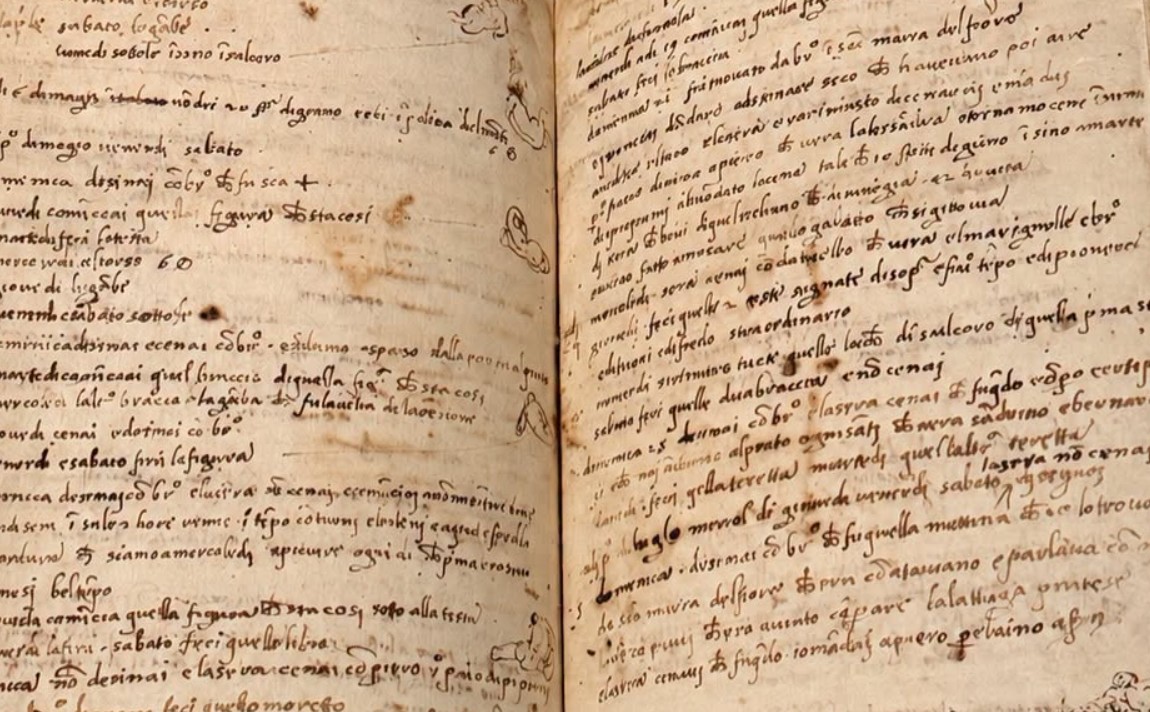
Pontormo, il diario segreto del pittore: malattie, pasti e piccoli disegni che raccontano la sua vita
🇮🇹Il diario di Pontormo: malattie, pasti, amicizie e piccoli disegni raccontano la vita privata del pittore e il lavoro perduto a San Lorenzo… 🇬🇧Pontormo’s diary—with its accounts of illnesses, meals, friendships, and small sketches—reveals the painter’s private life and his lost work at San Lorenzo…
Si è verificato un problema. Aggiorna la pagina e/o riprova in seguito.
Condividi:


Questo sono io




sostienici

Sostienici – Support Us
Se questo blog ti piace e ti appassiona, puoi aiutarci a farlo crescere sempre più sostenendoci in modo concreto condividendo i post, seguendo le pagine social e con un contributo che ci aiuta ad andare avanti con il nostro lavoro di divulgazione. . ENGLISH: If you like and are passionate about this blog, you can help us make it grow more and more by supporting us in a concrete way by sharing posts, following social pages and with a contribution that helps us to move forward with our dissemination work.
€10,00


meraviglioso, un vero gioiello
"Mi piace"Piace a 1 persona
eh si, un gran capolavoro
"Mi piace"Piace a 1 persona
L’ha ripubblicato su Il blog di Mauro Vetriani.
"Mi piace""Mi piace"