
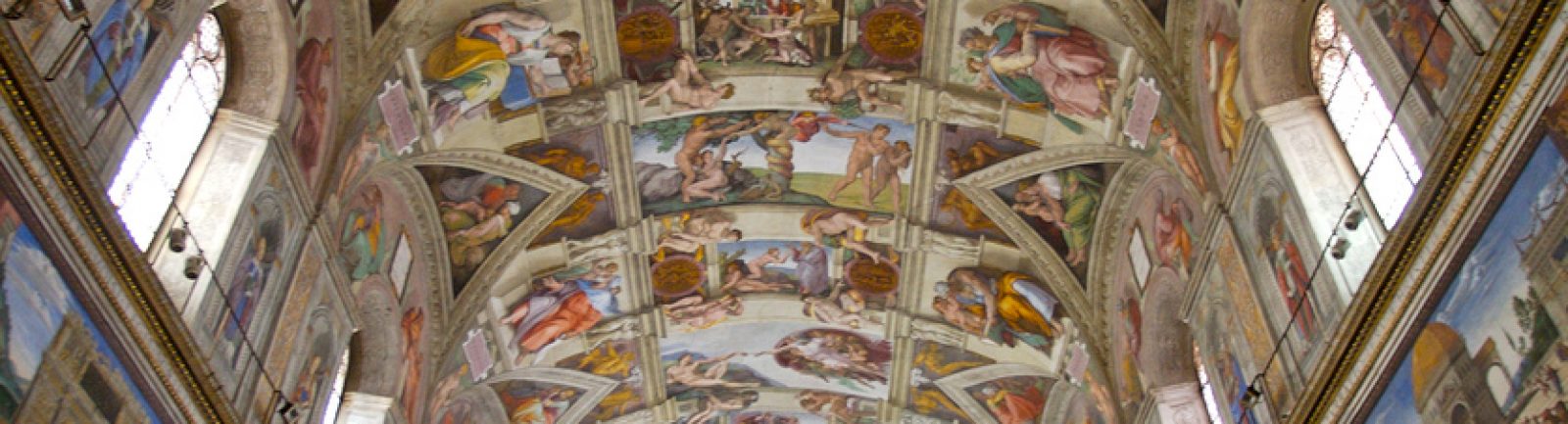
Perché il bue e l’asino sono accanto a Gesù Bambino? La storia dietro una tradizione secolare
Ogni Natale tornano al loro posto, accanto alla mangiatoia, con il muso rivolto verso Gesù Bambino. Sono il bue e l’asino, due presenze che sembrano inseparabili dal presepe, tanto che è difficile immaginare la Natività senza di loro. Eppure, c’è un particolare curioso: i Vangeli non dicono che questi due animali fossero presenti alla nascita di Gesù.
Perché allora li troviamo in quasi tutti i presepi, nelle tavole medievali, negli affreschi e nei dipinti dei grandi maestri? La risposta si nasconde tra antiche profezie bibliche, testi cristiani dei primi secoli e interpretazioni simboliche che hanno attraversato la storia dell’arte.
Quella del bue e dell’asinello non è soltanto una tradizione natalizia. È una storia che racconta come l’immagine della nascita di Cristo si sia formata nel tempo, arricchendosi di significati che ancora oggi ritroviamo nelle nostre case.
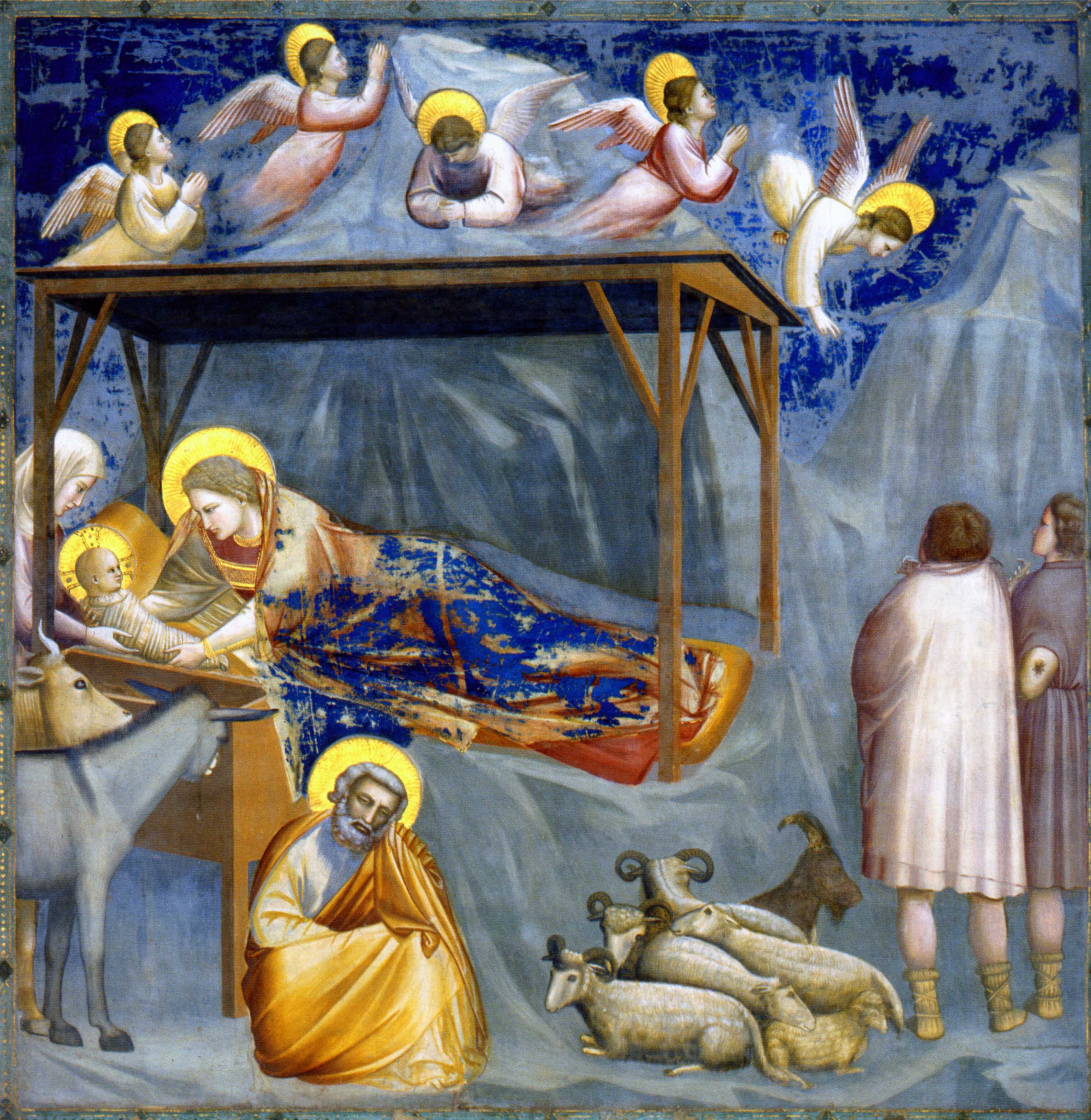
Il bue e l’asino erano davvero presenti alla nascita di Gesù?
Se leggiamo attentamente i racconti evangelici della Natività, troviamo Maria, Giuseppe, il bambino deposto in una mangiatoia, i pastori e, nel Vangelo di Matteo, i Magi che arrivano in seguito per rendere omaggio a Gesù. Non troviamo, invece, alcun riferimento esplicito al bue e all’asino nella stalla di Betlemme.
Il Vangelo di Luca racconta che Maria diede alla luce il suo primogenito, lo avvolse in fasce e lo depose in una mangiatoia, perché non c’era posto per loro nell’alloggio. È proprio la mangiatoia, destinata normalmente al cibo degli animali, ad aver suggerito ai cristiani dei primi secoli l’immagine di un ambiente rurale, umile e povero.
Ma quali animali si trovavano accanto a quella mangiatoia? I testi evangelici non lo specificano.
La presenza del bue e dell’asino nasce quindi da una tradizione successiva, che intreccia interpretazioni delle Scritture, racconti apocrifi e riflessioni teologiche. Una tradizione che, nel corso dei secoli, è diventata così familiare da sembrare parte integrante del racconto evangelico.
La profezia di Isaia: il significato nascosto dei due animali
Per comprendere perché il bue e l’asino siano entrati nell’iconografia della Natività, dobbiamo tornare all’Antico Testamento e, in particolare, al libro del profeta Isaia.
Nel primo capitolo leggiamo: «Il bue conosce il proprietario e l’asino la greppia del suo padrone, ma Israele non conosce, il mio popolo non comprende».
Il significato originario di queste parole è un rimprovero rivolto al popolo d’Israele, incapace di riconoscere il proprio Signore, a differenza degli animali che conoscono chi si prende cura di loro.
I primi interpreti cristiani lessero questo passo alla luce della nascita di Gesù. Il bue e l’asino, collocati accanto al bambino, divennero così un richiamo al riconoscimento del Messia: persino due animali, nella loro semplicità, sembrano riconoscere colui che è venuto al mondo.
Questa interpretazione contribuì in modo determinante alla diffusione della loro presenza nelle immagini sacre.
C’è anche un’altra profezia che venne collegata alla scena della Natività. Nel libro di Abacuc, in alcune antiche versioni e interpretazioni del testo, compare un riferimento alla manifestazione divina «in mezzo a due animali». I cristiani dei primi secoli interpretarono queste parole come un possibile richiamo al bue e all’asino accanto a Gesù.
Si tratta di letture simboliche delle Scritture: non sono una testimonianza storica della presenza dei due animali a Betlemme.
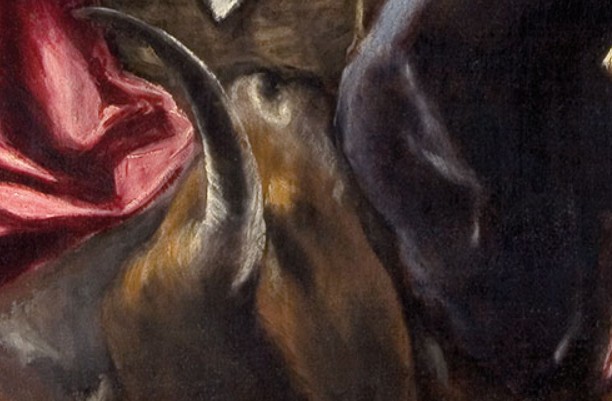
Il Vangelo apocrifo dello Pseudo-Matteo: quando gli animali adorano Gesù
Un altro testo fondamentale per la storia di questa tradizione è il cosiddetto Vangelo dello Pseudo-Matteo, uno scritto cristiano apocrifo, cioè non accolto nel canone biblico.
In questo racconto, la presenza del bue e dell’asino viene esplicitata e collegata proprio alla profezia di Isaia. I due animali sono descritti mentre riconoscono e adorano il bambino appena nato.
Il testo contribuì a consolidare un’immagine destinata a diventare celebre: Gesù nella mangiatoia, con il bue e l’asino ai suoi lati, chini verso di lui.
Le narrazioni apocrife ebbero un ruolo importante nella formazione dell’immaginario cristiano. Pur non facendo parte dei Vangeli canonici, offrirono ad artisti, predicatori e fedeli particolari narrativi che contribuirono a rendere più ricche e riconoscibili le scene della vita di Maria e di Gesù.
Grazie a questa tradizione che il bue e l’asino sono entrati stabilmente nel nostro modo di immaginare il Natale.

Che cosa simboleggiano il bue e l’asinello nel presepe?
Nel corso dei secoli, i due animali hanno assunto significati diversi, soprattutto nella lettura allegorica della Natività.
Secondo una delle interpretazioni diffuse nella tradizione cristiana medievale, il bue rappresentava il popolo ebraico, mentre l’asino rappresentava i popoli pagani. Entrambi, riuniti davanti a Gesù, diventavano l’immagine simbolica dell’umanità chiamata a riconoscere il Messia.
La scena acquistava così un significato universale: la nascita di Cristo non riguardava un solo popolo, ma era destinata a tutti.
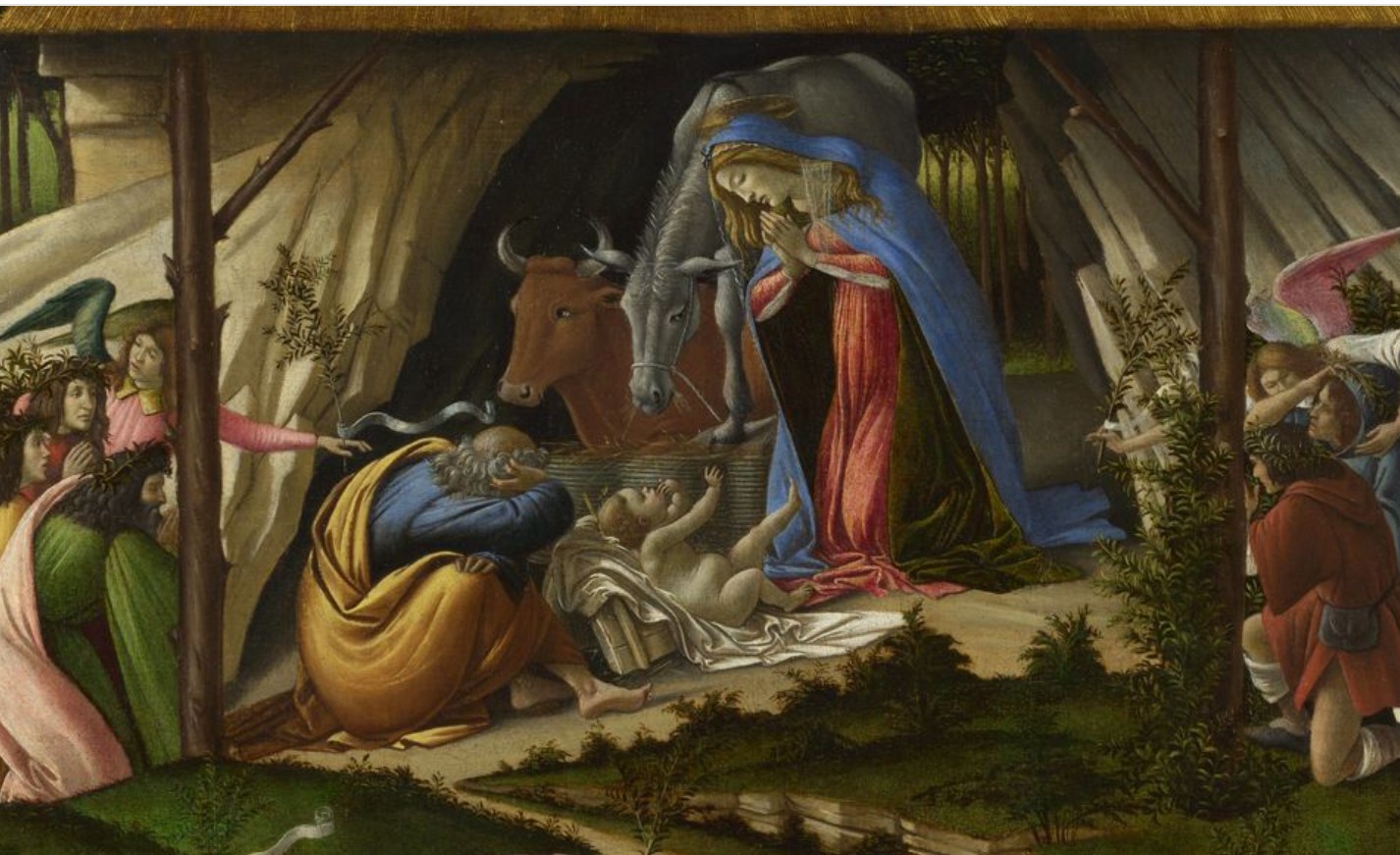
Naturalmente, il valore simbolico dei due animali non è stato sempre interpretato nello stesso modo. In alcune rappresentazioni, il loro ruolo è soprattutto narrativo: rendono credibile l’ambientazione della mangiatoia e suggeriscono il carattere umile del luogo in cui nasce Gesù.
In altre immagini, invece, la loro presenza è quasi una professione di fede. I musi abbassati verso il bambino, le teste raccolte attorno alla culla e la vicinanza al corpo fragile di Gesù trasformano due animali comuni in testimoni silenziosi di un evento straordinario.
Il loro significato non dipende anche dal modo in cui gli artisti li hanno inseriti nella composizione.
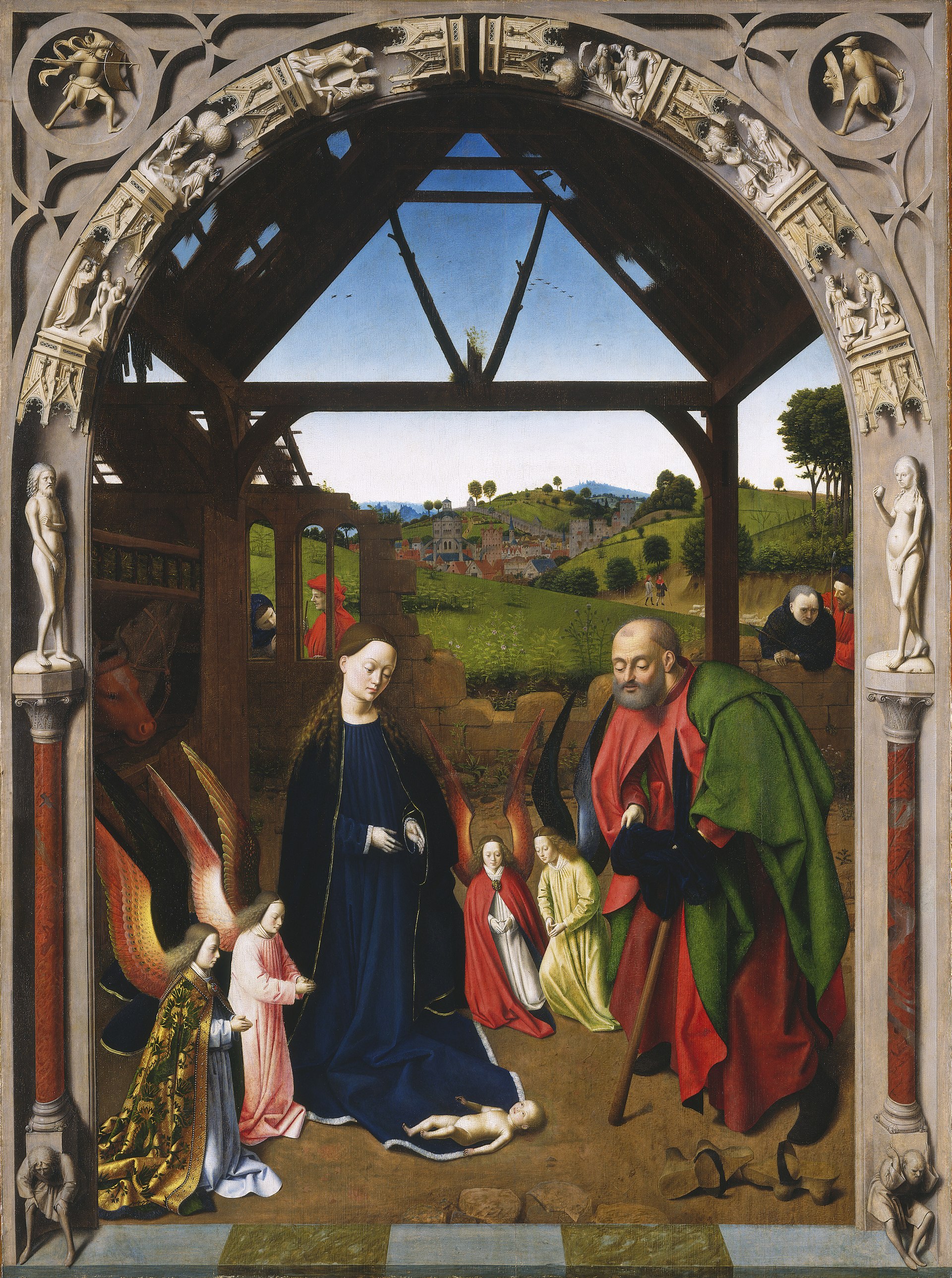
Il bue e l’asino nella storia dell’arte: dalle prime immagini cristiane al presepe
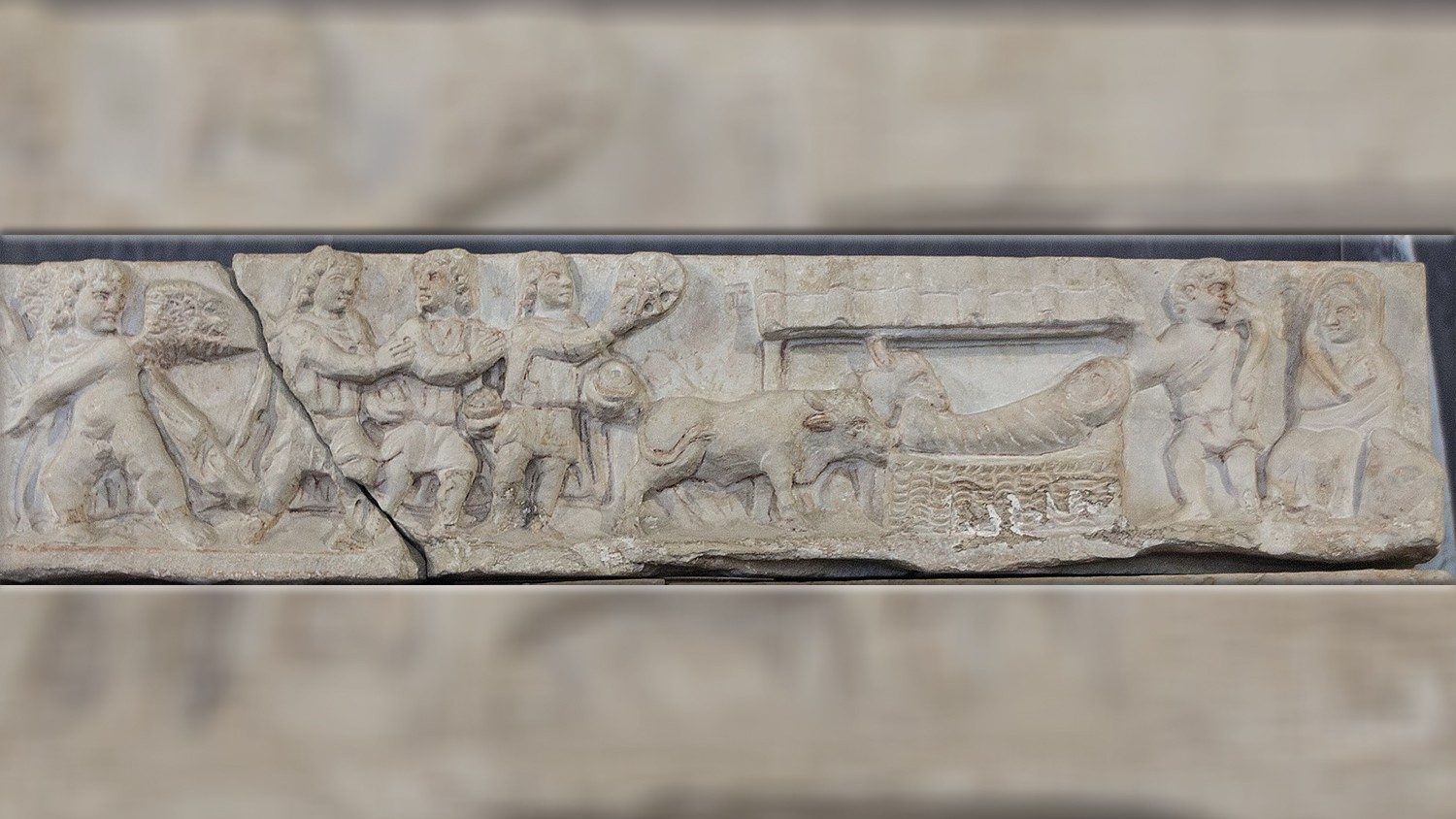
La presenza dei due animali nelle immagini della Natività è molto antica. Già nel IV secolo compaiono in rappresentazioni cristiane della nascita di Gesù, comprese alcune sculture funerarie.
Un dettaglio particolarmente interessante è che, nelle prime immagini conosciute, il bue e l’asino possono comparire accanto alla mangiatoia persino quando Maria e Giuseppe non sono rappresentati. La loro presenza era dunque già un elemento riconoscibile della scena.
Con il passare dei secoli, la Natività si arricchì di nuovi personaggi e dettagli: la Vergine, san Giuseppe, gli angeli, i pastori, la stella e, in scene più ampie, i Magi. Il bue e l’asino rimasero spesso vicini al bambino, contribuendo a mantenere un legame visivo con le origini della tradizione.

Nell’arte medievale, la scena della nascita di Cristo si sviluppò attraverso modelli iconografici diversi. In alcune opere l’ambientazione è una grotta, secondo una tradizione particolarmente diffusa in Oriente; in altre compare una capanna o una struttura simile a una stalla.
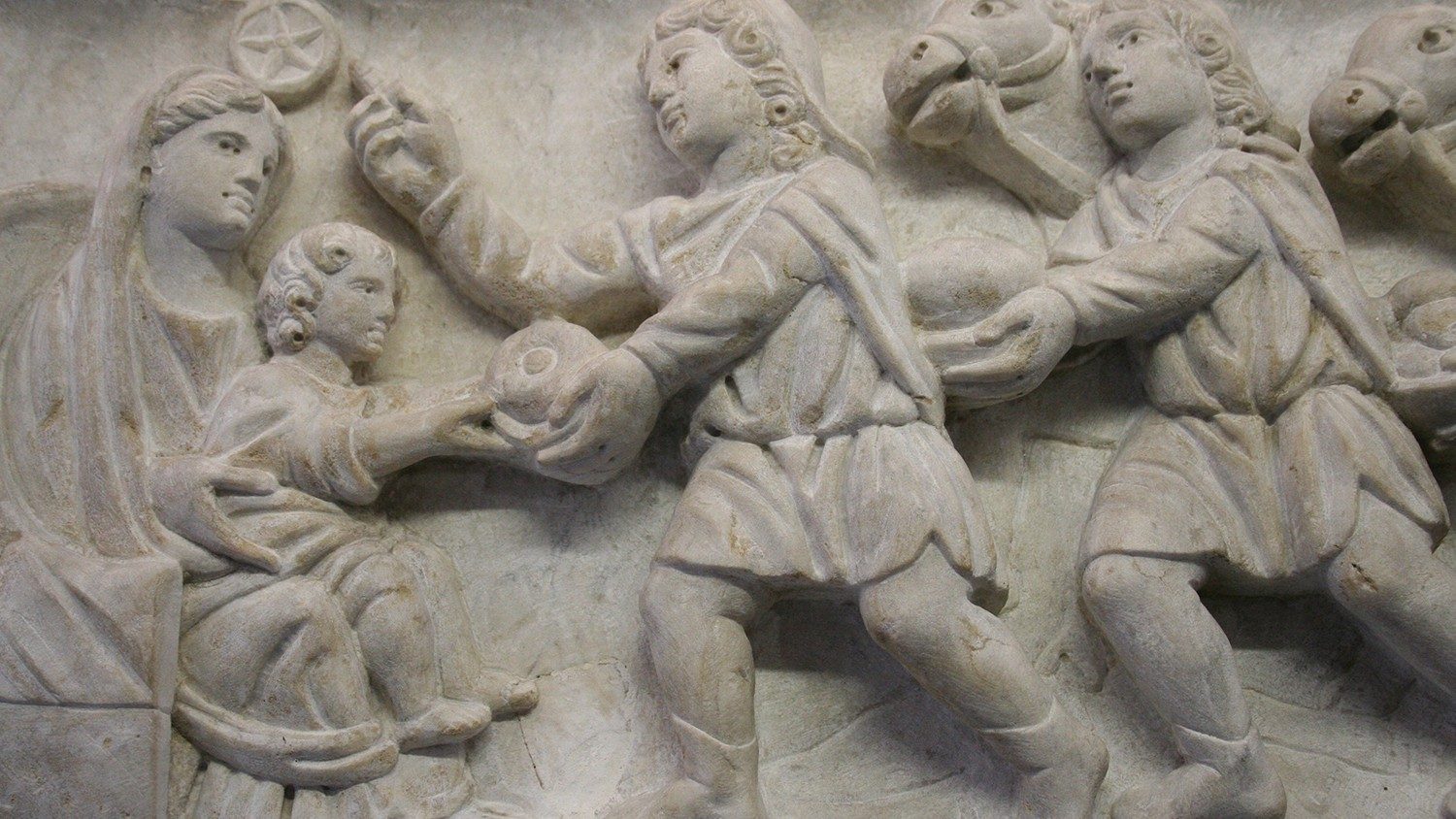
Dal Trecento in poi, soprattutto nella pittura italiana, la scena assunse forme sempre più articolate. Gli artisti cominciarono a prestare maggiore attenzione ai gesti, alle espressioni e ai rapporti tra le figure, trasformando la Natività in un episodio carico di tenerezza e significati spirituali.
Il bue e l’asino continuarono a svolgere il loro ruolo, talvolta in secondo piano, talvolta accanto alla mangiatoia, come se fossero i primi compagni terreni del neonato.
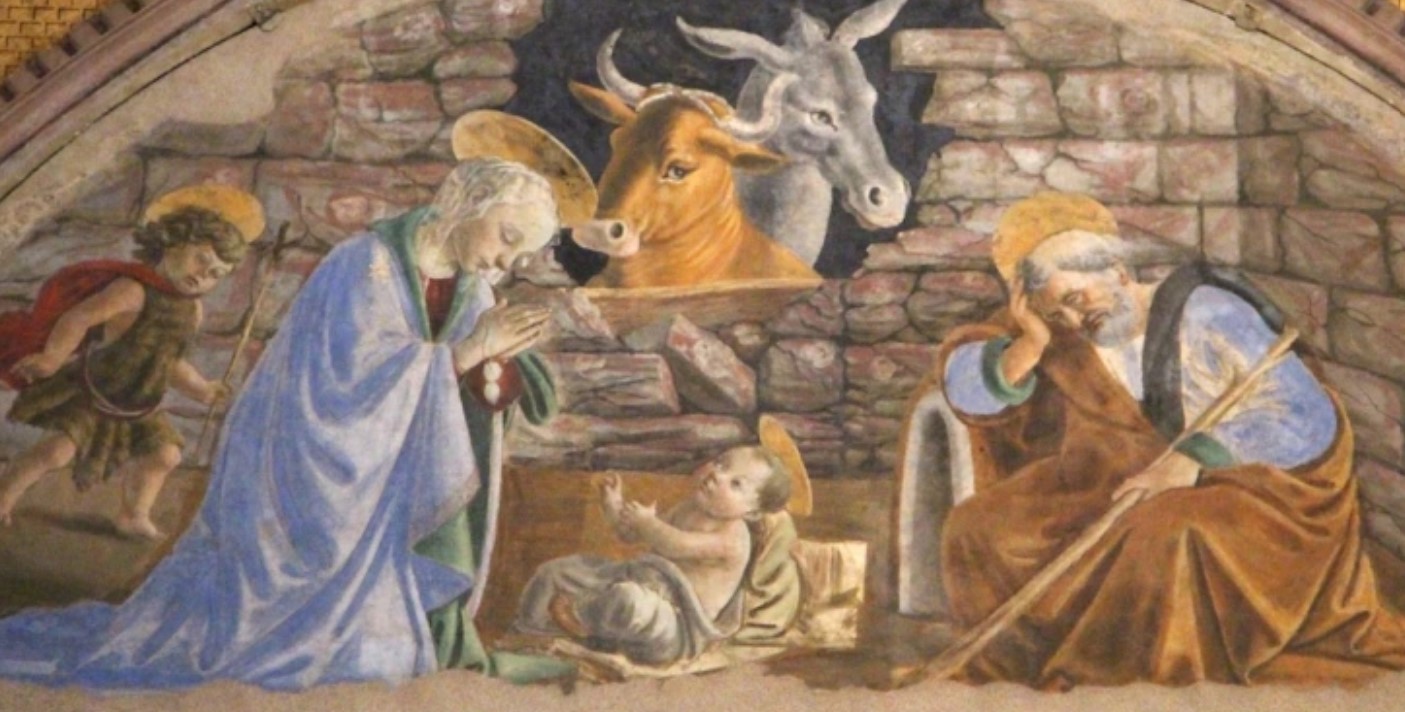
Perché gli artisti li mettono così vicini a Gesù Bambino?
La posizione dei due animali non è casuale. Nelle opere d’arte, la vicinanza alla mangiatoia permette di identificare immediatamente il luogo della nascita e di richiamare le antiche interpretazioni bibliche.
Il loro atteggiamento può suggerire calore, protezione e silenziosa adorazione. In alcune immagini sembrano quasi chinarsi per osservare il bambino; in altre, la loro presenza è discreta e serve soprattutto a definire l’ambiente.
Gli artisti hanno saputo sfruttare anche il contrasto tra la grandezza del mistero religioso e la semplicità della scena. Il Figlio di Dio, secondo la fede cristiana, nasce senza ricchezze, in un luogo umile, circondato da creature comuni.
San Francesco e il presepe di Greccio: il bue e l’asino nella tradizione natalizia
Quando pensiamo al presepe, è inevitabile ricordare san Francesco d’Assisi e la rappresentazione della Natività organizzata a Greccio nel 1223.
Secondo il racconto del suo primo biografo, Tommaso da Celano, Francesco desiderava rendere più vicino e concreto il ricordo della nascita di Gesù. Per farlo, volle ricreare la scena di Betlemme in un ambiente semplice, con una mangiatoia, il fieno, un bue e un asino.
Non si trattava ancora del presepe con le statuine che conosciamo oggi. A Greccio la scena venne vissuta attraverso una rappresentazione che coinvolgeva le persone presenti e richiamava la povertà della nascita di Cristo.
L’iniziativa di Francesco non fu la prima rappresentazione artistica della Natività: immagini di questo episodio esistevano già da molti secoli. Tuttavia, contribuì in modo importante alla diffusione di una forma di devozione natalizia capace di coinvolgere direttamente i fedeli.
Il bue e l’asino, presenti in quella scena, divennero così anche parte di una tradizione destinata a diffondersi nelle chiese e nelle case. Aiutavano a evocare l’umiltà del luogo, la povertà della mangiatoia e la vicinanza del mondo terreno al bambino appena nato.
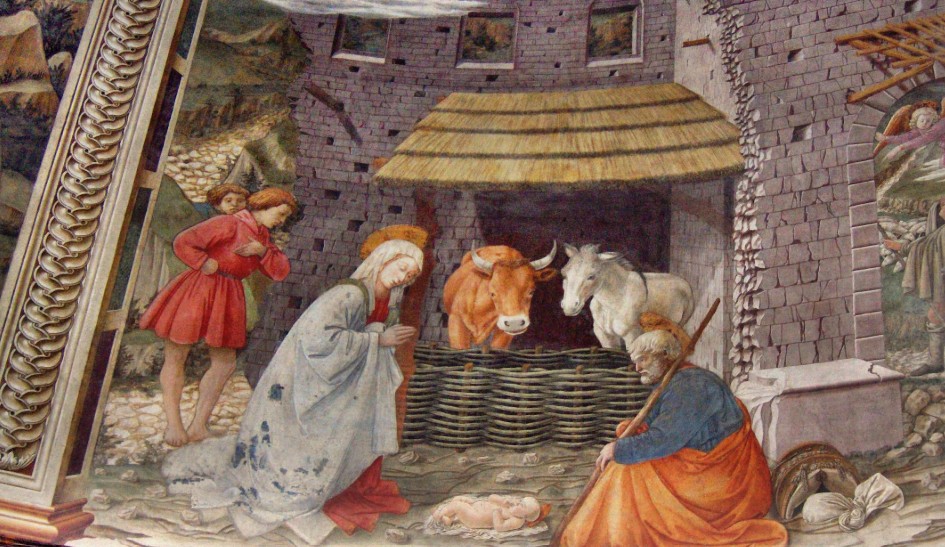
Perché il bue e l’asinello non mancano mai nel presepe di Natale?
Oggi possiamo trovare il bue e l’asinello nei presepi più diversi: dalle composizioni napoletane ricche di personaggi alle piccole natività in legno, ceramica o terracotta, fino alle rappresentazioni essenziali collocate sotto l’albero di Natale.
Le loro dimensioni cambiano, così come i materiali e lo stile con cui vengono realizzati. A volte sono grandi figure collocate ai lati della mangiatoia; altre volte sono piccoli dettagli che quasi si confondono con il fieno e la paglia.
Eppure, la loro presenza conserva una forza particolare. Ci ricorda che il presepe non è soltanto una ricostruzione della nascita di Gesù, ma anche un’immagine che si è formata attraverso secoli di fede, racconti e arte.
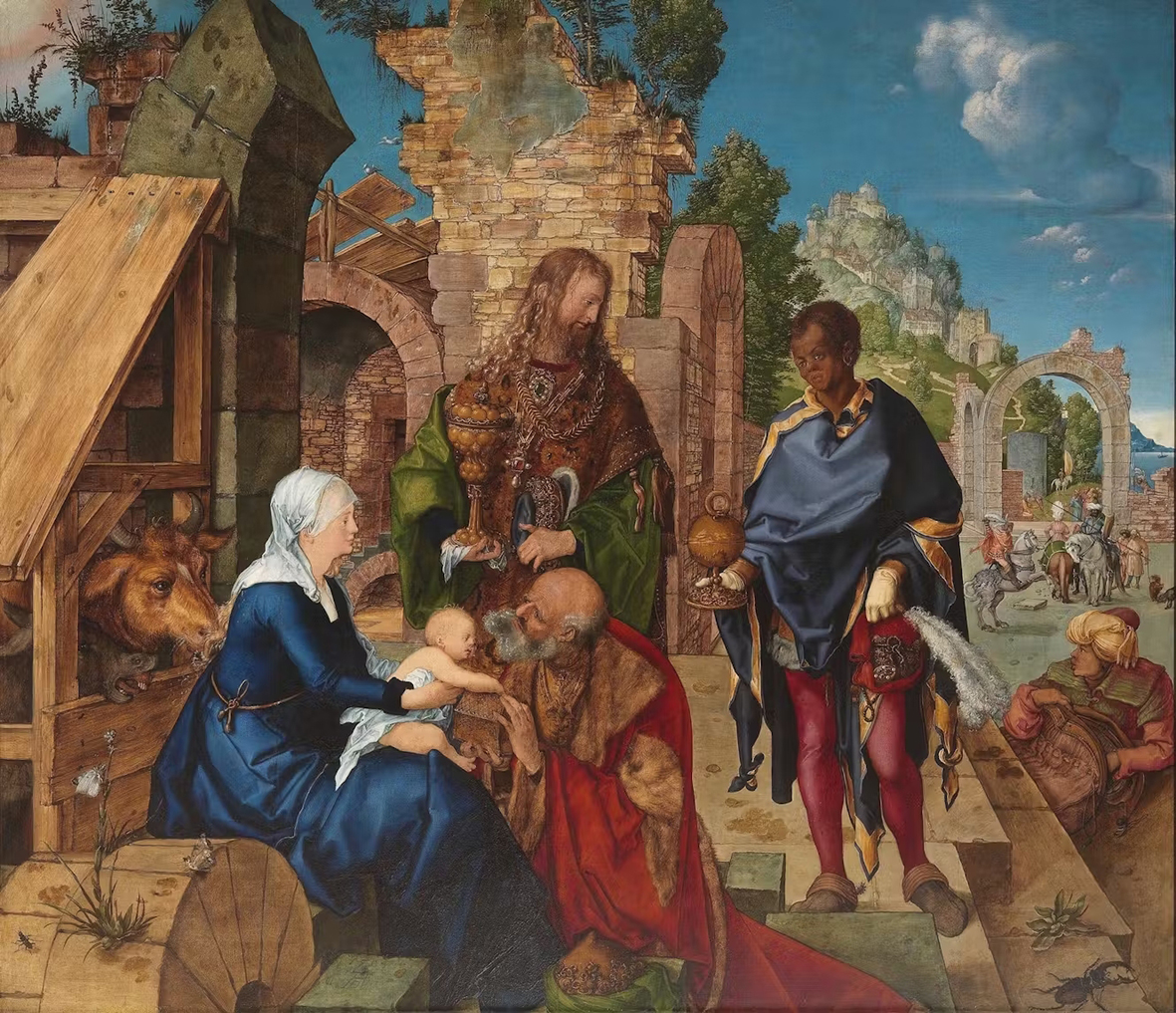
La tradizione ha unito le parole della Bibbia, le interpretazioni dei primi cristiani, i racconti apocrifi e la fantasia degli artisti, dando vita a una scena che ormai appartiene alla memoria collettiva del Natale.
La prossima volta che guarderete un presepe, provate a soffermarvi sul bue e sull’asinello. Sono i protagonisti di una tradizione antica, nella quale si incontrano le Scritture, il simbolismo religioso e la capacità dell’arte di trasformare un racconto in un’immagine che continua a emozionarci, Natale dopo Natale.
Per il momento il sempre vostro Michelangelo Buonarroti vi saluta dandovi appuntamento ai prossimi post e sui social.
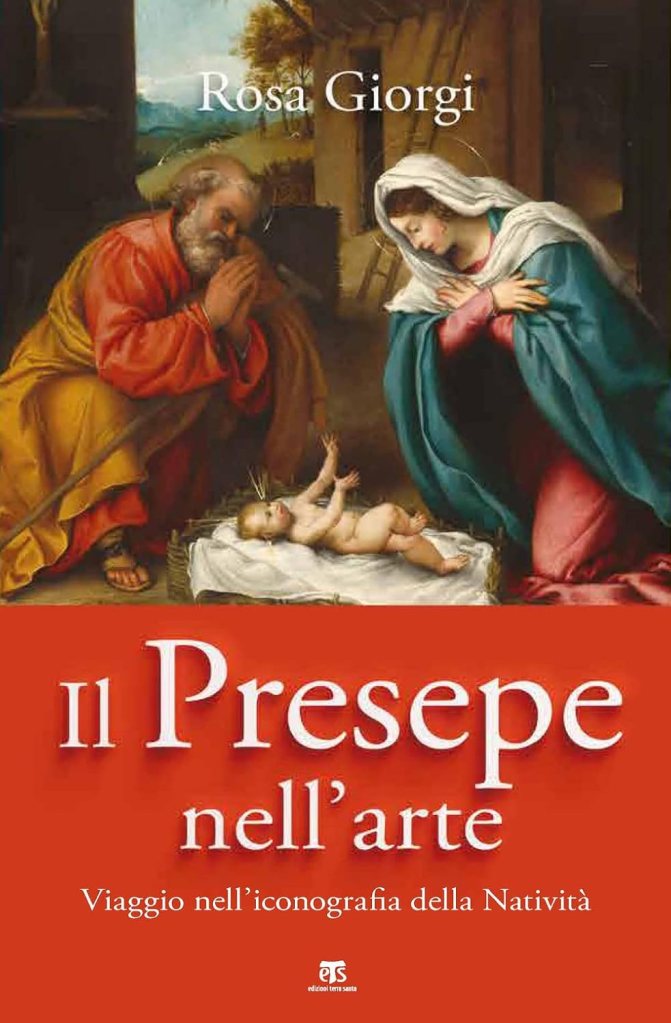
Why are the ox and the donkey beside the Baby Jesus? The story behind a centuries-old tradition
Every Christmas, they return to their place beside the manger, their muzzles turned toward the Baby Jesus. The ox and the donkey are such inseparable fixtures of the Nativity scene that it is hard to imagine the birth of Christ without them. Yet, there is a curious detail: the Gospels do not mention these two animals being present at the birth of Jesus.
Why, then, do we find them in almost every Nativity scene, as well as in medieval panels, frescoes, and paintings by the great masters? The answer lies in ancient biblical prophecies, early Christian texts, and symbolic interpretations that have woven their way through the history of art.
The presence of the ox and the donkey is more than just a Christmas tradition; it is a story that reveals how the image of Christ’s birth took shape over time, becoming enriched with meanings that we still encounter in our own homes today.
Were the ox and the donkey truly present at the birth of Jesus?
If we read the Gospel accounts of the Nativity carefully, we find Mary, Joseph, the infant laid in a manger, the shepherds, and—in the Gospel of Matthew—the Magi, who arrive later to pay homage to Jesus. There is, however, no explicit mention of an ox or a donkey in the stable in Bethlehem.
The Gospel of Luke recounts that Mary gave birth to her firstborn son, wrapped him in swaddling clothes, and laid him in a manger, because there was no room for them in the inn. It is precisely the manger—ordinarily used for animal feed—that suggested to early Christians the image of a rural, humble, and impoverished setting. But what animals were actually beside that manger? The Gospel texts do not specify.
The presence of the ox and the donkey, therefore, stems from a later tradition—one that weaves together scriptural interpretations, apocryphal accounts, and theological reflections. Over the centuries, this tradition has become so familiar that it now seems an integral part of the Gospel narrative itself.
The prophecy of Isaiah: the hidden meaning of the two animals
To understand why the ox and the donkey became part of the iconography of the Nativity, we must look back to the Old Testament—specifically, to the Book of the prophet Isaiah.
In the first chapter, we read: “The ox knows its owner, and the donkey its master’s manger; but Israel does not know, my people do not understand.”
The original meaning of these words is a rebuke directed at the people of Israel, who—unlike animals, which recognize those who care for them—fail to acknowledge their own Lord.
Early Christian interpreters read this passage in light of the birth of Jesus. Placed beside the infant, the ox and the donkey thus became a symbol of the recognition of the Messiah: even these two animals, in their simplicity, appear to acknowledge the One who has come into the world.
This interpretation played a decisive role in the inclusion of these animals in sacred art.
There is also another prophecy that has been linked to the Nativity scene. In the Book of Habakkuk, certain ancient versions and interpretations of the text contain a reference to a divine manifestation “in the midst of two animals.” Early Christians interpreted these words as a possible allusion to the ox and the donkey beside Jesus.
These are symbolic readings of the Scriptures; they do not constitute historical evidence that these two animals were actually present in Bethlehem.
The Apocryphal Gospel of Pseudo-Matthew: When Animals Adore Jesus
Another fundamental text in the history of this tradition is the so-called Gospel of Pseudo-Matthew—an apocryphal Christian writing, meaning one not included in the biblical canon.
In this account, the presence of the ox and the donkey is explicitly mentioned and linked directly to the prophecy of Isaiah. The two animals are described as recognizing and adoring the newborn child.
This text helped solidify an image that would become iconic: Jesus in the manger, with the ox and the donkey on either side, bowing toward him.
Apocryphal narratives played a significant role in shaping the Christian imagination. Although not part of the canonical Gospels, they provided artists, preachers, and the faithful with narrative details that helped make scenes from the lives of Mary and Jesus richer and more easily recognizable.
It is thanks to this tradition that the ox and the donkey have become a permanent fixture in how we envision Christmas.
What do the ox and the donkey symbolize in the Nativity scene?
Over the centuries, these two animals have taken on various meanings, particularly within the allegorical interpretation of the Nativity.
According to one interpretation common in the medieval Christian tradition, the ox represented the Jewish people, while the donkey represented the pagan nations. Together, gathered before Jesus, they serve as a symbolic representation of all humanity called upon to recognize the Messiah.
The scene thus took on a universal significance: the birth of Christ did not concern a single people alone, but was intended for all.
Naturally, the symbolic value of the two animals has not always been interpreted in the same way. In some depictions, their role is primarily narrative: they lend credibility to the setting of the manger and suggest the humble nature of the place where Jesus was born.
In other images, however, their presence serves almost as a profession of faith. With their muzzles lowered toward the child, their heads gathered around the cradle, and their proximity to Jesus’ fragile body, these two ordinary animals are transformed into silent witnesses to an extraordinary event.
Their significance is also shaped by the way artists have integrated them into the composition.
The ox and the donkey in the history of art: from early Christian imagery to the Nativity scene
The presence of these two animals in depictions of the Nativity is ancient. As early as the 4th century, they appear in Christian representations of the birth of Jesus, including certain funerary sculptures.
A particularly interesting detail is that, in the earliest known images, the ox and the donkey can appear beside the manger even when Mary and Joseph are not depicted. Their presence was, therefore, already a recognizable element of the scene.
Over the centuries, the Nativity scene was enriched with new figures and details: the Virgin, Saint Joseph, angels, shepherds, the star, and—in more expansive scenes—the Magi. The ox and the donkey often remained close to the child, helping to maintain a visual link to the origins of the tradition.
In medieval art, the scene of Christ’s birth evolved through various iconographic models. In some works, the setting is a cave—a tradition that was particularly widespread in the East. In others, a hut or a structure resembling a stable appears.
From the 14th century onwards—particularly in Italian painting—the scene took on increasingly elaborate forms. Artists began to pay greater attention to gestures, expressions, and the relationships between the figures, transforming the Nativity into an episode imbued with tenderness and spiritual meaning.
The ox and the donkey continued to play their part—sometimes in the background, at other times right beside the manger—as if they were the newborn’s first earthly companions.
Why do artists place them so close to the Baby Jesus?
The positioning of the two animals is not accidental. In works of art, their proximity to the manger serves to immediately identify the setting of the birth while evoking traditional biblical interpretations.
Their demeanor can suggest warmth, protection, and silent adoration. In some depictions, they appear to lean in to observe the child; in others, their presence is understated, serving primarily to define the setting.
Artists also skillfully leveraged the contrast between the magnitude of the religious mystery and the simplicity of the scene. According to the Christian faith, the Son of God is born without riches, in a humble place, surrounded by ordinary creatures.
Saint Francis and the Greccio Nativity scene: the ox and the donkey in Christmas tradition
When we think of the Nativity scene, it is impossible not to recall Saint Francis of Assisi and the Nativity tableau he organized in Greccio in 1223.
According to the account provided by his first biographer, Thomas of Celano, Francis wished to make the memory of Jesus’s birth feel more immediate and tangible. To achieve this, he sought to recreate the scene in Bethlehem within a simple setting, complete with a manger, hay, an ox, and a donkey. This was not yet the Nativity scene with figurines as we know it today. In Greccio, the scene was brought to life through a reenactment that involved those present and highlighted the poverty surrounding the birth of Christ.
Francis’s initiative was not the first artistic depiction of the Nativity; images of this event had already existed for many centuries. Nevertheless, it played a significant role in spreading a form of Christmas devotion that directly engaged the faithful.
The ox and the donkey, present in that scene, thus became part of a tradition destined to spread throughout churches and homes. They helped evoke the humility of the setting, the poverty of the manger, and the closeness of the earthly realm to the newborn child.
Why are the ox and the donkey always present in the Christmas Nativity scene?
Today, we can find the ox and the donkey in a wide variety of Nativity scenes: from elaborate Neapolitan displays teeming with characters to small Nativity sets made of wood, ceramic, or terracotta—even simple, minimalist representations placed beneath the Christmas tree.
Their size varies, as do the materials and styles used to craft them. Sometimes they appear as large figures positioned on either side of the manger; at other times, they are small details that almost blend into the hay and straw.
And yet, their presence retains a unique power. It reminds us that the Nativity scene is not merely a reconstruction of the birth of Jesus, but an image shaped over centuries of faith, storytelling, and art.
Tradition has woven together the words of the Bible, the interpretations of the early Christians, apocryphal accounts, and the imagination of artists—giving life to a scene that has become an integral part of our collective memory of Christmas.
The next time you look at a Nativity scene, take a moment to focus on the ox and the donkey. They are central figures in an ancient tradition where Scripture, religious symbolism, and the artistic power to transform a narrative into an image converge—an image that continues to move us, Christmas after Christmas.
For now, yours truly, Michelangelo Buonarroti, bids you farewell—until the next posts and over on social media.

Sostienici – Support Us
Se questo blog ti piace e ti appassiona, puoi aiutarci a farlo crescere sempre più sostenendoci in modo concreto condividendo i post, seguendo le pagine social e con un contributo che ci aiuta ad andare avanti con il nostro lavoro di divulgazione. . ENGLISH: If you like and are passionate about this blog, you can help us make it grow more and more by supporting us in a concrete way by sharing posts, following social pages and with a contribution that helps us to move forward with our dissemination work.
10,00 €
Condividi:


Questo sono io





sostienici

Sostienici - Support Us
Se questo blog ti piace e ti appassiona, puoi aiutarci a farlo crescere sempre più sostenendoci in modo concreto condividendo i post, seguendo le pagine social e con un contributo che ci aiuta ad andare avanti con il nostro lavoro di divulgazione. . ENGLISH: If you like and are passionate about this blog, you can help us make it grow more and more by supporting us in a concrete way by sharing posts, following social pages and with a contribution that helps us to move forward with our dissemination work.
€10,00


