

Il Natale di una volta nei dipinti: neve, case e tradizioni che abbiamo dimenticato
Quando pensiamo al Natale nell’arte, ci vengono subito in mente la Natività, la Madonna con il Bambino, i pastori raccolti intorno alla mangiatoia e gli angeli che annunciano la nascita di Gesù. Eppure, nei dipinti dei grandi maestri si nasconde anche un altro Natale, meno evidente ma altrettanto affascinante: quello delle case, delle strade, dei villaggi coperti di neve e delle persone intente alle loro occupazioni quotidiane.
È un Natale fatto di piccoli gesti, di camini accesi, di mercati, di animali nelle stalle e di viaggi compiuti nonostante il freddo. A volte non compare neppure un simbolo esplicitamente natalizio. Basta un paesaggio invernale, una finestra illuminata o un gruppo di persone riunite davanti a una casa per ritrovare qualcosa che appartiene anche ai nostri ricordi.
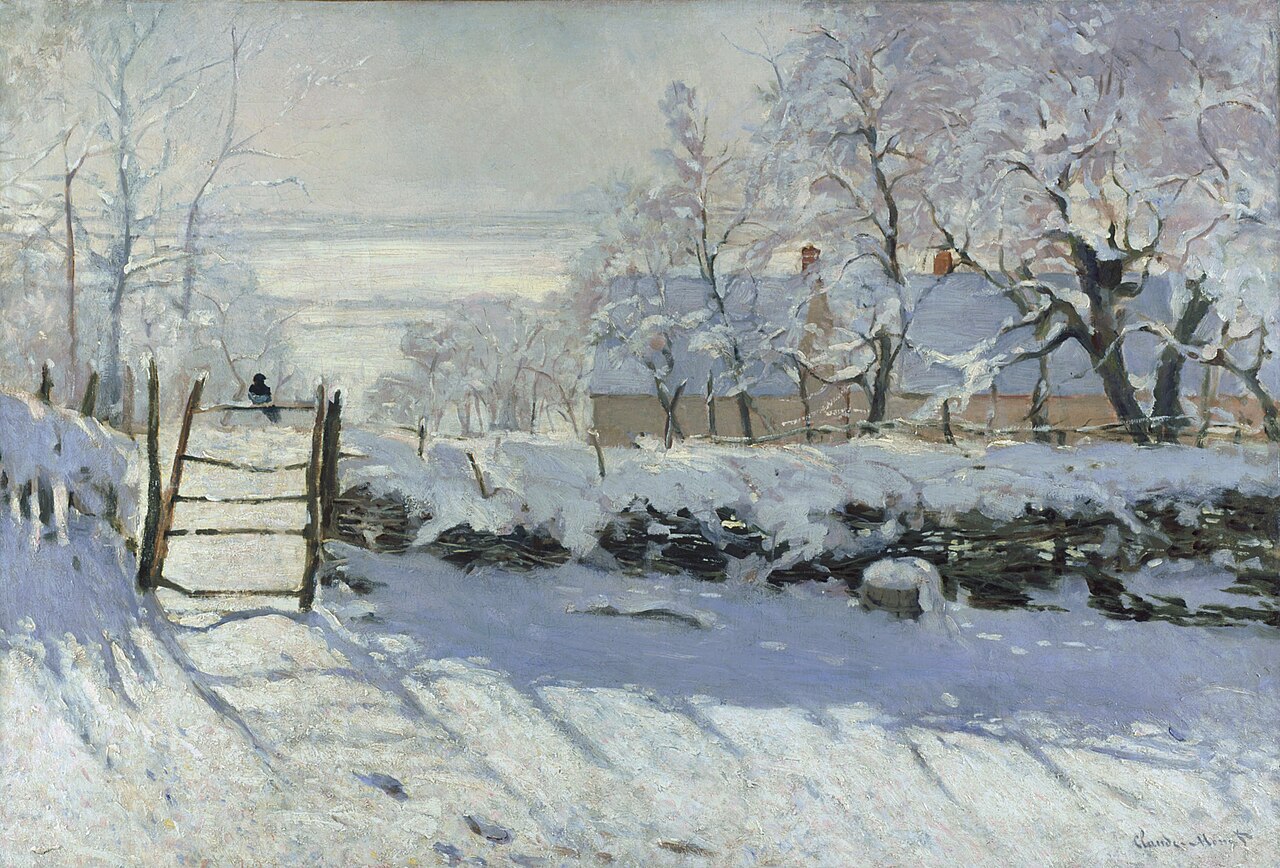
La pittura, del resto, non racconta soltanto re, santi e personaggi illustri. Ci permette anche di osservare come si vestivano le persone, come si spostavano, quali attività svolgevano e come affrontavano il ritmo delle stagioni.
E l’inverno, con la sua luce particolare e le giornate più corte, ha offerto agli artisti occasioni straordinarie per raccontare la vita.
Pieter Bruegel il Vecchio: la neve come teatro della vita quotidiana
Tra i dipinti più suggestivi per comprendere il fascino dell’inverno nell’arte c’è Cacciatori nella neve, realizzato nel 1565 da Pieter Bruegel il Vecchio.
Il paesaggio è dominato da montagne lontane, alberi spogli e distese innevate. In primo piano, alcuni cacciatori rientrano con i loro cani dopo una giornata trascorsa all’aperto. Più in basso, il villaggio si anima: alcune persone pattinano sul ghiaccio, altre giocano e altre ancora si dedicano alle attività di tutti i giorni.
La neve cambia il modo di abitare il paesaggio, modifica i percorsi, rende più difficili gli spostamenti e trasforma gli spazi consueti in luoghi di gioco e incontro.
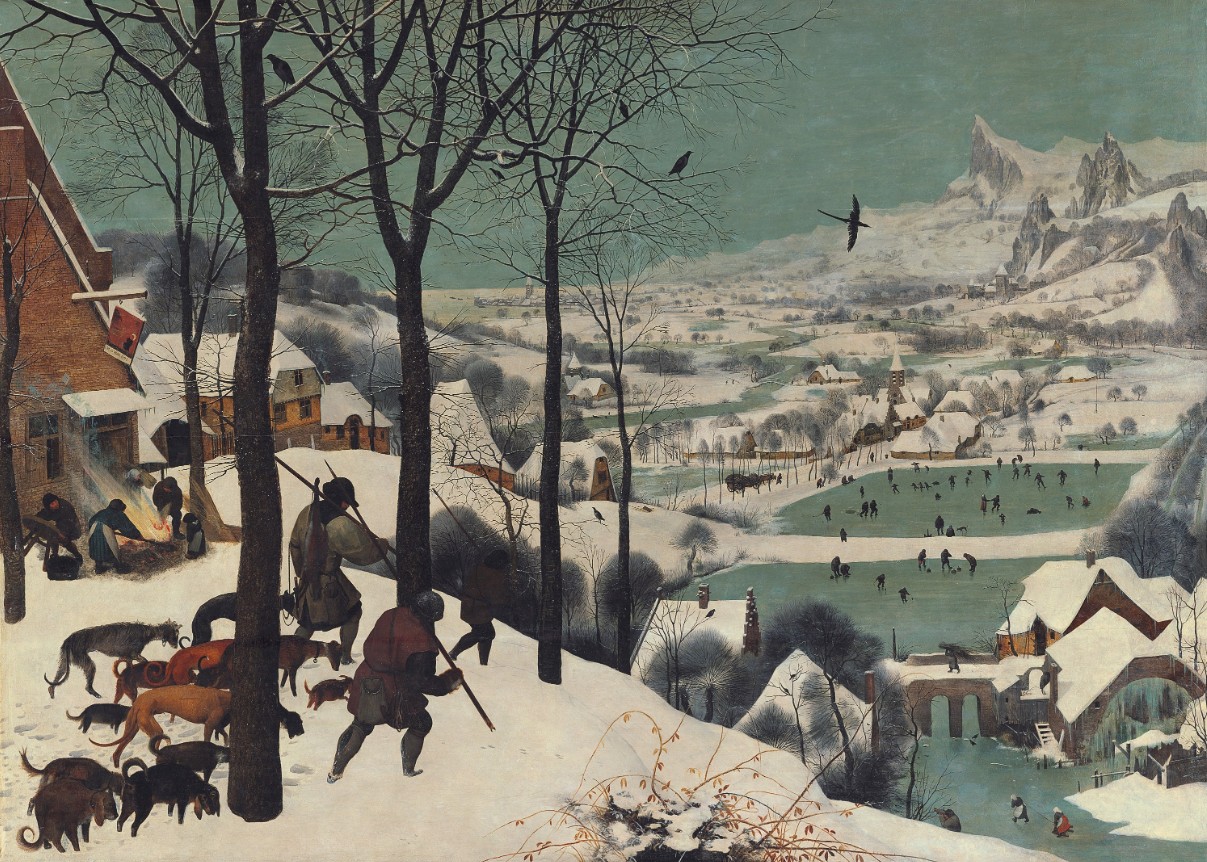
Bruegel dipinge una comunità intera. Ogni figura contribuisce a costruire una scena nella quale è facile perdersi, soffermandosi su un gesto o su un piccolo particolare.
Il dipinto non rappresenta direttamente il Natale, ma evoca quel mondo invernale fatto di lavoro, riposo e vita comunitaria che ancora oggi associamo alle feste di fine anno.
Davanti a un’opera simile viene spontaneo chiedersi come trascorressero le giornate le famiglie di allora, quando il freddo condizionava ogni attività e una nevicata poteva cambiare completamente il ritmo della vita.
Paesaggi innevati e villaggi: quando l’inverno diventa protagonista
Nella pittura fiamminga e olandese del Cinquecento e del Seicento, l’inverno diventa un soggetto capace di raccontare molto più della bellezza della natura.
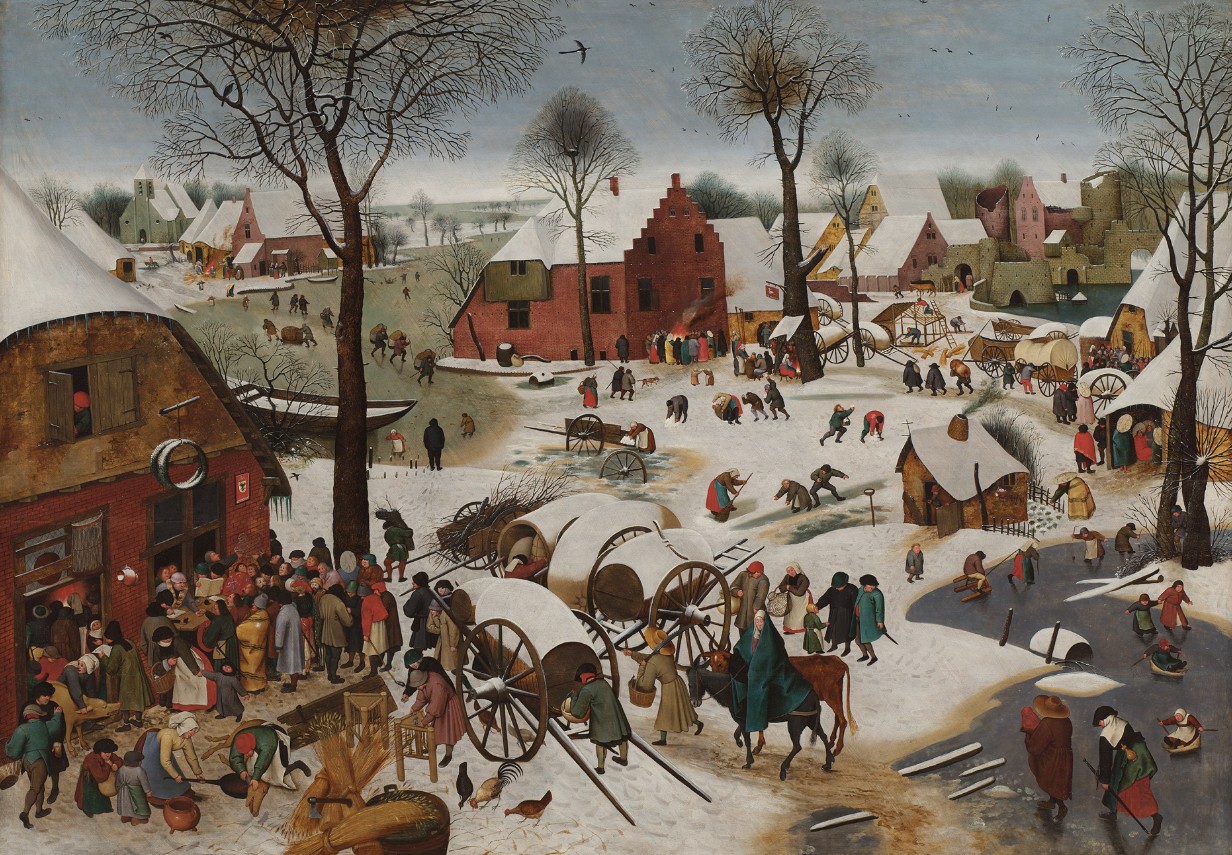
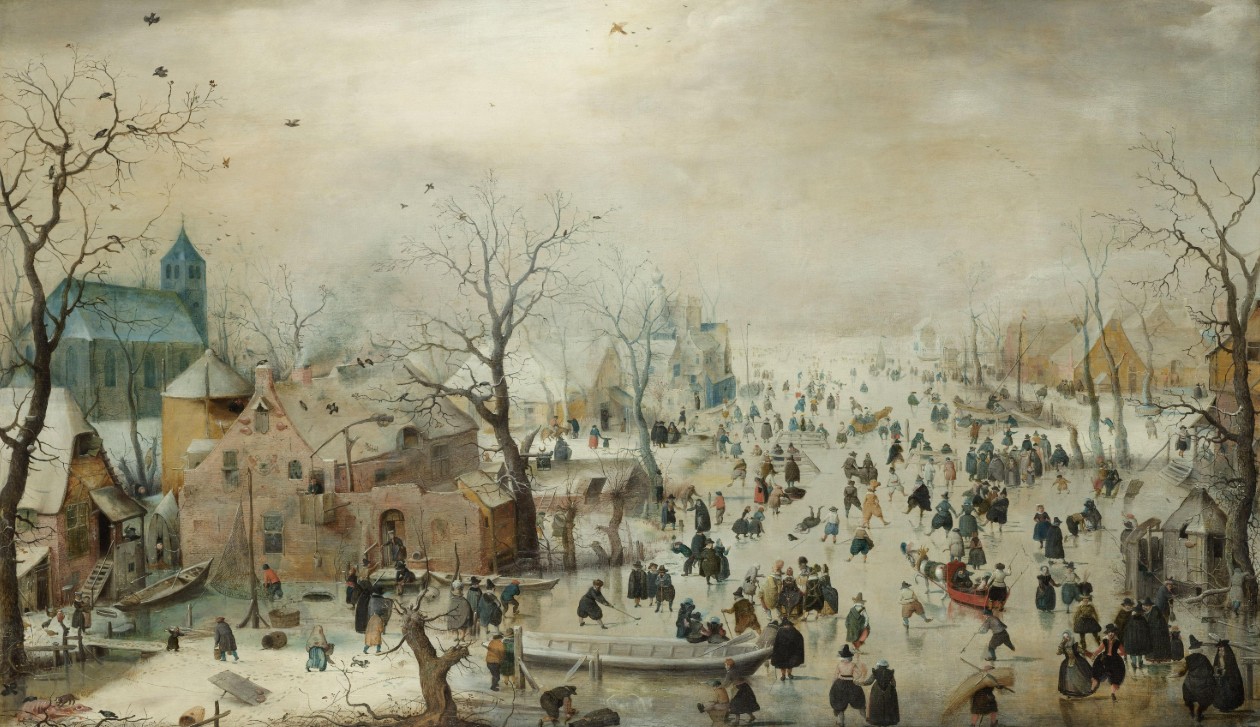
Nei paesaggi con fiumi ghiacciati, strade innevate e villaggi lontani, la presenza umana è spesso affidata a piccole figure. Eppure sono proprio queste persone a dare significato alla scena: pattinatori, viandanti, lavoratori e abitanti che attraversano il paesaggio o si incontrano negli spazi aperti.
In queste immagini si riconoscono abitudini che oggi consideriamo parte dell’immaginario natalizio: le passeggiate al freddo, le attività all’aperto, il ritorno a casa e il piacere di ritrovarsi al riparo dopo una giornata invernale.
Non bisogna però confondere l’atmosfera di un paesaggio innevato con una testimonianza diretta delle celebrazioni natalizie. Molte opere raffigurano semplicemente l’inverno, senza riferimenti specifici alla festa. È proprio questa distinzione a renderle interessanti: ci mostrano il contesto quotidiano nel quale le festività prendevano forma.
Le case di un tempo: il calore domestico nei dipinti
Se fuori la neve rende difficile camminare e il vento attraversa le strade, la casa diventa il centro della vita quotidiana.
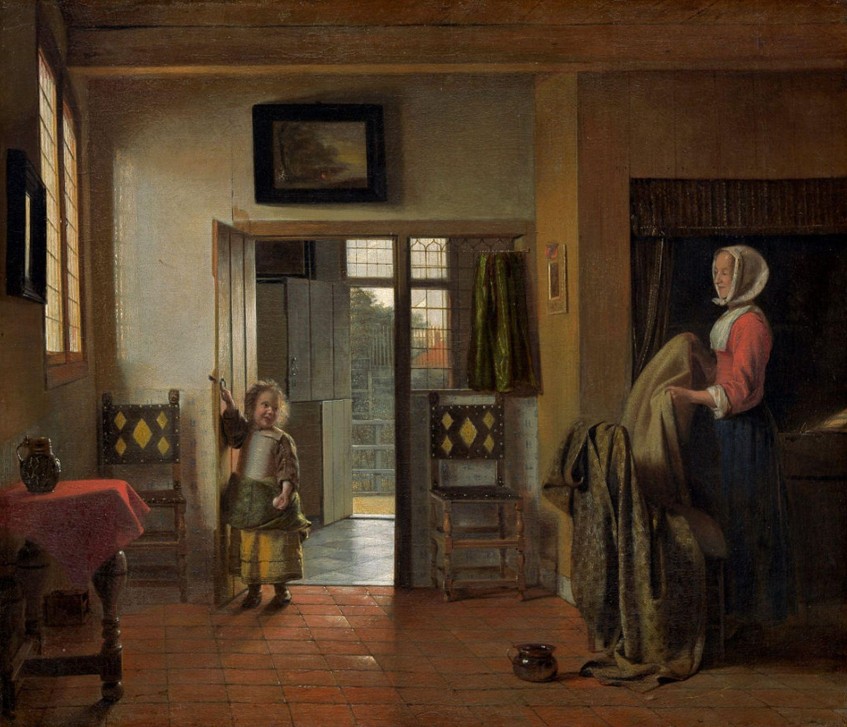
Nella pittura di genere, soprattutto nelle opere degli artisti nordici, gli interni domestici raccontano un universo fatto di tavoli, sedie, utensili, finestre, coperte e attività familiari. Spesso restituiscono l’intimità di un ambiente nel quale si lavora, si mangia e si trascorre il tempo insieme.
Basta osservare con attenzione questi spazi per comprendere quanto siano diversi dalle nostre abitazioni. La disposizione degli oggetti, gli abiti, gli strumenti di lavoro e le fonti di illuminazione raccontano una vita organizzata intorno a necessità molto concrete.
Durante l’inverno, il focolare aveva un’importanza fondamentale. Il fuoco serviva a riscaldare gli ambienti e a preparare i pasti; riunirsi nella stanza più calda significava anche condividere racconti, lavori manuali e momenti di riposo.
Naturalmente, le condizioni variavano molto in base alla ricchezza della famiglia, al luogo e all’epoca. Una dimora aristocratica non aveva gli stessi spazi e le stesse comodità di una casa contadina.
Nei dipinti, tuttavia, anche un dettaglio apparentemente insignificante può diventare prezioso: una pentola sul fuoco, un mantello appeso, una tavola apparecchiata o una finestra dalla quale entra una luce fredda. Sono particolari che ci aiutano a immaginare la quotidianità di chi visse secoli fa.
Il Natale prima delle luci elettriche e delle decorazioni moderne
Il Natale che conosciamo oggi, con le vetrine illuminate, gli alberi decorati e le città trasformate dalle installazioni luminose, è il risultato di una lunga evoluzione delle tradizioni.
Nei secoli passati, le celebrazioni variavano da regione a regione e cambiavano secondo le possibilità economiche delle famiglie. La dimensione religiosa aveva un ruolo centrale, mentre il calendario delle feste comprendeva usanze locali, pasti speciali, incontri familiari e momenti di partecipazione alla vita della comunità.
I dipinti possono aiutarci a ricostruire alcuni aspetti di quel mondo, soprattutto quando raffigurano mercati, banchetti, attività domestiche e scene di villaggio. Occorre però leggerli con attenzione: un quadro non è una fotografia neutrale della società, ma una rappresentazione influenzata dalle intenzioni dell’artista, dal committente e dal contesto culturale.
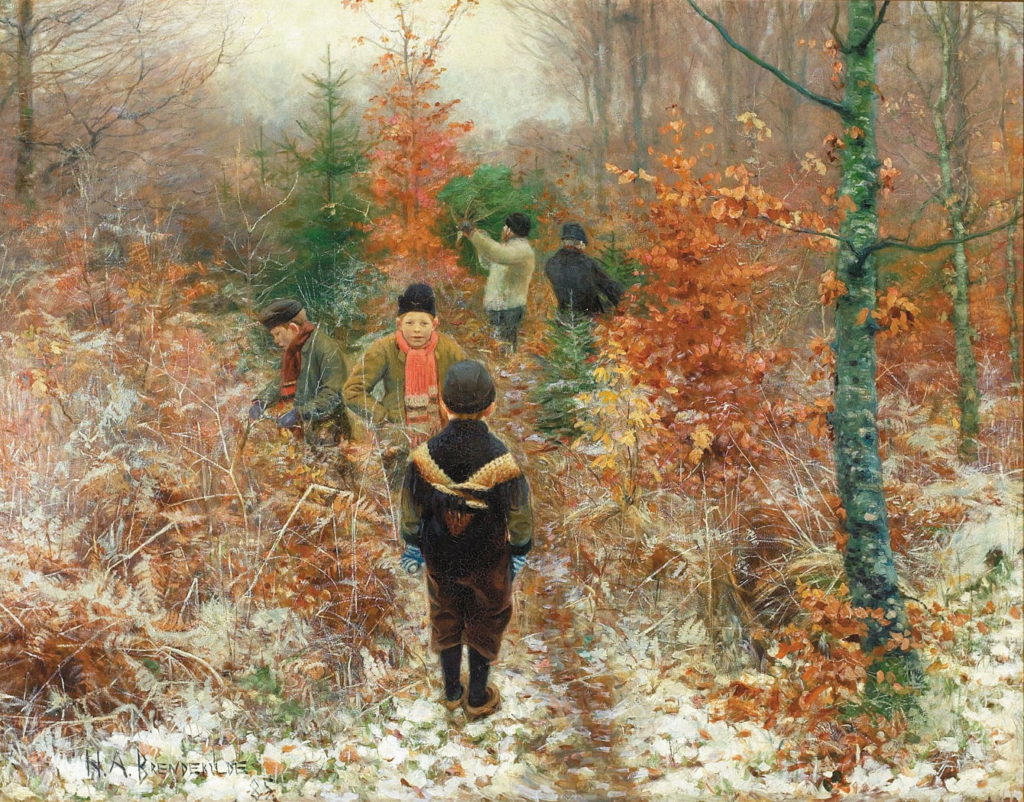
Anche l’illuminazione delle case era molto diversa da quella attuale. Candele, lampade e focolari avevano una funzione pratica, oltre a creare un’atmosfera particolare. Le decorazioni, gli alimenti disponibili e i modi di festeggiare non erano uguali per tutti.
Ecco perché osservare la vita quotidiana dipinta dai grandi maestri permette di andare oltre la nostalgia. Ci aiuta a comprendere le differenze tra passato e presente, senza dimenticare quanto alcuni desideri siano rimasti gli stessi: mangiare insieme, ritrovare i propri cari e rendere speciale un giorno dell’anno.
La Natività e il mondo reale: quando il sacro incontra la vita quotidiana
Nelle rappresentazioni della Natività, molti artisti hanno inserito elementi tratti dalla realtà del loro tempo. Le architetture, gli abiti, gli animali e i paesaggi potevano riflettere luoghi familiari al pittore e al pubblico che avrebbe osservato l’opera.
La scena della nascita di Gesù diventava così anche un’occasione per rappresentare ambienti conosciuti: stalle, edifici rurali, sentieri, campagne e oggetti della vita domestica.
Il racconto sacro si avvicinava alla quotidianità degli osservatori, che potevano riconoscere nel dipinto forme di vita e ambienti a loro familiari.

Nel corso dei secoli, la Natività è stata interpretata in modi molto diversi. Alcuni artisti hanno scelto composizioni solenni, illuminate da una luce simbolica; altri hanno dato spazio ai gesti semplici, alla presenza degli animali e alla materialità degli ambienti.
È in questi dettagli che il Natale dipinto dai grandi maestri diventa particolarmente vicino a noi. Non soltanto un evento religioso da contemplare, ma una scena abitata da persone, oggetti e luoghi capaci di evocare un’esperienza umana condivisa.
Mercati, cibi e usanze: il Natale attraverso i dettagli
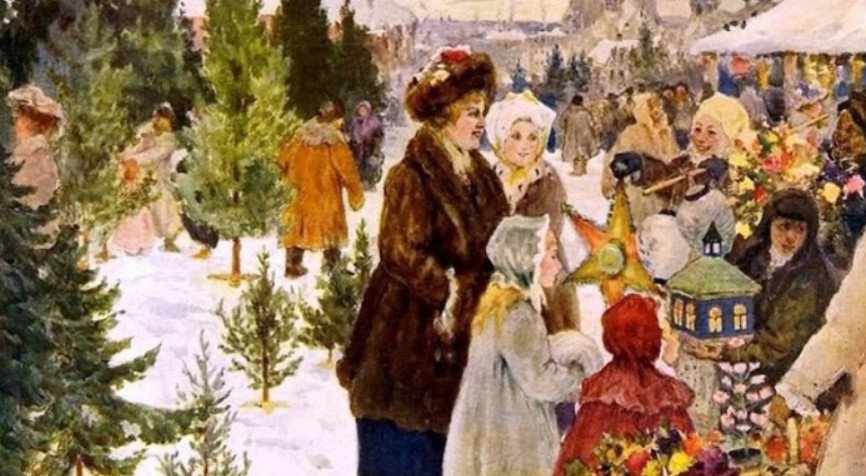
Per ritrovare le tracce delle feste del passato non è necessario cercare soltanto opere dedicate alla nascita di Gesù. Anche i dipinti che raffigurano mercati, cucine, banchetti e feste popolari possono offrire indizi preziosi.
Una tavola imbandita racconta quali alimenti si desiderava mettere in mostra. Un banco di mercato suggerisce la circolazione delle merci. Gli abiti indossati dai personaggi possono indicare differenze sociali, mentre gli oggetti presenti in una stanza aiutano a ricostruire le attività svolte al suo interno.
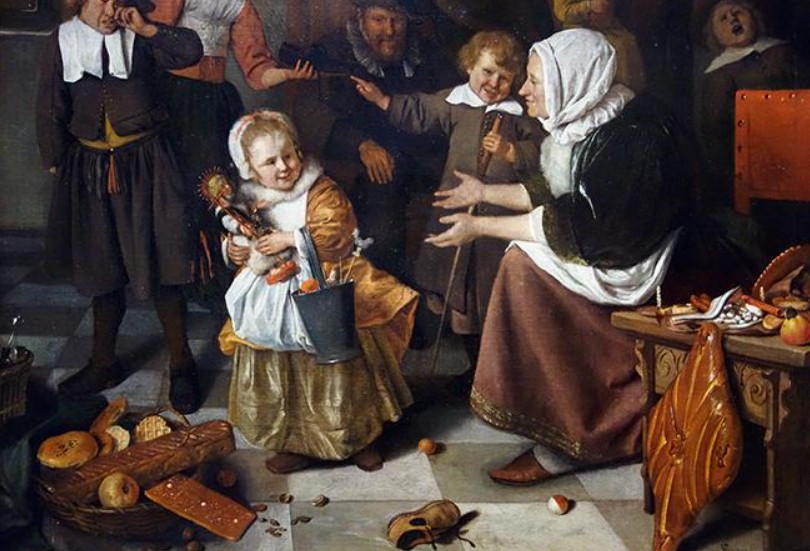
Non tutto ciò che appare in un dipinto natalizio o in una scena invernale può essere considerato una consuetudine diffusa. Alcuni elementi appartengono a contesti geografici precisi, altri sono simbolici e altri ancora rispondono alle esigenze della composizione.
Proprio per questo vale la pena soffermarsi sui particolari prima di trarre conclusioni. La storia delle tradizioni non è uguale in tutta Europa e non tutte le usanze che oggi associamo al Natale erano già presenti, nella stessa forma, secoli fa.
La pittura ci offre una porta d’ingresso per esplorare questo mondo, da affiancare alla ricerca storica e alle testimonianze scritte.
Perché questi dipinti ci fanno sentire il Natale più vicino
C’è qualcosa di sorprendentemente familiare nei paesaggi invernali dipinti secoli fa. Le strade coperte di neve, le persone che tornano a casa, il fumo che sale dai tetti e le finestre che interrompono il grigio delle giornate ricordano immagini che appartengono ancora alla nostra memoria.
Forse è proprio questa la ragione per cui continuiamo a guardare con interesse le scene di vita quotidiana del passato. Non mostrano soltanto un mondo lontano, ma conservano gesti e sensazioni che possiamo ancora riconoscere.
Davanti a Cacciatori nella neve di Bruegel, per esempio, l’occhio cerca le persone, segue i loro movimenti, osserva il villaggio e immagina cosa accadrà quando arriverà la sera.
La pittura ci invita a rallentare. Ci ricorda che dietro ogni grande opera esiste un universo di particolari, talvolta più eloquenti del soggetto principale.
Così il Natale può riemergere anche dove non è dichiarato: in una casa raccolta contro il freddo, in una strada silenziosa, in una comunità che continua le proprie attività mentre l’inverno avvolge ogni cosa.
La prossima volta che ti troverai davanti a un dipinto con la neve, prova a non fermarti al paesaggio. Cerca le finestre, osserva le case, segui le figure lungo la strada e guarda cosa accade sullo sfondo. Potresti scoprire che la storia più interessante non è quella che il quadro racconta in primo piano, ma quella che si nasconde nei suoi dettagli.
A volte, il Natale nell’arte non ha bisogno di un albero decorato o di una stella cometa. Gli bastano una casa, un paesaggio d’inverno e le tracce silenziose della vita quotidiana.
Per il momento il sempre vostro Michelangelo Buonarroti vi saluta dandovi appuntamento ai prossimi post e sui social.
Christmas of the Past in Paintings: Snow, Homes, and Traditions We Have Forgotten
When we think of Christmas in art, images of the Nativity, the Madonna and Child, shepherds gathered around a manger, and angels announcing the birth of Jesus immediately come to mind. Yet, hidden within the paintings of the great masters is another kind of Christmas—less obvious, perhaps, but no less enchanting: one defined by homes, streets, snow-covered villages, and people going about their daily lives.
It is a Christmas composed of small gestures: hearths aglow, bustling markets, animals in their stalls, and journeys undertaken despite the biting cold. Sometimes, there is not a single explicitly religious symbol of the holiday to be found. A winter landscape, a lit window, or a group of people gathered before a house is enough to evoke something that resonates with our own memories.
After all, painting does not merely depict kings, saints, and illustrious figures. It also offers us a glimpse into how people dressed, how they traveled, what tasks they performed, and how they navigated the rhythm of the seasons.
Winter, with its unique quality of light and shorter days, has provided artists with extraordinary opportunities to tell the story of human life.
Pieter Bruegel the Elder: Snow as a Stage for Daily Life
Among the most evocative paintings for understanding the allure of winter in art is Hunters in the Snow, created in 1565 by Pieter Bruegel the Elder.
The landscape is dominated by distant mountains, bare trees, and vast, snow-covered expanses. In the foreground, hunters return with their dogs after a day spent out in the cold. Further down, the village comes to life: some people are ice skating, others are playing, and still others are going about their daily activities.
Snow changes the way we inhabit the landscape; it alters paths, makes getting around more difficult, and transforms familiar spaces into places for play and social interaction.
Bruegel depicts an entire community. Each figure contributes to building a scene in which it is easy to lose oneself, lingering over a gesture or a small detail.
The painting does not represent Christmas directly; rather, it evokes a winter world—defined by work, rest, and communal life—that we still associate with the year-end holiday season today.
Standing before such a work, one naturally wonders how families lived back then, when the cold dictated every activity and a snowfall could completely alter the rhythm of daily life.
Snow-covered landscapes and villages: when winter takes center stage
In Flemish and Dutch painting of the 16th and 17th centuries, winter becomes a subject capable of conveying much more than just the beauty of nature.
In these landscapes—featuring frozen rivers, snow-laden roads, and distant villages—human presence is often represented by small figures. Yet, it is precisely these individuals who give meaning to the scene: skaters, travelers, laborers, and local residents moving through the landscape or gathering in open spaces.
These images reveal customs that we now consider part of the traditional Christmas imagery: walks in the cold, outdoor activities, returning home, and the pleasure of finding shelter after a winter day.
However, one should not mistake the atmosphere of a snowy landscape for a direct record of Christmas celebrations. Many of these works simply depict winter, without any specific reference to the holiday. It is precisely this distinction that makes them so compelling: they show us the everyday context in which the festivities took shape.
Homes of the Past: Domestic Warmth in Paintings
When snow makes walking difficult outside and the wind sweeps through the streets, the home becomes the center of daily life.
In genre painting—particularly in the works of Northern European artists—domestic interiors reveal a world composed of tables, chairs, utensils, windows, blankets, and family activities. They often capture the intimacy of a space where people work, eat, and spend time together.
A close look at these settings reveals just how different they were from our own homes. The arrangement of objects, the clothing, the tools of labor, and the sources of light all speak to a life organized around very practical needs.
During the winter, the hearth was of fundamental importance. The fire served to warm the rooms and prepare meals; gathering in the warmest room also meant sharing stories, engaging in manual tasks, and enjoying moments of rest.
Naturally, conditions varied greatly depending on a family’s wealth, as well as the location and the era. An aristocratic residence did not feature the same spaces or comforts as a peasant’s home.
In these paintings, however, even an apparently insignificant detail can become precious: a pot on the fire, a cloak hanging up, a table set for a meal, or a window letting in a cold, pale light. Such details help us imagine the everyday lives of those who lived centuries ago.
Christmas Before Electric Lights and Modern Decorations
The Christmas we know today—with illuminated shop windows, decorated trees, and cities transformed by light displays—is the result of a long evolution of traditions.
In centuries past, celebrations varied from region to region and depended on a family’s economic means. The religious dimension played a central role, while the holiday calendar encompassed local customs, special meals, family gatherings, and moments of participation in community life.
Paintings can help us reconstruct certain aspects of that world, especially when they depict markets, banquets, domestic activities, or village scenes. However, they must be interpreted with care: a painting is not a neutral photograph of society, but rather a representation shaped by the intentions of the artist, the patron, and the cultural context.
Lighting in homes was also very different from what we are used to today. Candles, lamps, and hearths served a practical purpose, while also creating a distinct atmosphere. Decorations, the food available, and the ways in which people celebrated were not the same for everyone.
This is why observing daily life as depicted by the great masters allows us to look beyond mere nostalgia. It helps us understand the differences between the past and the present, while reminding us that certain human desires have remained unchanged: the desire to eat together, to reunite with loved ones, and to make a particular day of the year feel special.
The Nativity and the real world: when the sacred meets daily life
In their depictions of the Nativity, many artists incorporated elements drawn from the reality of their own time. The architecture, clothing, animals, and landscapes often reflected settings familiar to both the painter and the audience who would view the work.
Thus, the scene of Jesus’s birth became an opportunity to portray recognizable environments: stables, rural buildings, pathways, countryside landscapes, and everyday household objects.
The sacred narrative was brought closer to the daily lives of the observers, who could recognize familiar ways of living and settings within the paintings.
Over the centuries, the Nativity has been interpreted in many different ways. Some artists opted for solemn compositions, illuminated by a symbolic light; others focused on simple gestures, the presence of animals, and the tangible, physical nature of the settings.
It is in these details that the Christmas depicted by the great masters becomes especially relatable to us—not merely a religious event to be contemplated, but a scene inhabited by people, objects, and places that evoke a shared human experience.
Markets, food, and customs: Christmas through its details
To uncover traces of holiday celebrations from the past, one need not look only at works dedicated to the birth of Jesus. Paintings depicting markets, kitchens, banquets, and popular festivities can also offer valuable clues.
A laden table reveals which foods were considered worthy of display. A market stall suggests the movement of goods. The clothing worn by the figures can indicate social distinctions, while the objects found within a room help reconstruct the activities that took place there.
Not everything that appears in a Christmas painting or a winter scene can be considered a widespread custom. Some elements belong to specific geographical contexts, others are symbolic, and some serve the needs of the composition itself.
For this very reason, it is worth taking a closer look at the details before drawing any conclusions. The history of traditions varies across Europe, and not all the customs we associate with Christmas today existed in the same form centuries ago.
Painting offers us a gateway to explore this world—a perspective that can be complemented by historical research and written accounts.
Why these paintings make us feel that Christmas is closer
There is something strikingly familiar about winter landscapes painted centuries ago. Snow-covered streets, people returning home, smoke rising from rooftops, and windows breaking up the grayness of the day—all these evoke images that still resonate within our own memories.
Perhaps this is precisely why we continue to look with interest at scenes of daily life from the past. They do not merely depict a distant world; they preserve gestures and sensations that we can still recognize today.
When standing before Bruegel’s Hunters in the Snow, for instance, the eye seeks out the people, follows their movements, observes the village, and imagines what will unfold as evening approaches.
Painting invites us to slow down. It reminds us that behind every great work lies a universe of details—often more eloquent than the main subject itself.
In this way, Christmas can emerge even where it isn’t explicitly depicted: in a home huddled against the cold, along a quiet street, or within a community carrying on with its daily life as winter envelops everything.
The next time you find yourself before a painting featuring snow, try not to stop at the landscape. Look for the windows, observe the houses, follow the figures along the road, and take note of what is happening in the background. You might discover that the most compelling story isn’t the one the painting tells in the foreground, but rather the one hidden within its details.
Sometimes, Christmas in art doesn’t require a decorated tree or a guiding star. All it needs is a house, a winter landscape, and the quiet traces of everyday life.
For now, yours truly, Michelangelo Buonarroti, bids you farewell—until the next post, or perhaps over on social media.
Sostienici – Support Us
Se questo blog ti piace e ti appassiona, puoi aiutarci a farlo crescere sempre più sostenendoci in modo concreto condividendo i post, seguendo le pagine social e con un contributo che ci aiuta ad andare avanti con il nostro lavoro di divulgazione. . ENGLISH: If you like and are passionate about this blog, you can help us make it grow more and more by supporting us in a concrete way by sharing posts, following social pages and with a contribution that helps us to move forward with our dissemination work.
10,00 €
Condividi:


Questo sono io



sostienici
Sostienici - Support Us
Se questo blog ti piace e ti appassiona, puoi aiutarci a farlo crescere sempre più sostenendoci in modo concreto condividendo i post, seguendo le pagine social e con un contributo che ci aiuta ad andare avanti con il nostro lavoro di divulgazione. . ENGLISH: If you like and are passionate about this blog, you can help us make it grow more and more by supporting us in a concrete way by sharing posts, following social pages and with a contribution that helps us to move forward with our dissemination work.
€10,00


