

Pontormo, il diario segreto del pittore: malattie, pasti e piccoli disegni che raccontano la sua vita
Pontormo annotava quello che mangiava, i giorni in cui stava male, gli incontri con gli amici e persino i progressi dei suoi affreschi. Nel suo Libro mio, scritto tra il 1554 e il 1556, è rimasta la testimonianza sorprendentemente intima degli ultimi anni di uno dei pittori più originali del Cinquecento.
Un manoscritto prezioso al momento esposto alla mostra monografica in corso alle Scuderie del Quirinale ‘Pontormo’. Quel diario consente di ritrovarsi faccia a faccia con l’artista, ma anche l’uomo alle prese con la propria salute e con un’impresa destinata a segnare la sua carriera: la decorazione del coro della chiesa di San Lorenzo a Firenze.
Proprio tra queste pagine, scritte senza l’intenzione di rivolgersi ai posteri, si nasconde una delle testimonianze più singolari della vita di un artista del Rinascimento.
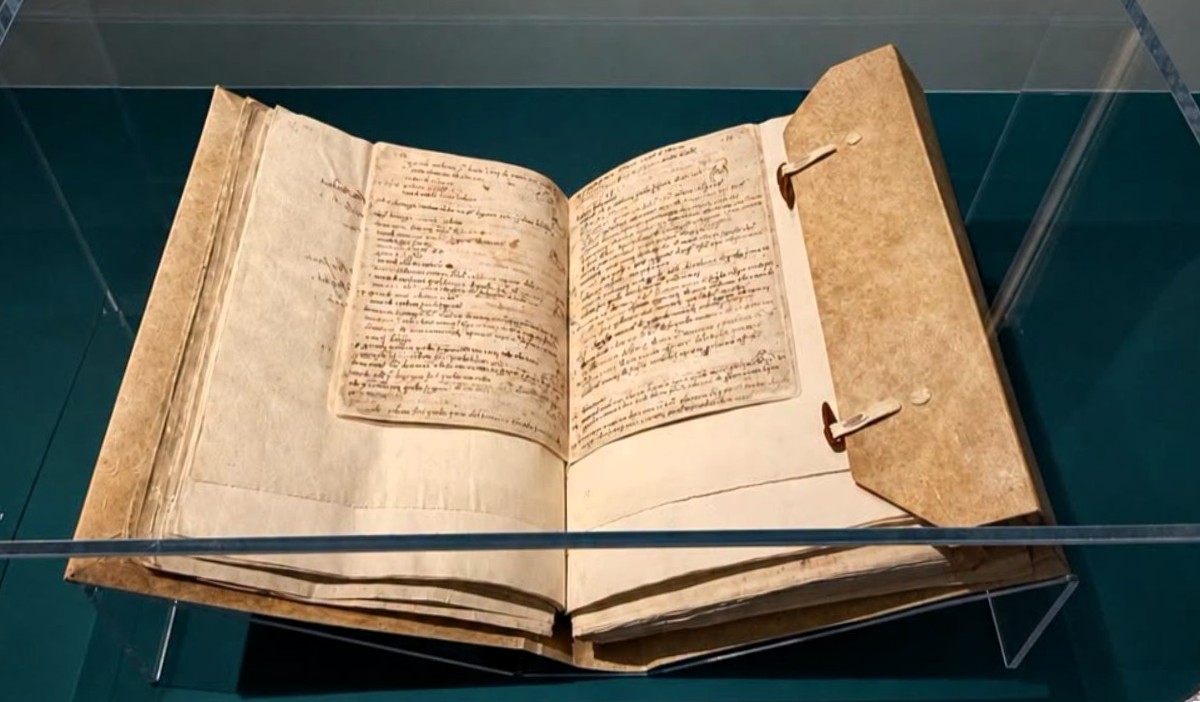
Il Libro mio di Pontormo: un manoscritto che svela la vita privata del pittore
Il manoscritto conosciuto come Il libro mio è conservato alla Biblioteca Nazionale Centrale di Firenze, nel Fondo Magliabechiano. Si tratta di un piccolo taccuino manoscritto che raccoglie annotazioni comprese tra il 7 gennaio 1554 e il 18 ottobre 1556, pochi mesi prima della morte del pittore, avvenuta il 1° gennaio 1557.
Il documento comprende 23 pagine ed è molto diverso dai registri che ci si aspetterebbe di trovare tra le carte di un artista rinascimentale. Non è un’autobiografia organizzata, non è un trattato sulla pittura e non è un testo scritto per essere pubblicato. È piuttosto un insieme di ricordi, appunti e annotazioni che Jacopo affidava alla carta per tenere traccia delle proprie giornate.
Vi compaiono gli amici, le condizioni meteorologiche, i pasti, i problemi di salute, le notizie sulla morte di persone conosciute e gli aggiornamenti relativi al cantiere di San Lorenzo. A volte bastano poche parole per registrare un avvenimento; altre volte l’artista aggiunge un particolare che oggi ci permette di ricostruire un frammento della sua esistenza.
La scoperta del manoscritto, avvenuta nell’Ottocento, suscitò sorpresa proprio per questa sua natura così personale. Le testimonianze scritte lasciate dagli artisti del tempo erano spesso legate a contabilità, corrispondenza o testi destinati a una circolazione più ampia. Pontormo, invece, ci ha lasciato qualcosa di diverso: un documento che non cerca di costruire un’immagine pubblica del pittore, ma registra la vita mentre accade.
La caduta del 1554 e la paura di non riuscire a terminare il lavoro
Una delle pagine più significative del diario si apre con un episodio tutt’altro che glorioso, ma estremamente umano.
Il 7 gennaio 1554 Pontormo annota di essere caduto e di essersi fatto male alla spalla e al braccio. Racconta di essere rimasto a casa del Bronzino per sei giorni e di essere poi tornato nella propria abitazione, continuando però a stare male per settimane.
Il pittore scrive con una semplicità disarmante. Registra l’incidente, la permanenza presso l’amico e il protrarsi del malessere. Dietro questa annotazione apparentemente ordinaria, si intravede una preoccupazione importante.
Pontormo stava lavorando alla decorazione del coro della chiesa di San Lorenzo, un’impresa complessa che richiedeva tempo, energie e una capacità di organizzazione notevole. Un infortunio poteva compromettere il ritmo del lavoro e rendere ancora più difficile portare a termine un incarico tanto impegnativo.
La salute diventa una questione concreta, quotidiana, che si intreccia con le esigenze della sua attività professionale.
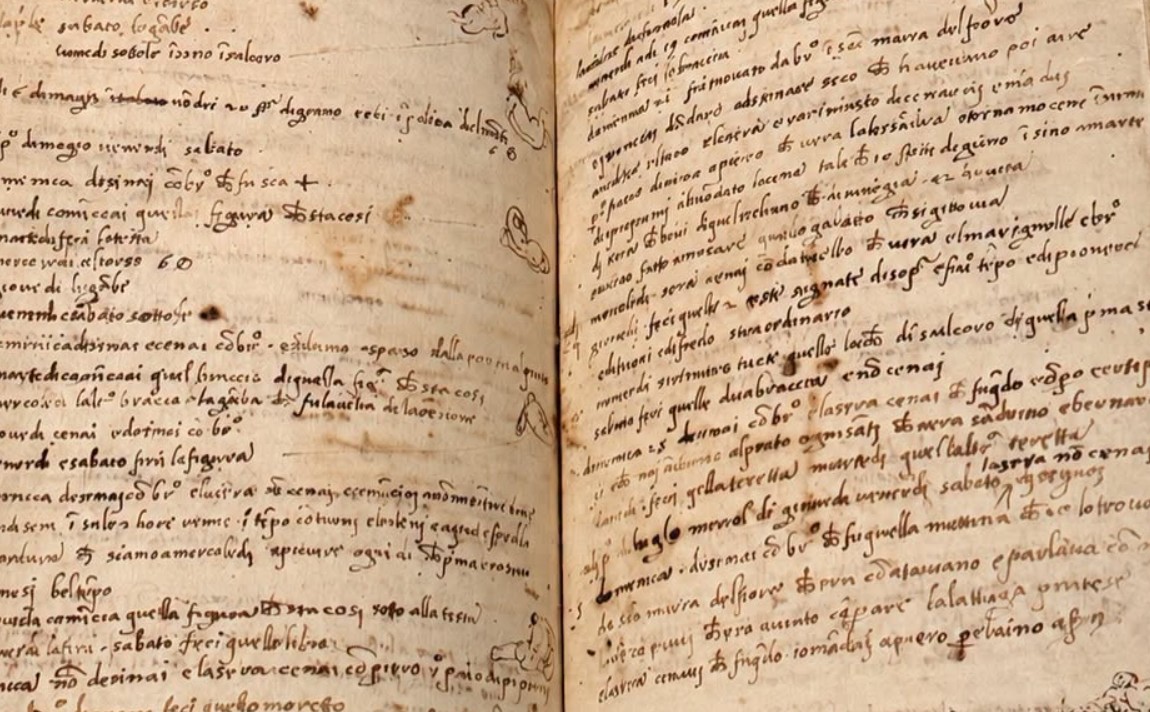
Che cosa mangiava Pontormo? Il curioso rapporto con la medicina del Cinquecento
Tra gli aspetti più curiosi del Libro mio ci sono le annotazioni dedicate al cibo e alle condizioni fisiche. Pontormo registra quello che mangia, descrive i propri disturbi e presta attenzione alle reazioni del corpo. Alcune note possono apparire insolite al lettore moderno, soprattutto quando scendono in particolari molto personali.
Per lungo tempo, questo genere di annotazioni ha contribuito a costruire l’immagine di un pittore eccentrico, inquieto e poco incline alla vita sociale. E’ necessario però leggere il diario attraverso la cultura medica del Cinquecento per capirlo.
La medicina dell’epoca era ancora fortemente influenzata dalla teoria degli umori, secondo la quale la salute dipendeva dall’equilibrio tra i diversi elementi del corpo. L’alimentazione, le abitudini quotidiane e l’osservazione dei sintomi erano considerate importanti per conservare o ristabilire tale equilibrio.
Pontormo cercava informazioni e consigli per affrontare i propri problemi fisici. Secondo l’interpretazione proposta dagli studiosi, potrebbe essersi servito anche di un liber sanitatis, un prontuario dedicato alla salute, copiando nel suo taccuino alcune indicazioni utili.
Le annotazioni sui pasti e sui malesseri acquistano così un significato diverso lette alla luce delle conoscenze mediche e delle pratiche di autocura del suo tempo.
Bronzino, l’allievo e amico che gli fu vicino
Nel Libro mio compare anche Agnolo Bronzino, pittore legato a Pontormo da un rapporto artistico e personale di grande importanza.
Bronzino era stato suo allievo e aveva condiviso con lui una parte significativa della propria formazione. Il loro legame emerge dalle testimonianze sulla loro attività e trova nel diario un riscontro particolarmente concreto: quando Pontormo si ferisce nel gennaio 1554, trascorre alcuni giorni proprio a casa di Bronzino.
Non ci racconta ogni aspetto della loro amicizia e non permette di ricostruirne con certezza tutte le dinamiche; mostra, tuttavia, che il rapporto non si esauriva nell’insegnamento o nella collaborazione artistica.
Nelle pagine del taccuino, Bronzino appartiene alla vita reale di Pontormo, quella che si svolge fuori dalle chiese, dalle committenze e dai luoghi in cui le opere vengono ammirate.
Gli affreschi di San Lorenzo: il grande lavoro che occupava le sue giornate
L’artista era impegnato nella decorazione del coro della basilica di San Lorenzo a Firenze, uno dei progetti più ambiziosi della sua carriera. Le annotazioni documentano le fasi conclusive del ciclo, attraverso il quale Pontormo affrontò temi religiosi legati alla rivelazione del disegno divino e alle letture della Settimana Santa.
Tra gli episodi ricordati dagli studiosi figura la Resurrezione della carne, parte di un programma figurativo complesso, destinato a svilupparsi su grandi superfici e a coinvolgere numerose figure.
Le pareti da decorare erano estese, le composizioni affollate e ogni figura doveva trovare una collocazione coerente all’interno della scena.
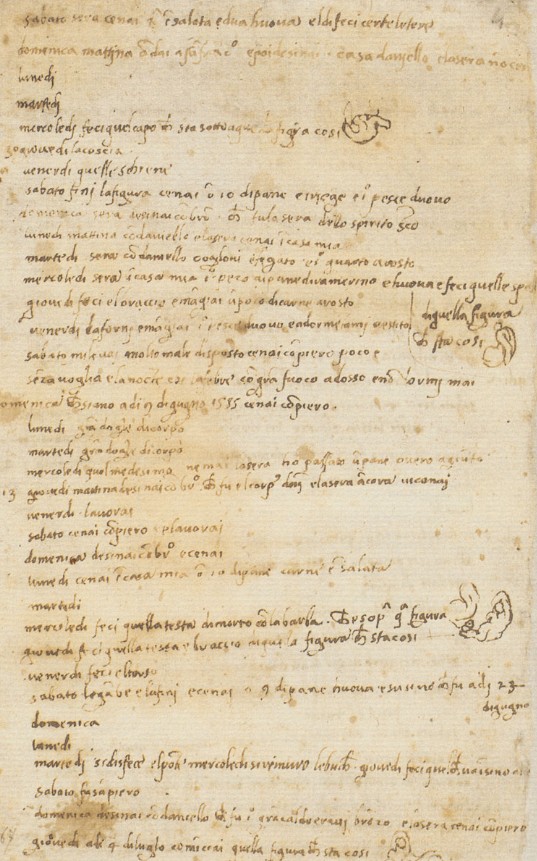
Le note del Libro mio mostrano quanto il pittore fosse concentrato sull’avanzamento del cantiere. In alcune occasioni registra di aver realizzato una determinata figura, accompagnando le parole con un piccolo schizzo.
Gli affreschi del coro purtroppo vennero distrutti nel Settecento. Il manoscritto conserva quindi una traccia preziosa di un progetto monumentale oggi perduto, contribuendo alla ricostruzione del lavoro svolto da Pontormo.

I piccoli disegni ai margini: schizzi di appena due centimetri
Ai margini di alcune pagine compaiono piccoli disegni a penna e inchiostro, figure singole o gruppi di due o tre personaggi, tracciati con pochi segni.
Alcuni sono lunghi appena due centimetri. Eppure, in quelle dimensioni ridotte, Pontormo riusciva a suggerire pose, movimenti e rapporti tra i corpi, affrontando problemi compositivi che avrebbero trovato sviluppo in opere di dimensioni molto maggiori.
Non si tratta semplicemente di decorazioni aggiunte per riempire gli spazi vuoti. Gli schizzi sono strettamente legati al suo modo di progettare le scene e, in diversi casi, agli affreschi che stava realizzando a San Lorenzo.
La scritta e il disegno permettono di mettere in relazione un appunto quotidiano con un particolare della composizione pittorica.
In un’altra pagina compare una figura reclinata, appoggiata a un grande volume. Altrove si riconosce un personaggio con un rotolo, oggetto che nell’arte religiosa poteva richiamare le Scritture e la relazione tra Antico e Nuovo Testamento.
Il Libro mio di Pontormo in mostra alle Scuderie del Quirinale a Roma
Il Libro mio di Pontormo si può ammirare oggi anche dal vivo grazie alla mostra dedicata all’artista in corso alle Scuderie del Quirinale, a Roma.
Per chi visita la mostra, il Libro mio rappresenta un’occasione preziosa per scoprire un lato meno conosciuto del maestro del Manierismo e osservare da vicino quelle pagine che, a distanza di quasi cinque secoli, continuano a raccontare la sua storia.
Per il momento il sempre vostro Michelangelo Buonarroti vi saluta dandovi appuntamento ai prossimi post e sui social.
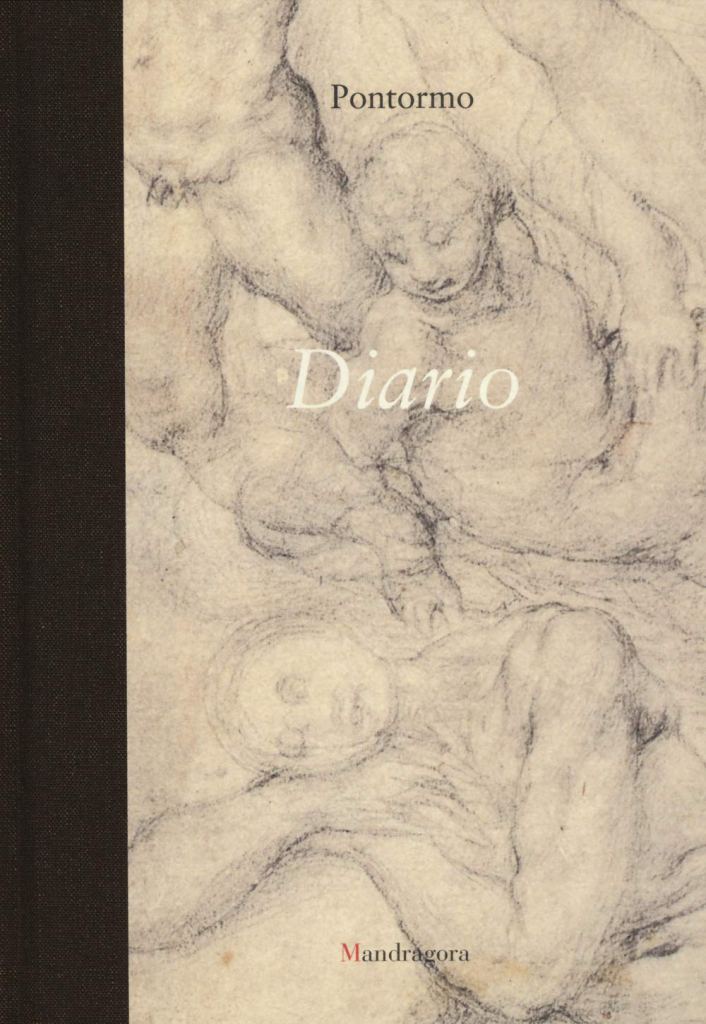
Pontormo, the painter’s secret diary: ailments, meals, and small sketches that chronicle his life
Pontormo recorded what he ate, the days he felt unwell, his meetings with friends, and even the progress of his frescoes. His Libro mio (“My Book”), written between 1554 and 1556, offers a remarkably intimate account of the final years of one of the most original painters of the sixteenth century.
This precious manuscript is currently on display as part of the monographic exhibition Pontormo at the Scuderie del Quirinale. The diary brings us face-to-face not only with the artist but also with the man—a man grappling with his own health and with a monumental undertaking that would define his career: the decoration of the choir in the church of San Lorenzo in Florence.
Hidden within these pages—written with no intention of being read by posterity—lies one of the most unique records of a Renaissance artist’s life.
Pontormo’s Libro mio: a manuscript that reveals the painter’s private life
The manuscript known as Il libro mio is held at the National Central Library of Florence, within the Fondo Magliabechiano. It is a small, handwritten notebook containing entries made between January 7, 1554, and October 18, 1556—just months before the painter’s death on January 1, 1557.
The document consists of 23 pages and bears little resemblance to the types of records one might expect to find among the papers of a Renaissance artist. It is neither a structured autobiography nor a treatise on painting, nor was it ever intended for publication. It is, rather, a collection of memories, notes, and jottings that Jacopo committed to paper to keep track of his daily life.
The entries mention friends, weather conditions, meals, health issues, news of the deaths of acquaintances, and updates regarding the construction site at San Lorenzo. Sometimes, a few words suffice to record an event; at other times, the artist includes a detail that allows us, today, to reconstruct a fragment of his existence.
The discovery of the manuscript in the nineteenth century came as a surprise precisely because of its deeply personal nature. The written records left by artists of that era were typically confined to account books, correspondence, or texts intended for a wider audience. Pontormo, by contrast, left us something different: a document that does not seek to construct a public image of the painter, but instead records life as it unfolds.
The fall of 1554 and the fear of failing to complete the work
One of the most significant pages in the diary begins with an episode that is far from glorious, yet profoundly human.
On January 7, 1554, Pontormo notes that he had a fall, injuring his shoulder and arm. He recounts staying at the home of his friend Bronzino for six days before returning to his own residence—though he continued to suffer from the injury for weeks afterward.
The painter writes with disarming simplicity. He records the accident, his stay with his friend, and the lingering nature of his ailment. Beneath this seemingly mundane entry, one can discern a serious concern.
At the time, Pontormo was working on the decoration of the choir in the church of San Lorenzo—a complex undertaking that demanded time, energy, and a remarkable capacity for organization. An injury threatened to disrupt the pace of his work, making it even more difficult to complete such a demanding commission. Health becomes a concrete, everyday matter, intertwined with the demands of his professional work.
What did Pontormo eat? His curious relationship with 16th-century medicine
Among the most intriguing aspects of his Libro mio (“My Book”) are the entries concerning food and physical condition. Pontormo records what he eats, describes his ailments, and pays close attention to his body’s reactions. Some of these notes may strike a modern reader as unusual, especially when they delve into highly personal details.
For a long time, such entries helped shape the image of Pontormo as an eccentric, restless painter with little inclination for social life. To truly understand the diary, however, one must view it through the lens of 16th-century medical culture.
Medicine at the time was still heavily influenced by the theory of the humors, which held that health depended on a balance between the various elements within the body. Diet, daily habits, and the observation of symptoms were all considered essential for maintaining or restoring this balance.
Pontormo sought information and advice to address his physical ailments. According to scholars, he may have consulted a liber sanitatis—a handbook on health—copying useful guidance into his own notebook.
Seen in the light of the medical knowledge of the era, his notes on meals and physical discomforts take on a different meaning medical knowledge and the self-care practices of his time.
Bronzino, the pupil and friend who remained close to him
Agnolo Bronzino—a painter bound to Pontormo by a deeply significant artistic and personal relationship—also appears in the Libro mio (“My Book”).
Bronzino had been his pupil, sharing a substantial part of his training with him. Their bond is evidenced by accounts of their professional activities and is further confirmed in the diary by a specific, tangible detail: when Pontormo sustained an injury in January 1554, he spent several days at Bronzino’s home.
While the diary does not reveal every facet of their friendship—nor does it allow for a definitive reconstruction of all its dynamics—it clearly demonstrates that their connection extended well beyond mere instruction or artistic collaboration.
Within the pages of this notebook, Bronzino emerges as part of Pontormo’s real life—a life lived outside of churches, away from the demands of patrons, and beyond the spaces where his works were ultimately displayed and admired.
The frescoes at San Lorenzo: the monumental undertaking that consumed his days
The artist was engaged in decorating the choir of the Basilica of San Lorenzo in Florence—one of the most ambitious projects of his entire career. His entries document the final stages of this cycle, through which Pontormo explored religious themes concerning the revelation of the divine plan and the liturgical readings of Holy Week.
Among the episodes noted by scholars is the Resurrection of the Flesh, a component of a complex iconographic program designed to span vast surfaces and incorporate a multitude of figures.
The walls to be decorated were expansive, the compositions crowded, and every single figure had to be placed coherently within the overall scene.
The notes in the Libro mio reveal just how intensely focused the painter was on the progress of the work at the site. On several occasions, he notes having created a specific figure, accompanying his words with a small sketch.
The frescoes in the choir were, unfortunately, destroyed in the eighteenth century. The manuscript thus preserves a precious trace of a monumental project that is now lost, contributing to the reconstruction of the work carried out by Pontormo.
Small drawings in the margins: sketches measuring barely two centimeters
In the margins of certain pages, one finds small pen-and-ink drawings—individual figures or groups of two or three characters—rendered with just a few strokes.
Some are barely two centimeters long. Yet, within such a tiny scale, Pontormo managed to suggest poses, movements, and the relationships between bodies, addressing compositional challenges that would later be developed in works of a much larger scale.
These are not merely decorative elements added to fill empty space. The sketches are intrinsically linked to his method of planning scenes and, in several instances, to the frescoes he was creating at San Lorenzo.
The text and the drawings allow us to connect a casual, everyday note to a specific detail within a painted composition.
On another page, there appears a reclining figure leaning against a large volume. Elsewhere, one can identify a character holding a scroll—an object that, in religious art, could signify the Scriptures and the connection between the Old and New Testaments.
Pontormo’s Libro mio on display at the Scuderie del Quirinale in Rome
Today, Pontormo’s Libro mio can also be viewed in person, thanks to an exhibition dedicated to the artist currently being held at the Scuderie del Quirinale in Rome.
For those visiting the exhibition, the Libro mio offers a valuable opportunity to discover a lesser-known side of this master of Mannerism and to examine, up close, pages that—nearly five centuries later—continue to tell his story. For now, yours truly, Michelangelo Buonarroti, bids you farewell—see you in future posts and on social media.
Sostienici – Support Us
Se questo blog ti piace e ti appassiona, puoi aiutarci a farlo crescere sempre più sostenendoci in modo concreto condividendo i post, seguendo le pagine social e con un contributo che ci aiuta ad andare avanti con il nostro lavoro di divulgazione. . ENGLISH: If you like and are passionate about this blog, you can help us make it grow more and more by supporting us in a concrete way by sharing posts, following social pages and with a contribution that helps us to move forward with our dissemination work.
10,00 €
Condividi:


Questo sono io



sostienici
Sostienici - Support Us
Se questo blog ti piace e ti appassiona, puoi aiutarci a farlo crescere sempre più sostenendoci in modo concreto condividendo i post, seguendo le pagine social e con un contributo che ci aiuta ad andare avanti con il nostro lavoro di divulgazione. . ENGLISH: If you like and are passionate about this blog, you can help us make it grow more and more by supporting us in a concrete way by sharing posts, following social pages and with a contribution that helps us to move forward with our dissemination work.
€10,00


