
Ercole Ferrata: il grande scultore che lavorò accanto a Bernini
Nel Seicento, quando Roma si trasformò in uno straordinario teatro di marmi, monumenti e decorazioni capaci di stupire fedeli e visitatori, Gian Lorenzo Bernini divenne il protagonista indiscusso della scultura barocca. Ma dietro i grandi cantieri della città papale lavorarono anche artisti di talento, capaci di tradurre in marmo le idee dei maestri e di lasciare un segno personale nella storia dell’arte.
Fra questi c’è Ercole Ferrata, scultore lombardo che collaborò con Bernini e Alessandro Algardi, due figure centrali della scultura del Seicento, pur così diverse per sensibilità e linguaggio artistico.
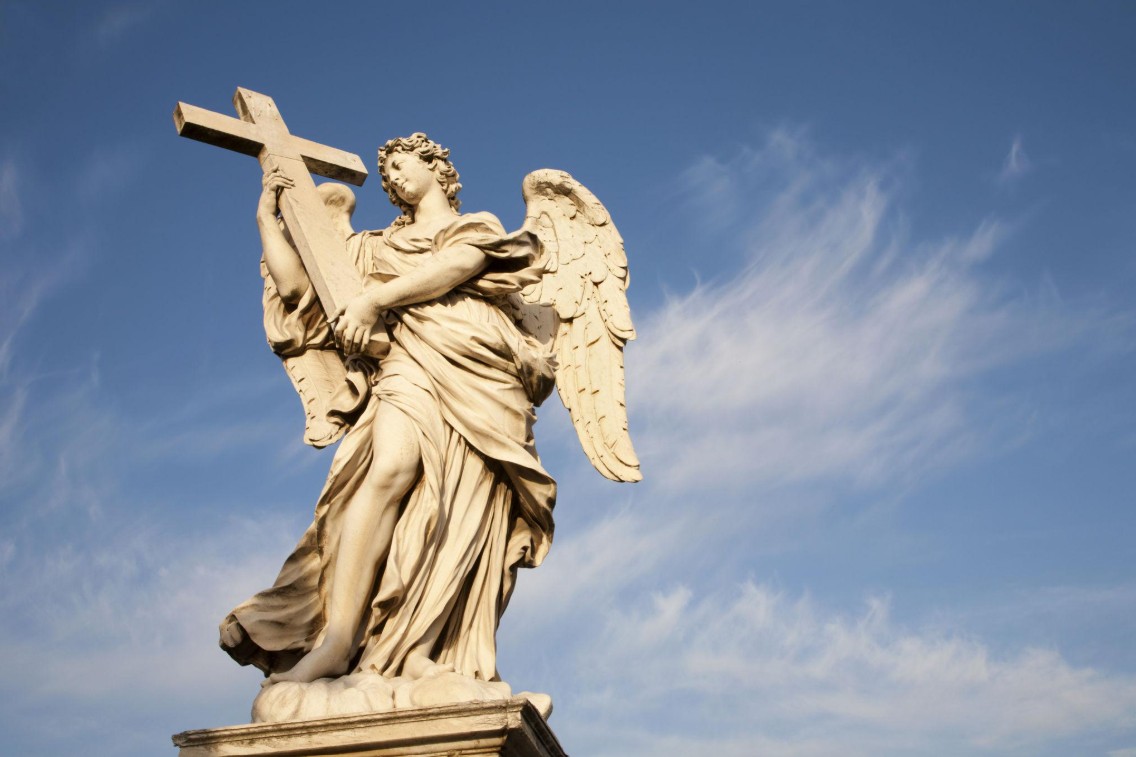
La sua storia passa attraverso alcune delle chiese e delle piazze più celebri di Roma: dall’Angelo con la Croce di Ponte Sant’Angelo alla Sant’Agnese tra le fiamme nella chiesa di Sant’Agnese in Agone, fino all’elefante che sorregge l’obelisco davanti a Santa Maria sopra Minerva. Opere che permettono di scoprire un artista spesso ricordato soprattutto per i suoi rapporti con Bernini, ma che ebbe un ruolo importante nella formazione della scultura romana della seconda metà del Seicento.
Chi era Ercole Ferrata, lo scultore lombardo arrivato a Roma
Ercole Ferrata nacque nel 1610 a Pellio Inferiore, nell’attuale territorio della Valle Intelvi, in Lombardia. La sua formazione si sviluppò attraverso esperienze diverse, in un’epoca in cui gli scultori si spostavano da una città all’altra alla ricerca di maestri, commissioni e occasioni per affermarsi.
Da giovane lavorò a Genova nella bottega di Tommaso Orsolino, per poi trasferirsi a Napoli, dove entrò in contatto con un ambiente artistico particolarmente vivace. Qui maturò un’esperienza fondamentale per la sua crescita professionale, prima di raggiungere Roma nel 1647 e inserirsi nel mondo delle grandi commissioni pontificie.
La capitale dello Stato della Chiesa offriva opportunità straordinarie. Papi, cardinali e famiglie aristocratiche commissionavano monumenti funebri, altari, decorazioni e sculture destinate a trasformare chiese e spazi pubblici. Per uno scultore preparato e ambizioso come Ferrata, arrivare a Roma significava entrare nel cuore della produzione artistica europea.
Fu proprio qui che il suo percorso si intrecciò con quello di Bernini e di Alessandro Algardi, due maestri che rappresentavano modi differenti di interpretare la scultura barocca.
Ercole Ferrata e Bernini: una collaborazione nel cuore del Barocco
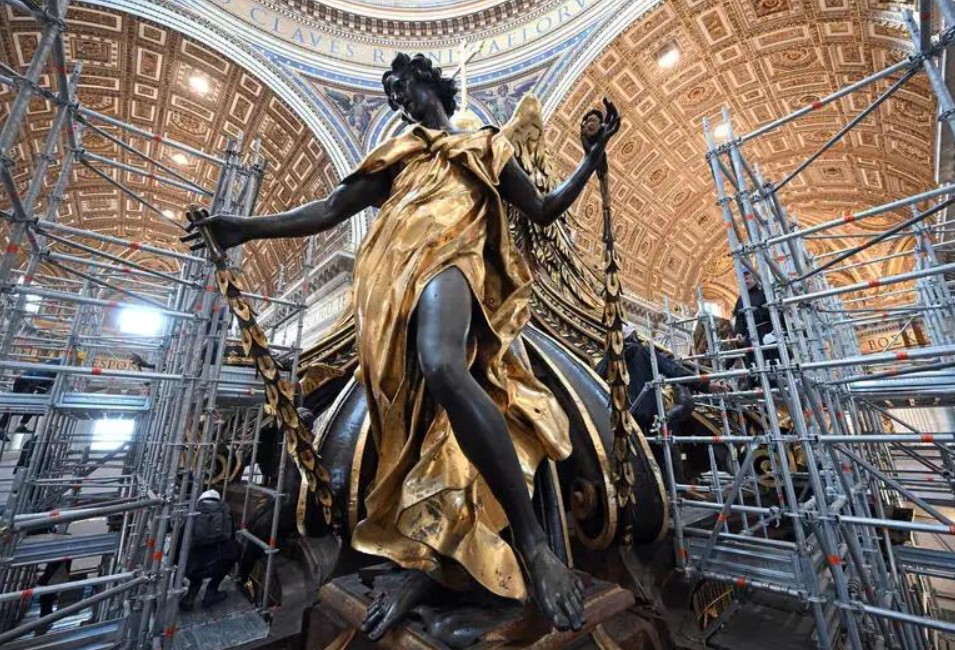
Quando Ferrata arrivò a Roma, Bernini era già un artista affermato e lavorava a importanti imprese per la basilica di San Pietro. La sua bottega non era soltanto un luogo di produzione: era un centro organizzativo complesso, nel quale disegni, modelli e indicazioni del maestro venivano tradotti nel marmo da collaboratori dotati di competenze specifiche.
Ferrata riuscì a entrare in questo ambiente grazie alle proprie capacità tecniche. Secondo la ricostruzione biografica riportata da Filippo Baldinucci, Bernini gli affidò inizialmente un modello per una delle figure destinate alla decorazione dei pilastri di San Pietro. Il risultato fu apprezzato e lo scultore ricevette incarichi per proseguire il lavoro.
Questa collaborazione gli permise di confrontarsi con un linguaggio artistico fondato sul movimento, sulla teatralità e sulla capacità di rendere il marmo sorprendentemente vivo. Nelle opere di Bernini, i panneggi sembrano agitarsi, i gesti interrompono la quiete della materia e i volti comunicano emozioni immediate. Ferrata assimilò alcuni di questi elementi, senza però rinunciare del tutto alla compostezza e all’equilibrio che aveva maturato attraverso altri incontri artistici.
Il rapporto con Bernini fu anche un’occasione di confronto che contribuì a definire il linguaggio di Ferrata e a consolidarne la posizione nel panorama artistico romano.
La Sant’Agnese tra le fiamme: il marmo diventa racconto
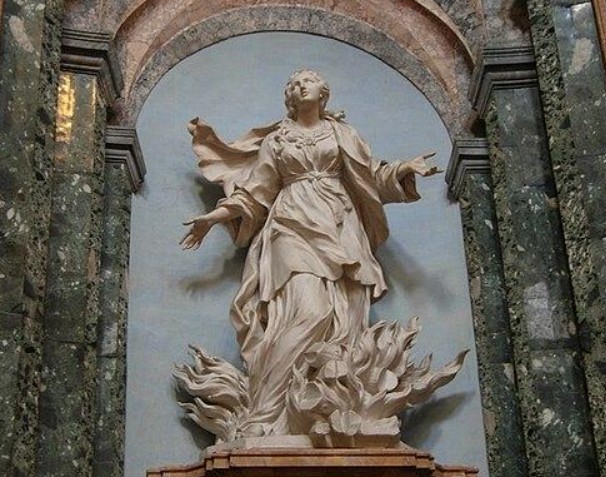
Fra le opere più interessanti per comprendere l’arte di Ercole Ferrata c’è la Sant’Agnese tra le fiamme, conservata nella chiesa di Sant’Agnese in Agone, a piazza Navona, uno dei luoghi simbolo del Barocco romano.
L’opera rappresenta la giovane martire cristiana, che secondo la tradizione fu sottoposta al supplizio del fuoco senza esserne consumata. Ferrata affronta un soggetto che richiede di tenere insieme la drammaticità dell’episodio e la dignità spirituale della protagonista.
Il marmo non è chiamato soltanto a riprodurre una figura: deve raccontare una vicenda, suggerire il pericolo e rendere percepibile la forza della fede. Il movimento dei panneggi e l’organizzazione della composizione contribuiscono a dare energia alla scena, mentre la figura della santa conserva una presenza distinta rispetto al tumulto che la circonda.
In quest’opera si riconoscono bene le tensioni che attraversano la scultura romana del Seicento. Da una parte c’è il desiderio barocco di coinvolgere emotivamente chi guarda; dall’altra rimane l’esigenza di mantenere una struttura ordinata e una bellezza idealizzata.
L’Angelo con la Croce: una delle opere più note di Ercole Ferrata
Camminando lungo Ponte Sant’Angelo, a Roma, si incontrano gli angeli che accompagnano il percorso verso Castel Sant’Angelo. Sono figure diventate parte integrante del paesaggio urbano, ma dietro ciascuna di esse si nasconde una storia fatta di progetti, collaborazioni e interpretazioni artistiche.
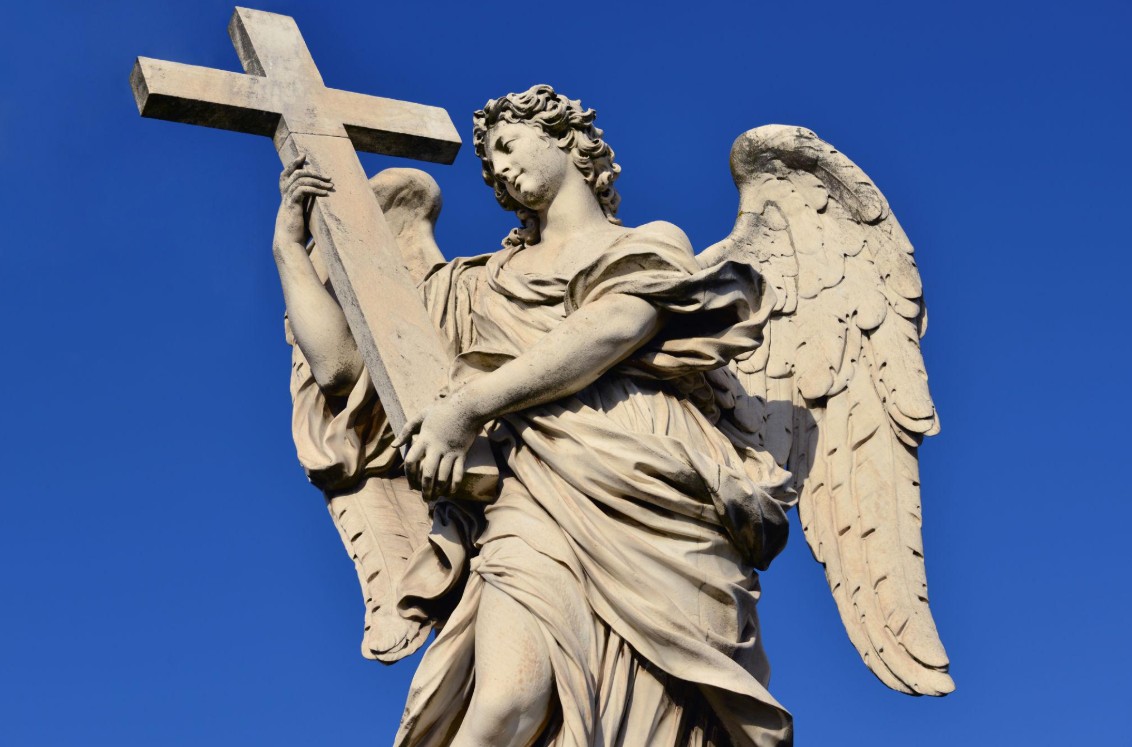
Fra queste sculture si trova l’Angelo con la Croce di Ercole Ferrata, realizzato seguendo il progetto di Bernini e collocato sul ponte nel 1669.
L’angelo porta lo strumento della Passione di Cristo e trasforma un simbolo religioso in una presenza monumentale. La figura è animata dal movimento del panneggio, che attraversa il corpo con pieghe fitte e ritmate, mentre la croce diventa il centro visivo e spirituale della composizione.
Il progetto apparteneva a Bernini, che aveva ideato il programma complessivo degli angeli destinati al ponte. Ferrata si confrontò quindi con un’invenzione altrui, traducendola in una scultura capace di dialogare con le altre figure del percorso.
È un esempio significativo di come funzionassero i grandi cantieri del Seicento: l’idea poteva nascere nella mente di un artista, ma la sua realizzazione richiedeva esperienza tecnica, conoscenza dei materiali e una straordinaria capacità di lavorare all’interno di un progetto condiviso.
L’angelo permette anche di comprendere una caratteristica del linguaggio di Ferrata. Pur aderendo alle indicazioni berniniane, lo scultore tende a rendere il movimento più controllato e le pieghe del panneggio più regolari, attenuando parte dell’energia impetuosa tipica del maestro.

L’elefante della Minerva: quando la scultura incontra l’ingegno
C’è un’altra opera che permette di avvicinarsi al mondo di Ercole Ferrata, anche se molti visitatori la conoscono senza sapere chi contribuì a realizzarla: l’elefante che sorregge un obelisco in piazza della Minerva, davanti alla basilica di Santa Maria sopra Minerva.
Il monumento, inaugurato nel 1667, è uno degli angoli più curiosi di Roma. Un piccolo elefante in marmo sostiene un obelisco egizio, creando un contrasto fra il peso apparente del monumento e la figura dell’animale, che sembra avanzare con naturalezza sulla piazza.
Il progetto è legato a Bernini, mentre l’esecuzione dell’elefante è attribuita a Ferrata. L’insieme unisce l’interesse seicentesco per l’antichità, il gusto per la meraviglia e la capacità di trasformare un problema architettonico in un’immagine memorabile.
Non si tratta soltanto di un’opera decorativa. L’elefante è anche una soluzione ingegnosa per sostenere l’obelisco, inserendolo in uno spazio urbano nel quale il monumento diventa un punto di riferimento visivo.

Per Ferrata, questo lavoro rappresenta un altro importante incontro con il linguaggio berniniano: un incarico nel quale la precisione esecutiva doveva essere accompagnata dalla capacità di dare forma a un’immagine immediatamente riconoscibile.
Oggi il monumento è conosciuto anche come Pulcino della Minerva, un soprannome popolare che rende ancora più familiare questa piccola meraviglia del Barocco romano.
Ercole Ferrata e Alessandro Algardi: l’altra anima della scultura barocca
Se il nome di Ferrata viene spesso associato a Bernini, il rapporto con Alessandro Algardi è altrettanto importante per comprendere la sua formazione.
Algardi rappresentava un orientamento diverso rispetto al dinamismo più spettacolare del Barocco berniniano. Nelle sue opere, la composizione tende a privilegiare l’equilibrio, la chiarezza narrativa e una monumentalità più composta, legata anche alla tradizione classica.
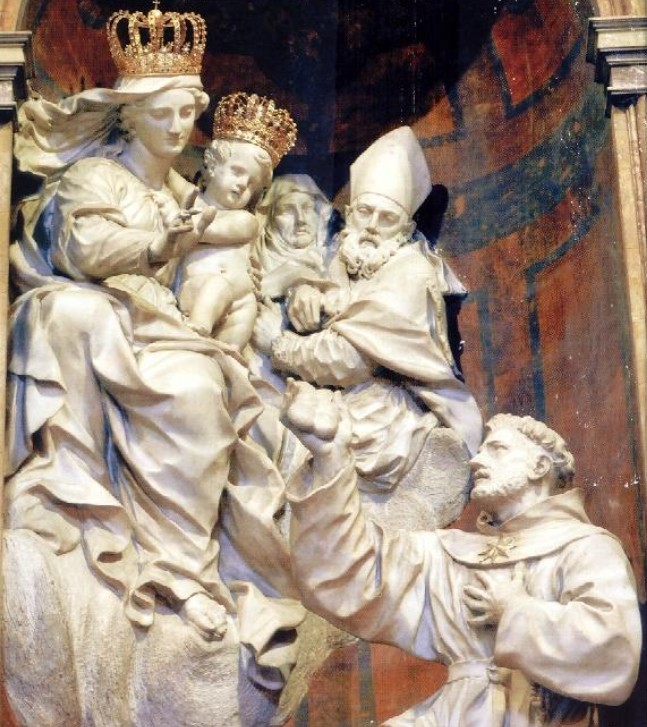
Ferrata frequentò il suo ambiente e collaborò a opere destinate a importanti edifici religiosi. Tra queste si ricorda il cantiere di San Nicola da Tolentino agli Orti Sallustiani, nel quale lavorò insieme ad altri scultori seguendo il progetto di Algardi.
Dopo la morte di quest’ultimo, avvenuta nel 1654, Ferrata divenne una figura di riferimento per quella componente della scultura romana che cercava un punto d’incontro fra il classicismo e le innovazioni del Barocco.
Questa doppia esperienza è essenziale. Ferrata imitava Bernini: si formò in un ambiente nel quale convivevano orientamenti differenti e sviluppò la capacità di adattare il proprio linguaggio alle esigenze delle commissioni.
La sua scultura può così apparire più misurata rispetto alle invenzioni più teatrali di Bernini, ma proprio questa caratteristica contribuì a renderlo un professionista richiesto in un panorama artistico nel quale i grandi progetti coinvolgevano spesso più artisti.
La bottega di Ercole Ferrata: lo scultore che formò una generazione
Il contributo di Ercole Ferrata alla storia dell’arte non si esaurisce nelle opere che possiamo ammirare nelle chiese e nelle piazze di Roma. Una parte fondamentale della sua eredità riguarda l’attività della sua bottega.
A partire dagli anni Cinquanta del Seicento, lo scultore costruì una struttura di lavoro molto attiva, nella quale si formarono giovani artisti e collaboratori. La bottega non era soltanto un luogo in cui si lavorava il marmo: era uno spazio di apprendimento, confronto e trasmissione di competenze.
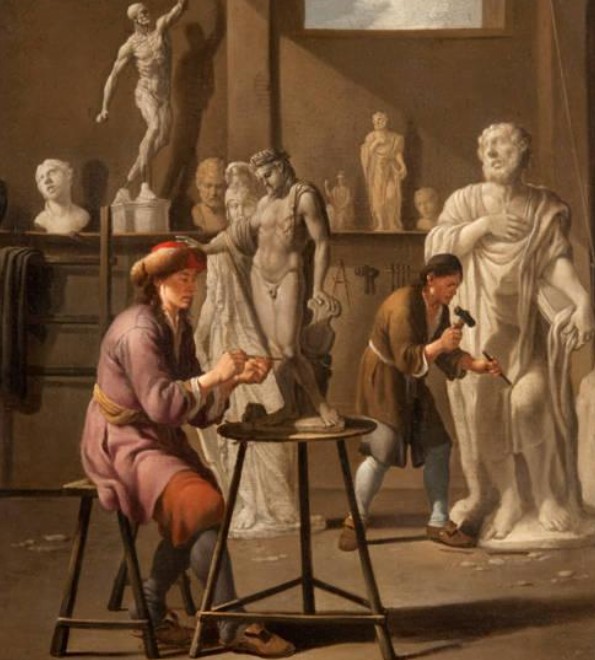
Fra gli scultori passati nel suo ambiente si ricorda Melchiorre Cafà, artista di grande talento la cui carriera fu interrotta dalla morte prematura. La storia dei rapporti fra i due mostra quanto fossero stretti i legami fra gli scultori del Seicento e quanto spesso le opere nascessero da collaborazioni, completamenti e interventi successivi.
Ferrata seppe inserirsi in questa rete artistica, diventando un punto di riferimento per la generazione che avrebbe proseguito la tradizione della scultura romana nella seconda metà del secolo.
Nel 1666 fu eletto principe dell’Accademia di San Luca, riconoscimento che testimonia il prestigio raggiunto nella comunità artistica. Negli anni successivi continuò a ricevere commissioni importanti, lavorando per chiese, monumenti e committenti di alto rango.
Morì a Roma il 10 luglio 1686, dopo una carriera che lo aveva portato dalle prime esperienze in area lombarda ai grandi cantieri della capitale pontificia.
Ercole Ferrata è uno di quegli artisti che aiutano a guardare il Seicento con occhi diversi. La storia dell’arte tende spesso a concentrarsi sui grandi protagonisti, e Bernini occupa senza dubbio un posto centrale nel racconto del Barocco. Ma osservare il lavoro dei suoi collaboratori permette di capire meglio come venivano realizzate le opere, quali competenze richiedessero e quanto fosse articolata la vita artistica dell’epoca.
Per il momento il sempre vostro Michelangelo Buonarroti vi saluta dandovi appuntamento ai prossimi post e sui social.
Ercole Ferrata: The Great Sculptor Who Worked Alongside Bernini
In the seventeenth century, as Rome transformed into an extraordinary theater of marble, monuments, and decorations designed to awe the faithful and visitors alike, Gian Lorenzo Bernini emerged as the undisputed protagonist of Baroque sculpture. Yet, behind the grand construction projects of the Papal city, other talented artists were also at work—men capable of translating the ideas of the masters into marble and leaving their own distinct mark on the history of art.
Among them was Ercole Ferrata, a sculptor from Lombardy who collaborated with both Bernini and Alessandro Algardi—two central figures in seventeenth-century sculpture, despite their vastly different sensibilities and artistic languages.
His story unfolds across some of Rome’s most celebrated churches and squares: from the Angel with the Cross on the Ponte Sant’Angelo to the Saint Agnes in the Flames in the church of Sant’Agnese in Agone, and the elephant supporting an obelisk in front of Santa Maria sopra Minerva. These works reveal an artist who, while often remembered primarily for his association with Bernini, played a significant role in shaping Roman sculpture during the second half of the seventeenth century.
Who Was Ercole Ferrata, the Lombard Sculptor Who Came to Rome?
Ercole Ferrata was born in 1610 in Pellio Inferiore, in what is now the Valle Intelvi region of Lombardy. His artistic training was shaped by a variety of experiences—typical of an era when sculptors frequently traveled from city to city in search of mentors, commissions, and opportunities to establish their reputations.
As a young man, he worked in Genoa in the studio of Tommaso Orsolino, before moving on to Naples, where he encountered a particularly vibrant artistic environment. It was here that he gained experience fundamental to his professional development, before arriving in Rome in 1647 and becoming involved in the world of major papal commissions.
The capital of the Papal States offered extraordinary opportunities. Popes, cardinals, and aristocratic families commissioned funerary monuments, altars, decorations, and sculptures intended to transform churches and public spaces. For a skilled and ambitious sculptor like Ferrata, arriving in Rome meant entering the very heart of European artistic production.
It was here that his path intersected with those of Bernini and Alessandro Algardi—two masters who represented distinct approaches to Baroque sculpture.
Ercole Ferrata and Bernini: A Collaboration at the Heart of the Baroque
When Ferrata arrived in Rome, Bernini was already an established artist, working on major projects for St. Peter’s Basilica. His workshop was more than just a place of production; it was a complex organizational hub where the master’s drawings, models, and instructions were translated into marble by collaborators with specialized expertise.
Ferrata managed to enter this environment thanks to his own technical proficiency. According to the biographical account provided by Filippo Baldinucci, Bernini initially entrusted him with a model for one of the figures intended to decorate the piers of St. Peter’s. The result was well-received, and the sculptor was subsequently commissioned to continue the work.
This collaboration allowed him to engage with an artistic language rooted in movement, theatricality, and the ability to make marble appear startlingly alive. In Bernini’s works, drapery seems to stir, gestures disrupt the stillness of the material, and faces convey immediate emotion. Ferrata absorbed some of these elements, while still retaining the sense of composure and balance he had cultivated through other artistic influences. The relationship with Bernini, therefore, should not be viewed merely as that between a great master and an executor. It was also an opportunity for exchange, which helped define Ferrata’s artistic language and solidify his standing within the Roman art scene.
Saint Agnes in the Flames: Marble as Narrative
Among the works most revealing of Ercole Ferrata’s art is Saint Agnes in the Flames, housed in the church of Sant’Agnese in Agone in Piazza Navona—one of the iconic sites of Roman Baroque.
The piece depicts the young Christian martyr who, according to tradition, was subjected to the ordeal of fire yet remained unconsumed. Ferrata tackles a subject that demands a balance between the drama of the event and the spiritual dignity of the protagonist.
Here, marble is tasked with more than just reproducing a figure; it must narrate a story, evoke danger, and make the power of faith palpable. The movement of the drapery and the composition’s arrangement infuse the scene with energy, while the figure of the saint maintains a distinct presence amidst the surrounding tumult.
This work clearly reflects the tensions that permeated seventeenth-century Roman sculpture. On one hand, there is the Baroque desire to engage the viewer emotionally for the viewer; at the same time, there remains a need to maintain an orderly structure and an idealized beauty.
The commission for Sant’Agnese in Agone further confirms the prestige attained by the sculptor, who by then was involved in some of the most significant religious building projects in the capital.
The Angel with the Cross: one of Ercole Ferrata’s best-known works
As one walks along the Ponte Sant’Angelo in Rome, one encounters the angels that line the path toward Castel Sant’Angelo. These figures have become an integral part of the urban landscape, yet behind each one lies a history of designs, collaborations, and artistic interpretations.
Among these sculptures is the Angel with the Cross by Ercole Ferrata, created based on a design by Bernini and placed on the bridge in 1669.
The angel carries an instrument of the Passion of Christ, transforming a religious symbol into a monumental presence. The figure is enlivened by the movement of its drapery, which sweeps across the body in dense, rhythmic folds, while the cross serves as the visual and spiritual focal point of the composition.
The design originated with Bernini, who conceived the overall program for the angels intended for the bridge. Ferrata thus engaged with another artist’s invention, translating it into a sculpture that enters into a dialogue with the other figures along the path.
This serves as a significant example of how major seventeenth-century artistic projects functioned: an idea might originate in the mind of one artist, but its realization required technical expertise, a deep knowledge of materials, and an extraordinary ability to work within a collaborative framework.
The angel also sheds light on a specific characteristic of Ferrata’s artistic language. While adhering to Bernini’s directives, the sculptor tends to render the movement more controlled and the folds of the drapery more regular, tempering some of the impetuous energy typical of the master.
The Minerva Elephant: Where Sculpture Meets Ingenuity
There is another work that offers a glimpse into the world of Ercole Ferrata—though many visitors encounter it without knowing who helped bring it to life: the elephant supporting an obelisk in Piazza della Minerva, in front of the Basilica of Santa Maria sopra Minerva.
Unveiled in 1667, this monument marks one of the most curious corners of Rome. A small marble elephant bears an Egyptian obelisk, creating a striking contrast between the apparent weight of the monument and the figure of the animal, which appears to move across the piazza with natural ease.
While the project is associated with Bernini, the execution of the elephant is attributed to Ferrata. The composition brings together the 17th-century fascination with antiquity, a taste for the marvelous, and the ability to transform an architectural challenge into an unforgettable image.
This is more than just a decorative piece; the elephant serves as an ingenious structural solution for supporting the obelisk, integrating it into an urban space where the monument becomes a distinct visual landmark.
For Ferrata, this project represented another significant engagement with the Berninian style—a commission that demanded both technical precision and the capacity to craft an instantly recognizable image.
Today, the monument is also known as the Pulcino della Minerva (“Minerva’s Chick”)—a popular nickname that lends an even more intimate, familiar quality to this small marvel of Roman Baroque art.
Ercole Ferrata and Alessandro Algardi: The Other Side of Baroque Sculpture
Although Ferrata’s name is frequently linked to Bernini, his relationship with Alessandro Algardi is equally vital to understanding his artistic development.
Algardi represented an approach distinct from the more dramatic, high-energy dynamism characteristic of Bernini’s Baroque style. In his works, the composition tends to favor balance, narrative clarity, and a more composed sense of monumentality—qualities also rooted in the classical tradition.
Ferrata moved within this milieu and collaborated on projects for significant religious buildings. Notable among these is the work at the church of San Nicola da Tolentino agli Orti Sallustiani, where he labored alongside other sculptors, following a design by Algardi.
Following Algardi’s death in 1654, Ferrata emerged as a key figure for that segment of Roman sculpture which sought to bridge the gap between classicism and the innovations of the Baroque.
This dual background is essential. Ferrata was not merely an artist who imitated Bernini; rather, he trained in an environment where diverse artistic approaches coexisted, and he developed the ability to adapt his own visual language to the specific requirements of his commissions.
Consequently, his sculpture may appear more restrained than the highly theatrical inventions of Bernini—yet it was precisely this quality that made him a sought-after professional in an artistic landscape where major projects frequently involved multiple artists.
The workshop of Ercole Ferrata: the sculptor who shaped a generation
Ercole Ferrata’s contribution to the history of art is not limited to the works we can admire in the churches and squares of Rome. A fundamental part of its legacy lies in the activity of the artist’s workshop.
Beginning in the 1650s, the sculptor established a highly active working environment, where young artists and collaborators received their training. The workshop was more than just a place for carving marble; it was a space for learning, exchanging ideas, and passing on technical skills.
Among the sculptors who spent time in his circle was Melchiorre Cafà—a remarkably talented artist whose career was cut short by an untimely death. The history of the relationship between the two reveals just how close the ties were among seventeenth-century sculptors, and how frequently works emerged from collaborations, completions, or subsequent interventions.
Ferrata successfully integrated himself into this artistic network, becoming a key figure for the generation that would carry on the tradition of Roman sculpture throughout the second half of the century.
In 1666, he was elected principe (president) of the Accademia di San Luca—an honor that testifies to the prestige he had attained within the artistic community. In the years that followed, he continued to receive significant commissions, working for churches, monuments, and high-ranking patrons.
He died in Rome on July 10, 1686, following a career that had taken him from his early experiences in the Lombardy region to the major building projects of the papal capital.
Ercole Ferrata is one of those artists who help us view the seventeenth century through a different lens. Art history often tends to focus on the major protagonists—and Bernini, without question, occupies a central place in the narrative of the Baroque. Yet, examining the work of his collaborators offers a deeper understanding of how these pieces were created, the skills they demanded, and the complex, multifaceted nature of artistic life during that era.
For now, yours truly, Michelangelo Buonarroti, bids you farewell—see you in future posts and on social media.
Sostienici – Support Us
Se questo blog ti piace e ti appassiona, puoi aiutarci a farlo crescere sempre più sostenendoci in modo concreto condividendo i post, seguendo le pagine social e con un contributo che ci aiuta ad andare avanti con il nostro lavoro di divulgazione. . ENGLISH: If you like and are passionate about this blog, you can help us make it grow more and more by supporting us in a concrete way by sharing posts, following social pages and with a contribution that helps us to move forward with our dissemination work.
10,00 €
Condividi:


Questo sono io



sostienici
Sostienici - Support Us
Se questo blog ti piace e ti appassiona, puoi aiutarci a farlo crescere sempre più sostenendoci in modo concreto condividendo i post, seguendo le pagine social e con un contributo che ci aiuta ad andare avanti con il nostro lavoro di divulgazione. . ENGLISH: If you like and are passionate about this blog, you can help us make it grow more and more by supporting us in a concrete way by sharing posts, following social pages and with a contribution that helps us to move forward with our dissemination work.
€10,00


