
Il ritratto enigmatico di Petrus Christus
Non conosciamo il suo nome e non sappiamo quale storia si nasconda dietro quel volto ma la giovane ritratta da Petrus Christus sembra abbia ancora qualcosa da dirci.
Dipinta intorno al 1470, è una delle immagini più affascinanti della pittura fiamminga del Quattrocento.
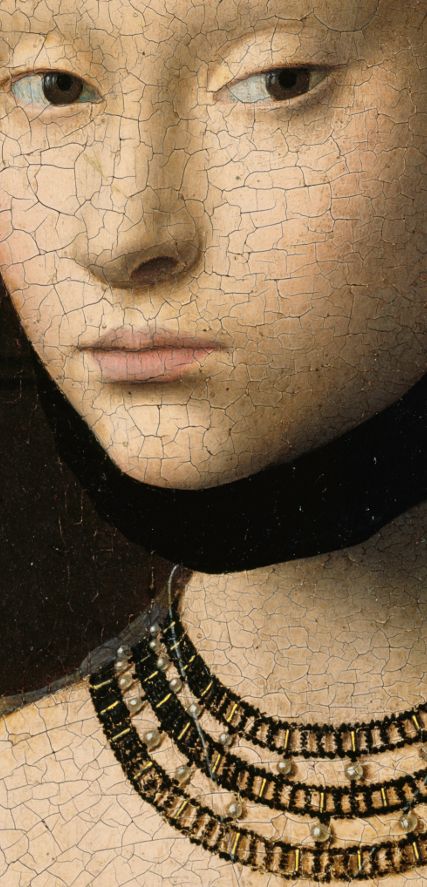
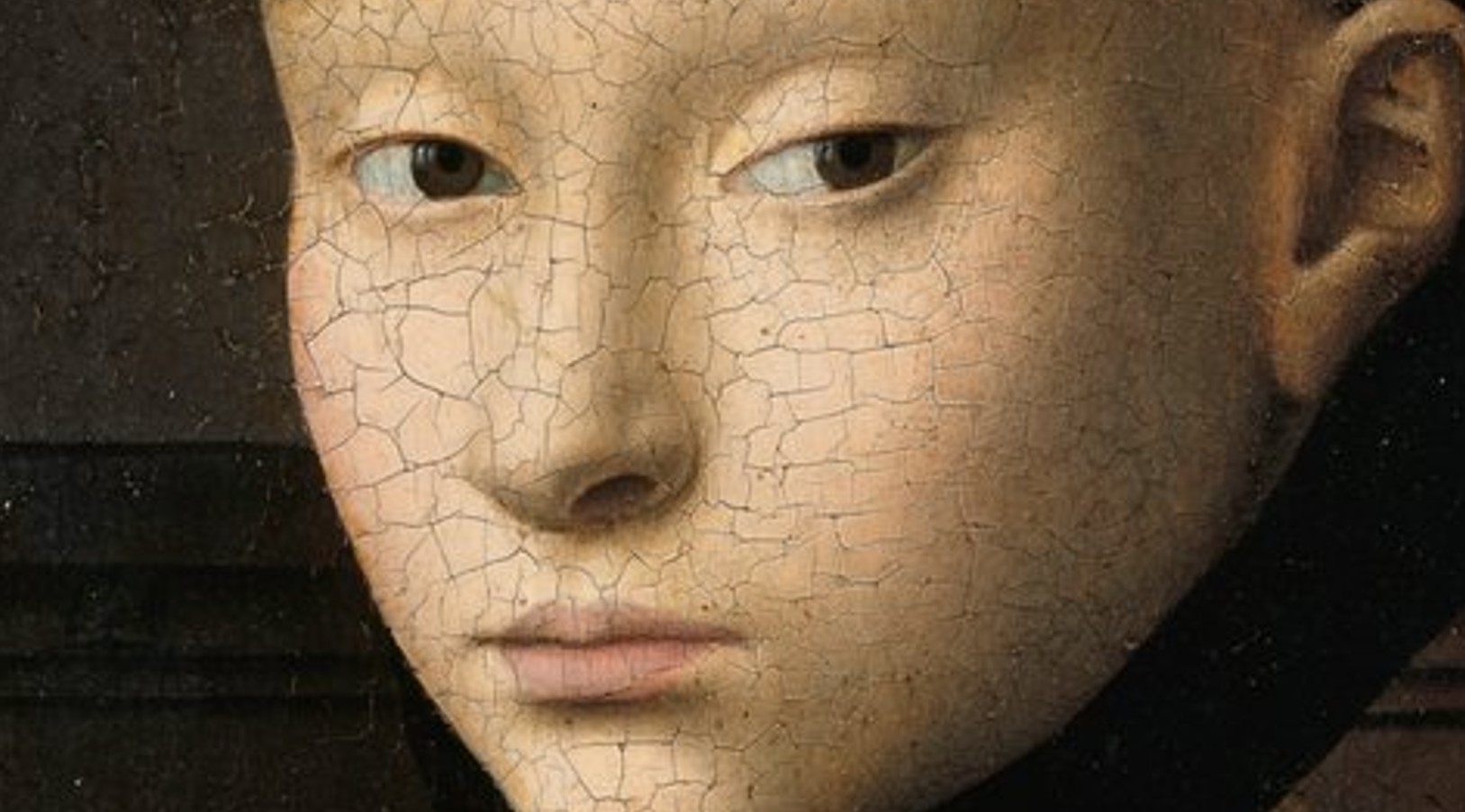
Una fronte altissima, un cappello di velluto nero, una collana di perle e uno sguardo che sembra cercare proprio il nostro. La giovane ritratta da Petrus Christus rimane seria, composta, quasi distante ma i suoi occhi calamitano tutta l’attenzione dello spettatore.
Il dipinto è piccolo, appena 29 × 22,5 centimetri, eppure riesce a trasmettere una presenza potente. Realizzato a olio su tavola intorno al 1470, è oggi conservato alla Gemäldegalerie di Berlino e rappresenta uno degli esempi più celebri della ritrattistica fiamminga del XV secolo.
Chi fosse quella donna, invece, continua a essere un mistero. Possiamo osservare i suoi abiti, studiarne i lineamenti e cercare indizi nella moda dell’epoca, ma non abbiamo un’identità certa da associare al suo volto. Ed è proprio questa distanza, insieme alla forza dello sguardo, a rendere il ritratto così interessante anche oggi.
Il cappello di velluto nero e i gioielli raccontano una donna ricca
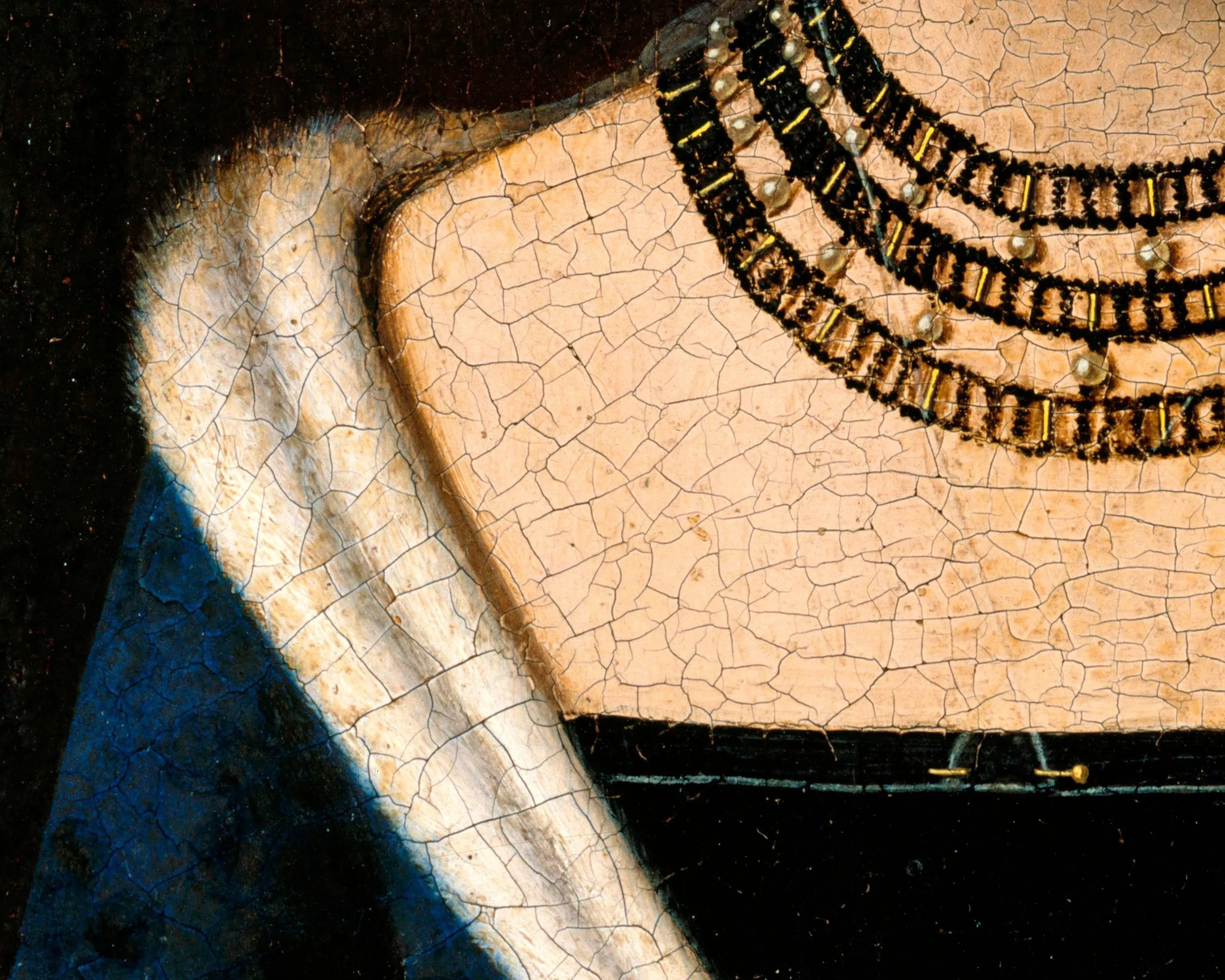
Indossa una mantella bordata di pelliccia e porta al collo un collier con oro e perle. Sulla testa ha un copricapo cilindrico molto alto, realizzato in quello che appare come prezioso velluto nero e fermato sotto il mento da un drappo.
Sono particolari che suggeriscono una donna appartenente a un ambiente agiato, forse legato alla ricca borghesia o all’élite sociale delle Fiandre. Nel Quattrocento, infatti, gli abiti e gli accessori erano anche un modo per mostrare il proprio rango.
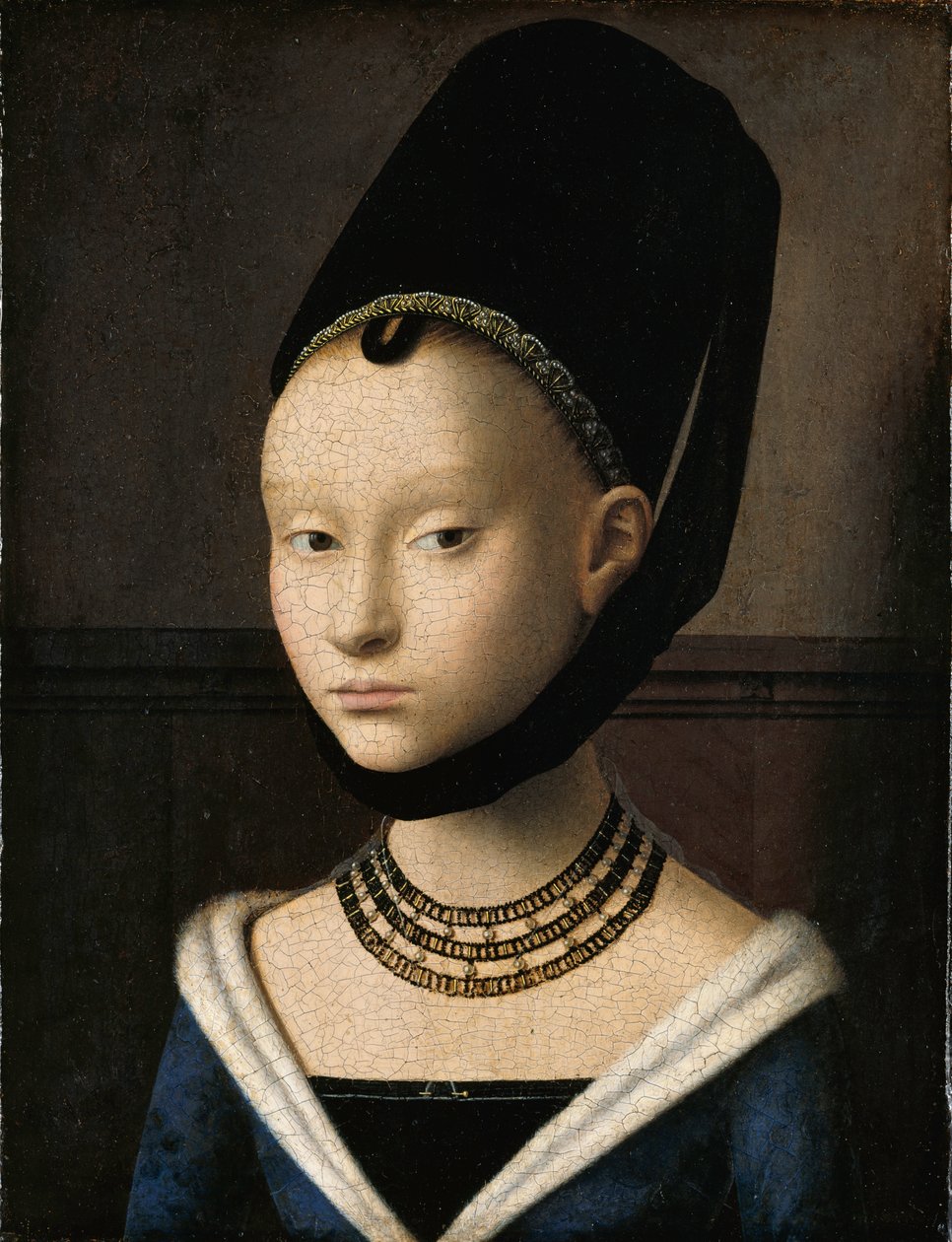
Nulla, però, sembra lasciato al caso. Il nero del copricapo incornicia il viso, mentre i dettagli luminosi dei gioielli attirano lo sguardo senza sottrarre spazio alla protagonista. Petrus Christus conosce bene il valore di ogni particolare e lo utilizza con grande misura.
C’è poi un dettaglio che oggi potrebbe sorprenderci: la fronte molto alta. Nella moda femminile del tempo era considerata un elemento di bellezza e alcune donne si depilavano o si rasavano i capelli lungo l’attaccatura per renderla più ampia. Quello che oggi potremmo interpretare come una scelta insolita rispondeva dunque agli ideali estetici del Quattrocento.
Perché il suo sguardo sembra così moderno?
È il volto a prendersi tutta la scena. La giovane è rappresentata di tre quarti, con il corpo appena accennato rispetto alla testa. Gli occhi sembrano cercare un contatto con chi osserva il dipinto. L’espressione è seria, controllata, difficile da interpretare. Non sappiamo se la donna fosse timida, orgogliosa o semplicemente abituata a mantenere un contegno composto davanti al pittore. Attribuirle un carattere preciso sarebbe una forzatura.
La giovane non sembra interessata a compiacere chi la guarda. È lì, con la sua presenza silenziosa, e lascia che sia lo spettatore a interrogarsi.
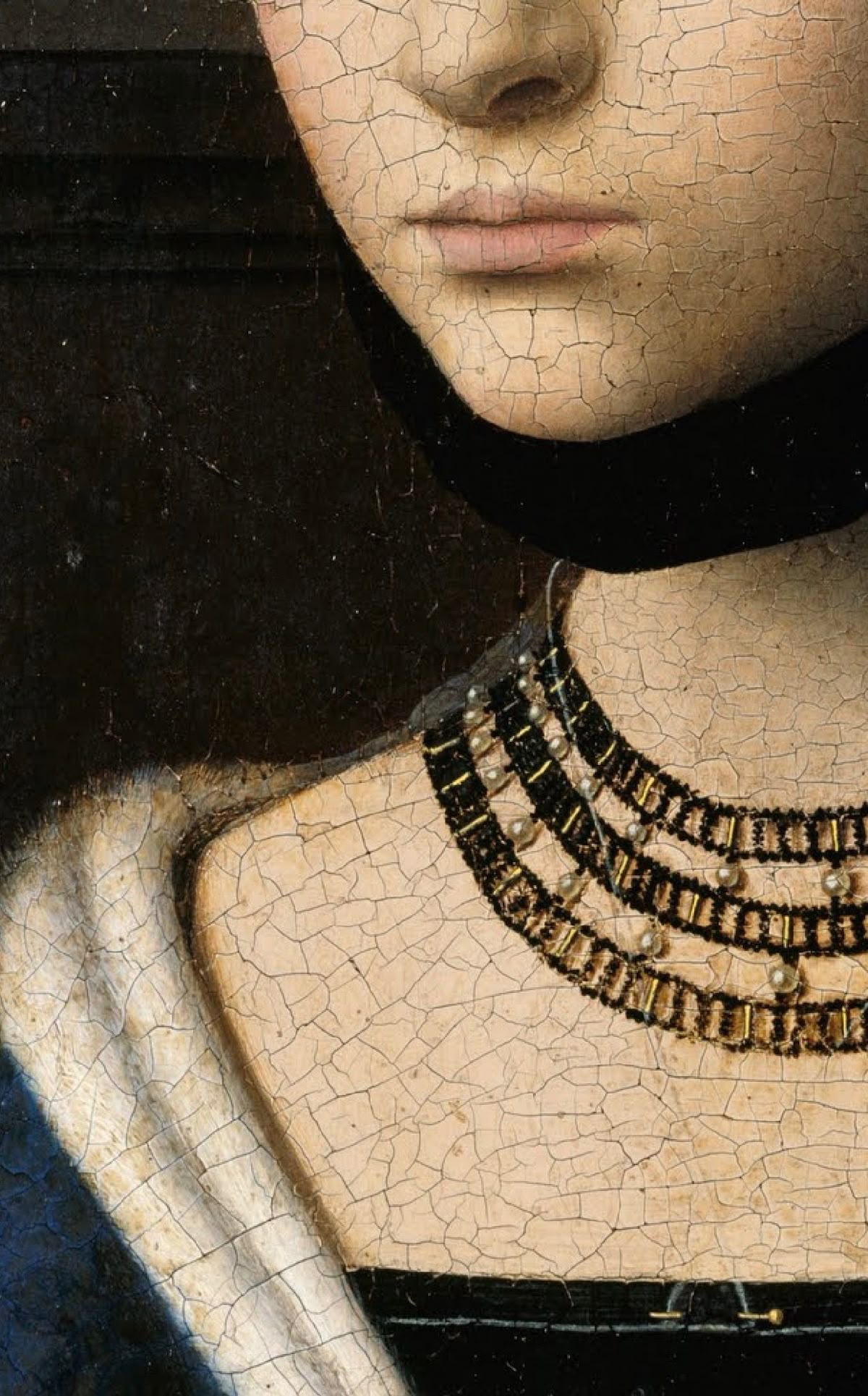
È una sensazione che conosciamo bene anche davanti a certi ritratti fotografici contemporanei: a volte un’espressione trattenuta ci incuriosisce molto più di un sorriso. Petrus Christus ottiene questo risultato più di cinque secoli fa, senza bisogno di aggiungere nulla alla figura.
La luce che fa emergere il volto dal fondo scuro
Anche lo sfondo contribuisce a creare questa impressione. È scuro, ma non completamente uniforme: alcuni dettagli fanno pensare a una parete interna, senza che l’ambiente diventi davvero protagonista.
La luce arriva sul volto e ne definisce lentamente i lineamenti. Le guance, la fronte e le zone più chiare della pelle emergono dal fondo con passaggi morbidi, mentre il copricapo nero crea un contrasto netto intorno alla testa.
Le pennellate e le variazioni tonali permettono di rendere materiali diversi senza ricorrere a effetti appariscenti: la pelle ha una consistenza, il velluto un’altra, la pelliccia e i gioielli reagiscono alla luce in maniera ancora differente.
La tavolozza è contenuta, quasi severa. Non servono colori accesi né una scenografia elaborata. Tutto è concentrato sulla figura e sul modo in cui viene illuminata, come se il volto dovesse emergere da uno spazio più profondo.
È una scelta che distingue questo ritratto da molte composizioni sacre dello stesso periodo, nelle quali i pittori fiamminghi si soffermavano su architetture, paesaggi, oggetti e dettagli simbolici. Qui, invece, basta una sola persona per sostenere l’intera immagine.
Petrus Christus e la grande stagione della pittura fiamminga
Petrus Christus lavorò soprattutto a Bruges, città che nel XV secolo era uno dei centri commerciali più importanti delle Fiandre e un luogo di grande fermento artistico.
La pittura fiamminga si distingueva per l’attenzione alla realtà visibile, per la resa minuziosa dei materiali e per la capacità di utilizzare la luce come strumento per dare volume e profondità alle figure.
Christus raccolse questa eredità e la tradusse in una pittura precisa, ma mai fredda. Nel Ritratto di fanciulla, ogni dettaglio è osservato con attenzione, eppure il risultato non è una semplice descrizione dell’aspetto esteriore di una donna. La composizione conduce continuamente verso il volto, dove si concentra il vero interesse dell’artista.
Non abbiamo bisogno di conoscere il nome della giovane per cogliere la qualità del lavoro. La sua identità resta sconosciuta, ma la figura conserva una presenza individuale che va oltre la moda e le convenzioni del tempo.
Dove vedere il Ritratto di fanciulla di Petrus Christus
Il Ritratto di fanciulla si trova alla Gemäldegalerie di Berlino, in Germania, dove è possibile ammirare da vicino la qualità della pittura di Petrus Christus.
Le sue dimensioni ridotte invitano a osservarlo con attenzione. Non è un’opera che si impone da lontano con la grandiosità di una grande pala d’altare. Bisogna avvicinarsi, soffermarsi sui gioielli, seguire il contorno del copricapo e, soprattutto, tornare a guardare gli occhi della giovane.
Per il momento il sempre vostro Michelangelo Buonarroti vi saluta dandovi appuntamento ai prossimi post e sui social.
The Enigmatic Portrait by Petrus Christus
We do not know her name, nor the story hidden behind that face—yet the young woman portrayed by Petrus Christus seems to still have something to tell us.
Painted around 1470, this is one of the most captivating images in fifteenth-century Flemish painting.
With an exceptionally high forehead, a black velvet hat, and a pearl necklace, she casts a gaze that seems to seek out our own. The young woman depicted by Petrus Christus remains serious, composed, and perhaps even distant—yet her eyes command the viewer’s full attention.
Though the painting is small—measuring just 29 × 22.5 centimeters—it conveys a powerful presence. Executed in oil on panel around 1470, it is now housed in the Gemäldegalerie in Berlin and stands as one of the most celebrated examples of fifteenth-century Flemish portraiture.
As for who this woman was, however, it remains a mystery. We can examine her attire, study her features, and look for clues in the fashions of the time, but we have no definitive identity to attach to her face. It is precisely this sense of distance, combined with the intensity of her gaze, that makes the portrait so compelling even today.
Her black velvet hat and jewelry reveal a woman of wealth.
She wears a fur-trimmed mantle and a necklace of gold and pearls. On her head sits a very tall, cylindrical headdress—fashioned from what appears to be exquisite black velvet—secured beneath her chin by a length of fabric.
These details suggest a woman from a privileged background, likely connected to the affluent bourgeoisie or the social elite of Flanders. In the fifteenth century, clothing and accessories served as clear indicators of one’s social rank.
Nothing, however, appears to have been left to chance. The black of the headdress frames the face, while the luminous details of the jewelry draw the eye without overshadowing the subject herself. Petrus Christus understands the value of every detail, employing each with great restraint.
There is also a detail that might surprise us today: the exceptionally high forehead. In the women’s fashion of the time, this was considered a mark of beauty; some women would even pluck or shave their hairline to make their foreheads appear larger. What we might perceive today as an unusual choice was, in fact, perfectly in line with the aesthetic ideals of the fifteenth century.
Why does her gaze seem so modern?
The face commands the entire scene. The young woman is depicted in a three-quarter view, with her body rendered only subtly in relation to her head. Her eyes seem to seek a connection with the viewer. Her expression is serious, controlled, and difficult to interpret. We cannot know whether she was shy, proud, or simply accustomed to maintaining a composed demeanor before the painter—to assign her a specific personality would be an overreach.
The young woman shows no interest in pleasing the viewer. She is simply there, in her silent presence, leaving it to the observer to wonder about her.
It is a sensation we recognize today when looking at certain contemporary photographic portraits: sometimes, a restrained expression piques our curiosity far more than a smile. Petrus Christus achieved this effect over five centuries ago, without needing to add anything extraneous to the figure.
The light that brings the face out from the dark background
The background, too, contributes to this impression. It is dark, yet not entirely uniform—subtle details suggest an interior wall, though the setting never becomes the focal point.
Light falls upon the face, gradually defining its features. The cheeks, forehead, and lighter areas of the skin emerge from the background through soft transitions, while the black headpiece creates a sharp contrast around the head.
Brushstrokes and tonal variations make it possible to render different materials without resorting to flashy effects: skin has one texture, velvet another, while fur and jewelry react to light in yet different ways.
The palette is restrained, almost austere. There is no need for vivid colors or an elaborate setting. Everything is focused on the figure and the way it is illuminated, as if the face were emerging from a deeper space.
This approach distinguishes this portrait from many sacred compositions of the same period, in which Flemish painters would dwell on architecture, landscapes, objects, and symbolic details. Here, by contrast, a single person is enough to sustain the entire image.
Petrus Christus and the Great Era of Flemish Painting
Petrus Christus worked primarily in Bruges—a city that, in the 15th century, was one of the most important commercial hubs in Flanders and a place of great artistic ferment.
Flemish painting was characterized by its close attention to visible reality, the meticulous rendering of materials, and the ability to use light as a tool to give volume and depth to figures.
Christus gathered he took this legacy and translated it into a style of painting that is precise, yet never cold. In the Portrait of a Young Woman, every detail is observed with great care; and yet, the result is more than a mere description of a woman’s outward appearance. The composition constantly draws the eye toward her face, where the artist’s true focus lies.
We do not need to know the young woman’s name to appreciate the quality of the work. Her identity remains a mystery, but the figure retains an individual presence that transcends the fashions and conventions of the time.
Where to see the Portrait of a Young Woman by Petrus Christus
The Portrait of a Young Woman is housed in the Gemäldegalerie in Berlin, Germany, where one can admire the quality of Petrus Christus’s painting up close.
Its small scale invites close, attentive observation. It is not a work that commands attention from afar with the grandeur of a large altarpiece. One must draw near, linger over the details of the jewelry, trace the contours of the headdress, and—above all—look once more into the young woman’s eyes.
For now, yours truly, Michelangelo Buonarroti, bids you farewell—until the next post, here or on social media.
Sostienici – Support Us
Se questo blog ti piace e ti appassiona, puoi aiutarci a farlo crescere sempre più sostenendoci in modo concreto condividendo i post, seguendo le pagine social e con un contributo che ci aiuta ad andare avanti con il nostro lavoro di divulgazione. . ENGLISH: If you like and are passionate about this blog, you can help us make it grow more and more by supporting us in a concrete way by sharing posts, following social pages and with a contribution that helps us to move forward with our dissemination work.
10,00 €

Condividi:


Questo sono io



sostienici

Sostienici - Support Us
Se questo blog ti piace e ti appassiona, puoi aiutarci a farlo crescere sempre più sostenendoci in modo concreto condividendo i post, seguendo le pagine social e con un contributo che ci aiuta ad andare avanti con il nostro lavoro di divulgazione. . ENGLISH: If you like and are passionate about this blog, you can help us make it grow more and more by supporting us in a concrete way by sharing posts, following social pages and with a contribution that helps us to move forward with our dissemination work.
€10,00


