

Gian Lorenzo Bernini: l’uomo che fece muovere il marmo
Davanti a una scultura di Gian Lorenzo Bernini, capita di avvicinarsi per osservare un dettaglio e ritrovarsi a seguire con lo sguardo l’intera scena.
Una mano stringe una coscia, un volto si volta per sfuggire a uno sguardo, le dita si trasformano in foglie. Tutto sembra accadere in quell’istante, come se ci ritrovassimo dinanzi a una fotografia ma è marmo. Ogni Bernini sapeva bene come ottenere questo effetto. Sceglieva sempre il momento più intenso di una storia e lo scolpiva con tale precisione e maestra da far dimenticare, almeno per qualche secondo, di ritrovarci davanti a un’opera in marmo.
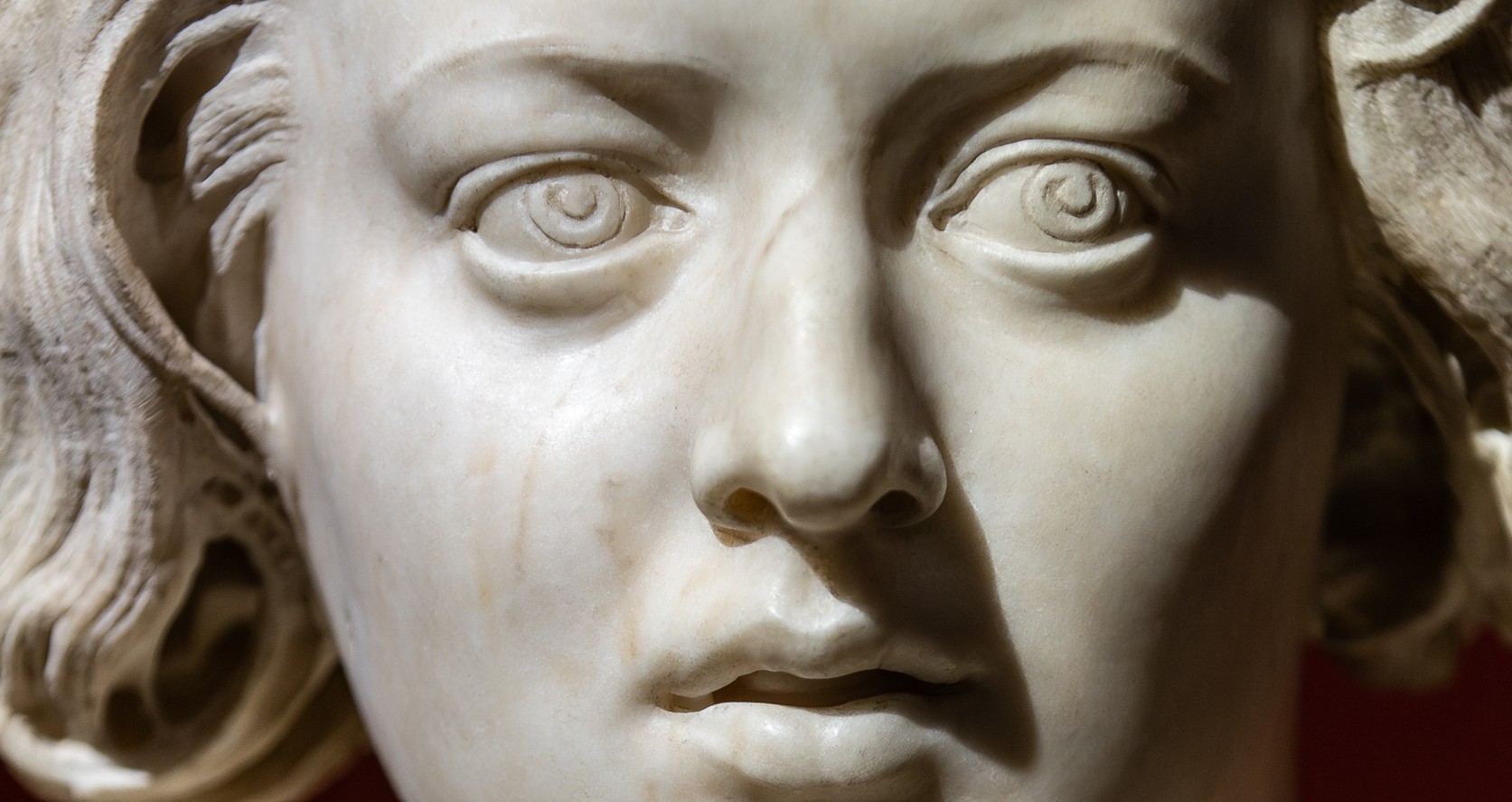
I capelli si scompigliano nel vento, i tessuti si gonfiano seguendo il movimento dei corpi e i volti raccontano emozioni così intense da sembrare rubate a persone in carne e ossa.
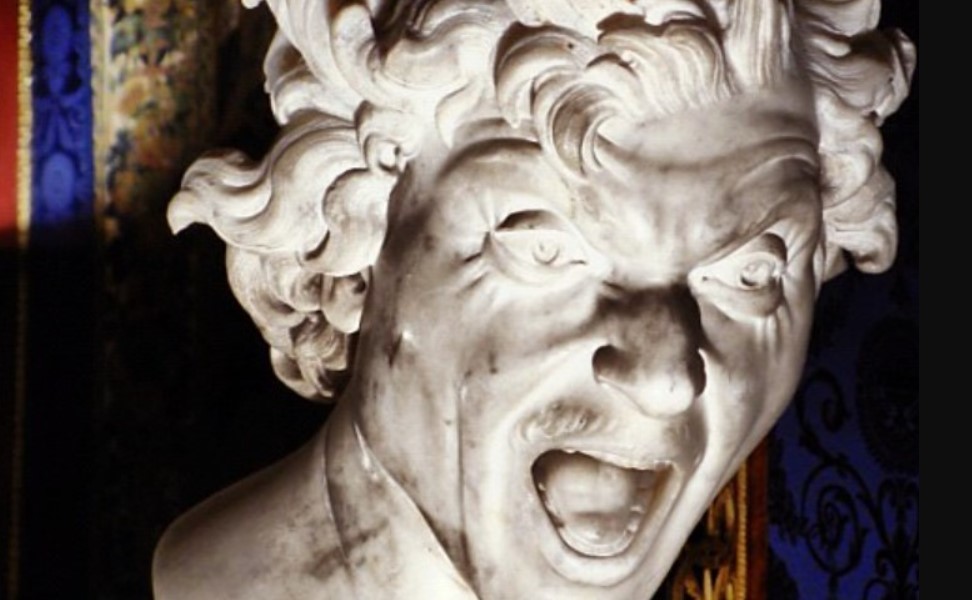
È proprio qui che comincia la straordinaria rivoluzione di Bernini, l’artista che trasformò la scultura in un’azione capace di coinvolgere chi guarda. Aveva la necessità di sorprendere i suoi personaggi mentre correvano, amavano, soffrivano, fuggivano o venivano travolti da un’esperienza mistica.
Il marmo, nelle sue mani, smette di essere materia inerte. Diventa protagonista di storie, passioni e metamorfosi. Alcune delle sue opere più celebri continuano ancora oggi a far domandare a chi le osserva ‘Come ha fatto Bernini a ottenere tutto questo dal marmo?‘
Gian Lorenzo Bernini, il genio che rivoluzionò la scultura barocca
Nato a Napoli nel 1598 e morto a Roma nel 1680, Gian Lorenzo Bernini fu scultore, architetto e artista poliedrico, destinato a diventare il protagonista assoluto del Barocco romano. Figlio dello scultore Pietro Bernini, crebbe in un ambiente nel quale la lavorazione della pietra faceva parte della vita quotidiana. Il talento precoce e la straordinaria abilità tecnica gli permisero di conquistare giovanissimo l’attenzione dei grandi committenti.
La svolta arrivò grazie al cardinale Scipione Borghese, che riconobbe le potenzialità del giovane artista e gli affidò una serie di commissioni destinate a cambiare la storia della scultura. Per la villa del cardinale, oggi sede della Galleria Borghese a Roma, Bernini realizzò alcuni dei suoi capolavori giovanili: Enea, Anchise e Ascanio, il Ratto di Proserpina, Apollo e Dafne e il David.
In queste opere si manifesta già la sua concezione rivoluzionaria dell’arte. Le figure non sono più corpi immobili, organizzati secondo una posa ideale, ma personaggi coinvolti in un’azione. Lo spettatore non si trova davanti a una scena conclusa: assiste a qualcosa che sta accadendo.
È questa la forza del Barocco di Bernini. La scultura conquista lo spazio, suggerisce il movimento e trasforma l’osservazione in un’esperienza emotiva.

Il Ratto di Proserpina: quando il marmo sembra carne viva
Come si può scolpire nella pietra la morbidezza della pelle? Basta osservare il Ratto di Proserpina, realizzato tra il 1621 e il 1622 e conservato alla Galleria Borghese.
Il gruppo scultoreo racconta il rapimento di Proserpina da parte di Plutone, dio degli Inferi. Bernini sceglie il momento più drammatico dell’episodio mitologico: il dio trattiene la giovane, mentre lei tenta disperatamente di sottrarsi alla sua presa.
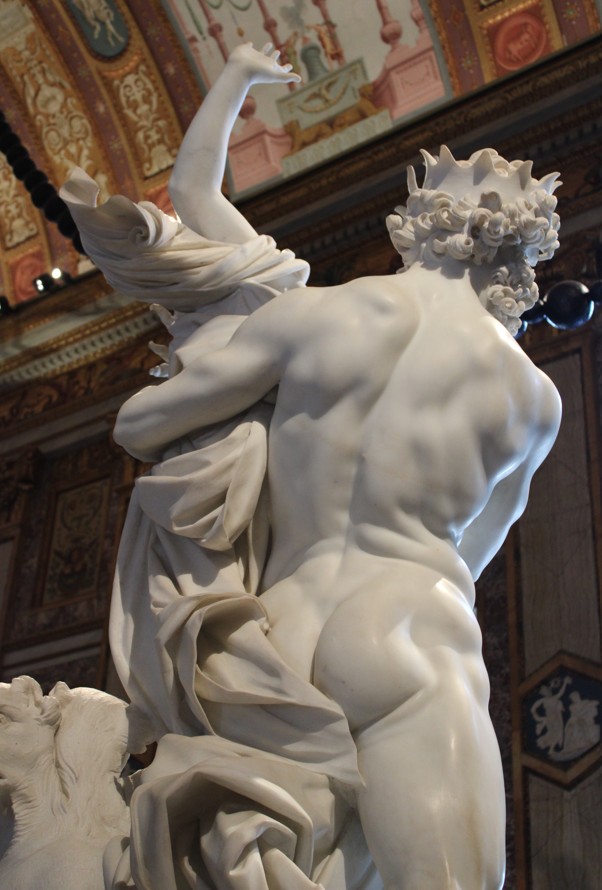
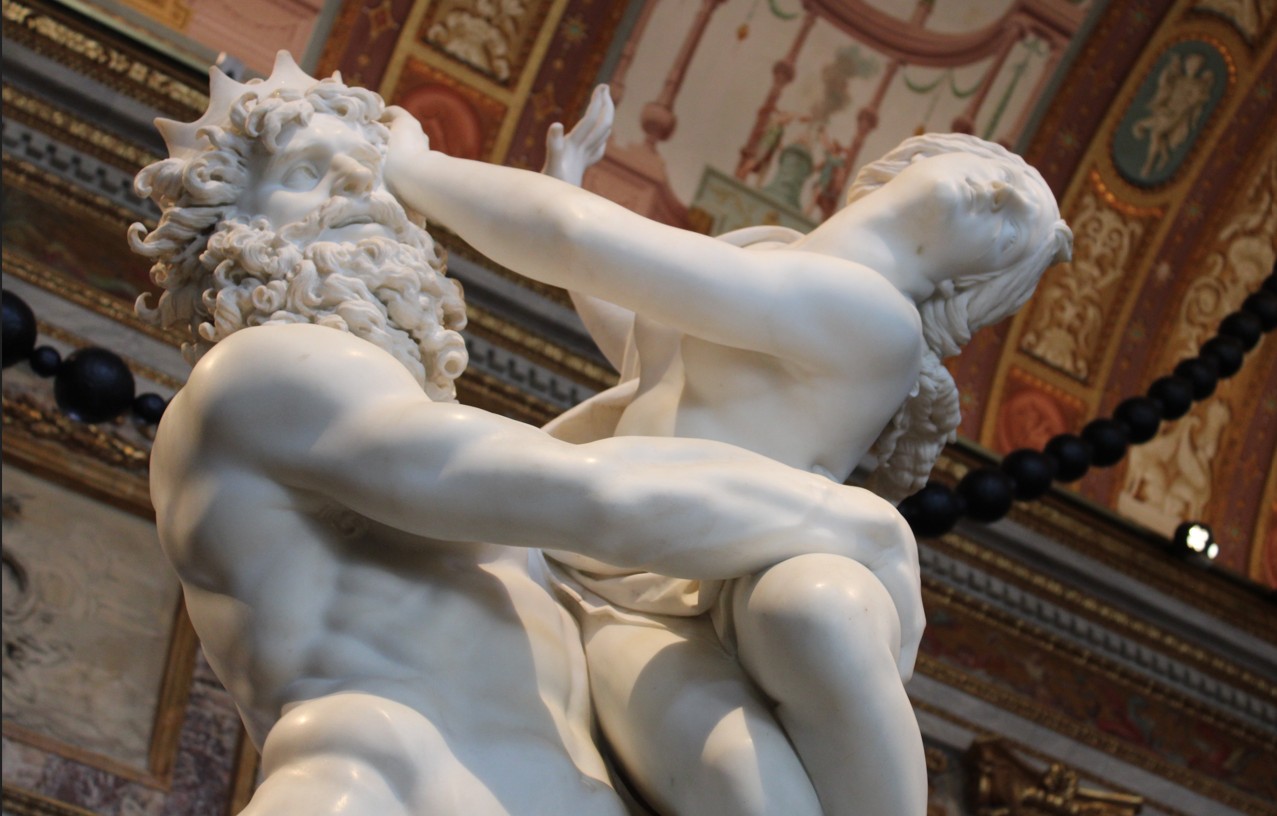
Tutto concorre a rendere tangibile la violenza dell’azione. Il corpo di Plutone avanza con forza, Proserpina si torce per liberarsi e il suo volto esprime paura e disperazione. Ma è un particolare a lasciare letteralmente senza parole: le dita di Plutone sembrano affondare nella coscia di Proserpina, comprimendo la carne come se fosse morbida e cedevole.
È marmo, eppure l’occhio percepisce la pressione delle dita, la tensione della pelle e la consistenza dei corpi. Bernini ottiene questo effetto attraverso una lavorazione minuziosa delle superfici, sfruttando le differenze tra le parti levigate e quelle modellate per creare un’illusione di straordinario realismo.
Non si tratta soltanto di virtuosismo tecnico. La materia diventa uno strumento narrativo: la sensazione di morbidezza rende ancora più brutale la presa di Plutone, mentre la torsione dei corpi trasmette la disperazione di Proserpina.
Apollo e Dafne: la metamorfosi impossibile che Bernini rese eterna
Se esiste un’opera capace di riassumere la genialità di Gian Lorenzo Bernini, è probabilmente Apollo e Dafne, realizzata tra il 1622 e il 1625 per Scipione Borghese.
Il soggetto proviene dalle Metamorfosi di Ovidio. Apollo, colpito dalla freccia di Cupido, si innamora della ninfa Dafne e comincia a inseguirla. Lei, per sfuggire al dio, invoca l’aiuto del padre Peneo e viene trasformata in un albero d’alloro.
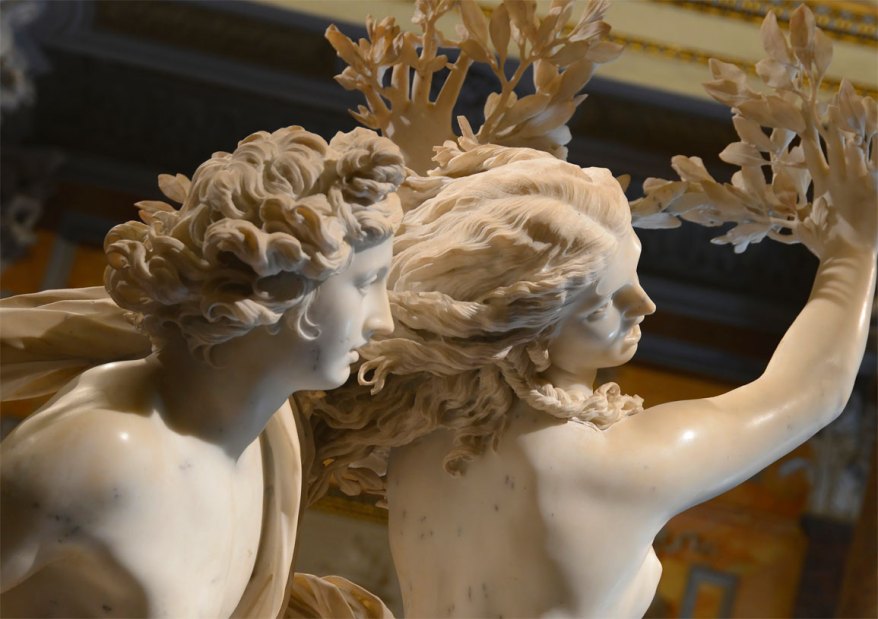
Bernini decide di rappresentare proprio l’istante in cui la trasformazione sta avvenendo. Apollo ha quasi raggiunto Dafne, ma la ninfa non è più interamente umana: i piedi cominciano a diventare radici, le dita si trasformano in foglie e i capelli si aprono in sottili fronde vegetali.
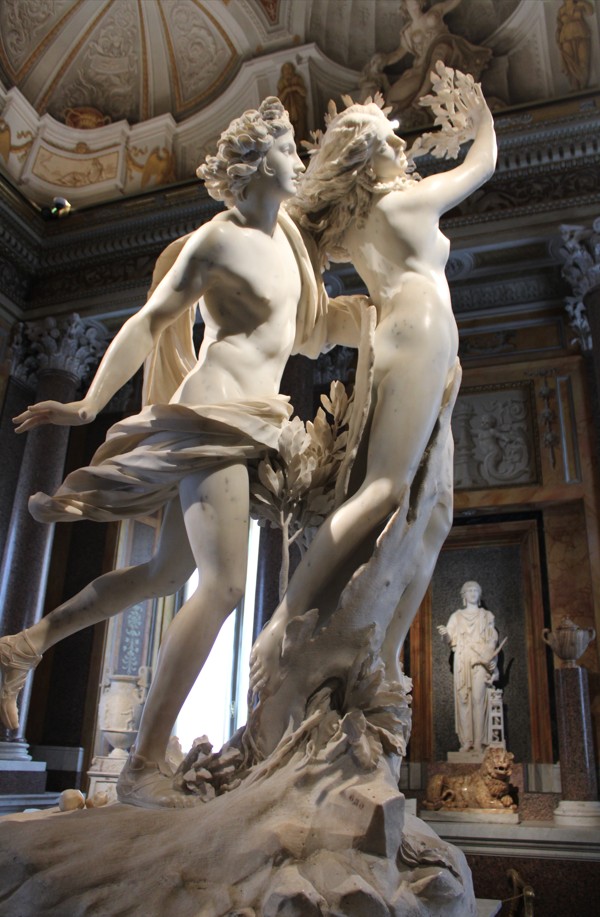
La metamorfosi non è raccontata: accade davanti ai nostri occhi.
Il dio sembra correre davvero. Un piede tocca terra mentre l’altro si solleva, il mantello accompagna lo slancio del corpo e la mano raggiunge la ninfa proprio quando la sua natura sta cambiando. Dafne, invece, si tende verso l’alto, cercando disperatamente una via di fuga che non esiste più.
Il dettaglio più sorprendente è il passaggio dalla carne alla corteccia. Bernini differenzia le superfici con una precisione straordinaria, rendendo riconoscibili la pelle, il legno e la leggerezza delle foglie. Le dita diventano rametti, i capelli si confondono con le fronde e le gambe si trasformano in radici.
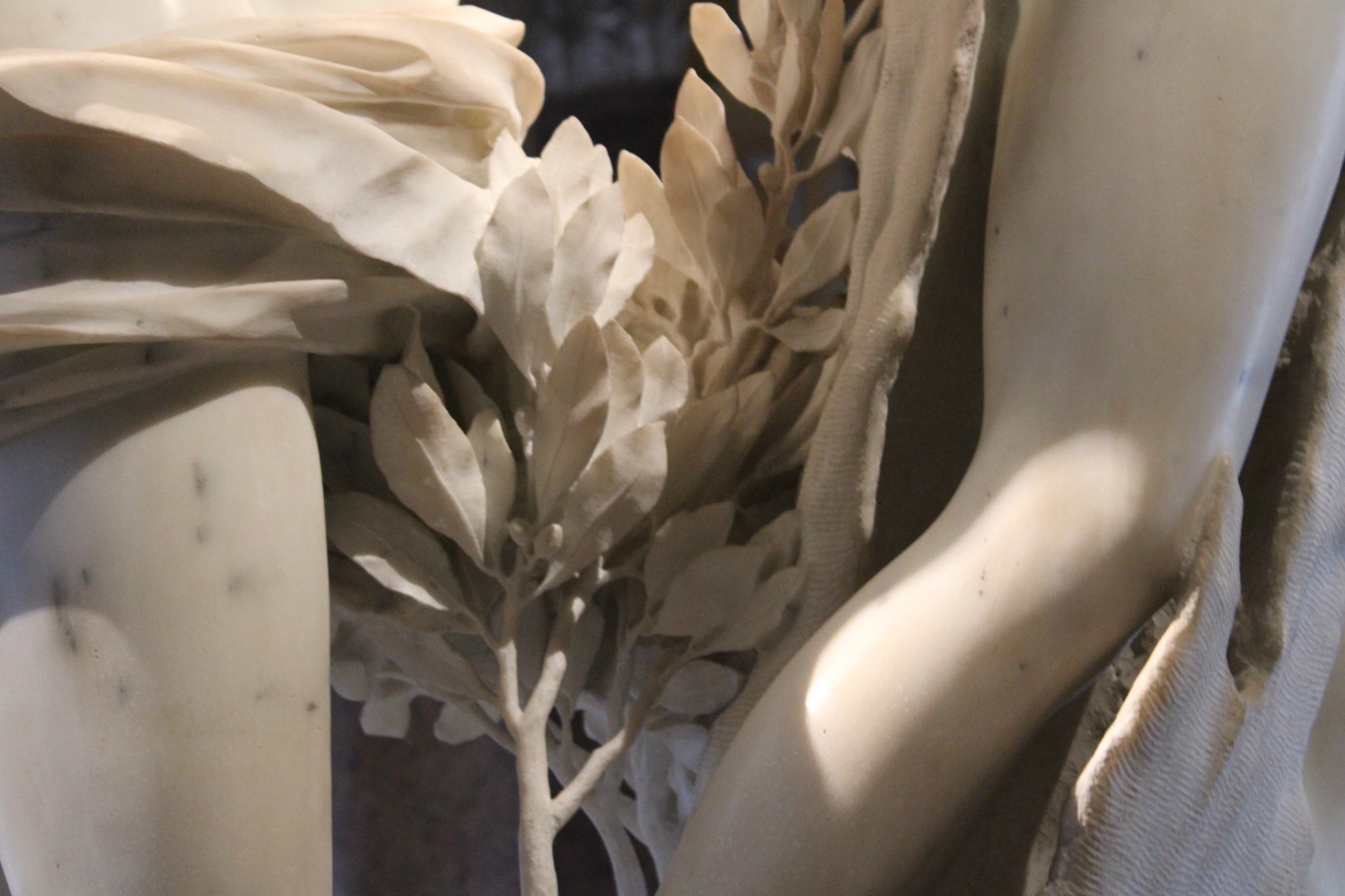
La scultura, alta circa 243 centimetri e realizzata in marmo di Carrara, sembra sfidare le possibilità stesse della materia. Il marmo, tradizionalmente associato alla permanenza e all’immobilità, diventa il mezzo attraverso cui rappresentare una trasformazione.
Apollo raggiunge finalmente Dafne, ma proprio nel momento in cui crede di averla raggiunta, la perde per sempre come donna. Il desiderio si trasforma in impossibilità, mentre l’alloro diventa il simbolo destinato a rimanere legato al dio.
Una storia di desiderio, paura e perdita che Bernini riesce a fissare in un istante eterno.
Il David di Bernini: l’eroe nell’istante prima del colpo
Il David, realizzato tra il 1623 e il 1624, racconta quanto fosse lontana la visione artistica di Bernini da quella di una scultura concepita come immagine statica e autosufficiente.
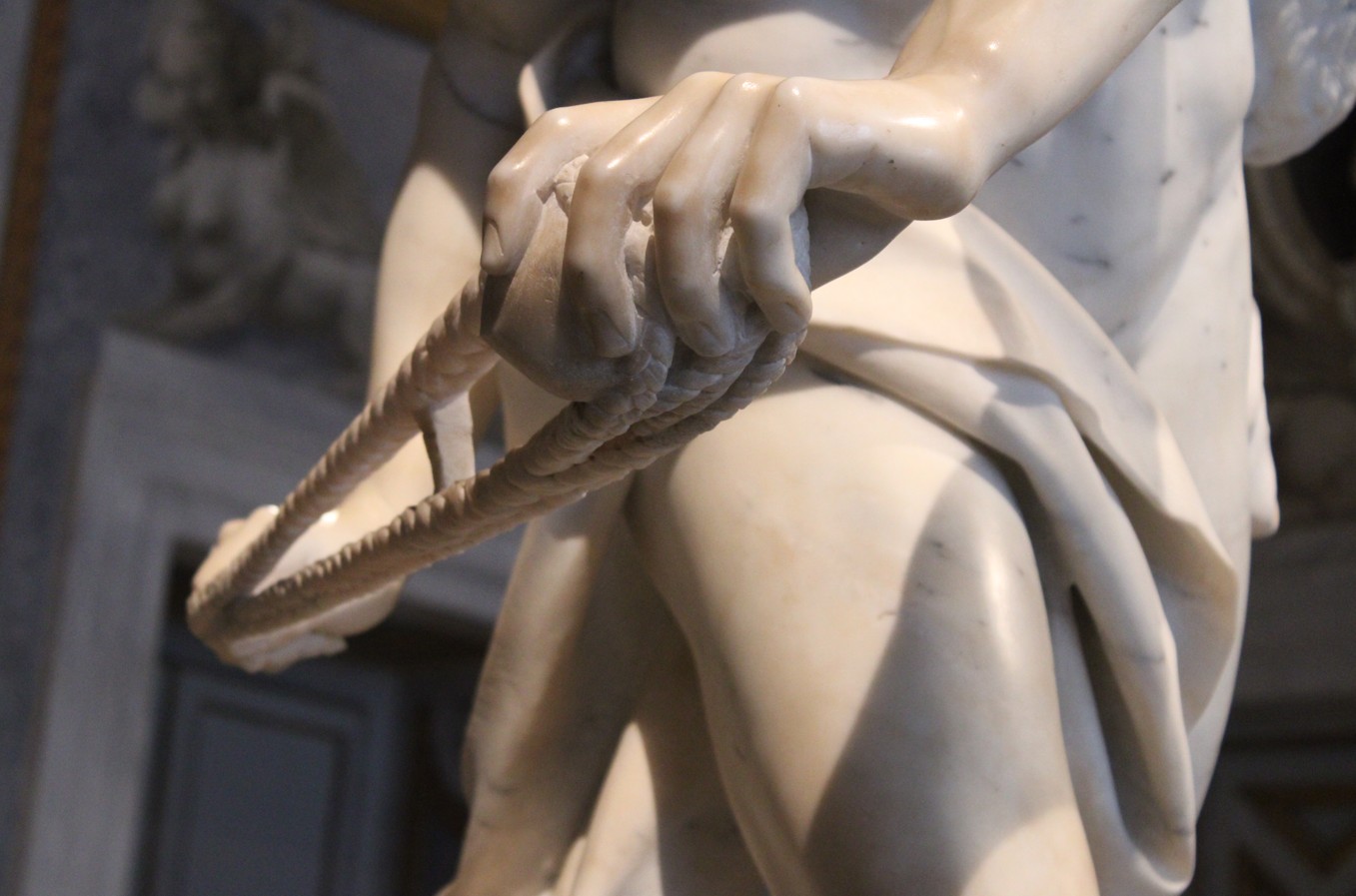
Il giovane eroe biblico non posa con calma dopo aver sconfitto Golia. Non è nemmeno fermo a contemplare il proprio destino. Bernini lo rappresenta mentre si prepara a scagliare la pietra contro il gigante.
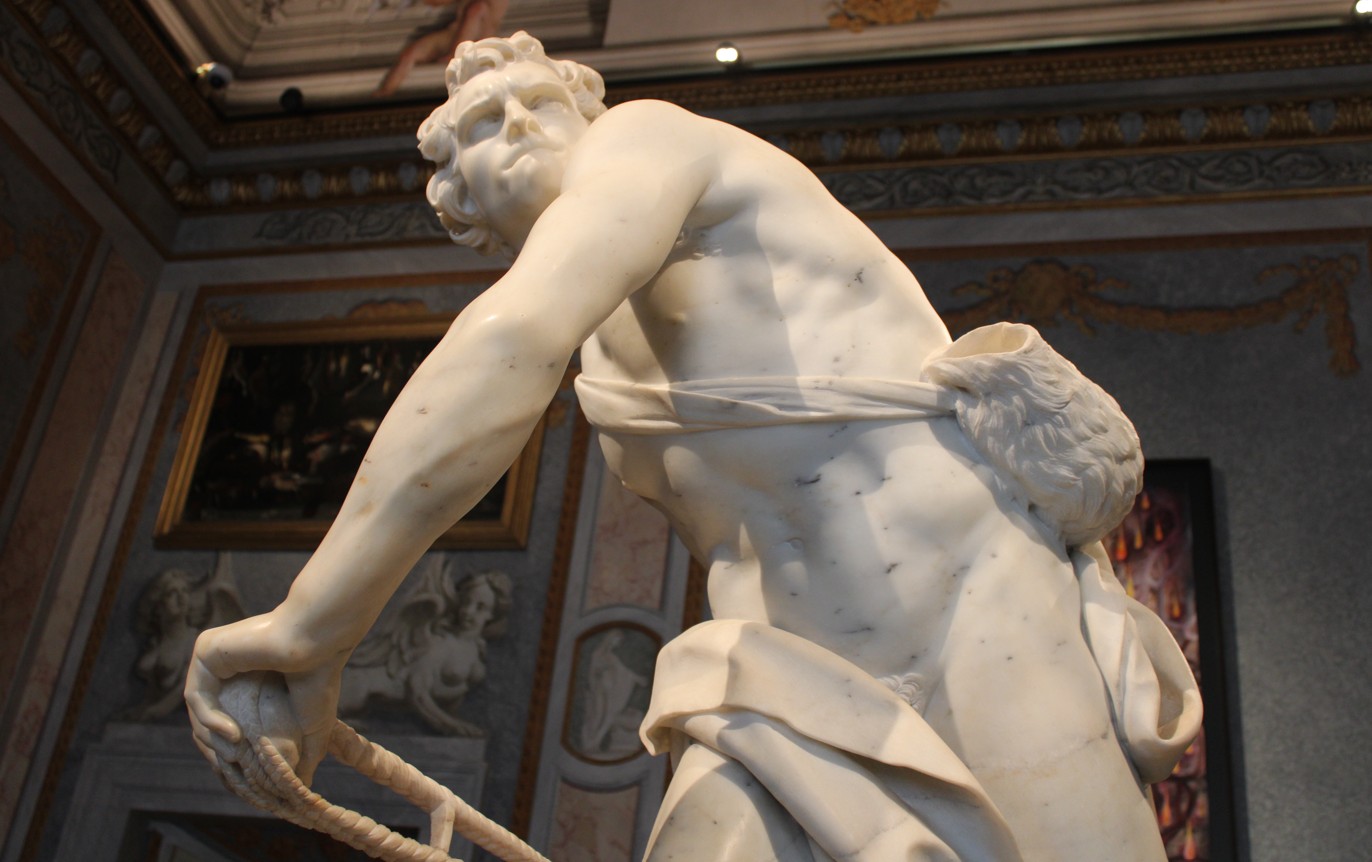
Il corpo è avvitato su se stesso, i muscoli sono tesi, le labbra serrate e lo sguardo concentrato sul bersaglio. Ogni parte della figura sembra partecipare allo sforzo: il busto ruota, le gambe sostengono la torsione e le braccia sono impegnate nel movimento che precede il lancio.
Ma c’è un elemento fondamentale: Golia non compare nella scultura. Il suo posto è idealmente occupato dallo spazio davanti a David, proprio dove si trova chi osserva.
Lo spettatore viene così coinvolto nella scena, quasi si trovasse sulla traiettoria del colpo. Il movimento non termina ai confini del marmo, ma sembra proseguire oltre, nello spazio reale.
L’estasi di Santa Teresa: il marmo che racconta un’esperienza mistica
Bernini non si limitò a rappresentare il movimento dei corpi. Seppe dare forma anche a ciò che non si vede: l’estasi, il turbamento interiore e l’esperienza spirituale.
Nella cappella Cornaro della chiesa di Santa Maria della Vittoria, a Roma, realizzò tra il 1647 e il 1652 uno dei suoi capolavori più celebri, l’Estasi di Santa Teresa.

Il gruppo raffigura la santa carmelitana mentre vive un’esperienza mistica descritta nei suoi scritti. Teresa è distesa su una nube, con il volto abbandonato e gli occhi socchiusi, mentre un angelo le si avvicina con una freccia. La scena si ispira al racconto della trafittura del cuore da parte di un angelo, episodio interpretato dalla santa come un’esperienza insieme dolorosa e spiritualmente intensa.
Anche qui il marmo sembra perdere la propria durezza. Le pieghe profonde dell’abito avvolgono il corpo in un movimento tumultuoso, mentre il volto e le mani suggeriscono l’abbandono a un’esperienza che supera la dimensione quotidiana.
Sopra il gruppo, raggi dorati e una luce proveniente da una finestra nascosta contribuiscono a creare un effetto scenografico. Ai lati, i membri della famiglia Cornaro sono raffigurati come spettatori di un evento straordinario.
Bernini costruisce così una vera e propria scena teatrale nella quale scultura, architettura e luce collaborano per coinvolgere chi entra nella cappella.
Il risultato è un’opera che cerca di rendere visibile l’invisibile, trasformando un’esperienza interiore in un’immagine concreta e potentemente suggestiva.

Bernini, l’artista che trasformò Roma in un teatro a cielo aperto
La genialità di Bernini non si esaurisce nelle sculture. La sua capacità di mettere in relazione figure, architettura e spazio cambiò profondamente anche il volto di Roma.
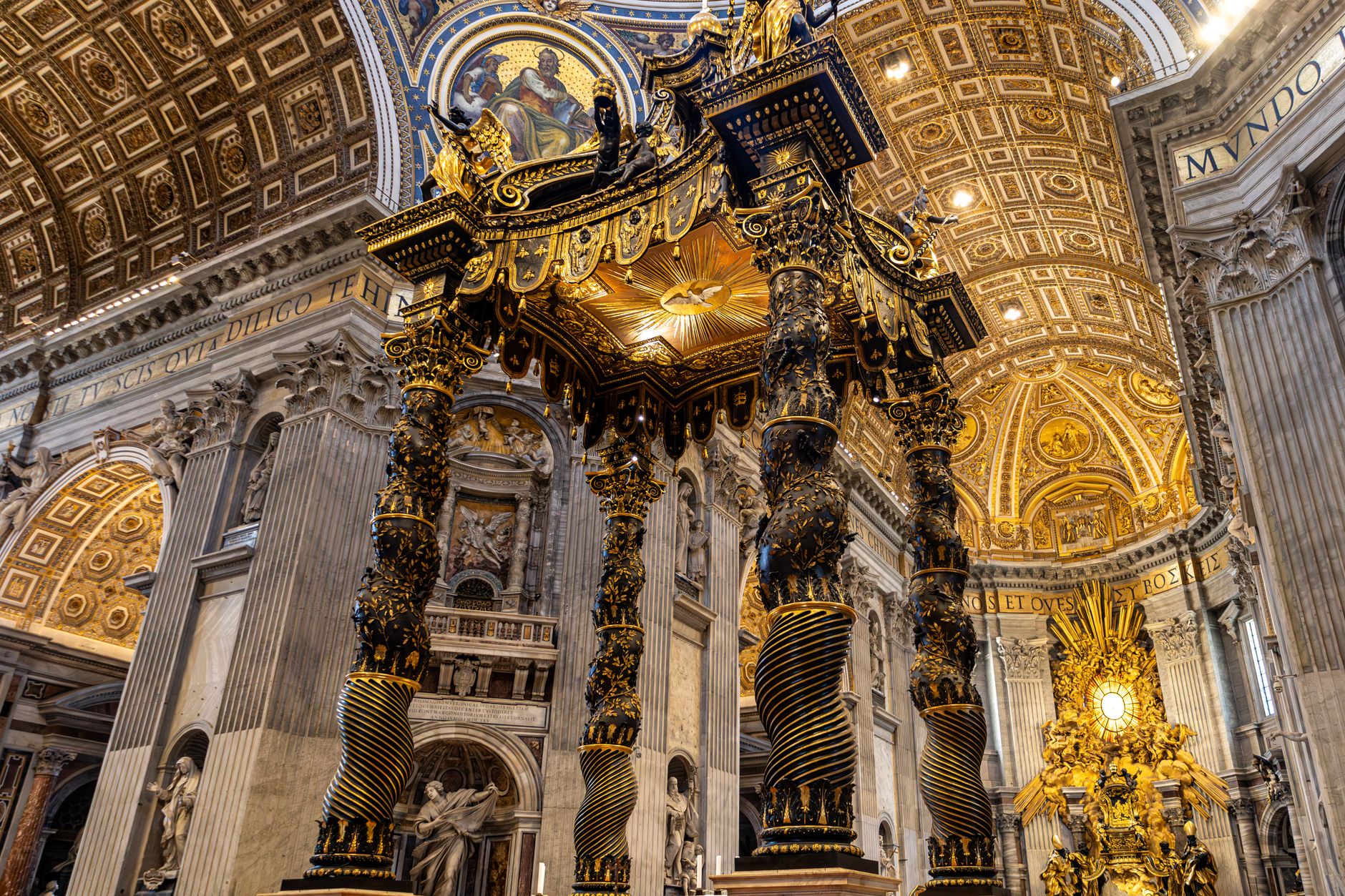
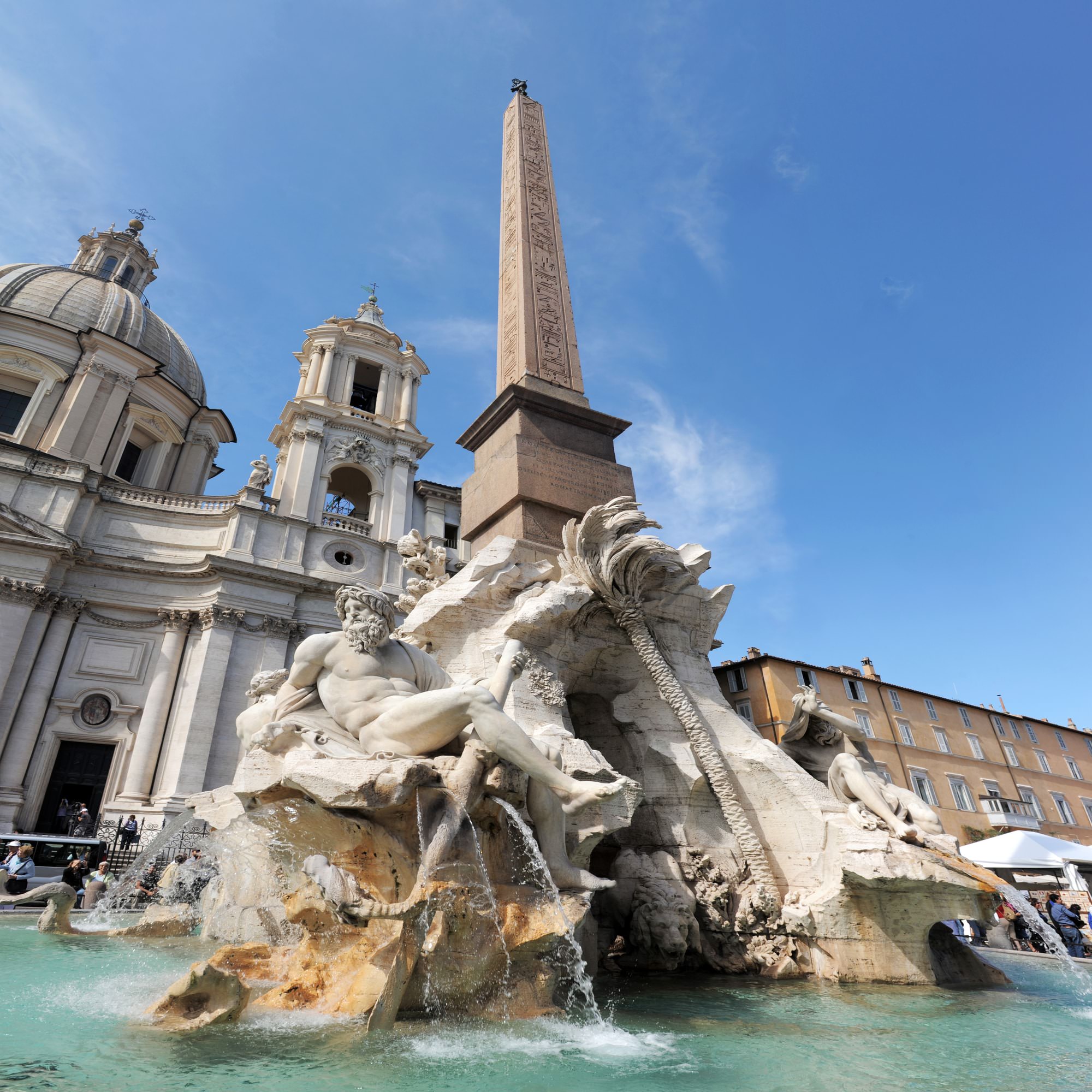
Il Baldacchino di San Pietro, realizzato sotto papa Urbano VIII, unisce scultura e architettura in una struttura monumentale di bronzo che domina l’altare della basilica. La Fontana dei Quattro Fiumi, in piazza Navona, trasforma l’acqua e la pietra in uno spettacolo dinamico, popolato da figure allegoriche che sembrano reagire alle forze della natura.
Il colonnato di piazza San Pietro, con le sue braccia architettoniche aperte verso la piazza, dimostra la stessa capacità di coinvolgere chi osserva e di trasformare lo spazio in un’esperienza.
In tutte queste opere ritorna un principio fondamentale: l’arte non deve limitarsi a essere guardata. Deve sorprendere, emozionare e creare una relazione con chi le sta davanti.
Per Bernini, la scultura non è mai soltanto una questione di forma. È movimento, luce, racconto e partecipazione emotiva. È un linguaggio capace di coinvolgere lo spettatore prima ancora che questi abbia il tempo di analizzare ciò che vede.
La grandezza di Bernini sta nell’aver compreso che una scultura può fare molto più che riprodurre un corpo. Può suggerire un movimento, raccontare una storia, rendere visibile un’emozione e persino creare l’illusione che la materia sia viva.
Bernini non cancellò la distanza tra marmo e carne, naturalmente. La trasformò in una sfida artistica, facendo della durezza della pietra il punto di partenza per un’illusione capace di ingannare lo sguardo e coinvolgere la mente.
Il marmo rimane marmo, ma davanti alle sue opere siamo portati a dimenticarlo. Bernini non ha fatto muovere la pietra, ma ci ha insegnato a cogliere il movimento dove prima sembrava impossibile trovarlo.
Per il momento il sempre vostro Michelangelo Buonarroti vi saluta dandovi appuntamento ai prossimi post e sui social.



Gian Lorenzo Bernini: the man who made marble move
When standing before a sculpture by Gian Lorenzo Bernini, one might step closer to examine a detail, only to find oneself following the entire scene with one’s gaze.
A hand grips a thigh, a face turns away to escape a stare, fingers transform into leaves. Everything seems to be happening in that very instant—as if we were looking at a photograph—yet it is marble. Bernini knew exactly how to achieve this effect. He would always choose the most intense moment of a story and sculpt it with such precision and mastery that, for a few seconds at least, one forgets they are standing before a work of marble.
Hair tousles in the wind, fabrics billow with the movement of bodies, and faces reveal emotions so intense they seem stolen from flesh-and-blood people.
This is precisely where Bernini’s extraordinary revolution began—the revolution of an artist who transformed sculpture into an action capable of engaging the viewer. He sought to catch his subjects in the act of running, loving, suffering, fleeing, or being swept up in a mystical experience.
In his hands, marble ceases to be inert matter. It becomes the protagonist of stories, passions, and metamorphoses. To this day, some of his most famous works leave viewers wondering: “How did Bernini manage to get all this out of marble?”
Gian Lorenzo Bernini: the genius who revolutionized Baroque sculpture
Born in Naples in 1598 and having died in Rome in 1680, Gian Lorenzo Bernini was a sculptor, architect, and multifaceted artist destined to become the undisputed protagonist of the Roman Baroque. The son of the sculptor Pietro Bernini, he grew up in an environment where stone-carving was part of daily life. His precocious talent and extraordinary technical skill allowed him to capture the attention of major patrons at a very young age.
The turning point came thanks to Cardinal Scipione Borghese, who recognized the young artist’s potential and entrusted him with a series of commissions destined to change the history of sculpture. For the cardinal’s villa—now home to the Galleria Borghese in Rome—Bernini created some of his early masterpieces: Aeneas, Anchises, and Ascanius; The Rape of Proserpina; Apollo and Daphne; and David.
His revolutionary conception of art is already evident in these works. The figures are no longer motionless bodies arranged in an idealized pose, but characters engaged in action. The viewer is not confronted with a finished scene; instead, they witness something that is actually unfolding.
This is the power of Bernini’s Baroque style. The sculpture claims the surrounding space, suggests movement, and transforms the act of viewing into an emotional experience.
The Rape of Proserpina: when marble looks like living flesh
How can the softness of skin be carved into stone? One need only look at The Rape of Proserpina, created between 1621 and 1622 and housed in the Galleria Borghese.
The sculptural group depicts the abduction of Proserpina by Pluto, god of the Underworld. Bernini chose the most dramatic moment of the mythological episode: the god restraining the young woman as she desperately tries to break free from his grasp.
Every element combines to make the violence of the action palpable. Pluto’s body surges forward powerfully; Proserpina twists in an attempt to break free, her face a mask of fear and despair. Yet, one detail leaves the viewer literally speechless: Pluto’s fingers appear to sink into Proserpina’s thigh, compressing the flesh as if it were soft and yielding.
It is marble, and yet the eye perceives the pressure of the fingers, the tension of the skin, and the texture of the bodies. Bernini achieves this effect through meticulous surface detailing, exploiting the contrast between polished and modeled areas to create an illusion of extraordinary realism.
This is not merely a display of technical virtuosity. The material itself becomes a narrative tool: the impression of softness makes Pluto’s grip seem all the more brutal, while the twisting of their bodies conveys Proserpina’s desperation.
Apollo and Daphne: the impossible metamorphosis Bernini immortalized
If there is a single work that encapsulates the genius of Gian Lorenzo Bernini, it is surely Apollo and Daphne, created between 1622 and 1625 for Scipione Borghese.
The subject is drawn from Ovid’s Metamorphoses. Struck by Cupid’s arrow, Apollo falls in love with the nymph Daphne and begins to pursue her. To escape the god, she calls upon her father, Peneus, for help and is transformed into a laurel tree.
Bernini chooses to depict the very moment this transformation is taking place. Apollo has almost caught Daphne, but the nymph is no longer entirely human: her feet are turning into roots, her fingers are transforming into leaves, and her hair is fanning out into delicate foliage.
The metamorphosis is not merely recounted; it unfolds before our very eyes.
The god appears running in earnest. One foot touches the ground while the other lifts; his cloak flows with the momentum of his body, and his hand reaches the nymph just as her nature is changing. Daphne, meanwhile, stretches upward, desperately seeking an escape route that no longer exists.
The most striking detail is the transition from flesh to bark. Bernini distinguishes between surfaces with extraordinary precision, making the skin, the wood, and the lightness of the leaves clearly recognizable. Fingers turn into twigs, hair blends with foliage, and legs transform into roots.
The sculpture, standing approximately 243 centimeters tall and carved from Carrara marble, seems to defy the very limits of the material. Marble—traditionally associated with permanence and immobility—becomes the medium through which a transformation is depicted.
Apollo finally catches up to Daphne, but at the very moment he believes he has reached her, he loses her forever as a woman. Desire turns into impossibility, while the laurel becomes the symbol destined to remain forever linked to the god.
It is a story of desire, fear, and loss that Bernini manages to capture in an eternal moment.
Bernini’s David: The hero in the moment before the strike
Created between 1623 and 1624, David illustrates just how far removed Bernini’s artistic vision was from the concept of sculpture as a static, self-contained image.
The young biblical hero is not posing calmly after defeating Goliath. Nor is he standing still, contemplating his destiny. Bernini depicts him in the act of preparing to hurl the stone at the giant.
His body is twisted, his muscles are taut, his lips are set, and his gaze is fixed intently on the target. Every part of the figure seems to participate in the effort: the torso twists, the legs support the rotation, and the arms are engaged in the movement preceding the throw.
Yet there is a fundamental element: Goliath does not appear in the sculpture. His place is ideally occupied by the space in front of David—precisely where the viewer stands.
The spectator is thus drawn into the scene, almost as if standing in the path of the strike. The movement does not end at the boundaries of the marble but seems to continue outward into real space.
The Ecstasy of Saint Teresa: marble depicting a mystical experience
Bernini did not limit himself to representing physical movement; he also knew how to give form to the unseen: ecstasy, inner turmoil, and spiritual experience.
Between 1647 and 1652, in the Cornaro Chapel of the Church of Santa Maria della Vittoria in Rome, he created one of his most celebrated masterpieces: The Ecstasy of Saint Teresa.
The sculptural group depicts the Carmelite saint undergoing a mystical experience described in her writings. Teresa lies upon a cloud, her face relaxed in surrender and her eyes half-closed, as an angel approaches her holding an arrow. The scene is inspired by the account of an angel piercing her heart—an episode the saint interpreted as an experience that was simultaneously painful and spiritually intense.
Here, too, the marble seems to lose its hardness. The deep folds of her habit envelop her body in a tumultuous swirl, while her face and hands suggest a surrender to an experience that transcends the everyday realm.
Above the group, golden rays and light streaming from a hidden window combine to create a dramatic, theatrical effect. On either side, members of the Cornaro family are depicted as spectators of an extraordinary event.
Bernini thus constructs a veritable theatrical scene in which sculpture, architecture, and light collaborate to engage anyone entering the chapel.
The result is a work that seeks to make the invisible visible, transforming an inner experience into a concrete and powerfully evocative image.
Bernini, the artist who transformed Rome into an open-air theater
Bernini’s genius was not limited to sculpture. His ability to interrelate figures, architecture, and space profoundly changed the face of Rome as well.
St. Peter’s Baldachin, created under Pope Urban VIII, unites sculpture and architecture in a monumental bronze structure that dominates the basilica’s altar. The Fountain of the Four Rivers in Piazza Navona transforms water and stone into a dynamic spectacle, populated by allegorical figures that seem to react to the forces of nature.
The colonnade of St. Peter’s Square, with its architectural arms opening toward the piazza, demonstrates the same ability to engage the observer and transform space into an experience.
A fundamental principle recurs in all these works: art should not merely be looked at. It must surprise, stir the emotions, and forge a connection with the viewer.
For Bernini, sculpture is never just a matter of form. It is movement, light, narrative, and emotional engagement. It is a language capable of engage the viewer before they even have time to analyze what they are seeing.
Bernini’s greatness lies in his understanding that a sculpture can do far more than simply reproduce a body. It can suggest movement, tell a story, make an emotion visible, and even create the illusion that the material itself is alive.
Naturally, Bernini did not erase the distinction between marble and flesh. Instead, he transformed it into an artistic challenge, using the hardness of the stone as the starting point for an illusion capable of deceiving the eye and captivating the mind.
The marble remains marble, yet in the presence of his works, we are led to forget that fact. Bernini did not make the stone move, but he taught us to perceive movement where it once seemed impossible to find.
For now, your ever-faithful Michelangelo Buonarroti bids you farewell, looking forward to seeing you in future posts and on social media.

Sostienici – Support Us
Se questo blog ti piace e ti appassiona, puoi aiutarci a farlo crescere sempre più sostenendoci in modo concreto condividendo i post, seguendo le pagine social e con un contributo che ci aiuta ad andare avanti con il nostro lavoro di divulgazione. . ENGLISH: If you like and are passionate about this blog, you can help us make it grow more and more by supporting us in a concrete way by sharing posts, following social pages and with a contribution that helps us to move forward with our dissemination work.
10,00 €
Condividi:


Questo sono io




sostienici

Sostienici - Support Us
Se questo blog ti piace e ti appassiona, puoi aiutarci a farlo crescere sempre più sostenendoci in modo concreto condividendo i post, seguendo le pagine social e con un contributo che ci aiuta ad andare avanti con il nostro lavoro di divulgazione. . ENGLISH: If you like and are passionate about this blog, you can help us make it grow more and more by supporting us in a concrete way by sharing posts, following social pages and with a contribution that helps us to move forward with our dissemination work.
€10,00


