
La donna morsa dal serpente nella Cappella Sistina
Tra corpi contorti e volti sfigurati dal dolore, c’è un dettaglio che sfugge a uno sguardo distratto o comunque poco concentrato.
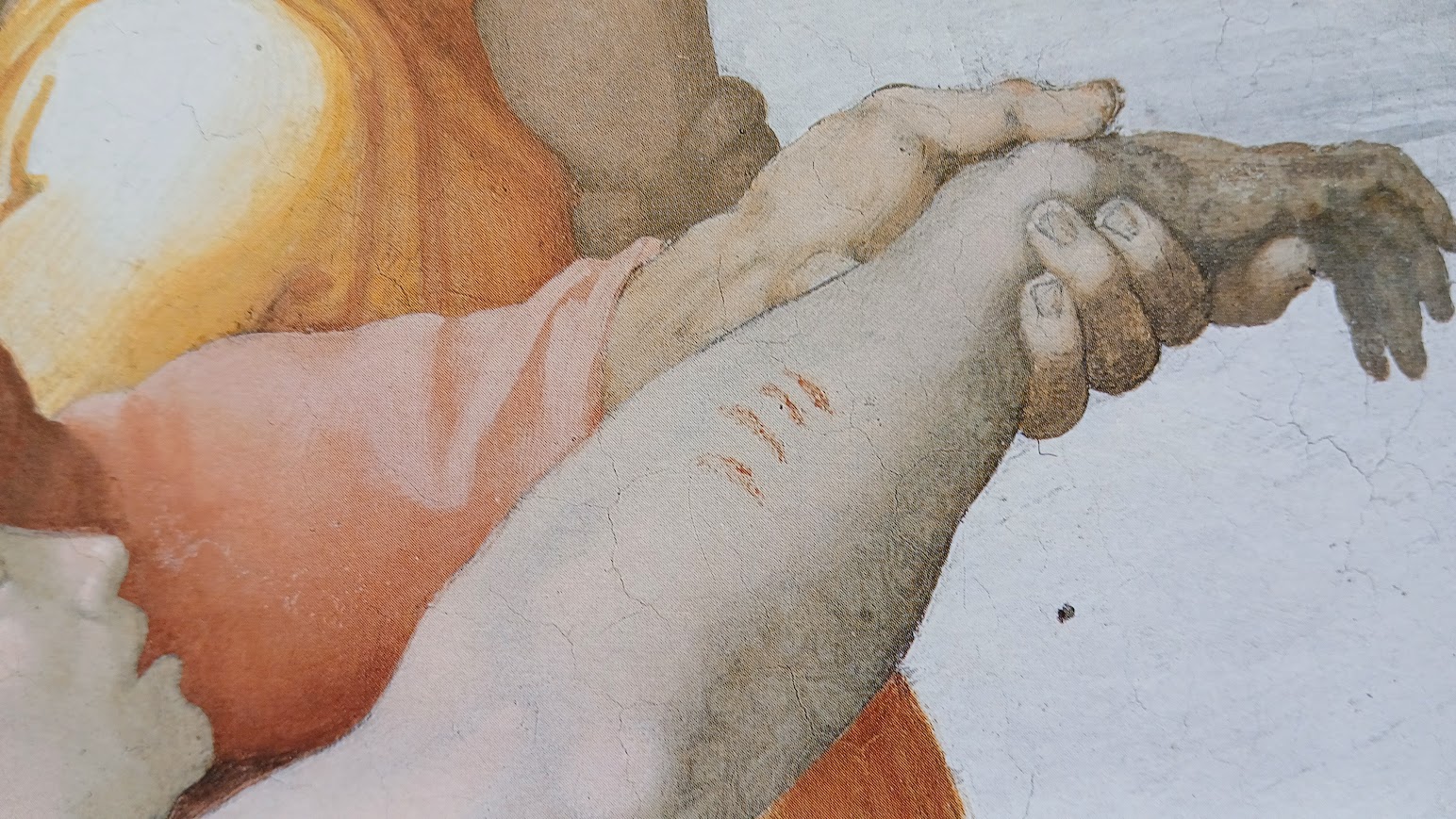
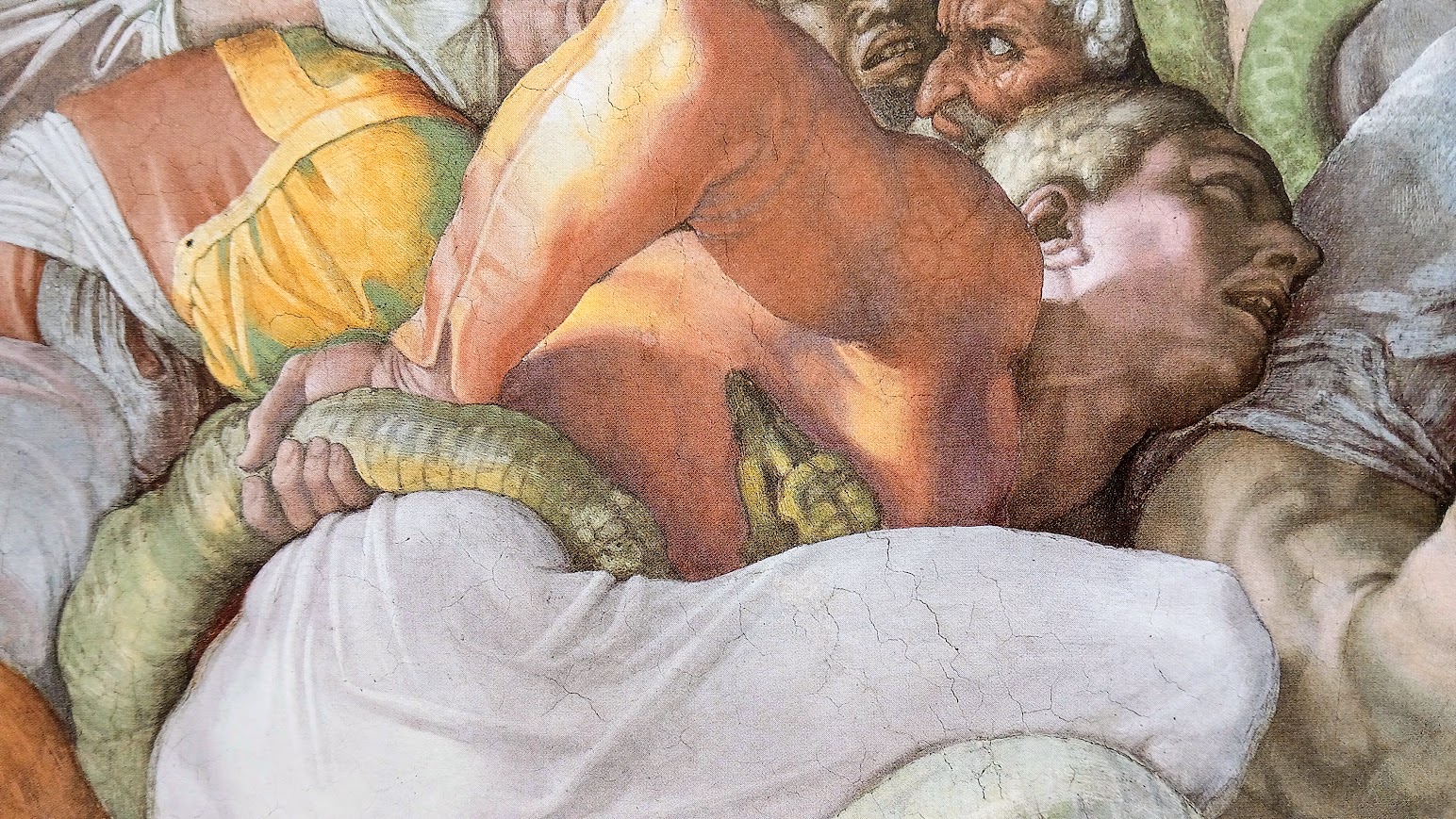
Nella volta della Cappella Sistina affrescai una donna morsa da un serpente. Sul suo braccio destro compaiono quattro piccoli segni, tracce lasciate da due morsi consecutivi. Un particolare presente nel momento concitato del Serpente di Bronzo.
Se volete comprendere fino a che punto mi sia spinto nel rappresentare il dolore umano, vi consiglio di soffermarvi a osservare in particolare quel pennacchio, là dove i corpi si accalcano e la salvezza sembra dipendere da un gesto disperato.
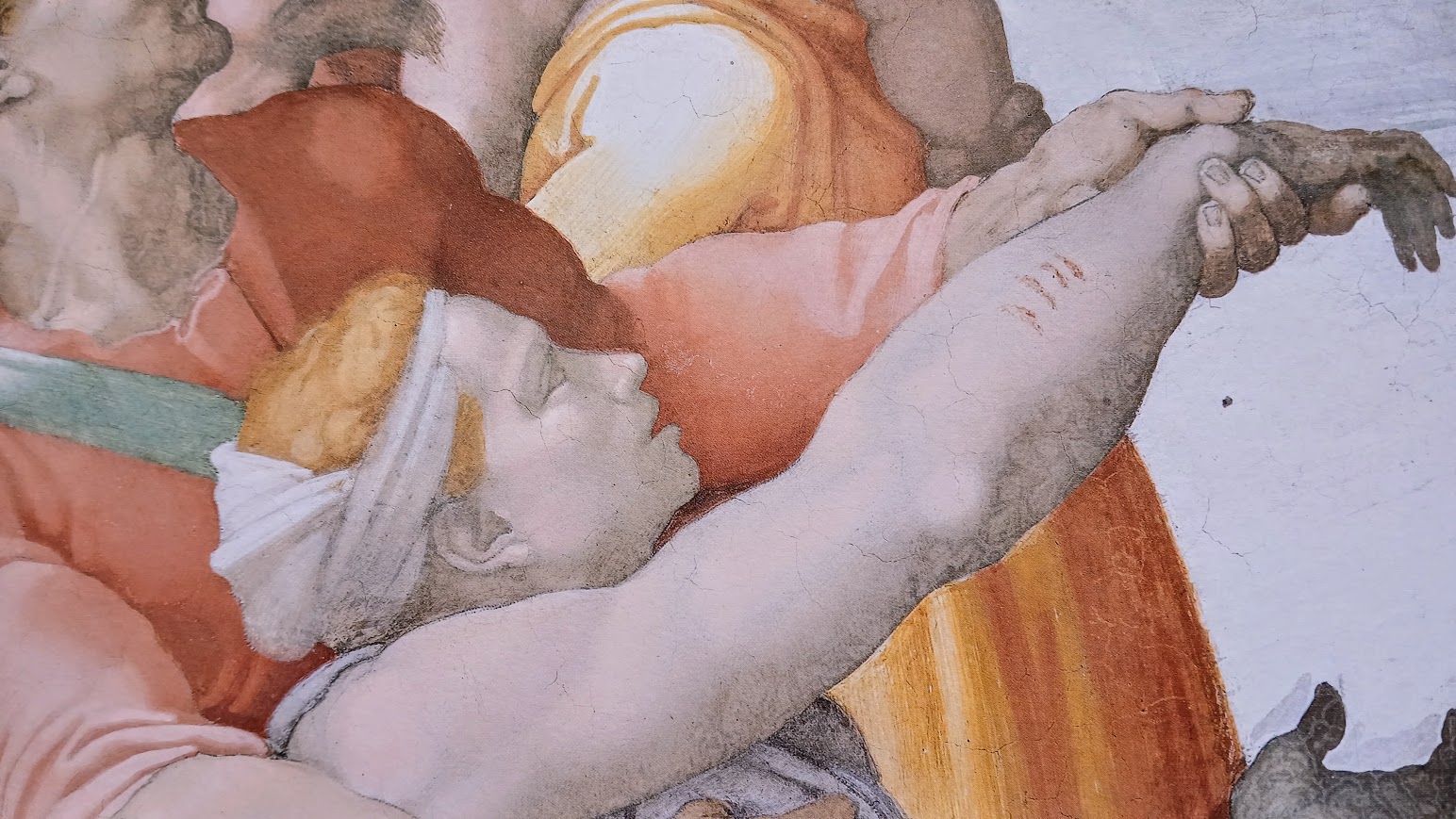
Il Serpente di Bronzo è una delle quattro scene dedicate alle salvazioni del popolo d’Israele. Fra le figure agitate da un terrore quasi palpabile, c’è una donna sul cui braccio si distinguono quattro segni: due coppie di tracce che sembrano indicare due morsi ravvicinati dello stesso serpente.
Un dettaglio piccolo, certo, ma descrive molto bene quello che sta accadendo. In mezzo a uomini e donne che si contorcono, cercano aiuto o tentano disperatamente di sfuggire ai rettili, quei segni riportano la storia biblica a una dimensione concreta: quella di un corpo vulnerabile, raggiunto dal veleno e minacciato dalla morte.
Il Serpente di Bronzo: la storia biblica dietro l’affresco
Per capire la ragione di tanta sofferenza, bisogna tornare al racconto dell’Antico Testamento, nel libro dei Numeri.
Gli Israeliti, durante il loro cammino nel deserto, persero la fiducia nell’Altissimo e cominciarono a protestare contro Dio e contro Mosè. La loro ribellione ebbe conseguenze terribili: il Signore mandò fra loro serpenti velenosi, i cui morsi provocarono la morte di molti.
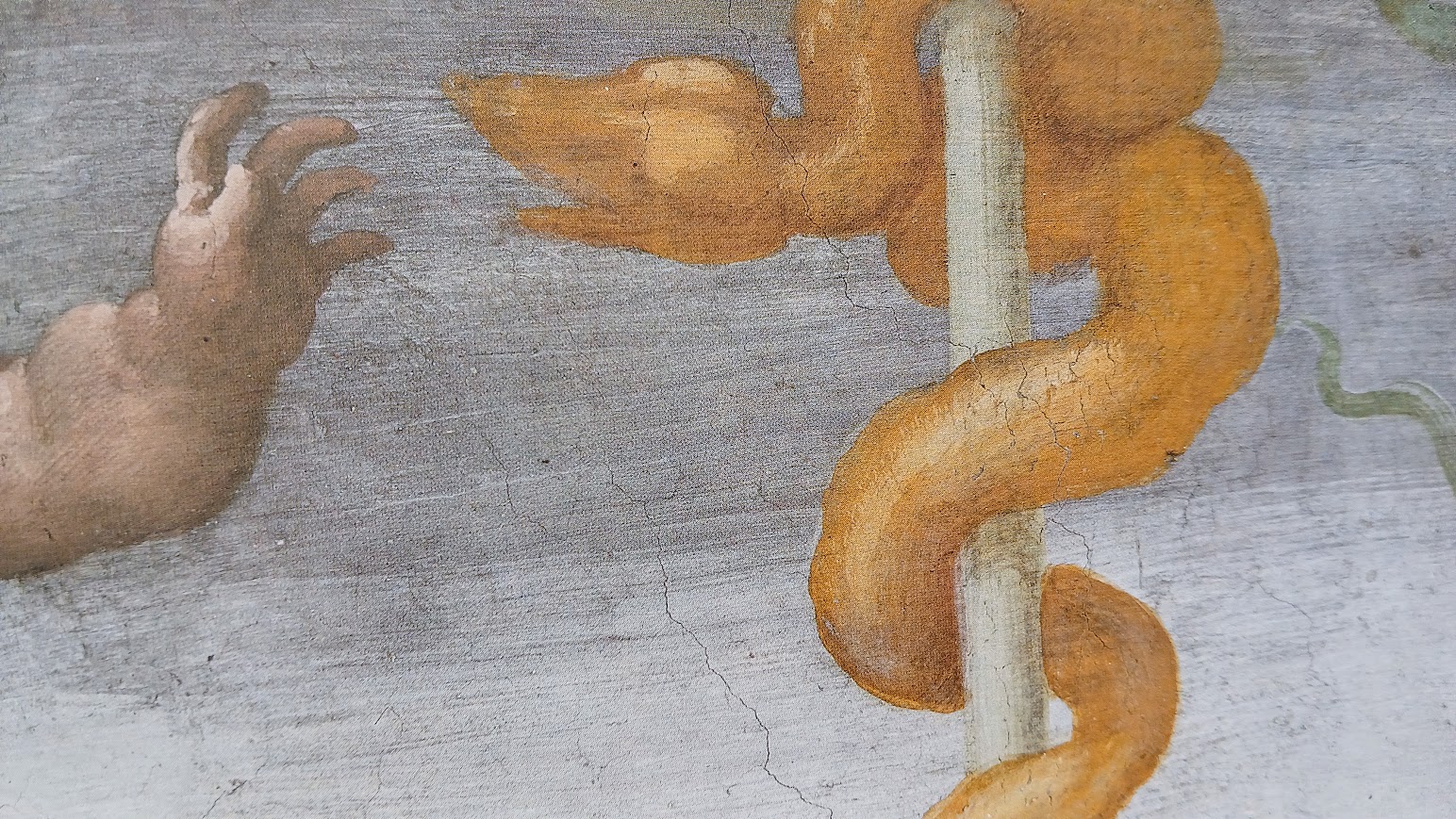
Il popolo riconobbe allora la propria colpa e chiese a Mosè di intercedere. La risposta divina fu sorprendente. Mosè ricevette l’ordine di costruire un serpente di bronzo e di innalzarlo sopra un’asta: chiunque fosse stato morso, guardandolo, avrebbe potuto salvarsi.
Non era dunque sufficiente fuggire, nascondersi o combattere contro gli animali. La guarigione richiedeva un atto di fiducia.
Ho affrescato così la punizione, il pentimento e la possibilità della salvezza. Tre momenti che si concentrano in uno spazio ristretto, dove ogni gesto sembra partecipare a una lotta disperata fra la vita e la morte.
Corpi intrecciati, espressioni deformate e colori violenti
Nel pennacchio del Serpente di Bronzo volli dare forma al tumulto.
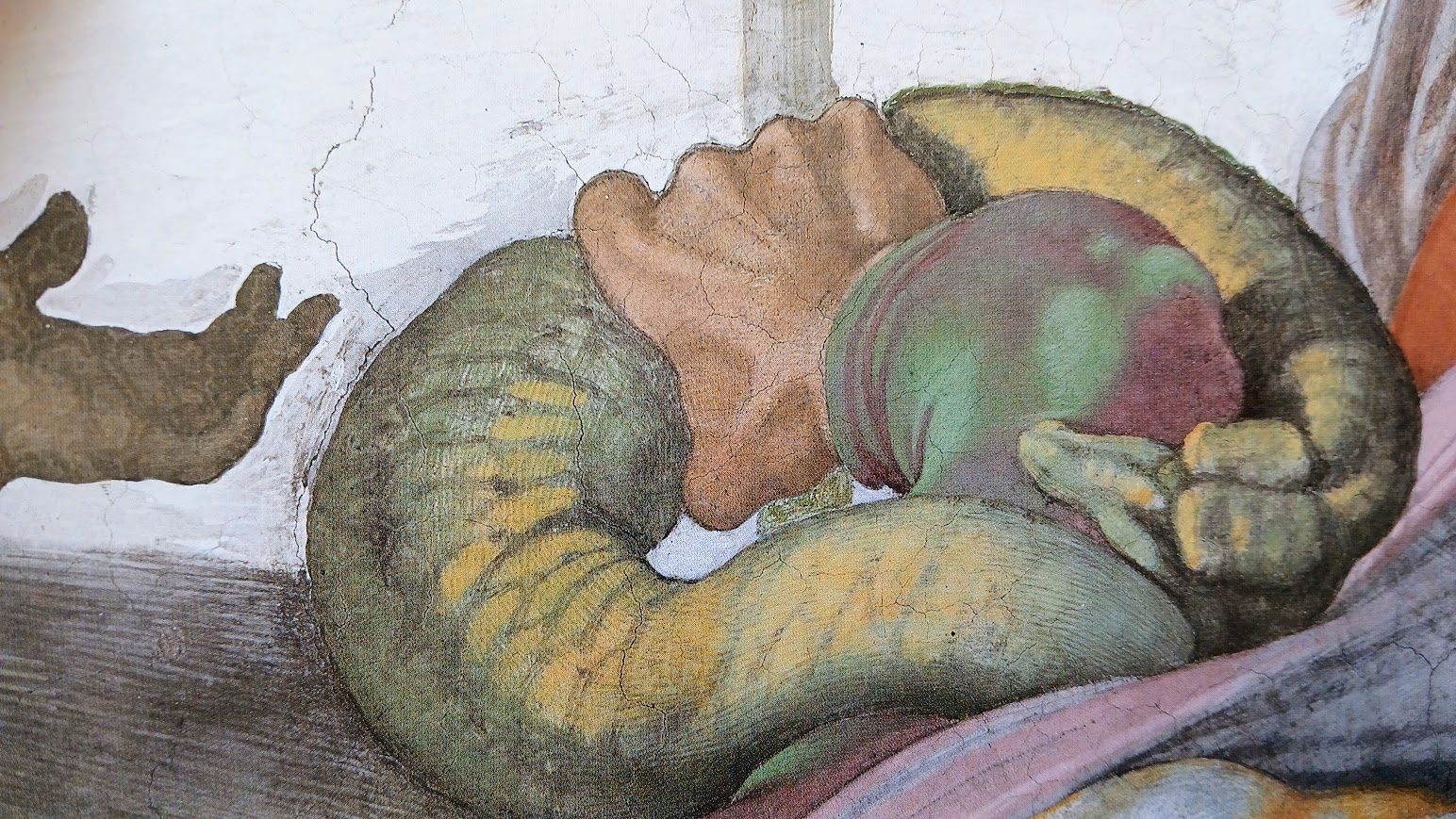
I corpi si sovrappongono, le braccia si tendono, le figure si stringono le une alle altre. Alcuni cercano scampo, altri sembrano già sopraffatti dal dolore. I volti si trasformano in maschere tragiche, deformate da espressioni che rendono quasi impossibile distinguere il terrore dalla disperazione.
Anche i colori contribuiscono a creare questa tensione. I contrasti cromatici separano le figure, ne accentuano i movimenti e fanno emergere la drammaticità della scena.
Lo spazio disponibile è limitato ma tale costrizione mi permise di concentrare una moltitudine di gesti e di emozioni in una composizione di straordinaria intensità.
Desideravo che chi guardava sentisse il peso di quella paura, che percepisse la fragilità dei corpi e la necessità di una salvezza che non poteva essere conquistata con la sola forza fisica.
Il ricordo del Laocoonte: quando il marmo sembra gridare
Se questa scena vi ricorda il gruppo scultoreo del Laocoonte, non è un caso.
Quando il celebre gruppo antico venne ritrovato a Roma nel 1506, ebbi modo di assistere anch’io alla scoperta. La sofferenza di Laocoonte e dei suoi figli, avvinghiati dai serpenti, mi colpì profondamente. Nel marmo antico, i muscoli tesi, i volti contratti e i corpi intrappolati esprimono una lotta disperata contro una forza che sembra impossibile sconfiggere.
Nel mio affresco il soggetto è diverso ed è differente anche il senso religioso, ma la potenza del dolore fisico costituisce un punto di contatto evidente. Anche qui i serpenti diventano parte di un dramma che coinvolge ogni fibra del corpo umano.
Nel Laocoonte assistiamo a una tragedia senza scampo; nel Serpente di Bronzo, invece, il dolore si inserisce in una storia che contempla la possibilità della guarigione. La morte minaccia tutti, ma non tutti sono destinati a soccombere.

Il Serpente di Bronzo prefigura la crocifissione di Cristo
Per la tradizione cristiana, il serpente innalzato da Mosè anticipa simbolicamente la crocifissione di Cristo.
Nel Vangelo di Giovanni, Gesù richiama esplicitamente quell’episodio: “E come Mosè innalzò il serpente nel deserto, così bisogna che sia innalzato il Figlio dell’uomo” (Giovanni 3,14).
Nel deserto, gli Israeliti colpiti dal veleno possono guardare il serpente innalzato e trovare la salvezza; nella lettura cristiana, lo sguardo rivolto a Cristo crocifisso diventa immagine della redenzione.
Quattro segni per una storia di dolore e salvezza
In un’opera monumentale come la volta della Cappella Sistina, sono spesso i particolari più piccoli a raccontare storie grandi.
Quei quattro segni sul braccio invitano a guardare più da vicino, a riconoscere la concretezza della sofferenza dietro il racconto biblico e a interrogarsi sul rapporto fra paura, colpa e redenzione.
Per il momento il sempre vostro Michelangelo Buonarroti vi saluta dandovi appuntamento ai prossimi post e sui social.


The woman bitten by the serpent in the Sistine Chapel
Amidst contorted bodies and faces twisted by pain, there is a detail that escapes a casual or unfocused glance.
On the ceiling of the Sistine Chapel, I frescoed a woman bitten by a serpent. Four small marks appear on her right arm—traces left by two consecutive bites. It is a detail found within the frenzied scene of The Brazen Serpent.
If you wish to understand the lengths to which I went in depicting human suffering, I suggest you pause to observe that particular spandrel—the area where bodies crowd together and salvation seems to hinge on a desperate gesture.
The Brazen Serpent is one of four scenes dedicated to the salvation of the people of Israel. Among the figures gripped by almost palpable terror, there is a woman whose arm bears four distinct marks: two pairs of traces that appear to indicate two closely spaced bites from the same serpent.
It is a small detail, certainly, yet it vividly captures the unfolding drama. Amidst men and women writhing in agony, seeking help, or desperately trying to escape the reptiles, those marks ground the biblical story in a tangible reality: that of a vulnerable body, struck by venom and threatened by death.
The Brazen Serpent: the biblical story behind the fresco
To understand the reason for such suffering, one must turn to the Old Testament account in the Book of Numbers.
During their journey through the wilderness, the Israelites lost faith in the Most High and began to protest against both God and Moses. Their rebellion had terrible consequences: the Lord sent venomous serpents among them, and their bites caused the deaths of many. The people then acknowledged their guilt and asked Moses to intercede. The divine response was surprising. Moses was commanded to fashion a bronze serpent and raise it upon a pole: anyone who had been bitten could be saved simply by looking at it.
Fleeing, hiding, or fighting the creatures was not enough; healing required an act of faith.
Thus, I depicted the punishment, the repentance, and the possibility of salvation—three moments converging in a confined space, where every gesture seems part of a desperate struggle between life and death.
Intertwined bodies, contorted expressions, and violent colors
In the Bronze Serpent spandrel, I sought to give form to the tumult.
Bodies overlap, arms reach out, and figures cling to one another. Some seek escape, while others appear already overcome by agony. Faces transform into tragic masks, twisted by expressions that make it nearly impossible to distinguish terror from despair.
The colors, too, contribute to this tension. Chromatic contrasts separate the figures, accentuate their movements, and bring out the drama of the scene.
The available space was limited, yet this constraint allowed me to concentrate a multitude of gestures and emotions into a composition of extraordinary intensity.
I wanted the viewer to feel the weight of that fear, to perceive the fragility of the bodies and the need for a salvation that could not be won by physical strength alone.
Echoes of the Laocoön: when marble seems to scream
If this scene reminds you of the Laocoön sculpture group, it is no coincidence. When the famous ancient sculpture group was unearthed in Rome in 1506, I too witnessed the discovery. The suffering of Laocoön and his sons, entwined by serpents, struck me deeply. In the ancient marble, the taut muscles, contorted faces, and trapped bodies express a desperate struggle against a force that seems impossible to defeat.
In my fresco, the subject is different, as is the religious significance, yet the intensity of physical pain forms a clear point of connection. Here, too, serpents become part of a drama that engages every fiber of the human body.
In the Laocoön, we witness a tragedy offering no escape; in The Brazen Serpent, however, the pain unfolds within a narrative that holds out the possibility of healing. Death threatens everyone, yet not all are destined to succumb.
The Brazen Serpent foreshadows the Crucifixion of Christ
In Christian tradition, the serpent raised up by Moses symbolically foreshadows the Crucifixion of Christ.
In the Gospel of John, Jesus explicitly refers to that episode: “And just as Moses lifted up the serpent in the wilderness, so must the Son of Man be lifted up” (John 3:14).
In the wilderness, Israelites stricken by venom could look upon the raised serpent and find salvation; in the Christian interpretation, gazing upon the crucified Christ becomes an image of redemption.
Four signs in a story of pain and salvation
In a monumental work like the Sistine Chapel ceiling, there are often it is the smallest details that tell the greatest stories.
Those four marks on the arm invite us to look more closely, to recognize the tangible reality of suffering behind the biblical narrative, and to reflect on the relationship between fear, guilt, and redemption.
For now, your ever-faithful Michelangelo Buonarroti bids you farewell, looking forward to seeing you in future posts and on social media.

Sostienici – Support Us
Se questo blog ti piace e ti appassiona, puoi aiutarci a farlo crescere sempre più sostenendoci in modo concreto condividendo i post, seguendo le pagine social e con un contributo che ci aiuta ad andare avanti con il nostro lavoro di divulgazione. . ENGLISH: If you like and are passionate about this blog, you can help us make it grow more and more by supporting us in a concrete way by sharing posts, following social pages and with a contribution that helps us to move forward with our dissemination work.
10,00 €
Condividi:


Questo sono io




sostienici

Sostienici - Support Us
Se questo blog ti piace e ti appassiona, puoi aiutarci a farlo crescere sempre più sostenendoci in modo concreto condividendo i post, seguendo le pagine social e con un contributo che ci aiuta ad andare avanti con il nostro lavoro di divulgazione. . ENGLISH: If you like and are passionate about this blog, you can help us make it grow more and more by supporting us in a concrete way by sharing posts, following social pages and with a contribution that helps us to move forward with our dissemination work.
€10,00


