

Natale in Piazza San Pietro 2026: l’albero di 24 metri dal Pollino e il grande presepe con 90 comuni e 146 parrocchie
Un grande abete bianco di 24 metri, decorato con le creazioni in ceramica dei bambini, oltre 50mila LED e un presepe monumentale che racconta Betlemme attraverso le tradizioni popolari abruzzesi.
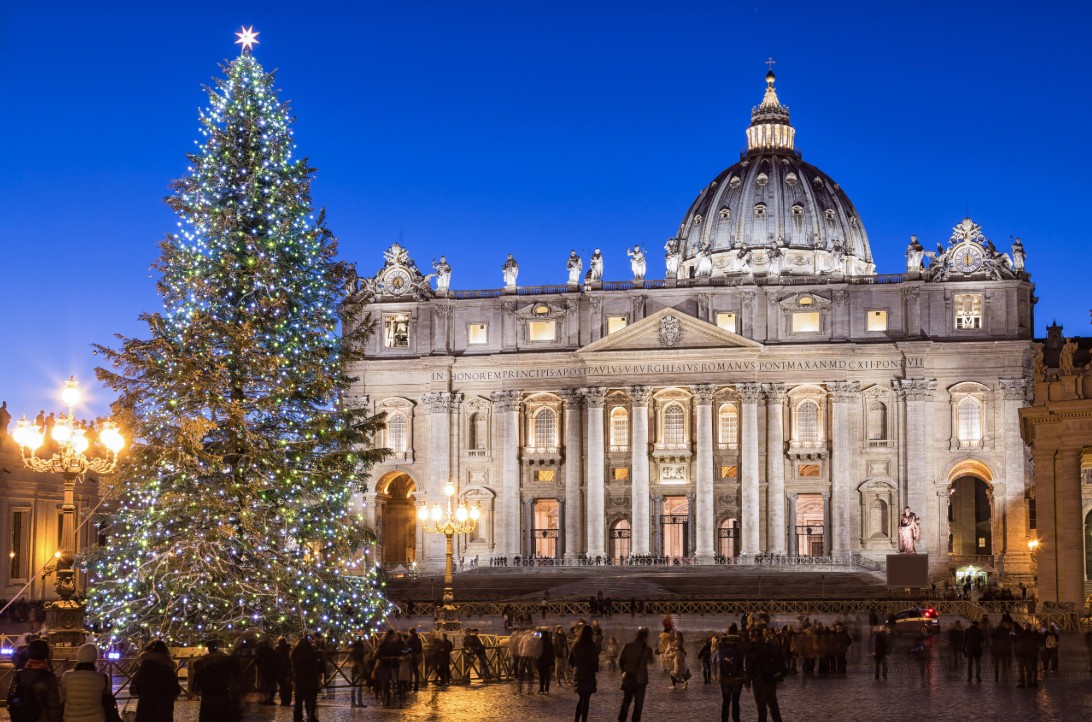
Il Natale 2026 si prepara a trasformare Piazza San Pietro in uno dei luoghi più suggestivi delle festività, con un allestimento che quest’anno mette al centro non soltanto la bellezza, ma anche la solidarietà, l’inclusione e il rispetto per l’ambiente.
L’albero di Natale e il presepe di Piazza San Pietro saranno inaugurati il 7 dicembre 2026 alle ore 17.30, con una cerimonia che avrà un significato speciale: per la prima volta, l’accensione dell’abete in Vaticano avverrà contemporaneamente a quella dell’albero di Natale di Gubbio, in Umbria, celebre per essere il più grande del mondo.

A premere il pulsante che darà ufficialmente luce alle installazioni saranno alcuni bambini in cura presso i reparti oncologici di ospedali italiani. Un gesto simbolico, che restituisce ai più piccoli un ruolo da protagonisti in una delle celebrazioni natalizie più attese.
La scelta di Gubbio non è casuale. Nel 2026 ricorre infatti l’ottavo centenario della morte di San Francesco d’Assisi e la città umbra è legata alla tradizione francescana per il celebre episodio dell’incontro tra il Santo e il lupo, tramandato dai Fioretti.
L’albero di Natale di Piazza San Pietro: un abete bianco di 24 metri dal Parco del Pollino
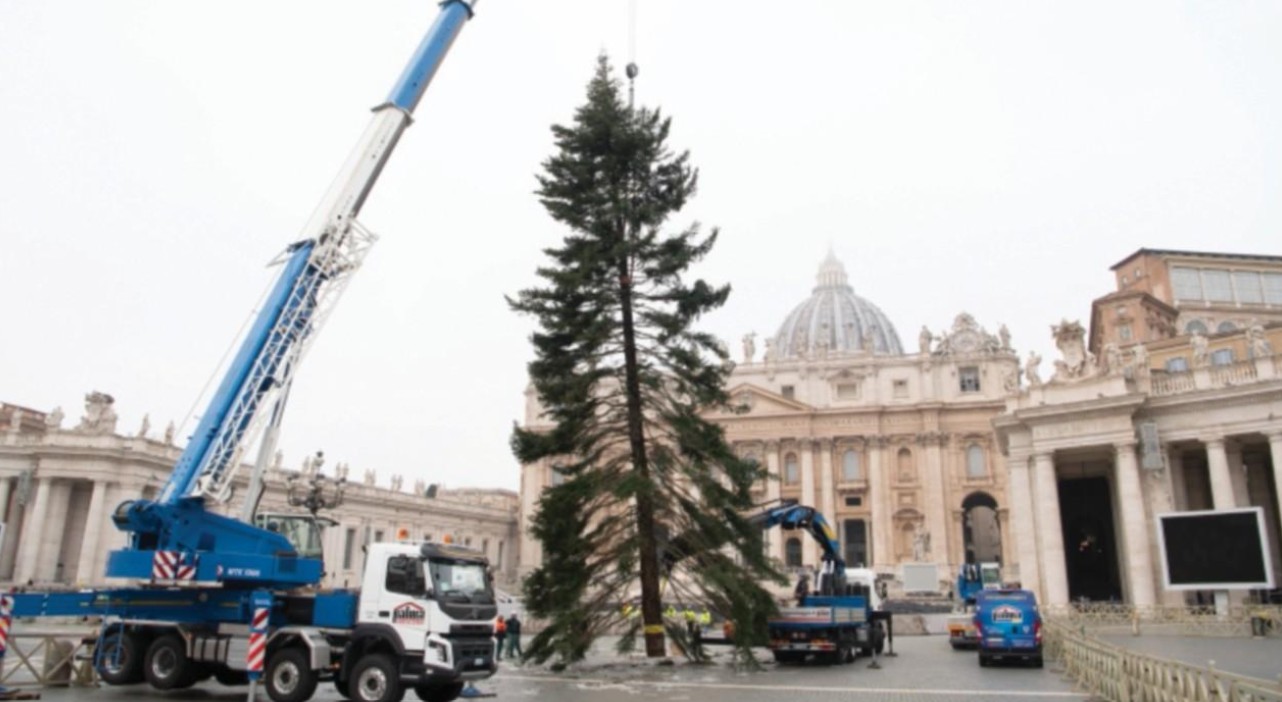
Il protagonista del Natale in Piazza San Pietro sarà un maestoso abete bianco alto 24 metri e del peso di 75 quintali, proveniente dal bosco di Cugno dell’Acero, nel territorio del Parco Nazionale del Pollino.
L’albero arriverà in Vaticano nella mattinata del 19 novembre e verrà immediatamente collocato nell’emiciclo del colonnato del Bernini, dove diventerà il fulcro dell’allestimento natalizio.
A donarlo è il Comune di Terranova di Pollino, in provincia di Potenza, un territorio caratterizzato da un patrimonio naturalistico di grande valore. La scelta dell’abete è stata affidata al servizio di custodia forestale, che ha individuato esemplari maturi il cui prelievo rientra nel naturale ricambio del bosco, nel rispetto dei criteri di sostenibilità.
Le decorazioni realizzate dai bambini e oltre 50mila LED
Il tema scelto per gli addobbi è Il Mondo che vorrei, un progetto che coinvolge i bambini attraverso i laboratori di ceramico-terapia della Fondazione Lene Thun, attivi settimanalmente negli ospedali italiani.
Saranno proprio le loro creazioni in argilla a decorare l’abete di Piazza San Pietro. Piccoli manufatti nei quali i bambini hanno affidato pensieri, desideri e speranze, trasformando l’albero in un racconto collettivo di emozioni.
Accanto alle decorazioni in ceramica, saranno installati oltre 50mila LED intelligenti, capaci di creare scenografie luminose dinamiche e suggestive.
L’effetto sarà quello di un grande albero che unisce tecnologia e artigianato, ma soprattutto dà spazio alla sensibilità e all’immaginazione dei più piccoli.
Il presepe di Piazza San Pietro: 90 comuni e 146 parrocchie raccontano Betlemme
Se l’abete bianco sarà il protagonista luminoso delle festività, il presepe rappresenterà il cuore della tradizione e della spiritualità natalizia.
L’allestimento del 2026, dal titolo ‘Il grande Mistero‘, è un dono dell’Arcidiocesi di Chieti-Vasto, realizzato insieme all’Associazione Amici del Presepe di Atessa, alla Libera Confraternita degli Artisti e al Centro Educazione Carcerario Santi Pietro e Paolo di Vasto.
Il progetto coinvolge una comunità davvero ampia: 90 comuni delle province di Chieti e Pescara e 146 parrocchie dell’arcidiocesi hanno partecipato alla sua realizzazione.
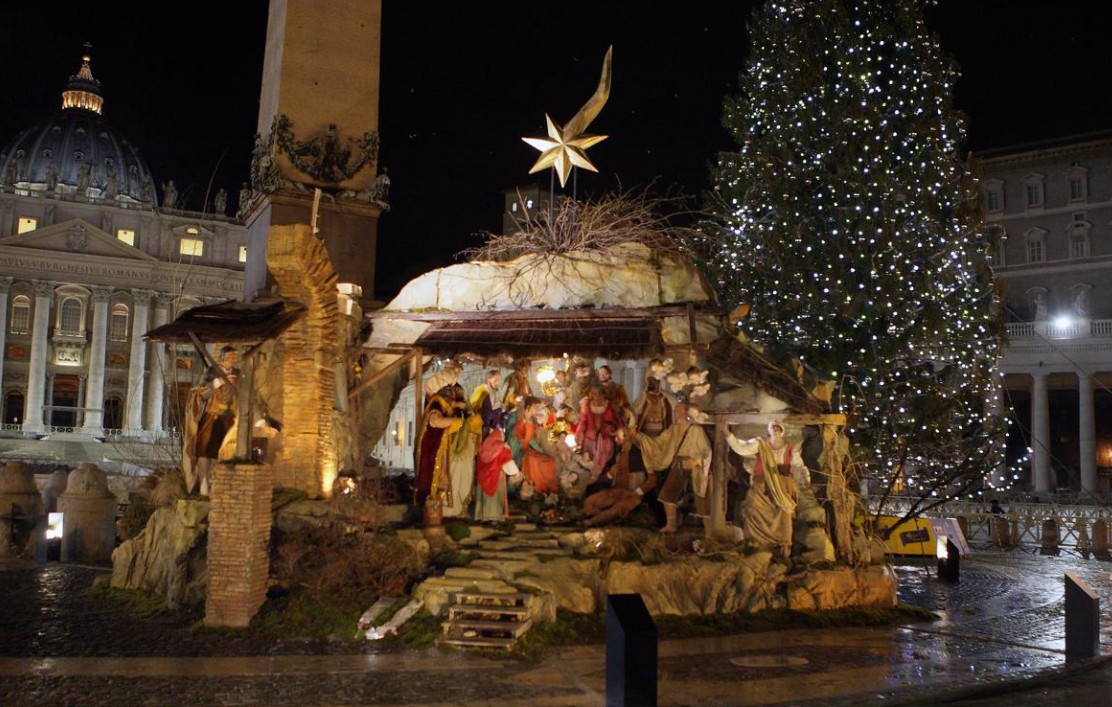
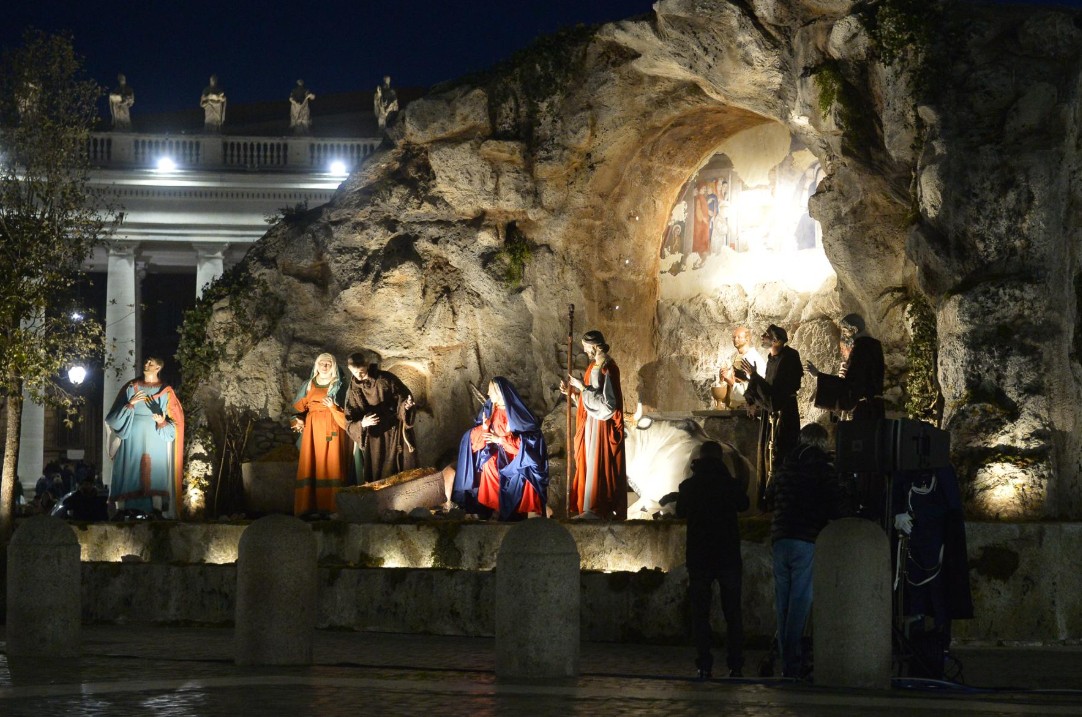
I personaggi, rappresentati a grandezza naturale, saranno inseriti in un paesaggio che intende ricreare l’atmosfera della Betlemme al tempo della nascita di Gesù.
Uno degli elementi più caratteristici è la presenza delle Pagliarelle, chiamate anche Pinciare: antiche abitazioni contadine costruite con terra e paglia, caratterizzate da semplici coperture in paglia.
Attraverso queste architetture rurali, il presepe recupera forme e materiali della tradizione popolare abruzzese, costruendo un paesaggio che richiama la vita quotidiana di un tempo e restituisce alla Natività una dimensione profondamente umana.
Un presepe che parla di solidarietà e inclusione
Alla sua realizzazione hanno partecipato anche alcuni detenuti del Centro Educazione Carcerario Santi Pietro e Paolo di Vasto, coinvolti in un percorso educativo e formativo. L’arte diventa così occasione di incontro, collaborazione e riscatto.
Il Natale in Vaticano tra sostenibilità e arte: che fine farà l’albero?
L’attenzione all’ambiente sarà un altro elemento centrale degli allestimenti natalizi di quest’anno.
Oltre all’abete destinato a Piazza San Pietro, altri alberi di dimensioni più contenute saranno portati in Vaticano e utilizzati per decorare uffici e palazzi della Santa Sede, oltre al Palazzo Apostolico di Castel Gandolfo.
Al termine del periodo natalizio, il legno dell’abete verrà recuperato e trasformato, grazie alla collaborazione con Conlegno di Milano, in oggetti di utilità sociale, artistica e liturgica.
Una scelta che si inserisce nel percorso di valorizzazione dell’economia circolare e richiama i principi dell’enciclica Laudato si’ di Papa Francesco.

Il presepe dei maestri del Carnevale di Viareggio nell’Aula Paolo VI
Il Natale in Vaticano avrà anche un’altra installazione artistica nell’Aula Paolo VI, dove sarà allestito un presepe realizzato dai maestri del Carnevale di Viareggio.
Il progetto guarda al mondo del mare e alla vita dei pescatori, un universo profondamente legato alla storia e all’identità della città toscana.
I Re Magi saranno reinterpretati attraverso questa prospettiva e verranno proposti uomini di mare che portano in dono le ricchezze del Mediterraneo.
Quando si accendono l’albero e il presepe di Piazza San Pietro?
L’appuntamento da segnare in calendario è quello del 7 dicembre 2026 alle ore 17.30, quando Piazza San Pietro si illuminerà ufficialmente per il Natale.
La cerimonia sarà collegata in diretta con Gubbio, dove nello stesso momento verrà acceso il celebre albero luminoso sulle pendici del Monte Ingino.
A rendere ancora più significativo il momento sarà la partecipazione dei bambini in cura presso alcuni reparti oncologici italiani, chiamati ad azionare il pulsante dell’accensione.
Per il momento il sempre vostro Michelangelo Buonarroti vi saluta dandovi appuntamento ai prossimi post e sui social.

Christmas in St. Peter’s Square 2026: A 24-meter tree from the Pollino region and a grand nativity scene involving 90 municipalities and 146 parishes
A towering 24-meter white fir, adorned with ceramic creations made by children and illuminated by over 50,000 LED lights, will stand alongside a monumental nativity scene that depicts Bethlehem through the lens of traditional folk customs from the Abruzzo region.
Christmas 2026 is set to transform St. Peter’s Square into one of the most enchanting holiday destinations, with a display that emphasizes not only beauty but also solidarity, inclusion, and environmental respect.
The Christmas tree and nativity scene in St. Peter’s Square will be unveiled on December 7, 2026, at 5:30 PM. The ceremony will carry special significance: for the first time, the lighting of the tree at the Vatican will take place simultaneously with the lighting of the Christmas tree in Gubbio, Umbria—famed as the largest in the world.
The honor of pressing the button to officially illuminate the displays will go to children currently undergoing treatment in the oncology wards of Italian hospitals. This symbolic gesture places these young ones at the heart of one of the most anticipated Christmas celebrations.
The choice of Gubbio is no coincidence. The year 2026 marks the eighth centenary of the death of Saint Francis of Assisi, and the Umbrian city is deeply connected to the Franciscan tradition—most notably through the famous account of the Saint’s encounter with the wolf, as recounted in the Fioretti (Little Flowers of Saint Francis). The Christmas Tree in St. Peter’s Square: A 24-Meter-Tall Silver Fir from Pollino National Park
The centerpiece of Christmas in St. Peter’s Square will be a majestic silver fir, standing 24 meters tall and weighing 7,500 kilograms (75 quintals). It comes from the Cugno dell’Acero forest, located within the territory of Pollino National Park.
The tree will arrive at the Vatican on the morning of November 19 and will be immediately positioned within the hemicycle of Bernini’s colonnade, where it will serve as the focal point of the Christmas display.
It was donated by the Municipality of Terranova di Pollino, in the province of Potenza—a region renowned for its exceptionally valuable natural heritage. The selection of the fir was entrusted to the forestry service, which identified mature specimens whose removal aligns with the forest’s natural renewal cycle, in full compliance with sustainability criteria.
Decorations Created by Children and Over 50,000 LED Lights
The theme chosen for the decorations is “The World I Would Like” (Il Mondo che vorrei), a project that engages children through the ceramic-therapy workshops of the Lene Thun Foundation, which are held weekly in hospitals across Italy.
The children’s own clay creations will adorn the fir tree in St. Peter’s Square—small, handcrafted pieces into which the children have poured their thoughts, wishes, and hopes, transforming the tree into a collective narrative of emotions.
Alongside the ceramic decorations, more than 50,000 smart LED lights will be installed, capable of creating dynamic and evocative lighting displays.
The result will be a magnificent tree that blends technology with craftsmanship, while—most importantly—giving voice to the sensitivity and imagination of children.
The Nativity Scene in St. Peter’s Square: 90 Municipalities and 146 Parishes Tell the Story of Bethlehem
While the white fir tree will serve as the luminous centerpiece of the holiday season, the Nativity scene will represent the heart of Christmas tradition and spirituality.
The 2026 display, titled “The Great Mystery,” is a gift from the Archdiocese of Chieti-Vasto, created in collaboration with the “Amici del Presepe” (Friends of the Nativity) Association of Atessa, the “Libera Confraternita degli Artisti” (Free Confraternity of Artists), and the “Santi Pietro e Paolo” Prison Education Center in Vasto.
The project involves a remarkably broad community: 90 municipalities from the provinces of Chieti and Pescara, along with 146 parishes from the Archdiocese, took part in its creation.
The life-sized figures will be set within a landscape designed to recreate the atmosphere of Bethlehem at the time of Jesus’ birth.
One of the most distinctive features is the inclusion of pagliarelle—also known as pinciare—traditional rural dwellings built from earth and straw, topped with simple thatched roofs.
Through these rural structures, the Nativity scene draws upon the forms and materials of the Abruzzo folk tradition, crafting a landscape that evokes the daily life of the past and lends a deeply human dimension to the Nativity.
A Nativity scene that speaks of solidarity and inclusion
Inmates from the “Santi Pietro e Paolo” Prison Education Center in Vasto also participated in the creation of the display as part of an educational and vocational program. In this way, art becomes an opportunity for connection, collaboration, and redemption.
Christmas at the Vatican: Sustainability and Art—What Becomes of the Tree?
Environmental awareness will be another central theme of this year’s Christmas displays. In addition to the fir tree destined for St. Peter’s Square, other, smaller trees will be brought to the Vatican and used for decorate the offices and buildings of the Holy See, as well as the Apostolic Palace of Castel Gandolfo.
At the end of the Christmas season, the wood from the fir tree will be reclaimed and—thanks to a collaboration with Conlegno of Milan—transformed into objects for social, artistic, and liturgical use.
This choice aligns with the promotion of a circular economy and reflects the principles set out in Pope Francis’s encyclical Laudato si’.
A Nativity scene by the masters of the Viareggio Carnival in the Paul VI Audience Hall
Christmas at the Vatican will also feature another artistic installation in the Paul VI Audience Hall: a Nativity scene created by the master craftsmen of the Viareggio Carnival.
The project draws inspiration from the maritime world and the lives of fishermen—a realm deeply intertwined with the history and identity of this Tuscan city.
Through this lens, the Three Wise Men are reimagined as seafaring men, bringing the riches of the Mediterranean as their gifts.
When will the tree and the Nativity scene in St. Peter’s Square be illuminated?
Mark your calendars for December 7, 2026, at 5:30 PM, when St. Peter’s Square will officially light up for Christmas.
The ceremony will be linked live to Gubbio, where, at the same moment, the famous illuminated tree on the slopes of Mount Ingino will be lit.
Adding even greater significance to the occasion, children undergoing treatment in various Italian oncology wards will be invited to press the button to turn on the lights.
For now, yours truly, Michelangelo Buonarroti, bids you farewell—until the next post, and see you on social media!

Sostienici – Support Us
Se questo blog ti piace e ti appassiona, puoi aiutarci a farlo crescere sempre più sostenendoci in modo concreto condividendo i post, seguendo le pagine social e con un contributo che ci aiuta ad andare avanti con il nostro lavoro di divulgazione. . ENGLISH: If you like and are passionate about this blog, you can help us make it grow more and more by supporting us in a concrete way by sharing posts, following social pages and with a contribution that helps us to move forward with our dissemination work.
10,00 €
Condividi:


Questo sono io





sostienici

Sostienici – Support Us
Se questo blog ti piace e ti appassiona, puoi aiutarci a farlo crescere sempre più sostenendoci in modo concreto condividendo i post, seguendo le pagine social e con un contributo che ci aiuta ad andare avanti con il nostro lavoro di divulgazione. . ENGLISH: If you like and are passionate about this blog, you can help us make it grow more and more by supporting us in a concrete way by sharing posts, following social pages and with a contribution that helps us to move forward with our dissemination work.
€10,00


