
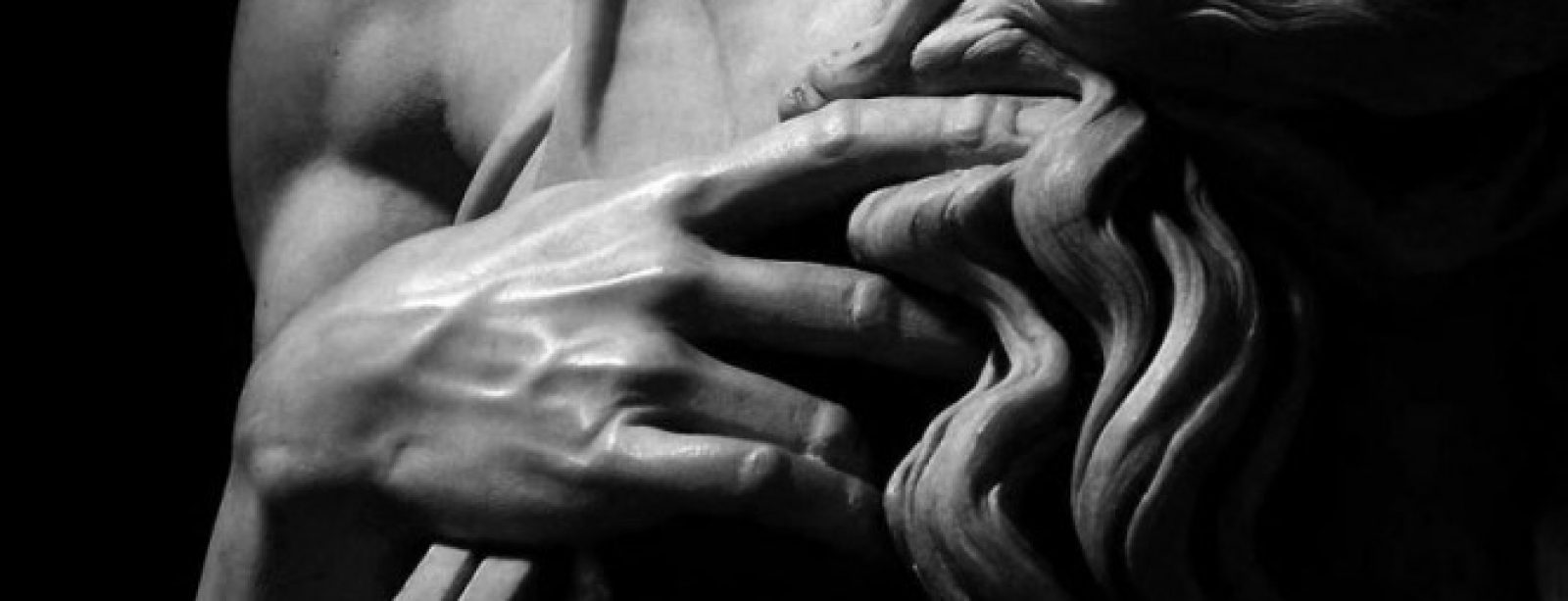
Natale nell’arte: angeli dalle ali colorate, pastori increduli e fiori simbolici nella Natività di Hugo van der Goes
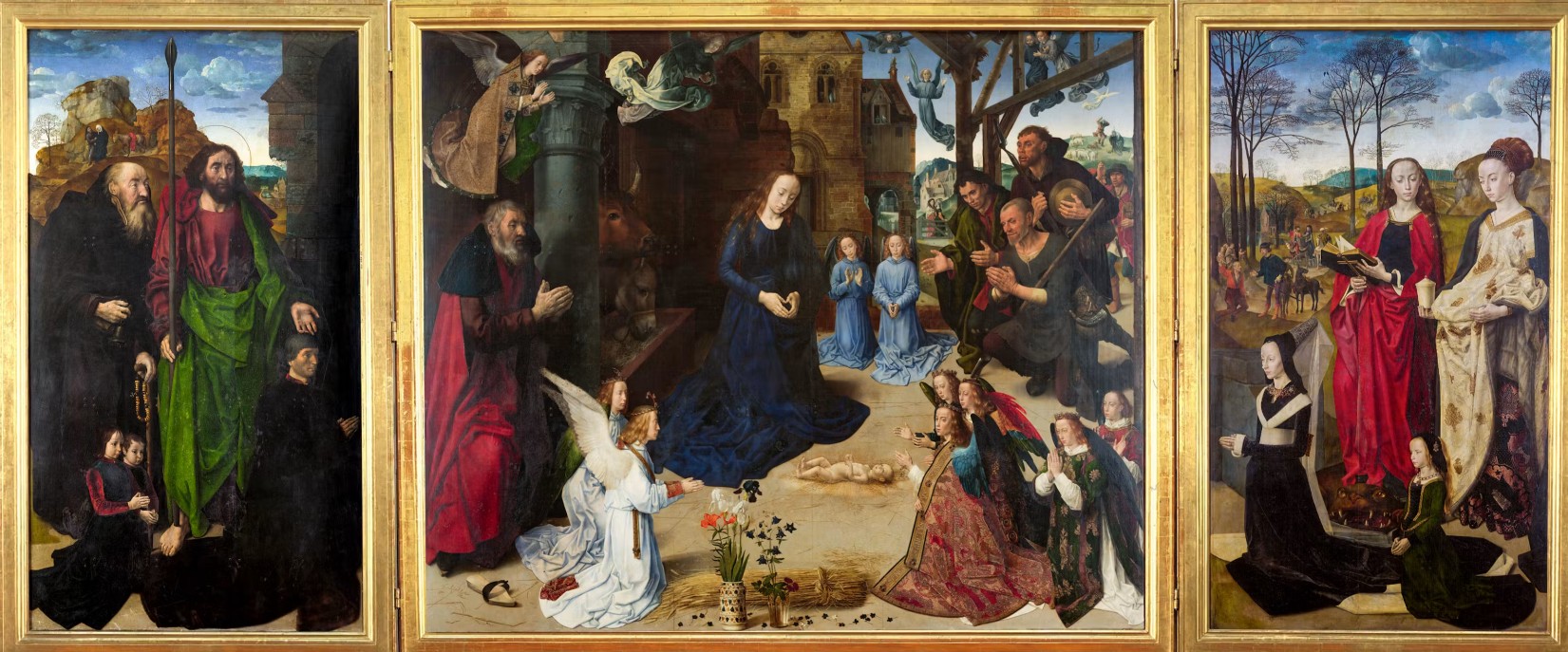
Tra le Natività più interessanti della storia dell’arte, particolare attenzione merita il monumentale Trittico Portinari, uno dei capolavori assoluti della pittura fiamminga del Quattrocento, realizzato da Hugo van der Goes su commissione del banchiere fiorentino Tommaso Portinari.
Un’opera che, quando arrivò a Firenze nel 1483, suscitò grande meraviglia e contribuì a cambiare il modo di guardare e dipingere la realtà. Era ed è tutt’oggi un universo di figure, espressioni, tessuti, fiori e oggetti dipinti con una precisione sorprendente.
Il Bambino Gesù, Luce del mondo
Al centro della composizione si trova Gesù Bambino, nudo e disteso direttamente sul pavimento. Il suo piccolo corpo è circondato da raggi luminosi che lo identificano come la Luce del mondo.
Maria è inginocchiata davanti al Figlio. Il suo volto giovane e malinconico esprime una tenerezza silenziosa, mentre contempla il Bambino con una partecipazione emotiva intensa.
Alle sue spalle, a distanza, si vede Giuseppe, raccolto in preghiera, con le mani giunte. È vicino a una colonna che richiama la tradizione apocrifa secondo la quale Maria si sarebbe appoggiata a una colonna durante il parto.
Van der Goes trasforma il luogo della nascita di Cristo in una sorta di loggia architettonica, con colonne classiche, collocata accanto a un grande edificio identificabile con il palazzo di re David, antenato di Cristo. Sul portale compare infatti una piccola arpa, riferimento al sovrano biblico.
I pastori: uomini veri davanti al miracolo
I pastori non hanno l’aspetto idealizzato dei personaggi che popolano tante altre rappresentazioni della Natività. Sono uomini segnati dalla fatica, con volti rugosi, mani nodose, abiti poveri e fisionomie quasi grottesche.
I loro sguardi raccontano lo stupore, la meraviglia e la commozione davanti a qualcosa che non riescono a comprendere completamente. Le loro figure hanno una forza espressiva tale da diventare protagoniste della scena al pari dei personaggi sacri.
Questa scelta ebbe conseguenze importanti anche sulla pittura fiorentina. Il gruppo dei tre pastori venne ripreso da Domenico Ghirlandaio nella Natività dipinta nel 1485 nella chiesa di Santa Trinita a Firenze, sebbene con tratti più addolciti.
Gli angeli e le loro ali dai colori straordinari
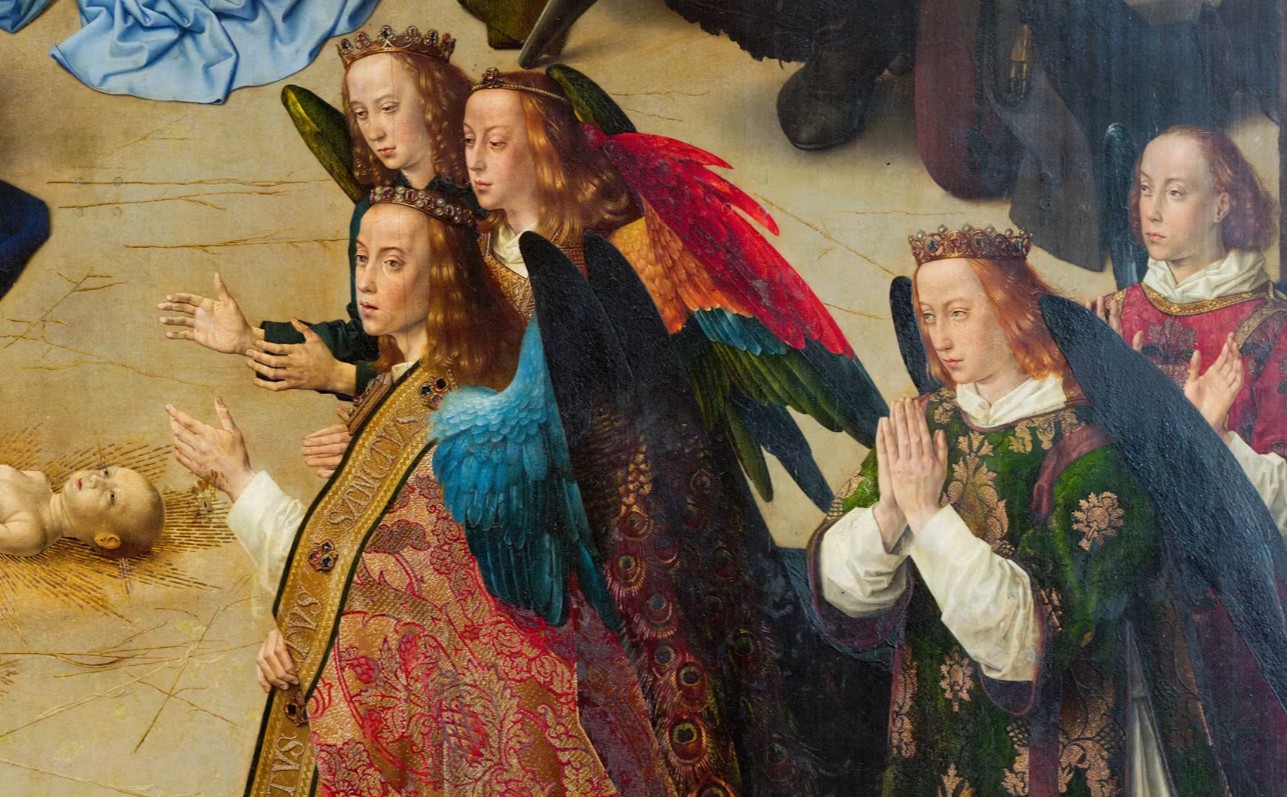
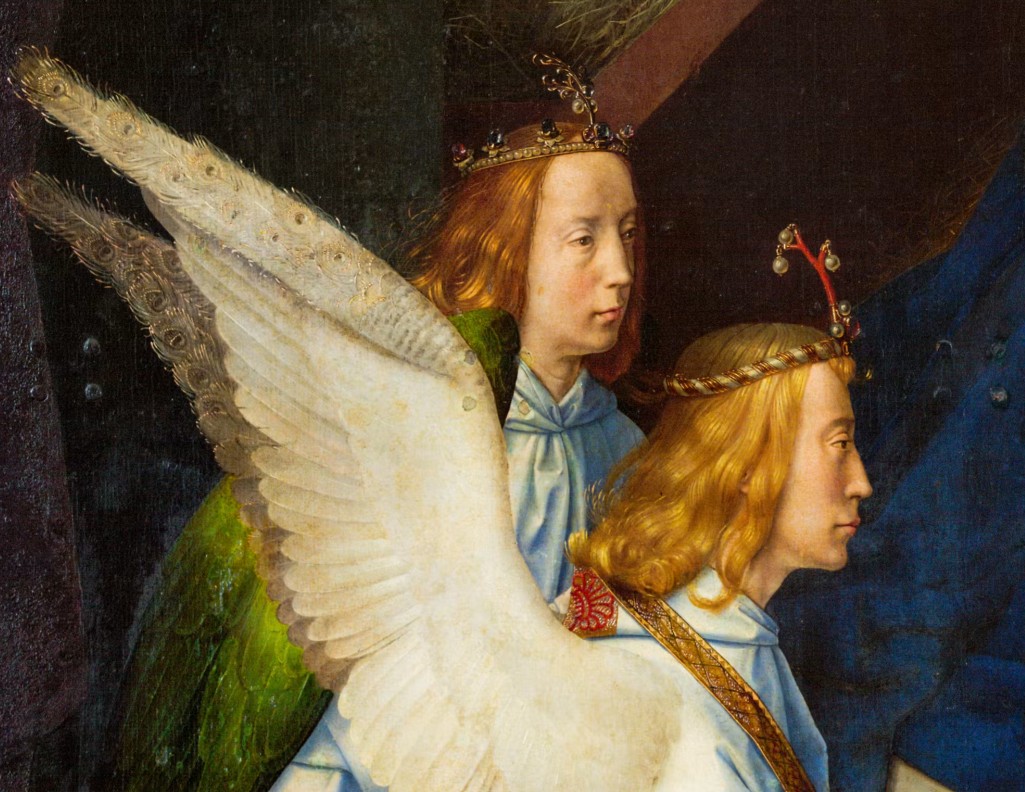
Intorno al Bambino si raccolgono numerosi angeli, inginocchiati o sospesi in volo. Figure raffinate, ciascuna caratterizzata da fisionomie, abiti e colori differenti. Le loro vesti comprendono paramenti liturgici come piviali e dalmatiche, mentre le ali presentano tonalità azzurre, rosse e decorazioni che richiamano gli occhi del pavone, simbolo dell’onniscienza divina, e le ali dei pappagalli ara ara.
La disposizione degli angeli rimanda alla tradizionale gerarchia celeste attribuita allo Pseudo-Dionigi l’Areopagita: Serafini, Cherubini, Troni, Dominazioni, Virtù, Potestà, Principati, Arcangeli e Angeli.
Insomma, un mondo celeste, costruito attraverso una straordinaria attenzione ai particolari.
I fiori davanti alla Natività: un messaggio nascosto
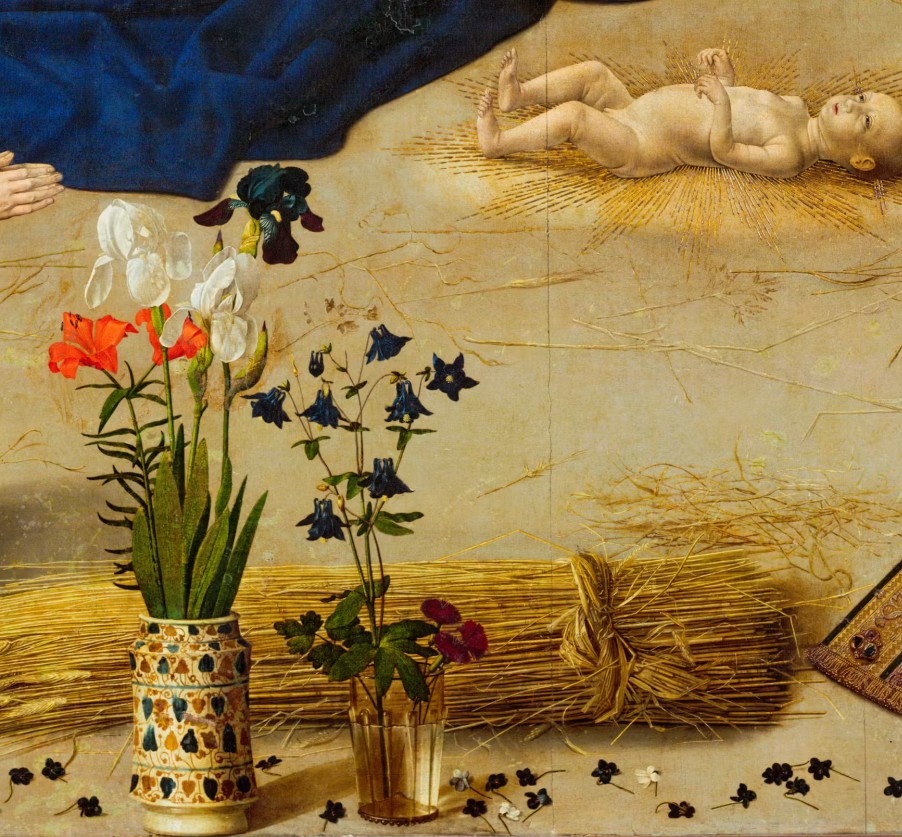
In primo piano, ai piedi dei personaggi, Van der Goes dipinge una natura morta di incredibile precisione, composta da fiori e recipienti che non hanno una funzione esclusivamente decorativa.
Un albarello in maiolica, decorato con foglie d’edera blu e riflessi dorati, contiene iris bianchi e blu e un giglio. Accanto si trova un vaso di vetro con sette aquilegie blu e tre garofani rossi.
Ogni elemento custodisce un significato simbolico. Il giglio e gli iris richiamano la purezza della Vergine e la regalità di Cristo mentre l’aquilegia allude ai dolori che Maria dovrà affrontare.
I tre garofani rossi rimandano alla Trinità e il vaso di vetro richiama la purezza di Maria, secondo una tradizione simbolica cristiana. Non c’è nulla di casuale.
Il curioso dettaglio dello zoccolo di Giuseppe e il piccolo demonio
Tra i particolari meno evidenti si trova uno zoccolo di legno abbandonato ai piedi di San Giuseppe.
La sua presenza è stata interpretata in chiave simbolica, come richiamo alla sacralità del luogo. Viene in mente il passo dell’Esodo nel quale Dio ordina a Mosè di togliersi i sandali davanti al roveto ardente: «Togliti i sandali dai piedi, perché il luogo sul quale tu stai è suolo santo» (Esodo 3,5).
Ancora più insolita è la presenza di un piccolo demonio, con volto leonino e zampa artigliata, dipinto accanto al capitello della colonna. Oggi è difficile individuarlo a causa delle dimensioni e della posizione.
La sua presenza nella scena della Natività è stata collegata alla tradizione cristiana che interpreta la venuta di Cristo come sconfitta del demonio e delle sue opere.
Tommaso Portinari e la sua famiglia: i committenti del capolavoro
Il Trittico Portinari racconta anche la storia di una famiglia fiorentina che aveva raggiunto una posizione di grande prestigio nelle Fiandre.
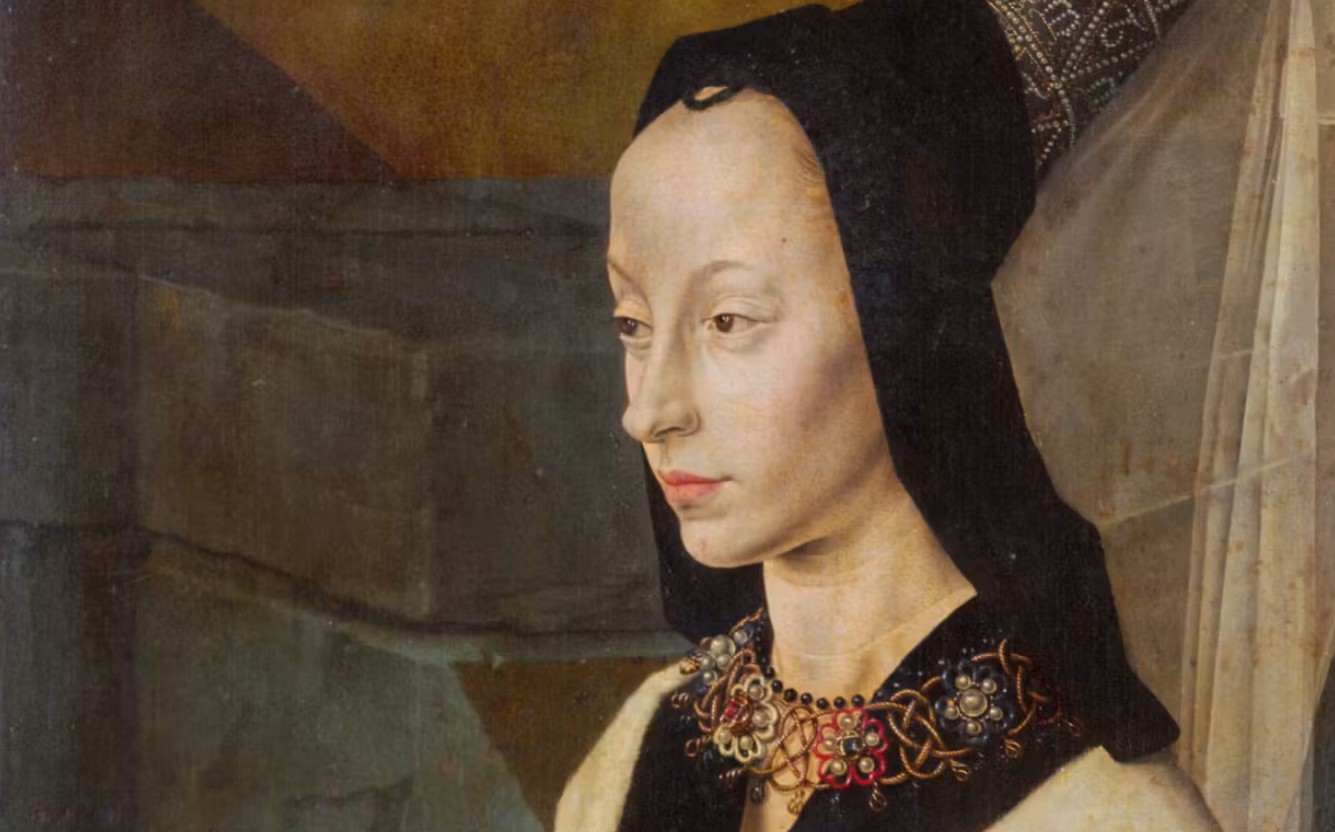
Tommaso Portinari (1428-1501) trascorse molti anni a Bruges, dove lavorava come agente del banco dei Medici. Nel 1470 sposò Maria Baroncelli, anch’essa originaria di Firenze.
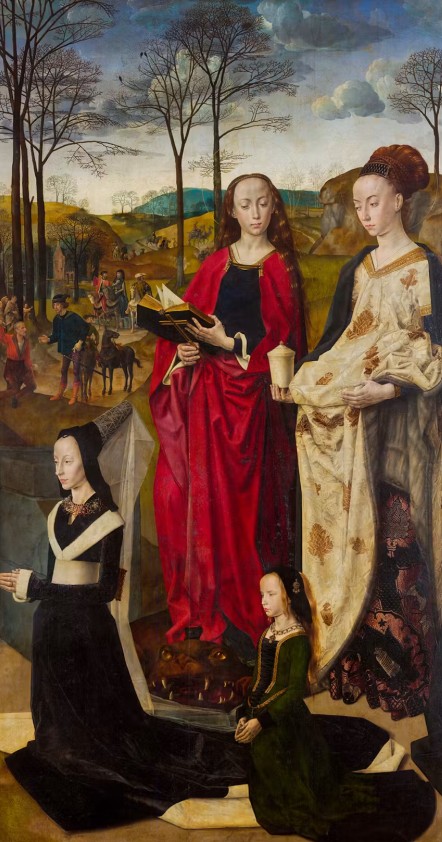
Fu proprio lui a commissionare l’opera a Van der Goes, destinandola alla cappella di famiglia nella chiesa di Sant’Egidio, presso l’ospedale di Santa Maria Nuova a Firenze. Le ante laterali mostrano i membri della famiglia inginocchiati in preghiera, accompagnati dai rispettivi santi protettori.
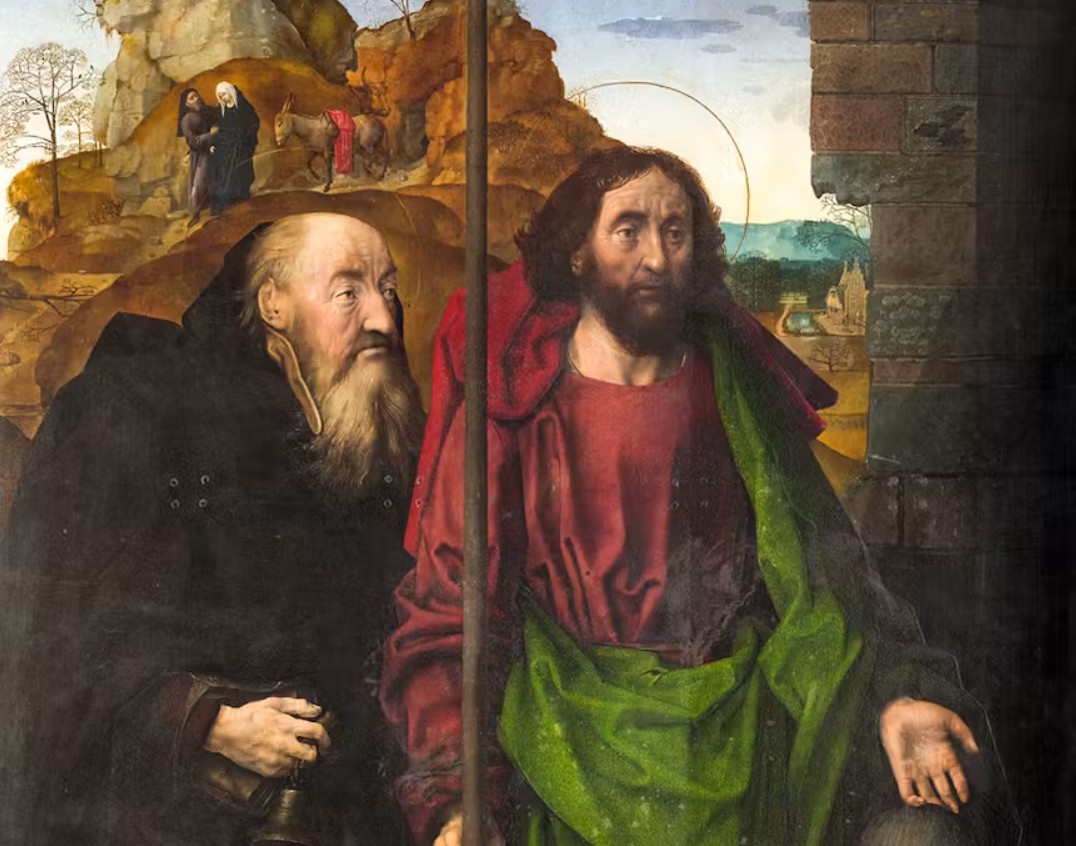
Nell’anta sinistra Tommaso Portinari è presentato dai santi Tommaso e Antonio abate, insieme ai figli Antonio e Pigello. Nell’anta destra Maria Baroncelli e la figlia Margherita sono accompagnate da santa Margherita e Maria Maddalena.
Le dimensioni dei santi sono molto maggiori rispetto a quelle dei committenti: una differenza che sottolinea la loro natura ultraterrena e la gerarchia tra mondo terreno e dimensione celeste.
Le vesti e le acconciature dei Portinari rispecchiano la moda fiamminga del tempo e testimoniano il prestigio sociale della famiglia.
Santa Margherita e Maria Maddalena: due figure ricche di simboli
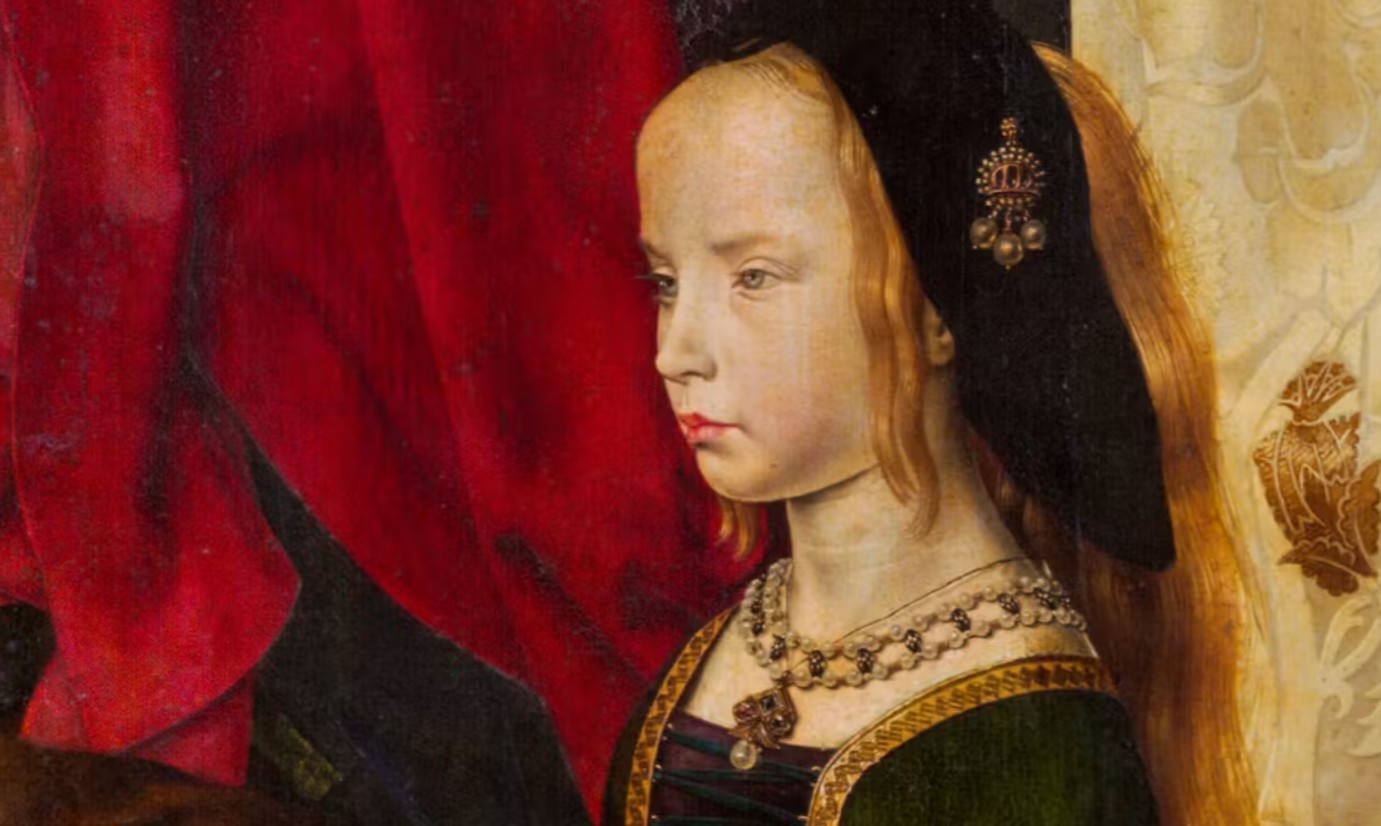
Tra le figure dell’anta destra spiccano due sante molto riconoscibili. Santa Margherita è raffigurata con il libro e una piccola croce, mentre tiene sotto i piedi un drago. Secondo la leggenda, il demonio si era manifestato alla santa sotto forma di drago e l’aveva inghiottita, ma lei era riuscita a liberarsi grazie alla croce.
Accanto a lei compare Maria Maddalena, riconoscibile dal caratteristico vasetto degli unguenti, simbolo della sua tradizione iconografica.
Le due figure sono eleganti, preziosamente vestite e impreziosite da gioielli. Particolarmente raffinato è il collare di Maria Baroncelli, composto da smalti, rubini, zaffiri, perle e grani di onice.
L’Annunciazione sul retro: quando il trittico si chiude
Quando il trittico veniva chiuso, le ante mostravano una raffigurazione dell’Annunciazione dipinta a monocromo. La scena della nascita di Cristo lasciava così il posto al momento precedente della storia sacra: l’annuncio dell’angelo a Maria.
Nel dipinto aperto, invece, l’episodio dell’annuncio è già presente sullo sfondo, inserito nel paesaggio che accompagna la scena principale.
Davanti al Trittico Portinari lo sguardo non si ferma mai a lungo sullo stesso particolare. È una Natività che unisce la solennità del racconto sacro alla vita concreta degli uomini, con le loro rughe, i loro abiti, le loro ricchezze e le loro emozioni.
Per il momento il sempre vostro Michelangelo Buonarroti vi saluta dandovi appuntamento ai prossimi post e sui social.

Christmas in Art: Angels with Colorful Wings, Disbelieving Shepherds, and Symbolic Flowers in the Nativity by Hugo van der Goes
Among the most compelling Nativity scenes in the history of art, the monumental Portinari Triptych—one of the absolute masterpieces of 15th-century Flemish painting—deserves special attention. It was created by Hugo van der Goes, commissioned by the Florentine banker Tommaso Portinari.
Upon its arrival in Florence in 1483, the work sparked great wonder and helped transform the way reality was perceived and depicted. It remains, to this day, a universe of figures, expressions, fabrics, flowers, and objects, all rendered with astonishing precision.
The Christ Child, Light of the World
At the center of the composition lies the infant Jesus, naked and resting directly on the floor. His small body is surrounded by rays of light, identifying Him as the Light of the World.
Mary kneels before her Son. Her youthful, melancholic face conveys a quiet tenderness as she gazes upon the Child with profound emotional intensity.
Behind her, at a slight distance, Joseph is shown in prayer, his hands clasped. He stands near a column—a detail referencing an apocryphal tradition that suggests Mary leaned against a pillar during the birth.
Van der Goes transforms the setting of Christ’s birth into an architectural loggia featuring classical columns, positioned beside a large structure identifiable as the palace of King David, an ancestor of Christ. Indeed, a small harp—a reference to the biblical monarch—appears on the portal.
The Shepherds: Real Men Confronting a Miracle
The shepherds lack the idealized appearance often found in other depictions of the Nativity. They are men marked by hardship, with wrinkled faces, gnarled hands, humble clothing, and almost grotesque features.
Their expressions reveal astonishment, wonder, and deep emotion in the face of something they cannot fully comprehend. Their figures possess such expressive power that they become central to the scene, standing on equal footing with the sacred figures themselves.
This artistic choice had significant repercussions on Florentine painting as well. The group of three shepherds was later incorporated by Domenico Ghirlandaio into his Nativity—painted in 1485 for the church of Santa Trinita in Florence—though with somewhat softened features.
Angels and their extraordinarily colored wings
Gathered around the Christ Child are numerous angels, some kneeling, others suspended in flight. These refined figures are each distinguished by unique facial features, attire, and colors. Their garments include liturgical vestments such as copes and dalmatics, while their wings display shades of blue and red, adorned with patterns reminiscent of peacock eyes—a symbol of divine omniscience—as well as the plumage of macaws.
The arrangement of the angels reflects the traditional celestial hierarchy attributed to Pseudo-Dionysius the Areopagite: Seraphim, Cherubim, Thrones, Dominions, Virtues, Powers, Principalities, Archangels, and Angels.
In short, it is a celestial realm, crafted with an extraordinary attention to detail.
Flowers before the Nativity: a hidden message
In the foreground, at the feet of the figures, Van der Goes has painted a still life of remarkable precision, consisting of flowers and vessels that serve a purpose beyond mere decoration.
A majolica albarello (apothecary jar), decorated with blue ivy leaves and golden highlights, holds white and blue irises, along with a lily. Nearby stands a glass vase containing seven blue columbines and three red carnations.
Each element holds a symbolic meaning. The lily and the irises evoke the purity of the Virgin and the royalty of Christ, while the columbine alludes to the sorrows that Mary will have to endure.
The three red carnations refer to the Trinity, and the glass vase signifies the purity of Mary, in keeping with Christian symbolic tradition. Nothing is accidental.
The curious detail of Joseph’s clog and the little demon
Among the less obvious details is a wooden clog left at the feet of Saint Joseph.
Its presence has been interpreted symbolically as a reference to the sacred nature of the setting. It brings to mind the passage from the Book of Exodus in which God commands Moses to remove his sandals before the burning bush: “Take off your sandals, for the place where you are standing is holy ground” (Exodus 3:5).
Even more unusual is the inclusion of a small demon—with a lion-like face and a clawed foot—painted near the capital of a column. Today, it is difficult to spot due to its small size and position.
Its presence in the Nativity scene has been linked to the Christian tradition that views the coming of Christ as the defeat of the devil and his works.
Tommaso Portinari and his family: the patrons of the masterpiece
The Portinari Triptych also tells the story of a Florentine family that had attained a position of great prestige in Flanders.
Tommaso Portinari (1428–1501) spent many years in Bruges, where he worked as an agent for the Medici bank. In 1470, he married Maria Baroncelli, who also hailed from Florence.
It was he who commissioned the work from Van der Goes, intending it for his family chapel in the church of Sant’Egidio, located at the hospital of Santa Maria Nuova in Florence. The side panels depict members of the family kneeling in prayer, accompanied by their respective patron saints.
On the left panel, Tommaso Portinari is presented by Saints Thomas and Anthony the Abbot, alongside his sons, Antonio and Pigello. On the right panel, Maria Baroncelli and her daughter Margherita are accompanied by Saint Margaret and Mary Magdalene.
The saints are depicted on a much larger scale than the patrons—a difference that underscores their otherworldly nature and the hierarchy between the earthly realm and the celestial sphere.
The clothing and hairstyles of the Portinari family reflect the Flemish fashions of the time and attest to the family’s social prestige.
Saint Margaret and Mary Magdalene: two figures rich in symbolism
Among the figures on the right panel, two saints stand out and are easily recognizable. Saint Margaret is depicted with a book and a small cross, while a dragon lies beneath her feet. According to legend, the devil appeared to the saint in the form of a dragon and swallowed her, but she managed to free herself by using the cross.
Beside her is Mary Magdalene, identifiable by the characteristic jar of ointment—a hallmark of her traditional iconography.
Both figures are elegant, dressed in sumptuous attire, and adorned with jewels. Particularly exquisite is the necklace worn by Maria Baroncelli, composed of enamel, rubies, sapphires, pearls, and onyx beads.
The Annunciation on the reverse: when the triptych is closed
When the triptych was closed, its outer panels revealed a depiction of the Annunciation, painted in monochrome. The scene of the birth of Christ thus gave way to an earlier moment in the sacred narrative: the angel’s announcement to Mary.
In the open triptych, by contrast, the episode of the Annunciation is already present in the background, integrated into the landscape that frames the central scene.
When standing before the Portinari Triptych, one’s gaze never rests on any single detail for long. It is a Nativity that bridges the solemnity of the sacred story and the tangible reality of human life—with all its wrinkles, attire, material wealth, and emotions.
For now, yours truly, Michelangelo Buonarroti, bids you farewell—until the next posts and over on social media.
Sostienici – Support Us
Se questo blog ti piace e ti appassiona, puoi aiutarci a farlo crescere sempre più sostenendoci in modo concreto condividendo i post, seguendo le pagine social e con un contributo che ci aiuta ad andare avanti con il nostro lavoro di divulgazione. . ENGLISH: If you like and are passionate about this blog, you can help us make it grow more and more by supporting us in a concrete way by sharing posts, following social pages and with a contribution that helps us to move forward with our dissemination work.
10,00 €

Condividi:


Questo sono io



sostienici

Sostienici - Support Us
Se questo blog ti piace e ti appassiona, puoi aiutarci a farlo crescere sempre più sostenendoci in modo concreto condividendo i post, seguendo le pagine social e con un contributo che ci aiuta ad andare avanti con il nostro lavoro di divulgazione. . ENGLISH: If you like and are passionate about this blog, you can help us make it grow more and more by supporting us in a concrete way by sharing posts, following social pages and with a contribution that helps us to move forward with our dissemination work.
€10,00


