
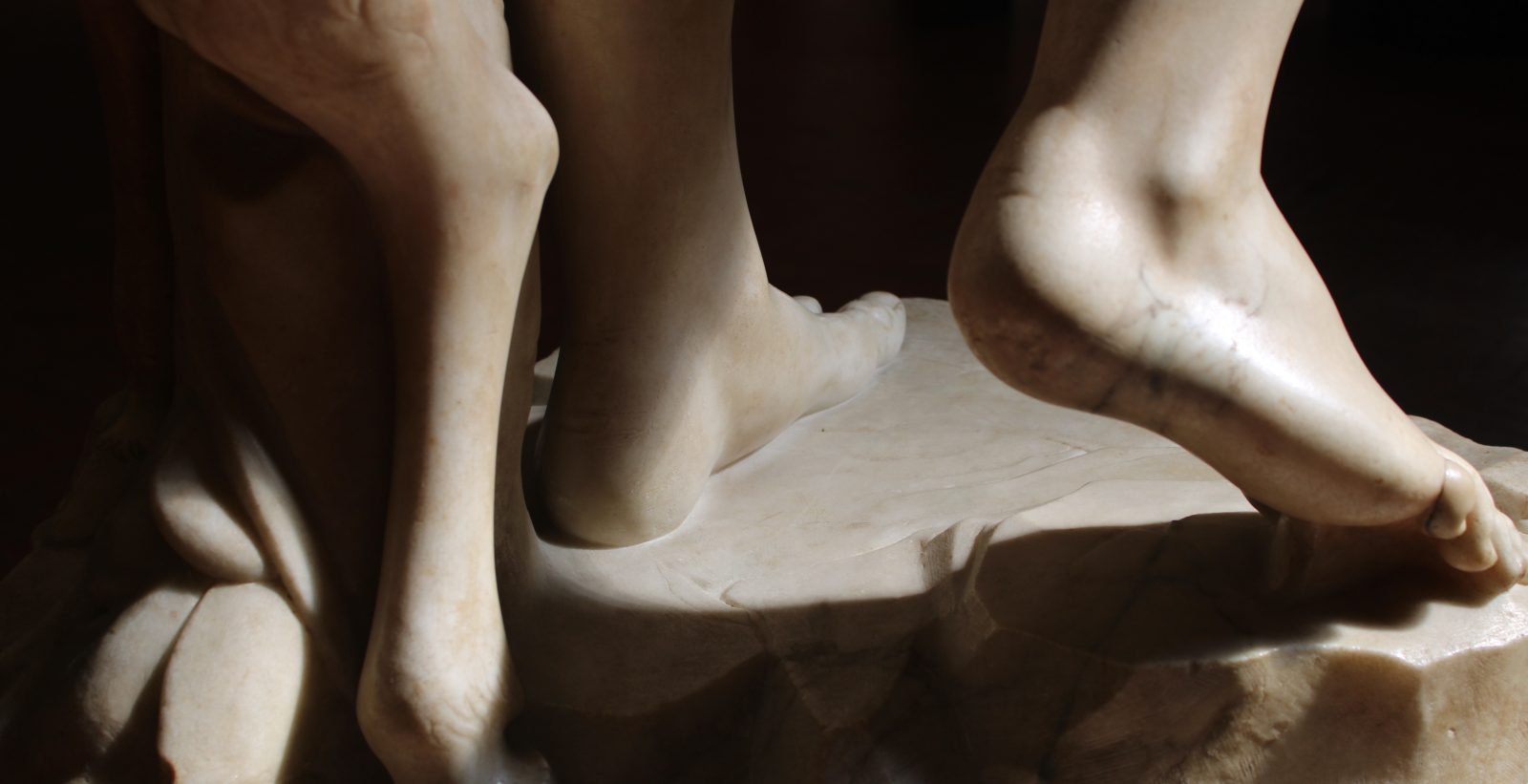
Louise d’Albany e Vittorio Alfieri: il sepolcro in Santa Croce, i due angeli e la storia di un amore eterno
Nella Basilica di Santa Croce, a Firenze, c’è un monumento funebre che racconta una storia di amore, indipendenza e memoria che vale la pena ammirare per la raffinatezza delle sue sculture.
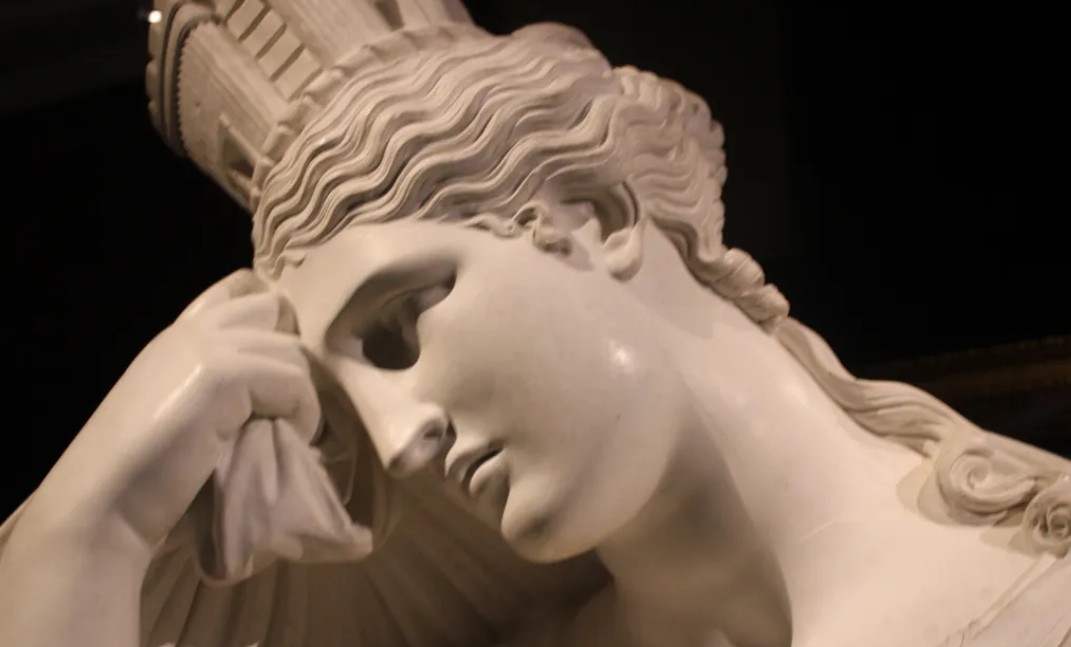
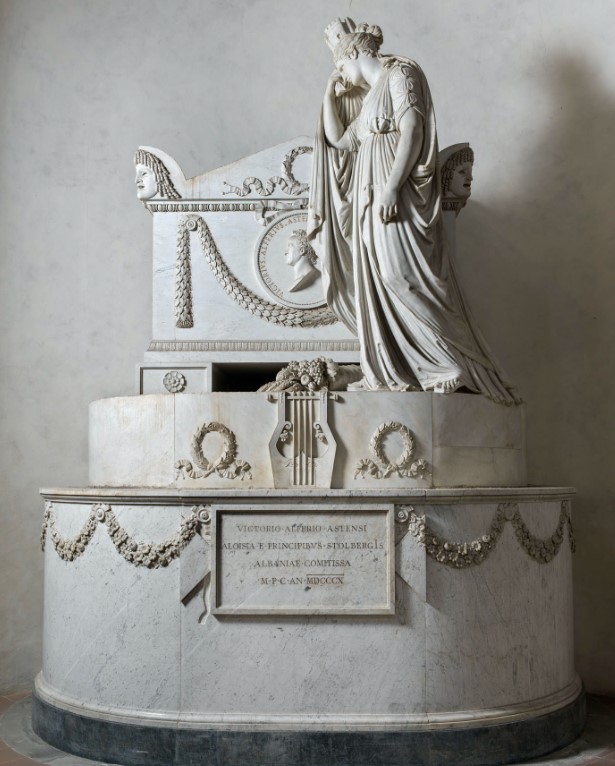
È il sepolcro di Louise di Stolberg-Gedern, contessa d’Albany, compagna di vita di Vittorio Alfieri, collocato nella Cappella Castellani, a poca distanza dalla monumentale tomba del drammaturgo.
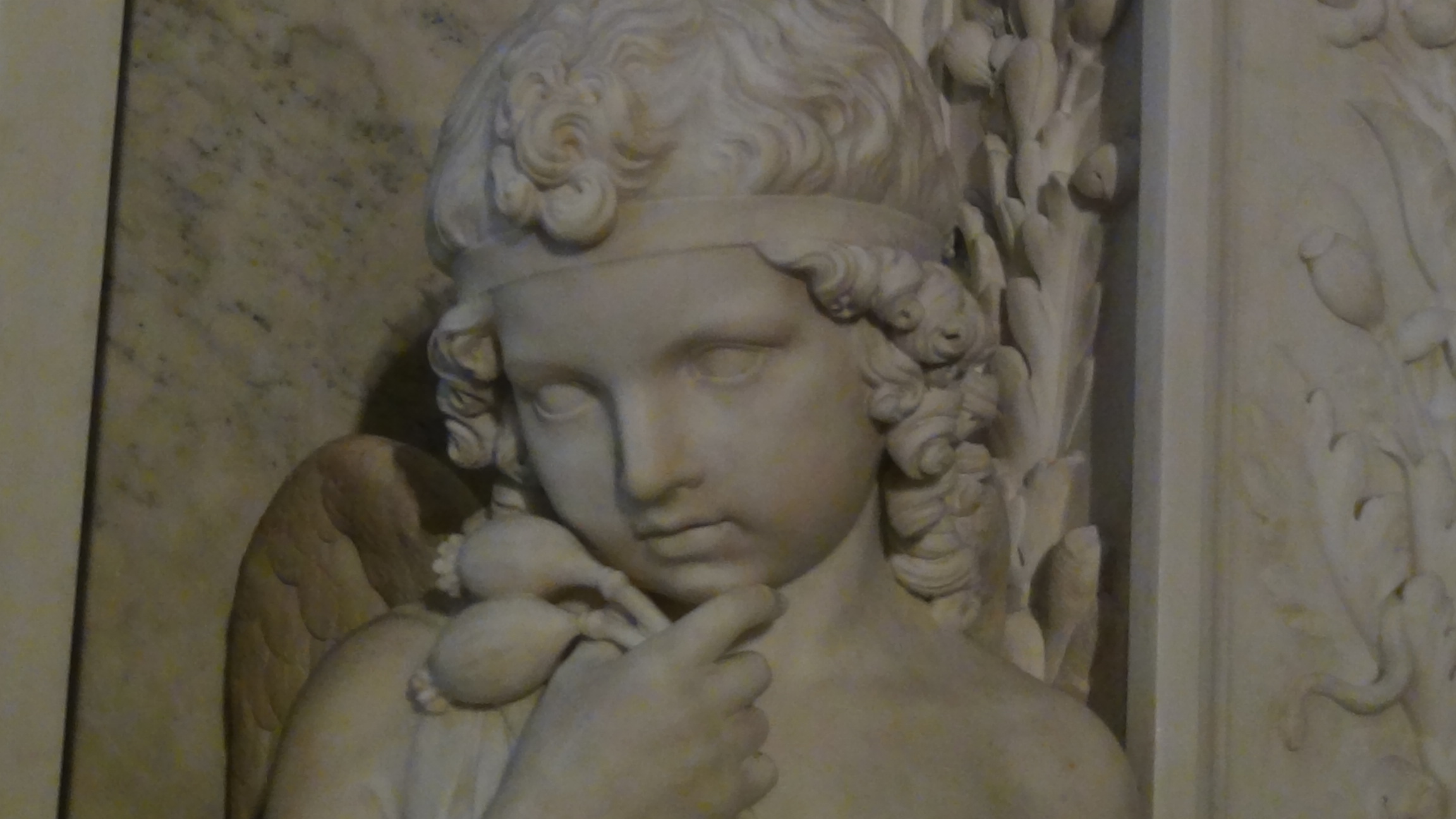
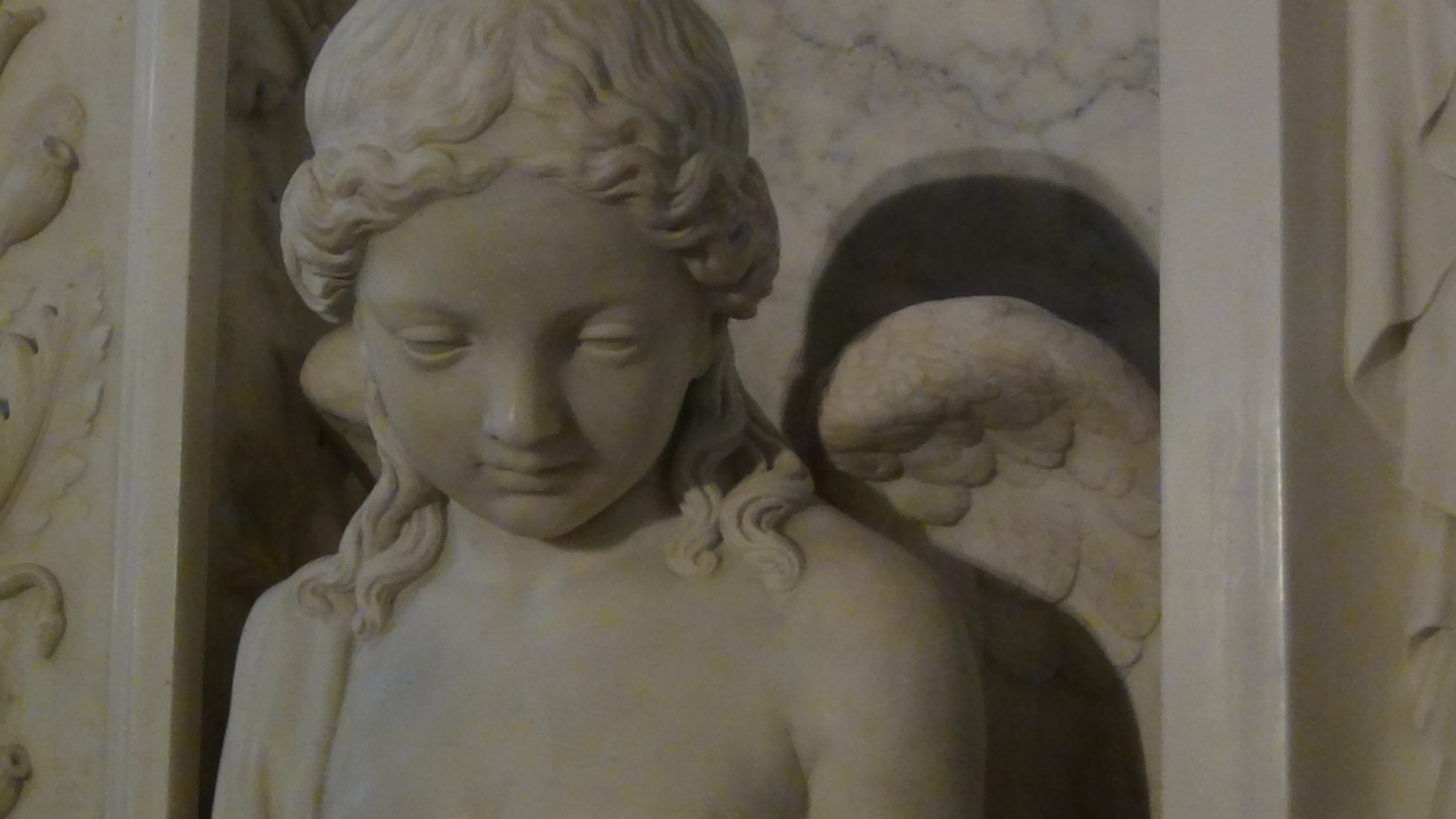
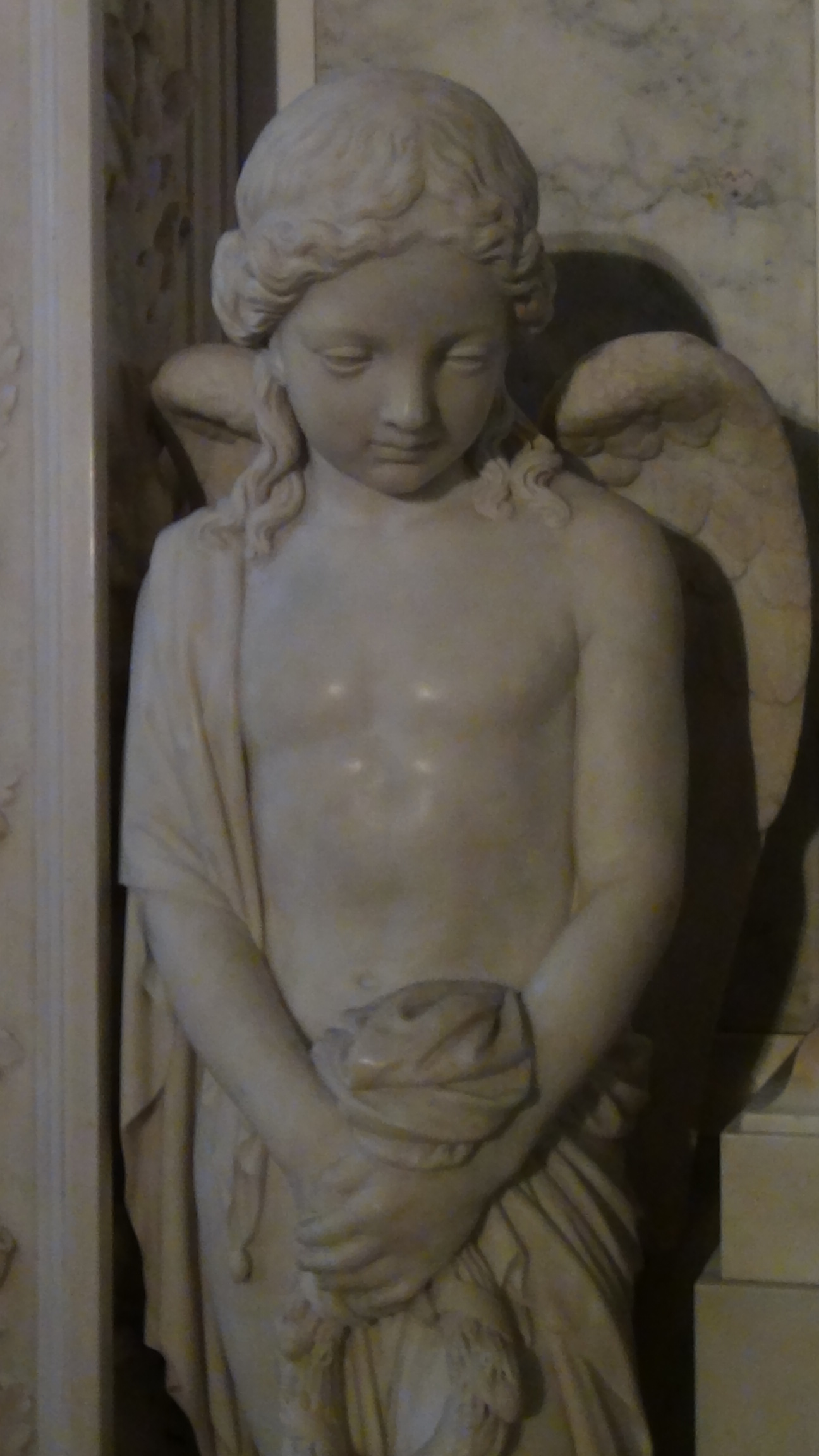
Realizzato tra il 1824 e il 1830, il monumento è un’opera neoclassica con un ricco programma allegorico. Al centro della composizione, due angeli attirano lo sguardo con gesti e attributi differenti: uno porta al volto due capsule di papavero, l‘altro sostiene con entrambe le mani una corona. Due immagini che invitano a riflettere sul significato della morte, della memoria e dell’onore tributato alla defunta.
Chi progettò e chi commissionò il sepolcro della contessa d’Albany?
Prima di soffermarsi sui dettagli scultorei, è importante ricostruire la storia della commissione, perché dietro questo monumento si nasconde anche un legame personale significativo.
Louise di Stolberg-Gedern morì a Firenze il 29 gennaio 1824, all’età di 72 anni. Il monumento che oggi possiamo ammirare in Santa Croce fu realizzato negli anni successivi alla sua morte e collocato nella Cappella Castellani nel 1830.
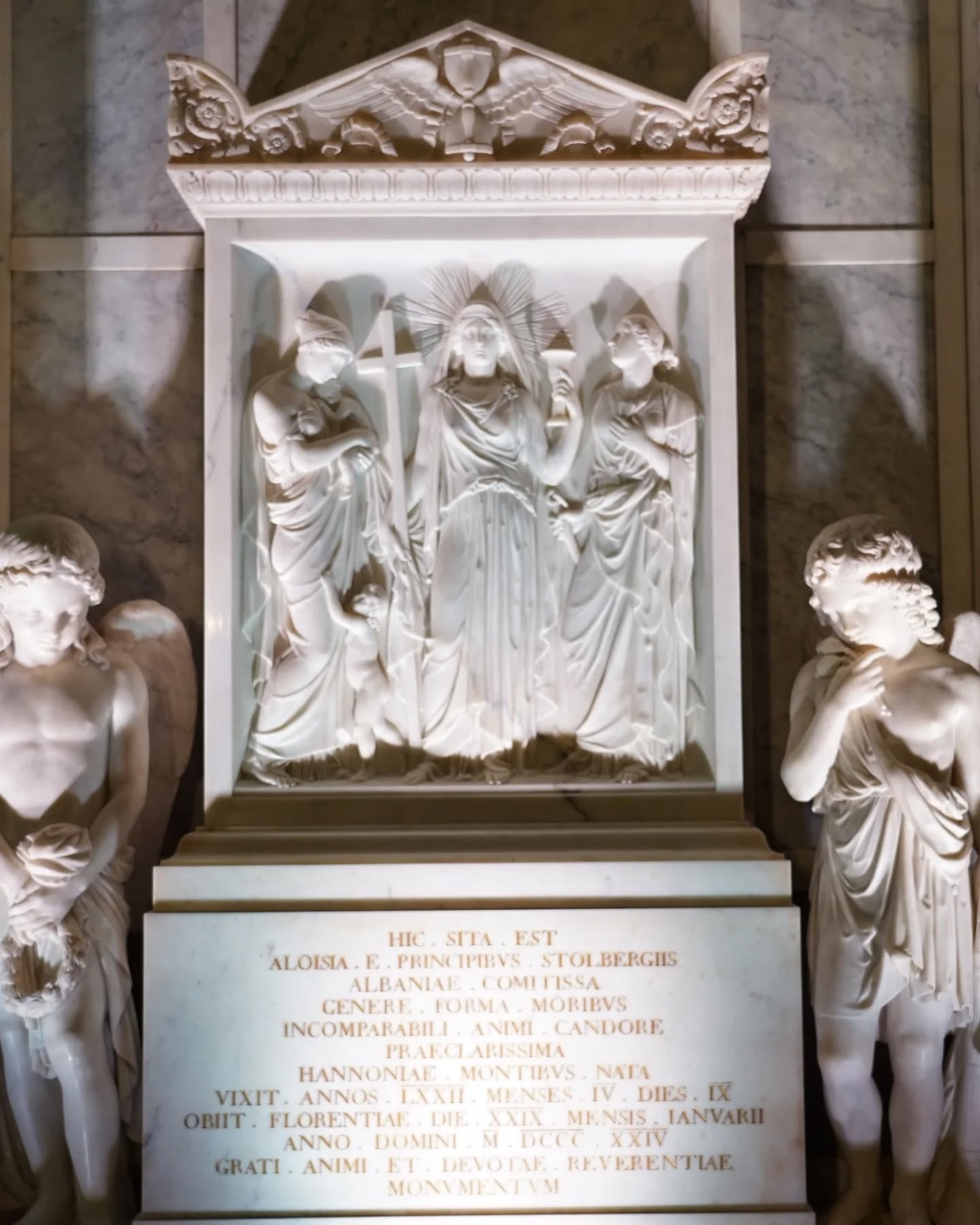
Il progetto architettonico fu ideato dal francese Charles Percier (1764-1838), architetto e decoratore tra i protagonisti del Neoclassicismo europeo. La realizzazione del gruppo scultoreo fu affidata a Emilio Santarelli (1801-1886), all’epoca giovane scultore fiorentino che proprio con quest’opera firmò uno dei suoi primi importanti lavori.
A Luigi Giovannozzi (1791-1870) spettò invece la realizzazione della raffinata componente ornamentale e della cornice architettonica.
Ma chi volle questo monumento?
La committenza fu di François-Xavier Fabre (1766-1837), pittore francese, amico intimo della contessa e suo erede universale. Fu lui a occuparsi di dare forma a un omaggio funebre degno della donna che aveva condiviso gli ultimi anni della propria vita e che era stata una delle figure più conosciute della società culturale fiorentina.
I due angeli e il significato dei loro attributi: il papavero e la corona
È proprio osservando da vicino le due figure alate che il monumento rivela alcuni dei suoi significati più interessanti.
Ai lati del cippo funerario si trovano due Geni funerari alati, raffigurati con forme giovanili e un atteggiamento raccolto e pensoso. Appartengono a un linguaggio simbolico molto diffuso nella scultura funeraria neoclassica, nel quale le figure alate accompagnano il passaggio dalla vita terrena alla dimensione della memoria e dell’eternità.
Uno dei due angeli porta al viso due capsule di semi di papavero. È un particolare che merita attenzione. Il papavero, fin dall’antichità, è associato al sonno per le sue proprietà soporifere e alla dimensione dell’oblio e del riposo. Nella simbologia funeraria diventa così un riferimento al sonno della morte, al sonno eterno.
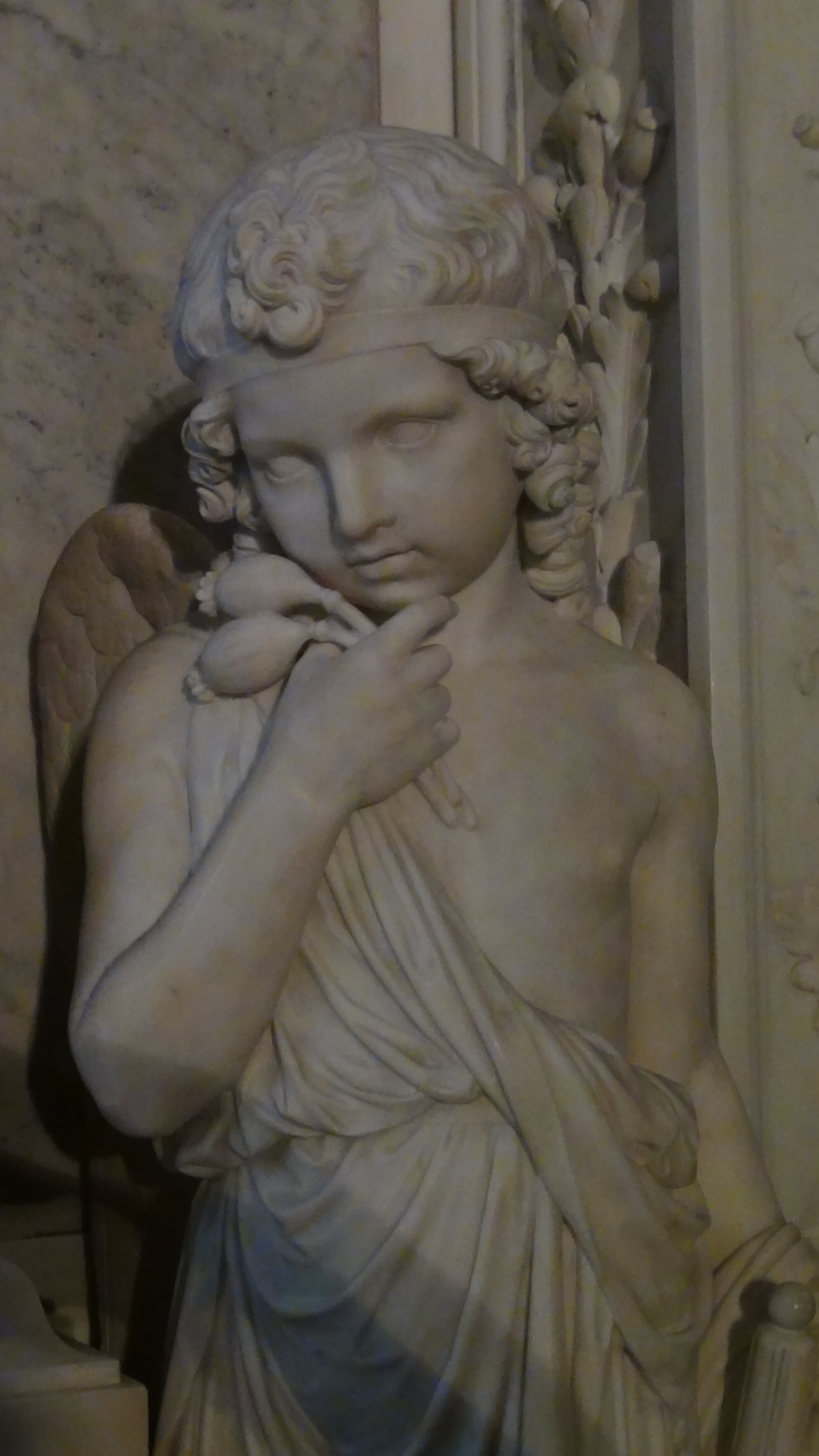
Il gesto dell’angelo, che avvicina le capsule al volto, sembra quasi voler evocare un ultimo abbandono al riposo. La morte viene suggerita attraverso un’immagine delicata, silenziosa, sospesa tra sonno e assenza.
L’altro angelo tiene invece una corona tra le mani. Anche questo attributo ha un significato preciso nel repertorio funerario: la corona può richiamare l’onore, la dignità e la memoria della persona scomparsa, ma anche la sua gloria simbolica e la ricompensa eterna. Nel caso della contessa, il riferimento si intreccia inevitabilmente con i suoi titoli aristocratici e con il rango che conservò nel corso della propria esistenza.
Un monumento ispirato all’architettura classica
L’intera composizione è costruita secondo un impianto architettonico che richiama i monumenti funerari dell’antichità, reinterpretati attraverso il gusto neoclassico e la sensibilità neorinascimentale.
Su un alto basamento si sviluppa una struttura scandita da lesene decorate, che sorreggono un arco a tutto sesto riccamente ornato. Nella lunetta superiore campeggia lo stemma della famiglia Stolberg-Gedern, affiancato dai simboli araldici delle casate degli Stolberg e degli Stuart.
Al centro si trova il cippo funerario, sul quale sono rappresentate a bassorilievo le tre virtù teologali: Fede, Speranza e Carità. Sopra di esse si sviluppa il gruppo scultoreo, mentre ai lati si dispongono i due Geni funerari.
L’equilibrio delle proporzioni, la delicatezza dei corpi giovanili, la cura delle ali e dei panneggi e la ricchezza degli ornati rendono il monumento un esempio significativo della scultura funeraria fiorentina del primo Ottocento.
Louise di Stolberg-Gedern, una donna che sfidò le convenzioni del suo tempo
Per comprendere fino in fondo il significato di questo sepolcro bisogna conoscere la donna alla quale è dedicato.
Nata nel 1752 a Mons, Louise di Stolberg-Gedern apparteneva a un’antica famiglia aristocratica tedesca. La sua vita fu segnata fin dall’inizio dalle strategie matrimoniali e diplomatiche delle corti europee. Ancora giovanissima, nel 1772, sposò Charles Edward Stuart, noto come Bonnie Prince Charlie, pretendente giacobita al trono britannico e considerato dai suoi sostenitori il legittimo erede della dinastia Stuart.
Quel matrimonio, voluto anche per ragioni dinastiche e politiche, si trasformò presto in un’unione infelice. Louise dovette affrontare una situazione personale difficile, segnata dal comportamento violento del marito e dall’impossibilità di vivere liberamente la propria esistenza.
Con determinazione e abilità diplomatica riuscì a ottenere la separazione, rivolgendosi anche a figure di primo piano della politica e della società europea. Una decisione tutt’altro che semplice per una donna del Settecento, quando l’indipendenza femminile era fortemente limitata dalle convenzioni sociali.
Dopo aver lasciato il marito, Louise visse tra Parigi e Firenze. Fu proprio nella città toscana che incontrò Vittorio Alfieri, con il quale instaurò un legame sentimentale e intellettuale destinato a durare per molti anni.
A Palazzo Gianfigliazzi, dove visse con il poeta, animò uno dei salotti letterari più frequentati della Firenze del tempo. Tra i suoi ospiti e frequentatori figuravano artisti, scrittori e intellettuali come Antonio Canova, Lord Byron e François-Xavier Fabre.
Accanto alla tomba di Vittorio Alfieri, il ricordo di un amore
La vicinanza tra il sepolcro della contessa e quello di Vittorio Alfieri non è casuale e aggiunge un ulteriore livello di significato alla visita della Cappella Castellani.
Quando Alfieri morì, nel 1803, fu proprio Louise a occuparsi della sua memoria e della sua sepoltura. Affidò ad Antonio Canova la realizzazione del monumento funebre che ancora oggi si trova nella navata della basilica di Santa Croce.
La contessa sopravvisse al poeta per oltre vent’anni e morì nel 1824. Il suo monumento sarebbe stato collocato nella Cappella Castellani sei anni dopo, completando idealmente la presenza dei due protagonisti di una delle storie sentimentali e intellettuali più particolari della Firenze tra Settecento e Ottocento.
Il recente restauro
Il monumento funebre della contessa d’Albany è stato recentemente sottoposto a un intervento di restauro che ne ha restituito la completa leggibilità.
L’intervento è stato reso possibile grazie alla generosa donazione di Donna Malin, sostenitrice dei progetti di conservazione dell’Opera di Santa Croce.
Il restauro è stato eseguito dalle restauratrici Paola Rosa ed Emanuela Pieretti e presentato al pubblico il 26 febbraio 2025.
Per il momento il sempre vostro Michelangelo Buonarroti vi saluta dandovi appuntamento ai prossimi post e sui social.



Louise d’Albany and Vittorio Alfieri: the tomb in Santa Croce, the two angels, and the story of an eternal love
In the Basilica of Santa Croce in Florence, there is a funerary monument that tells a story of love, independence, and remembrance—one well worth admiring for the exquisite refinement of its sculptures.
It is the tomb of Louise of Stolberg-Gedern, Countess of Albany—the life partner of Vittorio Alfieri—located in the Castellani Chapel, just a short distance from the playwright’s own monumental tomb.
Created between 1824 and 1830, the monument is a Neoclassical work featuring a rich allegorical program. At the center of the composition, two angels draw the eye with distinct gestures and attributes: one holds two poppy pods to its face, while the other supports a crown with both hands. These two figures invite reflection on the meaning of death, memory, and the honor paid to the deceased.
Who designed and commissioned the Countess of Albany’s tomb?
Before examining the sculptural details, it is important to look at the history of the commission, as a significant personal bond lies behind this monument.
Louise of Stolberg-Gedern died in Florence on January 29, 1824, at the age of 72. The monument we see today in Santa Croce was created in the years following her death and installed in the Castellani Chapel in 1830.
The architectural design was conceived by the Frenchman Charles Percier (1764–1838), an architect and decorator who was a leading figure in European Neoclassicism. The creation of the sculptural group was entrusted to Emilio Santarelli (1801–1886), a young Florentine sculptor at the time; this piece marked one of his first major works.
Luigi Giovannozzi (1791–1870) was responsible for the refined ornamental elements and the architectural framework.
But who commissioned this monument?
It was commissioned by François-Xavier Fabre (1766–1837), a French painter who was a close friend of the Countess and her sole heir. He took charge of creating a funerary tribute worthy of the woman who had shared the final years of his life and had been one of the most prominent figures in Florentine cultural society.
The two angels and the meaning of their attributes: the poppy and the crown
It is by observing the two winged figures closely that the monument reveals some of its most intriguing meanings.
Flanking the funerary stele are two winged funerary genii, depicted with youthful forms and a composed, pensive demeanor. They belong to a symbolic language common in Neoclassical funerary sculpture, in which winged figures accompany the transition from earthly life to the realm of memory and eternity.
One of the two angels holds two poppy seed pods up to its face. This detail warrants attention. Since ancient times, the poppy has been associated with sleep—due to its soporific properties—as well as with oblivion and rest. In funerary symbolism, it thus becomes a reference to the sleep of death, or eternal slumber.
The angel’s gesture—bringing the pods close to its face—seems almost to evoke a final surrender to rest. Death is suggested through a delicate, silent image, suspended between sleep and absence.
The other angel, meanwhile, holds a crown in its hands. This attribute, too, carries a specific meaning in funerary iconography: the crown can evoke the honor, dignity, and memory of the deceased, as well as their symbolic glory and eternal reward. In the Countess’s case, this reference is inextricably linked to her aristocratic titles and the rank she maintained throughout her life.
A monument inspired by classical architecture
The entire composition is structured around an architectural framework reminiscent of ancient funerary monuments, reinterpreted through Neoclassical taste and Neo-Renaissance sensibilities.
Rising from a high plinth is a structure articulated by decorated pilasters that support a richly ornamented round arch. The coat of arms of the Stolberg-Gedern family stands prominently in the lunette above, flanked by the heraldic symbols of the Stolberg and Stuart houses.
At the center stands the funerary stele, featuring bas-relief depictions of the three theological virtues: Faith, Hope, and Charity. The sculptural group rises above them, while the two funerary genii are positioned at the sides.
The balanced proportions, the delicacy of the youthful figures, the meticulous rendering of wings and drapery, and the richness of the ornamentation make this monument a significant example of early 19th-century Florentine funerary sculpture.
Louise of Stolberg-Gedern: a woman who defied the conventions of her time
To fully grasp the significance of this tomb, one must know the woman to whom it is dedicated.
Born in 1752 in Mons, Louise of Stolberg-Gedern belonged to an ancient German aristocratic family. Her life was shaped from the very beginning by the marital and diplomatic strategies of European courts. While still very young, in 1772, she married Charles Edward Stuart—known as Bonnie Prince Charlie—the Jacobite claimant to the British throne and the man his supporters regarded as the rightful heir of the Stuart dynasty.
That marriage, entered into partly for dynastic and political reasons, soon turned into an unhappy union. Louise faced a difficult personal situation, marked by her husband’s violent behavior and an inability to live her life freely.
With determination and diplomatic skill, she managed to secure a separation, enlisting the help of prominent figures in European politics and society. This was by no means an easy decision for a woman in the eighteenth century, an era when female independence was severely restricted by social conventions.
After leaving her husband, Louise lived between Paris and Florence. It was in the Tuscan city that she met Vittorio Alfieri, with whom she formed a romantic and intellectual bond destined to last for many years.
At Palazzo Gianfigliazzi, where she lived with the poet, she hosted one of the most popular literary salons in Florence at the time. Her guests and regular visitors included artists, writers, and intellectuals such as Antonio Canova, Lord Byron, and François-Xavier Fabre.
Beside Vittorio Alfieri’s tomb: the memory of a love
The proximity of the Countess’s tomb to that of Vittorio Alfieri is no coincidence; it adds a further layer of meaning to a visit to the Castellani Chapel.
When Alfieri died in 1803, it was Louise herself who took charge of preserving his memory and arranging his burial. She commissioned Antonio Canova to create the funerary monument that still stands today in the nave of the Basilica of Santa Croce.
The Countess outlived the poet by more than twenty years, passing away in 1824. Her monument was installed in the Castellani Chapel six years later, symbolically completing the presence of the two central figures in one of the most distinctive romantic and intellectual stories of Florence at the turn of the 18th and 19th centuries.
The recent restoration
The Countess of Albany’s funerary monument has recently undergone a restoration that has fully restored its legibility.
The project was made possible by a generous donation from Donna Malin, a supporter of the conservation initiatives of the Opera di Santa Croce.
The restoration was carried out by conservators Paola Rosa and Emanuela Pieretti and unveiled to the public on February 26, 2025.
For now, yours truly, Michelangelo Buonarroti, bids you farewell and looks forward to seeing you in future posts and on social media.

Sostienici – Support Us
Se questo blog ti piace e ti appassiona, puoi aiutarci a farlo crescere sempre più sostenendoci in modo concreto condividendo i post, seguendo le pagine social e con un contributo che ci aiuta ad andare avanti con il nostro lavoro di divulgazione. . ENGLISH: If you like and are passionate about this blog, you can help us make it grow more and more by supporting us in a concrete way by sharing posts, following social pages and with a contribution that helps us to move forward with our dissemination work.
10,00 €

Condividi:


Questo sono io




sostienici

Sostienici – Support Us
Se questo blog ti piace e ti appassiona, puoi aiutarci a farlo crescere sempre più sostenendoci in modo concreto condividendo i post, seguendo le pagine social e con un contributo che ci aiuta ad andare avanti con il nostro lavoro di divulgazione. . ENGLISH: If you like and are passionate about this blog, you can help us make it grow more and more by supporting us in a concrete way by sharing posts, following social pages and with a contribution that helps us to move forward with our dissemination work.
€10,00


