

Ad Assisi i fiori diventano un Cantico di Pace: l’infiorata di 120 metri quadrati dedicata a San Francesco
Questa mattina, sabato 3 ottobre 2026, Assisi si è svegliata con un’opera effimera spettacolare. Petali, fiori, foglie e altri elementi vegetali hanno composto sul prato della chiesa Superiore della Basilica di San Francesco un’immagine dedicata al messaggio francescano di pace, fraternità e rispetto del creato.
L’infiorata, realizzata dagli Infioratori di Spello, porta un titolo che ne racchiude il significato: “Nel segno del Tau, un Cantico di Pace”. È stata realizzata nella notte tra il 2 e il 3 ottobre e sarà visibile per tutta la giornata di oggi e fino al 4 ottobre, festa di San Francesco.
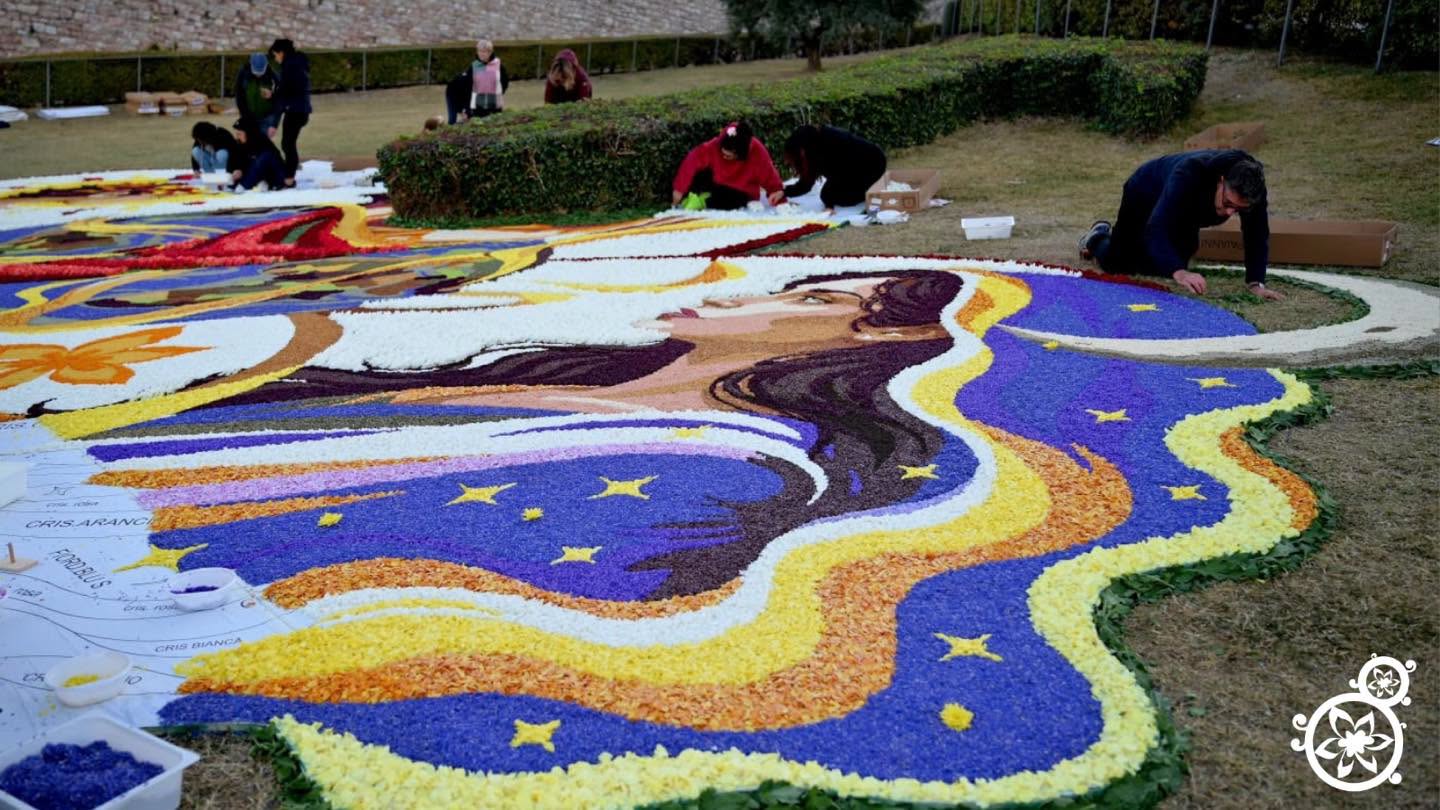
150 infioratori hanno lavorato tutta la notte
120 metri quadrati di colori che celano una notte intera trascorsa a lavorare, chini sul prato, disponendo con precisione petali, fiori, foglie ed elementi vegetali, seguendo il bozzetto preparatorio.
Sono circa 150 gli infioratori di Spello coinvolti nel progetto, nato dall’incontro fra una delle tradizioni artistiche più riconoscibili dell’Umbria e il luogo simbolo del francescanesimo.
La tradizione delle Infiorate di Spello è legata alla realizzazione di giganteschi tappeti e quadri floreali composti esclusivamente con materiale vegetale. Pensate che ogni anno vengono raccolti circa 1,5 milioni di fiori, appartenenti a 65 specie e utilizzati in circa 90 tonalità di colore.
Questa volta, però, il palcoscenico è particolarmente significativo: il prato della Basilica Superiore di San Francesco ad Assisi.
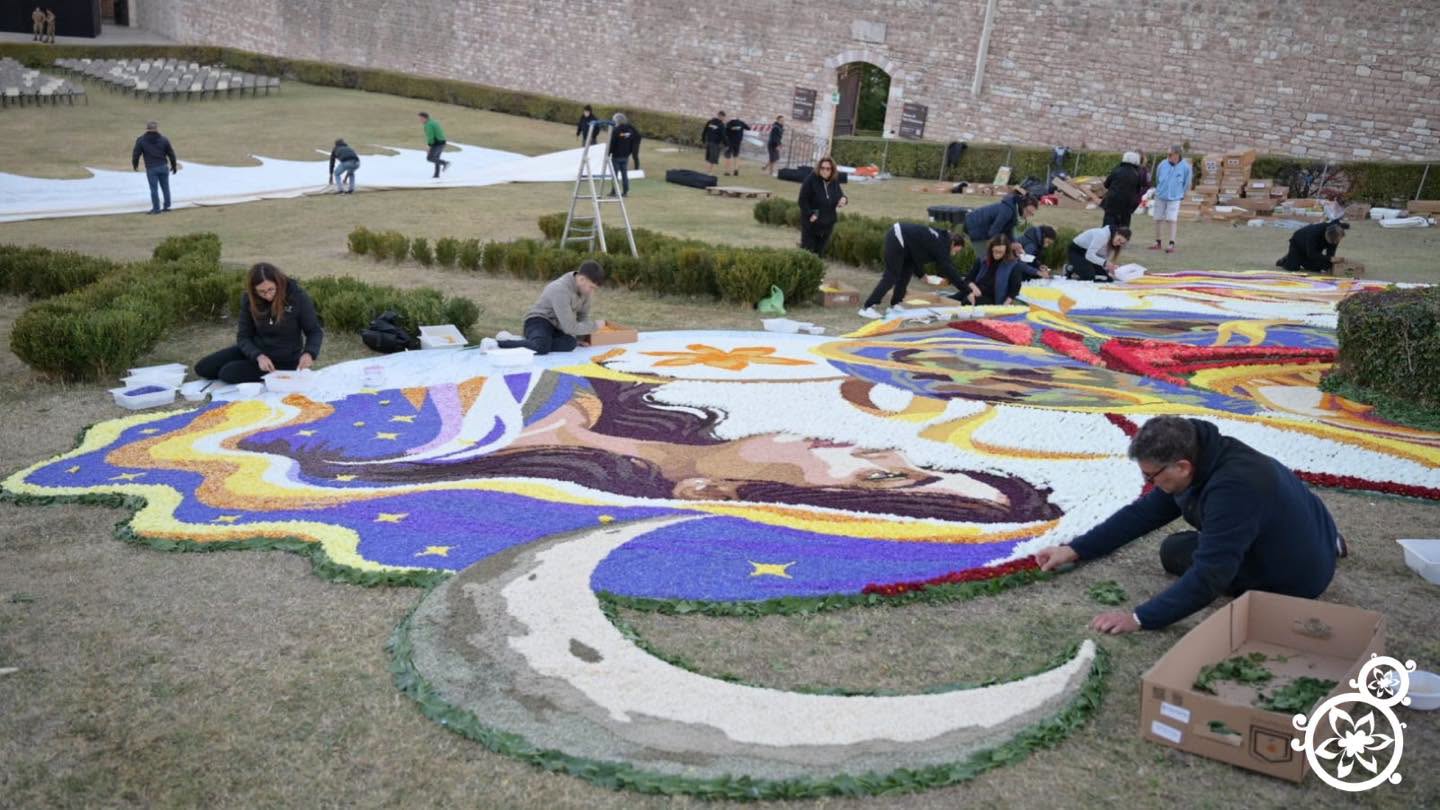
Un’opera ispirata al Cantico delle Creature
Il progetto nasce nell’ambito delle celebrazioni per l’ottavo centenario della morte di San Francesco e vuole tradurre attraverso i fiori alcuni dei temi centrali del messaggio francescano.
Il riferimento è naturalmente al Cantico delle Creature, con il suo rapporto fra l’uomo, la natura e il creato.
I fiori diventano immagini e simboli. Il progetto mette in relazione Cristo, la Terra, il creato e l’umanità, mentre il Sole, la Luna e le stelle richiamano le immagini del Cantico. Una colomba introduce invece il tema della pace.
Al centro della composizione compare inoltre il Tau, simbolo profondamente legato alla tradizione francescana, insieme alla parola PAX già presente sul prato della Basilica.
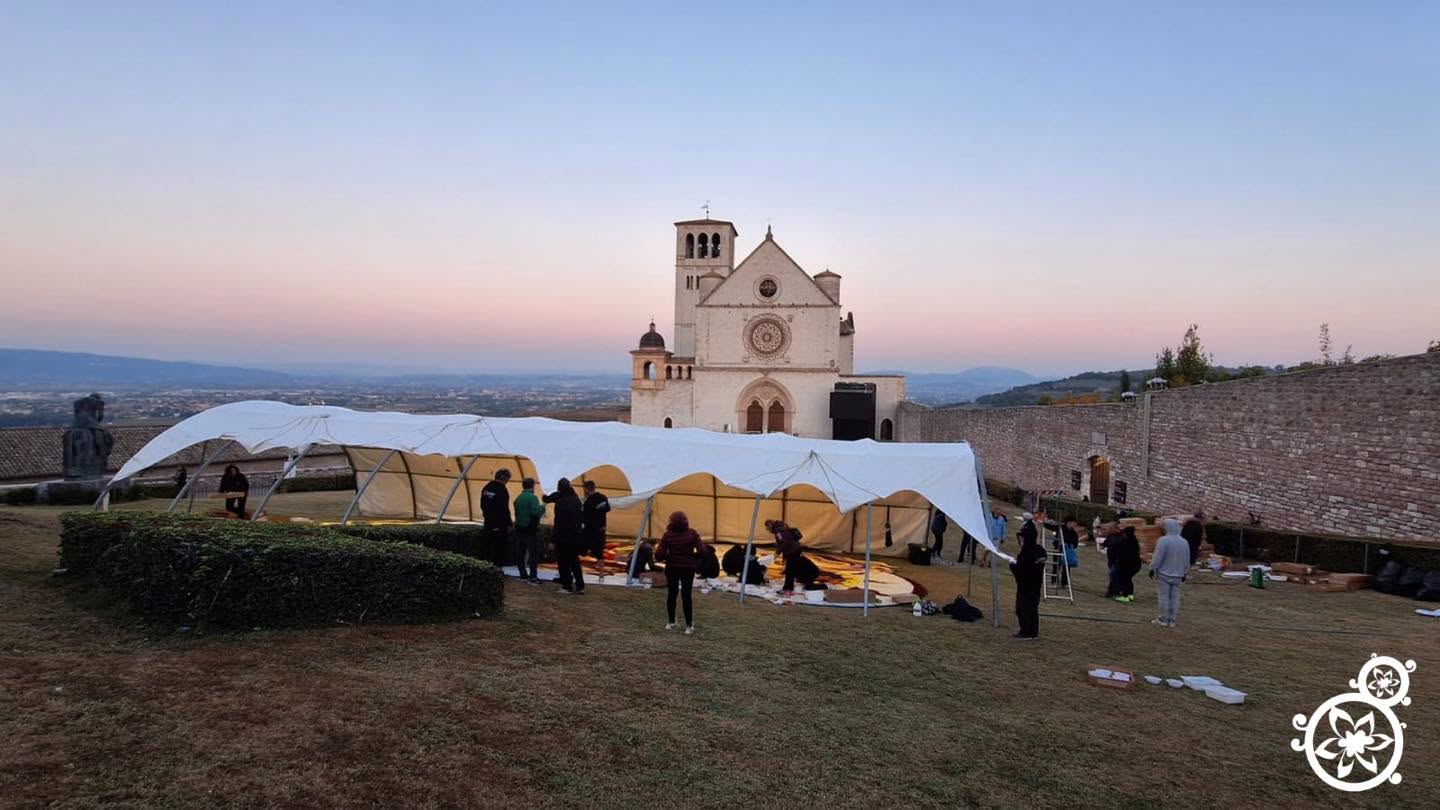
Il Tau, Cristo e la parola PAX
La composizione è stata ideata a partire da un bozzetto di Corrado Aisa, Elisa Benedetti e Tullia “Bibi” Capitanucci.
Il disegno accompagna lo sguardo dalla Croce verso Cristo e quindi verso la Terra e il creato, arrivando idealmente all’umanità e alla parola PAX. È un percorso che trasforma il tappeto floreale in qualcosa di più di una grande immagine.
L’opera diventa infatti una riflessione visiva sul legame fra Dio, uomo e natura, utilizzando proprio la materia del creato per raccontare il messaggio di Francesco.
Ed è forse questo uno degli aspetti più affascinanti dell’iniziativa: per parlare del creato, gli infioratori utilizzano il creato stesso.
Perché vedere l’infiorata oggi
Come tutte le grandi infiorate, è destinata a scomparire. I colori dei fiori, le composizioni realizzate con pazienza durante la notte e l’intero disegno resteranno visibili soltanto per un periodo molto breve.
L’infiorata di Assisi potrà essere ammirata dal 3 ottobre fino a tutta la giornata del 4 ottobre 2026. Chi si trova ad Assisi in queste ore può quindi assistere a qualcosa che fra pochi giorni non esisterà più.
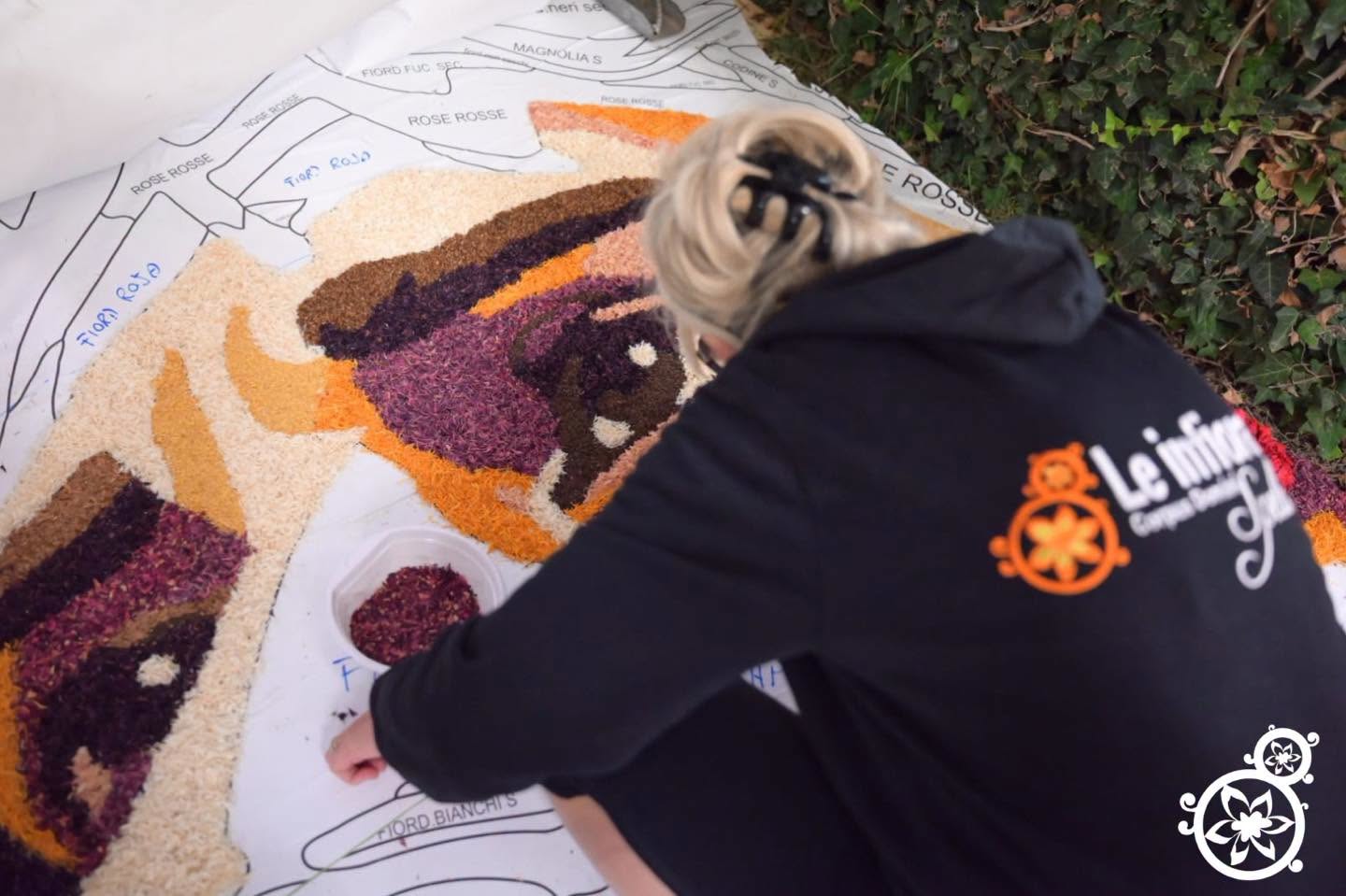
Da Spello ad Assisi: una tradizione che diventa arte
L’iniziativa è promossa dall’Associazione Le Infiorate di Spello insieme al Sacro Convento di San Francesco in Assisi.
L’incontro fra Spello e Assisi non è casuale. Da una parte c’è una tradizione secolare che ha trasformato la composizione floreale in una vera forma d’arte; dall’altra c’è il luogo nel quale il messaggio di Francesco continua a essere raccontato ogni anno a milioni di visitatori.
Il risultato è un’opera di grandi dimensioni che unisce arte effimera, tradizione popolare, spiritualità e patrimonio culturale.
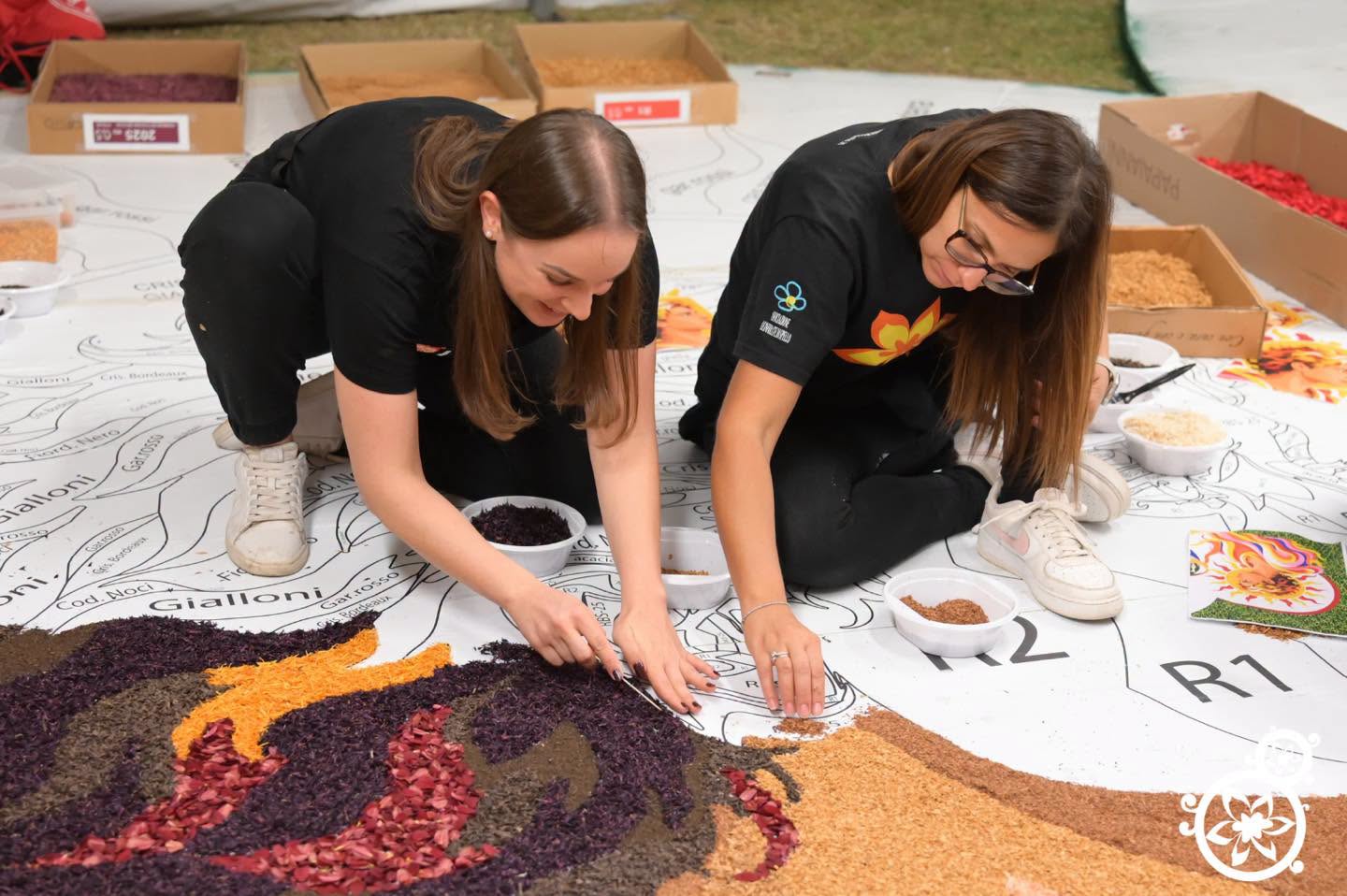
Si lavora tutta la notte per realizzarla. Si può ammirare per appena due giorni. Poi resterà soltanto nelle fotografie e nella memoria di chi l’ha vista. Un gigantesco quadro dipinto con i fiori, nel luogo simbolo del francescanesimo, che resterà visibile ancora per pochissimo.
Per il momento il sempre vostro Michelangelo Buonarroti vi saluta dandovi appuntamento ai prossimi post e sui social.



In Assisi, flowers become a Canticle of Peace: a 120-square-meter floral carpet dedicated to Saint Francis
This morning, Saturday, October 3, 2026, Assisi awoke to a spectacular ephemeral artwork. Petals, flowers, leaves, and other plant materials came together on the lawn of the Upper Basilica of Saint Francis to form an image dedicated to the Franciscan message of peace, fraternity, and respect for creation.
Created by the Infioratori (floral artists) of Spello, the floral carpet bears a title that encapsulates its meaning: “Under the Sign of the Tau: A Canticle of Peace.” It was crafted overnight between October 2 and 3 and will remain on display throughout the day and until October 4—the Feast of Saint Francis.
150 floral artists worked through the night
120 square meters of color conceal a full night of labor; artists worked bent over the lawn, precisely arranging petals, flowers, leaves, and plant elements according to a preparatory sketch.
Around 150 floral artists from Spello were involved in the project, which arose from the meeting of one of Umbria’s most recognizable artistic traditions and the iconic site of the Franciscan movement.
The Spello Infiorata tradition involves creating gigantic floral carpets and pictures made exclusively from plant materials. Remarkably, some 1.5 million flowers—comprising 65 species and 90 different color shades—are gathered for the event each year.
This time, however, the setting is particularly significant: the lawn of the Upper Basilica of Saint Francis in Assisi.
A work inspired by the Canticle of the Creatures
The project was launched as part of the celebrations marking the eighth centenary of the death of Saint Francis; it aims to translate key themes of the Franciscan message into the medium of flowers. The reference is, of course, to the Canticle of the Creatures, with its exploration of the relationship between man, nature, and creation.
Flowers become images and symbols. The design links Christ, the Earth, creation, and humanity, while the Sun, Moon, and stars evoke imagery from the Canticle. A dove, meanwhile, introduces the theme of peace.
At the center of the composition appears the Tau—a symbol deeply rooted in the Franciscan tradition—alongside the word PAX (Peace), which is already present on the Basilica’s lawn.
The Tau, Christ, and the word PAX
The composition was conceived based on a sketch by Corrado Aisa, Elisa Benedetti, and Tullia “Bibi” Capitanucci.
The design guides the eye from the Cross toward Christ, then toward the Earth and creation, ultimately reaching humanity and the word PAX. It is a journey that transforms the floral carpet into something more than just a large image.
Indeed, the work becomes a visual reflection on the bond between God, man, and nature, using the very materials of creation to convey the message of Saint Francis.
This is perhaps one of the most fascinating aspects of the initiative: to speak of creation, the floral artists use creation itself.
Why see the Infiorata today?
Like all great floral displays, it is destined to vanish. The colors of the flowers, the compositions painstakingly crafted overnight, and the entire design will remain visible for only a very short time.
The Assisi Infiorata can be admired from October 3rd through the entire day of October 4th, 2026. Those in Assisi during this time can thus witness something that, in just a few days, will no longer exist. From Spello to Assisi: a tradition transformed into art
The initiative is promoted by the Le Infiorate di Spello Association in collaboration with the Sacred Convent of Saint Francis in Assisi.
The coming together of Spello and Assisi is no coincidence. On one hand, there is a centuries-old tradition that has elevated floral composition to a true art form; on the other, there is the site where the message of Saint Francis continues to be shared with millions of visitors each year.
The result is a large-scale work that blends ephemeral art, folk tradition, spirituality, and cultural heritage.
Work continues throughout the night to create it. It can be admired for just two days. Afterward, it will live on only in photographs and in the memories of those who saw it. A gigantic picture painted with flowers—situated at the very heart of the Franciscan tradition—yet destined to remain visible for only a fleeting moment.
For now, your ever-faithful Michelangelo Buonarroti bids you farewell, looking forward to seeing you in future posts and on social media.

Sostienici – Support Us
Se questo blog ti piace e ti appassiona, puoi aiutarci a farlo crescere sempre più sostenendoci in modo concreto condividendo i post, seguendo le pagine social e con un contributo che ci aiuta ad andare avanti con il nostro lavoro di divulgazione. . ENGLISH: If you like and are passionate about this blog, you can help us make it grow more and more by supporting us in a concrete way by sharing posts, following social pages and with a contribution that helps us to move forward with our dissemination work.
10,00 €

Condividi:


Questo sono io




sostienici

Sostienici – Support Us
Se questo blog ti piace e ti appassiona, puoi aiutarci a farlo crescere sempre più sostenendoci in modo concreto condividendo i post, seguendo le pagine social e con un contributo che ci aiuta ad andare avanti con il nostro lavoro di divulgazione. . ENGLISH: If you like and are passionate about this blog, you can help us make it grow more and more by supporting us in a concrete way by sharing posts, following social pages and with a contribution that helps us to move forward with our dissemination work.
€10,00


