

Giudizio Universale: prima di Paolo III ci fu Clemente VII
Quando oggi entrate nella Cappella Sistina e osservate la grande parete dell’altare, il primo nome che viene associato al mio Giudizio Universale è quello di Paolo III Farnese, il pontefice sotto il quale portai a termine l’affresco.
La storia della commissione era cominciata però alcuni anni prima, quando Clemente VII, Giulio de’ Medici, mi propose di intervenire nuovamente nella cappella e di trasformare la parete dell’altare con una rappresentazione dell’ultimo giorno della storia dell’umanità.
Il progetto nacque con Clemente VII
La commissione del Giudizio Universale non fu dunque una decisione di Paolo III. Il progetto era stato concepito durante il pontificato di Clemente VII, con il quale avevo avuto modo di discutere dell’impresa già nel 1533, quando ci incontrammo a Firenze, a San Miniato al Tedesco, il 22 settembre.
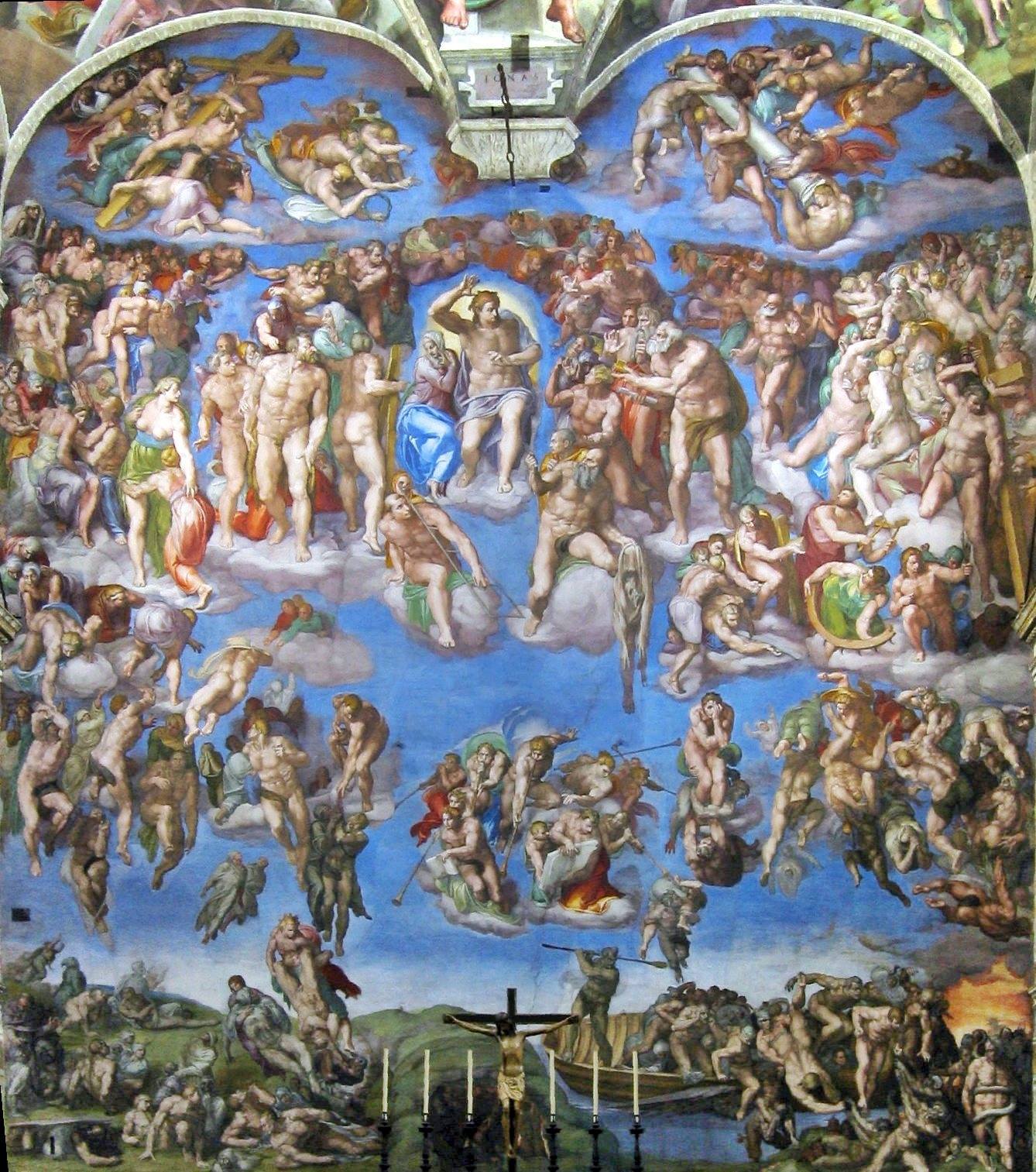
Clemente VII conosceva bene i miei lavori e sapeva che avevo già lavorato nella Cappella Sistina molti anni prima, quando avevo dipinto la volta per Giulio II della Rovere. La sua proposta comportava però un intervento completamente diverso: non si trattava di decorare una serie di superfici architettonicamente articolate, ma di trasformare la grande parete dell’altare in un’unica immensa composizione dedicata al Giudizio Universale.
Successivamente ei miei biografi Ascanio Condivi e Giorgio Vasari, scrissero che il progetto iniziale di Clemente VII sarebbe stato persino più ampio di quello che poi venne effettivamente realizzato. Il pontefice avrebbe voluto che sulla parete dell’altare dipingessi il Giudizio e che sulla parete opposta, sopra la porta principale, rappresentassi la Caduta degli Angeli ribelli, con Lucifero e gli angeli che avevano peccato insieme a lui precipitati dal cielo.
Un programma iconografico molto ambizioso, che avrebbe trasformato l’intera cappella in un racconto sulla fine dei tempi e sulla caduta degli esseri che si erano ribellati a Dio, ma quella seconda parte del progetto non venne mai stata realizzata.
La prima testimonianza del Giudizio Universale
Il progetto doveva essere già abbastanza concreto nel febbraio del 1534, perché il 20 di quel mese un agente diplomatico mantovano riferì che il papa era riuscito a convincermi a dipingere la cappella e che sopra l’altare sarebbe stata rappresentata la “resurrectione”.
Con questa parola non si intendeva la Resurrezione di Cristo, ma la resurrezione dei morti nel giorno del Giudizio.
A quel punto la progettazione doveva essere già cominciata e probabilmente avevo realizzato alcuni studi preliminari. Le fonti parlano infatti di un cartone che Clemente VII avrebbe avuto modo di vedere, intendendo con questo termine non necessariamente il grande cartone preparatorio definitivo che oggi immaginiamo, ma un modello della composizione.
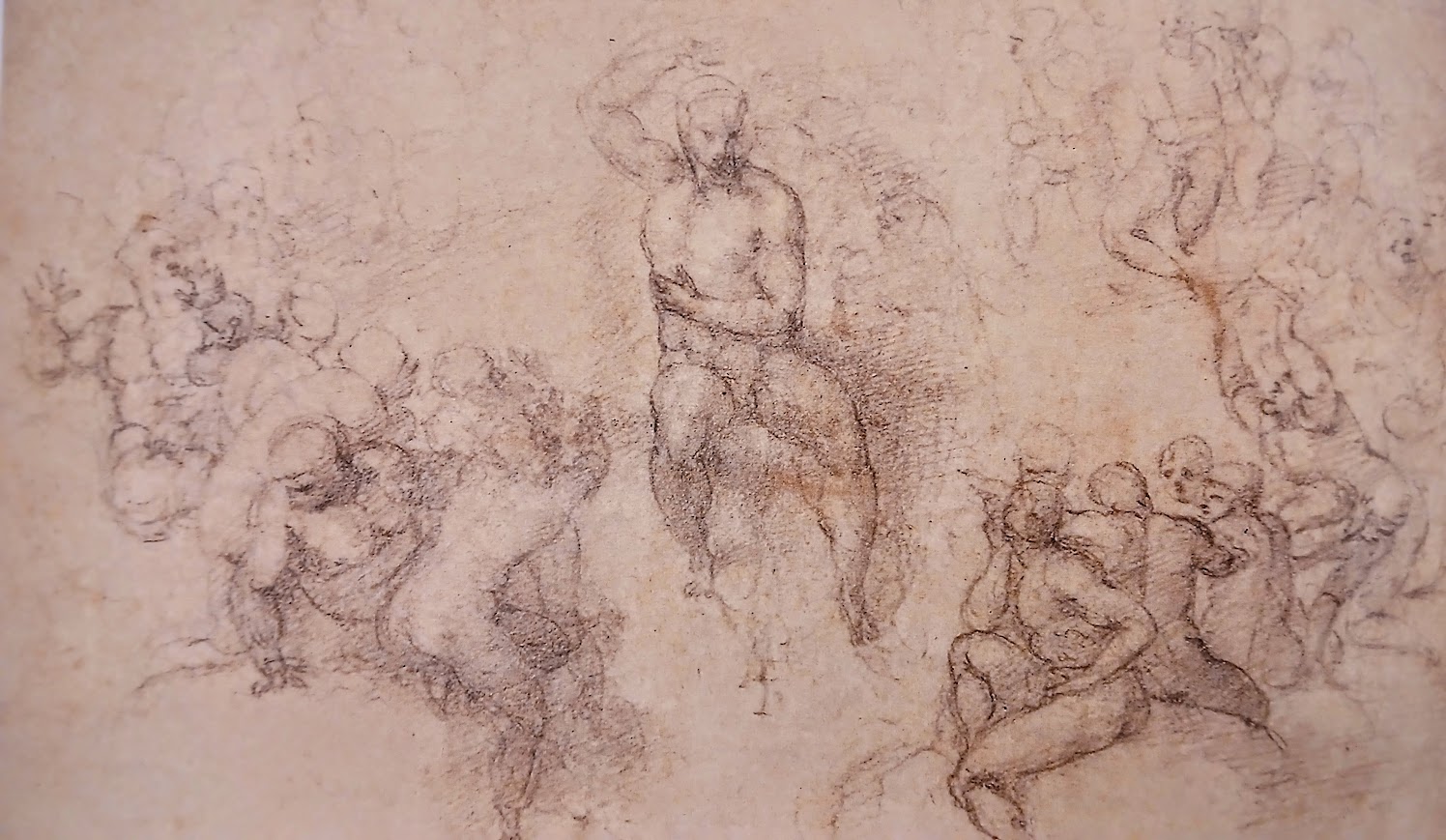
In uno degli studi riconducibili a questa prima fase si riconoscono già alcuni elementi che diventeranno fondamentali nell’affresco concluso, soprattutto la posizione di Cristo e della Vergine e quell’impostazione dinamica che avrebbe caratterizzato il mio Giudizio rispetto alle rappresentazioni precedenti dello stesso soggetto.
Clemente VII morì prima di vedere il dipinto
Il destino volle però che Clemente VII non potesse assistere alla realizzazione dell’opera che aveva commissionato. Il pontefice morì il 25 settembre 1534, pochi mesi dopo la testimonianza che documentava l’esistenza del progetto, e il suo posto venne preso da Alessandro Farnese, che salì al soglio pontificio con il nome di Paolo III.
A quel punto cercai di far valere gli impegni che avevo già assunto, soprattutto quelli relativi alla tomba di Giulio II, un progetto che mi aveva accompagnato per decenni e che continuava a rappresentare un obbligo nei confronti del Duca di Urbino.
Avevo quindi buone ragioni per chiedere che il nuovo incarico fosse rimandato, ma Paolo III non aveva intenzione di rinunciare al progetto che il suo predecessore aveva avviato. “Io ho avuto 30 anni questo desiderio, et ora che son Papa non me lo caverò. Io straccerò il contratto e son disposto che ti mi serva ad ogni modo”.
Ancora una volta mi trovavo quindi davanti a una situazione che avevo già conosciuto ai tempi di Giulio II: gli impegni precedenti, per quanto importanti fossero, dovevano lasciare spazio alla volontà del pontefice.
Paolo III confermò la commissione
Paolo III decise quindi di mantenere il progetto di Clemente VII e mi ordinò di proseguire il lavoro senza modificarne sostanzialmente l’invenzione.
La decisione venne accompagnata da un riconoscimento ufficiale molto importante. Con due Brevi del 1° settembre 1535, fui nominato “supremum Architectum Sculptorem et Pictorem” del Palazzo Apostolico e ricevetti un appannaggio vitalizio di 1.200 scudi all’anno, una cifra considerevole che comprendeva seicento scudi provenienti dal reddito del passo del Po presso Piacenza e altrettanti corrisposti dalla Dataria.
Nel primo dei due Brevi veniva indicato esplicitamente che questo incarico era legato alla realizzazione della pittura della parete dell’altare della Cappella Sistina con la storia dell’Ultimo Giudizio, oltre che agli eventuali altri lavori che avrei dovuto eseguire nel Palazzo Apostolico.
A quel punto il progetto non era più soltanto una volontà personale del pontefice, ma era diventato un incarico ufficiale.
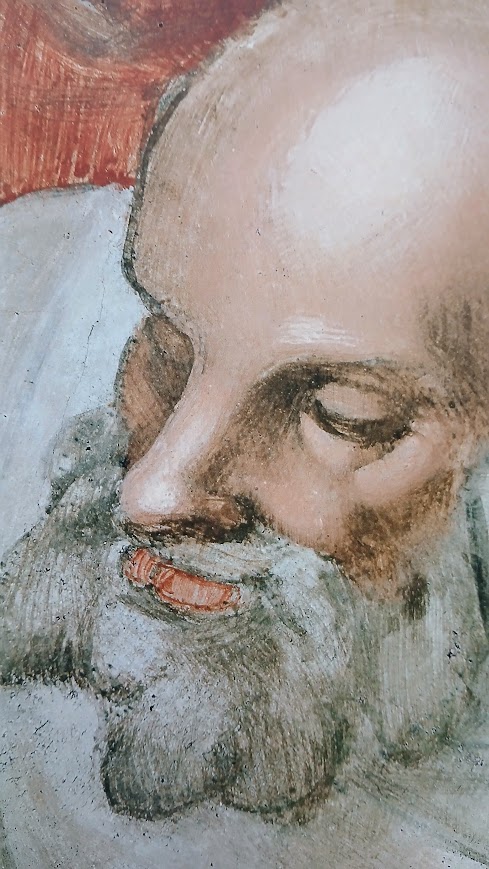
Perché il Giudizio fu collocato sulla parete dell’altare?
La scelta della parete dell’altare non fu casuale e deve essere considerata anche alla luce del particolare momento storico nel quale Clemente VII aveva concepito il progetto.
Il suo pontificato era iniziato in un periodo nel quale Roma aveva continuato a essere considerata il centro della cristianità e il simbolo di una rinnovata grandezza politica e religiosa, ma gli ultimi anni erano stati segnati da avvenimenti molto più drammatici, fino al Sacco di Roma del 1527, che aveva colpito profondamente la città e la stessa corte pontificia.
Il Giudizio Universale, collocato proprio davanti all’altare, poteva assumere in quel contesto un significato particolarmente forte, perché rappresentava un momento nel quale ogni distinzione terrena perdeva valore e ogni essere umano si trovava davanti al giudizio divino.
La scelta di Clemente VII può quindi essere collegata anche alla necessità di dare una nuova immagine alla Cappella dei papi in un periodo nel quale le certezze politiche e religiose che avevano caratterizzato la Roma dei decenni precedenti erano state profondamente messe in discussione.

Prima di dipingere dovetti modificare la parete
Quando il lavoro cominciò, non potei solo salire sul ponteggio e iniziare a dipingere.
La parete dell’altare conservava infatti una decorazione precedente, nella quale si trovavano anche gli affreschi del Perugino, compresa la grande pala dell’Assunta, oltre alle lunette mie, appartenenti alla decorazione precedente della cappella.
Per realizzare il nuovo progetto fu quindi necessario demolire una parte di quella decorazione.
Era un passaggio importante, perché significava sostituire un’immagine che aveva fatto parte della Cappella Sistina per decenni con una composizione completamente nuova, costruita secondo una concezione molto diversa dello spazio e del rapporto tra le figure.
I lavori preparatori iniziarono il 16 aprile 1535, quando venne costruito il ponteggio e cominciò la preparazione della superficie sulla quale avrei dovuto dipingere.
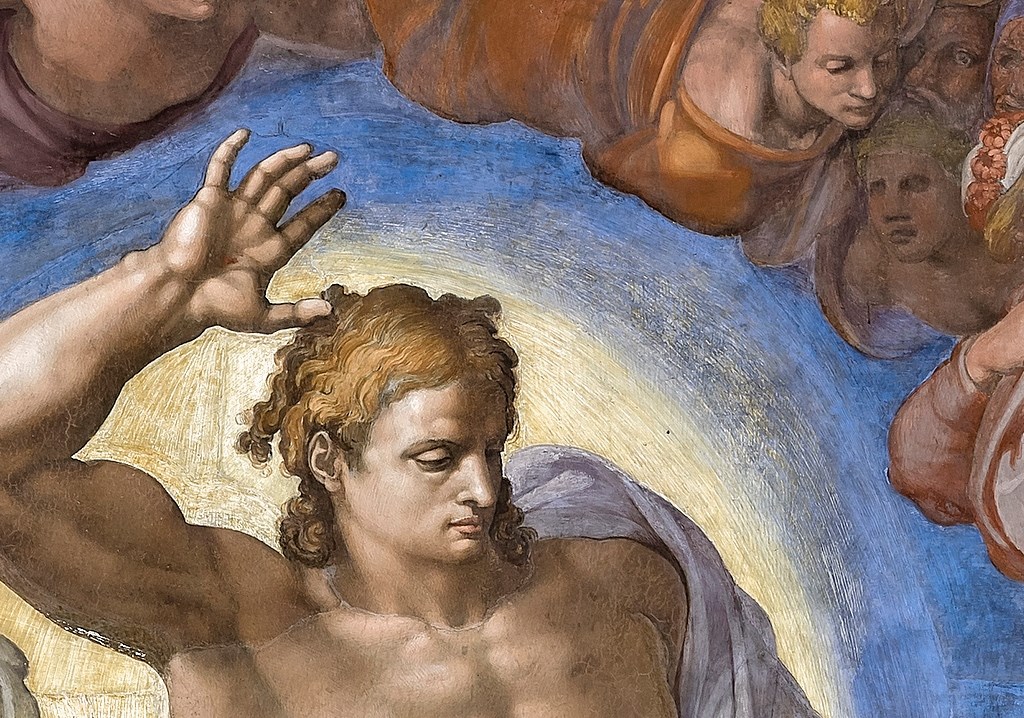
La parete fu rivestita di mattoni
Durante la preparazione volli che la parete venisse modificata anche nella sua struttura.
Fu realizzata una fodera di mattoni che cambiava la superficie rispetto a quella originaria e introduceva una particolare inclinazione del muro.
Vasari spiegò questa scelta sostenendo che avrei voluto impedire alla polvere di depositarsi sulla superficie dell’affresco, ma la questione può essere considerata anche da un altro punto di vista.
La mia composizione comprendeva infatti figure estremamente scorciate e movimenti complessi, che dovevano essere osservati dal basso. L’inclinazione della parete poteva quindi avere anche una funzione legata alla visione dell’opera e alla costruzione prospettica delle figure.
Non era la prima volta che affrontavo il problema del rapporto tra pittura, architettura e punto di vista dello spettatore, e anche nella Cappella Sistina la superficie sulla quale dipingevo non poteva essere considerata indipendente dall’immagine che doveva accogliere.
La discussione con Sebastiano del Piombo
Prima che il lavoro entrasse nella sua fase pittorica si verificò anche una discussione sulla tecnica da utilizzare. Sebastiano del Piombo aveva suggerito al papa di farmi realizzare il Giudizio a olio, ma io non ero d’accordo.
Preferivo il buon fresco, tecnica che avevo già utilizzato nella volta della Cappella Sistina e che ritenevo più adatta alla natura dell’impresa.
Per qualche tempo lasciai che la questione rimanesse in sospeso, finché alla fine dichiarai apertamente che avrei dipinto a fresco. Feci buttare a terra l’intonaco preparato secondo le indicazioni di Sebastiano e poi feci predisporre la parete per la tecnica che avevo scelto.
L’intonaco venne demolito il 25 gennaio 1536, mentre poco dopo furono acquistati i mattoni necessari per la fodera del muro. Solo allora la superficie fu realmente pronta per il mio lavoro.
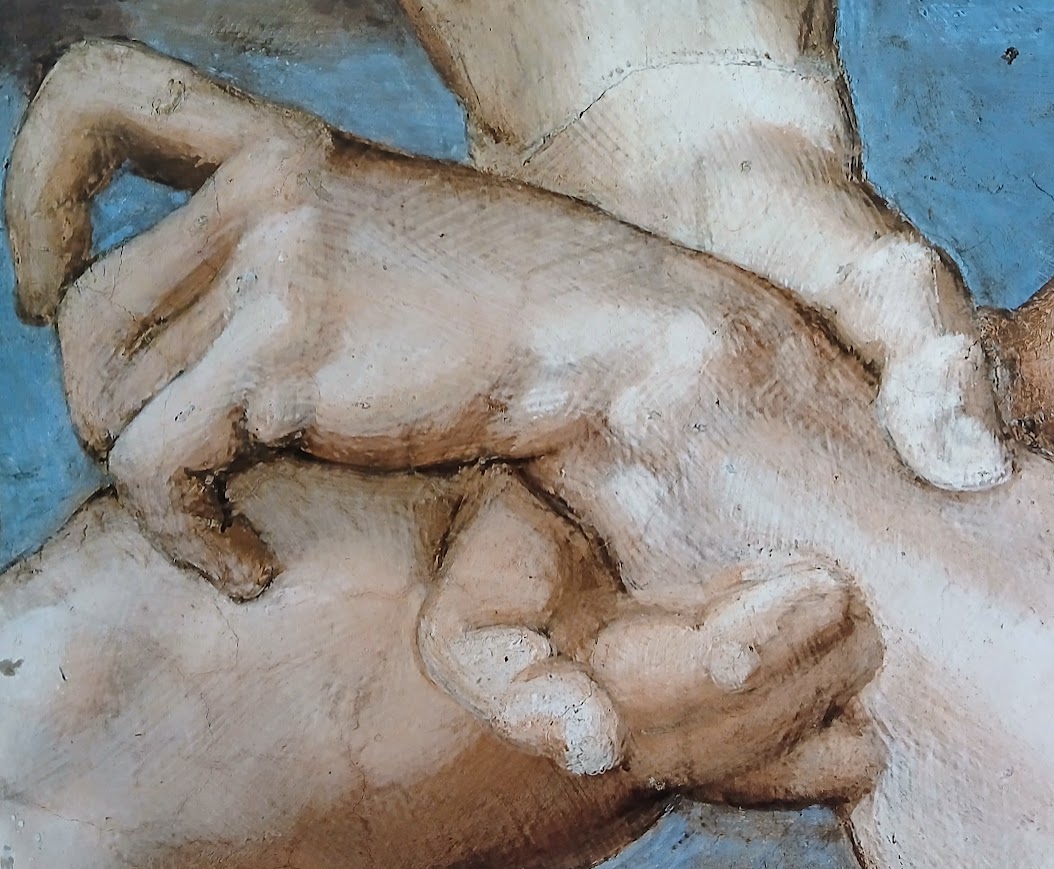
Il lapislazzuli per il grande cielo
I documenti relativi al Giudizio sono particolarmente numerosi e permettono di seguire anche gli acquisti dei materiali. Dal 18 maggio 1536 sono documentate le spese per i colori e tra questi compare frequentemente il costosissimo oltremarino, ottenuto dal lapislazzuli macinato proveniente dall’Afghanistan.
Il suo impiego nel Giudizio fu molto importante, soprattutto per il grande cielo che occupa una parte considerevole della composizione. Il pigmento veniva acquistato anche a Venezia e successivamente a Ferrara, mentre i pagamenti erano gestiti dal commissario alle fabbriche pontificie Iacopo Meleghino.
Il lapislazzuli era un materiale estremamente prezioso e il suo utilizzo su una superficie così vasta rappresentava una spesa notevole, ma in questo caso i costi erano sostenuti dalla Fabbrica pontificia. Accanto all’oltremarino venne utilizzata anche l’azzurrite, documentata tra gli acquisti effettuati a Ferrara nel novembre del 1537.
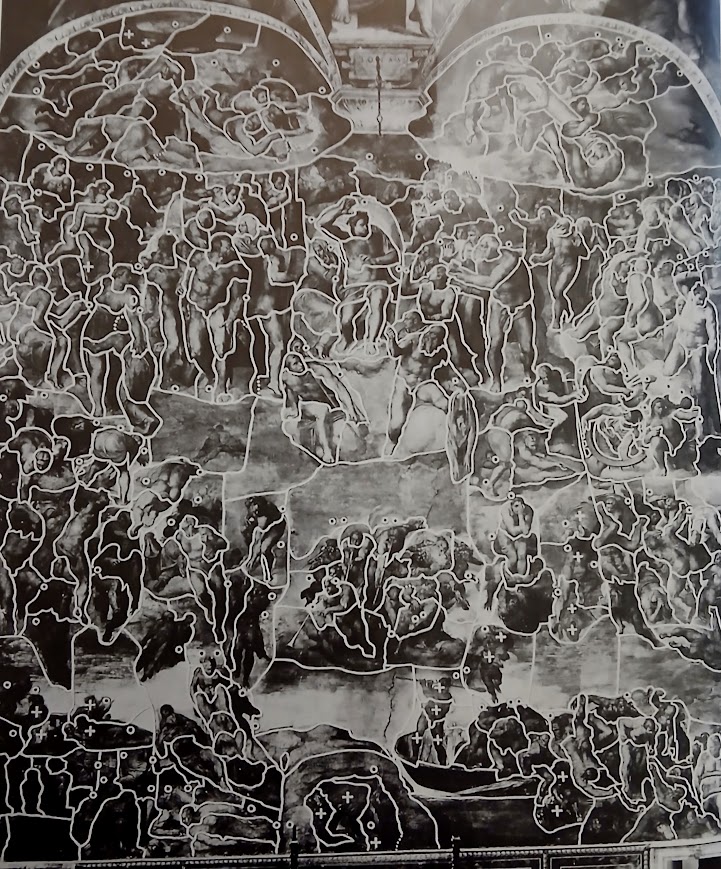
Il lavoro procedeva per giornate
Dipinsi il Giudizio secondo la tecnica del buon fresco, lavorando sull’intonaco ancora fresco e procedendo per giornate.
Ogni giornata rappresentava una porzione di superficie che doveva essere completata prima che l’intonaco asciugasse, e la ricostruzione tecnica dell’affresco ha permesso di individuare complessivamente 456 giornate.
Per le figure principali preparai i cartoni, che vennero trasferiti sull’intonaco attraverso differenti procedimenti. Nella parte alta utilizzai soprattutto lo spolvero, mentre nella parte bassa, realizzata nella fase finale del lavoro, ricorsi anche all’incisione indiretta.
Questo sistema permetteva di mantenere il controllo di una composizione estremamente complessa, ma non significava che tutto fosse deciso una volta per tutte prima di cominciare a dipingere.
Al contrario, molte figure cambiarono mentre lavoravo.
I pentimenti raccontano il mio modo di lavorare
Ancora oggi, osservando attentamente l’affresco a distanza ravvicinata, è possibile riconoscere numerosi pentimenti. In alcuni casi cambiai la posizione di una gamba o di un piede; in altri modificai un braccio o ruotai la testa di una figura, intervenendo quindi non soltanto sul dettaglio ma sul movimento complessivo del personaggio.
Il disegno era fondamentale, ma la pittura sulla parete continuava a essere un momento di invenzione per me. Una figura pensata su carta poteva funzionare diversamente quando entrava nella composizione reale e io intervenivo di conseguenza.
Cominciai dalle lunette
Il lavoro procedette inizialmente dalle lunette, nella parte superiore della parete. Dopo la loro realizzazione vi fu probabilmente una pausa, probabilmente necessaria anche per preparare i cartoni relativi alla fascia centrale con Cristo, la Vergine e gli eletti.
La successione delle giornate mostra comunque che il lavoro fu seguito con grande continuità e che la composizione venne costruita progressivamente. In questa fase fui aiutato da Francesco Amadori, detto l’Urbino, soprattutto nelle operazioni preparatorie.
La presenza dell’allievo è stata riconosciuta anche attraverso la diversa qualità di alcune parti dell’affresco, dove il suo intervento sembra essere stato più ampio.
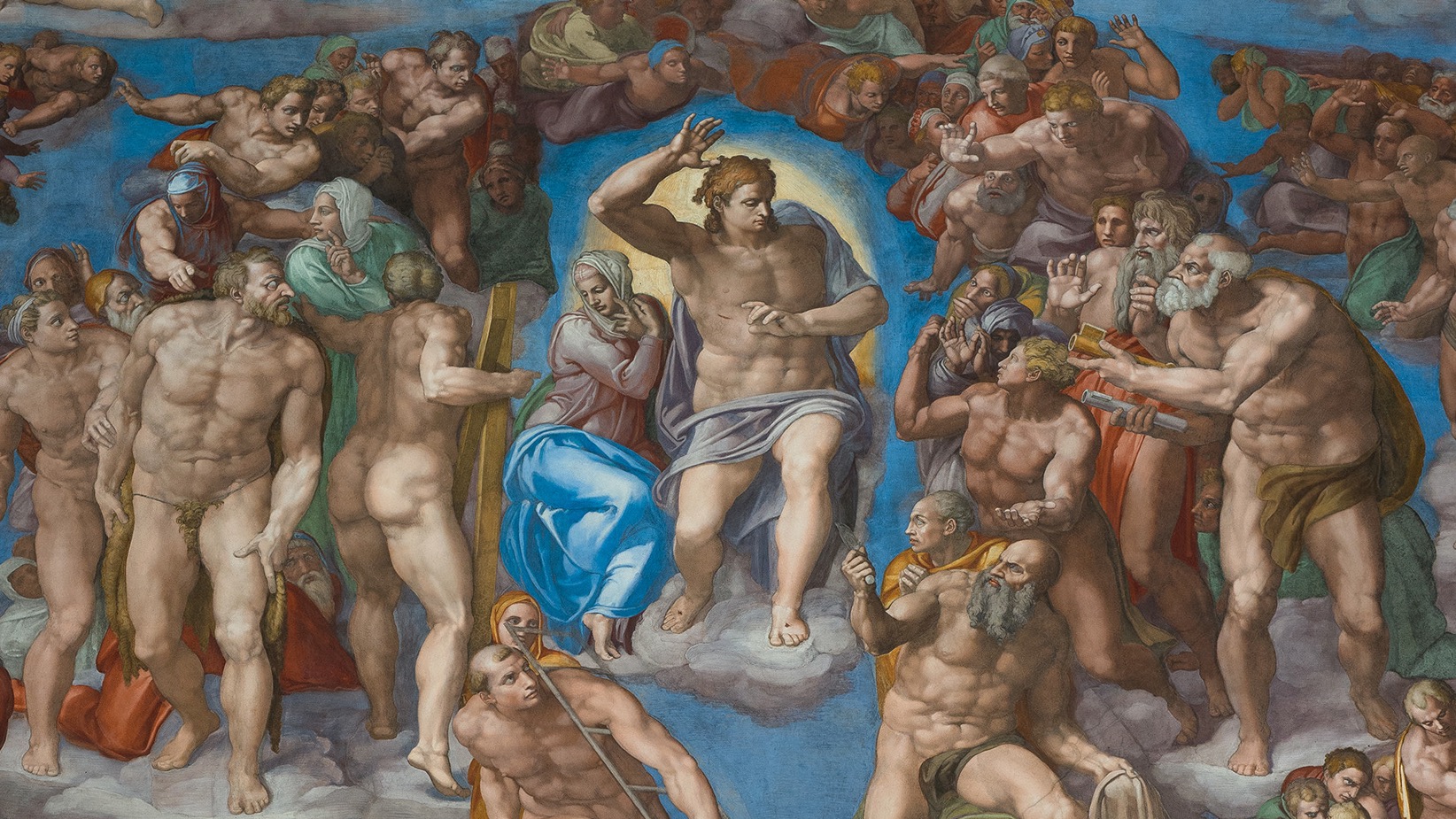
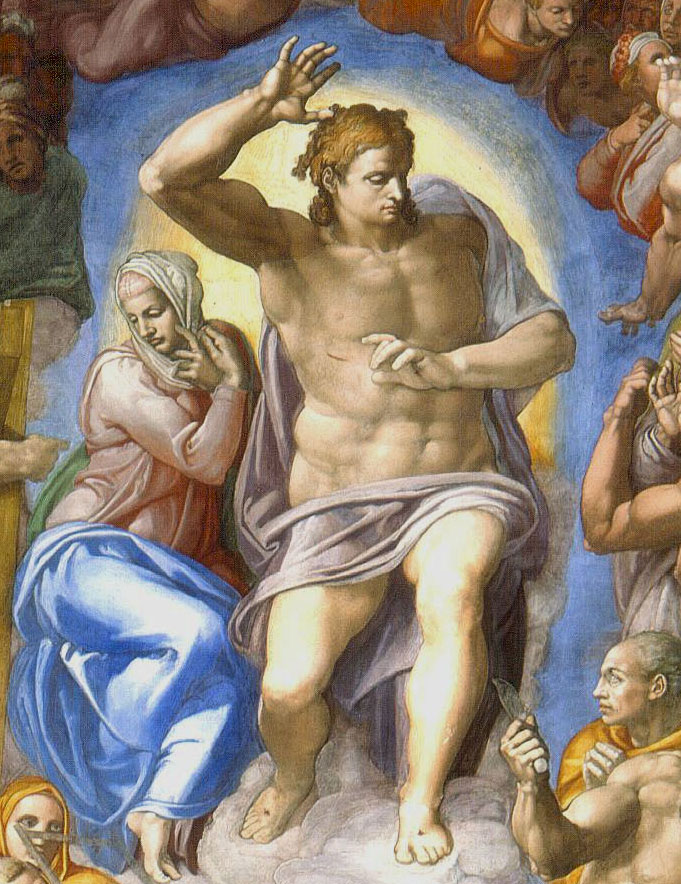
Cristo e la Vergine al centro della composizione
Il centro del mio Giudizio è occupato da Cristo giudice, attorno al quale si dispone una moltitudine di figure.
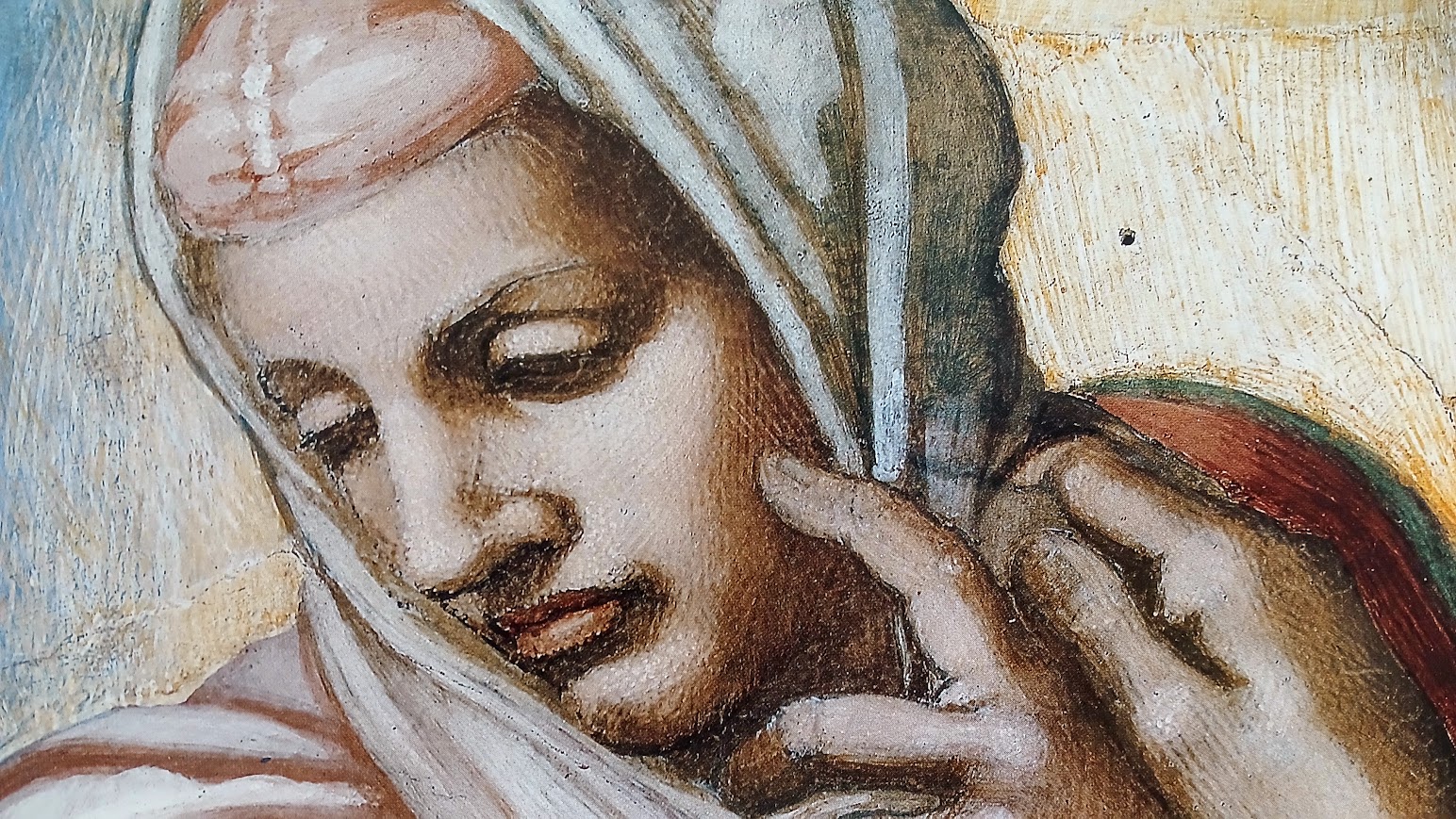
La sua posizione e il suo gesto organizzano l’intera composizione, mentre la Vergine, accanto a lui, stabilisce un rapporto diretto con il gesto del Figlio.
Nei primi studi che realizzai per il progetto la scena appare ancora più movimentata di quella definitiva. Il gesto di Cristo e la posizione della Vergine mostrano una concitazione che successivamente attenuai, senza però rinunciare alla forte energia della composizione.
La scelta fondamentale era ormai chiara: non volevo costruire il Giudizio come una serie di registri ordinati, con una netta separazione tra il mondo celeste e quello terreno.
Volevo che le figure partecipassero a un unico movimento.
Un Giudizio fatto di corpi in movimento
Gli eletti salgono verso il cielo, mentre i dannati vengono trascinati verso il basso; gli angeli si muovono tra le figure e i santi mostrano gli strumenti del proprio martirio.
La composizione non è divisa in compartimenti separati, ma costruita attraverso una continua relazione tra i corpi.
Il corpo umano, che avevo studiato per tutta la vita, tornava quindi a essere uno dei principali strumenti attraverso i quali esprimere il significato dell’opera.
Questa volta non era il corpo dell’eroe o dell’atleta, come nel David, ma quello dell’uomo davanti alla morte e all’eternità: il corpo che risorge, che cerca di salire, che viene trascinato verso il basso, che si aggrappa e che perde la propria forza.
Anche durante il lavoro dovetti fermarmi per un incidente
Non tutto procedette senza difficoltà. Durante l’esecuzione caddi dal ponteggio e mi ferii a una gamba.
Inizialmente rifiutai di farmi curare, ma il medico e mio amico Baccio Rontini intervenne e riuscii a guarire in tempi relativamente brevi. Tornai quindi al lavoro. La grande parete era ancora lontana dall’essere conclusa e la composizione richiedeva la mia assidua presenza.
La pittura del Giudizio è diversa da quella della volta
Tecnicamente il Giudizio presenta caratteristiche diverse rispetto alla pittura della volta. I colori sono spesso più corposi e la stesura appare energica, con pennellate rapide e dense.
Le correzioni a secco sono numerose e riguardano soprattutto modifiche delle figure, aggiunte e variazioni dei punti di luce. Nella parte alta furono inoltre aggiunte alcune figure secondarie, spesso appena accennate, che servivano a dare maggiore profondità alla composizione.
Non tutto ciò che vedete oggi, dunque, era già presente nel primo disegno. La composizione si sviluppò progressivamente mentre il lavoro procedeva.
Il Giudizio Universale nacque nell’arco di diversi anni
Quando guardate la parete dell’altare della Cappella Sistina, vedete un’immagine unitaria. La sua realizzazione però fu un processo lungo e complesso, iniziato con un progetto discusso con Clemente VII, proseguito dopo la sua morte sotto Paolo III e accompagnato da una lunga fase di preparazione della parete, dalla costruzione del ponteggio, dalla scelta della tecnica, dall’acquisto dei pigmenti e dalla realizzazione dei cartoni.
Ogni parte della composizione fu costruita attraverso un lavoro progressivo e, come vi ho raccontato, anche dopo aver trasferito il disegno sull’intonaco, continuai a modificare le figure.
Rimasi davanti a quella parete per anni, lavorando sul disegno, sull’intonaco e sul colore, modificando continuamente le figure mentre la composizione prendeva forma. E così, sotto Paolo III, il progetto concepito da Clemente VII divenne realtà.
Per il momento il sempre vostro Michelangelo Buonarroti vi saluta dandovi appuntamento ai prossimi post e sui social.
The Last Judgment: Before Paul III, There Was Clement VII
When you enter the Sistine Chapel today and gaze at the great altar wall, the first name associated with my Last Judgment is that of Paul III Farnese—the pontiff under whom I completed the fresco.
However, the story of the commission began years earlier, when Clement VII (Giulio de’ Medici) proposed that I work in the chapel once more and transform the altar wall with a depiction of the final day of human history.
The project originated with Clement VII
The commission for the Last Judgment was not, therefore, a decision made by Paul III. The project was conceived during the pontificate of Clement VII; I had discussed the undertaking with him as early as 1533, when we met in Florence—specifically at San Miniato al Tedesco—on September 22nd.
Clement VII was well acquainted with my work and knew I had already labored in the Sistine Chapel years before, when I painted the ceiling for Julius II della Rovere. His proposal, however, entailed a completely different kind of intervention: it was not a matter of decorating a series of architecturally complex surfaces, but rather of transforming the vast altar wall into a single, immense composition dedicated to the Last Judgment.
Later, my biographers Ascanio Condivi and Giorgio Vasari wrote that Clement VII’s initial plan was even more ambitious than what was ultimately realized. The pontiff had wanted me to paint the Last Judgment on the altar wall and, on the opposite wall above the main entrance, to depict the Fall of the Rebellious Angels—showing Lucifer and the angels who had sinned alongside him plunging from the heavens.
It was a highly ambitious iconographic program that would have transformed the entire chapel into a narrative about the end of time and the fall of those beings who had rebelled against God; yet, that second part of the project was never carried out. The First Evidence of the Last Judgment
The project must have already been quite concrete by February 1534, for on the 20th of that month, a Mantuan diplomatic agent reported that the Pope had succeeded in persuading me to paint the chapel and that the “Resurrection” would be depicted above the altar.
This term did not refer to the Resurrection of Christ, but rather the resurrection of the dead on the Day of Judgment.
By that stage, the planning process must have already begun, and I had likely produced some preliminary studies. Indeed, historical sources mention a cartone—or cartoon—that Clement VII had the opportunity to see; the term here does not necessarily refer to the large, definitive preparatory cartoon we imagine today, but rather to a compositional model.
One of the studies attributable to this early phase already reveals elements that would become fundamental to the finished fresco—most notably the positioning of Christ and the Virgin, and the dynamic composition that would distinguish my Last Judgment from earlier depictions of the same subject.
Clement VII Died Before Seeing the Painting
Fate, however, decreed that Clement VII would not live to see the realization of the work he had commissioned. The pontiff died on September 25, 1534—just months after the record documenting the project’s existence—and was succeeded by Alessandro Farnese, who ascended the papal throne as Paul III.
At that point, I attempted to assert the commitments I had already undertaken—particularly those regarding the tomb of Julius II, a project that had occupied me for decades and remained a binding obligation to the Duke of Urbino.
I therefore had valid reasons to request that the new commission be postponed, but Paul III had no intention of abandoning the project his predecessor had initiated. “I have harbored this desire for thirty years, and now that I am Pope, I will not let it go. I shall tear up the contract, and I am prepared for you to serve me regardless.”
Once again, therefore, I found myself facing a situation I had already experienced in the time of Julius II: prior commitments, however important, had to yield to the will of the Pontiff.
Paul III confirmed the commission
Paul III decided to proceed with Clement VII’s project and ordered me to continue the work without making any substantial changes to the original design.
This decision was accompanied by a highly significant official appointment. Through two papal briefs dated September 1, 1535, I was named supremum Architectum Sculptorem et Pictorem (Supreme Architect, Sculptor, and Painter) of the Apostolic Palace and granted a lifetime stipend of 1,200 scudi per year—a considerable sum comprising six hundred scudi from the revenue of the Po River crossing near Piacenza and an equal amount paid by the Datary.
The first of the two briefs explicitly stated explicitly that this commission was linked to the execution of the painting on the altar wall of the Sistine Chapel depicting the Last Judgment, as well as any other works I was to carry out in the Apostolic Palace.
At that point, the project was no longer merely a personal wish of the Pontiff; it had become an official commission.
Why was the Last Judgment placed on the altar wall?
The choice of the altar wall was not arbitrary; it must be viewed in the context of the specific historical moment when Clement VII conceived the project.
His pontificate had begun at a time when Rome was still regarded as the center of Christendom and a symbol of renewed political and religious grandeur; yet, the final years were marked by far more dramatic events—culminating in the Sack of Rome in 1527—which deeply affected both the city and the papal court itself.
Placed directly above the altar, the Last Judgment could take on a particularly powerful significance in that context, representing a moment when all earthly distinctions lost their value and every human being stood before divine judgment.
Clement VII’s choice can thus also be linked to the need to project a new image for the Papal Chapel at a time when the political and religious certainties that had defined Rome in previous decades were being profoundly challenged.
I had to modify the wall before painting
When work began, I could not simply climb onto the scaffolding and start painting.
The altar wall still bore earlier decorations—including frescoes by Perugino, such as the large altarpiece of the Assumption of the Virgin, as well as my own lunettes from the chapel’s previous decorative scheme.
To realize the new project, it was therefore necessary to demolish part of that existing decoration. It was a significant step, as it meant replacing an image that had been part of the Sistine Chapel for decades with a completely new composition, constructed according to a very different concept of space and the relationship between figures.
Preparatory work began on April 16, 1535, with the erection of the scaffolding and the preparation of the surface I was to paint upon.
The wall was faced with brick
During the preparation phase, I also wanted the wall’s structure to be modified.
A brick facing was constructed that altered the original surface and introduced a distinct inclination to the wall.
Vasari explained this choice by claiming I wanted to prevent dust from settling on the fresco’s surface, but the matter can also be viewed from another perspective.
My composition involved figures with extreme foreshortening and complex movements, intended to be viewed from below. Thus, the wall’s inclination could also serve a purpose related to the viewing of the work and the perspectival construction of the figures.
It was not the first time I had addressed the relationship between painting, architecture, and the viewer’s vantage point; even here in the Sistine Chapel, the surface I was painting on could not be considered independent of the image it was meant to receive.
The discussion with Sebastiano del Piombo
Before the work entered its painting phase, a debate arose regarding the technique to be used. Sebastiano del Piombo had suggested to the Pope that I execute the Last Judgment in oil, but I disagreed.
I preferred buon fresco—a technique I had already employed on the Sistine Chapel ceiling and which I considered better suited to the nature of the undertaking.
For a time, I left the matter unresolved, until I finally declared openly that I would paint in fresco. I had the plaster—prepared according to Sebastiano’s instructions—torn down, and then had the wall prepared for the technique I had chosen. The plaster was removed on January 25, 1536, and shortly thereafter, the bricks needed to line the wall were purchased. Only then was the surface truly ready for my work.
Lapis lazuli for the vast sky
The documents relating to the Last Judgment are particularly numerous, allowing us to track the purchase of materials as well. Expenses for pigments are recorded starting May 18, 1536; among them, the extremely costly ultramarine—derived from ground lapis lazuli from Afghanistan—appears frequently.
Its use in the Last Judgment was crucial, especially for the vast sky that occupies a significant portion of the composition. The pigment was purchased in Venice and later in Ferrara, while payments were handled by Iacopo Meleg, the commissioner of the papal works lapis lazuli.
Lapis lazuli was an extremely precious material, and using it over such a vast surface represented a considerable expense; in this instance, however, the costs were borne by the Papal Works Office (Fabbrica Pontificia). Alongside ultramarine, azurite was also used—a material documented among purchases made in Ferrara in November 1537.
Work proceeded in daily stages
I painted the Last Judgment using the buon fresco technique, working on the plaster while it was still fresh and proceeding in daily stages.
Each stage (giornata) represented a section of the surface that had to be completed before the plaster dried; a technical reconstruction of the fresco has identified a total of 456 such stages.
I prepared cartoons for the main figures, which were transferred onto the plaster using various methods. In the upper section, I primarily used the pouncing method (spolvero), whereas in the lower section—executed during the final phase of the work—I also employed indirect incision.
This system allowed me to maintain control over an extremely complex composition, yet it did not mean that everything was decided once and for all before I began to paint.
On the contrary, many figures changed as I worked.
Changes of mind reveal my working method
Even today, by closely examining the fresco, one can spot numerous pentimenti—changes of mind or alterations made during the painting process. In some cases, I altered the position of a leg or a foot; in others, I modified an arm or turned a figure’s head, thereby adjusting not just a detail but the figure’s overall movement.
Drawing was fundamental, yet painting on the wall remained a moment of invention for me. A figure conceived on paper might function differently once placed within the actual composition, and I would make adjustments accordingly.
I began with the lunettes
Work initially proceeded from the lunettes, located in the upper part of the wall. After their completion, there was likely a pause—probably necessary to prepare the cartoons for the central band featuring Christ, the Virgin, and the elect.
The sequence of the giornate (daily work sections) shows, however, that the work proceeded with great continuity and that the composition was built up progressively. During this phase, I was assisted by Francesco Amadori—known as “l’Urbino”—particularly with the preparatory tasks.
The pupil’s presence has also been identified through the varying quality of certain parts of the fresco where his contribution appears to have been more extensive.
Christ and the Virgin at the center of the composition
The center of my Last Judgment is occupied by Christ the Judge, surrounded by a multitude of figures.
His position and gesture organize the entire composition, while the Virgin, standing beside him, establishes a direct connection with her Son’s gesture.
In the initial studies I created for the project, the scene appears even more dynamic than in the final version. Christ’s gesture and the Virgin’s pose convey a sense of agitation that I later toned down, without, however, sacrificing the composition’s powerful energy.
The fundamental choice was clear by then: I did not want to construct the Last Judgment as a series of orderly registers with a sharp separation between the celestial and earthly realms.
I wanted the figures to participate in a single, unified movement.
A Last Judgment of bodies in motion
The elect ascend toward heaven while the damned are dragged downward; angels move among the figures, and saints display the instruments of their martyrdom.
The composition is not divided into separate compartments but is built through a continuous interplay between the bodies.
The human body—which I had studied all my life—thus became, once again, one of the primary means of expressing the work’s meaning. This time, it was not the body of a hero or an athlete, as in the David, but that of a man facing death and eternity: a body rising, striving to ascend, being dragged downward, clinging on, and losing its strength.
I even had to stop working due to an accident
Not everything went smoothly. During the execution, I fell from the scaffolding and injured my leg.
At first, I refused treatment, but my friend and physician Baccio Rontini intervened, and I managed to recover relatively quickly. I then returned to work. The great wall was far from finished, and the composition required my constant presence.
The painting of the Last Judgment differs from that of the vault
Technically, the Last Judgment presents characteristics distinct from the vault paintings. The colors are often more substantial, and the application appears energetic, featuring rapid, thick brushstrokes.
There are numerous a secco (dry) corrections, primarily involving alterations to figures, additions, and adjustments to highlights. In the upper section. Furthermore, I added certain secondary figures—often merely sketched in—to lend greater depth to the composition.
Thus, not everything you see today was present in the initial drawing; the composition evolved progressively as the work advanced.
The Last Judgment came into being over the course of several years
When you look at the altar wall of the Sistine Chapel, you see a unified image. Yet its creation was a long and complex process: it began with a plan discussed with Clement VII and continued after his death under Paul III, accompanied by a lengthy phase of wall preparation, scaffolding construction, the selection of techniques, the purchase of pigments, and the creation of the cartoons.
Every part of the composition was built up through a progressive process; as I have told you, even after transferring the design onto the plaster, I continued to modify the figures.
I stood before that wall for years, working on the drawing, the plaster, and the color, constantly altering the figures as the composition took shape. And so, under Paul III, the project conceived by Clement VII became reality.
For now, your ever-faithful Michelangelo Buonarroti bids you farewell, looking forward to seeing you in future posts and on social media.

Sostienici – Support Us
Se questo blog ti piace e ti appassiona, puoi aiutarci a farlo crescere sempre più sostenendoci in modo concreto condividendo i post, seguendo le pagine social e con un contributo che ci aiuta ad andare avanti con il nostro lavoro di divulgazione. . ENGLISH: If you like and are passionate about this blog, you can help us make it grow more and more by supporting us in a concrete way by sharing posts, following social pages and with a contribution that helps us to move forward with our dissemination work.
10,00 €
-
La donna morsa dal serpente nella Cappella Sistina
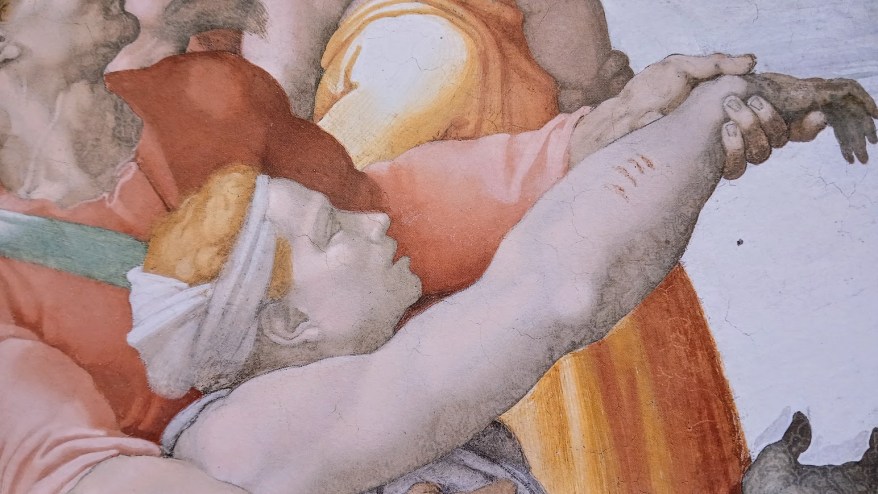
🇮🇹Quattro segni sul braccio. Nella volta della Cappella Sistina ho dipinto serpenti velenosi, corpi contorti e volti deformati dal terrore. Ma c’è un particolare che potrebbe sfuggirvi… 🇬🇧Four marks on the arm. On the ceiling of the Sistine Chapel, I painted venomous snakes, contorted bodies, and faces twisted by terror. But there is a detail…
-
Gian Lorenzo Bernini: l’uomo che fece muovere il marmo
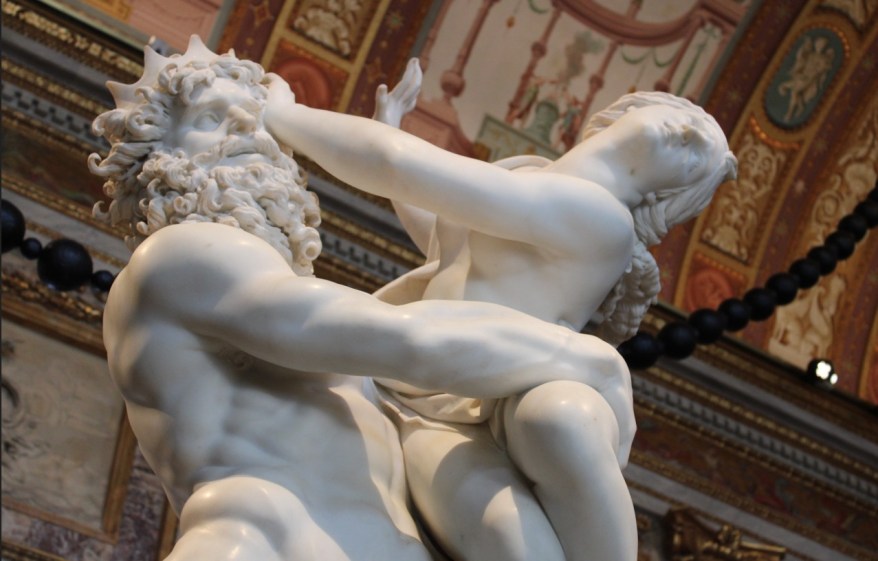
🇮🇹Davanti a una scultura di Gian Lorenzo Bernini, capita di avvicinarsi per osservare un dettaglio e ritrovarsi a seguire con lo sguardo l’intera scena. Una mano stringe una coscia, un volto si volta per sfuggire a uno sguardo, le dita si trasformano in foglie… 🇬🇧When standing before a sculpture by Gian Lorenzo Bernini, you might…
-
L’Allegoria della Geometria di Prospero Fontana: il dipinto attribuito per errore a Jacopo Coppi
🇮🇹L’Allegoria della Geometria, attribuita un tempo a Jacopo Coppi, è stata restituita a Prospero Fontana: storia, significato e segreti del dipinto… 🇬🇧The Allegory of Geometry, once attributed to Jacopo Coppi, has been reattributed to Prospero Fontana: the history, meaning, and secrets of the painting…
Condividi:


Questo sono io




sostienici

Sostienici – Support Us
Se questo blog ti piace e ti appassiona, puoi aiutarci a farlo crescere sempre più sostenendoci in modo concreto condividendo i post, seguendo le pagine social e con un contributo che ci aiuta ad andare avanti con il nostro lavoro di divulgazione. . ENGLISH: If you like and are passionate about this blog, you can help us make it grow more and more by supporting us in a concrete way by sharing posts, following social pages and with a contribution that helps us to move forward with our dissemination work.
€10,00


