
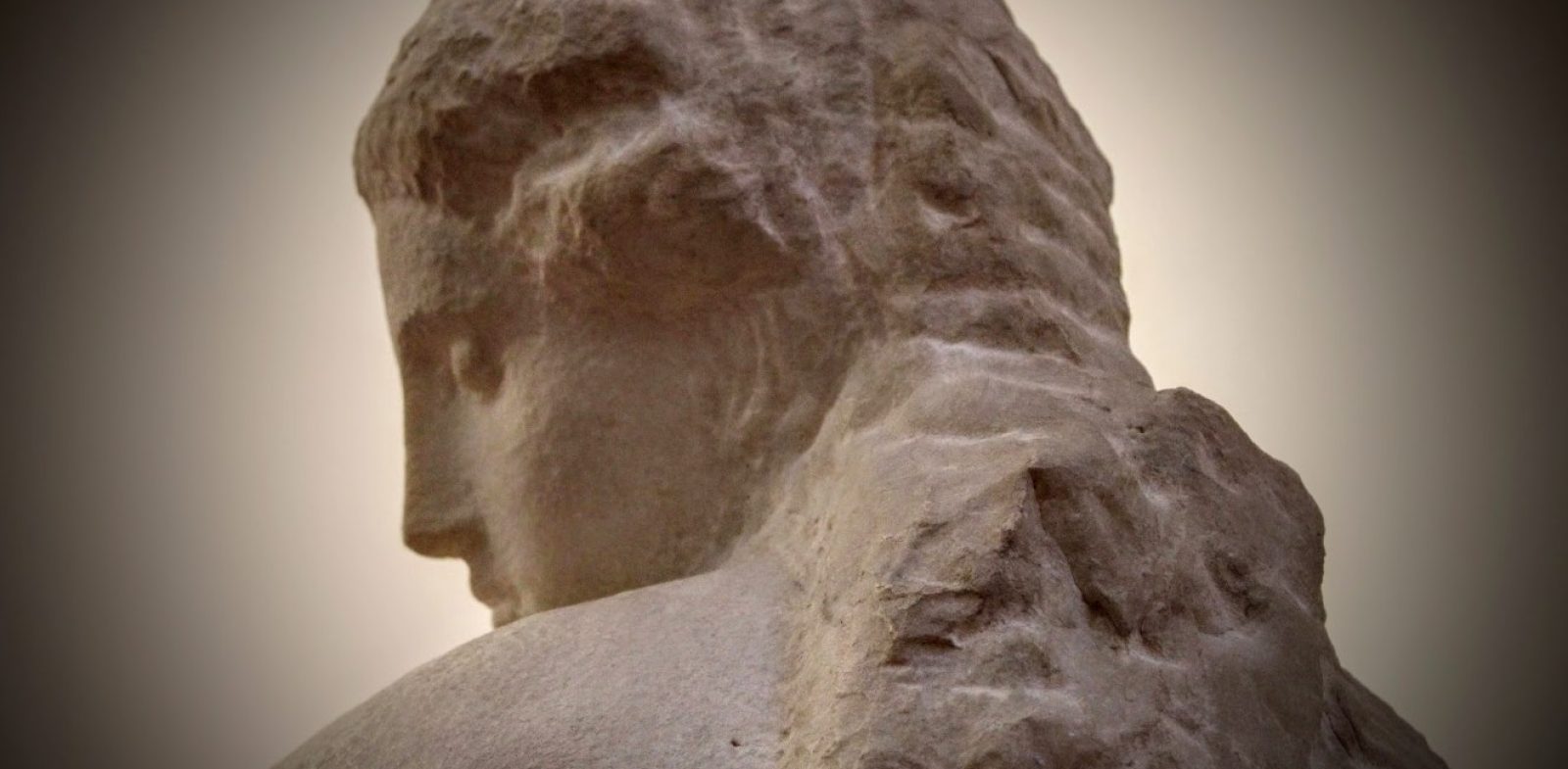
Napoleone rubò le Nozze di Cana del Veronese: il dettaglio del gatto
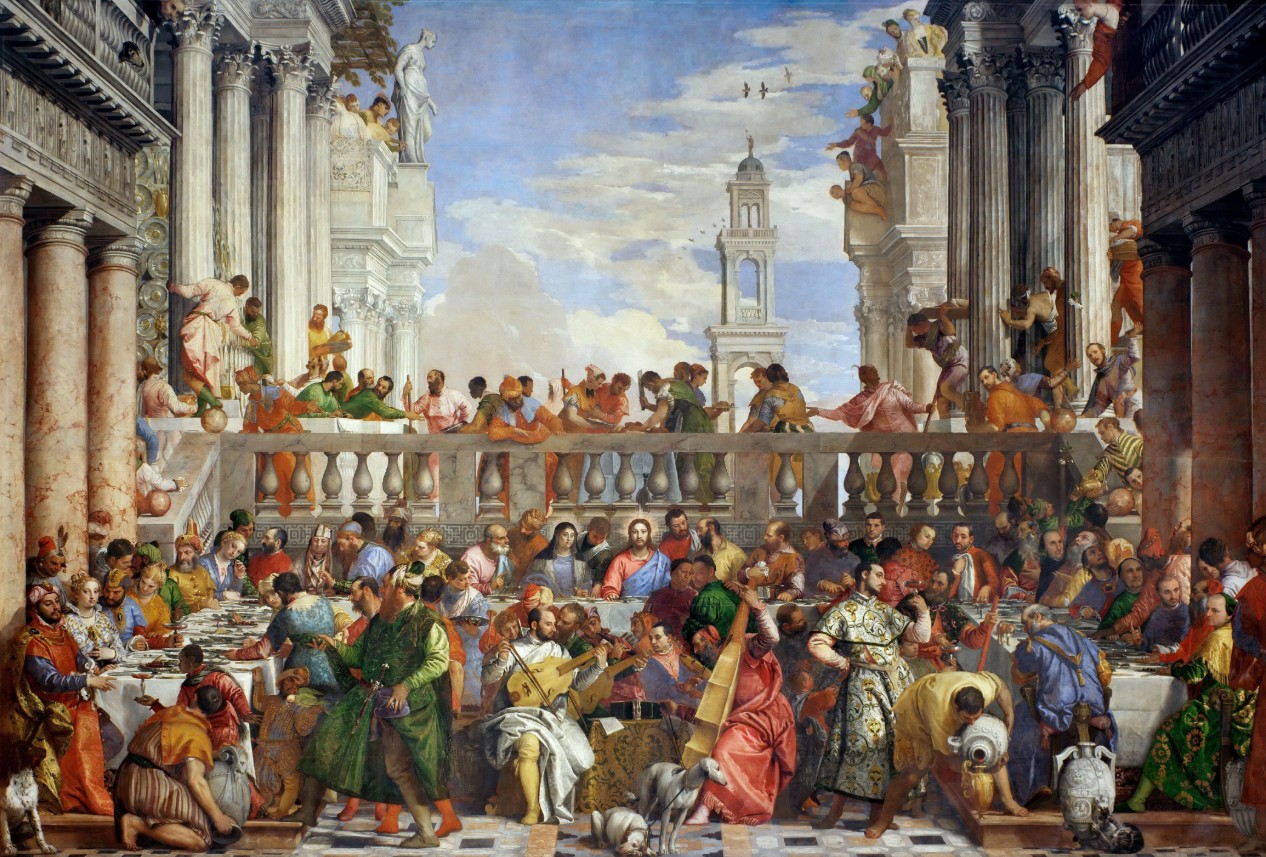
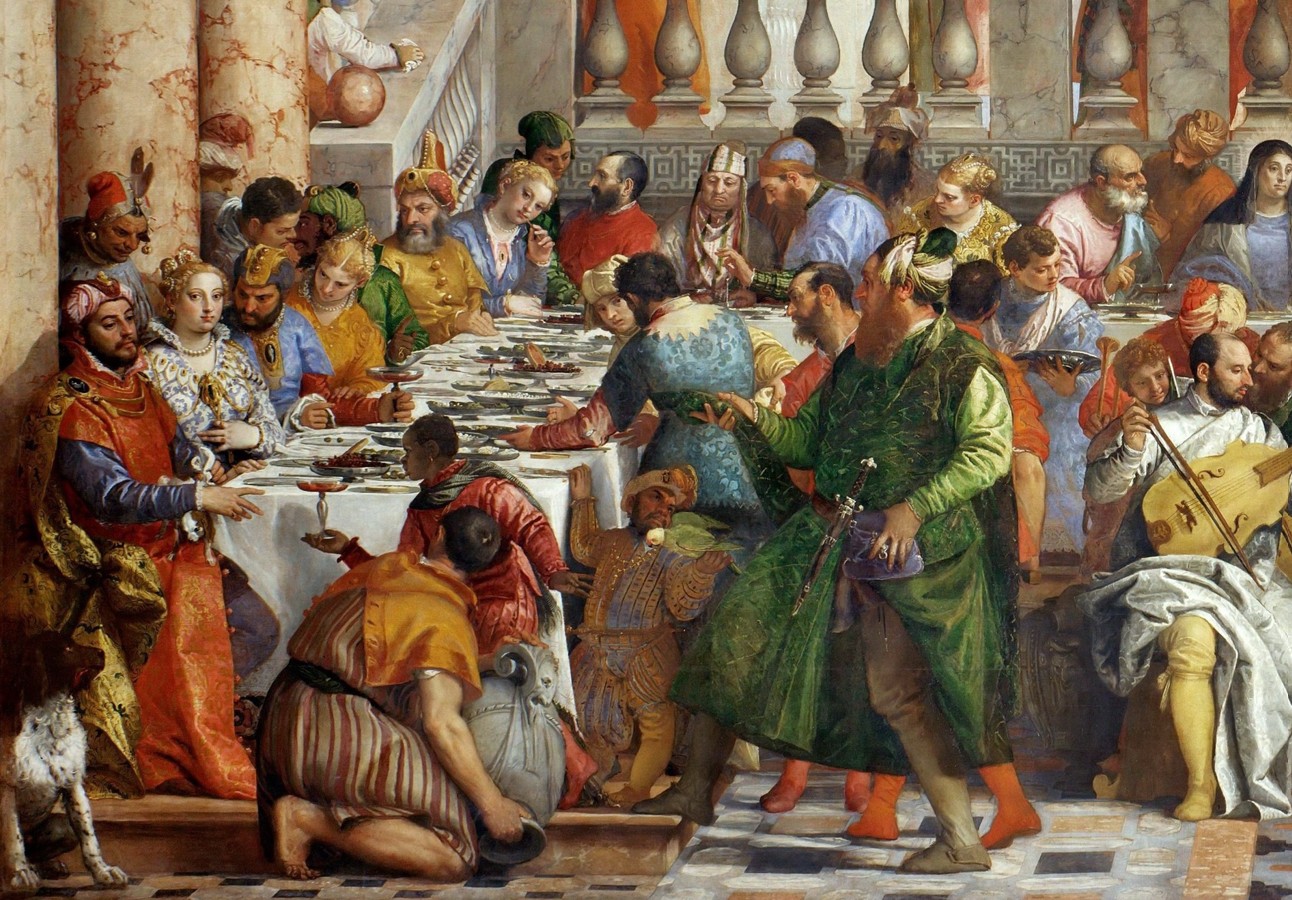
Il dipinto delle Nozze di Cana di Paolo Veronese rappresentano il primo miracolo di Cristo.
Dentro questa gigantesca tela, oggi conservata al Louvre, si nasconde un mondo intero: circa 130 personaggi, musicisti, servitori, nobili, animali, oggetti preziosi e dettagli apparentemente secondari che narrano la società veneziana del Cinquecento.
La storia dell’opera è intricata quanto la sua composizione. Nel 1797 venne prelevata dalle truppe napoleoniche a Venezia e trasferita a Parigi, dove si trova tutt’oggi, purtroppo.
Un matrimonio veneziano trasformato in una scena biblica
Paolo Caliari, detto Veronese, dipinse le Nozze di Cana tra il 1562 e il 1563, su commissione dei monaci benedettini per il refettorio del monastero di San Giorgio Maggiore a Venezia.
Veronese non immaginò una piccola scena religiosa destinata alla contemplazione privata, ma un’immensa festa capace di trasformare il refettorio in uno spazio spettacolare. Il soggetto è quello narrato nel Vangelo di Giovanni: durante un matrimonio a Cana, il vino finisce e Gesù ordina di riempire d’acqua alcune grandi giare. L’acqua viene miracolosamente trasformata in vino, dando origine a quello che la tradizione cristiana considera il primo miracolo di Cristo.
Veronese porta questo episodio biblico dentro la Venezia del XVI secolo. L’architettura monumentale, gli abiti, le suppellettili, i personaggi e l’atmosfera del banchetto appartengono al mondo contemporaneo dell’artista. Il risultato è un’opera nella quale il racconto sacro convive con la rappresentazione della società veneziana, con la sua ricchezza, la sua eleganza e il suo gusto per lo spettacolo.
Le Nozze di Cana è più grande dipinto esposto nel museo del Louvre: la tela misura circa 6,77 metri di altezza per 9,94 metri di larghezza, per una superficie superiore ai 67 metri quadrati.
Gesù al centro di un banchetto affollatissimo
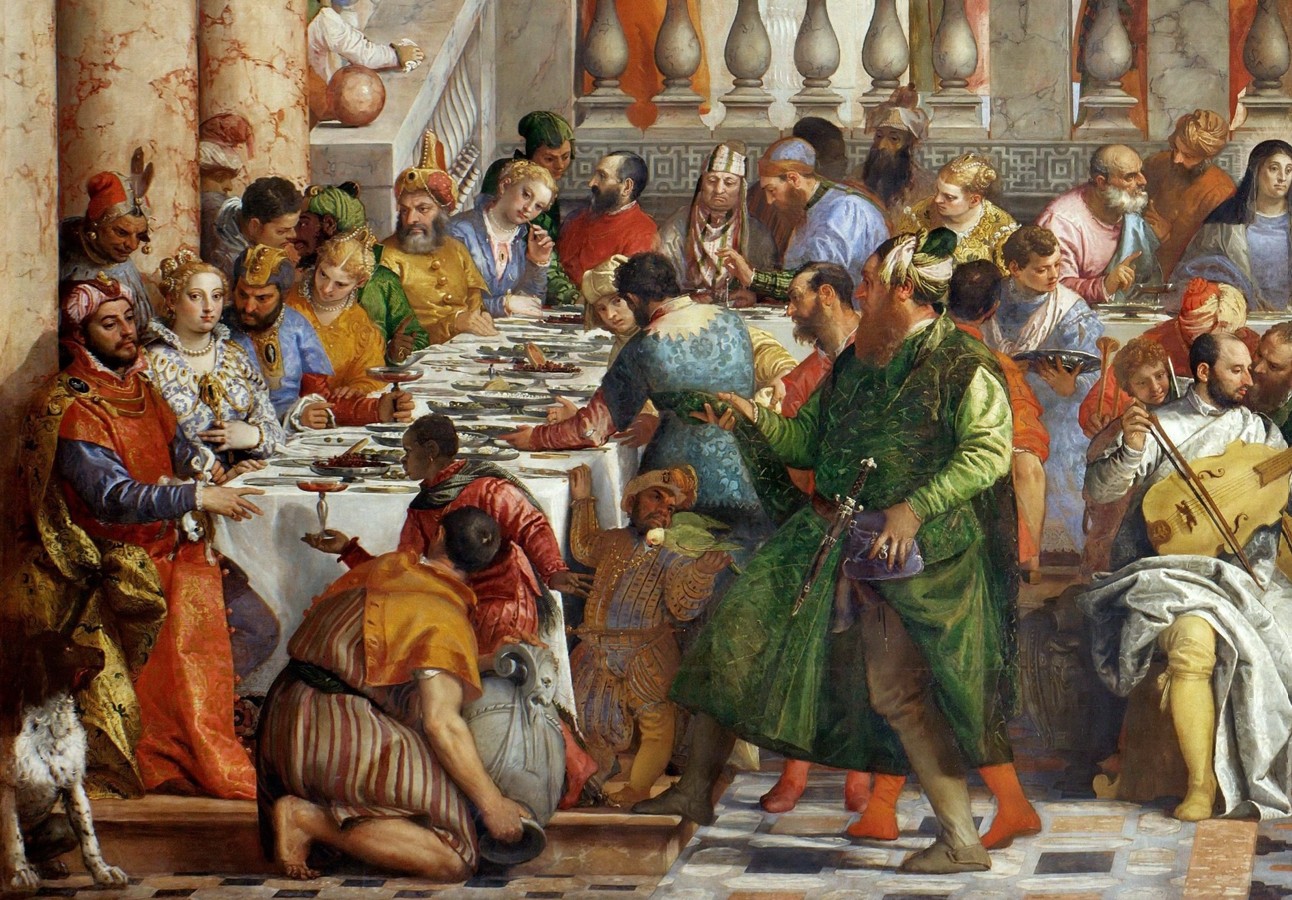
A prima vista è quasi difficile capire dove guardare. La tela è talmente popolata che l’occhio passa continuamente da un personaggio all’altro.
Al centro della composizione si trova Cristo, seduto al tavolo insieme alla Vergine e agli apostoli. La sua posizione è fondamentale perché costituisce il fulcro religioso dell’intera scena, anche se Veronese lo inserisce all’interno di un banchetto estremamente mondano.
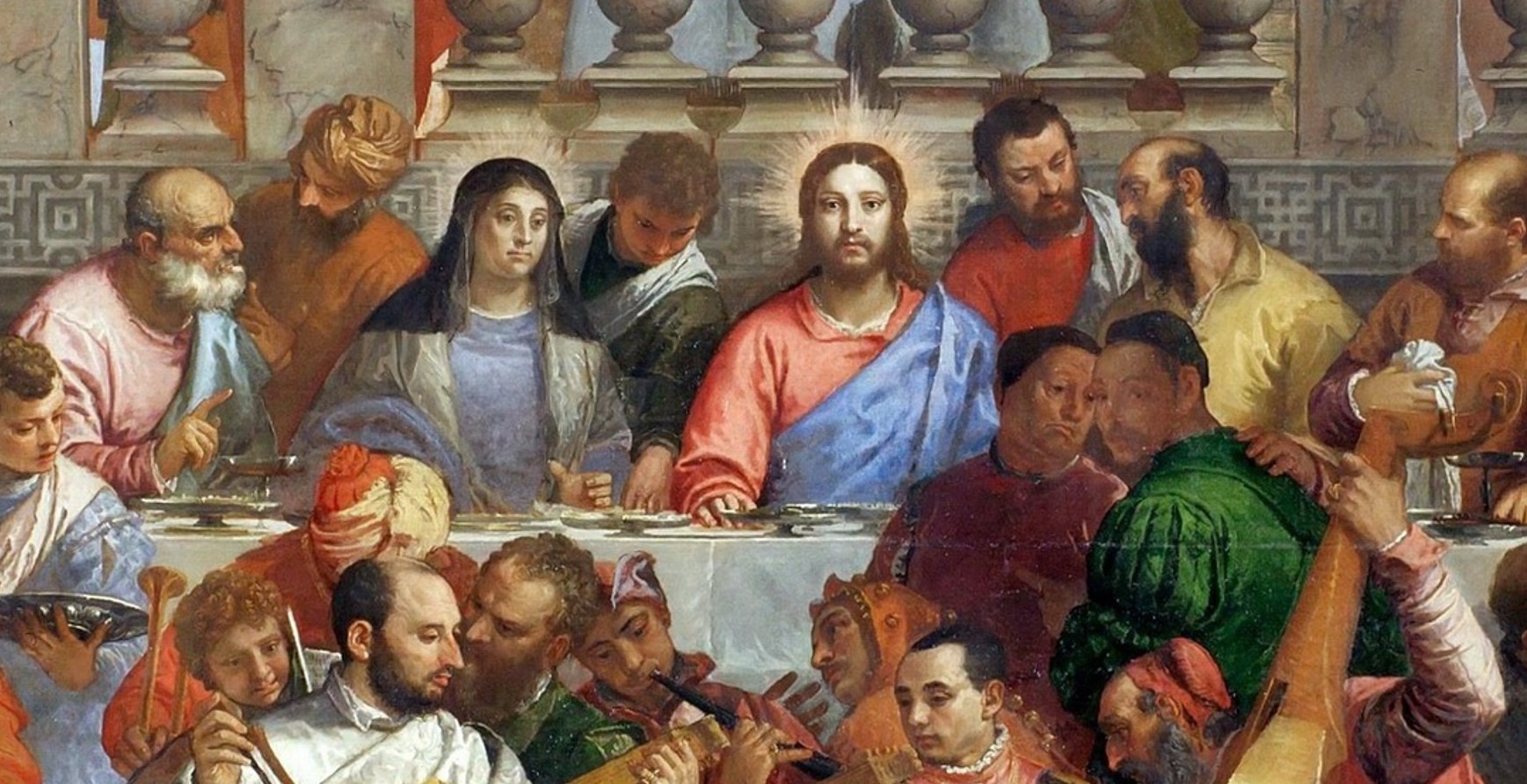
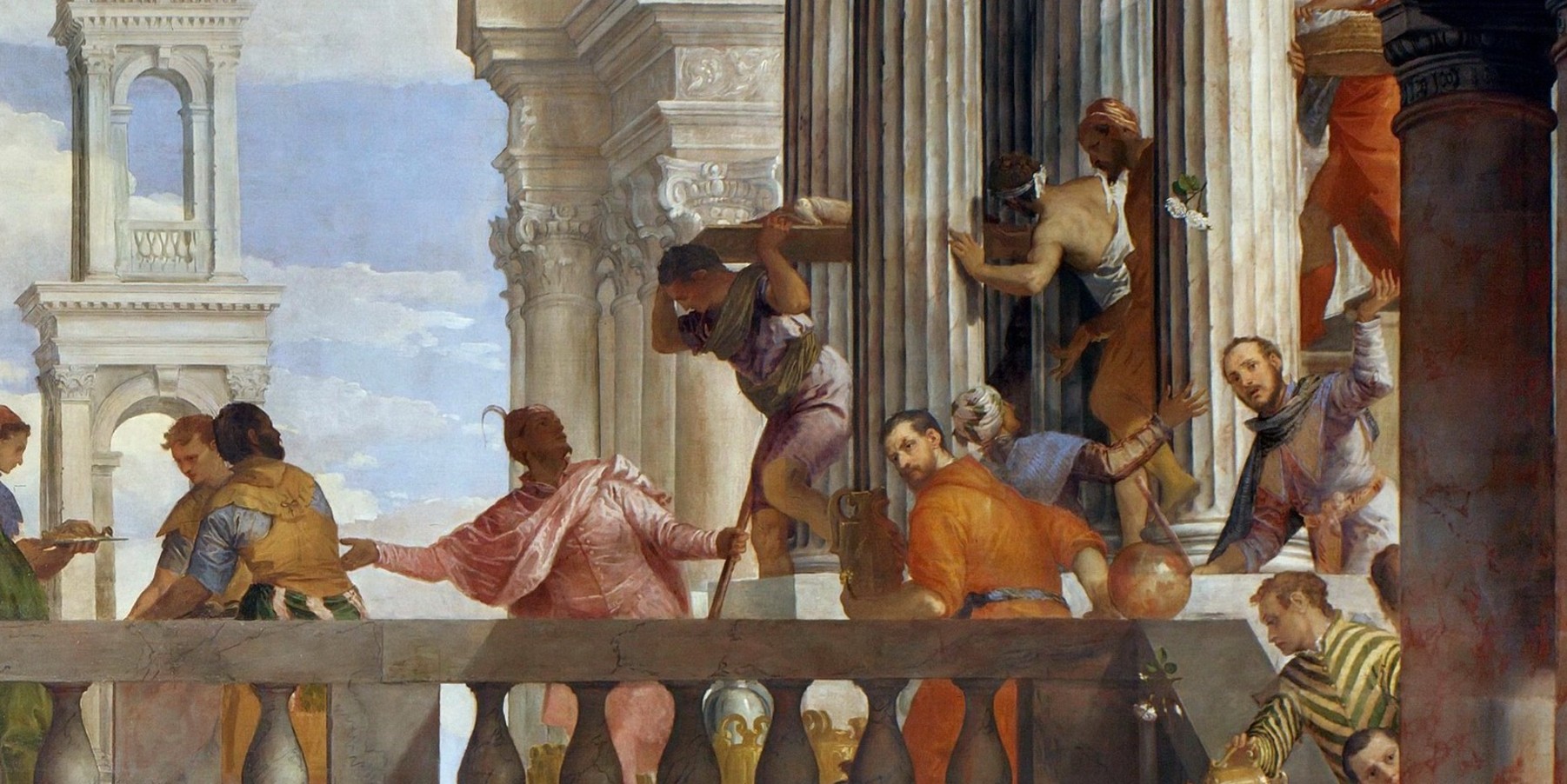
Attorno a lui si muove una folla composta da aristocratici, servitori, musicisti, personaggi esotici e figure elegantemente vestite. Il pittore costruisce così una sorta di grande teatro all’aperto, racchiuso da una monumentale architettura di gusto classico.
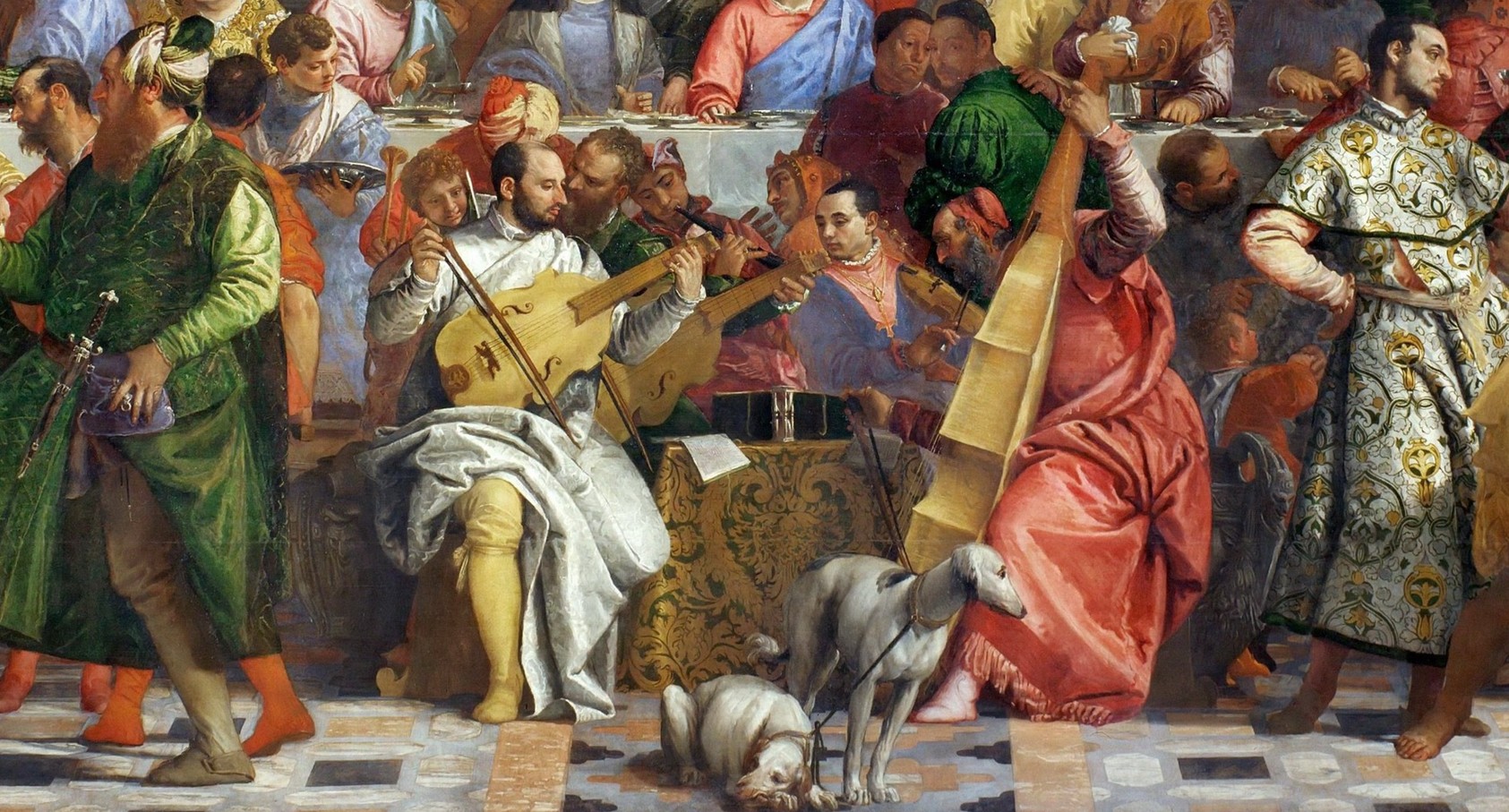
Secondo la tradizione, tra i musicisti rappresentati in primo piano si riconoscerebbero anche importanti pittori veneziani: Veronese stesso, Tiziano e Jacopo Bassano. Si tratta di identificazioni tradizionali, non sempre considerate certe dagli studiosi, ma che contribuiscono a rendere ancora più affascinante la lettura del dipinto.
Il piccolo cane sul tavolo
Tra i particolari più curiosi delle Nozze di Cana ci sono gli animali, disseminati nella scena quasi come piccoli personaggi autonomi.
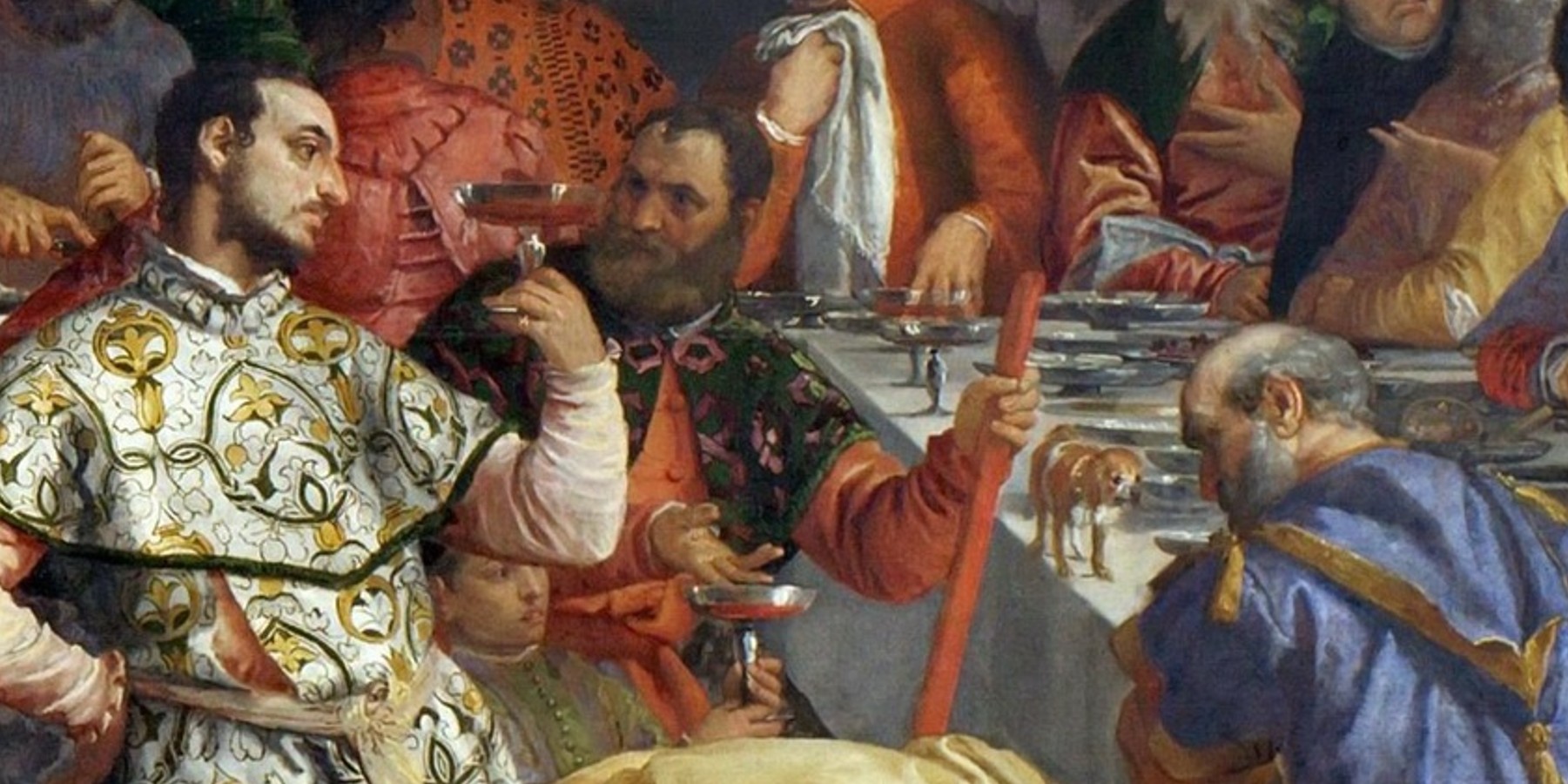
Sul lato destro del grande banchetto, sul tavolo tra i piatti, compare un piccolo cane, apparentemente del tutto incurante della solennità religiosa dell’episodio. Non è certo l’unico cane presente nell’opera. Veronese ne inserisce diversi, collocandoli in punti differenti della composizione. Alcuni sono in primo piano, altri compaiono tra i partecipanti al banchetto o osservano la scena da altre zone dell’architettura.
Questa presenza animale contribuisce a rendere il banchetto ancora più realistico e movimentato.
Il gatto che gioca con la brocca d’argento
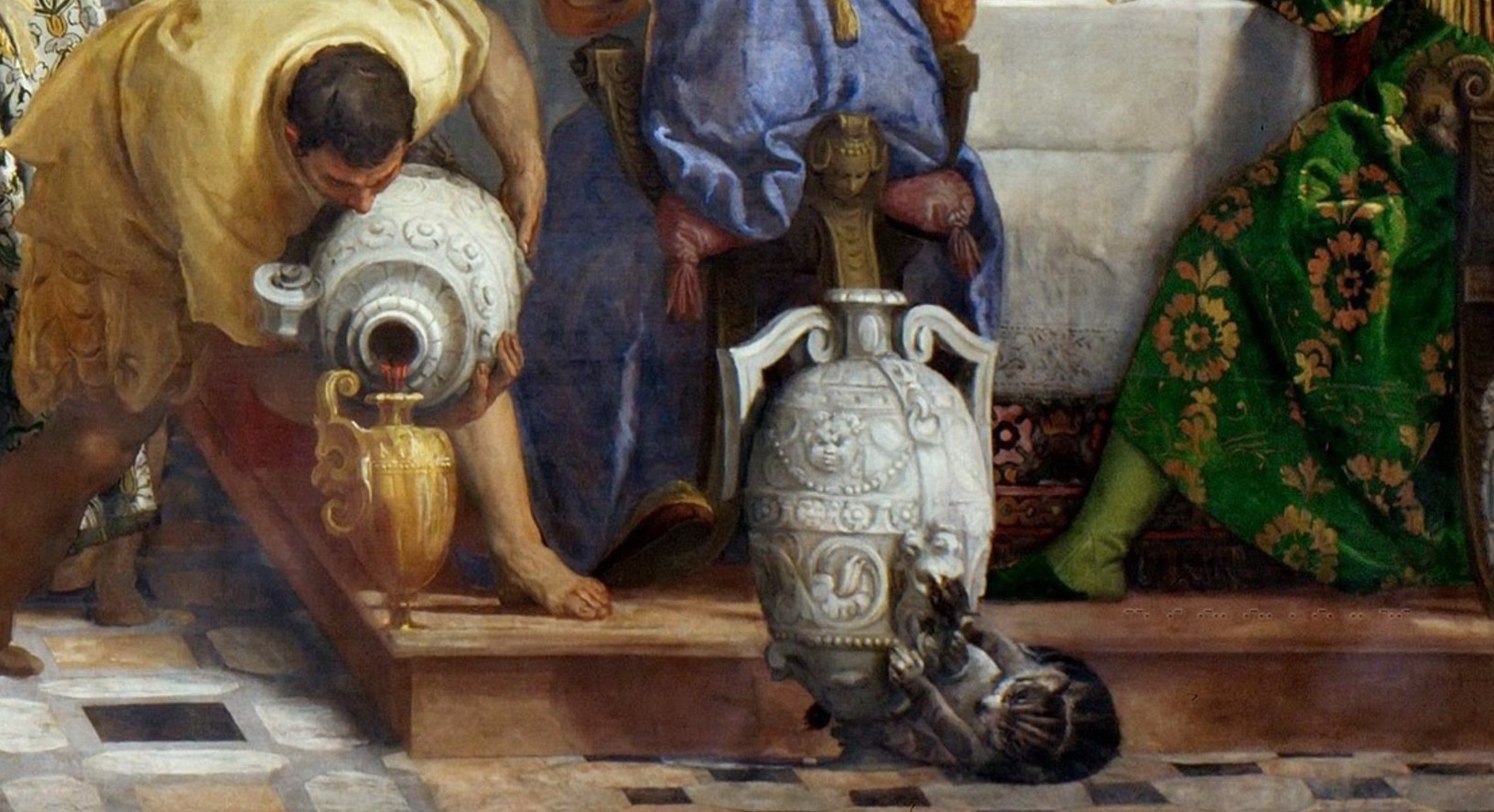
Nella parte inferiore destra della tela, poco sotto il tavolo, compare un gatto rappresentato mentre sembra giocare con una grande brocca. Il micio sembra quasi completamente estraneo a ciò che sta accadendo intorno a lui.
Il furto di Napoleone: dalle sale di Venezia al Louvre
Nel 1797, durante la campagna d’Italia, le truppe napoleoniche arrivarono a Venezia e il gigantesco dipinto di Veronese venne prelevato dal refettorio di San Giorgio Maggiore.
L’opera fu quindi trasferita in Francia e arrivò al Louvre nel 1798. La stessa scheda ufficiale del museo indica come modalità di acquisizione la “conquista militare”.
Il problema era enorme anche dal punto di vista materiale. Una tela di quasi dieci metri di larghezza non poteva essere trasportata semplicemente come un normale dipinto. Fu quindi necessario arrotolarla per poterla trasferire.
Perché l’opera non tornò a Venezia?
La storia avrebbe potuto concludersi nel 1815, quando, dopo la caduta dell’Impero napoleonico, molte delle opere confiscate in Italia furono restituite.
Il ritorno a Venezia avrebbe comportato un viaggio estremamente rischioso per una tela di quelle dimensioni. Si temeva infatti che il trasporto potesse danneggiarla gravemente. Fu quindi deciso di lasciare il dipinto in Francia, scambiandolo con un’opera di Charles Le Brun, La Maddalena e il Fariseo.
Una motivazione che suona più coma un pretesto per non restituirla all’Italia.
Così il capolavoro di Veronese, nato per il refettorio benedettino di San Giorgio Maggiore, è rimasto a Parigi.
Oggi le Nozze di Cana sono esposte nella Sala degli Stati del Louvre, nella stessa grande sala che ospita la Gioconda di Leonardo.
Per il momento il sempre vostro Michelangelo Buonarroti vi saluta dandovi appuntamento ai prossimi post e sui social.
Napoleon Stole Veronese’s Wedding at Cana: The Cat Detail
Paolo Veronese’s painting of the Wedding at Cana represents Christ’s first miracle.
This gigantic canvas, now housed in the Louvre, conceals an entire world: approximately 130 figures, musicians, servants, nobles, animals, precious objects, and seemingly secondary details that narrate 16th-century Venetian society.
The history of the work is as intricate as its composition. In 1797, it was captured by Napoleon’s troops in Venice and moved to Paris, where, sadly, it remains today.
A Venetian Wedding Transformed into a Biblical Scene
Paolo Caliari, known as Veronese, painted the Wedding at Cana between 1562 and 1563, commissioned by the Benedictine monks for the refectory of the monastery of San Giorgio Maggiore in Venice.
Veronese did not envision a small religious scene intended for private contemplation, but an immense celebration capable of transforming the refectory into a spectacular space. The subject is the one narrated in the Gospel of John: during a wedding at Cana, the wine runs out and Jesus orders several large jars filled with water. The water is miraculously transformed into wine, giving rise to what Christian tradition considers Christ’s first miracle.
Veronese brings this biblical episode to 16th-century Venice. The monumental architecture, the clothing, the furnishings, the characters, and the atmosphere of the banquet belong to the artist’s contemporary world. The result is a work in which the sacred narrative coexists with the representation of Venetian society, with its wealth, elegance, and flair for spectacle.
The Wedding at Cana is the largest painting exhibited in the Louvre: the canvas measures approximately 6.77 meters high by 9.94 meters wide, covering a surface area of over 67 square meters.
Jesus at the Center of a Crowded Banquet
At first glance, it’s almost difficult to know where to look. The canvas is so crowded that the eye continually wanders from one figure to another.
At the center of the composition is Christ, seated at the table with the Virgin and the apostles. His position is crucial because it constitutes the religious fulcrum of the entire scene, even though Veronese places him within an extremely worldly banquet.
Around him moves a crowd of aristocrats, servants, musicians, exotic characters, and elegantly dressed figures. The painter thus constructs a sort of large open-air theater, enclosed by a monumental classical-style architecture.
According to tradition, among the musicians depicted in the foreground are also important Venetian painters: Veronese himself, Titian, and Jacopo Bassano. These are traditional identifications, not always considered certain by scholars, but they contribute to making the painting even more fascinating to read.
The Little Dog on the Table
Among the most curious details of the Wedding at Cana are the animals, scattered throughout the scene almost like small, autonomous characters.
On the right side of the large banquet, on the table among the dishes, appears a small dog, seemingly oblivious to the religious solemnity of the scene. It is certainly not the only dog in the work. Veronese includes several, placing them at different points in the composition. Some are in the foreground, others appear among the banquet participants or observe the scene from other parts of the architecture.
This animal presence contributes to making the banquet even more realistic and lively.
The Cat Playing with the Silver Jug
In the lower right part of the canvas, just below the table, a cat appears playing with a large jug. The cat seems almost completely oblivious to what is happening around him.
Napoleon’s Theft: From the Halls of Venice to the Louvre
In 1797, during the Italian campaign, Napoleon’s troops arrived in Venice, and Veronese’s gigantic painting was taken from the refectory of San Giorgio Maggiore.
The work was then transferred to France and arrived at the Louvre in 1798. The museum’s official description lists the method of acquisition as “military conquest.”
The problem was also enormous from a material standpoint. A canvas nearly ten meters wide could not be transported simply like a normal painting. It was therefore necessary to roll it up to be transported.
Why wasn’t the work returned to Venice?
The story could have ended in 1815, when, after the fall of the Napoleonic Empire, many of the works confiscated in Italy were returned.
Returning to Venice would have been an extremely risky journey for a canvas of that size. It was feared that transport would seriously damage it. It was therefore decided to leave the painting in France, exchanging it for a work by Charles Le Brun, The Magdalen and the Pharisee.
A reason that sounds more like a pretext for not returning it to Italy.
Thus, Veronese’s masterpiece, created for the Benedictine refectory of San Giorgio Maggiore, remained in Paris.
Today, the Wedding at Cana is exhibited in the Hall of the States at the Louvre, in the same great hall that houses Leonardo’s Mona Lisa.
For now, yours truly, Michelangelo Buonarroti bids you farewell, saying he’ll see you in future posts and on social media.

Sostienici – Support Us
Se questo blog ti piace e ti appassiona, puoi aiutarci a farlo crescere sempre più sostenendoci in modo concreto condividendo i post, seguendo le pagine social e con un contributo che ci aiuta ad andare avanti con il nostro lavoro di divulgazione. . ENGLISH: If you like and are passionate about this blog, you can help us make it grow more and more by supporting us in a concrete way by sharing posts, following social pages and with a contribution that helps us to move forward with our dissemination work.
10,00 €
-
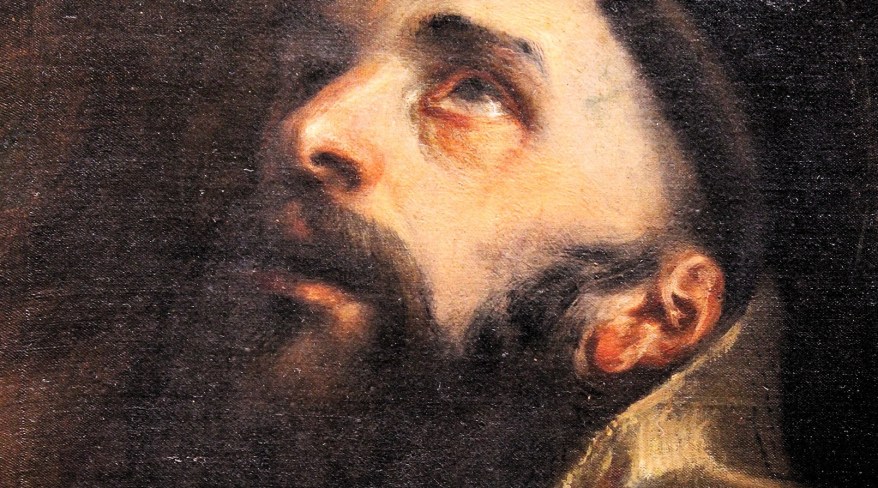
Lo sguardo di San Francesco che emerge dal buio: il dipinto di Annibale Carracci
🇮🇹C’è uno sguardo, nel dipinto di Annibale Carracci, che sembra cercare qualcosa oltre ciò che possiamo vedere: è quello di San Francesco d’Assisi, ritratto con gli occhi rivolti al cielo… 🇬🇧In Annibale Carracci’s painting, there is a gaze that seems to be searching for something beyond what we can see: it is the gaze of…
-
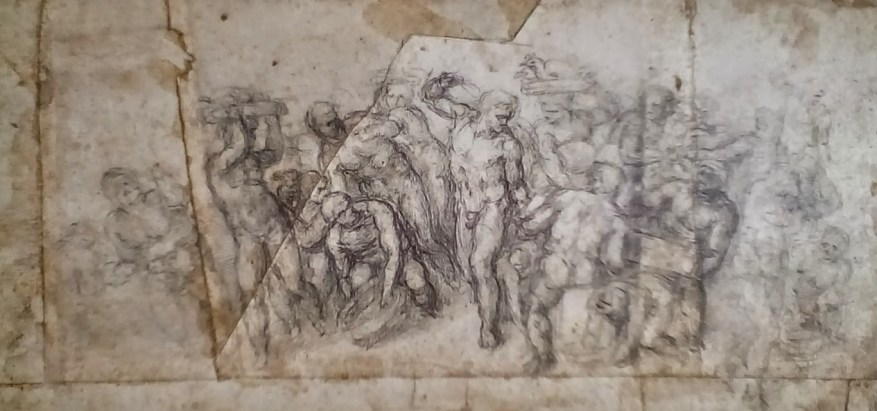
La Cacciata dei mercanti dal Tempio: quel disegno che forse nasconde un progetto incompiuto
🇮🇹Vi porto davanti al mio disegno della Cacciata dei mercanti dal Tempio, conservato al British Museum. Guardate il braccio destro di Cristo: la forza del suo gesto vi ricorda qualcosa? 🇮🇹 I am bringing you before my drawing of the Expulsion of the Money Changers from the Temple, held at the British Museum. Look at…
-
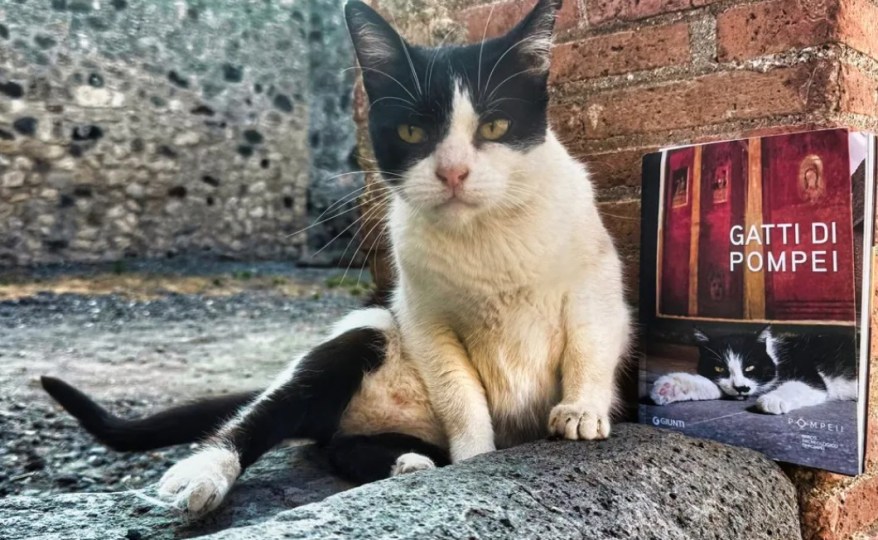
A Pompei ci sono 50 gatti che vivono tra le rovine antiche: ora la loro storia diventa un libro
A Pompei i gatti sono diventati celebri sui social. Ora il libro Gatti di Pompei racconta, con foto e storie, la loro vita tra le antiche rovine romane.
Condividi:


Questo sono io




sostienici

Sostienici – Support Us
Se questo blog ti piace e ti appassiona, puoi aiutarci a farlo crescere sempre più sostenendoci in modo concreto condividendo i post, seguendo le pagine social e con un contributo che ci aiuta ad andare avanti con il nostro lavoro di divulgazione. . ENGLISH: If you like and are passionate about this blog, you can help us make it grow more and more by supporting us in a concrete way by sharing posts, following social pages and with a contribution that helps us to move forward with our dissemination work.
€10,00


