
La gigantesca vasca in porfido che incanta i Musei Vaticani
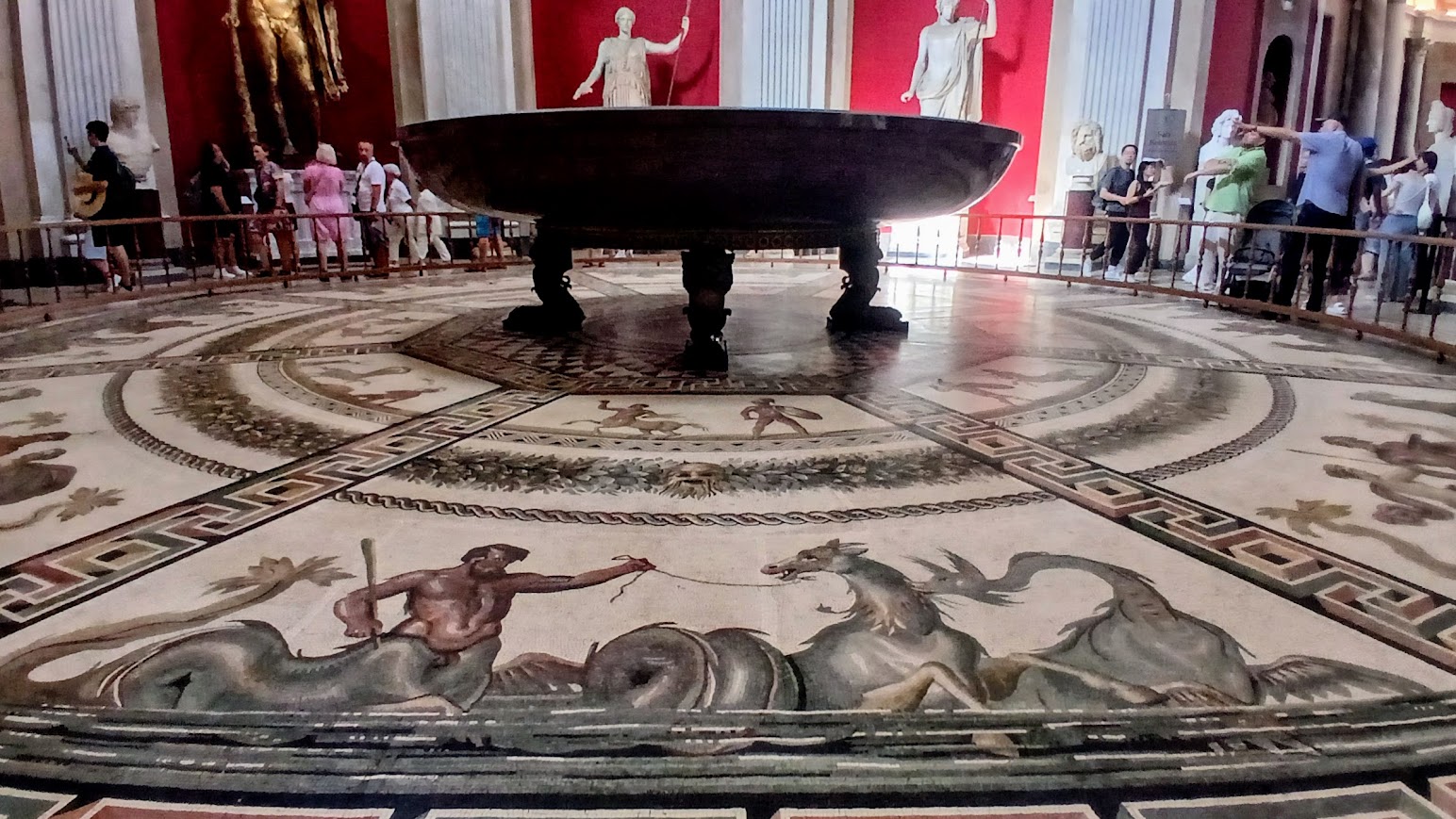
La Sala Rotonda dei Musei Vaticani custodisce al centro un capolavoro che stupisce per le sue dimensioni. Non è una statua, né un dipinto, ma una straordinaria vasca monumentale in porfido rosso, autentico prodigio dell’ingegneria e dell’arte romana che da quasi duemila anni racconta il lusso e il potere dell’Impero.
Con i suoi 13 metri di circonferenza, è una delle più grandi vasche antiche in porfido giunte fino ai vostri tempi. Il suo colore rosso intenso, quasi violaceo, si impone sopra il pavimento a mosaico.
Un materiale riservato agli imperatori
Osservando la grande vasca si comprende subito perché il porfido rosso fosse considerato il marmo degli imperatori.
Questa pietra durissima, chiamata nell’antichità lapis porphyrites, proveniva esclusivamente dalle cave dell’Egitto orientale, nell’area del Mar Rosso. Estrarla, trasportarla e scolpirla era un’impresa colossale che richiedeva tecniche sofisticate e un enorme impiego di uomini e risorse.
Proprio per la sua rarità e per il suo caratteristico colore rosso-violaceo punteggiato di piccoli cristalli bianchi, il porfido divenne il simbolo stesso dell’autorità imperiale romana.
La grande vasca dei Musei Vaticani venne realizzata nel II secolo d.C., probabilmente tra il regno di Adriano e quello di Antonino Pio, in uno dei periodi di massimo splendore dell’Impero.
Cos’era davvero questo enorme bacino?
In origine questa straordinaria opera era un labrum, un grande bacino circolare destinato a contenere acqua.
Nell’antica Roma i labra erano elementi fondamentali delle terme pubbliche e dei bagni privati più prestigiosi. Potevano essere utilizzati come vasche ornamentali, fontane monumentali, recipienti per l’acqua lustrale oppure impreziosire le residenze delle famiglie più potenti.
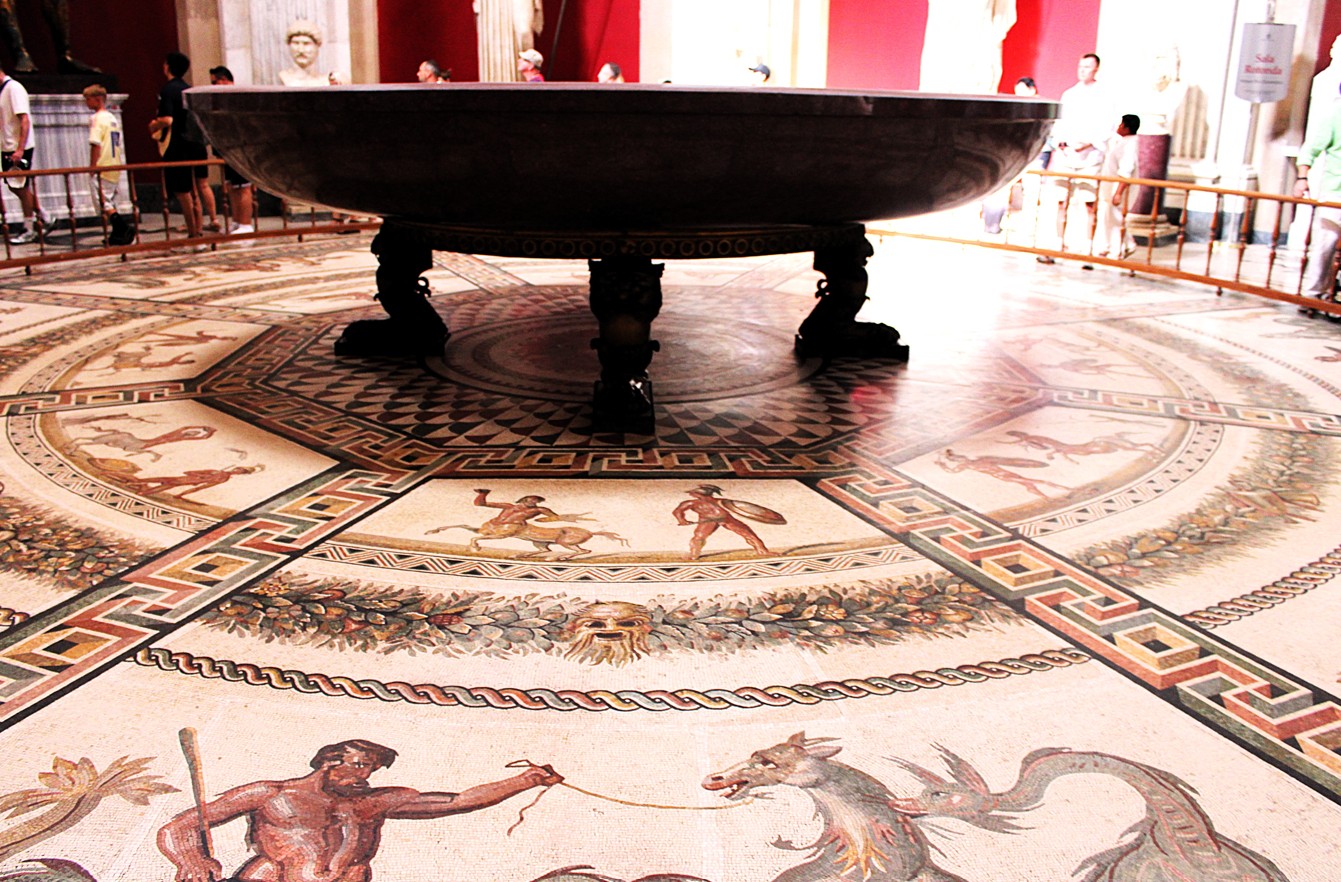
La vasca presenta il classico bordo ricurvo verso l’esterno e un fondo piatto, caratteristiche tipiche di questi raffinati manufatti romani.
Le sue dimensioni fanno pensare che fosse destinata ad arredare uno dei grandi edifici pubblici della Roma imperiale, dove avrebbe rappresentato un simbolo di magnificenza destinato a impressionare cittadini e visitatori.
Il mistero del suo ritrovamento
Anche il ritrovamento della vasca è avvolto da un certo fascino. Secondo il celebre architetto e antiquario Pirro Ligorio, il gigantesco manufatto sarebbe stato scoperto nel Foro Romano durante il pontificato di Giulio II.
Un’altra ricostruzione, proposta dalla storica dell’arte Maria Grazia Picozzi, racconta invece che il labrum venne rinvenuto durante gli scavi nel giardino di Palazzo Colonna, dove rimase esposto fino al 1552.
Fu Ascanio Colonna a donarlo successivamente a papa Giulio III, al secolo Giovanni Maria Ciocchi del Monte, che lo fece trasferire nella splendida Villa Giulia, una delle residenze rinascimentali più prestigiose della Roma del tempo.
Dal Cortile delle Statue alla spettacolare Sala Rotonda
Nel 1717 la monumentale vasca fu acquistata da papa Clemente XI e trasferita in Vaticano.
Inizialmente trovò posto nel celebre Cortile delle Statue, ma fu soltanto nel 1792 che raggiunse la sua attuale collocazione nella Sala Rotonda, dove ancora oggi domina l’ambiente.
Pochi anni prima, nel 1787, il restauratore Giovanni Pierantoni aveva completato un importante intervento di integrazione che consentì di riportare la vasca alle dimensioni originarie, raggiungendo l’impressionante circonferenza di circa 13 metri.
I quattro eleganti sostegni in bronzo, modellati a forma di zampe leonine, sono invece aggiunte moderne realizzate per sostenere il monumentale bacino.
La Sala Rotonda: il Pantheon dei Musei Vaticani
L’effetto scenografico della vasca è amplificato dalla magnificenza della Sala Rotonda, uno degli ambienti più spettacolari dell’intero percorso museale.
La sala fu completata nel 1779 su progetto dell’architetto Michelangelo Simonetti, che si ispirò direttamente al Pantheon romano, riprendendone la grande volta emisferica.
L’ambiente è scandito da profonde nicchie che ospitano sculture colossali dell’antichità, mentre tra una nicchia e l’altra si innalzano semicolonne che sostengono grandi busti marmorei, creando un insieme di straordinaria armonia classica.
Al centro di questo spazio perfettamente equilibrato, la gigantesca vasca in porfido diventa il fulcro visivo dell’intera sala.
Il pavimento che racconta la Roma del III secolo
Se la vasca cattura immediatamente lo sguardo, basta abbassare gli occhi per scoprire un altro autentico tesoro.
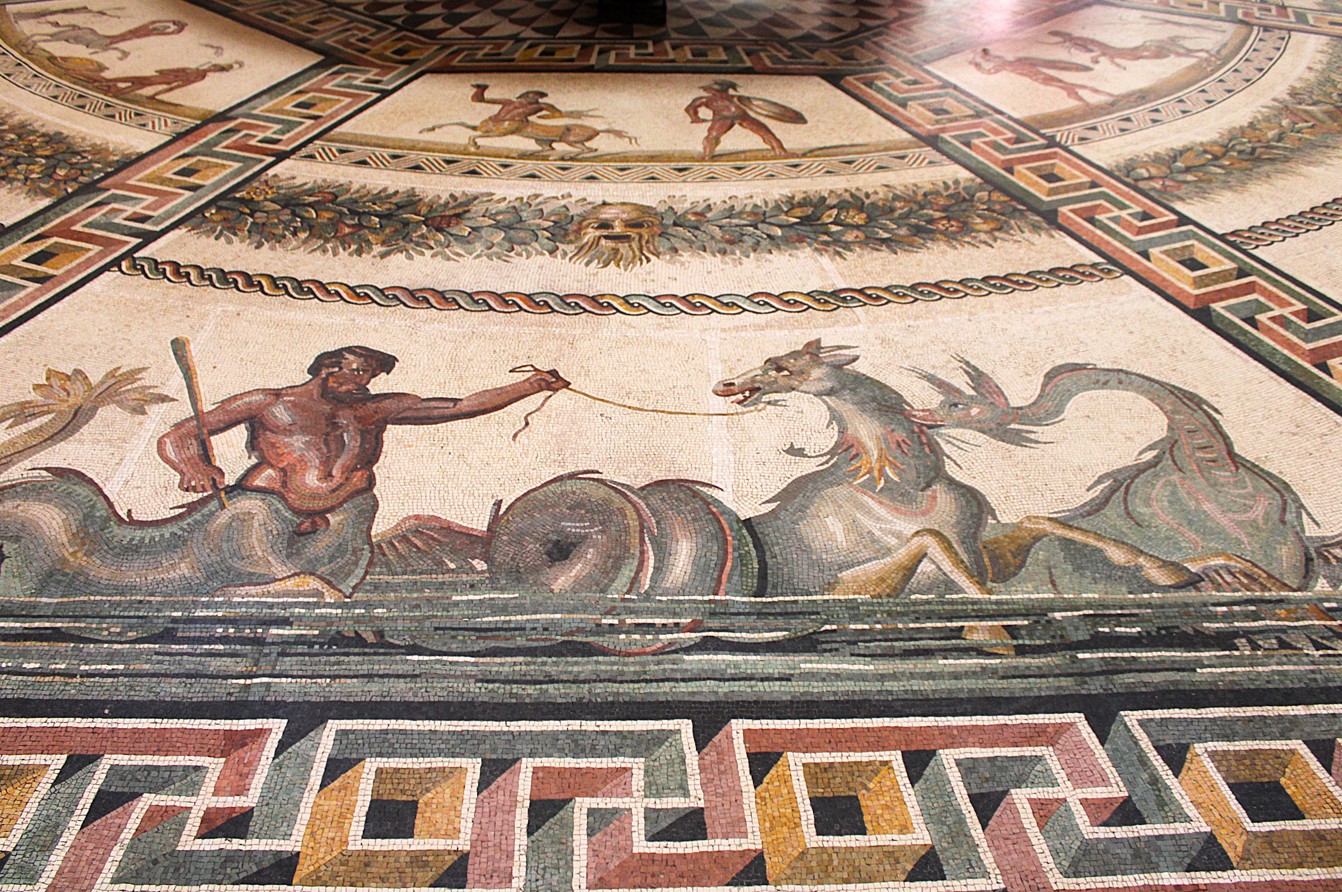
Il pavimento della Sala Rotonda è infatti uno straordinario mosaico composto nel XVIII secolo utilizzando preziosi frammenti antichi provenienti soprattutto dalle terme di Otricoli, in Umbria, e da Sacrofano.
Le scene raffigurano Lapiti e Centauri, cortei marini e motivi ornamentali appartenenti in gran parte ai primi decenni del III secolo d.C.
L’assemblaggio settecentesco fu affidato ad alcuni dei migliori restauratori dell’epoca: Andrea Volpini realizzò la grande testa di Medusa posta al centro del pavimento, Gioacchino Falcioni progettò i raffinati girali d’acanto su fondo bianco, mentre Cesare Aguatti completò l’insieme con il ricco festone decorato da maschere, frutta e fiori.
Per il momento il sempre vostro Michelangelo Buonarroti vi saluta dandovi appuntamento ai prossimi post e sui social.

The gigantic porphyry basin that enchants the Vatican Museums
The Round Hall of the Vatican Museums houses a masterpiece at its center that astonishes with its size. It is neither a statue nor a painting, but an extraordinary monumental basin in red porphyry, a true marvel of Roman engineering and art that for nearly two thousand years has recounted the luxury and power of the Empire.
With its 13 meters in circumference, it is one of the largest ancient porphyry basins to have survived to this day. Its intense red, almost purplish color stands out against the mosaic floor.
A material reserved for emperors
Looking at the large basin, it is immediately clear why red porphyry was considered the marble of emperors.
This extremely hard stone, known in ancient times as lapis porphyrites, came exclusively from the quarries of eastern Egypt, in the Red Sea area. Quarrying, transporting, and sculpting it was a colossal undertaking, requiring sophisticated techniques and a massive investment of manpower and resources.
Precisely because of its rarity and its characteristic reddish-purple color dotted with small white crystals, porphyry became the very symbol of Roman imperial authority.
The large basin in the Vatican Museums was created in the 2nd century AD, likely between the reigns of Hadrian and Antoninus Pius, during one of the Empire’s greatest periods of splendor.
What was this enormous basin really?
This extraordinary work was originally a labrum, a large circular basin designed to hold water.
In ancient Rome, labrums were essential elements of public baths and the most prestigious private baths. They could be used as ornamental basins, monumental fountains, vessels for lustral water, or to embellish the residences of the most powerful families.
The basin features the classic outwardly curved edge and a flat bottom, typical features of these refined Roman artifacts.
Its size suggests it was intended to decorate one of the great public buildings of Imperial Rome, where it would have served as a symbol of magnificence designed to impress citizens and visitors.
The mystery of its discovery
The discovery of the basin is also shrouded in mystery. According to the renowned architect and antiquarian Pirro Ligorio, the gigantic artifact was discovered in the Roman Forum during the pontificate of Julius II.
Another reconstruction, proposed by art historian Maria Grazia Picozzi, instead suggests that the labrum was discovered during excavations in the garden of Palazzo Colonna, where it remained on display until 1552.
It was Ascanio Colonna who later donated it to Pope Julius III, born Giovanni Maria Ciocchi del Monte, who had it moved to the splendid Villa Giulia, one of the most prestigious Renaissance residences in Rome at the time.
From the Courtyard of the Statues to the spectacular Round Hall
In 1717, the monumental basin was purchased by Pope Clement XI and moved to the Vatican.
It was initially placed in the famous Courtyard of the Statues, but it was only in 1792 that it reached its current location in the Round Hall, where it still dominates the space today.
A few years earlier, in 1787, the restorer Giovanni Pierantoni had completed a major restoration project that restored the basin to its original dimensions, reaching an impressive circumference of approximately 13 meters.
The four elegant bronze supports, shaped like lion’s paws, are modern additions made to support the monumental basin.
The Round Hall: The Pantheon of the Vatican Museums
The spectacular effect of the basin is amplified by the magnificence of the Round Hall, one of the most spectacular spaces in the entire museum.
The room was completed in 1779 to a design by architect Michelangelo Simonetti, who drew direct inspiration from the Roman Pantheon, echoing its great hemispherical vault.
The space is punctuated by deep niches housing colossal sculptures from antiquity, while between each niche rise semi-columns supporting large marble busts, creating a setting of extraordinary classical harmony.
At the center of this perfectly balanced space, the gigantic porphyry basin becomes the visual fulcrum of the entire room.
The floor that tells the story of 3rd-century Rome
If the basin immediately captures the eye, simply lower your gaze to discover another authentic treasure.
The floor of the Sala Rotonda is an extraordinary mosaic composed in the 18th century using precious ancient fragments, mainly from the thermal baths of Otricoli, in Umbria, and from Sacrofano.
The scenes depict Lapiths and Centaurs, marine processions, and ornamental motifs, mostly dating to the early decades of the 3rd century AD.
The 18th-century assembly was entrusted to some of the finest restorers of the time: Andrea Volpini created the large head of Medusa at the center of the floor, Gioacchino Falcioni designed the refined acanthus scrolls on a white background, while Cesare Aguatti completed the ensemble with the rich festoon decorated with masks, fruit, and flowers.
For now, Michelangelo Buonarroti bids you farewell and invites you to join him in future posts and on social media.

Sostienici – Support Us
Se questo blog ti piace e ti appassiona, puoi aiutarci a farlo crescere sempre più sostenendoci in modo concreto condividendo i post, seguendo le pagine social e con un contributo che ci aiuta ad andare avanti con il nostro lavoro di divulgazione. . ENGLISH: If you like and are passionate about this blog, you can help us make it grow more and more by supporting us in a concrete way by sharing posts, following social pages and with a contribution that helps us to move forward with our dissemination work.
10,00 €
Articoli

Condividi:


Questo sono io




sostienici

Sostienici – Support Us
Se questo blog ti piace e ti appassiona, puoi aiutarci a farlo crescere sempre più sostenendoci in modo concreto condividendo i post, seguendo le pagine social e con un contributo che ci aiuta ad andare avanti con il nostro lavoro di divulgazione. . ENGLISH: If you like and are passionate about this blog, you can help us make it grow more and more by supporting us in a concrete way by sharing posts, following social pages and with a contribution that helps us to move forward with our dissemination work.
€10,00


