
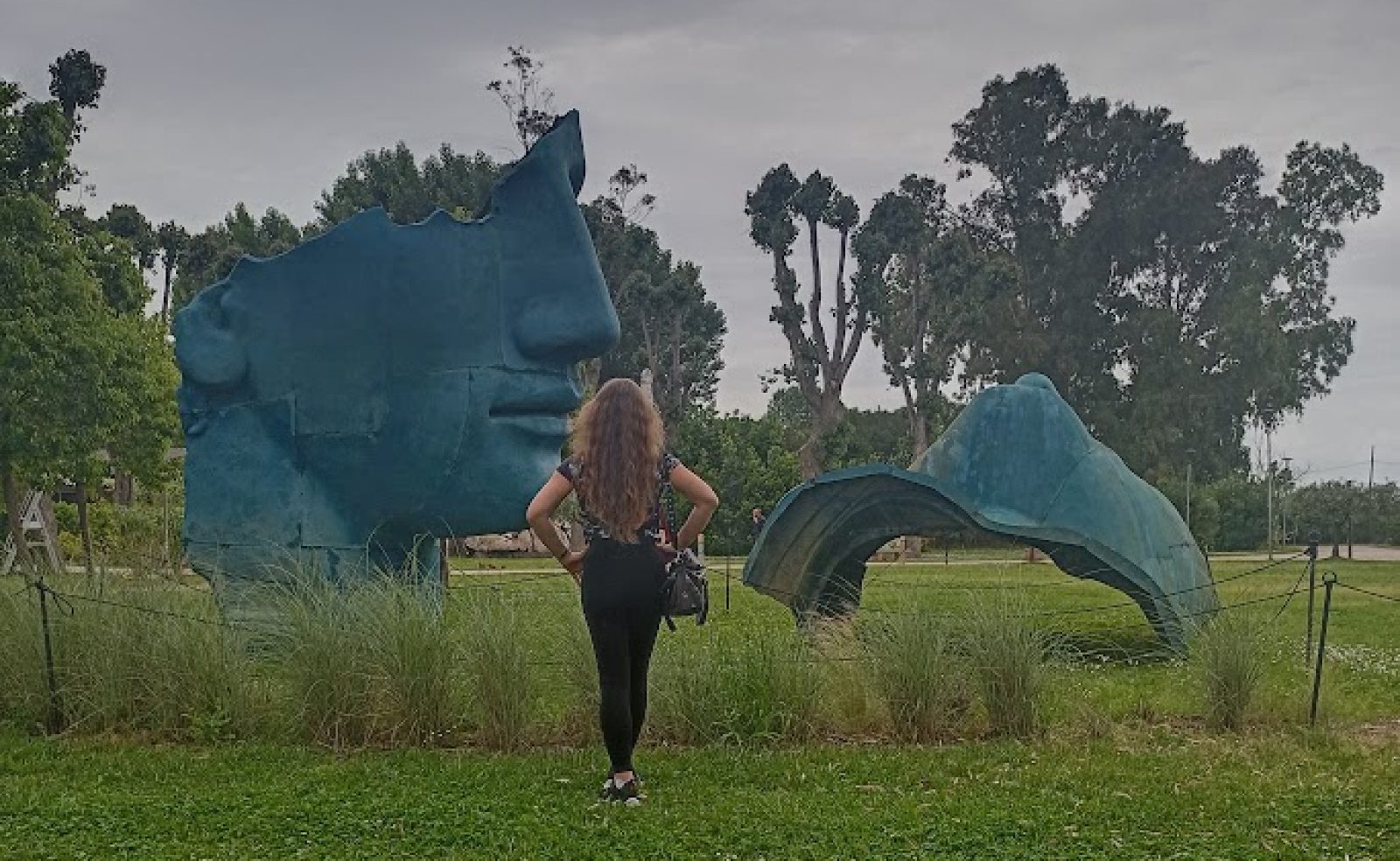
A Vittoria Colonna: il madrigale dell’anima che si fa carne
Nel silenzio delle mie stanze romane, quando il marmo tace e la polvere della scultura si posa sulle mani, accade talvolta che l’anima trovi voce non nello scalpello, ma nel verso. Così nacque questo madrigale che dedicai a Vittoria Colonna, donna nella quale la grazia terrena pareva conciliarsi con quella divina.
Forse tra i primi componimenti che rivolsi a lei, questi versi sorgono come stupore dinanzi a una creatura che sembra celeste e tuttavia vive fra gli uomini: mangia, dorme, parla. È il grande mistero della bellezza quando prende corpo umano.

La donna divina che vive tra gli uomini
“S’egli è, donna, che puoi / come cosa mortal, benché sia diva…”
Così si apre il madrigale, quasi con esitazione reverente. Non mi domando se ella sia bella: ciò è già certo. Mi interrogo però sulla natura di tale bellezza.
Se davvero una creatura tanto alta può camminare sulla terra come ogni altro mortale, allora il mondo intero dovrebbe seguirla come si segue una luce nella notte.
La mia parola nasce da una meraviglia che ricorda la poesia di Francesco Petrarca e l’altezza visionaria di Dante Alighieri. Come Laura e Beatrice, anche Vittoria appare figura sospesa fra cielo e carne. Eppure ella non è fantasma né visione: vive “qui fra noi”.
In questo contrasto dimora tutta la tensione del madrigale. La donna è divina nella beltà, ma umana nel respiro. È proprio tale unione a renderla irresistibile agli occhi dell’anima.
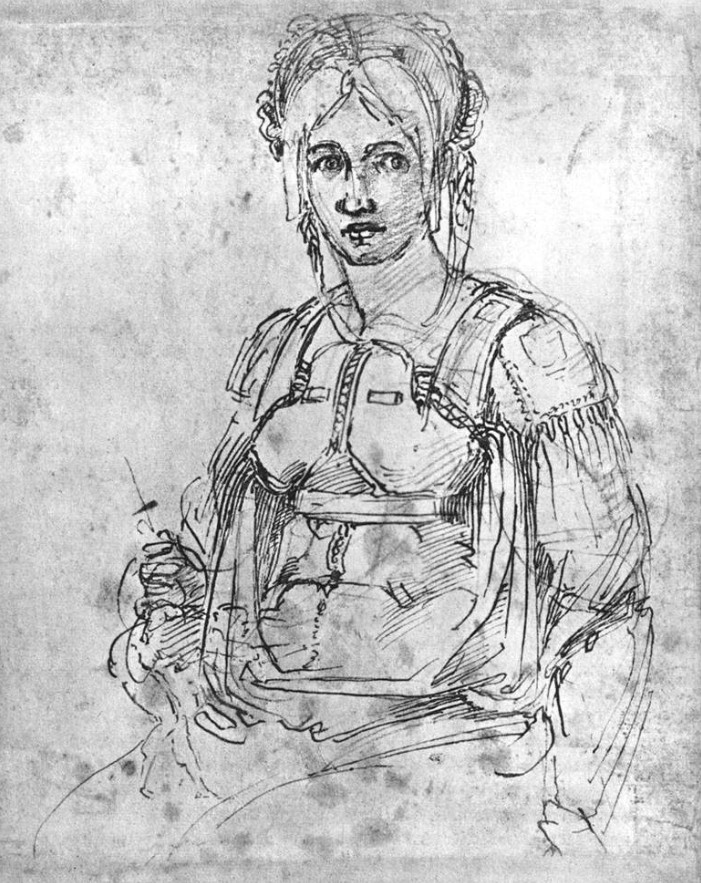
Il peccato di chi non segue la luce
“A non seguirti poi, / cessato il dubbio…”
Quando ogni esitazione cade, quando si comprende che quella grazia non è inganno ma verità manifesta, allora il non seguirla diviene colpa. Non semplice errore, ma peccato spirituale.
Io mi domando quale pena sarebbe degna di chi, vedendo una tale luce, decidesse comunque di voltarsi altrove. La domanda richiama l’eco severa di Dante: quale scusa potrebbe bastare davanti a un simile rifiuto?
Non si tratta d’amore terreno soltanto. L’amore diventa elevazione morale. Seguire la donna significa tendere verso il bene, verso la perfezione, verso Dio stesso che nella bellezza lascia la propria impronta.
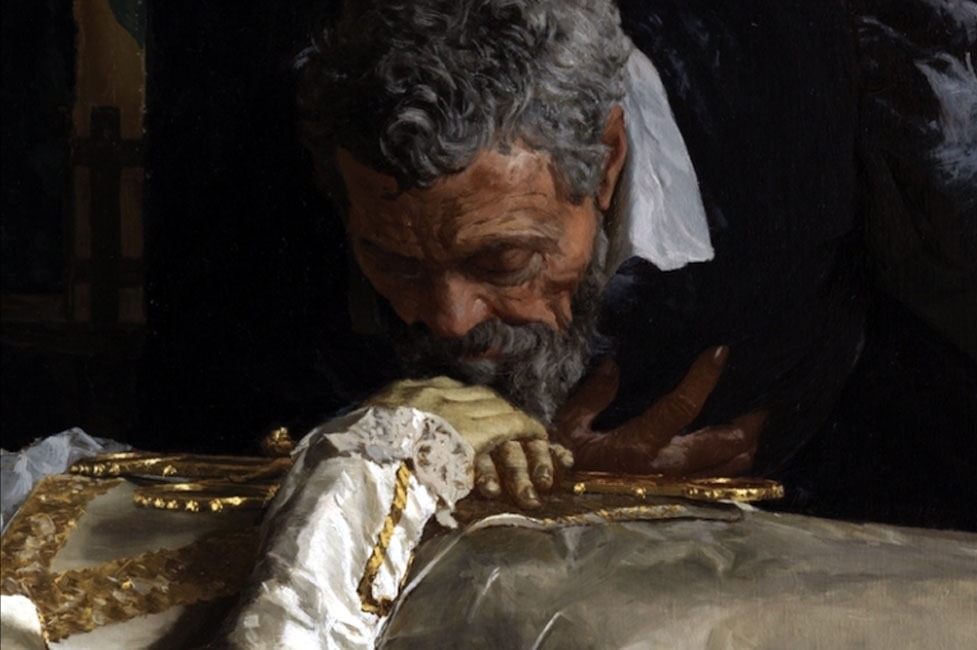
Gli uomini ciechi davanti al divino
“Ché alcun ne’ pensier suoi, / co’ l’occhio che non vede…”
Vi sono uomini che restano chiusi nei propri pensieri come in stanze senza finestre. Guardano, ma non vedono. Possiedono occhi incapaci di riconoscere il riflesso del cielo nelle cose terrene.
Per questo si innamorano tardi, o forse non si innamorano affatto. Non per prudenza, ma per povertà interiore. Manca loro quella virtù capace di riconoscere il miracolo quando appare.
L’amore non nasce soltanto dalla vista, ma dalla disposizione dell’anima. Solo chi custodisce dentro di sé una scintilla di nobiltà può riconoscere la vera bellezza.
Il paragone con la scultura: l’anima come marmo bianco
“Disegna in me di fuora, / com’io fo in pietra…”
Negli ultimi versi il me poeta lascia spazio al me scultore. Paragono me stesso a un blocco di marmo o a un foglio candido, vuoto dentro finché la mano dell’artista non vi imprime forma.
Così Vittoria opera sulla mia anima.
Come io libero la figura dalla pietra, ella scolpisce dall’esterno il mio spirito, tracciando dentro di me ciò che desidera. È un’immagine potentissima: l’amore diventa arte creatrice.
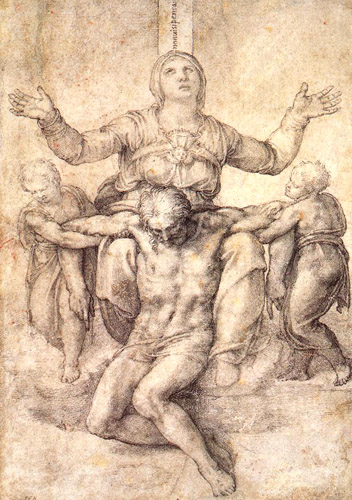
Nel marmo, infatti, la figura già esiste, ma nascosta. Lo scultore non inventa: libera. Allo stesso modo la donna amata porta alla luce ciò che nell’uomo era ancora sepolto.
Questo componimento è un incontro fra carne e spirito, fra arte e fede, fra desiderio umano e aspirazione divina.
Come il marmo attende il colpo dello scalpello, così il cuore dell’uomo attende una bellezza capace di destarlo dal sonno.
S’egli è, donna, che puoi
come cosa mortal, benché sia diva
di beltà, c’ancor viva
e mangi e dorma e parli qui fra noi,
a non seguirti poi,
cessato il dubbio, tuo grazia e mercede,
qual pena a tal peccato degna fora?
Ché alcun ne’ pensier suoi,
co’ l’occhio che non vede,
per virtù propia tardi s’innamora.
Disegna in me di fuora,
com’io fo in pietra od in candido foglio,
che nulla ha dentro, e èvvi ciò ch’io voglio.
Per il momento il sempre vostro Michelangelo Buonarroti vi saluta dandovi appuntamento ai prossimi post e sui social.

To Vittoria Colonna: the madrigal of the soul becoming flesh
In the silence of my Roman rooms, when the marble is silent and the dust of sculpture settles on the hands, it sometimes happens that the soul finds voice not in the chisel, but in verse. Thus was born this madrigal, which I dedicated to Vittoria Colonna, a woman in whom earthly grace seemed to be reconciled with the divine.
Perhaps among the first compositions I wrote to her, these verses arise out of wonder at a creature who seems celestial and yet lives among men: she eats, sleeps, speaks. It is the great mystery of beauty when it takes on human form.
The divine woman who lives among men
“If he is, woman, who can / as a mortal thing, although she is a goddess…”
Thus the madrigal opens, almost with reverent hesitation. I do not ask myself if she is beautiful: that is already certain. I do, however, question the nature of such beauty.
If such a lofty creature can truly walk the earth like any other mortal, then the entire world should follow her as one follows a light in the night.
My words arise from a wonder reminiscent of the poetry of Francesco Petrarca and the visionary heights of Dante Alighieri. Like Laura and Beatrice, Vittoria appears suspended between heaven and flesh. Yet she is neither ghost nor vision: she lives “here among us.”
In this contrast lies all the tension of the madrigal. The woman is divine in her beauty, yet human in her breath. It is precisely this union that makes her irresistible in the eyes of the soul.
The sin of those who do not follow the light
“And then, not to follow you, / once doubt has ceased…”
When all hesitation falls away, when one understands that that grace is not deception but manifest truth, then not following it becomes sin. Not a simple error, but a spiritual sin.
I wonder what punishment would be worthy of someone who, seeing such a light, nevertheless decided to turn away. The question echoes Dante’s stern words: what excuse could suffice in the face of such a refusal?
It’s not just earthly love. Love becomes moral elevation. Following a woman means striving toward goodness, toward perfection, toward God himself, who leaves his mark in beauty.
Men blind to the divine
“For some in their thoughts, / with an eye that does not see…”
There are men who remain closed in their thoughts as if in windowless rooms. They look, but do not see. Their eyes are incapable of recognizing the reflection of heaven in earthly things.
This is why they fall in love late, or perhaps never fall in love at all. Not out of prudence, but out of inner poverty. They lack the virtue capable of recognizing the miracle when it appears.
Love is born not merely from sight, but from the disposition of the soul. Only those who harbor a spark of nobility within themselves can recognize true beauty.
The comparison with sculpture: the soul as white marble
“Draw within me from without, / as I do in stone…”
In the final lines, the poet me gives way to the sculptor me. I compare myself to a block of marble or a white sheet of paper, empty within until the artist’s hand imprints form.
Thus Vittoria works on my soul.
As I free the figure from the stone, she sculpts my spirit from without, tracing within me what she desires. It is a powerful image: love becomes creative art.
In the marble, in fact, the figure already exists, but hidden. The sculptor does not invent: he liberates. In the same way, the beloved woman brings to light what was still buried in man.
This poem is an encounter between flesh and spirit, between art and faith, between human desire and divine aspiration.
As marble awaits the blow of the chisel, so the heart of man awaits a beauty capable of awakening it from slumber.
S’egli è, donna, che puoi
come cosa mortal, benché sia diva
di beltà, c’ancor viva
e mangi e dorma e parli qui fra noi,
a non seguirti poi,
cessato il dubbio, tuo grazia e mercede,
qual pena a tal peccato degna fora?
Ché alcun ne’ pensier suoi,
co’ l’occhio che non vede,
per virtù propia tardi s’innamora.
Disegna in me di fuora,
com’io fo in pietra od in candido foglio,
che nulla ha dentro, e èvvi ciò ch’io voglio.
For now, yours truly, Michelangelo Buonarroti, bids farewell and invites you to join him in future posts and on social media.

Sostienici – Support Us
Se questo blog ti piace e ti appassiona, puoi aiutarci a farlo crescere sempre più sostenendoci in modo concreto condividendo i post, seguendo le pagine social e con un contributo che ci aiuta ad andare avanti con il nostro lavoro di divulgazione. . ENGLISH: If you like and are passionate about this blog, you can help us make it grow more and more by supporting us in a concrete way by sharing posts, following social pages and with a contribution that helps us to move forward with our dissemination work.
10,00 €
Articoli

Condividi:


Questo sono io




sostienici

Sostienici – Support Us
Se questo blog ti piace e ti appassiona, puoi aiutarci a farlo crescere sempre più sostenendoci in modo concreto condividendo i post, seguendo le pagine social e con un contributo che ci aiuta ad andare avanti con il nostro lavoro di divulgazione. . ENGLISH: If you like and are passionate about this blog, you can help us make it grow more and more by supporting us in a concrete way by sharing posts, following social pages and with a contribution that helps us to move forward with our dissemination work.
€10,00


