
Il gatto ruba la scena: il fascino irresistibile de Il gioco del gatto di Gustave Léonard de Jonghe
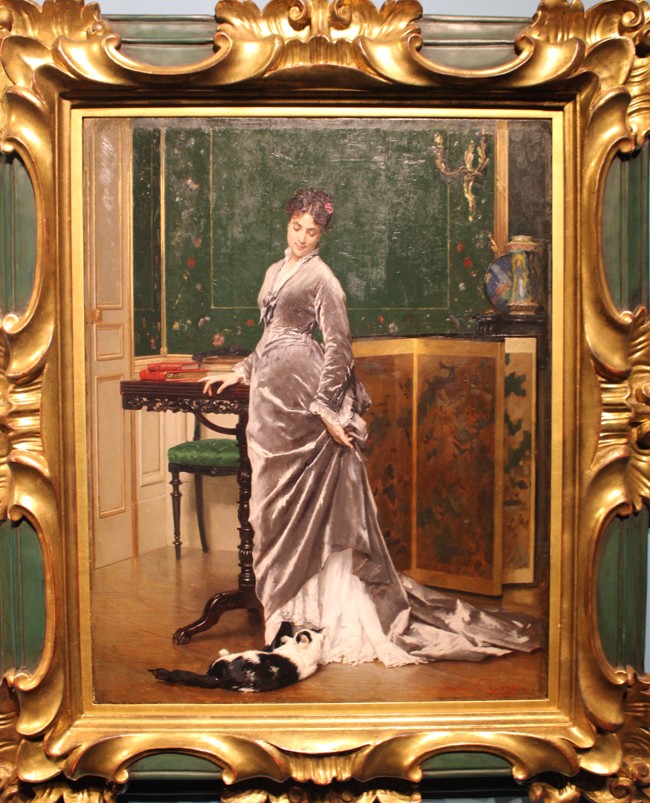
C’è un dettaglio che conquista lo sguardo prima ancora dell’eleganza della dama, dei preziosi tessuti o della raffinatezza dell’ambiente borghese: è il magnifico gatto bianco e nero ai piedi della protagonista de Il gioco del gatto, dipinto realizzato nel 1865 da Gustave Léonard de Jonghe.
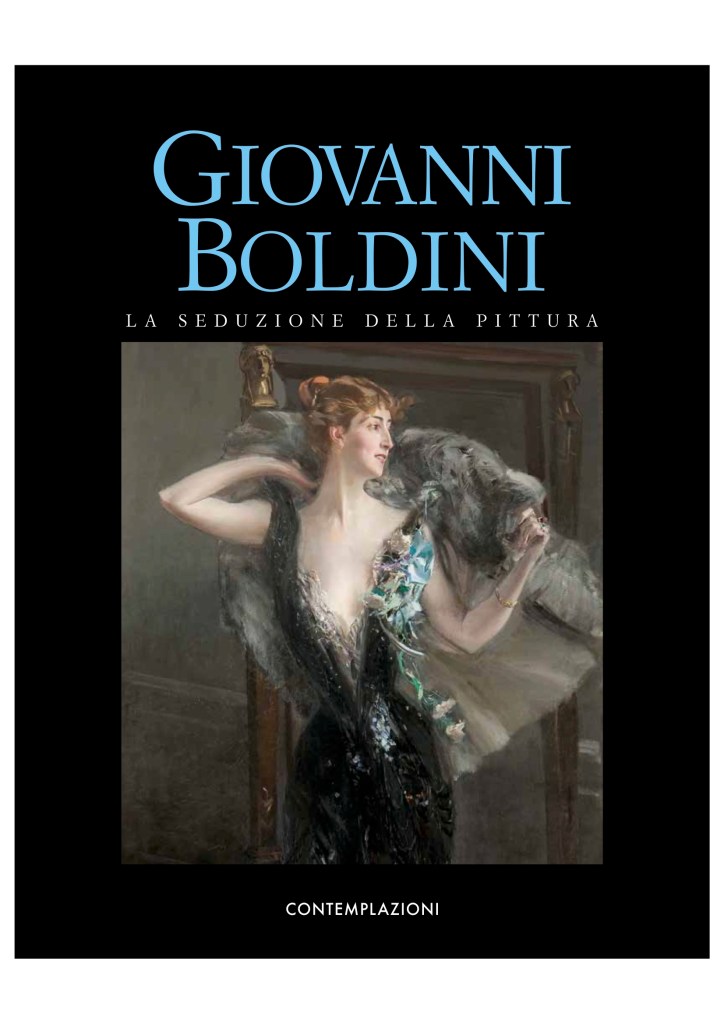
L’opera, custodita in una collezione privata, è visibile fino al 7 giugno 2026 alla Ex Cavallerizza di Lucca nel percorso espositivo della mostra ‘Giovanni Boldini. La seduzione della pittura’, un viaggio nella pittura elegante e seduttiva dell’Ottocento europeo.
Un gatto protagonista assoluto
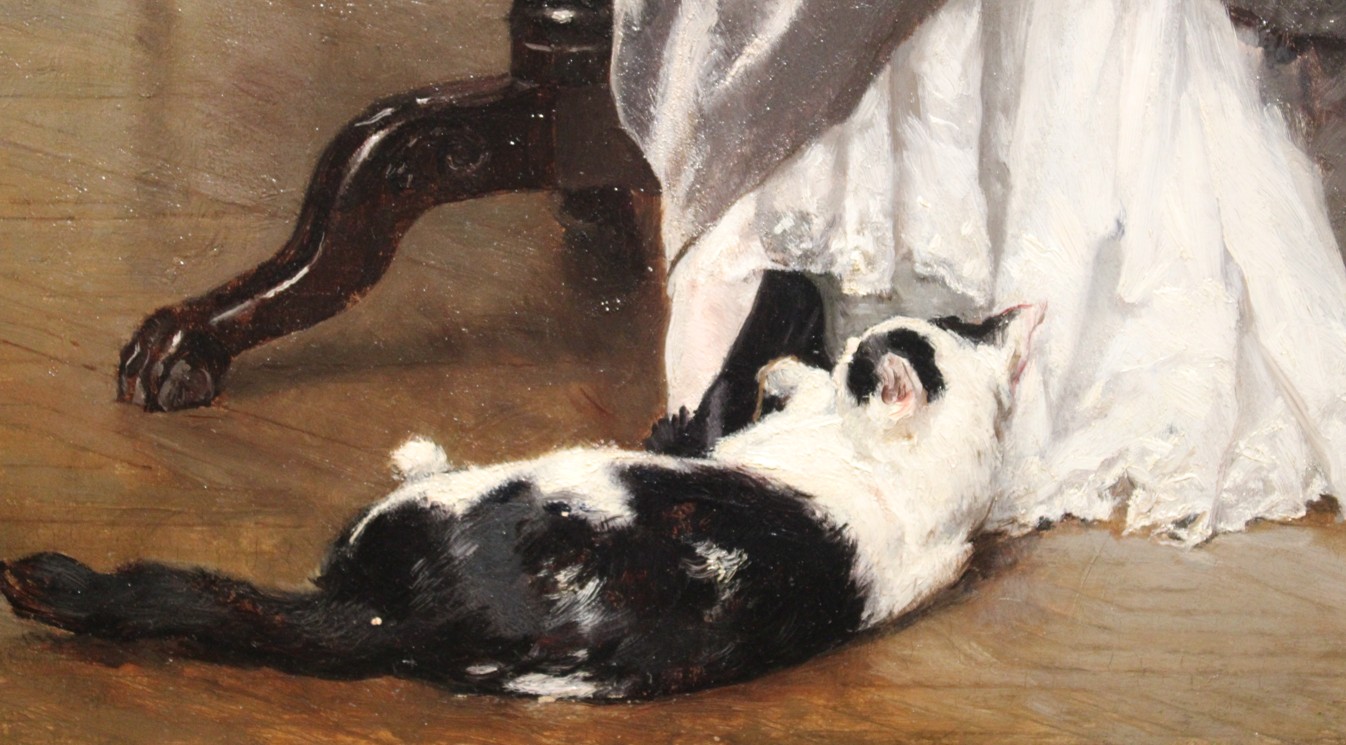
È impossibile non soffermarsi immediatamente su quel grande gatto bianco e nero che anima la scena con naturalezza irresistibile. Accovacciato ai piedi della ricca dama, l’animale sembra reclamare attenzioni e carezze.
Con la zampa sinistra sollevata, pare voler giocare con i delicati pizzi della sottoveste che fanno capolino da sotto l’abito, leggermente alzato dalla donna con gesto spontaneo e raffinato. È una scena intima, quotidiana, quasi rubata alla vita privata dell’alta borghesia ottocentesca.
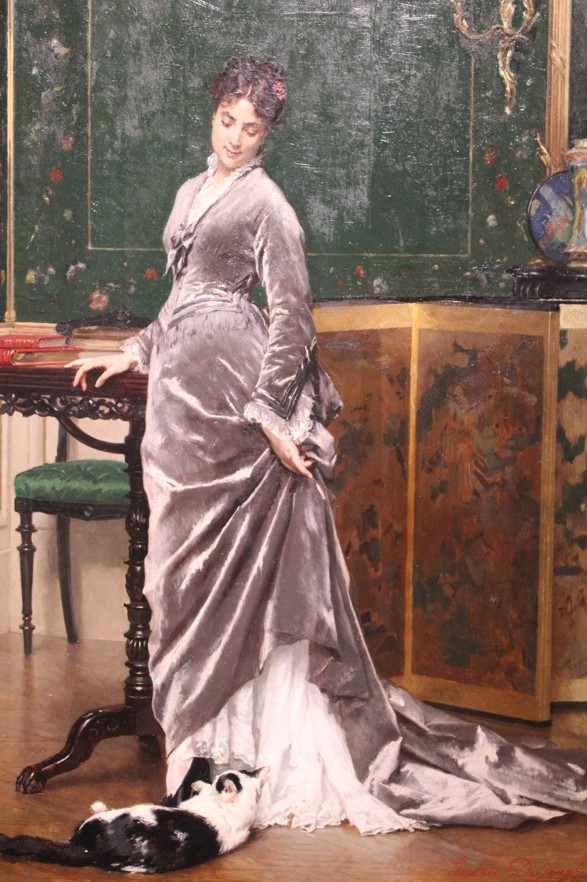
La donna osserva il gatto con uno sguardo divertito e affettuoso. Non c’è rigidità nella posa: tutto appare vivo, naturale, elegante. Una mano sostiene l’abito, l’altra si appoggia con leggerezza al tavolo, contribuendo a creare un equilibrio perfetto tra compostezza e tenerezza domestica.
I colori che danno vita alla scena
De Jonghe dimostra una straordinaria sensibilità cromatica. In un ambiente dominato da tonalità morbide e luminose, alcuni dettagli accendono letteralmente la composizione.
Il rosso intenso dei libri appoggiati sul tavolo cattura immediatamente l’occhio e dialoga con il verde smeraldo della fodera della sedia, che dona profondità e vigore all’intera pittura. Sono tocchi calibrati, mai eccessivi, che rendono la scena sofisticata ma vibrante.
La luce, diffusa con delicatezza, esalta le stoffe, i riflessi dell’abito e soprattutto il manto del gatto, vero centro emotivo dell’opera.
L’eleganza dell’Ottocento raccontata attraverso un momento quotidiano
Con Il gioco del gatto, Gustave Léonard de Jonghe riesce a trasformare una semplice scena domestica in un racconto di eleganza e complicità. Il pittore belga era celebre per le sue rappresentazioni di interni raffinati e figure femminili dell’alta società, ma qui aggiunge un elemento di sorprendente vitalità: il gatto.
L’animale rompe la staticità della composizione, introduce movimento e crea un dialogo affettuoso con la dama. È proprio questa naturalezza a rendere il dipinto ancora oggi così moderno e coinvolgente.
Alla mostra lucchese dedicata all’universo pittorico di Giovanni Boldini, l’opera di de Jonghe riesce così a ritagliarsi uno spazio speciale, conquistando i visitatori con la grazia di una scena semplice ma piena di fascino.
Per il momento il sempre vostro Michelangelo Buonarroti vi saluta dandovi appuntamento ai prossimi post e sui social.
The Cat Steals the Show: The Irresistible Charm of Gustave-Léonard de Jonghe’s The Cat Game
There’s a detail that captures the eye even before the lady’s elegance, the precious fabrics, or the refinement of the bourgeois setting: it’s the magnificent black-and-white cat at the feet of the protagonist of The Cat Game, a painting created in 1865 by Gustave-Léonard de Jonghe.
The work, held in a private collection, is on display until June 7, 2026, at the Ex Cavallerizza in Lucca as part of the exhibition “Giovanni Boldini. The Seduction of Painting,” a journey through the elegant and seductive painting of nineteenth-century Europe.
A Cat as the Undisputed Star
It’s impossible not to immediately linger on that large black-and-white cat that animates the scene with irresistible ease. Perched at the feet of the wealthy lady, the animal seems to demand attention and caresses.
With her left paw raised, she seems to be playing with the delicate lace of her petticoat peeking out from beneath her dress, which the woman has raised slightly with a spontaneous and refined gesture. It is an intimate, everyday scene, almost stolen from the private life of the nineteenth-century upper class.
The woman observes the cat with an amused and affectionate gaze. There is no rigidity in the pose: everything appears alive, natural, elegant. One hand supports the dress, the other rests lightly on the table, helping to create a perfect balance between composure and domestic tenderness.
The colors that bring the scene to life
De Jonghe demonstrates an extraordinary chromatic sensitivity. In a setting dominated by soft, luminous hues, certain details literally lighten the composition.
The intense red of the books on the table immediately catches the eye and interacts with the emerald green of the chair upholstery, lending depth and vigor to the entire painting. These are calibrated touches, never excessive, that make the scene sophisticated yet vibrant.
The delicately diffused light enhances the fabrics, the reflections of the dress, and especially the cat’s fur, the true emotional center of the work.
Nineteenth-century elegance told through an everyday moment
With The Cat’s Game, Gustave Léonard de Jonghe transforms a simple domestic scene into a tale of elegance and complicity. The Belgian painter was renowned for his depictions of refined interiors and high-society female figures, but here he adds an element of surprising vitality: the cat.
The animal breaks the static nature of the composition, introducing movement and creating an affectionate dialogue with the lady. It is precisely this naturalness that makes the painting so modern and engaging even today.
At the Lucca exhibition dedicated to the pictorial universe of Giovanni Boldini, de Jonghe’s work thus manages to carve out a special space for itself, captivating visitors with the grace of a simple yet captivating scene.
For now, Michelangelo Buonarroti bids you farewell and looks forward to seeing you in future posts and on social media.

Sostienici – Support Us
Se questo blog ti piace e ti appassiona, puoi aiutarci a farlo crescere sempre più sostenendoci in modo concreto condividendo i post, seguendo le pagine social e con un contributo che ci aiuta ad andare avanti con il nostro lavoro di divulgazione. . ENGLISH: If you like and are passionate about this blog, you can help us make it grow more and more by supporting us in a concrete way by sharing posts, following social pages and with a contribution that helps us to move forward with our dissemination work.
10,00 €
Articoli
Condividi:


Questo sono io




sostienici

Sostienici – Support Us
Se questo blog ti piace e ti appassiona, puoi aiutarci a farlo crescere sempre più sostenendoci in modo concreto condividendo i post, seguendo le pagine social e con un contributo che ci aiuta ad andare avanti con il nostro lavoro di divulgazione. . ENGLISH: If you like and are passionate about this blog, you can help us make it grow more and more by supporting us in a concrete way by sharing posts, following social pages and with a contribution that helps us to move forward with our dissemination work.
€10,00


