

17 maggio 1510: muore Sandro Botticelli, il genio inquieto del Rinascimento
Il 17 maggio 1510 si spegneva a Firenze uno dei più grandi maestri della pittura italiana: Sandro Botticelli. L’artista che aveva dato forma alla grazia, alla bellezza ideale e al mito classico morì solo, malato e in povertà, lontano dai fasti della corte medicea che ne aveva celebrato il talento.
Venne sepolto nella chiesa di Chiesa di Ognissanti, nella tomba di famiglia. Una fine malinconica per colui che aveva dipinto alcuni dei capolavori più celebri del Rinascimento, dalla Primavera alla Nascita di Venere, opere che ancora oggi incantano milioni di visitatori in tutto il mondo.
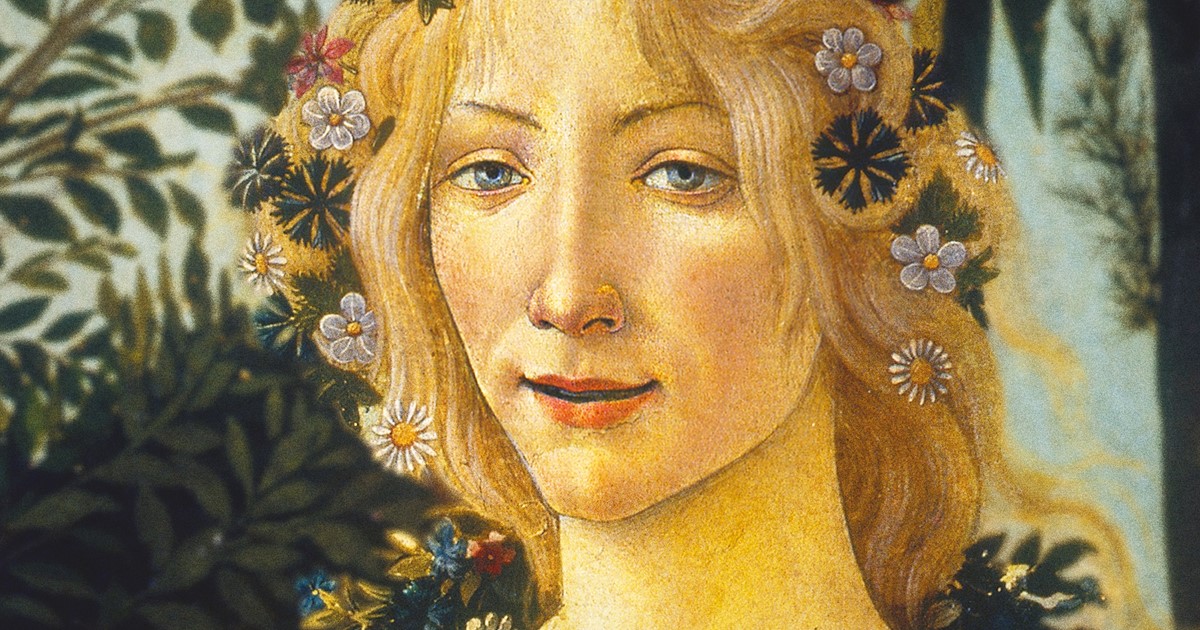
Sandro Botticelli: dagli inizi in bottega alla scoperta del talento
Nato a Firenze nel 1445 con il nome di Alessandro di Mariano di Vanni Filipepi, Botticelli crebbe in un ambiente artigiano. Il soprannome “Botticelli” derivava probabilmente dal fratello maggiore, soprannominato “Botticello”, che lavorava come orafo.
Fu proprio il fratello a introdurlo al mestiere, portandolo fin da bambino in bottega. Ma il giovane Sandro mostrò presto una straordinaria predisposizione per il disegno. Il padre comprese immediatamente il suo talento e nel 1464 lo affidò alla scuola di Filippo Lippi, uno dei più raffinati maestri dell’epoca.
Con Lippi lavorò anche agli affreschi delle Storie di Santo Stefano e San Giovanni Battista a Prato, apprendendo quella delicatezza delle linee e quella grazia compositiva che sarebbero diventate il marchio distintivo della sua pittura.
Le Madonne giovanili e l’influenza di Filippo Lippi
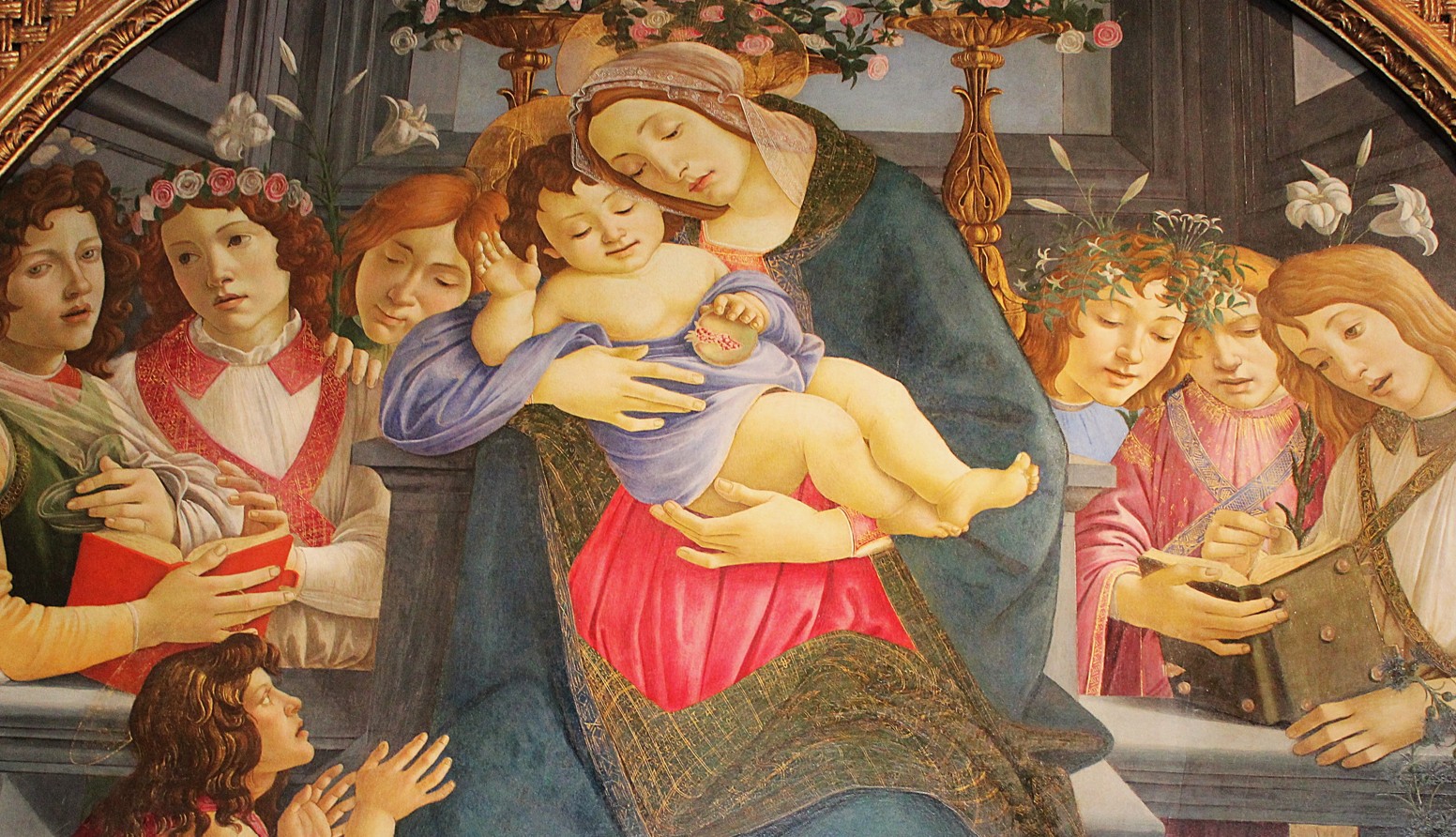
Nei primi anni della sua carriera Botticelli realizzò numerose Madonne, ancora fortemente influenzate dallo stile del maestro. Tra le opere più significative di questo periodo figurano la Madonna col Bambino e un angelo conservata presso lo Spedale degli Innocenti e la celebre Madonna del Roseto custodita agli Gallerie degli Uffizi.
In questi dipinti emergono già alcuni elementi che renderanno unico Botticelli: l’eleganza delle figure, la dolcezza malinconica dei volti e la capacità di trasformare il sacro in una dimensione profondamente umana.
La Primavera: il capolavoro simbolo del Rinascimento
Tra il 1478 e il 1481 Botticelli raggiunse la piena maturità artistica. Furono anni straordinari, segnati da commissioni prestigiose da parte della famiglia Medici.
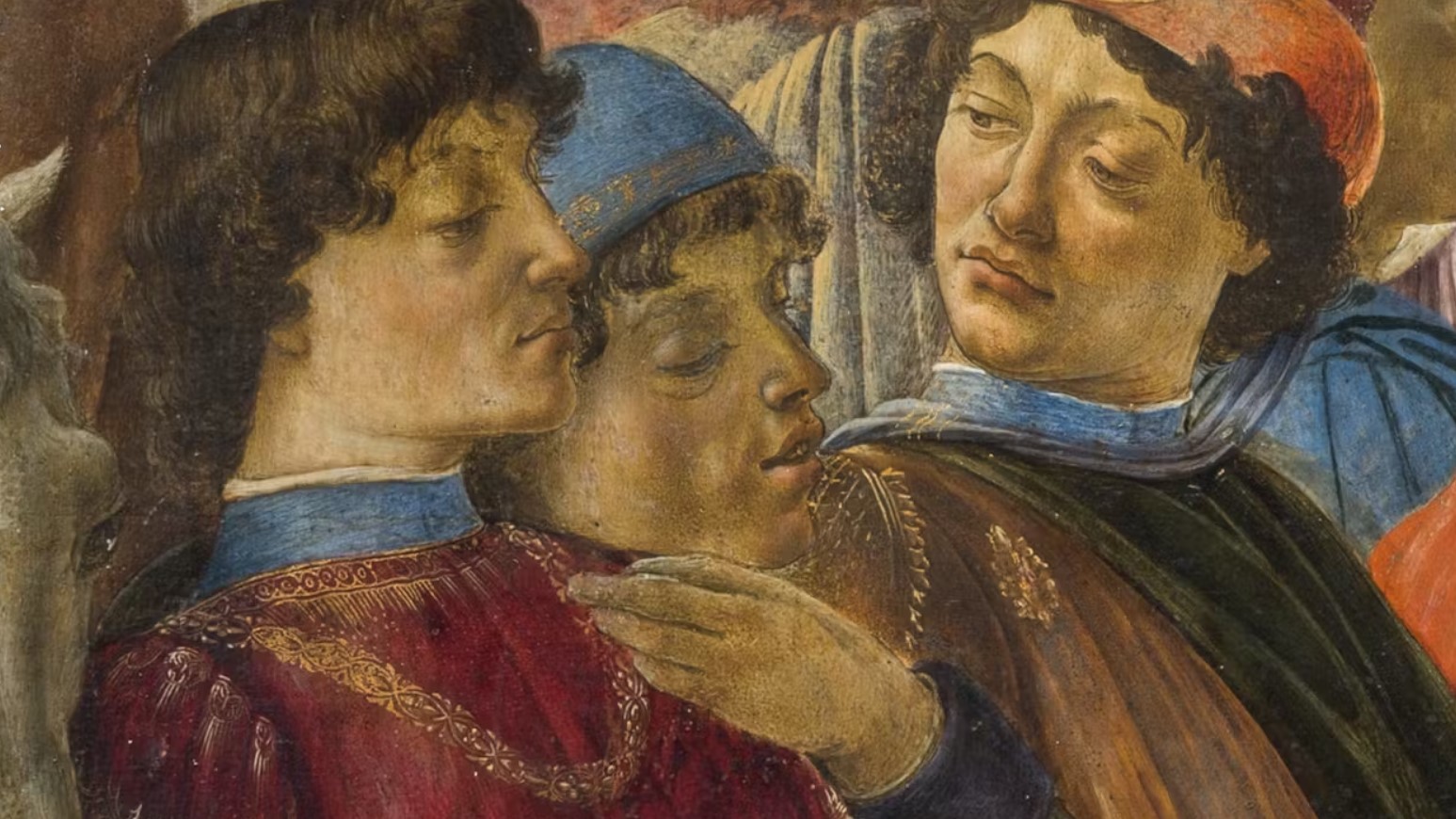
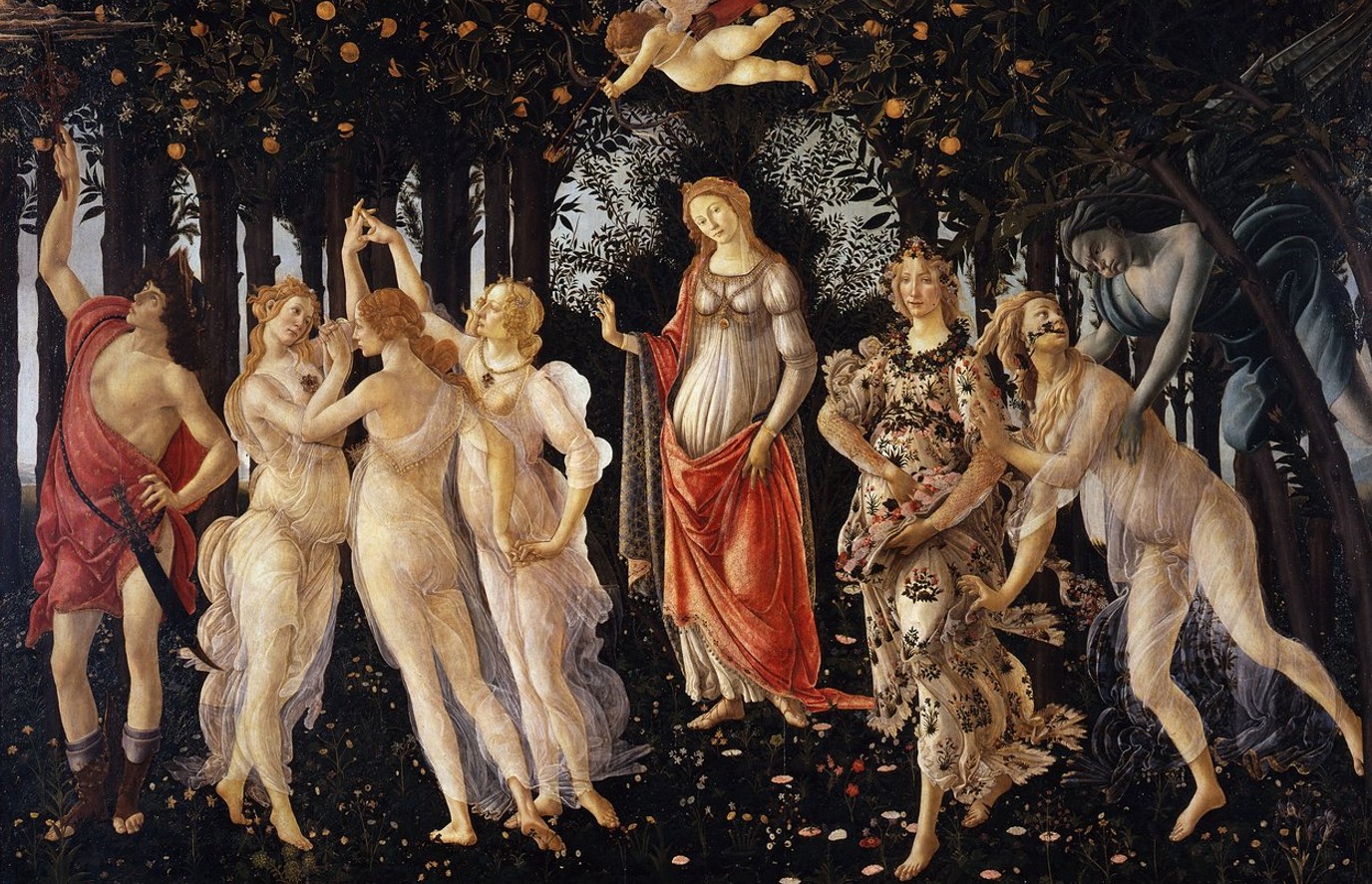
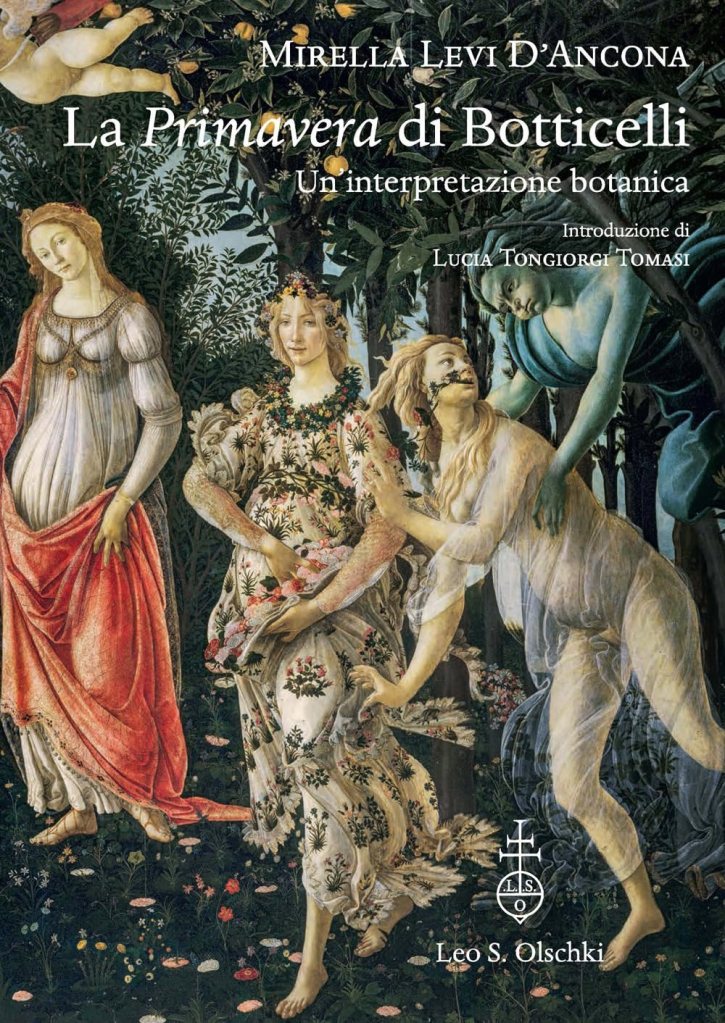
Per Lorenzo di Pierfrancesco de’ Medici dipinse la monumentale Primavera, destinata alla Villa Medicea di Castello. Ancora oggi l’opera è considerata uno dei dipinti più enigmatici e affascinanti della storia dell’arte.
L’artista immaginò un bosco rigoglioso di aranci e piante in fiore, popolato da figure mitologiche sospese in una dimensione senza tempo. Al centro domina Venere, simbolo di armonia e rinascita, mentre il prato è un incredibile catalogo botanico: gli studiosi hanno identificato centinaia di specie vegetali diverse, tutte legate simbolicamente alla primavera.
La Nascita di Venere e l’ideale di bellezza femminile
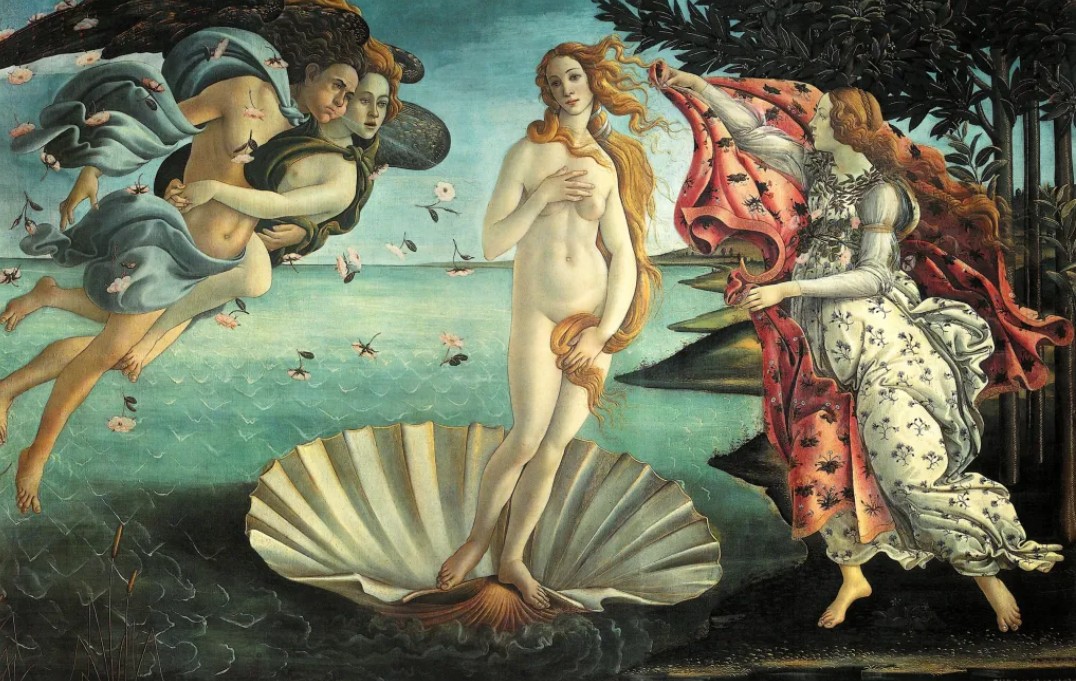
Per la stessa villa medicea Botticelli realizzò anche la celeberrima Nascita di Venere, probabilmente ispirata alle Stanze di Angelo Poliziano e ai miti narrati da Ovidio.
Contrariamente a quanto suggerisce il titolo, il dipinto non rappresenta realmente la nascita della dea, ma il suo approdo sull’isola di Cipro. La figura di Venere, eterea e delicata, è diventata nei secoli l’incarnazione universale della bellezza ideale.
Le linee sinuose, il movimento dei capelli mossi dal vento e la luce irreale trasformano il quadro in una visione poetica sospesa tra mito e spiritualità.
Botticelli nella Cappella Sistina
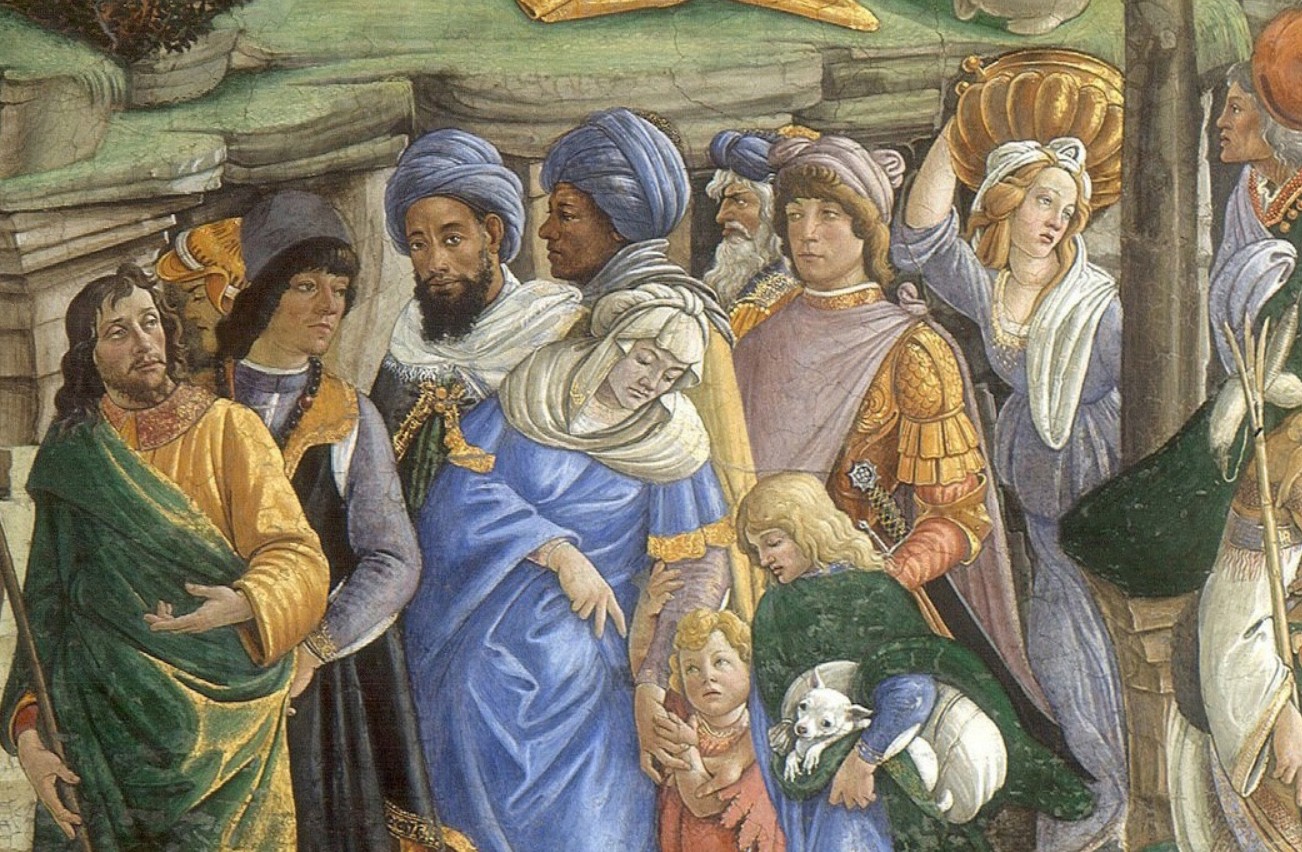
Nel 1480 Botticelli venne chiamato a Roma da Papa Sisto IV insieme ad altri grandi maestri del Rinascimento: Domenico Ghirlandaio, Pietro Perugino e Cosimo Rosselli.
Gli artisti furono incaricati di decorare il secondo registro della Cappella Sistina con episodi della vita di Cristo e di Mosè.
Il ciclo pittorico aveva un profondo significato simbolico: mettere in parallelo la vita di Mosè con quella di Cristo per affermare la continuità tra Vecchio e Nuovo Testamento.
Le scene realizzate da Botticelli mostrano una straordinaria capacità narrativa e una ricchezza di dettagli che testimoniano la piena maturità dell’artista.
L’inquietudine spirituale e l’influenza di Savonarola
A partire dagli ultimi anni del Quattrocento, però, qualcosa cambiò profondamente nella vita del pittore. La Firenze spensierata dei Medici lasciò spazio a un clima di tensione religiosa e politica, alimentato dalle prediche del frate domenicano Girolamo Savonarola.
Come molti artisti e intellettuali del tempo, Botticelli rimase fortemente colpito dal suo messaggio apocalittico e moralizzatore. L’inquietudine spirituale si rifletté anche nelle sue opere, che divennero più drammatiche, severe e intense.
Secondo la tradizione, durante il celebre Rogo delle Vanità del 1497 l’artista avrebbe persino gettato tra le fiamme alcune sue opere considerate troppo mondane o pagane.

Gli ultimi anni di Botticelli: solitudine e povertà
Negli ultimi anni Botticelli visse una lenta decadenza. La sua pittura, ormai lontana dai nuovi gusti dominati da Leonardo da Vinci, Michelangelo Buonarroti e Raffaello Sanzio, venne progressivamente dimenticata.
Malato e quasi isolato, morì a Firenze il 17 maggio 1510. A raccogliere parte della sua eredità artistica fu Filippino Lippi, anche lui segnato da una forte inquietudine spirituale negli ultimi anni della propria produzione.

Eppure il tempo avrebbe restituito a Botticelli il posto che meritava nella storia dell’arte. Oggi i suoi dipinti sono considerati simboli assoluti del Rinascimento italiano: immagini eterne capaci di raccontare insieme il sacro, il mito, la grazia e la fragilità dell’animo umano.
Per il momento il sempre vostro Michelangelo Buonarroti vi saluta dandovi appuntamento ai prossimi post e sui social.
May 17, 1510: Sandro Botticelli, the Restless Genius of the Renaissance, Dies
On May 17, 1510, one of the greatest masters of Italian painting passed away in Florence: Sandro Botticelli. The artist who had given form to grace, ideal beauty, and classical myth died alone, ill, and in poverty, far from the pomp of the Medici court that had celebrated his talent.
He was buried in the family tomb in the Church of Ognissanti. A melancholy end for the man who had painted some of the most celebrated masterpieces of the Renaissance, from Primavera to The Birth of Venus, works that still enchant millions of visitors worldwide.
Sandro Botticelli: From His Beginnings in the Workshop to the Discovery of Talent
Born in Florence in 1445 as Alessandro di Mariano di Vanni Filipepi, Botticelli grew up in an artisan’s environment. The nickname “Botticelli” likely came from his older brother, nicknamed “Botticello,” who worked as a goldsmith.
It was his brother who introduced him to the craft, taking him to the workshop as a child. But young Sandro soon showed an extraordinary talent for drawing. His father immediately recognized his talent and in 1464 sent him to the school of Filippo Lippi, one of the finest masters of the time.
With Lippi, he also worked on the frescoes of the Stories of Saint Stephen and Saint John the Baptist in Prato, learning the delicacy of line and compositional grace that would become the hallmark of his painting.
The Early Madonnas and the Influence of Filippo Lippi
During the early years of his career, Botticelli created numerous Madonnas, still strongly influenced by the master’s style. Among the most significant works of this period are the Madonna and Child with an Angel, housed at the Spedale degli Innocenti, and the famous Madonna of the Rose Garden, housed at the Uffizi Gallery.
These paintings already reveal some of the elements that would make Botticelli unique: the elegance of the figures, the melancholy sweetness of the faces, and the ability to transform the sacred into a profoundly human dimension.
Primavera: The Iconic Masterpiece of the Renaissance
Between 1478 and 1481, Botticelli reached the height of his artistic maturity. These were extraordinary years, marked by prestigious commissions from the Medici family.
For Lorenzo di Pierfrancesco de’ Medici, he painted the monumental Primavera, intended for the Medici Villa in Castello. Even today, the work is considered one of the most enigmatic and fascinating paintings in the history of art.
The artist imagined a lush forest of orange trees and flowering plants, populated by mythological figures suspended in a timeless dimension. Venus, a symbol of harmony and rebirth, dominates the center, while the meadow is an incredible botanical catalog: scholars have identified hundreds of different plant species, all symbolically linked to spring.
The Birth of Venus and the Ideal of Female Beauty
For the same Medici villa, Botticelli also painted the celebrated Birth of Venus, likely inspired by the Stanze di Angelo Poliziano and the myths narrated by Ovid.
Contrary to what the title suggests, the painting does not actually depict the birth of the goddess, but rather her arrival on the island of Cyprus. The figure of Venus, ethereal and delicate, has become the universal embodiment of ideal beauty over the centuries.
The sinuous lines, the movement of her hair blowing in the wind, and the unreal light transform the painting into a poetic vision suspended between myth and spirituality.
Botticelli in the Sistine Chapel
In 1480, Botticelli was summoned to Rome by Pope Sixtus IV, along with other great Renaissance masters: Domenico Ghirlandaio, Pietro Perugino, and Cosimo Rosselli.
The artists were commissioned to decorate the second tier of the Sistine Chapel with episodes from the life of Christ and Moses.
The pictorial cycle had a profound symbolic meaning: it paralleled the life of Moses with that of Christ to affirm the continuity between the Old and New Testaments.
Botticelli’s scenes display an extraordinary narrative skill and a wealth of detail that testify to the artist’s full maturity.
Spiritual Restlessness and the Influence of Savonarola
Beginning in the late 15th century, however, something profoundly changed in the painter’s life. The carefree Florence of the Medici gave way to a climate of religious and political tension, fueled by the preaching of the Dominican friar Girolamo Savonarola.
Like many artists and intellectuals of the time, Botticelli was deeply moved by his apocalyptic and moralizing message. This spiritual restlessness was also reflected in his works, which became more dramatic, severe, and intense.
According to tradition, during the famous Bonfire of the Vanities in 1497, the artist even threw some of his works into the flames, considering them too worldly or pagan.
Botticelli’s Last Years: Solitude and Poverty
In his final years, Botticelli experienced a slow decline. His painting, now distant from the new tastes dominated by Leonardo da Vinci, Michelangelo Buonarroti, and Raphael, was gradually forgotten.
Sick and almost isolated, he died in Florence on May 17, 1510. Part of his artistic legacy was inherited by Filippino Lippi, who himself was marked by a strong spiritual restlessness in the final years of his career.
Yet time would restore Botticelli to his rightful place in art history. Today, his paintings are considered absolute symbols of the Italian Renaissance: eternal images capable of simultaneously recounting the sacred, myth, grace, and fragility of the human soul.
For now, yours truly, Michelangelo Buonarroti, bids farewell and invites you to join him in future posts and on social media.

Sostienici – Support Us
Se questo blog ti piace e ti appassiona, puoi aiutarci a farlo crescere sempre più sostenendoci in modo concreto condividendo i post, seguendo le pagine social e con un contributo che ci aiuta ad andare avanti con il nostro lavoro di divulgazione. . ENGLISH: If you like and are passionate about this blog, you can help us make it grow more and more by supporting us in a concrete way by sharing posts, following social pages and with a contribution that helps us to move forward with our dissemination work.
10,00 €
Condividi:


Questo sono io




sostienici

Sostienici – Support Us
Se questo blog ti piace e ti appassiona, puoi aiutarci a farlo crescere sempre più sostenendoci in modo concreto condividendo i post, seguendo le pagine social e con un contributo che ci aiuta ad andare avanti con il nostro lavoro di divulgazione. . ENGLISH: If you like and are passionate about this blog, you can help us make it grow more and more by supporting us in a concrete way by sharing posts, following social pages and with a contribution that helps us to move forward with our dissemination work.
€10,00


