

18 novembre 1593: il giorno in cui fu messa in posa la palla di San Pietro
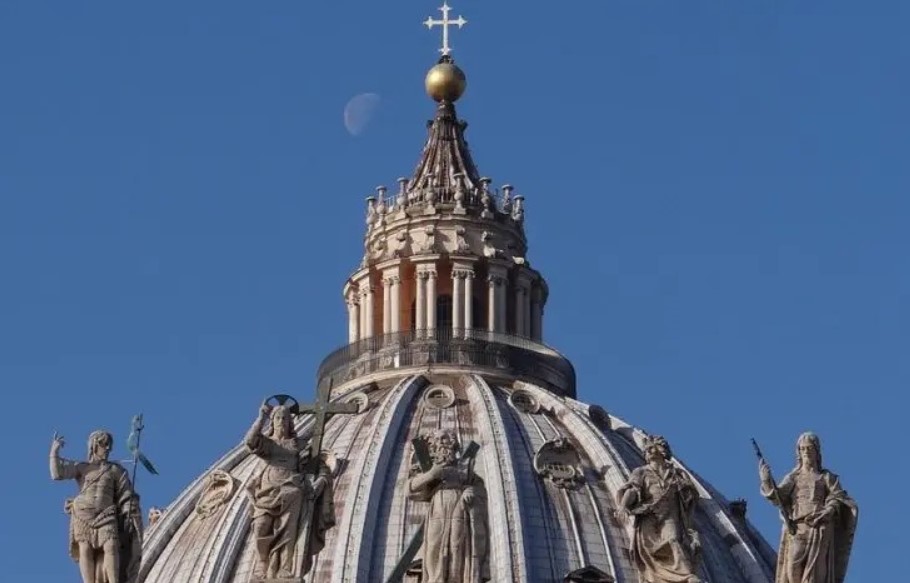
Il 18 novembre del 1593, fu collocata sulla lanterna della Cupola di San Pietro la palla laminata in oro e realizzata con cinquanta lastre di bronzo di varie dimensioni.
I lavori di posizionamento furono coordinati scrupolosamente da Giacomo della Porta su commissione di Papa Clemente VIII Aldobrandini.

Le caratteristiche della Palla di San Pietro
Fu Bastiano Torreggiano a realizzare sia il globo che la grande croce che lo sormonta. La grande sfera ha un diametro di 2,50 metri e per una circonferenza di 7,88 metri e pesa ben 1862 Kg. Vista da lontano sembra piccola ma può contenere fino a un massimo di sedici persone sedute, l’una accanto all’altra.
Dal suo interno si può vedere un magnifico panorama su tutta Roma. Tra le lamine infatti si celano quattro strette fessure, corrispondenti ai quatto punti cardinali.
La Croce che la sovrasta ha invece un’altezza di 3,33 metri.
Nel 1809, sotto la direzione di monsignore Filippo Luigi Gilj, fu installato al di sopra della Croce un parafulmini.
Entrare nella Palla di San Pietro
Fino alla metà del Novecento era consentito arrampicarsi fin lassù, entrando dentro la Palla. Ci si arrivava salendo una scala di ridotte dimensioni che ha inizio nella loggia del lanternino.
Per arrivare all’interno del globo era però necessario oltrepassare un passaggio largo solo 80 centimetri: con un po’ di pancia non era possibile pensare di avventurarsi nell’ardua impresa.
Per farsi un’idea di come doveva essere entrare lì dentro, vi propongo cosa scrisse in merito il viaggiatore americano William M. Gillespie che nel 1844 ebbe modo di entrarci dentro.

“Dovemmo salire ancora un’altra rampa che si svolge attorno alla lanterna e infine arrivammo sulla cima, ai piedi dello stelo che sostiene la sfera e la croce. Questo stelo è cavo e contiene una scala a pioli, perpendicolare, su cui ci arrampicammo e, attraverso una stretta apertura, entrammo a fatica nella sfera. Questa ha un diametro di otto piedi e la guida dice che può contenere sedici persone.
Una persona prudente non vorrebbe proprio far parte dei sedici, visto che, con solo due amici oltre a me, la sfera sembrava oscillare avanti e indietro e cedere ad ogni colpo di vento. Istintivamente tememmo che la sottile lastra di rame di cui è fatta potesse rompersi o che il nostro peso potesse farla vacillare e cadere dalla superba altezza, per poi rimbalzare dalla lanterna sulla cupola del tetto, fino a schiantarsi al suolo col suo prezioso contenuto, a quattrocentotrenta piedi dal punto di distacco. Non rimanemmo lì a lungo”.

Nemmeno pontefici e sovrani non furono insensibili a quello spettacolo. L’ultimo papa che si arrampicò sulla scaletta passando poi attraverso lo stretto pertugio fu Pio IX, il 28 giugno del 1847, vigilia di San Pietro e Paolo.
Solo un paio di anni prima era salito lassù lo zar Nicola I, ospitato da papa Gregorio XVI.
Per il momento il sempre vostro Michelangelo Buonarroti vi saluta dandovi appuntamento ai prossimi post e sui social.
November 18, 1593: the day the St. Peter’s Ball was placed
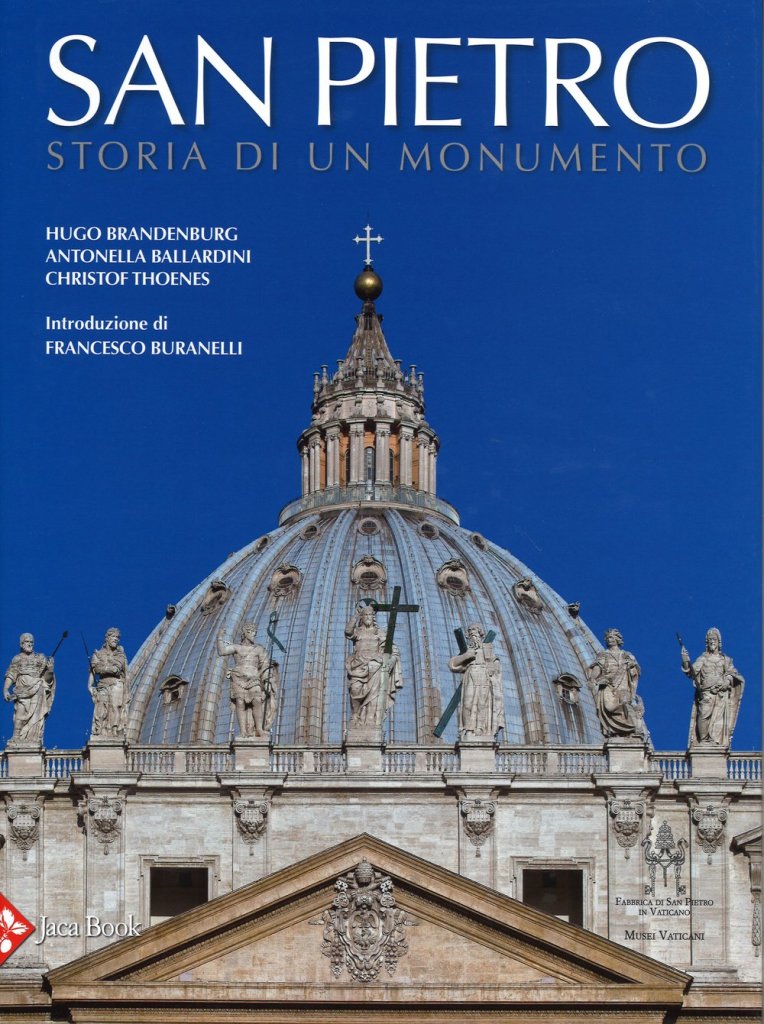
On November 18, 1593, the gold-plated ball made of fifty bronze plates of various sizes was placed on the lantern of St. Peter’s Dome.
The positioning work was meticulously coordinated by Giacomo della Porta on commission from Pope Clement VIII Aldobrandini.
The characteristics of the St. Peter’s Ball
Bastiano Torreggiano created both the globe and the large cross that surmounts it. The large sphere has a diameter of 2.50 meters and a circumference of 7.88 meters and weighs 1862 kg. Seen from afar, it seems small but it can hold up to a maximum of sixteen people seated, one next to the other.
From inside, you can see a magnificent panorama of all of Rome. In fact, four narrow slits are hidden between the plates, corresponding to the four cardinal points.
The cross that overlooks it is 3.33 meters high. In 1809, under the direction of Monsignor Filippo Luigi Gilj, a lightning rod was installed above the Cross.
Entering the Ball of St. Peter
Until the mid-twentieth century, it was permitted to climb up there, entering inside the Ball. You got there by climbing a small staircase that begins in the loggia of the lantern.
To get inside the globe, however, it was necessary to cross a passage only 80 centimeters wide: with a bit of a belly it was not possible to think of venturing into this arduous undertaking.
To get an idea of what it must have been like to enter in there, I propose what the American traveler William M. Gillespie wrote about it, who had the opportunity to enter in 1844.
“We had to climb another ramp that goes around the lantern and finally we arrived at the top, at the foot of the stem that supports the sphere and the cross. This shaft is hollow, and contains a perpendicular ladder, which we climbed up, and, through a narrow opening, struggled into the sphere. It is eight feet in diameter, and the guide says it can hold sixteen people.
A prudent person would not want to be one of the sixteen, for, with only two friends besides myself, the sphere seemed to sway back and forth, and give way to every gust of wind. Instinctively we feared that the thin copper plate of which it is made would break, or that our weight would make it totter and fall from the superb height, to rebound from the lantern on the dome of the roof, until it crashed to the ground with its precious contents, four hundred and thirty feet from the point of departure. We did not remain there long.”
Even pontiffs and kings were not insensitive to that spectacle. The last pope to climb the ladder and then pass through the narrow opening was Pius IX, on June 28, 1847, the eve of St. Peter and Paul.
Only a couple of years earlier, Tsar Nicholas I had gone up there, hosted by Pope Gregory XVI.
For the moment, yours truly Michelangelo Buonarroti bids you farewell, making an appointment with you in the next posts and on social media.
Sostienici – Support Us
Se questo blog ti piace e ti appassiona, puoi aiutarci a farlo crescere sempre più sostenendoci in modo concreto condividendo i post, seguendo le pagine social e con un contributo che ci aiuta ad andare avanti con il nostro lavoro di divulgazione. . ENGLISH: If you like and are passionate about this blog, you can help us make it grow more and more by supporting us in a concrete way by sharing posts, following social pages and with a contribution that helps us to move forward with our dissemination work.
10,00 €
-
Pietrasanta: un museo per Fernando Botero
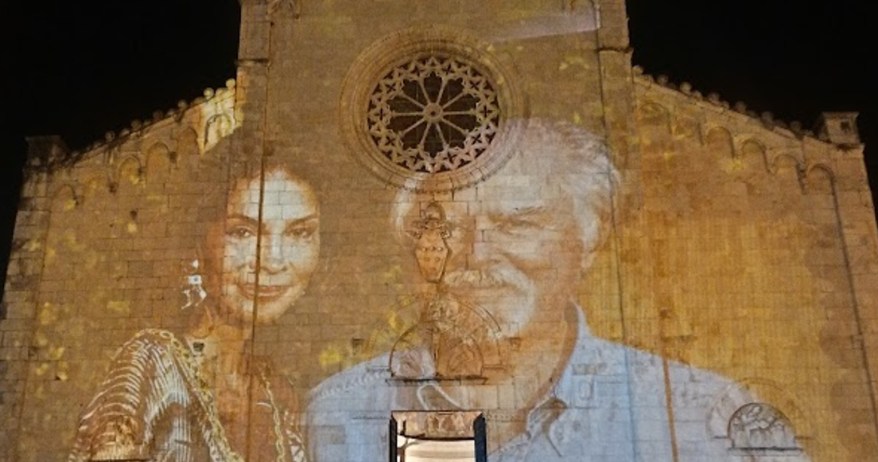
🇮🇹Pietrasanta prepara un museo dedicato a Fernando Botero con circa 90 bozzetti a Palazzo Panichi. Il legame con la città che lo nominò cittadino onorario nel 2001… 🇬🇧Pietrasanta is preparing a museum dedicated to Fernando Botero, featuring around 90 sketches at Palazzo Panichi. This reflects his connection to the city, which named him an honorary…
-
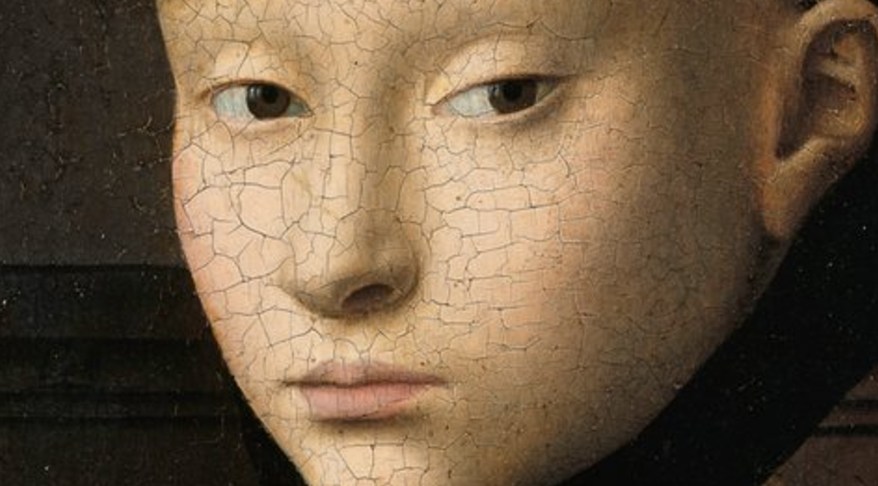
Il ritratto enigmatico di Petrus Christus
🇮🇹Chi è la giovane ritratta da Petrus Christus? Un volto misterioso, abiti preziosi e la luce del capolavoro fiammingo del 1470… 🇬🇧Who is the young woman portrayed by Petrus Christus? A mysterious face, exquisite attire, and the light of a Flemish masterpiece from 1470…
-
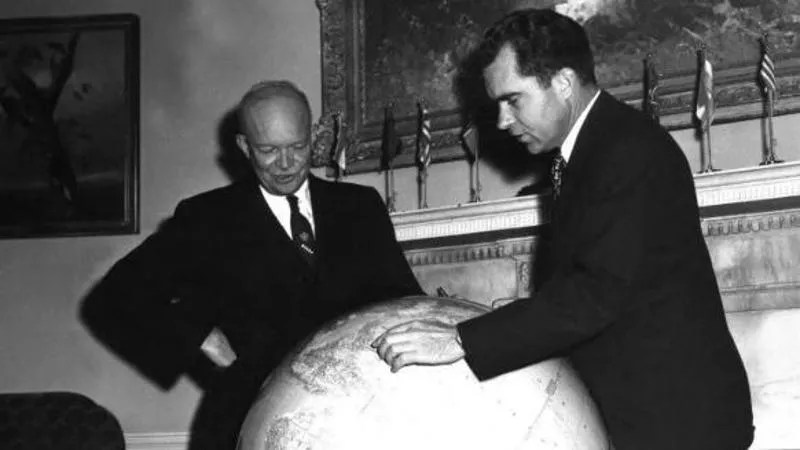
Pentagono, danneggiato il mappamondo legato a Eisenhower: era destinato all’ufficio di Hegseth
🇮🇹Il mappamondo di Eisenhower, cimelio della Seconda guerra mondiale conservato al Pentagono, è stato danneggiato durante un tentativo di trasferimento nell’ufficio di Pete Hegseth… 🇬🇧Eisenhower’s globe, a World War II relic kept at the Pentagon, was damaged during an attempt to move it to Pete Hegseth’s office…
Condividi:


Questo sono io



sostienici

Sostienici – Support Us
Se questo blog ti piace e ti appassiona, puoi aiutarci a farlo crescere sempre più sostenendoci in modo concreto condividendo i post, seguendo le pagine social e con un contributo che ci aiuta ad andare avanti con il nostro lavoro di divulgazione. . ENGLISH: If you like and are passionate about this blog, you can help us make it grow more and more by supporting us in a concrete way by sharing posts, following social pages and with a contribution that helps us to move forward with our dissemination work.
€10,00


Lo scorso anno ho visitato la cupola, e sono salito fino in cima per ammirarne sia lo spettacolo che il panorama. Un lavoro straordinario! 👏👏👏👏👏👏👏👏👏👏👏👍👍😊😉
"Mi piace"Piace a 1 persona
Sublime, un capolavoro di arte e ingegneria…e poi che panorama da lassù
"Mi piace"Piace a 1 persona