

La Scultura del giorno: Ebe di Canova
La scultura del giorno che vi propongo oggi è Ebe, scolpita da Antonio Canova in quattro versioni tra il 1796 e il 1817.
Ebe era la figliola di Zeus, simbolo della giovinezza assieme a tutti i piaceri che caratterizzano la felice età. Coppiera delle divinità dell’Olimpo, Canova volle immaginarsi Ebe mentre incede con un leggiadro passo di danza in punta di piedi, levando la coppa al cielo.

Sembra quasi che la scultura sia priva di peso. Leggiadra e sinuosa, si muove con grazia e il movimento delle gambe è ben controbilanciato da quello aperto delle braccia.
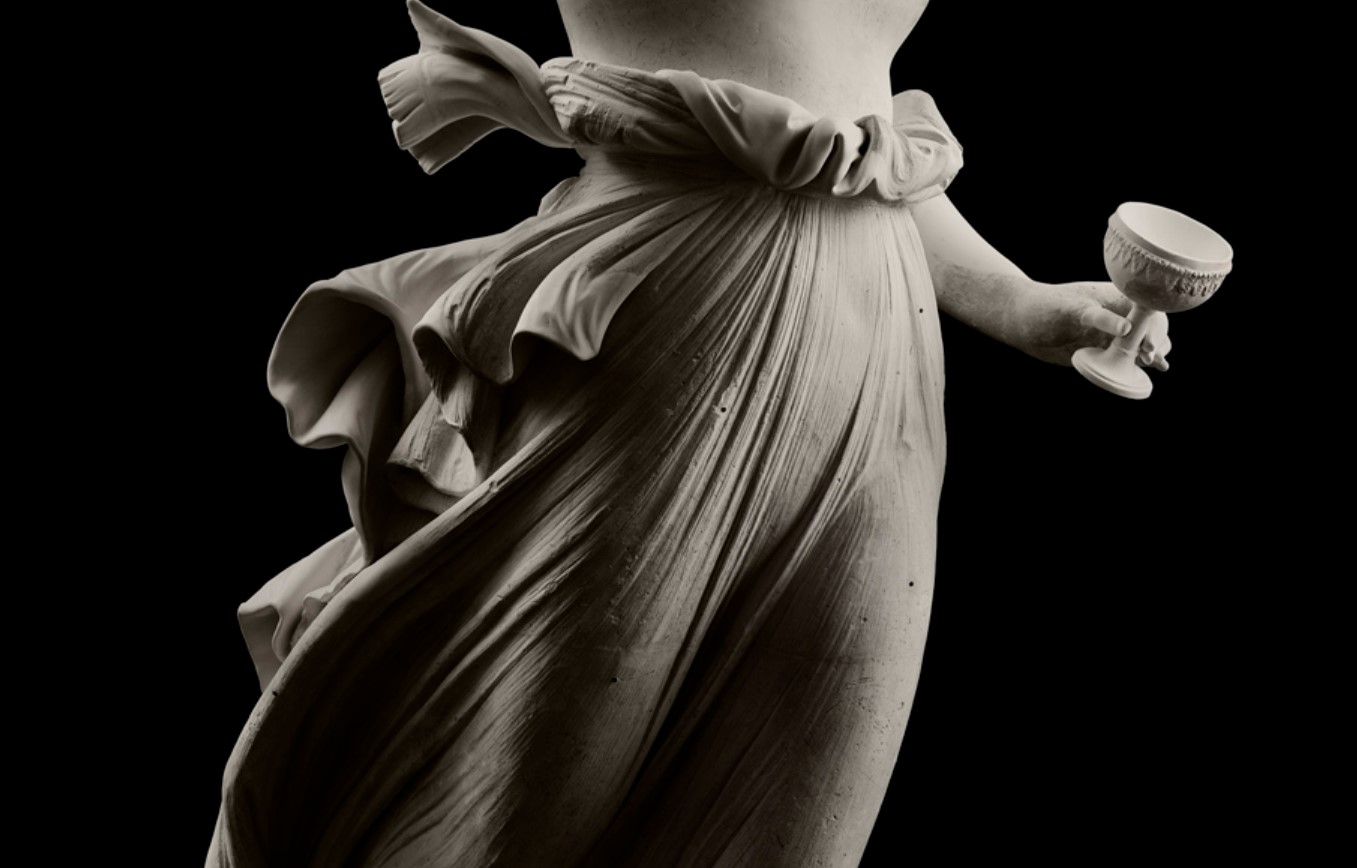
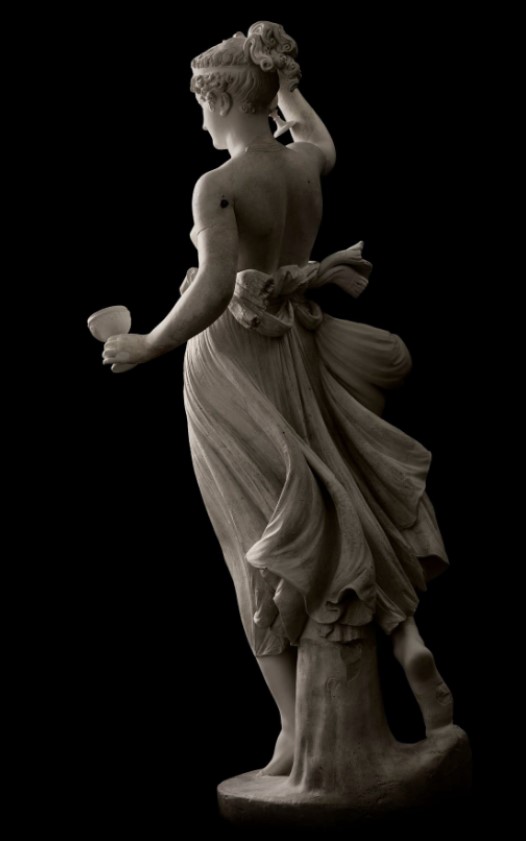
Ebe mostra il busto nudo mentre dalla vita in giù è coperta da un abito panneggiato mosso dal vento. La giovane ha i capelli raccolti dietro la nuca e con diadema che li trattiene mentre il volto appare incorniciato dai classici boccoli, tipici dell’artista.
In Ebe Canova raggiunse i vertici della perfezione con un idealismo estetico incredibile.
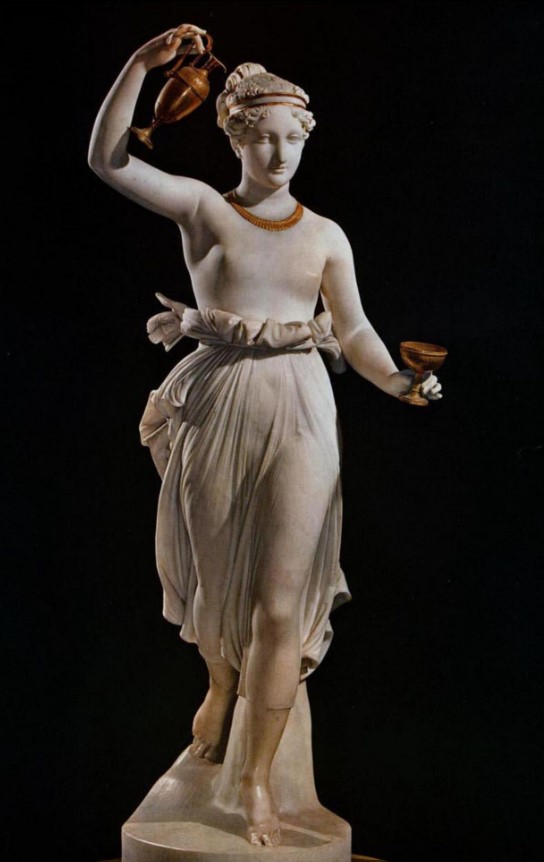
Come accennato prima, di Ebe ne esistono ben quattro versioni differenti, realizzate fra il 1796 e il 1817, oggi ubicate a Berlino, San Pietroburgo, Regno Unito e Forlì.
La prima versione di Ebe fu commissionata allo scultore dal principe Jusupof nel 1795 ma subito ceduta a Giuseppe Vivnte Albizzi. Fu portata a termine probabilmente nel 1799 mentre nel 1830 venne venduta a Federico Guglielmo II, re di Prussia.
Quella prima versione di Ebe riscosse un enorme successo ma non mancarono le polemiche a corredo di chi sosteneva che la ragazza fosse priva di qualsiasi espressione.
Canova così rispose ai suoi detrattori: «a voler più espressione nel viso mi sarebbe stata cosa assai facile il dargliela, ma certamente alle spese di esser criticato da chi sa conoscere il bello; la Ebe sarebbe diventata una Baccante».
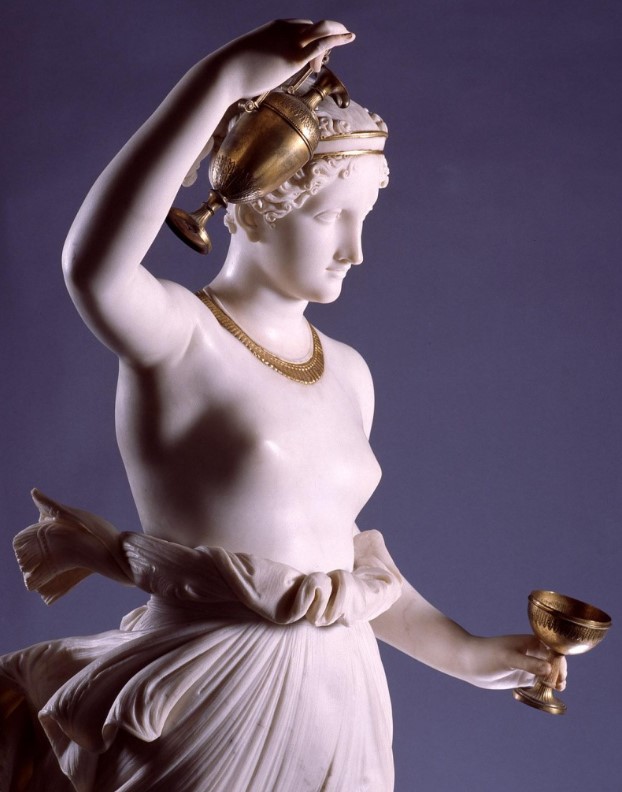
L’opera fu presentata al Salone di Parigi del 1808 e qualcuno osò dire che avesse una policromia fuori luogo con quella brocca e la coppa in bronzo. Canova successivamente realizzò altre due versioni eliminando finanche le nuvole sotto i piedi di Ebe, da qualcuno criticate come eccessivamente barocche.
Per il momento il vostro michelangelo Buonarroti vi saluta dandovi appuntamento ai prossimi post e sui social.
Sculpture of the day: Hebe by Canova
The sculpture of the day that I propose to you today is Hebe, sculpted by Antonio Canova in four versions between 1796 and 1817.
Hebe was the daughter of Zeus and symbolized youth together with all the pleasures that characterize her happy age. Cupbearer of the Olympian divinities, Canova wanted to imagine Hebe as she advances with a graceful dance step on tiptoe, raising the cup to the sky.
It almost seems as if the sculpture is weightless. Graceful and sinuous, she moves gracefully and the movement of her legs is well counterbalanced by the open movement of her arms.
Hebe shows her naked torso while from the waist down she is covered by a draped dress blowing in the wind. The young woman has her hair gathered behind her neck and with a tiara holding it back while her face appears framed by the classic curls typical of the artist.
In Ebe Canova reached the heights of perfection with an incredible aesthetic idealism.
As mentioned before, there are four different versions of Ebe, created between 1796 and 1817, today located between Berlin, St. Petersburg, the United Kingdom and Forlì.
The first version of Hebe was commissioned to the sculptor by Prince Jusupof in 1795 but immediately sold to Giuseppe Vivnte Albizzi. It was probably completed in 1799 while in 1830 it was sold to Frederick William II, king of Prussia.
That first version of Ebe was a huge success but there was no shortage of controversy accompanying those who claimed that the girl was devoid of any expression. Canova responded to his detractors thus: «if I wanted more expression in her face it would have been very easy for me to give it to her, but certainly at the expense of being criticized by those who know how to understand beauty; Hebe would have become a Bacchante.”
The work was presented at the Paris Salon of 1808 and someone dared to say that it had an out-of-place polychromy with the bronze jug and cup. Canova subsequently created two other versions, even eliminating the clouds under Hebe’s feet, which some criticized as excessively baroque.
For the moment, your Michelangelo Buonarroti greets you and will meet you in future posts and on social media.

Sostienici – Support Us
Se questo blog ti piace e ti appassiona, puoi aiutarci a farlo crescere sempre più sostenendoci in modo concreto condividendo i post, seguendo le pagine social e con un contributo che ci aiuta ad andare avanti con il nostro lavoro di divulgazione. . ENGLISH: If you like and are passionate about this blog, you can help us make it grow more and more by supporting us in a concrete way by sharing posts, following social pages and with a contribution that helps us to move forward with our dissemination work.
8,00 €
-
Patrimonio mondiale a rischio: 3 minacce mettono in pericolo monumenti e siti storici
🇮🇹Patrimonio culturale mondiale a rischio: il World Monuments Fund lancia l’allarme su carenza di fondi, cambiamenti climatici e perdita di competenze… 🇬🇧World cultural heritage at risk: the World Monuments Fund raises the alarm over a lack of funds, climate change, and the loss of skills…
-
L’Italia più bella si scopre in autunno: 12 luoghi d’arte che sembrano usciti da un dipinto
🇮🇹Dove andare in autunno in Italia? 12 mete d’arte tra città rinascimentali, borghi medievali, musei, palazzi storici e paesaggi mozzafiato… 🇬🇧Where to go in Italy in autumn? 12 art-focused destinations featuring Renaissance cities, medieval villages, museums, historic palaces, and breathtaking landscapes…
-
La posizione impossibile nella Cappella Sistina: ecco perché perdevo l’orientamento
🇮🇹Avete presente la leggenda che mi racconta disteso sulla schiena mentre affresco la Cappella Sistina? Ecco, dimenticatela. O almeno, smettetela di prenderla per buona… 🇬🇧You know that legend about me lying on my back while painting the Sistine Chapel frescoes? Well, forget it. Or at least, stop taking it as gospel…
Condividi:


Questo sono io




sostienici

Sostienici – Support Us
Se questo blog ti piace e ti appassiona, puoi aiutarci a farlo crescere sempre più sostenendoci in modo concreto condividendo i post, seguendo le pagine social e con un contributo che ci aiuta ad andare avanti con il nostro lavoro di divulgazione. . ENGLISH: If you like and are passionate about this blog, you can help us make it grow more and more by supporting us in a concrete way by sharing posts, following social pages and with a contribution that helps us to move forward with our dissemination work.
€10,00


letteralmente affascinata da tanta grazia!
"Mi piace"Piace a 1 persona
opera straordinaria, sembra leggerissima
"Mi piace"Piace a 1 persona