

Il Fauno rubato: tutta la storia
Chi di voi conosce il mio Fauno? E’ il mascherone scolpito nel marmo che raffigura un bel fauno sdentato. Bello si fa per dire…diciamo inusuale va’. Lo scolpii quando ancora ero un ragazzino nel Giardino di San Marco, dove iniziai ad apprender i primi rudimenti assieme ad altri giovani talenti.
In realtà il mio Fauno in origine aveva una bella dentatura da sfoggiare. Però, mentre ero tutt’intento a rifinirlo, passò di lì Lorenzo il Magnifico e mi fece qualche giusta osservazione: “Come mai ha tutti quei denti? I vecchi son quasi sempre sdentati!”. Aveva ragione eccome! Così con un popoino di pazienza, gli scalpellai via tutta la dentatura e mi preoccupai di lasciare anche i buchi lasciati dalle radici
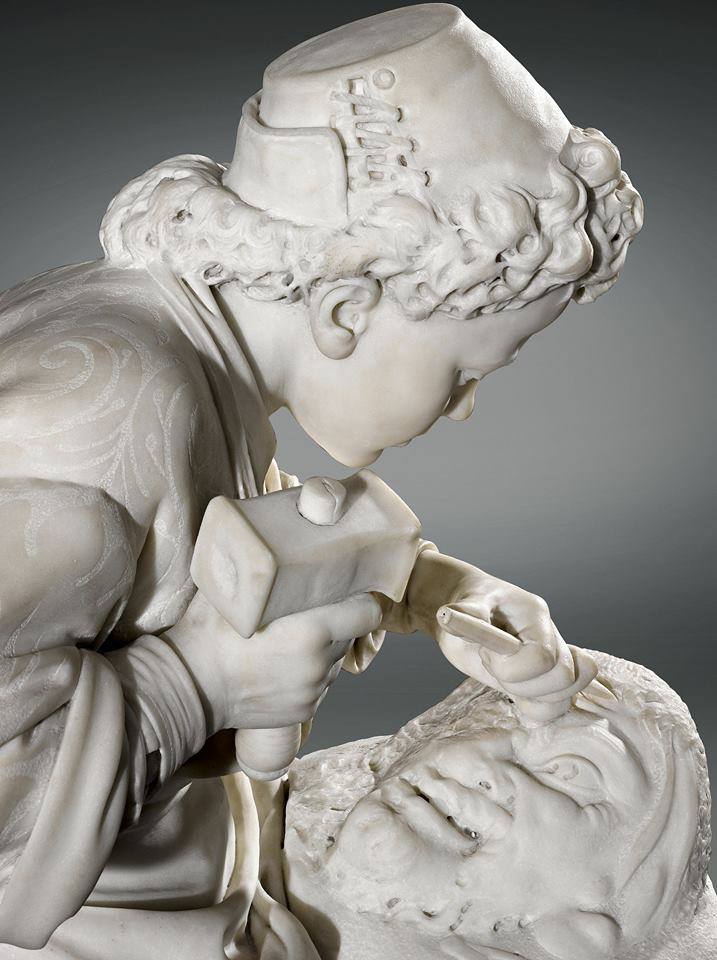
Di questa Testa di Fauno si hanno notizie fino allo scoppio della Seconda Guerra Mondiale quando, insieme ad altre opere, venne portata nel Castello di Poppi, nel Casentino, per essere sottratta dalle rapaci mani dei nazisti.
Il rifugio era considerato sicuro. Per arrivare al caveau era necessario aprire sette porte differenti, chiuse tutte a doppia mandata. Ciascuna aveva bisogno di una propria chiave per essere aperta.
Le precauzioni prese però furono aggirate con un inganno. Gli ufficiali delle SS della 305° divisione entrarono con un espediente, riuscendo a portar via non solo il mio Fauno, ma anche molte altre preziose opere. Caricarono il maltolto su un furgoncino e sparirono, proteggendosi le spalle con raffiche di fuoco.
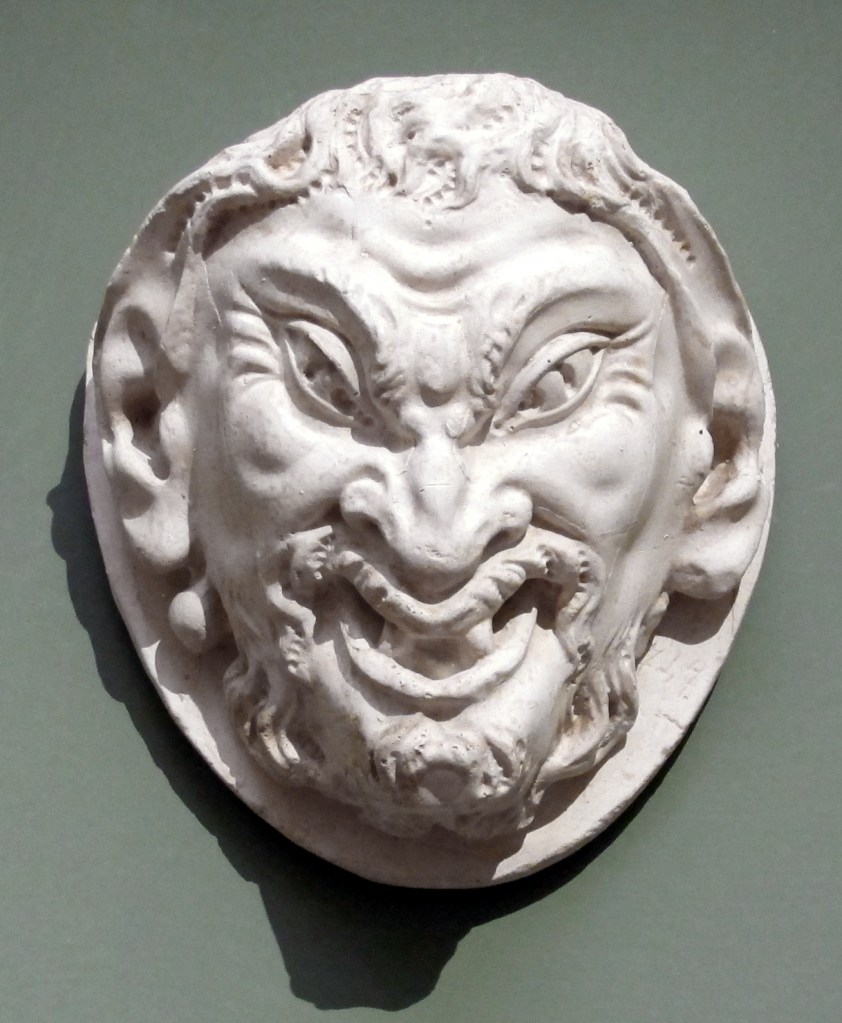
La maggior parte di quella refurtiva venne poi restituita all’Italia a guerra conclusa ma non la testa del mio Fauno sdentato.
Rodolfo Siverio, un dei più noti cacciatori d’opere trafugate, ha indagato a lungo sul Fauno arrivando a ipotizzare che al momento potrebbe trovarsi all’interno di qualche caveau in una banca svizzera oppure potrebbe essere finita in Russia, come risarcimento di guerra da parte di Berlino.
Non avrò pace finché non verrà restituita all’Italia. Voglio vedere di nuovo il Fauno esposto in casa mia a Firenze. Possibile che nessuno parli e che si tengano un’opera presa in tempi di guerra? Via, giù.. ci vado fuori dai gangheri. Meglio che per il momento vi saluti.
Il vostro Michelangelo Buonarroti, che s’infervora con chi si appropria di ciò che non è suo.

Stolen Faun: the whole story
Who of you knows my Faun? It is a mask that depicts a beautiful toothless faun. Nice to say … we say unusual. I carved it when I was still a kid in the Garden of San Marco, where I began to learn the first rudiments together with other young talents.
My Faun originally had a nice denture to show off. However, while I was intent on refining it, Lorenzo the Magnificent passed by and made me some observations: “How come all your teeth? The old ones are always toothless! “. He was right, all right! So, with a little patience, I chiseled away all the teeth and I also worried about leaving the holes left by the roots.
This head of Faun is known until the outbreak of World War II when, along with other works, was taken to the castle of Poppi, in the Casentino, to be stolen by the rapacious hands of the Nazis.
The shelter was considered safe. To get to the vault it was necessary to open seven different doors, all closed at double delivery. Each needed their own key to be open.
The precautions taken however were bypassed with a deception. The officers of the SS of the 305th division entered with an expedient, succeeding in stealing not only my Faun, but also many other precious works. They loaded the stolen goods into a van and disappeared, protecting their shoulders with gusts of fire.
Most of that stolen goods was then returned to Italy after the war but not the head of my toothless Faun.
Rodolfo Siverio, one of the most well-known hunters of stolen works, has long investigated the Faun and assumed that at the moment he might be in some vaults in a Swiss bank or could have ended up in Russia, as compensation for war by of Berlin.
I will not have peace until it is returned to Italy. I want to see the Faun exposed in my house in Florence again. Is it possible that nobody talks and takes a work taken in times of war? I get crazy. Better than for the moment, stop here.
Your Michelangelo Buonarroti, who gets angry with those who take possession of what is not his.

Sostienici – Support Us
Se questo blog ti piace e ti appassiona, puoi aiutarci a farlo crescere sempre più sostenendoci in modo concreto condividendo i post, seguendo le pagine social e con un contributo che ci aiuta ad andare avanti con il nostro lavoro di divulgazione. . ENGLISH: If you like and are passionate about this blog, you can help us make it grow more and more by supporting us in a concrete way by sharing posts, following social pages and with a contribution that helps us to move forward with our dissemination work.
10,00 €
ULTIMI ARTICOLI
Cena in Emmaus di Pontormo: il pane, il gatto e il cane alle Scuderie del Quirinale
La Cena in Emmaus di Pontormo nasconde dettagli sorprendenti: il significato del pane, i simboli e il mistero della Resurrezione. Scopri il capolavoro del 1525 in mostra alle Scuderie del Quirinale a Roma… 🇬🇧Pontormo’s *Supper at Emmaus* conceals surprising details: the significance of the bread, various symbols, and the mystery of the Resurrection. Discover this…
Palazzo Vecchio, il restauro svela la vera natura dei quattro leoni e il mistero della fontana greca
🇮🇹Restaurato il Cortile della Dogana di Palazzo Vecchio a Firenze: i quattro leoni sono calchi, una fontana conserva un’iscrizione greca da studiare e tornano a funzionare entrambe le fontane… 🇬🇧The Cortile della Dogana (Customs Courtyard) at Palazzo Vecchio in Florence has been restored: the four lions are casts, one fountain features a Greek inscription that…
Disma, il buon ladrone nel Giudizio Universale: la misericordia e la giustizia divina
Nel Giudizio Universale della Cappella Sistina ci sono particolari che rischiano di passare inosservati, anche a chi ha avuto la fortuna di alzare gli occhi verso la mia grande parete. Tra i corpi che si sollevano, gli angeli che suonano le trombe e le anime che cercano di raggiungere il cielo, ci sono figure che…
21 ottobre 1816: nasce Pietro Magni, lo scultore che trasformò una giovane lettrice in un capolavoro
🇮🇹Il 21 ottobre 1816 nasceva Pietro Magni, lo scultore della Giovane leggitrice. Scopri la storia dell’opera ignorata a Brera e diventata un successo nel 1861… 🇬🇧On October 21, 1816, Pietro Magni—the sculptor behind The Young Reader was born. Discover the story of this work, which was initially overlooked at the Brera Academy before becoming a…
Si è verificato un problema. Aggiorna la pagina e/o riprova in seguito.
Condividi:


Questo sono io




sostienici

Sostienici - Support Us
Se questo blog ti piace e ti appassiona, puoi aiutarci a farlo crescere sempre più sostenendoci in modo concreto condividendo i post, seguendo le pagine social e con un contributo che ci aiuta ad andare avanti con il nostro lavoro di divulgazione. . ENGLISH: If you like and are passionate about this blog, you can help us make it grow more and more by supporting us in a concrete way by sharing posts, following social pages and with a contribution that helps us to move forward with our dissemination work.
€10,00


sdentato, strabico ma bellissimo 🙂
"Mi piace"Piace a 1 persona
Grazie… ma d’altro canto come fa un fauno ad esser bello?
"Mi piace""Mi piace"
bellissimo di realizzazione, seppur di giovanil fattura 🙂
"Mi piace""Mi piace"
be’ mi’ tempi… ero un ragazzino
"Mi piace""Mi piace"
La Fontana “Carlo Delcroix” a Saltino di Vallombrosa contiene due copie in pietra della testa del fauno realizzate dallo scultore Hendrik C. Andersen nel 1924.
"Mi piace"Piace a 1 persona
Grazie per l’informazione, non lo sapevo
"Mi piace""Mi piace"