22 novembre, Santa Cecilia: perché è la patrona della musica e come l’hanno raffigurata i grandi artisti
Oggi 22 novembre, la Chiesa cattolica celebra Santa Cecilia, patrona della musica, dei musicisti, dei cantanti e dei poeti. Una figura amatissima, che nel corso dei secoli ha ispirato pittori, scultori e artisti, diventando una delle sante più riconoscibili della storia dell’arte.
La sua immagine è legata soprattutto agli strumenti musicali, agli angeli e a un’espressione di intensa spiritualità. Dietro questa iconografia così familiare c’è una storia di fede, amore e martirio, tramandata attraverso un racconto dalle forti componenti leggendarie.
Dalle prime testimonianze del suo culto fino ai grandi dipinti del Rinascimento e del Barocco, Santa Cecilia ha attraversato i secoli senza perdere il proprio fascino. Ma come è stata raffigurata dagli artisti? E perché proprio una giovane martire romana è diventata il simbolo universale della musica?

Santa Cecilia, una giovane romana che scelse la fede
Secondo la tradizione, Cecilia era una nobildonna romana vissuta nel III secolo, durante il periodo dell’imperatore Alessandro Severo e del pontificato di Urbano I. La sua vicenda è raccontata nella Passio Sanctae Caeciliae, un testo agiografico di carattere prevalentemente letterario, nel quale storia e leggenda si intrecciano.
Il culto della santa è molto antico. La basilica a lei intitolata in Trastevere, a Roma, testimonia una devozione già radicata nei primi secoli del cristianesimo. La celebrazione liturgica in suo onore è attestata almeno dal 545.
La forza dell’amore
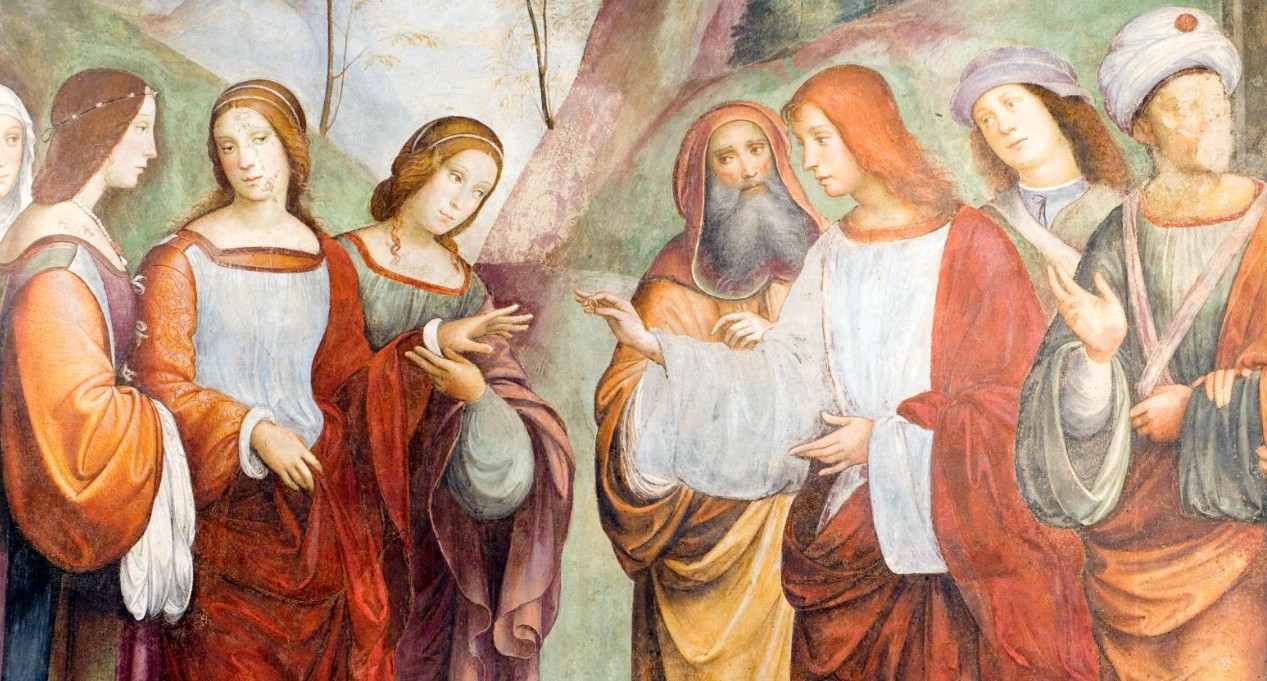
La Passio racconta che Cecilia venne promessa in sposa al patrizio Valeriano. Il giorno delle nozze, mentre si celebrava il matrimonio, la giovane avrebbe confidato al marito di essersi consacrata a Dio e di aver fatto voto di perpetua verginità.
Valeriano, colpito dalla determinazione della moglie, accettò di conoscere la sua fede. Si recò così da papa Urbano I, dal quale ricevette il battesimo. Anche Tiburzio, fratello di Valeriano, si convertì al cristianesimo.
La scelta dei due fratelli ebbe conseguenze drammatiche. Arrestati per ordine del prefetto Turcio Almachio, furono condannati a morte insieme a Massimo, l’ufficiale incaricato di condurli in carcere, che si era convertito dopo aver assistito alla loro testimonianza di fede.
Rimasta sola, Cecilia continuò a professare il cristianesimo e a soccorrere i più deboli. Anche lei venne arrestata e condannata a morte. Secondo il racconto agiografico, il tentativo di soffocarla nelle terme della sua abitazione non riuscì e fu quindi ordinato di decapitarla. Il carnefice, tuttavia, non riuscì a reciderle completamente il capo: la giovane sarebbe sopravvissuta ancora tre giorni, durante i quali continuò a distribuire i propri beni ai poveri.
La tradizione vuole che sia stata sepolta nelle catacombe di San Callisto e che, successivamente, le sue spoglie siano state traslate nella basilica romana a lei dedicata.

Come viene raffigurata Santa Cecilia nella storia dell’arte?
La rappresentazione di Santa Cecilia è cambiata profondamente nel corso dei secoli. Inizialmente la martire veniva identificata attraverso gli attributi propri della santità e del martirio: l’aureola, la palma e il richiamo alla sua vicenda religiosa.
Con il tempo, però, si è affermata un’immagine destinata a diventare inconfondibile: quella della giovane donna associata alla musica.
Il legame tra Cecilia e la musica nasce da un’interpretazione della Passio che, nel corso della trasmissione del testo, ha assunto un significato sempre più musicale. Nel racconto si legge che, durante le nozze, mentre gli strumenti suonavano, Cecilia cantava interiormente a Dio. Da qui si è sviluppata la sua identificazione con la musica sacra e, successivamente, con i musicisti.
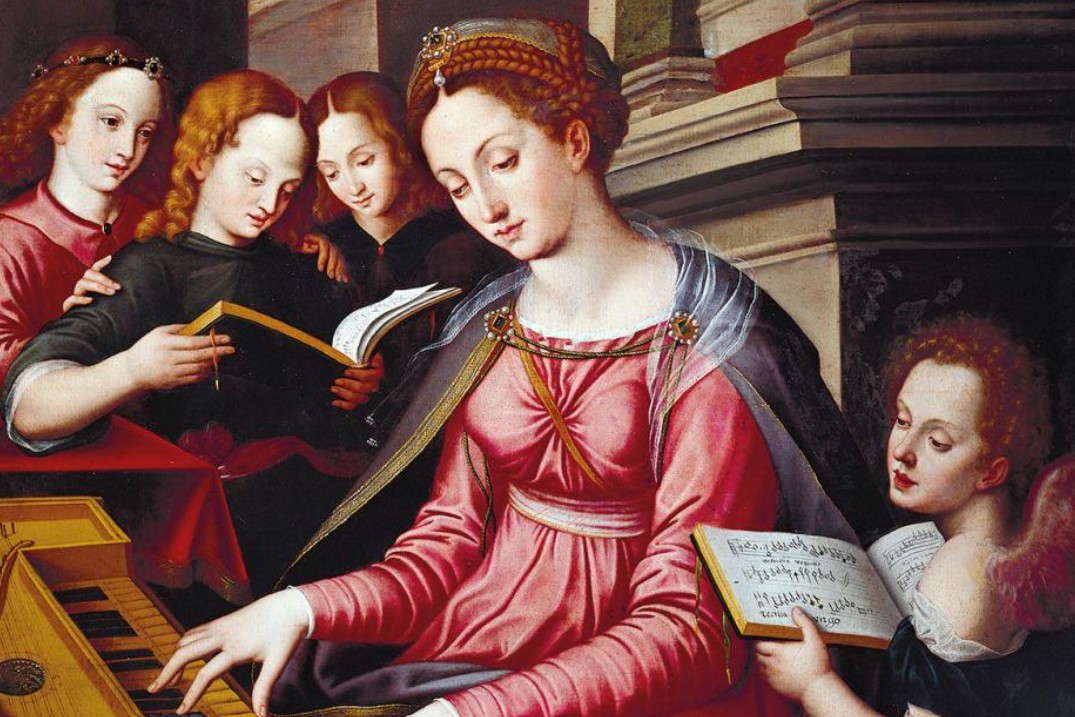
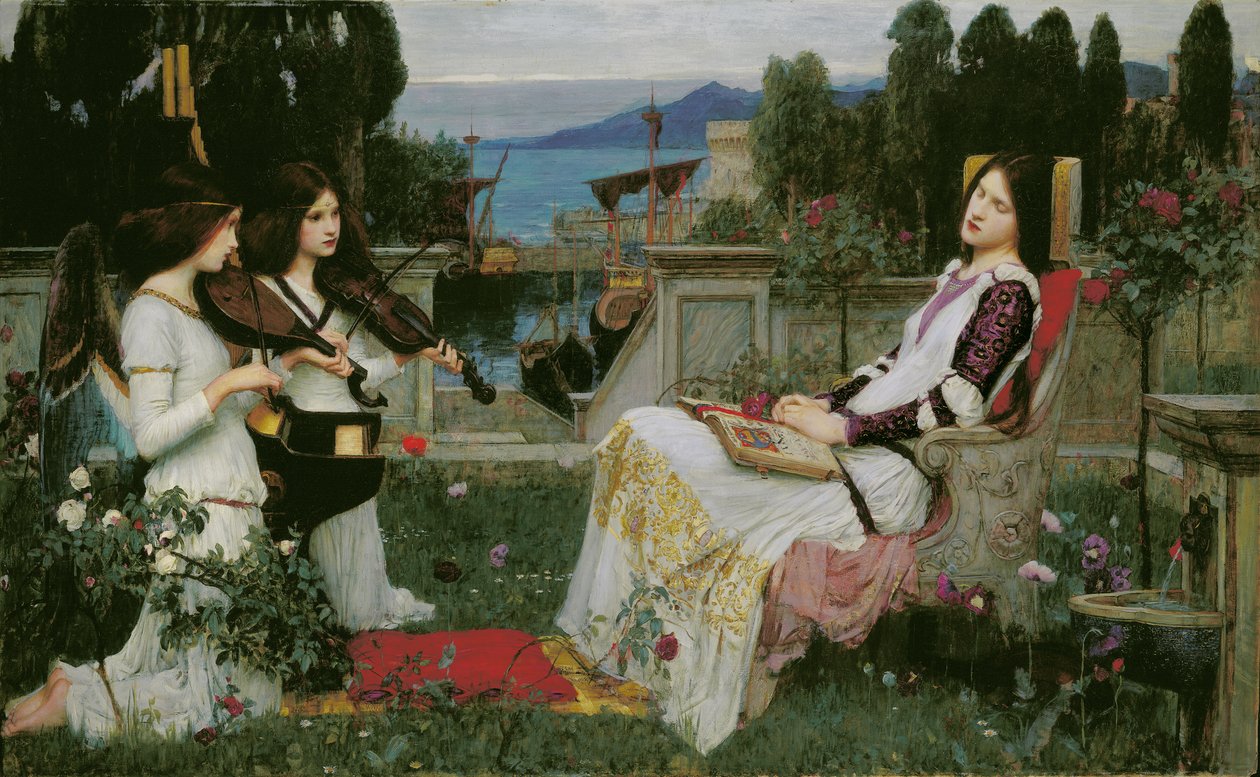
Dal Quattrocento in poi l’organo diventa uno dei suoi attributi più frequenti. Accanto a questo strumento compaiono spesso violini, viole, liuti, arpe e altri strumenti musicali. Talvolta Cecilia è accompagnata da angeli musicanti, altre volte sembra ascoltare una melodia proveniente dal cielo.
Il suo volto assume così un’espressione assorta, quasi rapita da una musica che non appartiene soltanto al mondo terreno.
I capolavori dedicati a Santa Cecilia
Raffaello, l’estasi di Santa Cecilia
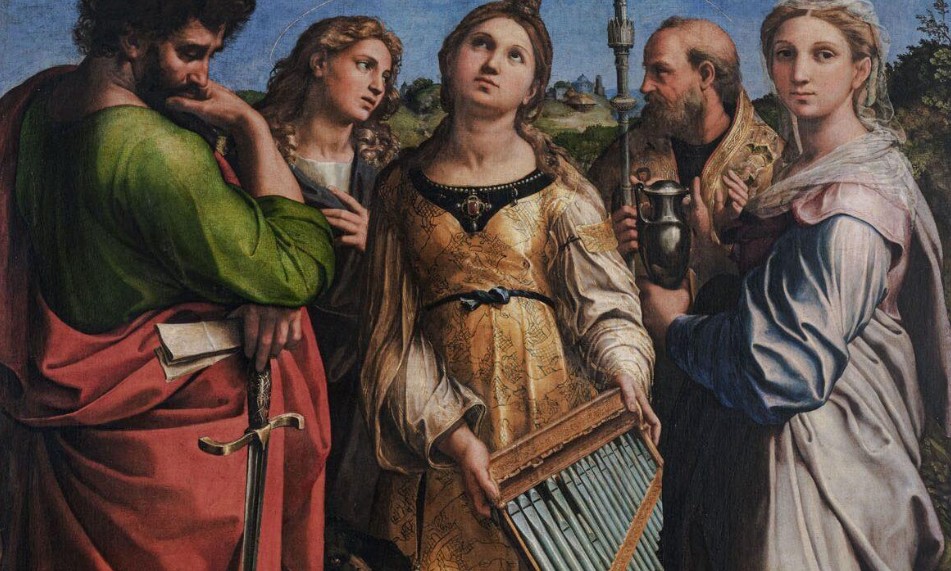
Uno dei dipinti più celebri dedicati alla santa è la Santa Cecilia e quattro santi di Raffaello, conosciuta anche come Estasi di Santa Cecilia, realizzata intorno al 1514 e oggi conservata alla Pinacoteca Nazionale di Bologna.
Raffaello sceglie di rappresentare Cecilia al centro della composizione, con lo sguardo rivolto verso l’alto, assorta in una visione celeste. Ai suoi piedi si trovano diversi strumenti musicali, fra cui un piccolo organo portativo, insieme ad altri strumenti abbandonati.
La santa non sta suonando: ascolta. La sua attenzione è completamente rivolta alla musica divina, mentre sopra di lei si apre una dimensione spirituale popolata da angeli.
Accanto a Cecilia compaiono san Paolo, san Giovanni Evangelista, sant’Agostino e santa Maria Maddalena. Ognuno sembra partecipare, in modo diverso, a questa esperienza mistica.

Stefano Maderno, Santa Cecilia: il corpo della martire
Un’altra immagine straordinaria è quella scolpita da Stefano Maderno intorno al 1600 e conservata nella Basilica di Santa Cecilia in Trastevere, a Roma.
In questo caso l’artista abbandona completamente la rappresentazione della santa come musicista e torna al racconto del martirio.
Nel 1599, durante alcuni lavori nella basilica, venne rinvenuto un corpo che fu identificato con quello di Cecilia. Secondo le testimonianze dell’epoca, le spoglie apparivano miracolosamente incorrotte e conservavano una posizione particolare.
Maderno realizzò la celebre figura marmorea della giovane distesa su un fianco, con il volto rivolto verso terra e le mani raccolte. Il corpo sembra abbandonato in un sonno silenzioso, più che nella rigidità della morte.
Le dita della mano indicano il numero tre, interpretato come un possibile riferimento alla Trinità oppure ai tre giorni durante i quali, secondo la tradizione, Cecilia sopravvisse dopo il tentativo di decapitazione.
La scultura è collocata sotto l’altare maggiore, all’interno di una nicchia di marmo scuro. Il candore del corpo crea un contrasto fortissimo con lo spazio circostante, aumentando il senso di raccoglimento e di mistero.

Santa Cecilia e gli strumenti musicali: l’iconografia barocca
Nel Seicento la figura di Santa Cecilia trova una nuova fortuna. La sua immagine viene ripresa da numerosi artisti, che insistono sul rapporto tra musica, fede e contemplazione.
La santa viene spesso rappresentata mentre suona un organo, tiene uno strumento musicale oppure ascolta il canto degli angeli. La musica diventa una manifestazione visibile dell’armonia divina.
Tra i pittori che hanno contribuito alla diffusione di questa iconografia si ricordano Domenichino e Guido Reni. Le loro interpretazioni si inseriscono in quella sensibilità barocca che ricerca un equilibrio tra bellezza ideale, intensità emotiva e spiritualità.

Cecilia diventa l’immagine stessa della musica come linguaggio capace di avvicinare l’uomo a Dio.
Per il momento il sempre vostro Michelangelo Buonarroti vi saluta dandovi appuntamento ai prossimi post e sui social.
November 22, Saint Cecilia: Why She Is the Patron Saint of Music and How Great Artists Have Depicted Her
Today, November 22, the Catholic Church celebrates Saint Cecilia, the patron saint of music, musicians, singers, and poets. She is a deeply beloved figure who, over the centuries, has inspired painters, sculptors, and other artists, becoming one of the most recognizable saints in the history of art.
Her image is primarily associated with musical instruments, angels, and an expression of profound spirituality. Behind this familiar iconography lies a story of faith, love, and martyrdom—a narrative steeped in legend.
From the earliest evidence of her veneration to the great paintings of the Renaissance and Baroque periods, Saint Cecilia has endured through the centuries without ever losing her allure. But how have artists portrayed her? And why did a young Roman martyr become the universal symbol of music?
Saint Cecilia: A Young Roman Woman Who Chose Faith
According to tradition, Cecilia was a Roman noblewoman who lived in the 3rd century, during the reign of Emperor Alexander Severus and the pontificate of Urban I. Her story is recounted in the Passio Sanctae Caeciliae—an hagiographic text that is largely literary in nature, in which history and legend are intertwined.
The veneration of the saint dates back to ancient times. The basilica dedicated to her in Rome’s Trastevere district bears witness to a devotion that was already well-established during the early centuries of Christianity. A liturgical celebration in her honor has been documented since at least the year 545.
The Power of Love
The Passio relates that Cecilia was betrothed to a patrician named Valerian. On their wedding day, the young woman confided to her husband that she had consecrated herself to God and had taken a vow of perpetual virginity. Valerian, struck by his wife’s determination, agreed to learn about her faith. He went to Pope Urban I, from whom he received baptism. Tiburtius, Valerian’s brother, also converted to Christianity.
The two brothers’ decision had dramatic consequences. Arrested by order of the prefect Turcius Almachius, they were sentenced to death, along with Maximus—the officer tasked with taking them to prison—who had converted after witnessing their profession of faith.
Left alone, Cecilia continued to profess Christianity and to aid the most vulnerable. She, too, was arrested and sentenced to death. According to hagiographic accounts, an attempt to suffocate her in the baths of her own home failed, so an order was given for her to be beheaded. The executioner, however, failed to sever her head completely; the young woman reportedly survived for another three days, during which time she continued to distribute her possessions to the poor.
Tradition holds that she was buried in the Catacombs of Saint Callixtus and that her remains were later transferred to the Roman basilica dedicated to her.
How is Saint Cecilia depicted in the history of art?
The representation of Saint Cecilia has evolved significantly over the centuries. Initially, the martyr was identified through the traditional attributes of sanctity and martyrdom: the halo, the palm branch, and references to her religious story.
Over time, however, an image emerged that would become unmistakable: that of a young woman associated with music.
The connection between Cecilia and music stems from an interpretation of her Passio (the account of her martyrdom) which, as the text was transmitted through the ages, took on an increasingly musical significance. The account relates that, during her wedding, while musical instruments were playing, Cecilia sang inwardly to God. From this, her association with sacred music—and, subsequently, with musicians—developed.
From the 15th century onwards, the organ became one of her most frequent attributes. Alongside this instrument, one often finds violins, violas, lutes, harps, and other musical instruments. At times, Cecilia is accompanied by music-making angels; at others, she appears to be listening to a melody descending from heaven.
Her face thus takes on an absorbed expression, as if she were enraptured by music that does not belong solely to the earthly realm.
Masterpieces dedicated to Saint Cecilia
Raphael’s Ecstasy of Saint Cecilia
One of the most celebrated paintings dedicated to the saint is Raphael’s Saint Cecilia with Four Saints—also known as the Ecstasy of Saint Cecilia—created around 1514 and now housed in the Pinacoteca Nazionale in Bologna.
Raphael chose to place Cecilia at the center of the composition, her gaze directed upward, absorbed in a celestial vision. At her feet lie various musical instruments, including a small portable organ, alongside other instruments that have been set aside.
The saint is not playing; she is listening. Her attention is entirely focused on divine music, while above her, a spiritual dimension populated by angels unfolds.
Alongside Saint Cecilia appear Saint Paul, Saint John the Evangelist, Saint Augustine, and Saint Mary Magdalene. Each seems to participate, in a different way, in this mystical experience.
Stefano Maderno, Saint Cecilia: The Martyr’s Body
Another extraordinary depiction is the sculpture created by Stefano Maderno around 1600, housed in the Basilica of Saint Cecilia in Trastevere, Rome.
In this work, the artist completely abandons the portrayal of the saint as a musician, returning instead to the narrative of her martyrdom.
In 1599, during renovation work in the basilica, a body was discovered and identified as that of Saint Cecilia. According to accounts from the time, the remains appeared miraculously incorrupt and were found in a specific, distinct position.
Maderno crafted the celebrated marble figure of the young woman lying on her side, her face turned toward the ground and her hands gathered together. The body appears as if surrendered to a silent slumber, rather than caught in the rigidity of death.
The fingers of her hand indicate the number three—interpreted either as a reference to the Trinity or as an allusion to the three days that, according to tradition, Cecilia survived following an attempted beheading.
The sculpture is positioned beneath the high altar, set within a niche of dark marble. The stark whiteness of the body creates a powerful contrast with the surrounding space, heightening the sense of profound stillness and mystery.
Saint Cecilia and Musical Instruments: Baroque Iconography
During the seventeenth century, the figure of Saint Cecilia experienced a resurgence in popularity. Her image was taken up by numerous artists, who emphasized the connection between music, faith, and contemplation.
The saint is frequently depicted playing an organ, holding a musical instrument, or listening to the singing of angels. In these works, music becomes a visible manifestation of divine harmony. Among the painters who contributed to the spread of this iconography are Domenichino and Guido Reni. Their interpretations are rooted in a Baroque sensibility that seeks a balance between ideal beauty, emotional intensity, and spirituality.
Cecilia becomes the very embodiment of music as a language capable of bringing humanity closer to God.
For now, yours truly, Michelangelo Buonarroti, bids you farewell—until the next posts and over on social media.

Sostienici – Support Us
Se questo blog ti piace e ti appassiona, puoi aiutarci a farlo crescere sempre più sostenendoci in modo concreto condividendo i post, seguendo le pagine social e con un contributo che ci aiuta ad andare avanti con il nostro lavoro di divulgazione. . ENGLISH: If you like and are passionate about this blog, you can help us make it grow more and more by supporting us in a concrete way by sharing posts, following social pages and with a contribution that helps us to move forward with our dissemination work.
10,00 €
Condividi:


Questo sono io





sostienici

Sostienici - Support Us
Se questo blog ti piace e ti appassiona, puoi aiutarci a farlo crescere sempre più sostenendoci in modo concreto condividendo i post, seguendo le pagine social e con un contributo che ci aiuta ad andare avanti con il nostro lavoro di divulgazione. . ENGLISH: If you like and are passionate about this blog, you can help us make it grow more and more by supporting us in a concrete way by sharing posts, following social pages and with a contribution that helps us to move forward with our dissemination work.
€10,00