

Prima di Gesù Bambino viene l’Annunciazione: i dipinti che raccontano l’inizio della storia di Natale
Quando pensiamo al Natale, la prima immagine che ci viene in mente è spesso quella di Gesù Bambino nella mangiatoia, con Maria e Giuseppe accanto, il bue e l’asinello, i pastori e magari una stella luminosa sopra la capanna. Nella storia raccontata dai Vangeli però, c’è una scena che viene prima di tutte queste immagini.
È l’Annunciazione, il momento in cui l’arcangelo Gabriele appare a Maria per annunciarle che diventerà la madre di Gesù.
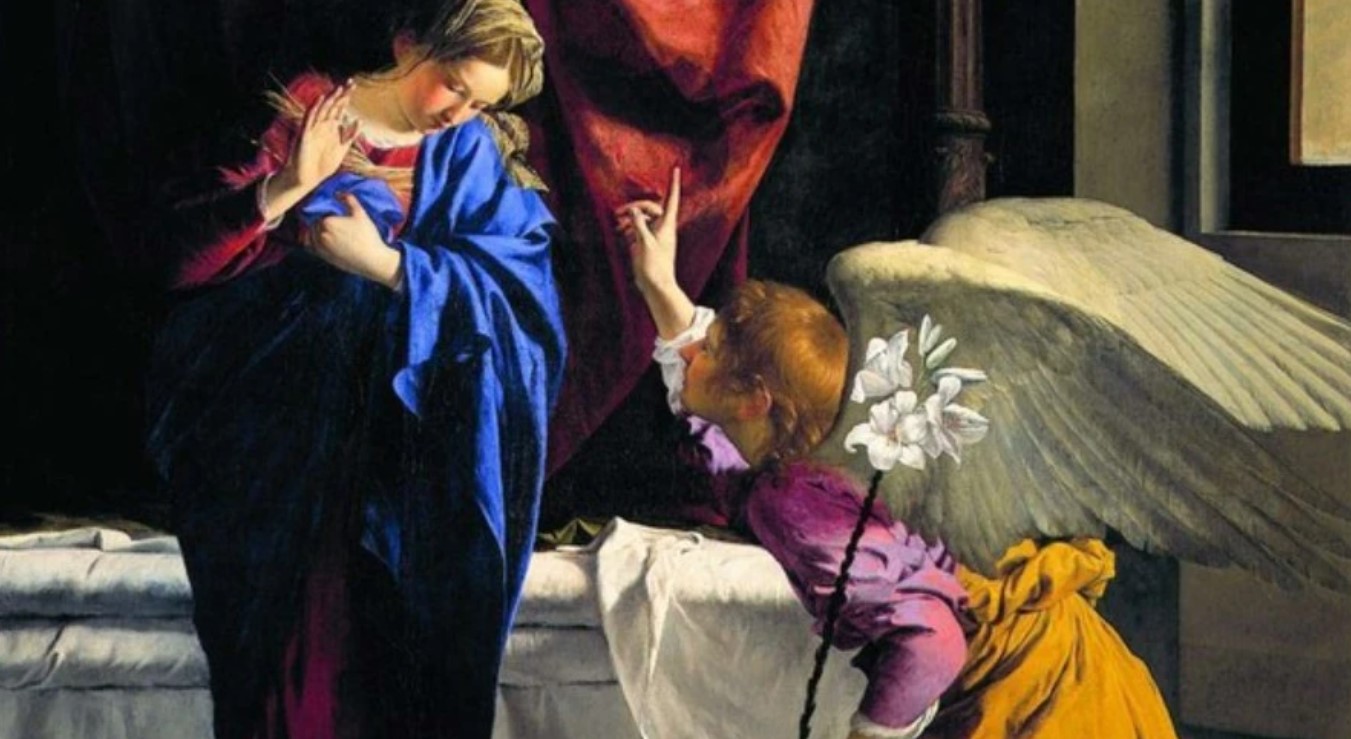
C’è una giovane donna, raggiunta da una notizia straordinaria, e un incontro destinato a diventare uno dei soggetti più rappresentati nella storia dell’arte.
Pittori di epoche diverse hanno immaginato questa scena in modi profondamente differenti. Alcuni hanno scelto ambienti intimi e silenziosi, altri hanno riempito le loro composizioni di ori, architetture monumentali e dettagli preziosi. In certi dipinti Maria appare sorpresa, in altri sembra già conoscere il significato di ciò che sta accadendo.
Come si può rappresentare in un’immagine un momento che cambia il corso della storia cristiana?
Che cosa racconta l’Annunciazione?
Il racconto dell’Annunciazione si trova nel Vangelo secondo Luca, al capitolo 1, versetti 26-38. L’arcangelo Gabriele viene inviato da Dio a Nazaret, in Galilea, per raggiungere Maria, una giovane promessa sposa di Giuseppe.
Il saluto dell’angelo è diventato una delle formule più riconoscibili della tradizione cristiana: «Rallégrati, piena di grazia». Gabriele le annuncia che concepirà un figlio, che sarà chiamato Gesù e che sarà riconosciuto come Figlio dell’Altissimo.

Maria domanda come possa accadere, non essendo ancora sposata. L’angelo le spiega che lo Spirito Santo scenderà su di lei. Alla fine, Maria accoglie l’annuncio con parole che hanno ispirato secoli di pittura, scultura, musica e devozione: si dichiara serva del Signore e accetta ciò che le è stato annunciato.
L’Annunciazione racconta il momento dell’accoglienza, della fiducia e del mistero dell’Incarnazione.
Per gli artisti, rappresentare questa scena significava dare forma visibile a qualcosa di invisibile. Come mostrare l’arrivo del divino in uno spazio quotidiano? Come rendere percepibile il peso di quelle parole senza trasformare Maria in una figura distante dalla realtà umana?
I dipinti dell’Annunciazione più celebri: cinque capolavori da riscoprire
1. Beato Angelico, l’Annunciazione in cui il silenzio diventa protagonista
Beato Angelico è uno dei nomi ai quali si pensa immediatamente quando si parla di Annunciazione. La sua celebre versione conservata al Museo del Prado di Madrid, realizzata nel Quattrocento, presenta una scena raccolta, luminosa, nella quale ogni gesto sembra misurato.
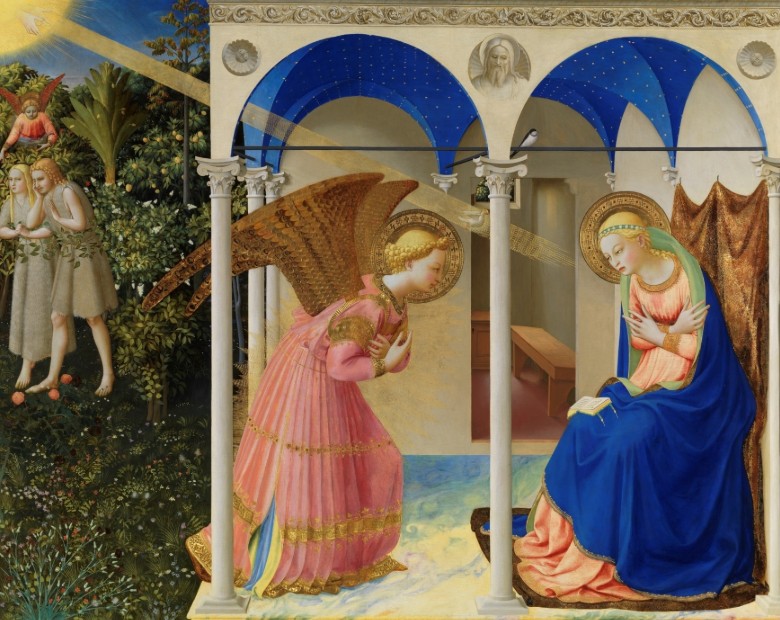
L’angelo e Maria si trovano sotto un elegante portico, scandito da colonne sottili e archi. Non assistiamo a una visione spettacolare, ma a un incontro composto, quasi sospeso nel tempo. Le ali dell’angelo, i colori delicati delle vesti e la struttura architettonica contribuiscono a creare un’atmosfera di straordinaria quiete.
Maria tiene il corpo raccolto e le mani incrociate sul petto. Il suo atteggiamento suggerisce ascolto e disponibilità, senza cancellare la dimensione umana dell’episodio.
Un altro particolare merita attenzione: sullo sfondo compare la cacciata di Adamo ed Eva dal Paradiso terrestre. Non è un’aggiunta casuale. La tradizione cristiana ha spesso messo in relazione Eva e Maria, contrapponendo alla disobbedienza della prima l’accoglienza della seconda. L’Annunciazione diventa così l’inizio simbolico di una storia di redenzione.
2. Simone Martini e Lippo Memmi, l’Annunciazione d’oro che sembra uscita da un mondo prezioso
Agli Uffizi di Firenze si conserva una delle Annunciazioni più raffinate del Trecento, realizzata nel 1333 da Simone Martini e Lippo Memmi per l’altare di Sant’Ansano nel Duomo di Siena.
Il fondo oro, le linee eleganti e i panneggi elaborati fanno di quest’opera uno degli esempi più straordinari del gotico internazionale alle sue origini.
L’angelo è appena arrivato: le sue ali sono ancora spiegate e il mantello sembra mosso dal movimento. Nella mano porta un ramo d’ulivo, simbolo di pace, mentre le parole del saluto sembrano raggiungere Maria attraverso la superficie dorata.
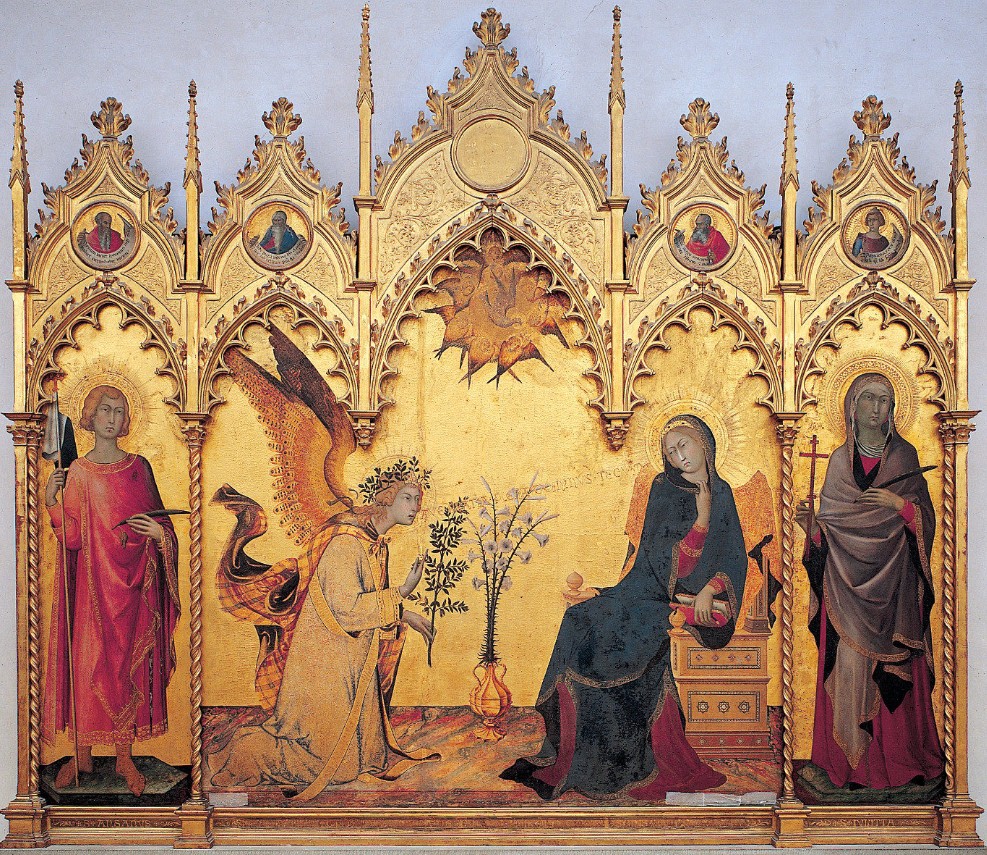
La Vergine, seduta su un trono, arretra leggermente e stringe il mantello attorno al corpo. Il suo gesto comunica sorpresa e una certa ritrosia, molto diversa dalla composta accoglienza che incontreremo in altre Annunciazioni.
Tra i due personaggi si trova un vaso con gigli bianchi, tradizionalmente associati alla purezza di Maria. L’oggetto non è un semplice ornamento: contribuisce a rendere leggibile il significato religioso della scena.
In questo dipinto tutto sembra prezioso, dal fondo dorato alle decorazioni minuziose ma ciò che colpisce maggiormente è la distanza emotiva tra l’angelo in movimento e Maria che sembra quasi voler prendere le distanze da ciò che sta ascoltando.
3. Leonardo da Vinci, Maria nel giardino e il mistero della luce
Nell’Annunciazione di Leonardo da Vinci, conservata agli Uffizi, la scena si svolge all’aperto, davanti a un edificio rinascimentale e in un giardino che sembra aprirsi verso un paesaggio lontano.
La scelta è significativa. Maria non è rappresentata in uno spazio astratto, ma all’interno di un ambiente costruito con attenzione alla prospettiva, alla natura e alla luce.
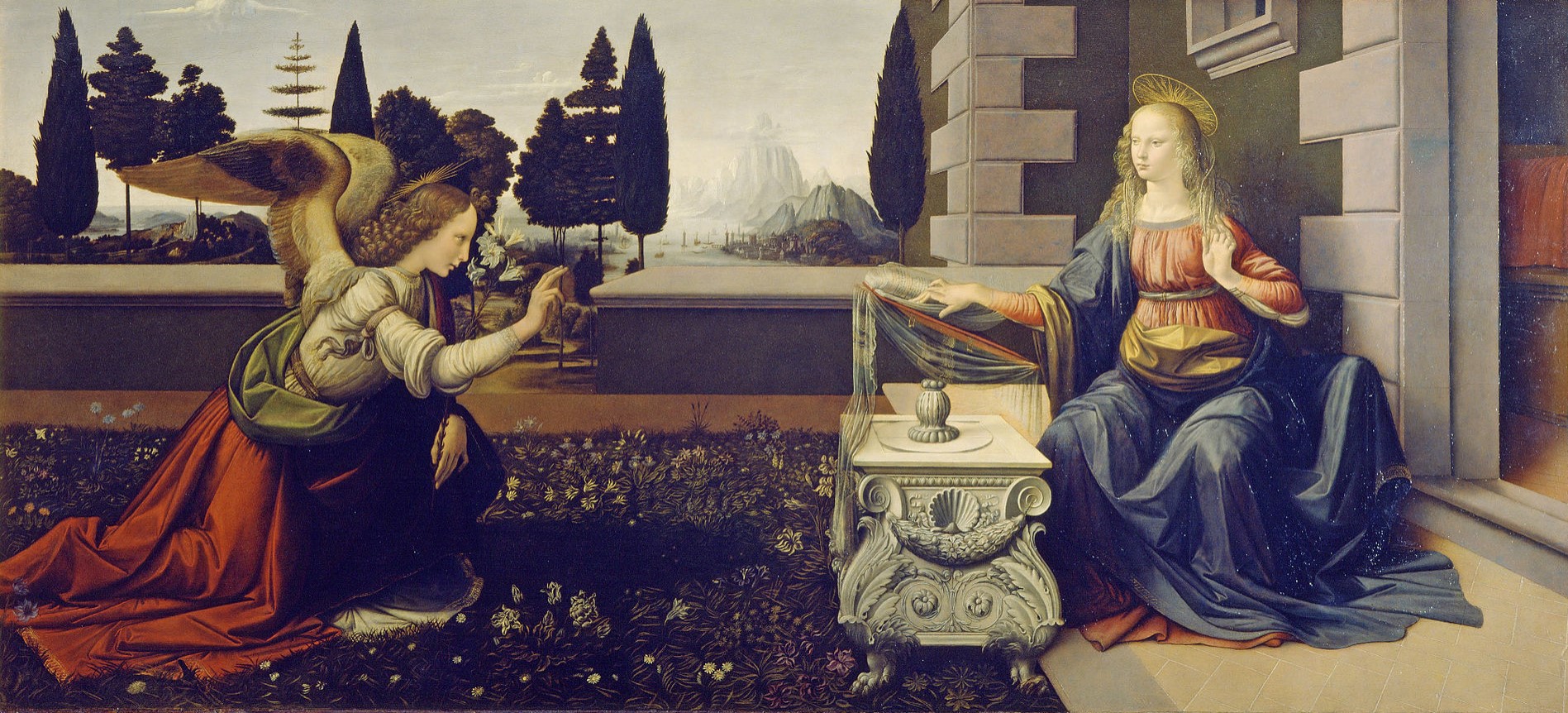
L’angelo si inginocchia davanti a lei e regge un giglio, mentre Maria è seduta accanto a un leggio sul quale si trova un libro. La lettura è un elemento ricorrente nelle rappresentazioni dell’Annunciazione: allude alla familiarità di Maria con le Scritture e alla sua vita raccolta prima dell’arrivo dell’angelo.
Il giardino, con le sue piante e gli alberi, non è soltanto uno sfondo piacevole. Nella tradizione cristiana può richiamare la purezza della Vergine e il tema del giardino chiuso, mentre la presenza della natura permette al pittore di mostrare la propria capacità di osservare il mondo.
La luce, i volumi e la profondità dello spazio trasformano l’episodio evangelico in una scena concreta, quasi possibile da incontrare durante una passeggiata.
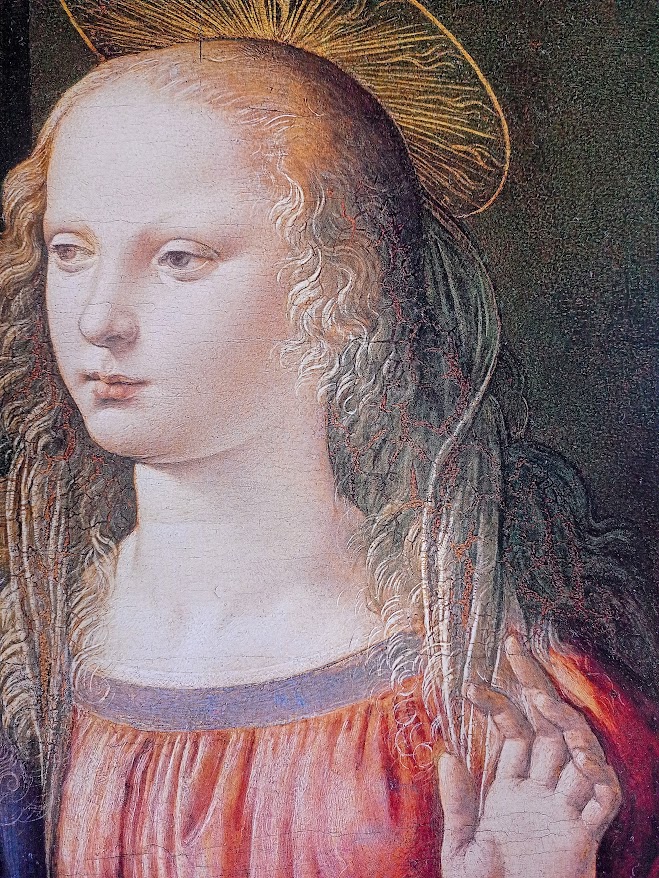
4. Sandro Botticelli, l’Annunciazione come incontro tra grazia e movimento
Sandro Botticelli affrontò più volte il tema dell’Annunciazione. Le sue diverse versioni mostrano quanto un soggetto apparentemente semplice potesse offrire occasioni per sperimentare gesti, linee e soluzioni compositive.
Nelle sue immagini, la figura dell’angelo si distingue spesso per la grazia del movimento, mentre Maria risponde con una postura che esprime insieme modestia, sorpresa e raccoglimento.
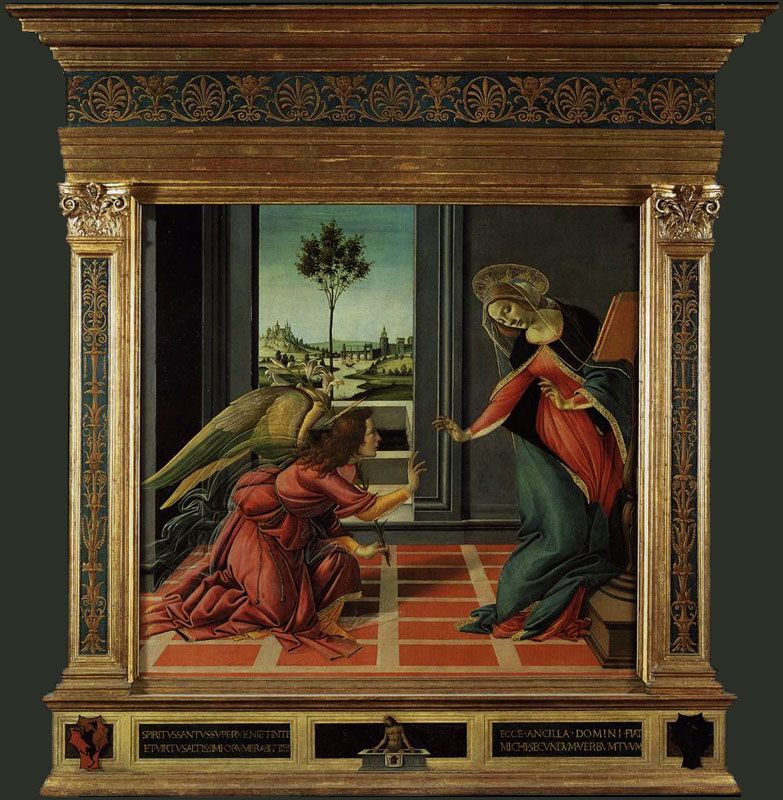
Il linguaggio di Botticelli è riconoscibile nella delicatezza dei profili, nelle mani affusolate e nella capacità di costruire una scena attraverso il ritmo delle linee. Anche quando l’architettura è rigorosa, i corpi sembrano seguire un movimento più emotivo che geometrico.
Il rapporto tra Gabriele e Maria è fondamentale: l’angelo si protende verso la Vergine, mentre lei sembra arretrare o inclinarsi in risposta al suo arrivo. Lo spazio tra i due diventa così il luogo in cui si concentra tutta la tensione narrativa.
Per comprendere queste opere è utile ricordare che, nel Rinascimento, la bellezza non era separata dal significato religioso. L’eleganza delle figure e l’armonia della composizione potevano essere strumenti per accompagnare lo spettatore verso la contemplazione.
5. Caravaggio, il chiaroscuro e il modo di rendere visibile il sacro
Con Caravaggio, il sacro entra in una dimensione più fisica e immediata. La sua Annunciazione, conservata al Musée des Beaux-Arts di Nancy, utilizza il contrasto tra luce e ombra per concentrare l’attenzione sulle figure e sui loro gesti.
L’angelo occupa la parte superiore della composizione, mentre Maria è rappresentata più in basso, in una posizione raccolta. Il movimento dell’angelo e il gesto della Vergine costruiscono una scena essenziale, lontana dalla ricchezza decorativa delle Annunciazioni tardomedievali.
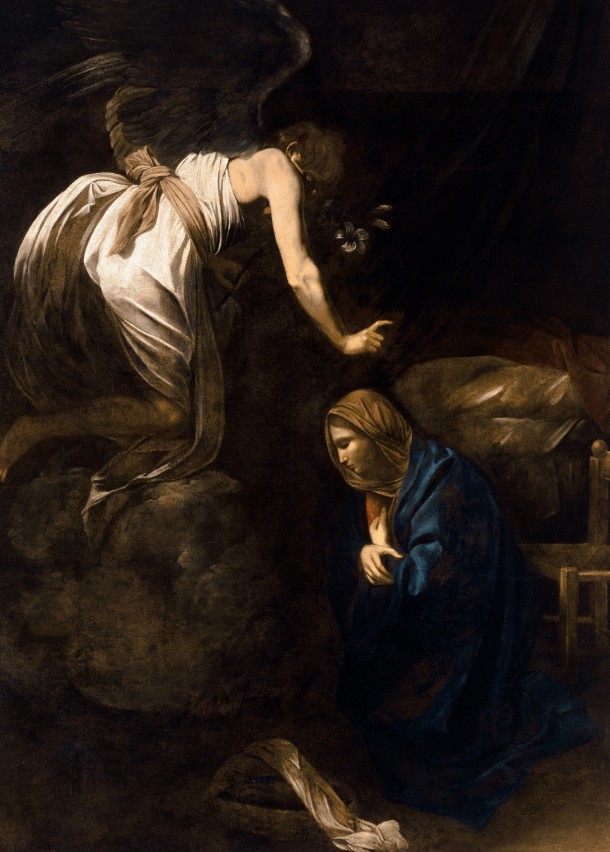
La luce non si limita a illuminare gli oggetti: guida lo sguardo e contribuisce a dare alla scena una forte intensità. La presenza divina non è affidata a un ambiente scintillante, ma alla relazione tra i corpi, alla disposizione delle figure e al contrasto luminoso.
È una maniera diversa di affrontare lo stesso episodio evangelico. Se nelle opere medievali il fondo oro poteva suggerire una dimensione fuori dal tempo, qui il dramma sacro sembra avvicinarsi allo spettatore attraverso una presenza concreta e un’atmosfera raccolta.
I simboli dell’Annunciazione: come riconoscerli nei dipinti
Una volta conosciuti i capolavori, vale la pena tornare davanti alle immagini e osservare ciò che spesso passa inosservato. Nell’iconografia cristiana, infatti, gli oggetti e i gesti hanno spesso un significato preciso.
Il giglio bianco è uno dei simboli più riconoscibili. Associato alla purezza e alla verginità di Maria, compare frequentemente nella mano dell’angelo o all’interno di un vaso.
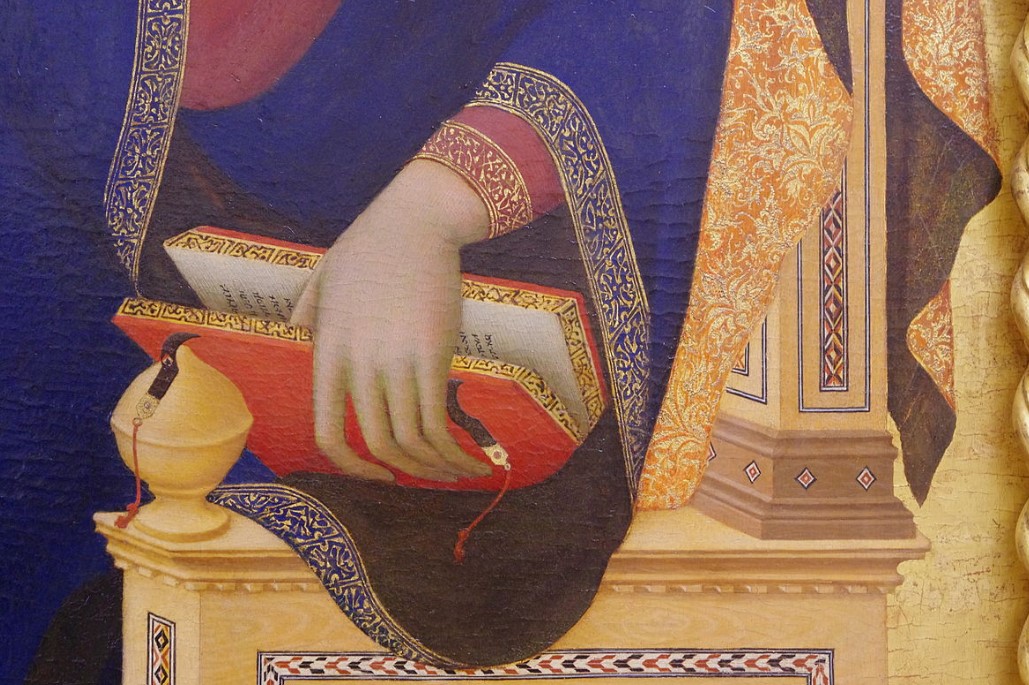
Il libro aperto o il leggio rimandano alla lettura e alla meditazione sulle Scritture. Maria può essere raffigurata mentre legge quando Gabriele interrompe la sua attività.
La colomba rappresenta lo Spirito Santo. In alcune opere appare in volo, spesso accompagnata da raggi luminosi che indicano la discesa della grazia divina.
Il portico e la stanza definiscono lo spazio dell’incontro. La casa di Maria rende l’evento vicino alla vita quotidiana, mentre le architetture monumentali possono suggerire ordine, solennità e dimensione spirituale.
Il gesto delle mani è altrettanto importante. Maria può incrociarle sul petto, sollevarle in segno di sorpresa oppure portarle verso il corpo in un movimento di raccoglimento. L’angelo, invece, può indicare il cielo, porgere un ramo o protendersi verso la Vergine.
Non tutte queste immagini compaiono in ogni dipinto, e il loro significato può cambiare in base all’epoca e all’artista. È proprio questo a rendere interessante il confronto: un medesimo simbolo può essere inserito in composizioni molto diverse e contribuire a raccontare sfumature differenti dell’episodio.
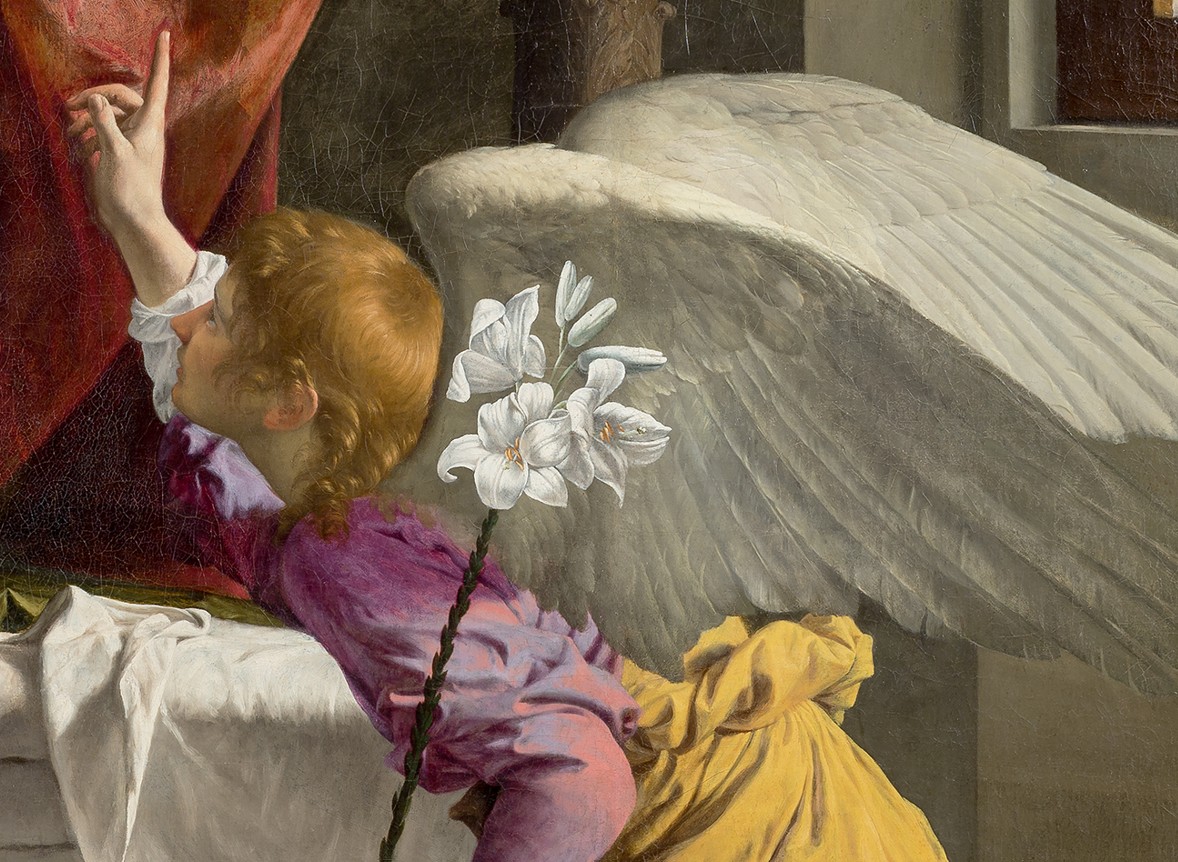
Dall’Annunciazione al Natale: un viaggio nella storia dell’arte
Guardare le Annunciazioni di Beato Angelico, Simone Martini, Leonardo, Botticelli e Caravaggio significa attraversare secoli di storia dell’arte senza abbandonare lo stesso episodio.
Nel Trecento, l’oro e l’eleganza delle figure potevano trasformare l’evento in una visione preziosa e solenne. Nel Quattrocento, lo spazio prospettico e l’osservazione della natura offrivano nuove possibilità per avvicinare il sacro alla realtà. Con il linguaggio più drammatico del Seicento, la luce e l’ombra diventavano strumenti per coinvolgere lo spettatore in modo diretto.
Ogni pittore ha trovato la propria risposta, ma nessuno ha potuto eliminare il nucleo essenziale della scena: un annuncio, una risposta e l’inizio di una storia destinata a essere raccontata per secoli.
E forse è proprio questo il motivo per cui l’Annunciazione continua ad attirare il nostro sguardo. Nonostante le differenze di stile, di colore e di composizione, davanti a questi dipinti ritroviamo un momento di attesa, un incontro inatteso e una decisione che cambia tutto.
Prima del Natale, prima del Bambino e della mangiatoia, c’è una stanza, un giardino o un portico. E c’è Maria, che ascolta.
È da qui che comincia la storia di Natale.
Per il momento il sempre vostro Michelangelo Buonarroti vi saluta dandovi appuntamento ai prossimi post e sui social.

Before the Infant Jesus comes the Annunciation: paintings that tell the beginning of the Christmas story
When we think of Christmas, the first image that comes to mind is often that of the Infant Jesus in the manger, with Mary and Joseph by his side, the ox and the donkey, the shepherds, and perhaps a bright star above the stable. Yet, in the story recounted by the Gospels, there is a scene that precedes all these images.
It is the Annunciation—the moment when the Archangel Gabriel appears to Mary to announce that she will become the mother of Jesus.
It involves a young woman receiving extraordinary news, and an encounter destined to become one of the most frequently depicted subjects in the history of art.
Painters from different eras have imagined this scene in profoundly varied ways. Some chose intimate, quiet settings, while others filled their compositions with gold, monumental architecture, and exquisite details. In some paintings, Mary appears surprised; in others, she seems already to grasp the significance of what is unfolding.
How can one capture, in a single image, a moment that alters the course of Christian history?
What does the Annunciation tell us?
The account of the Annunciation is found in the Gospel according to Luke, chapter 1, verses 26–38. The Archangel Gabriel is sent by God to Nazareth, in Galilee, to visit Mary—a young woman betrothed to Joseph.
The angel’s greeting has become one of the most recognizable phrases in the Christian tradition: “Rejoice, full of grace.” Gabriel announces that she will conceive a son, who will be named Jesus and recognized as the Son of the Most High.
Mary asks how this can come to pass, given that she is not yet married. The angel explains that the Holy Spirit will descend upon her. Ultimately, Mary responds to the announcement with words that have inspired centuries of painting, sculpture, music, and devotion: she declares herself the servant of the Lord and accepts what has been announced to her.
The Annunciation speaks of a moment of acceptance, trust, and the mystery of the Incarnation.
For artists, depicting this scene meant giving visible form to something invisible. How could they show the arrival of the divine within an everyday setting? How could they make the weight of those words palpable, without turning Mary into a figure detached from human reality?
The Most Famous Paintings of the Annunciation: Five Masterpieces to Rediscover
- Fra Angelico: The Annunciation Where Silence Takes Center Stage
Fra Angelico is one of the first names that comes to mind when discussing the Annunciation. His celebrated version, housed at the Prado Museum in Madrid and created in the 15th century, presents an intimate, luminous scene in which every gesture appears measured and deliberate.
The angel and Mary are positioned beneath an elegant portico, defined by slender columns and arches. We do not witness a spectacular vision, but rather a composed encounter—one that seems suspended in time. The angel’s wings, the delicate colors of the garments, and the architectural structure all contribute to an atmosphere of extraordinary stillness.
Mary’s posture is reserved, her hands crossed over her chest. Her demeanor suggests a spirit of listening and receptivity, without ever diminishing the human dimension of the event.
Another detail warrants attention: in the background, the expulsion of Adam and Eve from the Garden of Eden is depicted. This is no random addition; Christian tradition has long drawn a parallel between Eve and Mary, contrasting the former’s disobedience with the latter’s acceptance. Thus, the Annunciation becomes the symbolic beginning of a story of redemption.
- Simone Martini and Lippo Memmi: A Golden Annunciation from an Exquisite World
Housed in the Uffizi Gallery in Florence is one of the most refined Annunciations of the 14th century, created in 1333 by Simone Martini and Lippo Memmi for the altar of Sant’Ansano in the Siena Cathedral.
With its gold-leaf background, elegant lines, and elaborate drapery, this work stands as one of the most remarkable examples of the International Gothic style in its early stages. The angel has just arrived: his wings are still spread, and his cloak appears to be stirred by the movement. In his hand, he carries an olive branch—a symbol of peace—while the words of his greeting seem to reach Mary across the golden surface.
The Virgin, seated on a throne, draws back slightly and pulls her mantle around her body. Her gesture conveys surprise and a certain reticence—a marked contrast to the composed receptiveness seen in other depictions of the Annunciation.
Between the two figures stands a vase of white lilies, traditionally associated with the purity of Mary. This object is more than a mere ornament; it helps clarify the religious significance of the scene.
Everything in this painting appears precious—from the gilded background to the intricate, detailed decorations—but what is most striking is the emotional distance between the approaching angel and Mary, who seems almost to recoil from what she is hearing.
- Leonardo da Vinci, Mary in the Garden, and the Mystery of Light
In Leonardo da Vinci’s Annunciation, housed in the Uffizi, the scene unfolds outdoors—in front of a Renaissance-style building and within a garden that seems to open up toward a distant landscape.
This choice is significant. Mary is not portrayed in an abstract space, but rather within a setting constructed with careful attention to perspective, the natural world, and light.
The angel kneels before her, holding a lily, while Mary sits beside a lectern upon which a book rests. Reading is a recurring element in depictions of the Annunciation; it alludes to Mary’s familiarity with the Scriptures and her life of quiet contemplation prior to the angel’s arrival.
The garden, with its plants and trees, is more than just a pleasant backdrop. In the Christian tradition, it may evoke the purity of the Virgin and the theme of the “enclosed garden” (hortus conclusus), while the presence of nature also allows the painter to demonstrate his capacity for observing the world.
The light, the volumes, and the depth of the space transform the Gospel episode into a tangible scene—one that might almost be encountered while out for a walk.
- Sandro Botticelli: The Annunciation as an Encounter Between Grace and Movement
Sandro Botticelli addressed the theme of the Annunciation on several occasions. His various versions demonstrate how an ostensibly simple subject could provide opportunities to experiment with gestures, lines, and compositional solutions.
In his depictions, the figure of the angel is often distinguished by the grace of his movement, while Mary responds with a posture that conveys a blend of modesty, surprise, and inward reflection.
Botticelli’s artistic language is recognizable in the delicacy of his profiles, his slender, tapering hands, and his ability to construct a scene through the rhythm of lines. Even when the architecture is rigorous, the figures seem to follow a movement that is more emotional than geometric.
The relationship between Gabriel and Mary is fundamental: the angel leans toward the Virgin, while she appears to draw back or incline away in response to his arrival. The space between them thus becomes the focal point for all the narrative tension.
To understand these works, it is helpful to remember that, during the Renaissance, beauty was not separate from religious meaning. The elegance of the figures and the harmony of the composition served as tools to guide the viewer toward contemplation.
- Caravaggio, chiaroscuro, and the way of making the sacred visible
With Caravaggio, the sacred enters a more physical and immediate dimension. His Annunciation—housed at the Musée des Beaux-Arts in Nancy—employs a contrast between light and shadow to focus attention on the figures and their gestures.
The angel occupies the upper portion of the composition, while Mary is depicted lower down, in a composed, withdrawn posture. The movement of the angel and the gesture of the Virgin create an essential, stripped-back scene—far removed from the decorative richness found in late-medieval Annunciation paintings.
Botticelli’s artistic language is recognizable in the delicacy of his profiles, his slender, tapering hands, and his ability to construct a scene through the rhythm of lines. Even when the architecture is rigorous, the figures seem to follow a movement that is more emotional than geometric.
The relationship between Gabriel and Mary is fundamental: the angel leans toward the Virgin, while she appears to draw back or incline away in response to his arrival. The space between them thus becomes the focal point for all the narrative tension.
To understand these works, it is helpful to remember that, during the Renaissance, beauty was not separate from religious meaning. The elegance of the figures and the harmony of the composition served as tools to guide the viewer toward contemplation.
- Caravaggio, chiaroscuro, and the way of making the sacred visible
With Caravaggio, the sacred enters a more physical and immediate dimension. His Annunciation—housed at the Musée des Beaux-Arts in Nancy—uses the contrast between light and shadow to focus attention on the figures and their gestures.
The angel occupies the upper part of the composition, while Mary is depicted lower down, in a composed, withdrawn posture. The movement of the angel and the gesture of the Virgin create an essential, stripped-back scene—far removed from the decorative richness found in late-medieval Annunciation paintings.
Light does more than simply illuminate objects; it directs the viewer’s gaze and imbues the scene with intense power. The divine presence is not conveyed through a glittering setting, but rather through the interplay between the bodies, the arrangement of the figures, and the contrast of light and shadow.
It is a different approach to the same Gospel episode. While the gold backgrounds of medieval works might suggest a realm beyond time, here the sacred drama draws closer to the viewer through a tangible, concrete presence and an intimate, hushed atmosphere.
Symbols of the Annunciation: how to Recognize Them in Paintings
Once you are familiar with these masterpieces, it is worth returning to the images to observe details that often go unnoticed. In Christian iconography, objects and gestures frequently carry a specific meaning.
The white lily is one of the most recognizable symbols. Associated with the purity and virginity of Mary, it often appears in the angel’s hand or placed within a vase.
An open book or a lectern alludes to the reading of and meditation upon the Scriptures. Mary is sometimes depicted in the act of reading when Gabriel interrupts her.
The dove represents the Holy Spirit. In some works, it appears in flight, often accompanied by rays of light that signify the descent of divine grace.
The portico and the room define the space where the encounter takes place. Mary’s home brings the event closer to everyday life, while monumental architectural elements can evoke a sense of order, solemnity, and spiritual dimension.
The gestures of the figures are equally significant. Mary might cross her hands over her chest, raise them in surprise, or draw them toward her body in a gesture of inward reflection. The angel, meanwhile, might point toward the heavens, offer a branch, or reach out toward the Virgin.
Not all of these elements appear in every painting, and their meaning can shift depending on the era and the artist. This is precisely what makes comparing them so compelling: the same symbol can be incorporated into vastly different compositions, helping to convey distinct nuances of the episode.
From the Annunciation to the Nativity: A Journey Through Art History
To examine the Annunciations by Fra Angelico, Simone Martini, Leonardo, Botticelli, and Caravaggio is to traverse centuries of art history while remaining focused on the very same episode.
In the 14th century, the use of gold and the elegance of the figures could transform the event into a precious, solemn vision. By the 15th century, the application of perspective and the observation of nature offered new ways to bring the sacred into the realm of reality. In the more dramatic language of the 17th century, light and shadow became tools to engage the viewer directly.
Each painter found his own unique response, yet none could—or would—remove the essential core of the scene: an announcement, a response, and the beginning of a story destined to be told for centuries to come. And perhaps this is precisely why the Annunciation continues to draw our gaze. Despite differences in style, color, and composition, in these paintings we encounter a moment of anticipation, an unexpected meeting, and a decision that changes everything.
Before Christmas—before the Child and the manger—there is a room, a garden, or a portico. And there is Mary, listening.
This is where the Christmas story begins.
For now, yours truly, Michelangelo Buonarroti, bids you farewell—until the next posts and over on social media.
Sostienici – Support Us
Se questo blog ti piace e ti appassiona, puoi aiutarci a farlo crescere sempre più sostenendoci in modo concreto condividendo i post, seguendo le pagine social e con un contributo che ci aiuta ad andare avanti con il nostro lavoro di divulgazione. . ENGLISH: If you like and are passionate about this blog, you can help us make it grow more and more by supporting us in a concrete way by sharing posts, following social pages and with a contribution that helps us to move forward with our dissemination work.
10,00 €

Condividi:


Questo sono io



sostienici

Sostienici - Support Us
Se questo blog ti piace e ti appassiona, puoi aiutarci a farlo crescere sempre più sostenendoci in modo concreto condividendo i post, seguendo le pagine social e con un contributo che ci aiuta ad andare avanti con il nostro lavoro di divulgazione. . ENGLISH: If you like and are passionate about this blog, you can help us make it grow more and more by supporting us in a concrete way by sharing posts, following social pages and with a contribution that helps us to move forward with our dissemination work.
€10,00


