
La Baccante stanca di Dupré: la bellezza sensuale di una donna dopo la danza
Alla 34ª BIAF la raffinata scultura di Giovanni Dupré racconta l’istante sospeso dopo la danza: una giovane baccante, ancora immersa nell’ebbrezza dionisiaca, si abbandona alla stanchezza. Il marmo di Carrara diventa così materia di sensualità, bellezza e vanitas.
La musica è appena finita, la danza si è fermata e ciò che rimane è una sensazione di ebbrezza ancora sospesa nell’aria.
È proprio quell’istante che Giovanni Dupré riesce a fermare nel marmo con la sua straordinaria Baccante stanca, una delle opere che più hanno attirato la mia attenzione alla 34ª Biennale Internazionale dell’Antiquariato di Firenze.
E non è un caso che proprio questa scultura sia stata insignita quest’anno del Premio per la Scultura della BIAF, assegnato alla Galleria Gomiero di Montegrotto Terme, dove l’opera è presentata.
Una giovane donna colta subito dopo la danza
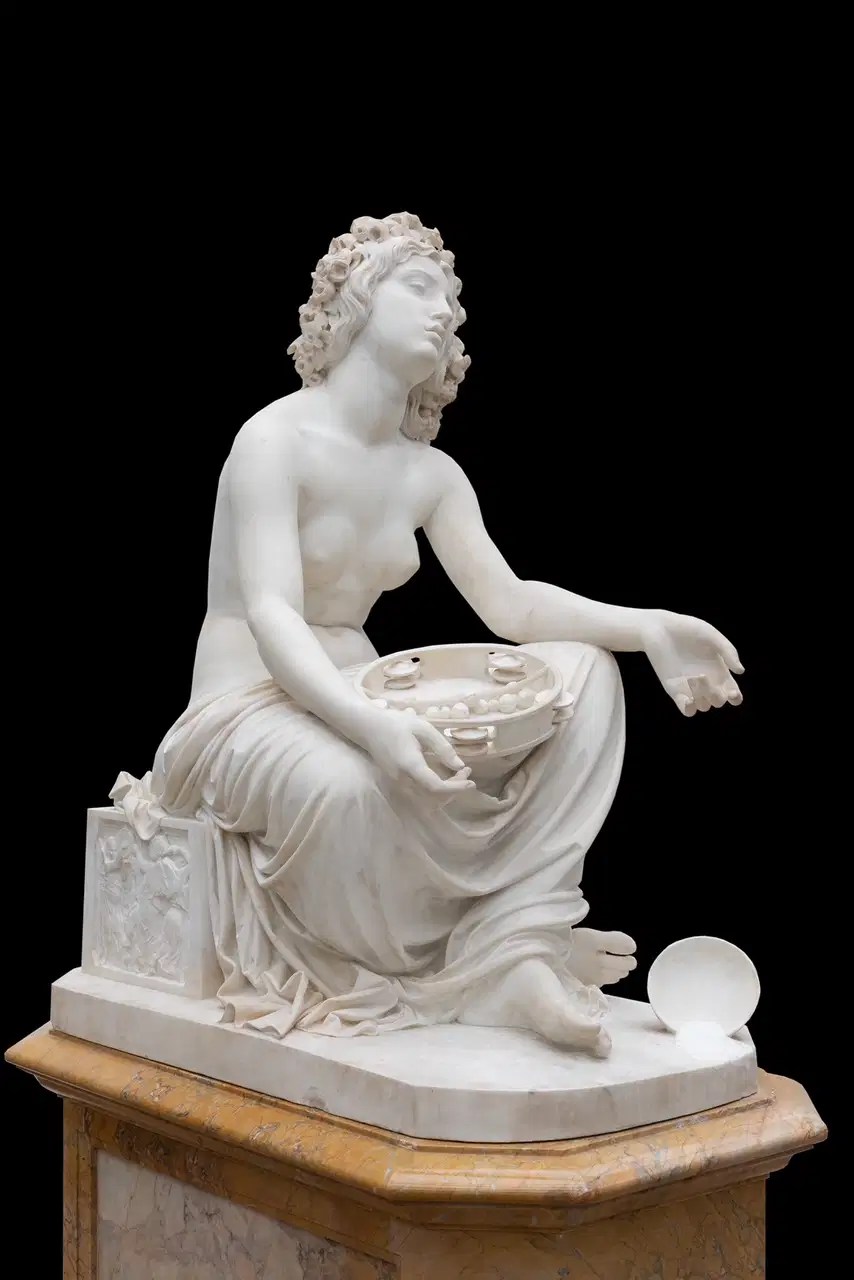
La baccante è seduta, il corpo ancora attraversato dall’energia della festa ma ormai vinto dalla stanchezza.
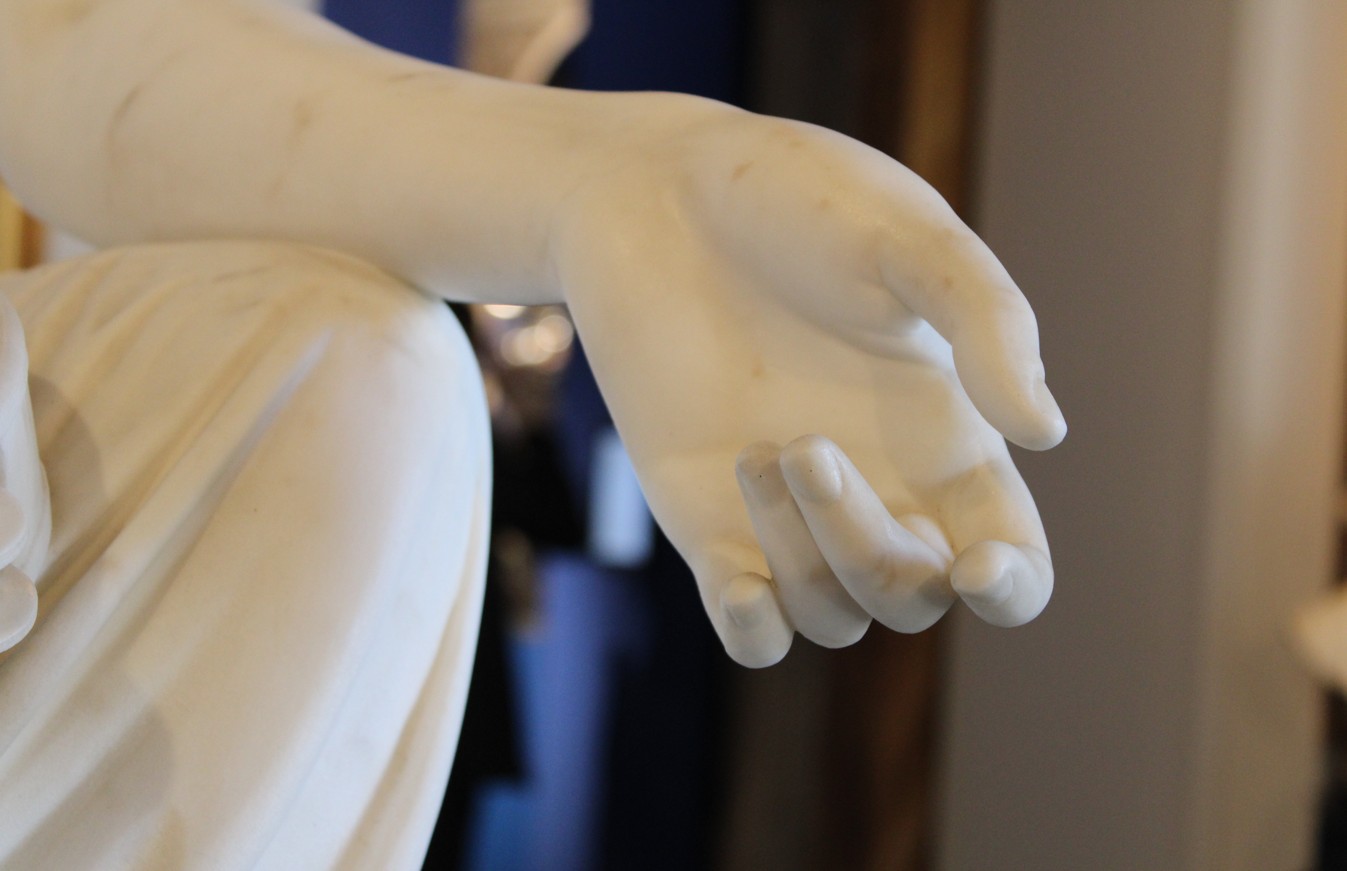
Il suo atteggiamento non è quello di una figura trionfante. Sembra quasi sorpresa dalla propria stessa stanchezza. Il busto si inclina delicatamente, la testa ricade verso una spalla e le braccia si allungano con una morbidezza che restituisce tutta la naturalezza dell’abbandono.
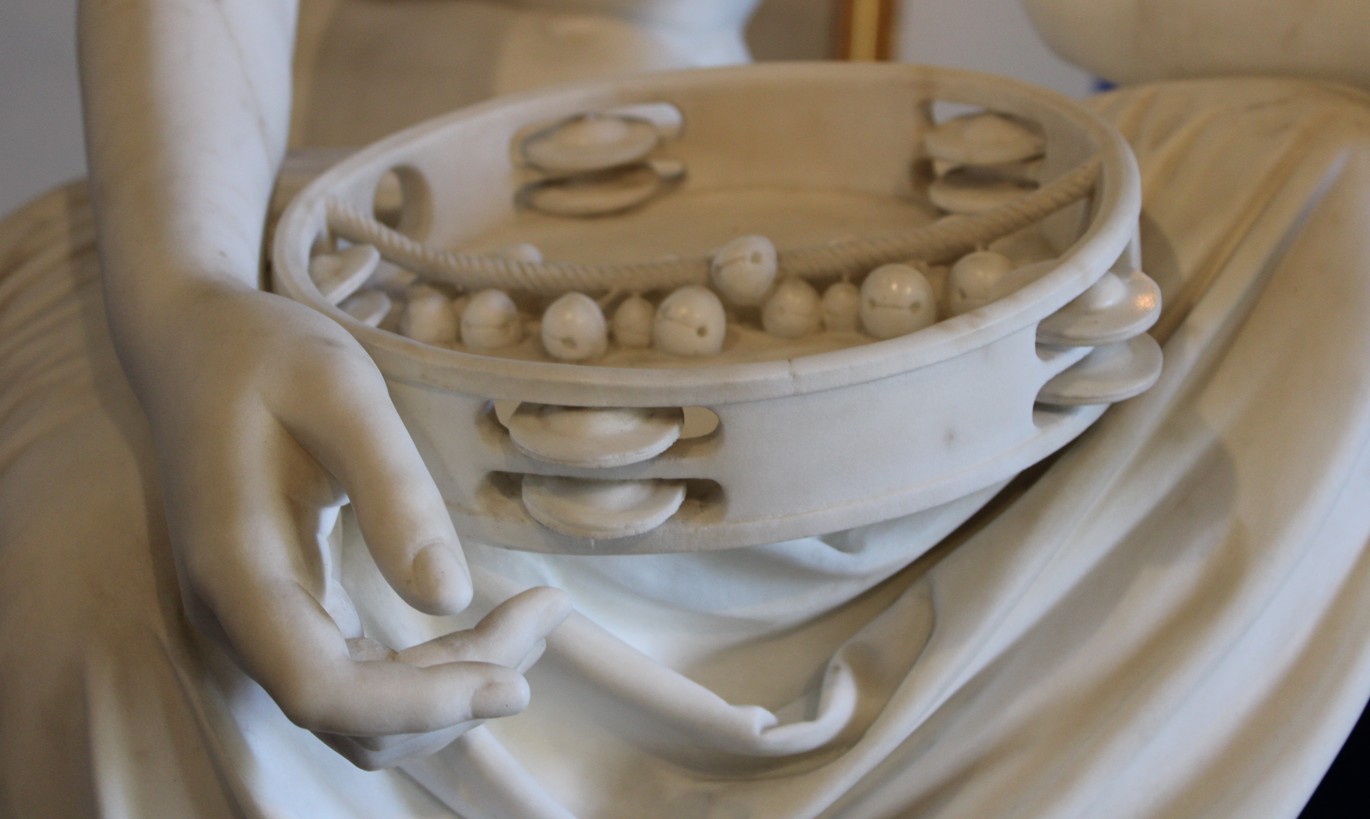
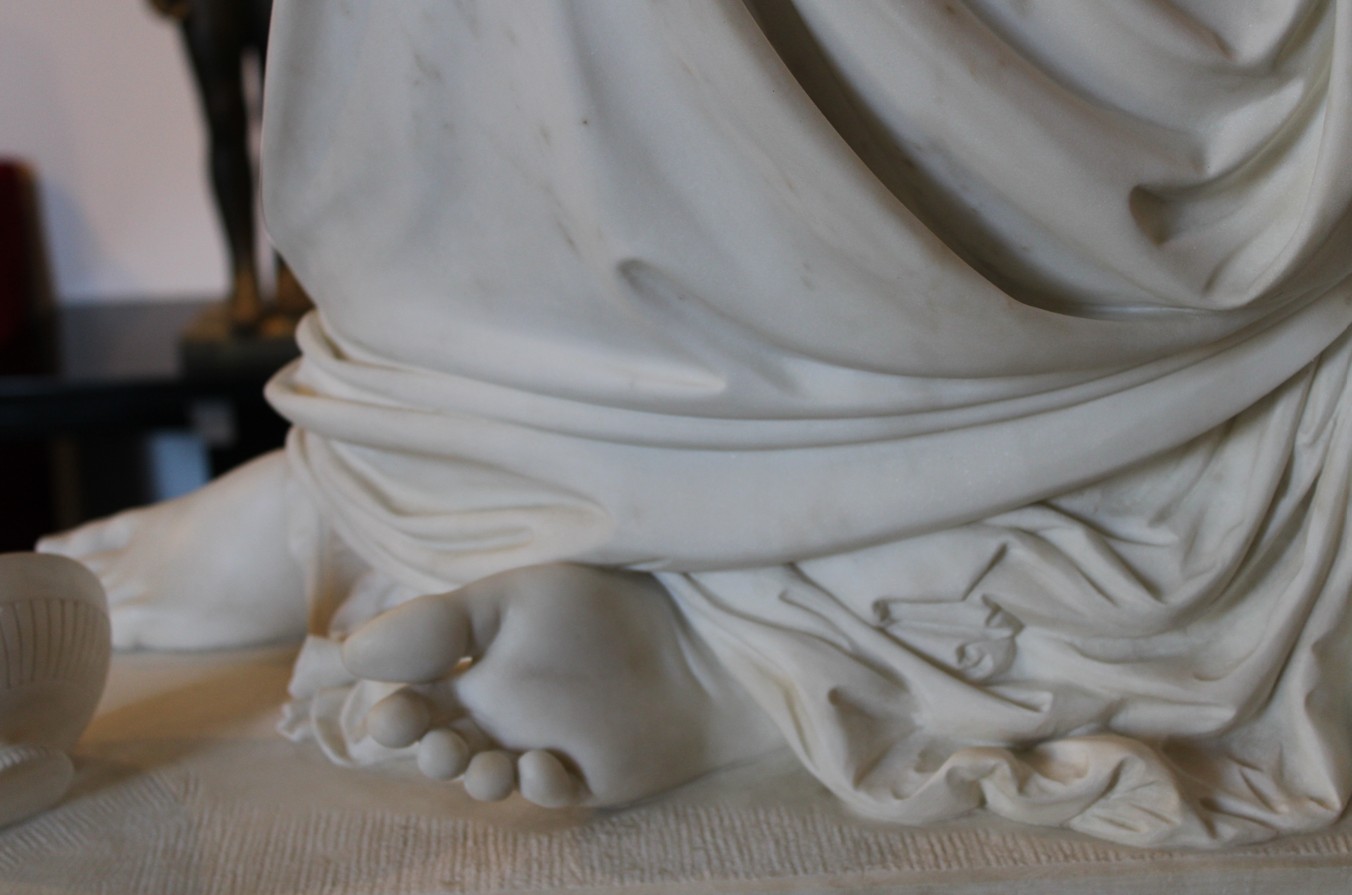
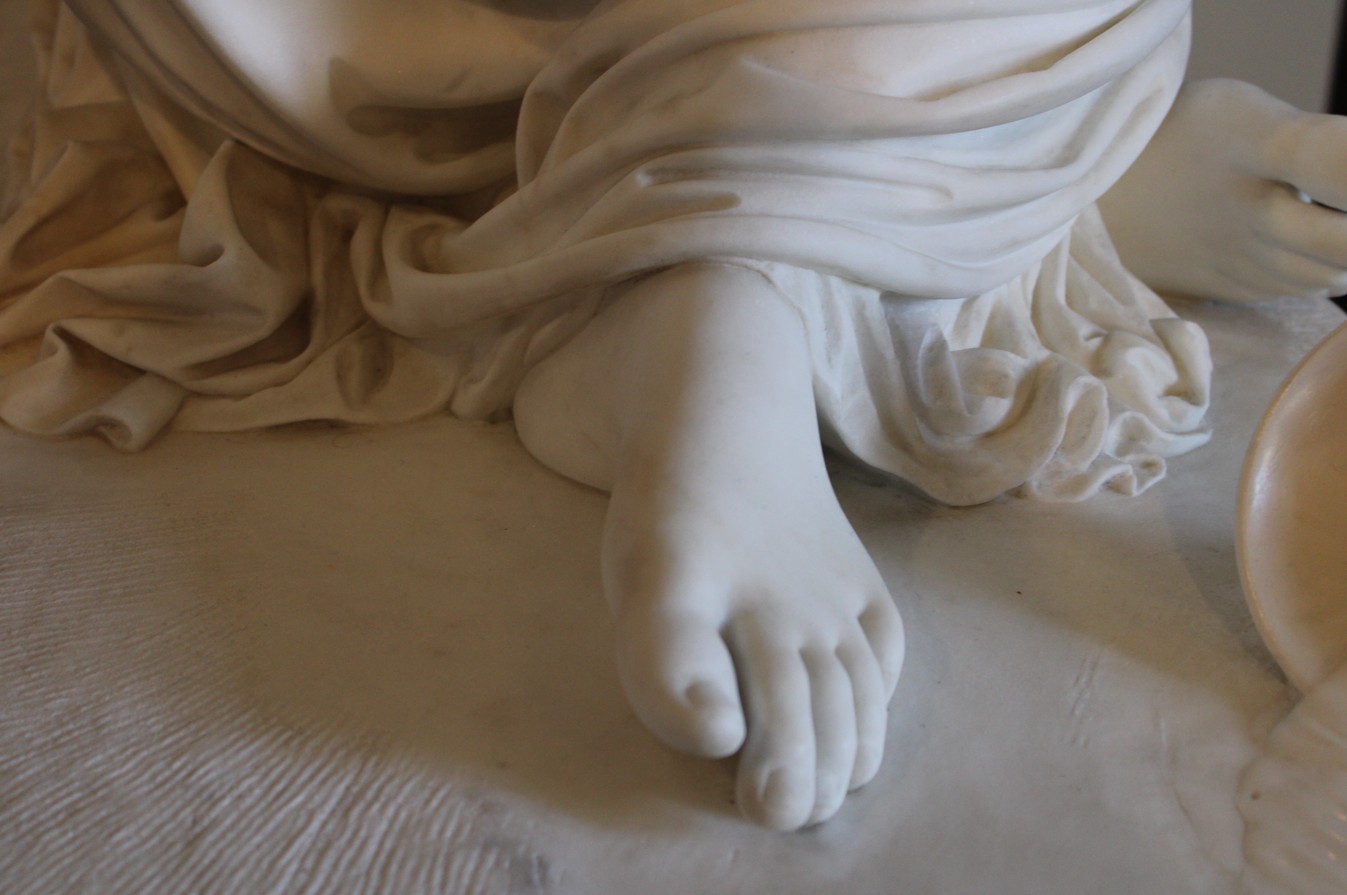
Tra le mani tiene il vaso legato al rito bacchico, mentre sulla destra, accanto ai piedi, compare una sfera. Sono dettagli che contribuiscono a costruire una scena sospesa fra il mondo mitologico e una rappresentazione estremamente umana del piacere.
Il candore del marmo di Carrara sembra quasi trasformare la pelle della giovane in qualcosa di immateriale: tutto appare fluido, morbido, sensuale.
Tutta questa bellezza è anche vanitas.
Le rose tra i capelli e la bellezza che passa
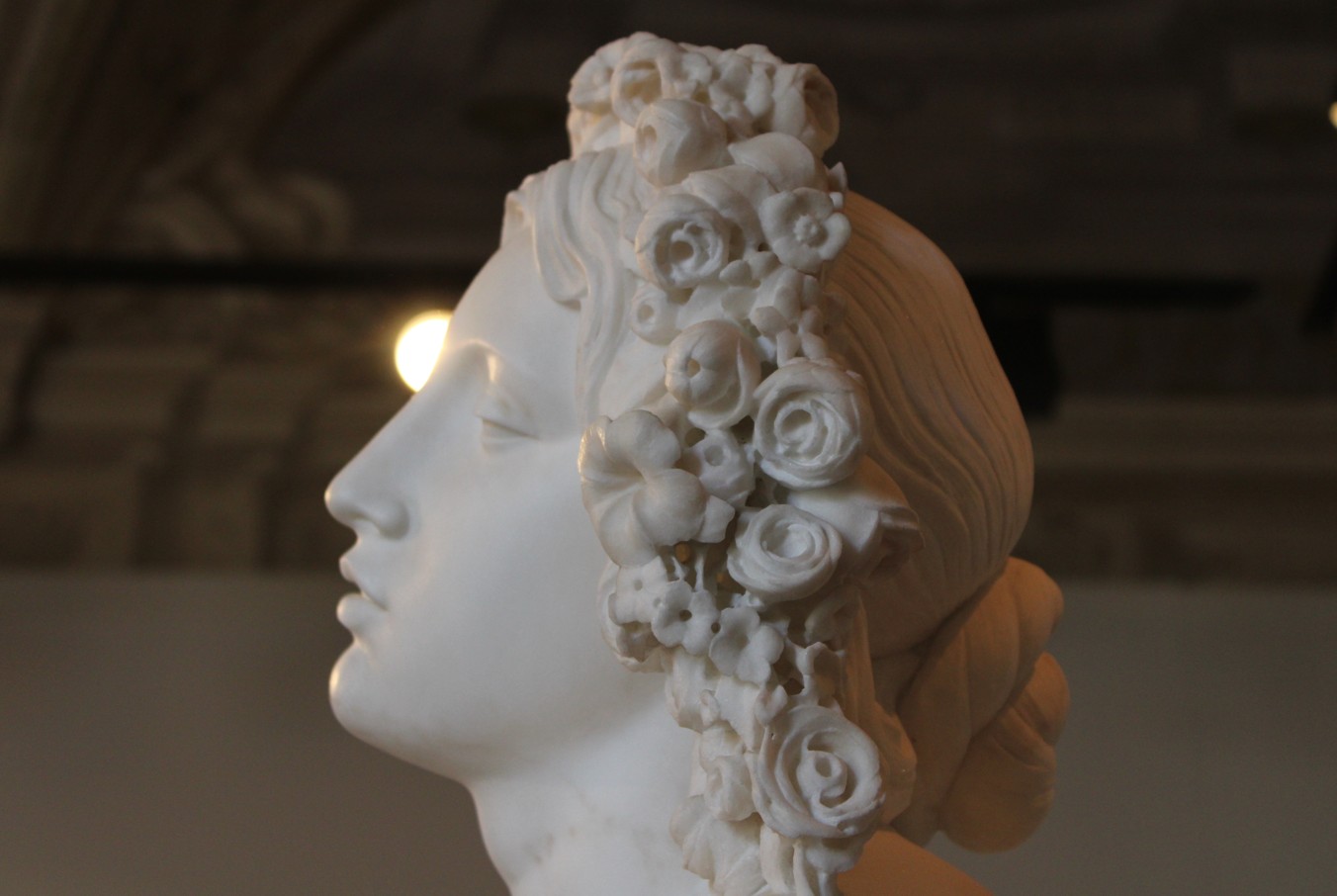
Guardando il capo della giovane si nota la splendida corona di fiori che raccoglie la capigliatura.
Fra i capelli compaiono le roselline, che possono essere lette anche come simbolo della caducità della bellezza: il fiore è bellissimo proprio perché destinato ad appassire.
Dupré mette insieme piacere, sensualità, bellezza e caducità. La festa è finita. Il vino è stato bevuto. La danza si è conclusa. Rimane il corpo, bellissimo e stanco, e rimane il tempo che inevitabilmente passa.
Dupré e il suo periodo “neo-greco”
La Baccante stanca rappresenta il culmine della fase cosiddetta “neo-greca” di Giovanni Dupré, sviluppata intorno alla metà degli anni Cinquanta dell’Ottocento.
Fondamentale fu per lo scultore il viaggio a Napoli del 1853, durante il quale ebbe modo di confrontarsi direttamente con la statuaria antica e con le testimonianze della cultura classica.
Dupré prende la lezione della scultura antica e la trasforma in un linguaggio moderno, sensuale e internazionale. La baccante appartiene al mito, ma il suo atteggiamento è quello di una donna reale.
Il “lusso pagano” nel marmo di Carrara
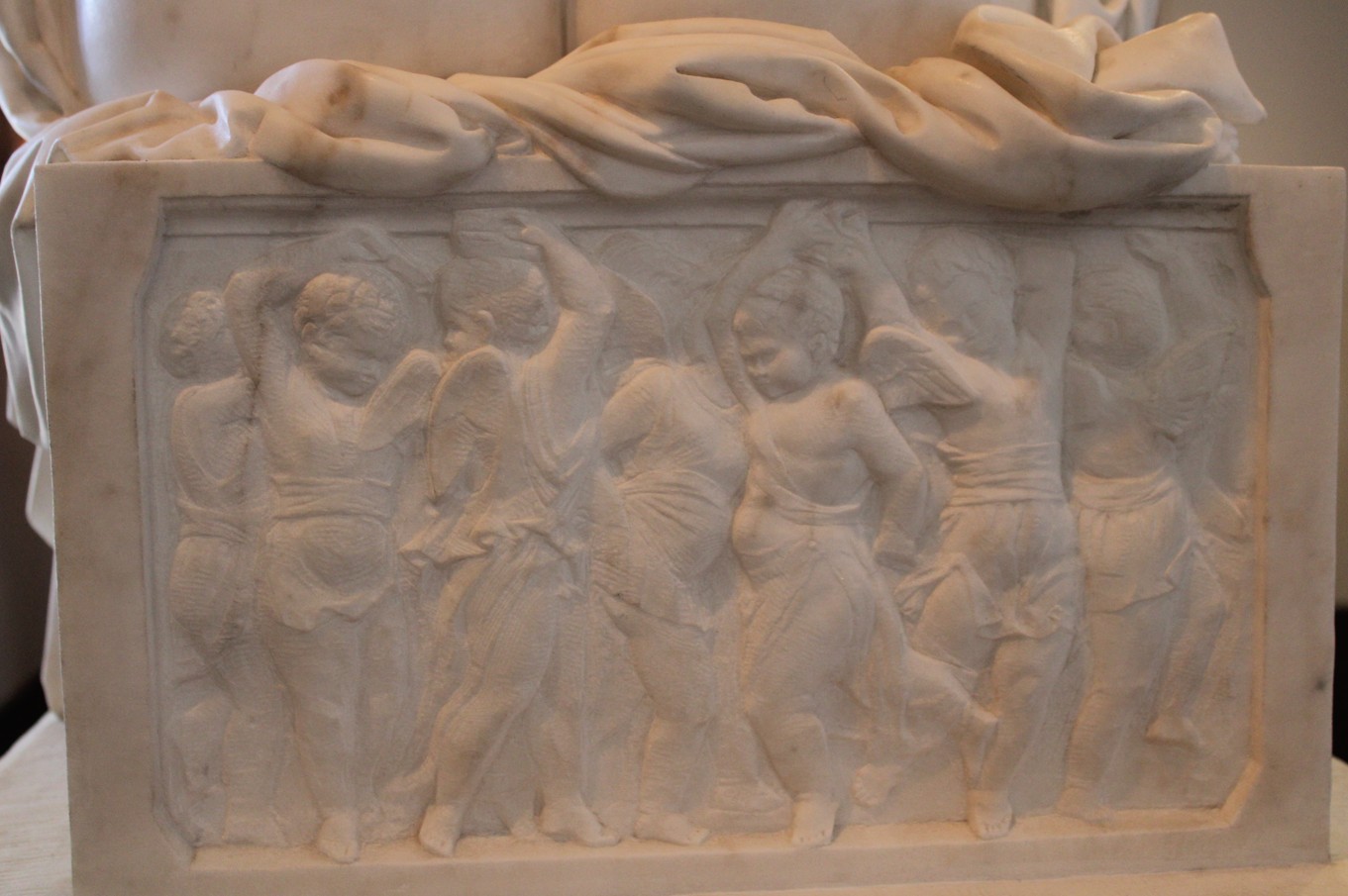
Il bianco luminoso della figura emerge dal tono caldo del basamento in Giallo di Siena, creando un effetto prezioso. È una scelta che richiama quella dimensione di “lusso pagano” che Dupré stesso evocava nelle sue lettere al pittore Antonio Ciseri.
La scena diventa così una celebrazione dei sensi, ma senza perdere quella sottile inquietudine che accompagna ogni rappresentazione della bellezza destinata a finire.
Una scultura nata per un re
La storia dell’opera è affascinante. Dupré realizzò almeno cinque versioni della Baccante stanca, destinate a importanti collezionisti e raccolte internazionali, tra cui Manchester, Londra, San Pietroburgo e l’America.
Questa versione, proveniente dagli eredi Ciseri, è riconducibile a quella eseguita su commissione diretta del re del Portogallo. La scultura, tuttavia, non fu più consegnata a causa di una particolare venatura obliqua presente nel marmo.
E’ curioso pensare che proprio quella caratteristica della pietra, che avrebbe potuto rappresentare un difetto, abbia finito per lasciare questa versione nella storia dell’opera.
La quiete. Il corpo. Il tempo. E la consapevolezza, tutta umana, che persino la bellezza più perfetta è destinata a passare.
L’opera è al momento esposta alla Biaf, allo stand della Galleria Gomiero di Montegrotto Terme.
Per il momento il sempre vostro Michelangelo Buonarroti vi saluta dandovi appuntamento ai prossimi post e sui social.
Dupré’s Weary Bacchante: the sensual beauty of a woman after the dance
At the 34th BIAF, Giovanni Dupré’s exquisite sculpture captures the suspended moment following the dance: a young Bacchante, still immersed in Dionysian intoxication, surrenders to exhaustion. Carrara marble thus becomes a medium for sensuality, beauty, and vanitas.
The music has just ended, the dancing has stopped, and what remains is a lingering sense of intoxication hanging in the air.
It is precisely this moment that Giovanni Dupré captures in marble with his extraordinary Weary Bacchante—one of the works that most captivated me at the 34th Florence International Antiques Fair (BIAF).
It is no coincidence that this very sculpture was awarded the BIAF Sculpture Prize this year, presented to the Gomiero Gallery of Montegrotto Terme, where the piece is on display.
A young woman captured just after the dance
The Bacchante is seated; her body still pulses with the energy of the revelry, yet it has succumbed to fatigue.
Her posture is not that of a triumphant figure. She seems almost surprised by her own exhaustion. Her torso leans gently, her head falls toward one shoulder, and her arms extend with a softness that perfectly conveys the natural ease of her surrender.
She holds a vessel associated with the Bacchic rite in her hands, while a sphere appears on the right, beside her feet. These details help create a scene suspended between the mythological realm and a deeply human portrayal of pleasure.
The whiteness of the Carrara marble seems almost to transform the young woman’s skin into something ethereal; everything appears fluid, soft, and sensual.
All this beauty is also vanitas. Roses in her hair and the fleeting nature of beauty
Looking at the young woman’s head, one notices the splendid wreath of flowers gathering her hair.
Small roses appear amidst her locks; these can also be interpreted as a symbol of the transience of beauty: the flower is exquisite precisely because it is destined to wither.
Dupré brings together pleasure, sensuality, beauty, and transience. The celebration is over. The wine has been drunk. The dance has ended. What remains is the body—beautiful yet weary—and the inevitable passage of time.
Dupré and his “Neo-Greek” period
The Weary Bacchante represents the pinnacle of Giovanni Dupré’s so-called “Neo-Greek” phase, which developed around the mid-1850s.
A trip to Naples in 1853 was pivotal for the sculptor, offering him the chance to engage directly with ancient statuary and the vestiges of classical culture.
Dupré takes the lessons of ancient sculpture and transforms them into a modern, sensual, and international artistic language. The Bacchante belongs to the realm of myth, yet her demeanor is that of a real woman.
“Pagan luxury” in Carrara marble
The figure’s luminous white emerges from the warm tones of the Giallo di Siena (Siena Yellow) base, creating an effect of exquisite richness. This choice evokes the sense of “pagan luxury” that Dupré himself described in letters to the painter Antonio Ciseri.
The scene thus becomes a celebration of the senses, yet it retains that subtle sense of unease accompanying any depiction of beauty destined to fade.
A sculpture created for a king
The story behind the work is fascinating. Dupré created at least five versions of The Weary Bacchante (La Baccante stanca), destined for prominent collectors and international collections, including those in Manchester, London, St. Petersburg, and America.
This version, which comes from the Ciseri heirs, can be traced back to the one commissioned directly by the King of Portugal. However, the sculpture was never delivered due to a distinct diagonal vein in the marble.
It is intriguing to think that this very characteristic of the stone—which could have been considered a flaw—is precisely what secured this version’s place in the work’s history.
Stillness. The body. Time. And the deeply human awareness that even the most perfect beauty is destined to fade.
The piece is currently on display at BIAF, at the Galleria Gomiero (Montegrotto Terme) stand.
For now, your ever-faithful Michelangelo Buonarroti bids you farewell, looking forward to seeing you in future posts and on social media.

Sostienici – Support Us
Se questo blog ti piace e ti appassiona, puoi aiutarci a farlo crescere sempre più sostenendoci in modo concreto condividendo i post, seguendo le pagine social e con un contributo che ci aiuta ad andare avanti con il nostro lavoro di divulgazione. . ENGLISH: If you like and are passionate about this blog, you can help us make it grow more and more by supporting us in a concrete way by sharing posts, following social pages and with a contribution that helps us to move forward with our dissemination work.
10,00 €
-
18 ottobre 1634: nasce Luca Giordano, il pittore che dipingeva così in fretta da essere chiamato «Luca fa’ presto»
🇮🇹Luca Giordano nacque a Napoli il 18 ottobre 1634. Scopri perché era chiamato «Luca fa’ presto» e i suoi capolavori, dalla Galleria degli Specchi alla corte di Spagna… 🇬🇧Luca Giordano was born in Naples on October 18, 1634. Discover why he was nicknamed “Luca fa’ presto” (“Luca, hurry up!”) and explore his masterpieces—from the Hall…
-

Incendio al municipio di Limoges, crolla la torre dell’orologio: distrutto storico palazzo dell’Ottocento
🇮🇹Incendio a Limoges, il municipio storico è devastato: crollano il tetto e la torre dell’orologio alta 43 metri. Che cosa resta del patrimonio artistico? 🇬🇧Fire in Limoges: the historic town hall is devastated, with its roof and 43-meter-tall clock tower having collapsed. What remains of its artistic heritage?
-
Prima di Gesù Bambino viene l’Annunciazione: i dipinti che raccontano l’inizio della storia di Natale
🇮🇹Prima di Gesù Bambino c’è l’Annunciazione: scopri i dipinti più celebri di Leonardo, Beato Angelico e Simone Martini e i simboli nascosti nell’arte cristiana… 🇬🇧Before the Christ Child comes the Annunciation: discover the most famous paintings by Leonardo, Fra Angelico, and Simone Martini, and the symbols hidden within Christian art…
Condividi:


Questo sono io




sostienici

Sostienici – Support Us
Se questo blog ti piace e ti appassiona, puoi aiutarci a farlo crescere sempre più sostenendoci in modo concreto condividendo i post, seguendo le pagine social e con un contributo che ci aiuta ad andare avanti con il nostro lavoro di divulgazione. . ENGLISH: If you like and are passionate about this blog, you can help us make it grow more and more by supporting us in a concrete way by sharing posts, following social pages and with a contribution that helps us to move forward with our dissemination work.
€10,00


Che spettacolo!!!! 👏👏👏👏👏👏👌👌👌👍👍👍
"Mi piace"Piace a 1 persona
bellissima
"Mi piace"Piace a 1 persona