
Il dubbio di San Tommaso illuminato da Matthias Stom
Nel giorno dedicato a San Tommaso, una straordinaria tela conservata in una collezione privata di Bergamo racconta uno degli episodi più umani e intensi del Vangelo. Firmata da Matthias Stom, maestro del caravaggismo europeo, l’opera trasforma il dubbio in luce.
Il 3 luglio la Chiesa celebra San Tommaso apostolo, il discepolo passato alla storia come “l’incredulo”. Eppure il suo dubbio non rappresenta una debolezza, ma uno dei momenti più profondi della fede cristiana: il desiderio di vedere e toccare prima di credere.
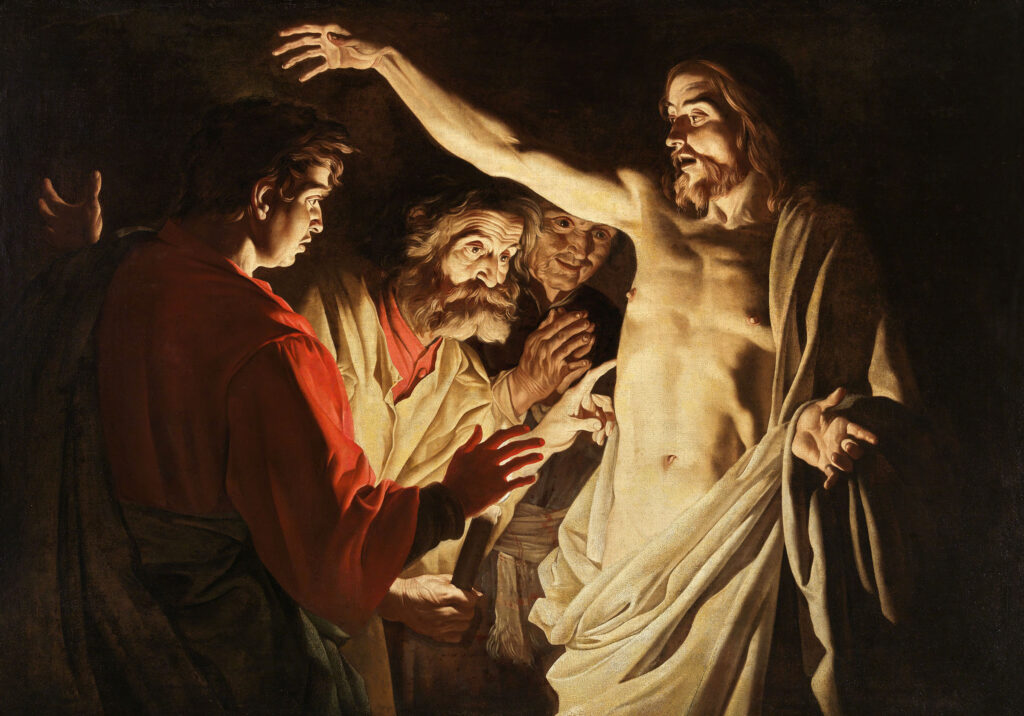
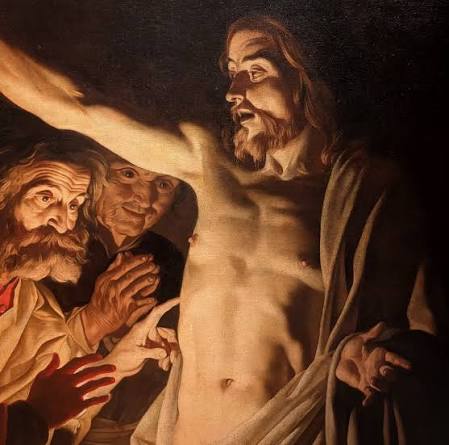
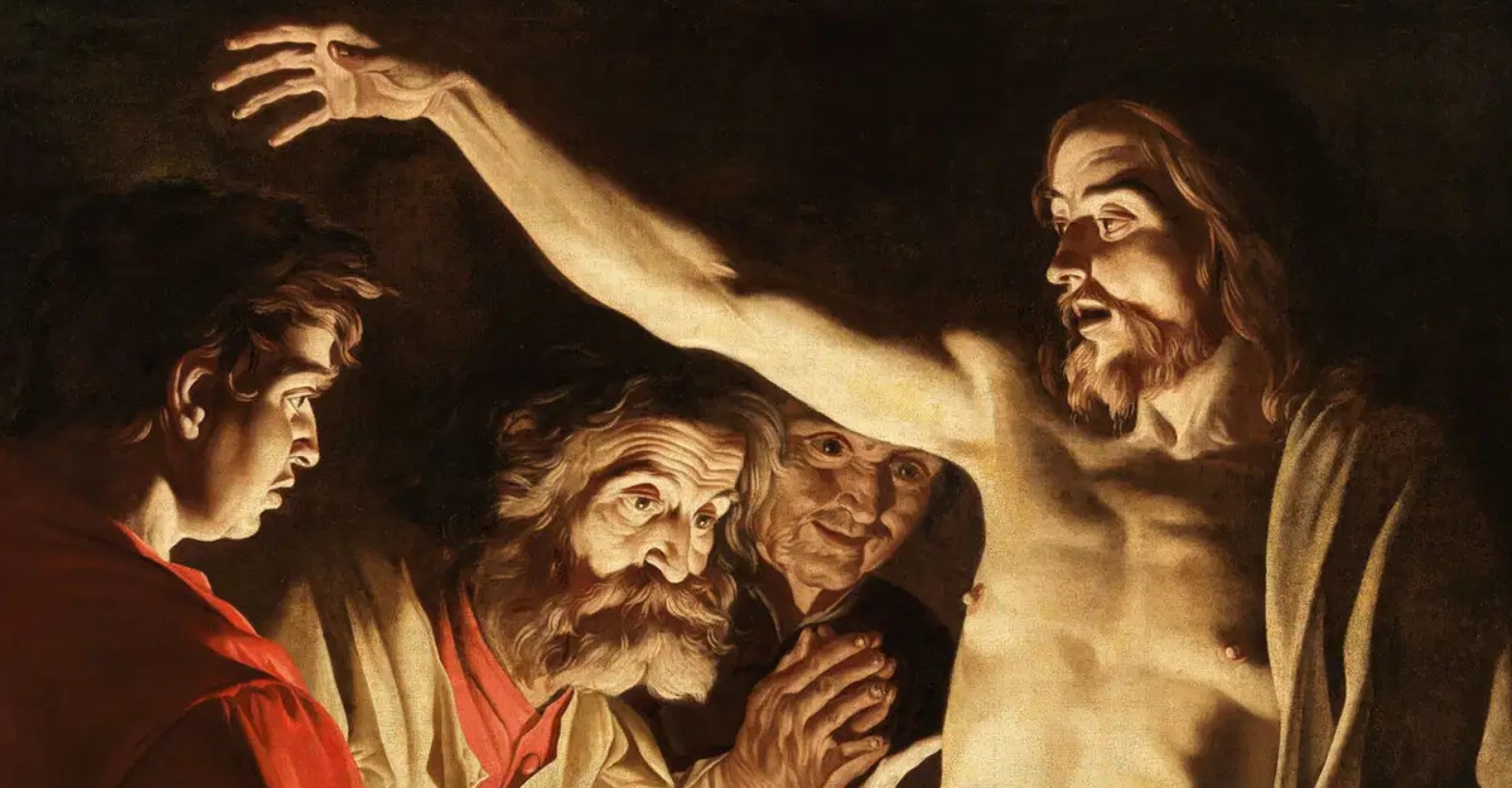
A Bergamo, custodita in una collezione privata, esiste una magnifica interpretazione di questo episodio: l’Incredulità di San Tommaso, dipinta da Matthias Stom tra il 1630 e il 1640. Un olio su tela di straordinaria intensità, nel quale il linguaggio del caravaggismo raggiunge esiti di rara suggestione.
La notte rischiarata da una torcia
La scena si svolge nel buio. Cristo, in piedi, si presenta davanti a tre uomini. Al centro compare San Tommaso, incapace di credere ai propri occhi dopo la Resurrezione.
Con la mano sinistra l’apostolo allunga le dita verso la ferita aperta nel costato di Gesù, proprio come racconta il Vangelo di Giovanni. È il gesto che ha reso celebre questo episodio nei secoli: il momento esatto in cui il dubbio lascia spazio alla certezza.
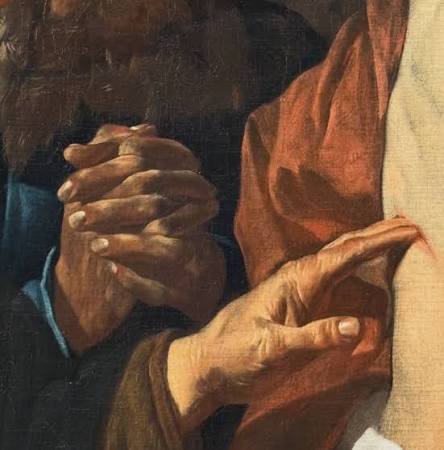
Ma Matthias Stom introduce un dettaglio sorprendente e altamente teatrale. Con l’altra mano Tommaso regge una torcia accesa, la cui fiamma illumina i volti, le mani e il corpo di Cristo: è il simbolo della ricerca della verità. La luce non cade dall’alto, ma nasce dall’azione stessa dell’apostolo che cerca una risposta.
L’effetto è spettacolare. Il buio avvolge ogni cosa, mentre la fiamma costruisce i volumi, accende gli incarnati e guida lo sguardo dello spettatore fino al punto centrale del racconto: la ferita del costato.
L’eredità di Caravaggio reinterpretata da Matthias Stom
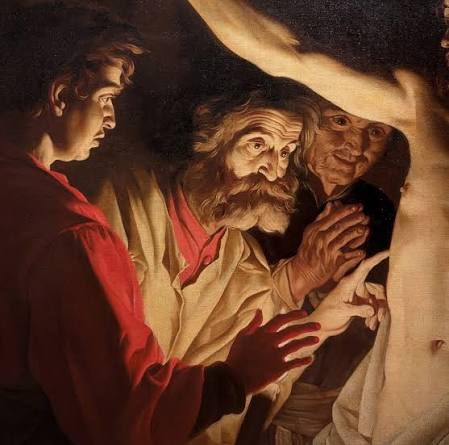
Osservando il dipinto è impossibile non pensare all’insegnamento di Caravaggio. Il contrasto tra luce e ombra, il realismo delle figure, la tensione emotiva e la vicinanza fisica tra i personaggi rivelano quanto Matthias Stom fosse uno dei più raffinati interpreti della rivoluzione caravaggesca.
Eppure Stom non è un semplice imitatore. Nei suoi dipinti la luce assume spesso una qualità ancora più intima: candele, torce e lanterne diventano protagoniste della composizione, creando atmosfere raccolte e profondamente spirituali.
In questa Incredulità di San Tommaso la torcia diventa quasi un personaggio aggiunto, capace di trasformare un episodio evangelico in un’esperienza teatrale e psicologica.
Il mistero di Matthias Stom
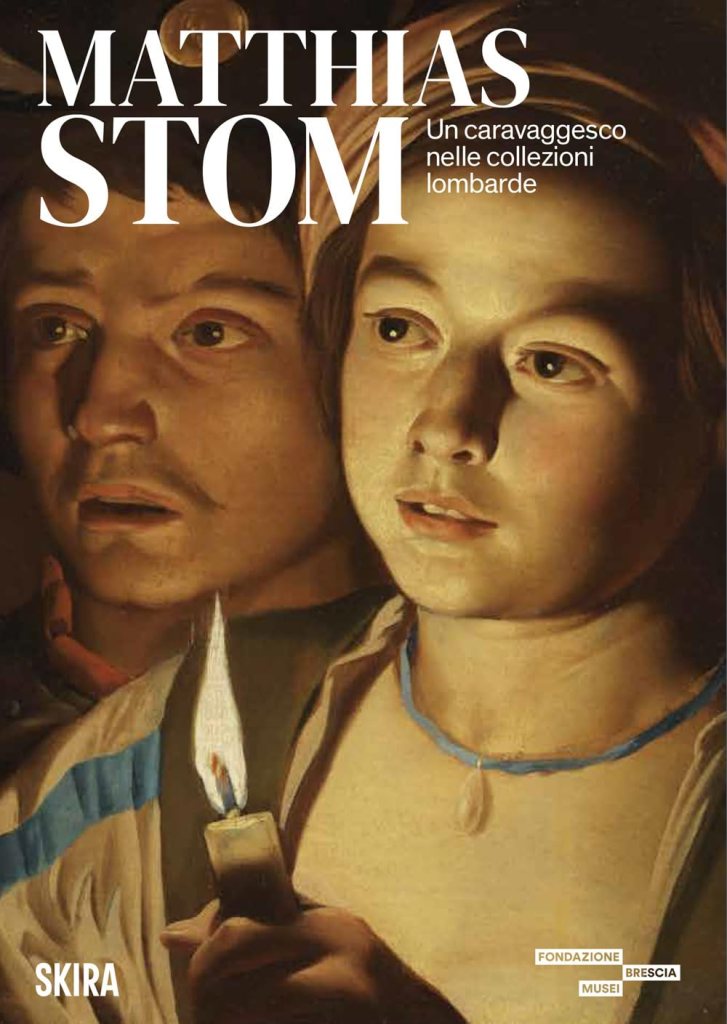
Nonostante oggi sia considerato uno dei maggiori pittori caravaggeschi del Seicento, la vita di Matthias Stom rimane avvolta nel mistero.
Nato probabilmente nelle Fiandre meridionali, nell’attuale Belgio, intorno al 1600, non si conoscono con certezza né il luogo di nascita – forse Anversa, forse Bruxelles – né quello della morte. Anche il suo cognome è stato a lungo tramandato erroneamente come “Stomer”, mentre gli studi più recenti hanno confermato la forma corretta: Stom, autentico cognome fiammingo.
Il pittore lavorò a lungo in Italia. Fu attivo a Roma tra il 1624 e il 1633 circa, quindi a Napoli fino al 1638. Dal 1640 si trasferì a Palermo, dove realizzò alcuni dei suoi capolavori, mentre documenti emersi soltanto negli ultimi decenni attestano la sua presenza anche a Venezia nel 1643 e nel 1645. Dopo quella data le sue tracce si perdono.
Della sua biografia rimangono pochissimi documenti, ma sopravvivono oltre trecento dipinti, quasi sempre caratterizzati da una qualità altissima e da un uso magistrale della luce.
Il dubbio che diventa fede
L’opera bergamasca colpisce perché riesce a raccontare il momento esatto in cui l’uomo passa dall’incertezza alla convinzione. Non c’è enfasi miracolistica, ma una scena costruita sull’osservazione, sul gesto e sulla luce.
La mano di Tommaso entra nella ferita di Cristo mentre la torcia illumina il mistero che il buio sembrava nascondere. È una metafora potente: la fede non cancella il dubbio, ma lo attraversa.
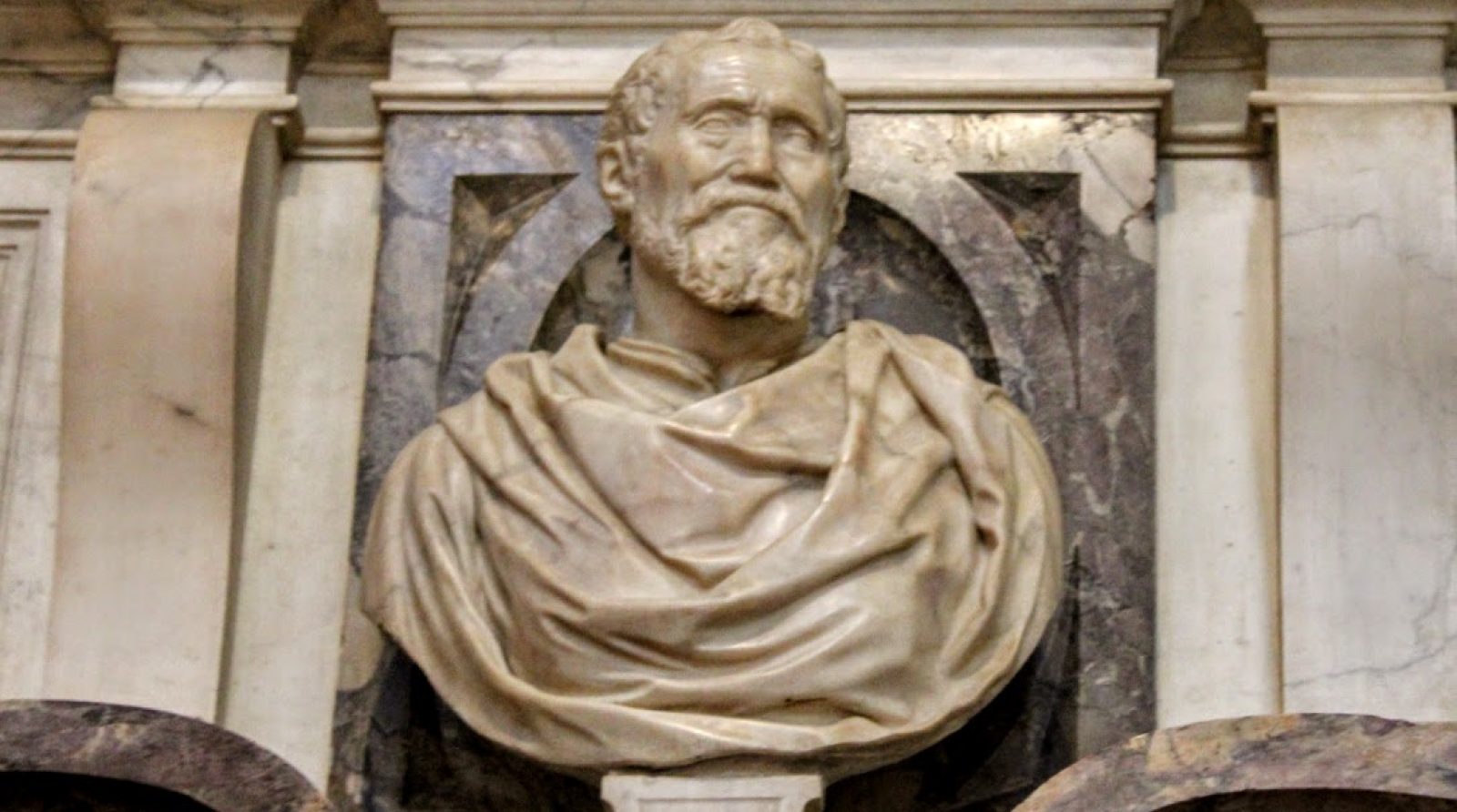
Per il momento il sempre vostro Michelangelo Buonarroti vi saluta dandovi appuntamento ai prossimi post e sui social.
The Doubt of Saint Thomas Illuminated by Matthias Stom
On the feast day of Saint Thomas, an extraordinary canvas held in a private collection in Bergamo recounts one of the most human and intense episodes in the Gospel. Painted by Matthias Stom, a master of European Caravaggism, the work transforms doubt into light.
On July 3, the Church celebrates Saint Thomas the Apostle, the disciple known to history as “the Doubter.” Yet his doubt does not represent weakness, but one of the most profound moments of Christian faith: the desire to see and touch before believing.
In Bergamo, held in a private collection, there is a magnificent interpretation of this episode: The Doubting of Saint Thomas, painted by Matthias Stom between 1630 and 1640. An oil on canvas of extraordinary intensity, in which the language of Caravaggism achieves results of rare evocative power.
The Night Illuminated by a Torch
The scene takes place in darkness. Christ, standing, appears before three men. In the center stands Saint Thomas, unable to believe his own eyes after the Resurrection.
With his left hand, the apostle extends his fingers toward the open wound in Jesus’ side, just as the Gospel of John recounts. It is the gesture that has made this episode famous over the centuries: the exact moment when doubt gives way to certainty.
But Matthias Stom introduces a surprising and highly theatrical detail. With his other hand, Thomas holds a lit torch, whose flame illuminates the faces, hands, and body of Christ: it is the symbol of the search for truth. The light does not fall from above, but arises from the apostle’s own action as he searches for an answer.
The effect is spectacular. Darkness envelops everything, while the flame builds the volumes, illuminates the flesh tones, and guides the viewer’s gaze to the central point of the story: the wound in Christ’s side.
Caravaggio’s Legacy Reinterpreted by Matthias Stom
Looking at the painting, it’s impossible not to think of Caravaggio’s teachings. The contrast between light and shadow, the realism of the figures, the emotional tension, and the physical closeness between the characters reveal how Matthias Stom was one of the most refined interpreters of the Caravaggesque revolution.
Yet Stom is not a simple imitator. In his paintings, light often takes on an even more intimate quality: candles, torches, and lanterns become the protagonists of the composition, creating intimate and profoundly spiritual atmospheres.
In this Incredulity of Saint Thomas, the torch almost becomes an additional character, capable of transforming a Gospel episode into a theatrical and psychological experience.
The Mystery of Matthias Stom
Although he is today considered one of the greatest Caravaggesque painters of the 17th century, the life of Matthias Stom remains shrouded in mystery.
Probably born in southern Flanders, in present-day Belgium, around 1600, neither his place of birth—perhaps Antwerp, perhaps Brussels—nor his place of death are known with certainty. His surname was also long erroneously passed down as “Stomer,” while more recent studies have confirmed the correct form: Stom, an authentic Flemish surname.
The painter worked extensively in Italy. He was active in Rome between 1624 and 1633, then in Naples until 1638. From 1640 he moved to Palermo, where he created some of his masterpieces, while documents emerging only in recent decades attest to his presence in Venice in 1643 and 1645. After that date, his traces are lost.
Very few documents remain of his biography, but over three hundred paintings survive, almost always characterized by extremely high quality and a masterful use of light.
Doubt Becomes Faith
This work from Bergamo is striking because it captures the exact moment when man passes from uncertainty to conviction. There’s no emphasis on miracles, but rather a scene built on observation, gesture, and light.
Thomas’s hand enters Christ’s wound while the torch illuminates the mystery that the darkness seemed to hide. It’s a powerful metaphor: faith doesn’t erase doubt, but rather transcends it.
For now, yours truly, Michelangelo Buonarroti bids you farewell, and says he’ll see you in future posts and on social media.

Sostienici – Support Us
Se questo blog ti piace e ti appassiona, puoi aiutarci a farlo crescere sempre più sostenendoci in modo concreto condividendo i post, seguendo le pagine social e con un contributo che ci aiuta ad andare avanti con il nostro lavoro di divulgazione. . ENGLISH: If you like and are passionate about this blog, you can help us make it grow more and more by supporting us in a concrete way by sharing posts, following social pages and with a contribution that helps us to move forward with our dissemination work.
10,00 €
Condividi:


Questo sono io




sostienici

Sostienici – Support Us
Se questo blog ti piace e ti appassiona, puoi aiutarci a farlo crescere sempre più sostenendoci in modo concreto condividendo i post, seguendo le pagine social e con un contributo che ci aiuta ad andare avanti con il nostro lavoro di divulgazione. . ENGLISH: If you like and are passionate about this blog, you can help us make it grow more and more by supporting us in a concrete way by sharing posts, following social pages and with a contribution that helps us to move forward with our dissemination work.
€10,00


