

La Visitazione di Raffaello: il capolavoro che torna nella città dove era nato
Per quasi quattro secoli è rimasta lontana dalla città che l’aveva vista nascere. Oggi, invece, la Visitazione di Raffaello compie un ritorno che ha il sapore di una riconciliazione con la storia. Il capolavoro dipinto tra il 1517 e il 1519 torna infatti all’Aquila, il luogo per cui era stato concepito, regalando ai visitatori un’occasione che difficilmente si ripeterà.
È il ritorno di una pagina fondamentale della memoria aquilana, di un dipinto nato dall’incontro tra arte, fede e amicizia.
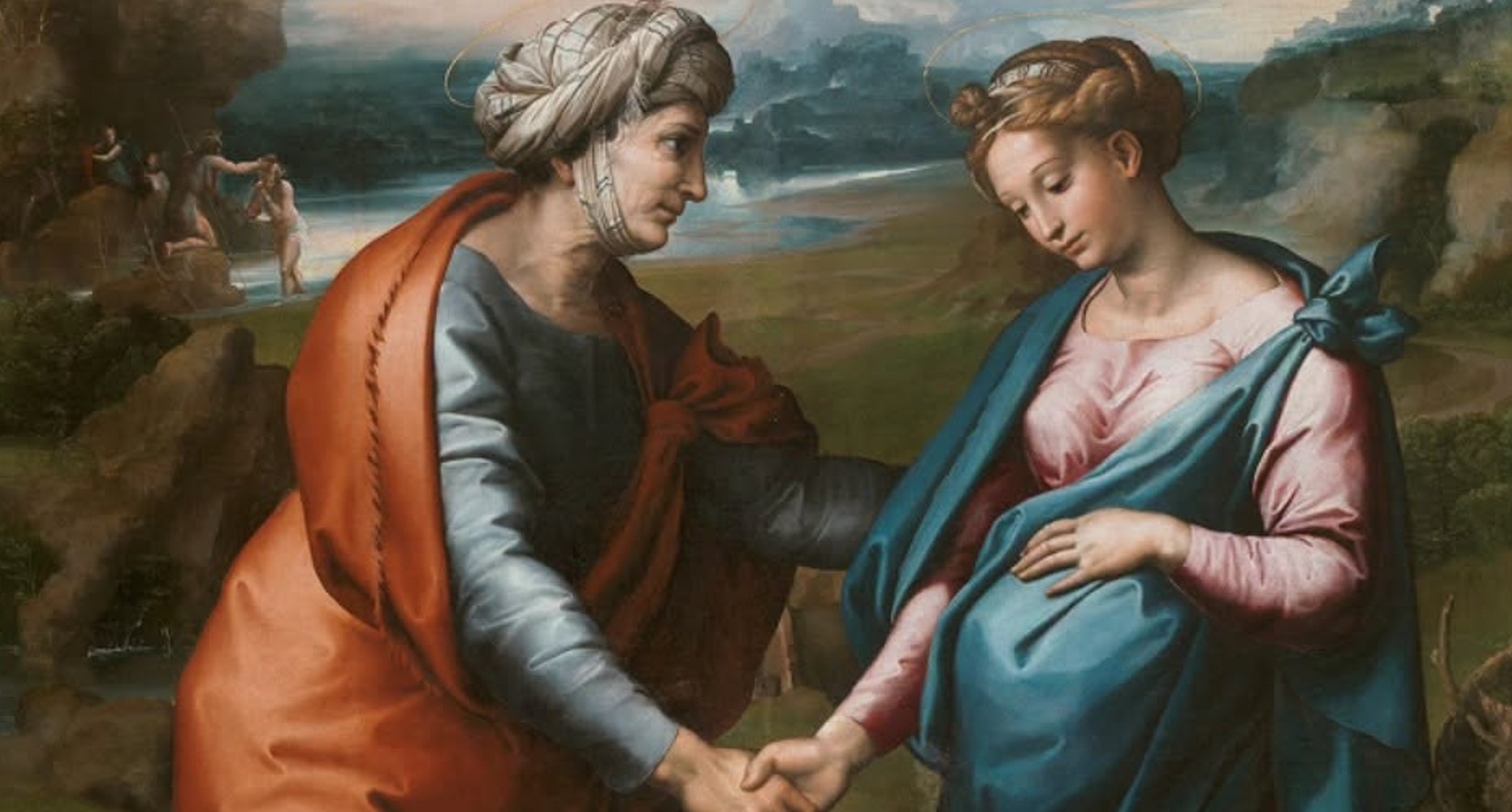
La tavola venne infatti commissionata grazie alla volontà testamentaria di Marino Branconio e al profondo rapporto che legava suo figlio Giovanni Battista a Raffaello. Destinata alla cappella di famiglia nella chiesa di San Silvestro, la Visitazione rappresentava il prestigio di una famiglia influente ma anche una sincera testimonianza di devozione.
L’abbraccio tra Maria ed Elisabetta che continua a commuovere dopo cinque secoli
Raffaello sceglie di raccontare uno degli episodi più intensi del Vangelo di Luca. Dopo aver ricevuto l’annuncio dell’angelo, Maria affronta un lungo viaggio per raggiungere la cugina Elisabetta, anch’essa miracolosamente in attesa di un figlio: Giovanni Battista.
L’artista non rappresenta il cammino né l’arrivo. Sceglie l’attimo più umano e universale: quello dell’incontro.
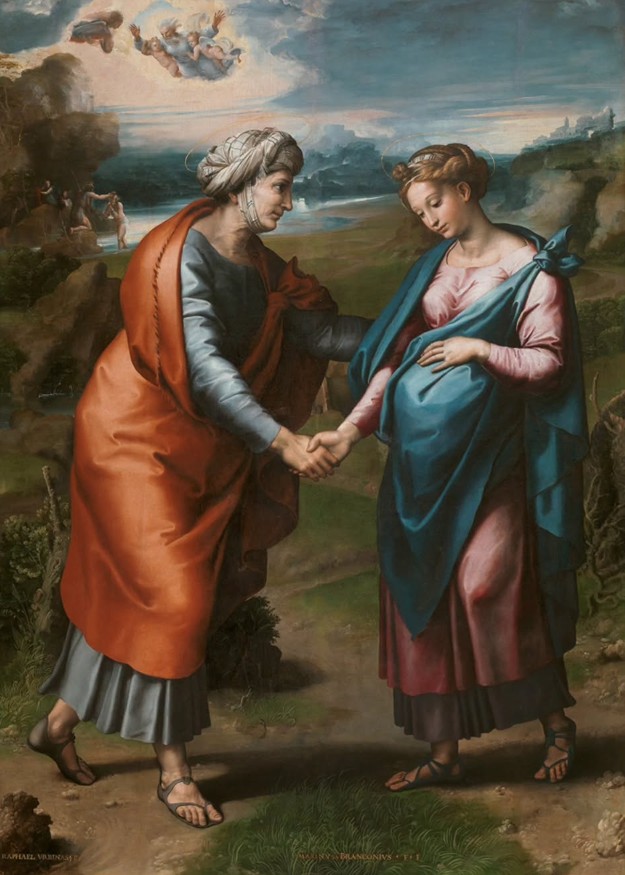
Maria ed Elisabetta si guardano negli occhi, si stringono le mani e sembrano riconoscere, ancora prima delle parole, il mistero che entrambe portano nel grembo. È una scena costruita sulla delicatezza dei gesti e sulla forza dei sentimenti. Nessun elemento appare forzato. Ogni sguardo, ogni piega delle vesti, ogni movimento delle figure accompagna lo spettatore dentro un racconto fatto di gioia, speranza e fiducia.
I dettagli nascosti che rendono unica la Visitazione
Lo sfondo del dipinto non è una semplice ambientazione. Le colline, gli alberi e le architetture si fondono in un paesaggio luminoso che amplifica il significato spirituale della scena. Il verde della natura diventa simbolo di vita, fertilità e salvezza, mentre la luce diffusa suggerisce un senso di armonia che avvolge ogni elemento della composizione.
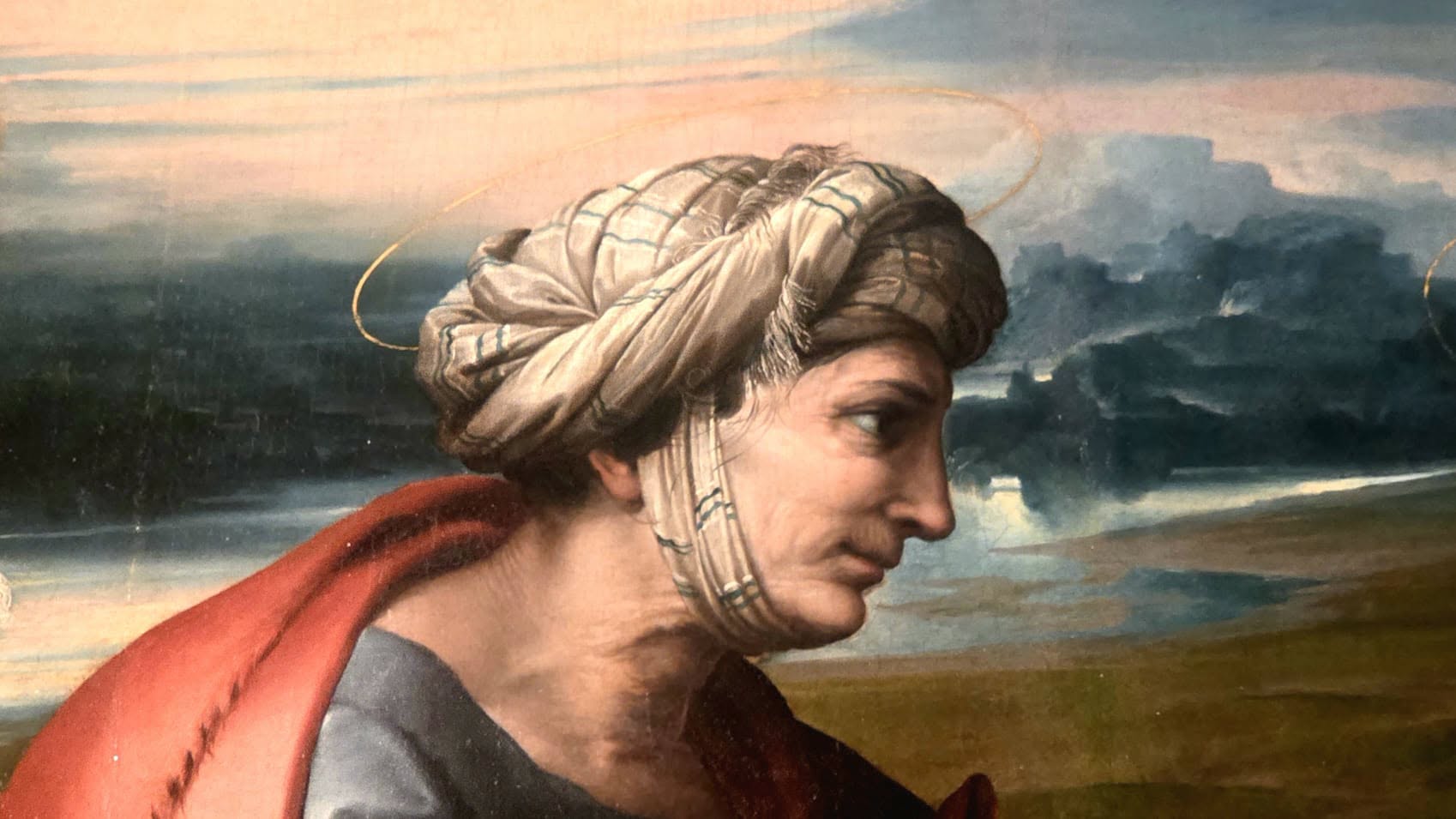
Poi c’è un particolare che spesso sfugge a un primo sguardo. Sul lato sinistro della tavola Raffaello inserisce una piccola scena con il Battesimo di Cristo. È una scelta narrativa di straordinaria modernità: il pittore collega l’incontro tra Maria ed Elisabetta al futuro incontro tra Gesù e Giovanni Battista sulle rive del Giordano, trasformando il dipinto in un racconto che unisce tempi diversi della storia evangelica.
Perché la Visitazione lasciò L’Aquila nel Seicento
Per oltre un secolo la Visitazione rimase nella cappella della famiglia Branconio. Poi, nel 1655, il dipinto lasciò definitivamente L’Aquila per essere trasferito in Spagna, allora potenza dominante sul Regno di Napoli.
Entrata nelle collezioni reali spagnole, l’opera trovò la sua sede definitiva al Museo del Prado di Madrid, dove ancora oggi è considerata uno dei più importanti capolavori della pittura rinascimentale.
Quel trasferimento privò la città di una delle sue opere più preziose. Per questo il ritorno temporaneo della tavola assume oggi un valore che va oltre l’eccezionalità dell’evento espositivo: significa restituire, anche solo per pochi mesi, un frammento della storia culturale dell’Aquila.
La mostra al MuNDA mette a confronto Raffaello e Pontormo
Fino al 27 settembre il MuNDA – Museo Nazionale d’Abruzzo ospita una mostra che permette di vivere un’esperienza rara. La Visitazione di Raffaello dialoga infatti con quella dipinta dal Pontormo, offrendo al pubblico la possibilità di confrontare due capolavori dedicati allo stesso episodio evangelico ma profondamente diversi per linguaggio, sensibilità e visione artistica.
Il percorso espositivo è arricchito da documenti che raccontano la storia dell’opera, tra cui il testamento di Giovanni Battista Branconio, e da una ricostruzione digitale del palazzo della famiglia, che restituisce il contesto storico e culturale della commissione.
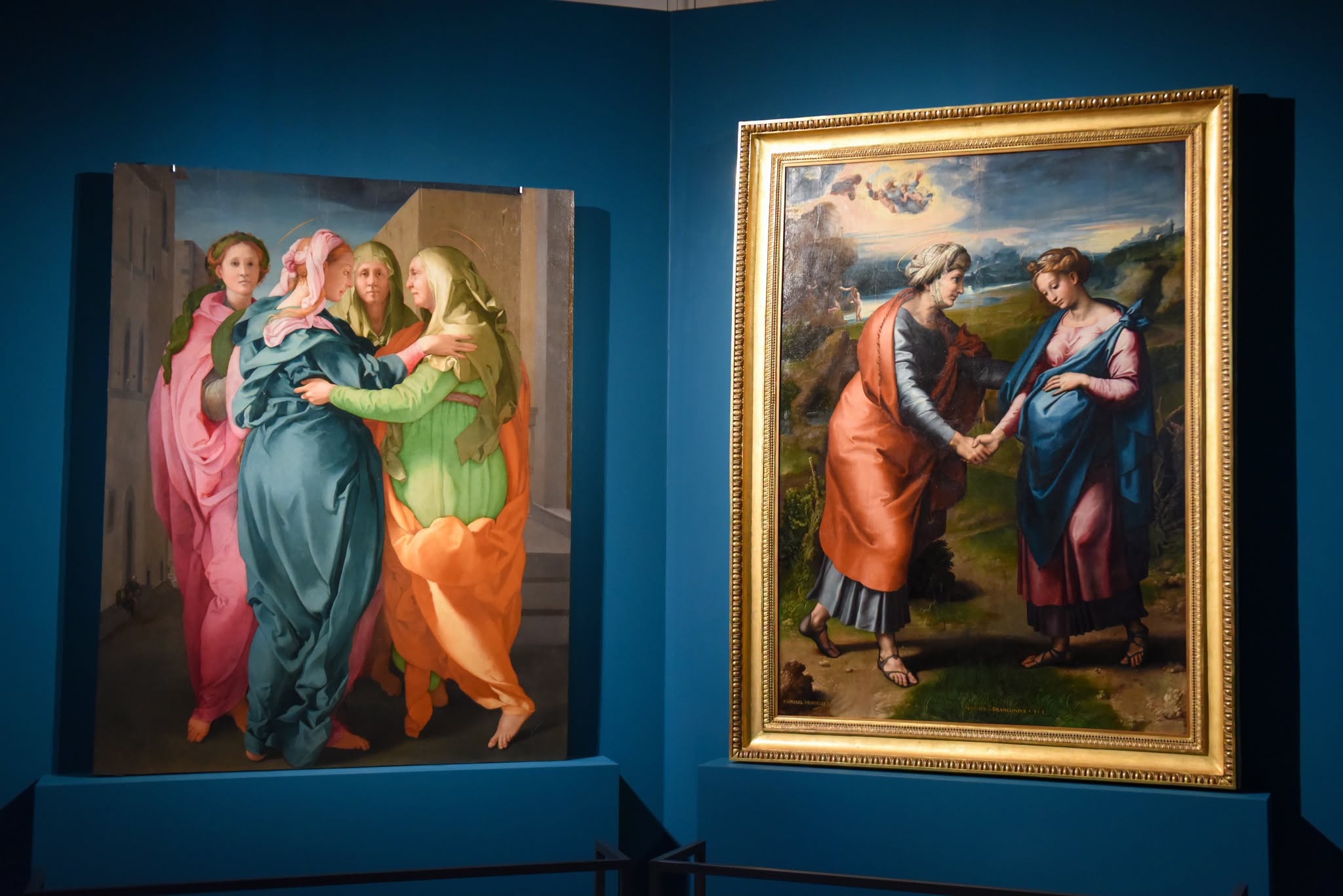
Davanti alle due tavole, però, ogni documento passa in secondo piano. È la pittura a parlare. Da una parte l’equilibrio, la misura e la grazia che hanno reso Raffaello uno dei protagonisti assoluti del Rinascimento. Dall’altra la tensione espressiva del Pontormo, già proiettata verso il manierismo.
Due interpretazioni dello stesso racconto evangelico che, a distanza di oltre cinque secoli, continuano a dimostrare come la grande arte riesca ancora oggi a dare forma ai sentimenti più profondi dell’uomo.
Per il momento il sempre vostro Michelangelo Buonarroti vi saluta dandovi appuntamento ai prossimi post e sui social.
Raphael’s Visitation: the masterpiece returns to its birthplace
For nearly four centuries, it remained distant from the city where it was born. Today, however, Raphael’s Visitation is making a comeback that feels like a reconciliation with history. The masterpiece, painted between 1517 and 1519, returns to L’Aquila, the place for which it was conceived, offering visitors an opportunity unlikely to be repeated.
It is the return of a key chapter in L’Aquila’s history, a painting born from the encounter between art, faith, and friendship.
The panel was commissioned thanks to the will of Marino Branconio and the deep bond that bound his son Giovanni Battista to Raphael. Destined for the family chapel in the church of San Silvestro, the Visitation represented the prestige of an influential family but also a sincere testimony to devotion.
The embrace between Mary and Elizabeth continues to move after five centuries
Raphael chooses to narrate one of the most powerful episodes in the Gospel of Luke. After receiving the angel’s announcement, Mary undertakes a long journey to reach her cousin Elizabeth, who is also miraculously expecting a child: John the Baptist.
The artist does not depict the journey or the arrival. He chooses the most human and universal moment: that of the encounter.
Mary and Elizabeth look into each other’s eyes, clasp hands, and seem to recognize, even before words, the mystery they both carry within their wombs. It is a scene constructed on the delicacy of gestures and the strength of emotion. Nothing appears forced. Every glance, every fold of clothing, every movement of the figures leads the viewer into a story of joy, hope, and trust.
The hidden details that make the Visitation unique
The background of the painting is not a simple setting. The hills, trees, and architecture blend into a luminous landscape that amplifies the spiritual significance of the scene. The green of nature becomes a symbol of life, fertility, and salvation, while the diffused light suggests a sense of harmony that envelops every element of the composition.
Then there is a detail that often escapes the first glance. On the left side of the panel, Raphael inserts a small scene depicting the Baptism of Christ. It is an extraordinarily modern narrative choice: the painter connects the meeting between Mary and Elizabeth to the future meeting between Jesus and John the Baptist on the banks of the Jordan, transforming the painting into a story that unites different periods of the Gospel story.
Why the Visitation left L’Aquila in the 17th century
For over a century, the Visitation remained in the Branconio family chapel. Then, in 1655, the painting left L’Aquila for good, moving to Spain, then the dominant power in the Kingdom of Naples.
After entering the Spanish royal collections, the work found its permanent home at the Prado Museum in Madrid, where it is still considered one of the most important masterpieces of Renaissance painting.
That move deprived the city of one of its most precious works. For this reason, the temporary return of the panel today takes on a value that goes beyond the exceptional nature of the exhibition: it means restoring, even if only for a few months, a fragment of L’Aquila’s cultural history.
The exhibition at MuNDA compares Raphael and Pontormo
Until September 27, the MuNDA – Museo Nazionale d’Abruzzo hosts an exhibition that offers a rare experience. Raphael’s Visitation dialogues with the one painted by Pontormo, offering the public the opportunity to compare two masterpieces dedicated to the same Gospel episode yet profoundly different in language, sensibility, and artistic vision.
The exhibition is enriched by documents that tell the story of the work, including Giovanni Battista Branconio’s will, and a digital reconstruction of the family palace, which provides the historical and cultural context of the commission.
Before the two panels, however, all documents fade into the background. It is the painting that speaks. On the one hand, the balance, restraint, and grace that made Raphael one of the undisputed protagonists of the Renaissance. On the other, the expressive tension of Pontormo, already leaning toward Mannerism.
Two interpretations of the same Gospel story that, over five centuries later, continue to demonstrate how great art can still give form to man’s deepest feelings.
For now, yours truly, Michelangelo Buonarroti bids you farewell and invites you to see him in future posts and on social media.ù

Sostienici – Support Us
Se questo blog ti piace e ti appassiona, puoi aiutarci a farlo crescere sempre più sostenendoci in modo concreto condividendo i post, seguendo le pagine social e con un contributo che ci aiuta ad andare avanti con il nostro lavoro di divulgazione. . ENGLISH: If you like and are passionate about this blog, you can help us make it grow more and more by supporting us in a concrete way by sharing posts, following social pages and with a contribution that helps us to move forward with our dissemination work.
10,00 €
Condividi:


Questo sono io




sostienici

Sostienici – Support Us
Se questo blog ti piace e ti appassiona, puoi aiutarci a farlo crescere sempre più sostenendoci in modo concreto condividendo i post, seguendo le pagine social e con un contributo che ci aiuta ad andare avanti con il nostro lavoro di divulgazione. . ENGLISH: If you like and are passionate about this blog, you can help us make it grow more and more by supporting us in a concrete way by sharing posts, following social pages and with a contribution that helps us to move forward with our dissemination work.
€10,00


