

Festa della mamma e arte: la maternità celebrata nei capolavori senza tempo
La Festa della mamma è un’occasione che, oltre alla celebrazione contemporanea degli affetti familiari, invita anche a riflettere su come la maternità sia stata rappresentata nei secoli.
Nell’arte occidentale la figura materna è uno dei temi più profondi e ricorrenti, capace di attraversare epoche, stili e sensibilità diverse. Dai grandi maestri del Rinascimento fino alla scultura ottocentesca, la madre è stata simbolo di amore, protezione e sacralità.
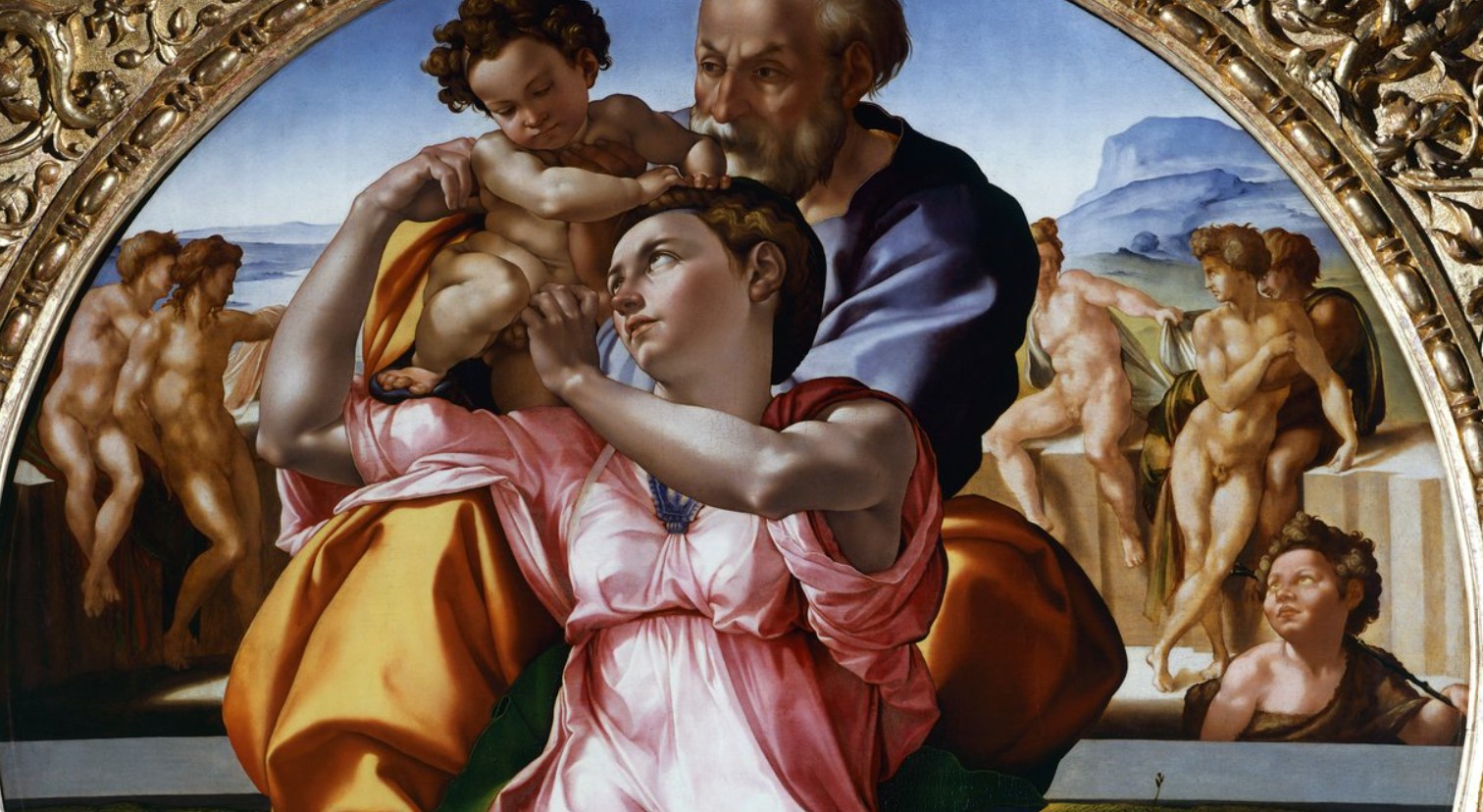
La dolcezza della Madonna della Seggiola di Raffaello
Tra le immagini più iconiche della maternità nell’arte rinascimentale spicca la Madonna della Seggiola di Raffaello Sanzio. In questo capolavoro, la Vergine non è più solo figura sacra, ma diventa una madre reale, teneramente raccolta nell’abbraccio con il Bambino.
La composizione circolare e la vicinanza tra i volti trasmettono un’intimità straordinaria, quasi domestica, che rende l’opera una delle più umane rappresentazioni della maternità. La dolcezza dello sguardo e la naturalezza del gesto trasformano l’iconografia religiosa in un inno universale all’amore materno.

La potenza emotiva della mia Madonna di Bruges
Un’altra interpretazione intensa del tema materno è la mia Madonna di Bruges. A differenza della dolcezza raffaellesca, qui la Vergine appare distante e raccolta, con un’espressione quasi meditativa.
Al Bambino diedi una completa autonomia fisica tanto che sembra già proiettato verso il proprio destino. Ruppi con la tradizionale iconografia affettuosa per proporre una maternità più complessa, fatta di consapevolezza e premonizione, in cui l’amore si intreccia con il sacrificio.

La luce e il mistero della Vergine delle Rocce di Leonardo da Vinci
Con Vergine delle Rocce di Leonardo da Vinci, la maternità si inserisce in un contesto naturale enigmatico e armonioso.
Le figure della Madonna, del Bambino e di San Giovannino sono immerse in un paesaggio roccioso che diventa quasi simbolico. La madre non è solo figura centrale, ma parte di un equilibrio cosmico. Il celebre uso dello sfumato rende i contorni morbidi, suggerendo una maternità avvolgente e misteriosa, sospesa tra realtà e spiritualità.

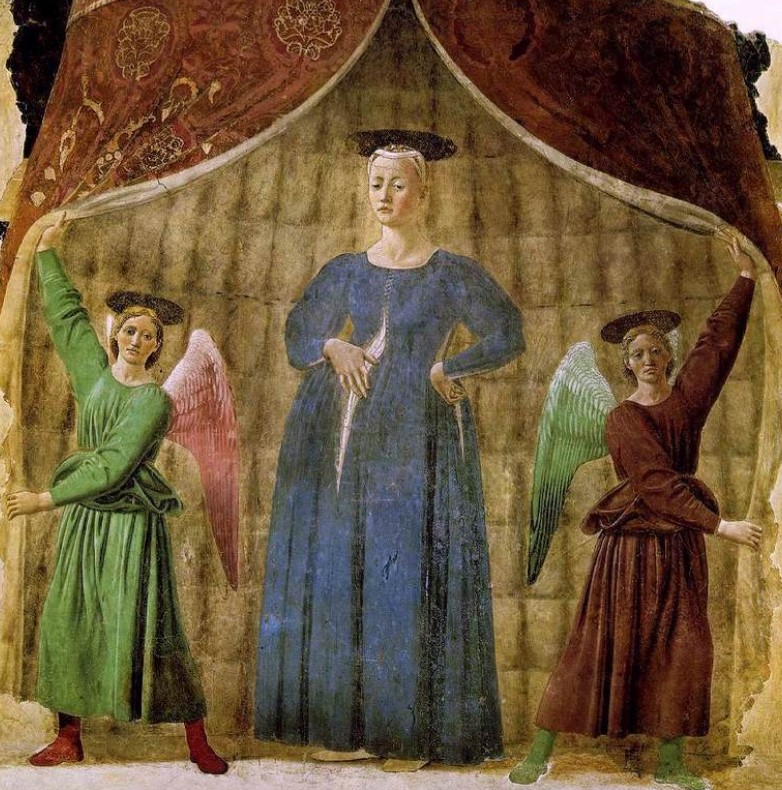
La maternità sacra della Madonna del Parto di Piero della Francesca
Di grande forza simbolica è anche la Madonna del Parto di Piero della Francesca, in cui la Vergine è rappresentata in stato di gravidanza.
L’opera, rara nel panorama artistico del tempo, celebra la maternità prima ancora della nascita, elevandola a condizione sacra e universale. La figura solenne della Madonna, incorniciata da angeli speculari, esprime equilibrio matematico e spirituale, tipico della poetica dell’artista, e trasforma il momento dell’attesa in un simbolo di speranza e vita.
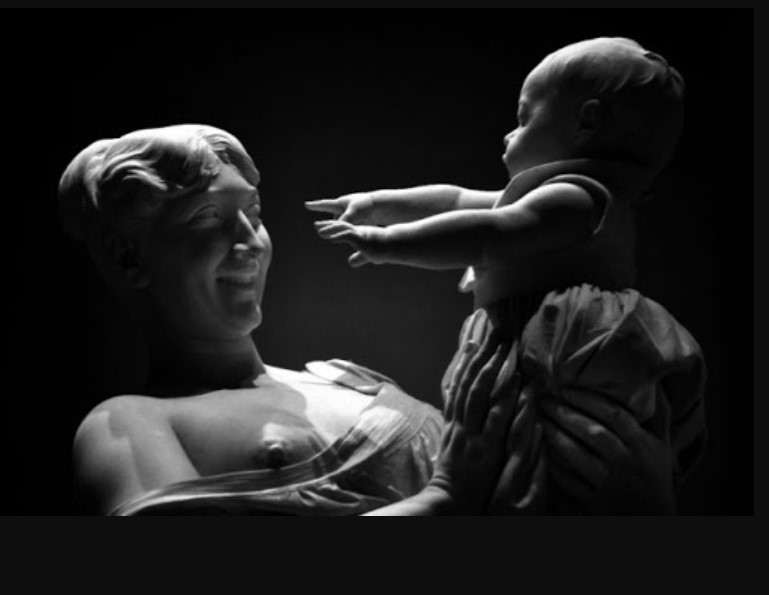
La modernità della Madre di Adriano Cecioni
Nel passaggio all’Ottocento, la maternità assume un volto più realistico e quotidiano nella scultura della Madre realizzata nel 1880 da Adriano Cecioni. Qui non troviamo più idealizzazioni sacre o allegoriche, ma una madre vera, colta in un momento di intimità con il proprio bambino. L
a forza dell’opera sta proprio nella sua semplicità: il gesto spontaneo, la naturalezza della scena e l’assenza di retorica trasformano la maternità in esperienza quotidiana e profondamente umana.
La maternità nell’arte come linguaggio universale
Dalle tavole rinascimentali alle sculture ottocentesche, la maternità si rivela uno dei temi più universali e potenti della storia dell’arte.
Ogni artista ha interpretato la figura della madre secondo la sensibilità del proprio tempo, ma tutte le opere condividono un nucleo comune: l’idea che il legame tra madre e figlio rappresenti una delle forme più pure e profonde dell’esperienza umana.
In occasione della Festa della mamma, questi capolavori ricordano come l’arte abbia saputo trasformare un sentimento intimo in patrimonio culturale universale.
Per il momento il sempre vostro Michelangelo Buonarroti vi saluta dandovi appuntamento ai prossimi post e sui social.
Mother’s Day and Art: Motherhood Celebrated in Timeless Masterpieces
Mother’s Day is an occasion that, beyond the contemporary celebration of family affection, also invites reflection on how motherhood has been represented over the centuries.
In Western art, the maternal figure is one of the most profound and recurring themes, capable of spanning different eras, styles, and sensibilities. From the great Renaissance masters to nineteenth-century sculpture, the mother has been a symbol of love, protection, and sacredness.
The Sweetness of Raphael’s Madonna of the Chair
Among the most iconic images of motherhood in Renaissance art, Raphael’s Madonna of the Chair stands out. In this masterpiece, the Virgin is no longer merely a sacred figure, but becomes a real mother, tenderly embraced by the Child.
The circular composition and the closeness between the faces convey an extraordinary, almost domestic intimacy, making the work one of the most human representations of motherhood. The sweetness of her gaze and the naturalness of her gesture transform religious iconography into a universal hymn to maternal love.
The emotional power of my Madonna of Bruges
Another intense interpretation of the maternal theme is my Madonna of Bruges. Unlike Raphael’s sweetness, here the Virgin appears distant and collected, with an almost meditative expression.
I gave the Child complete physical autonomy, so much so that he seems already projected toward his own destiny. I broke with traditional affectionate iconography to propose a more complex motherhood, one of awareness and premonition, in which love is intertwined with sacrifice.
The light and mystery of Leonardo da Vinci’s Virgin of the Rocks
With Leonardo da Vinci’s Virgin of the Rocks, motherhood is inserted into an enigmatic and harmonious natural context.
The figures of the Madonna, the Child, and the Infant Saint John are immersed in a rocky landscape that becomes almost symbolic. The mother is not only a central figure, but part of a cosmic balance. The celebrated use of sfumato softens the contours, suggesting an enveloping and mysterious motherhood, suspended between reality and spirituality.
The Sacred Motherhood of Piero della Francesca’s Madonna del Parto
Piero della Francesca’s Madonna del Parto, in which the Virgin is depicted pregnant, is also of great symbolic power.
This work, rare in the artistic panorama of the time, celebrates motherhood even before birth, elevating it to a sacred and universal status. The solemn figure of the Madonna, framed by mirrored angels, expresses a mathematical and spiritual balance, typical of the artist’s poetics, and transforms the moment of waiting into a symbol of hope and life.
The Modernity of Adriano Cecioni’s Mother
At the turn of the 19th century, motherhood takes on a more realistic and everyday aspect in Adriano Cecioni’s sculpture of the Mother, created in 1880. Here we no longer find sacred or allegorical idealizations, but a real mother, captured in a moment of intimacy with her child. The
strength of the work lies precisely in its simplicity: the spontaneous gesture, the naturalness of the scene, and the absence of rhetoric transform motherhood into a daily and profoundly human experience.
Motherhood in Art as a Universal Language
From Renaissance panels to 19th-century sculptures, motherhood proves to be one of the most universal and powerful themes in the history of art.
Each artist has interpreted the figure of the mother according to the sensibilities of their time, but all the works share a common core: the idea that the bond between mother and child represents one of the purest and most profound forms of human experience.
On the occasion of Mother’s Day, these masterpieces remind us how art has transformed an intimate feeling into universal cultural heritage.
For now, yours truly, Michelangelo Buonarroti bids you farewell and invites you to join him in future posts and on social media.

Sostienici – Support Us
Se questo blog ti piace e ti appassiona, puoi aiutarci a farlo crescere sempre più sostenendoci in modo concreto condividendo i post, seguendo le pagine social e con un contributo che ci aiuta ad andare avanti con il nostro lavoro di divulgazione. . ENGLISH: If you like and are passionate about this blog, you can help us make it grow more and more by supporting us in a concrete way by sharing posts, following social pages and with a contribution that helps us to move forward with our dissemination work.
10,00 €
Articoli
Condividi:


Questo sono io




sostienici

Sostienici – Support Us
Se questo blog ti piace e ti appassiona, puoi aiutarci a farlo crescere sempre più sostenendoci in modo concreto condividendo i post, seguendo le pagine social e con un contributo che ci aiuta ad andare avanti con il nostro lavoro di divulgazione. . ENGLISH: If you like and are passionate about this blog, you can help us make it grow more and more by supporting us in a concrete way by sharing posts, following social pages and with a contribution that helps us to move forward with our dissemination work.
€10,00


