
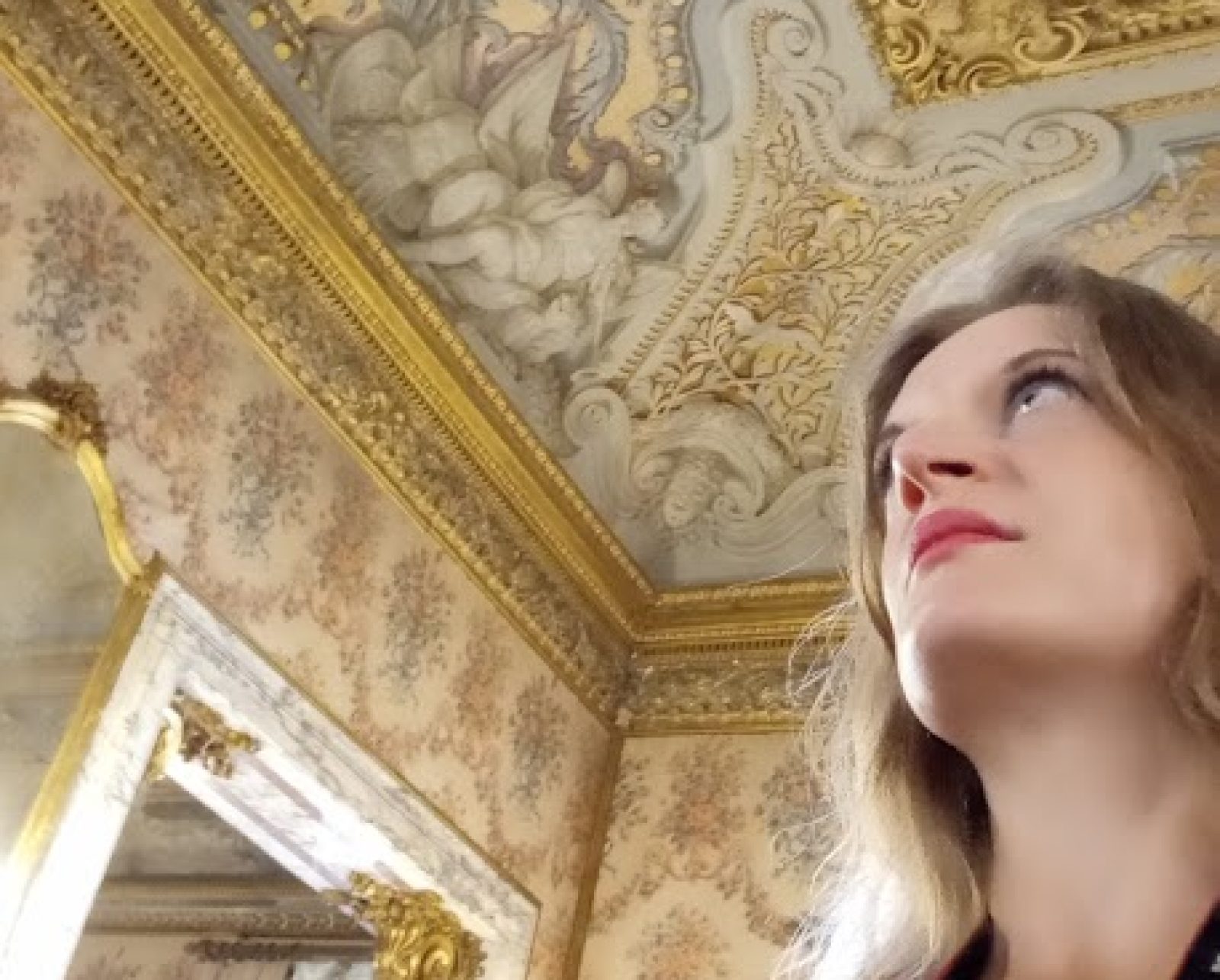
11 maggio 2003, il furto della Saliera del Cellini: il colpo che umiliò il museo più famoso di Vienna
C’è una data che ancora oggi fa rabbrividire gli storici dell’arte europei: l’11 maggio 2003. In quella notte incredibile, nel cuore di Vienna, sparì una delle opere più preziose del Rinascimento italiano. Dal prestigioso Kunsthistorisches Museum venne rubata la celebre Saliera di Benvenuto Cellini, considerata un tesoro assoluto dell’arte mondiale.
Un furto clamoroso, degno di un film hollywoodiano, che mise in imbarazzo uno dei musei più importanti del pianeta e lasciò tutti con una domanda inquietante: com’era possibile sottrarre un capolavoro da 50 milioni di euro senza che nessuno intervenisse?

Il furto della Saliera del Cellini: una notte incredibile al Kunsthistorisches Museum
La notte fra l’11 e il 12 maggio 2003 il ladro riuscì a entrare nel museo sfruttando alcune impalcature montate all’esterno dell’edificio. Arrampicandosi fino al primo piano, ruppe una finestra e raggiunse indisturbato la sala dove era custodita la preziosissima saliera.
A quel punto mandò in frantumi la teca e portò via l’opera nel giro di pochi minuti, eludendo ogni controllo. L’aspetto più sconvolgente emerse durante le indagini: l’allarme era effettivamente scattato, ma i custodi pensarono a un malfunzionamento e non verificarono immediatamente cosa stesse accadendo.
Fu uno scandalo internazionale. L’unica opera di oreficeria certa realizzata da Benvenuto Cellini sopravvissuta ai secoli era sparita nel nulla.

La storia della Saliera del Cellini affascina ancora oggi
La nascita della Saliera del Cellini è legata alla magnificenza delle corti rinascimentali. In origine fu il cardinale Ippolito II d’Este a voler commissionare un oggetto straordinario per impreziosire i suoi sontuosi banchetti.
Per scegliere il soggetto coinvolse due intellettuali della sua corte, ma Cellini ignorò buona parte dei suggerimenti ricevuti e decise di seguire la propria ispirazione artistica. Realizzò così un primo modello che conquistò immediatamente il cardinale, anche se quell’esemplare oggi è andato perduto.

Nel 1540 l’artista trovò protezione presso Francesco I di Francia, che gli mise a disposizione enormi risorse economiche per completare l’opera definitiva. Cellini lavorò per circa tre anni a quello che sarebbe diventato uno dei massimi capolavori dell’oreficeria rinascimentale.
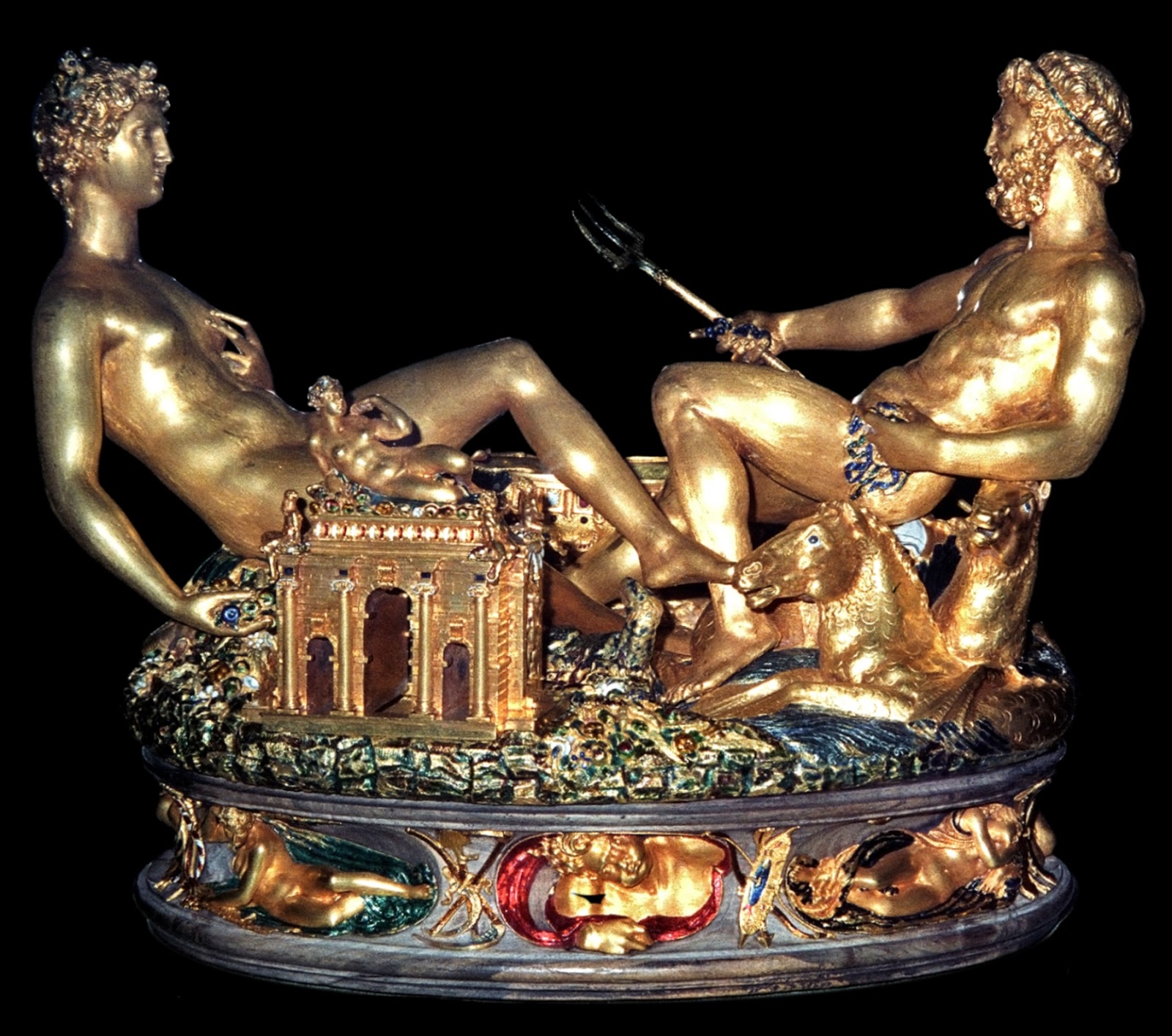
Alta appena 26 centimetri, la saliera venne realizzata in oro, smalto, ebano e avorio, con una raffinatezza tecnica che ancora oggi lascia senza parole.
Cosa rappresenta davvero la Saliera del Cellini
L’opera è un concentrato di simboli e allegorie. I protagonisti principali sono Nettuno e Cerere, incarnazioni rispettivamente del mare e della terra. Le due figure si intrecciano armoniosamente per rappresentare l’unione degli elementi naturali da cui nasce il sale, bene preziosissimo nel Rinascimento.

La cornucopia di Cerere allude all’abbondanza, mentre le altre figure scolpite attorno richiamano le allegorie del Giorno e della Notte, dell’Aurora e del Crepuscolo.
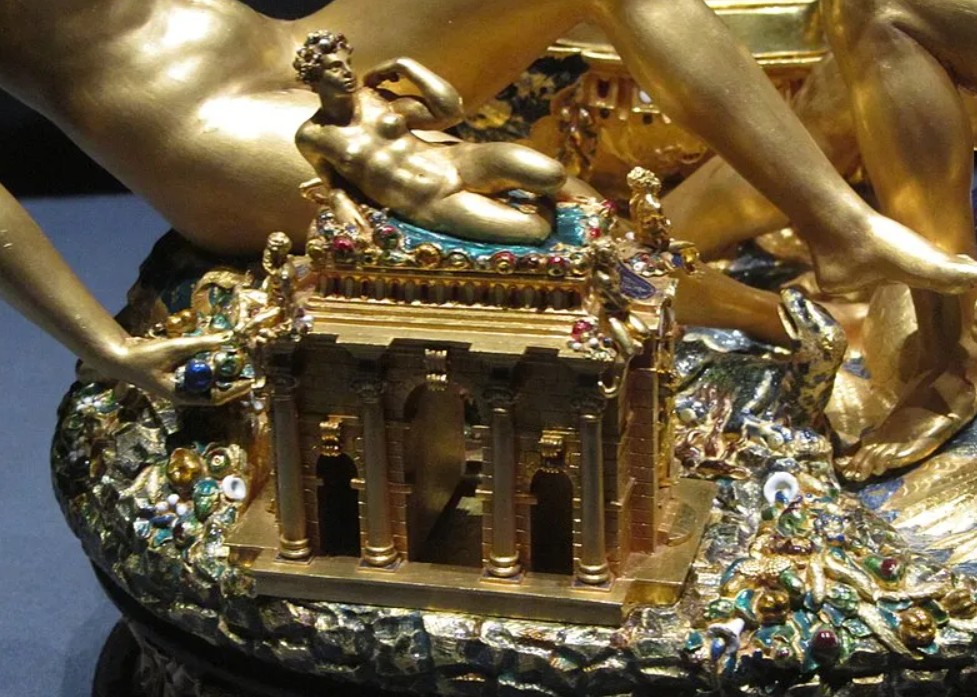
Ogni dettaglio aveva una funzione precisa. Il pepe veniva custodito all’interno di un piccolo tempietto decorato come un arco trionfale, mentre il sale era contenuto in una minuscola imbarcazione collegata simbolicamente al mare di Nettuno.
Non solo un oggetto da tavola: era una dichiarazione di potere, cultura e ricchezza.
Come la Saliera del Cellini arrivò a Vienna
Dopo essere passata nelle mani di Carlo IX di Francia, l’opera venne donata all’arciduca Ferdinando II d’Asburgo come gesto di riconoscenza per il sostegno al matrimonio con Elisabetta d’Austria.
Da quel momento la saliera entrò stabilmente nelle collezioni degli Asburgo. Secoli dopo, nel 1871, venne esposta al Kunsthistorisches Museum, dove divenne una delle opere più ammirate dai visitatori provenienti da tutto il mondo.
Il riscatto da 10 milioni e il dettaglio che incastrò il ladro
Per mesi il furto sembrò irrisolvibile. Poi arrivò una svolta inattesa. Il responsabile, Robert Mang, chiese un riscatto di 10 milioni di euro per restituire l’opera.
Per convincere la polizia di possedere davvero la saliera, inviò una prova inequivocabile: il tridente di Nettuno, unica parte amovibile dell’intero capolavoro.
Quell’errore si rivelò decisivo. Gli investigatori riuscirono lentamente a stringere il cerchio attorno al ladro, mentre l’Europa seguiva con il fiato sospeso una delle indagini artistiche più celebri degli ultimi decenni.
Il ritrovamento della Saliera del Cellini dopo tre anni
Dopo tre anni di ricerche serrate, il 22 gennaio 2006 arrivò finalmente la notizia che tutti aspettavano. La Saliera del Cellini venne ritrovata nascosta in una cassetta sotterrata nei boschi di Zwettl, a circa 90 chilometri da Vienna.
L’opera, valutata circa 50 milioni di euro, era sopravvissuta incredibilmente senza danni irreparabili. Poco dopo Robert Mang si consegnò alla polizia, consapevole che ormai gli investigatori erano sulle sue tracce.
Il ritorno della saliera al museo fu accolto come una liberazione nazionale. Ancora oggi quel furto viene ricordato come uno dei colpi d’arte più incredibili mai avvenuti in Europa.
Perché il furto della Saliera del Cellini continua a far discutere
A oltre vent’anni di distanza, il caso continua ad affascinare perché racchiude tutto ciò che rende irresistibili le grandi storie d’arte: un capolavoro unico al mondo, un museo prestigioso, errori clamorosi nella sicurezza e una caccia internazionale al tesoro.
Ma soprattutto resta una domanda che ancora oggi inquieta storici e appassionati: se un’opera tanto famosa poteva sparire così facilmente, quante altre meraviglie custodite nei musei del mondo sono davvero al sicuro?
Per il momento il sempre vostro Michelangelo Buonarroti vi saluta dandovi appuntamento ai prossimi post e sui social.
May 11, 2003, the theft of Cellini’s Salt Cellar: the heist that humiliated Vienna’s most famous museum
There is a date that still sends shivers down the spines of European art historians: May 11, 2003. On that incredible night, in the heart of Vienna, one of the most precious works of the Italian Renaissance disappeared. Benvenuto Cellini’s famous Salt Cellar, considered an absolute treasure of world art, was stolen from the prestigious Kunsthistorisches Museum.
A sensational theft, worthy of a Hollywood film, which embarrassed one of the world’s most important museums and left everyone with a disturbing question: how could a €50 million masterpiece be stolen without anyone intervening?
The Theft of the Cellini Salt Cellar: An Incredible Night at the Kunsthistorisches Museum
On the night of May 11-12, 2003, the thief gained entry to the museum using scaffolding erected outside the building. Climbing to the first floor, he broke a window and reached the room where the priceless salt cellar was kept undisturbed.
He then shattered the display case and stole the work within minutes, evading all security checks. The most shocking aspect emerged during the investigation: the alarm had indeed been triggered, but the guards thought it was a malfunction and did not immediately investigate.
It was an international scandal. The only known piece of goldsmith art created by Benvenuto Cellini that had survived the centuries had vanished into thin air.
The story of the Cellini Salt Cellar still fascinates today
The birth of the Cellini Salt Cellar is linked to the magnificence of the Renaissance courts. Cardinal Ippolito II d’Este originally wanted to commission an extraordinary object to embellish his sumptuous banquets.
To choose the subject, he consulted two intellectuals from his court, but Cellini ignored most of their suggestions and decided to follow his own artistic inspiration. He thus created a first model that immediately captivated the cardinal, although that model is now lost.
In 1540, the artist found protection from Francis I of France, who provided him with enormous financial resources to complete the final work. Cellini worked for approximately three years on what would become one of the greatest masterpieces of Renaissance goldsmithing.
Just 26 centimeters tall, the salt cellar was crafted from gold, enamel, ebony, and ivory, with a technical refinement that still amazes today.
What Cellini’s Salt Cellar Really Represents
The work is a concentration of symbols and allegories. The main protagonists are Neptune and Ceres, incarnations of the sea and the earth respectively. The two figures harmoniously intertwine to represent the union of the natural elements from which salt is born, a precious commodity during the Renaissance.
Ceres’ cornucopia alludes to abundance, while the other figures sculpted around it recall the allegories of Day and Night, Dawn and Dusk.
Every detail had a specific function. The pepper was kept inside a small temple decorated like a triumphal arch, while the salt was contained in a tiny vessel symbolically connected to Neptune’s sea.
More than just a tableware object: it was a declaration of power, culture, and wealth.
How Cellini’s Salt Cellar Came to Vienna
After passing into the hands of Charles IX of France, the work was donated to Archduke Ferdinand II of Habsburg as a gesture of gratitude for his support of his marriage to Elisabeth of Austria.
From that moment on, the salt cellar became a permanent fixture in the Habsburg collections. Centuries later, in 1871, it was exhibited at the Kunsthistorisches Museum, where it became one of the most admired works by visitors from around the world.
The €10 Million Ransom and the Detail That Convicted the Thief
For months, the theft seemed unsolvable. Then came an unexpected twist. The perpetrator, Robert Mang, demanded a €10 million ransom to return the work.
To convince the police that he truly possessed the salt cellar, he sent unequivocal evidence: Neptune’s trident, the only removable part of the entire masterpiece.
That mistake proved decisive. Investigators slowly closed in on the thief, while Europe watched with bated breath one of the most famous art investigations of recent decades.
The Cellini Salt Cellar Found After Three Years
After three years of intense searching, on January 22, 2006, the news everyone had been waiting for finally arrived. The Cellini Salt Cellar was found hidden in a box buried in the woods of Zwettl, about 90 kilometers from Vienna.
The work, valued at approximately €50 million, had incredibly survived without irreparable damage. Shortly thereafter, Robert Mang turned himself in to the police, knowing that investigators were now on his trail.
The return of the salt cellar to the museum was hailed as a national liberation. Even today, the theft is remembered as one of the most incredible art heists ever to have occurred in Europe.
Why the theft of the Cellini Salt Cellar continues to spark controversy
More than twenty years later, the case continues to fascinate because it encompasses everything that makes great art stories irresistible: a unique masterpiece, a prestigious museum, glaring security errors, and an international treasure hunt.
But above all, a question remains that still troubles historians and enthusiasts today: if such a famous work could disappear so easily, how many other wonders held in the world’s museums are truly safe?
For now, yours truly, Michelangelo Buonarroti bids you farewell and says he’ll see you in future posts and on social media.

Sostienici – Support Us
Se questo blog ti piace e ti appassiona, puoi aiutarci a farlo crescere sempre più sostenendoci in modo concreto condividendo i post, seguendo le pagine social e con un contributo che ci aiuta ad andare avanti con il nostro lavoro di divulgazione. . ENGLISH: If you like and are passionate about this blog, you can help us make it grow more and more by supporting us in a concrete way by sharing posts, following social pages and with a contribution that helps us to move forward with our dissemination work.
10,00 €
Condividi:


Questo sono io





sostienici

Sostienici – Support Us
Se questo blog ti piace e ti appassiona, puoi aiutarci a farlo crescere sempre più sostenendoci in modo concreto condividendo i post, seguendo le pagine social e con un contributo che ci aiuta ad andare avanti con il nostro lavoro di divulgazione. . ENGLISH: If you like and are passionate about this blog, you can help us make it grow more and more by supporting us in a concrete way by sharing posts, following social pages and with a contribution that helps us to move forward with our dissemination work.
€10,00


