
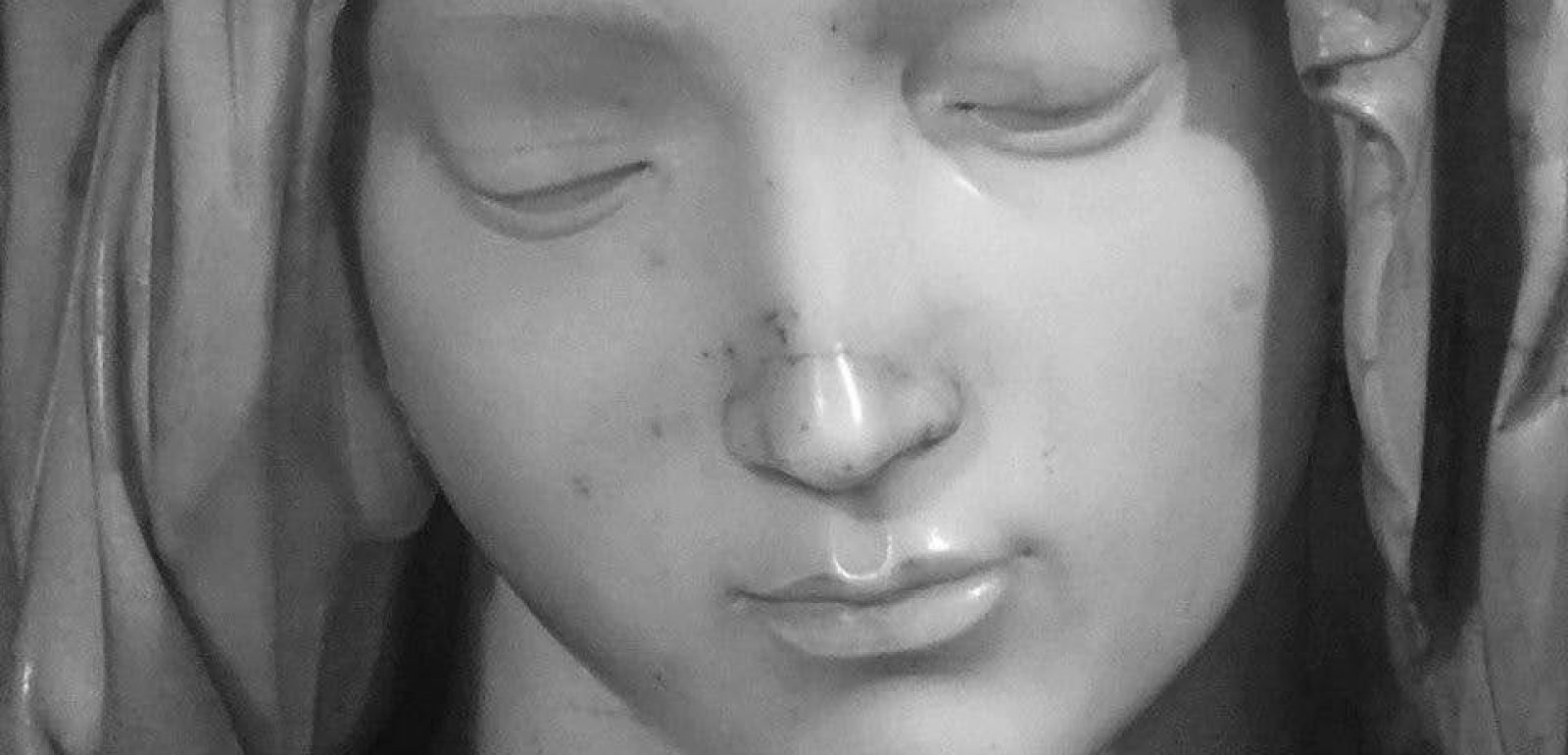
Non chiamatelo Braghettone: il 4 aprile del 1566 muore Daniele da Volterra, l’artista che salvò il Giudizio Universale
Roma, 4 aprile 1566. Due anni dopo che lasciai questo mondo, anche Daniele da Volterra mi raggiunse nell’eternità. Con lui se ne andava non solo un artista, ma uno dei pochi uomini che seppero davvero comprendere il peso della mia arte e soprattutto della mia vita.
Daniele fu presenza costante, discreta, leale. Rimase al mio fianco fino al mio ultimo respiro, condividendo fatiche, silenzi e visioni.

La formazione artistica: da Sodoma a Roma, fino al mio fianco
Prima di giungere a me, Daniele aveva appreso i fondamenti della pittura da maestri illustri come il Sodoma, Baldassarre Peruzzi e Perin del Vaga.
Quando arrivò a Roma, portava già con sé una mano sicura e uno spirito attento. Ma fu nel nostro incontro che affinò davvero il suo linguaggio, avvicinandosi a quella tensione interiore che la mia arte esigeva.
La Cappella Orsini e la “Discesa dalla Croce”: il talento di Daniele
Tra le sue prime grandi prove vi furono gli affreschi della Cappella Orsini nella Chiesa della Trinità dei Monti. Lì Daniele diede forma a una delle sue opere più intense: la Discesa dalla Croce, realizzata intorno al 1545.
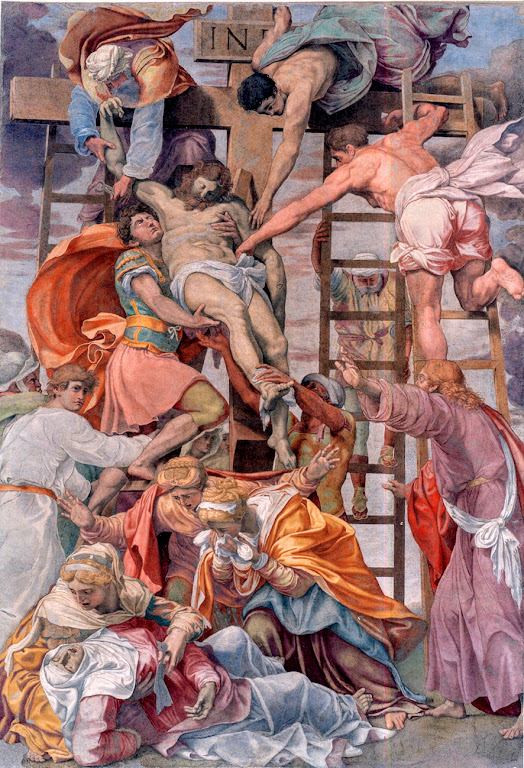
In quell’opera vidi chiaramente la sua capacità: compostezza, forza drammatica e una devozione sincera alla figura umana. Fu un pittore degno, anche se la storia, troppo spesso, sceglie cosa ricordare e cosa dimenticare.
Il “Braghettone”: la verità dietro il Giudizio Universale
Molti oggi ricordano Daniele soltanto per un soprannome ingiusto: il “Braghettone”.
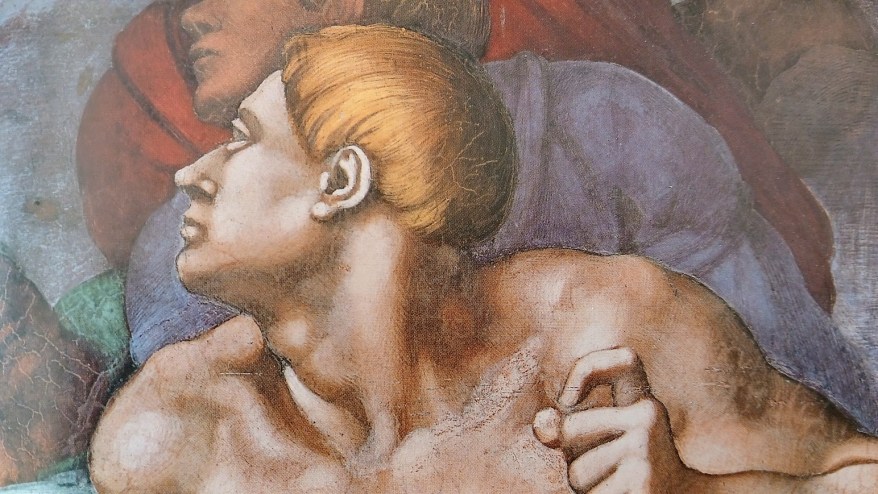
Dopo il Concilio di Trento, gli venne imposto di coprire le nudità del mio Giudizio Universale nella Cappella Sistina. Non fu una scelta sua, ma un ordine.
Eppure, fu proprio lui a salvare quell’opera dalla distruzione. Intervenne a secco, rispettando quanto più possibile la mia pittura, pur dovendo alterare a buon fresco, scalpellando via la porzione del mio affresco, le due figure di San Biagio e Santa Caterina.

Chi, se non Daniele, avrebbe potuto farlo senza tradire completamente il mio lavoro? Nessuno conosceva la mia mano come lui.
Il ritratto e l’amicizia: quando un artista vede l’anima
Un giorno, mentre gli anni gravavano sulle mie spalle, Daniele decise di ritrarmi.
Non cercò di abbellirmi. Non nascose le rughe, né addolcì quella malinconia che da sempre abitava il mio sguardo. Mi restituì per ciò che ero: stanco, pensoso, vero.
Da quel disegno nacque anche la mia presenza nell’Assunzione della Vergine, sempre alla Trinità dei Monti, dove egli mi diede le sembianze di un apostolo.

I busti e le opere incompiute: un’eredità interrotta
Il mio nipote Lionardo gli affidò la realizzazione di due busti in bronzo con le mie sembianze. Poco dopo anche Diomede Leoni gli commissionò un’opera simile.
Ma la morte giunse prima che potesse portarli a compimento. Così, come spesso accade agli artisti, anche parte della sua eredità rimase sospesa nel tempo.

Oltre la storia: chi era davvero Daniele da Volterra
Daniele fu uno dei pochi che seppero restare accanto a me negli anni più gravosi, quando la fama pesava più della pietra e ogni commissione era un tormento. Fu uomo sensibile, leale, silenzioso.
La storia lo ha ridotto a un soprannome. Io lo ricordo per ciò che fu davvero: un artista sincero e un amico raro.
E se oggi qualcuno guarda ancora il mio Giudizio Universale, sappia che lo deve anche a lui.
Per il momento il sempre vostro Michelangelo Buonarroti vi saluta dandovi appuntamento ai prossimi post e sui social.
Don’t call him Braghettone: on April 4, 1566, Daniele da Volterra, the artist who saved the Last Judgment, died.
Rome, April 4, 1566. Two years after I left this world, Daniele da Volterra also joined me in eternity. With him, not only an artist passed away, but one of the few men who truly understood the weight of my art and, above all, my life.
Daniele was a constant, discreet, loyal presence. He remained at my side until my last breath, sharing toil, silence, and visions.
Artistic training: from Sodoma to Rome, to my side
Before coming to me, Daniele had learned the fundamentals of painting from illustrious masters such as Sodoma, Baldassarre Peruzzi, and Perin del Vaga.
When he arrived in Rome, he already brought with him a sure hand and a careful spirit. But it was during our meeting that he truly refined his language, approaching the inner tension that my art demanded.
The Orsini Chapel and the “Descent from the Cross”: Daniele’s Talent
Among his first great efforts were the frescoes in the Orsini Chapel in the Church of Trinità dei Monti. There, Daniele created one of his most intense works: the Descent from the Cross, created around 1545.
In that work, I clearly saw his talent: composure, dramatic force, and a sincere devotion to the human figure. He was a worthy painter, even if history too often chooses what to remember and what to forget.
The “Braghettone”: the truth behind the Last Judgment
Many today remember Daniele only by an unfair nickname: the “Braghettone.”
After the Council of Trent, he was ordered to cover the nudity of my Last Judgment in the Sistine Chapel. It wasn’t his choice, but an order.
Yet, it was he who saved that work from destruction. He worked dry, respecting my painting as much as possible, even though he had to alter the two figures of Saint Blaise and Saint Catherine in fresco, chiseling away a portion of my fresco.
Who, if not Daniele, could have done this without completely betraying my work? No one knew my hand like he did.
Portrait and friendship: when an artist sees the soul
One day, as the years weighed on my shoulders, Daniele decided to paint me.
He didn’t try to beautify me. He didn’t hide the wrinkles, nor did he soften the melancholy that had always inhabited my gaze. He restored me for what I was: tired, pensive, true.
From that drawing also arose my presence in the Assumption of the Virgin, also at the Trinità dei Monti, where he gave me the appearance of an apostle.
Busts and Unfinished Works: An Interrupted Legacy
My nephew Lionardo commissioned him to create two bronze busts of my likeness. Shortly thereafter, Diomede Leoni also commissioned a similar work.
But death came before he could complete them. Thus, as often happens with artists, part of his legacy remained suspended in time.
Beyond History: Who Daniele da Volterra Really Was
Daniele was one of the few who knew how to stay by my side during the most difficult years, when fame weighed more than stone and every commission was a torment. He was a sensitive, loyal, and quiet man.
History has reduced him to a nickname. I remember him for what he truly was: a sincere artist and a rare friend.
And if anyone still looks at my Last Judgment today, know that they also owe it to him.
For now, yours truly, Michelangelo Buonarroti bids you farewell, and I’ll see you in future posts and on social media.

Sostienici – Support Us
Se questo blog ti piace e ti appassiona, puoi aiutarci a farlo crescere sempre più sostenendoci in modo concreto condividendo i post, seguendo le pagine social e con un contributo che ci aiuta ad andare avanti con il nostro lavoro di divulgazione. . ENGLISH: If you like and are passionate about this blog, you can help us make it grow more and more by supporting us in a concrete way by sharing posts, following social pages and with a contribution that helps us to move forward with our dissemination work.
10,00 €

Condividi:


Questo sono io




sostienici

Sostienici – Support Us
Se questo blog ti piace e ti appassiona, puoi aiutarci a farlo crescere sempre più sostenendoci in modo concreto condividendo i post, seguendo le pagine social e con un contributo che ci aiuta ad andare avanti con il nostro lavoro di divulgazione. . ENGLISH: If you like and are passionate about this blog, you can help us make it grow more and more by supporting us in a concrete way by sharing posts, following social pages and with a contribution that helps us to move forward with our dissemination work.
€10,00


