

La Deposizione del Pontormo: il capolavoro dell’artista
Ti coinvolge. Ti mette a disagio. Ti costringe a sentire.
E’ la Deposizione dalla Croce, dipinta da Jacopo Pontormo tra il 1525 e il 1528 per la Cappella Capponi, all’interno della Chiesa di Santa Felicita.
Un’opera a tempera su tavola che rappresenta uno degli esempi più alti del Manierismo, lo stile che rompe con l’armonia rinascimentale per abbracciare l’artificio, la tensione e l’emozione.
Un vortice di dolore e bellezza
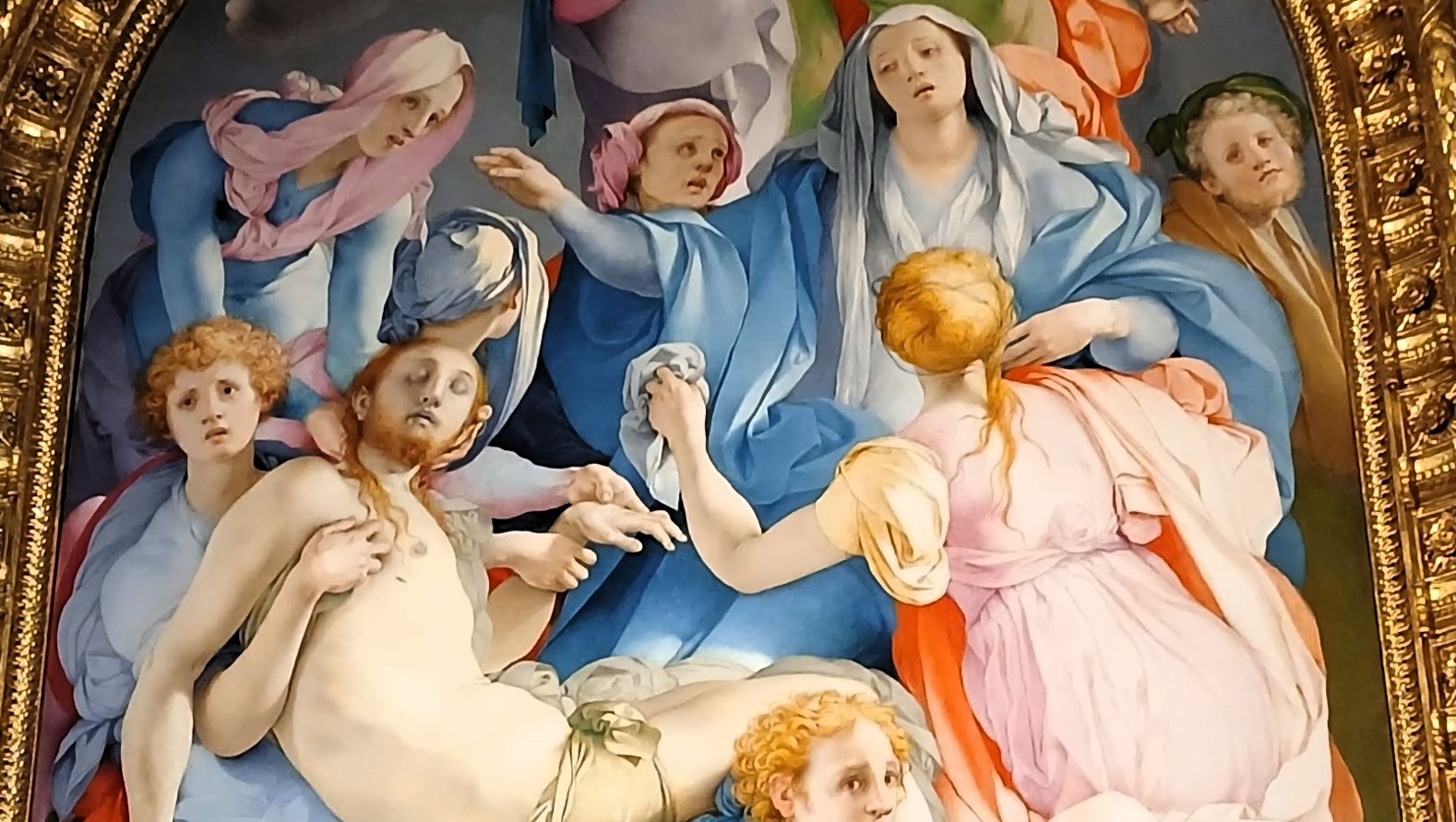
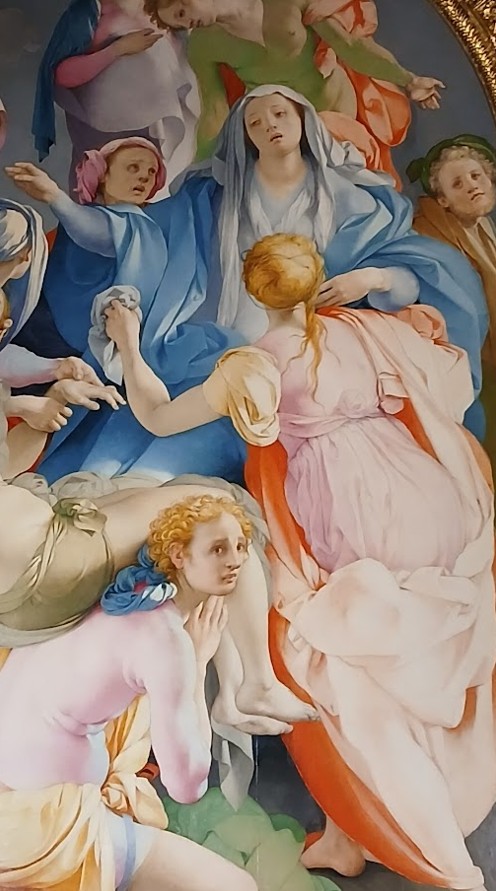
La scena colpisce subito: non c’è una croce visibile, ma un intreccio complesso di corpi sospesi nello spazio. Due giovani angeli apteri, ovvero senza ali, sorreggono il corpo di Cristo, mentre un gruppo di donne circonda la Vergine Maria, vestita di un intenso celeste.
Le figure sembrano fluttuare, sovrapporsi, quasi danzare in un equilibrio fragile. Tutto è movimento, tutto è emozione. È il dolore che prende forma.
Maria al centro: più grande, più umana
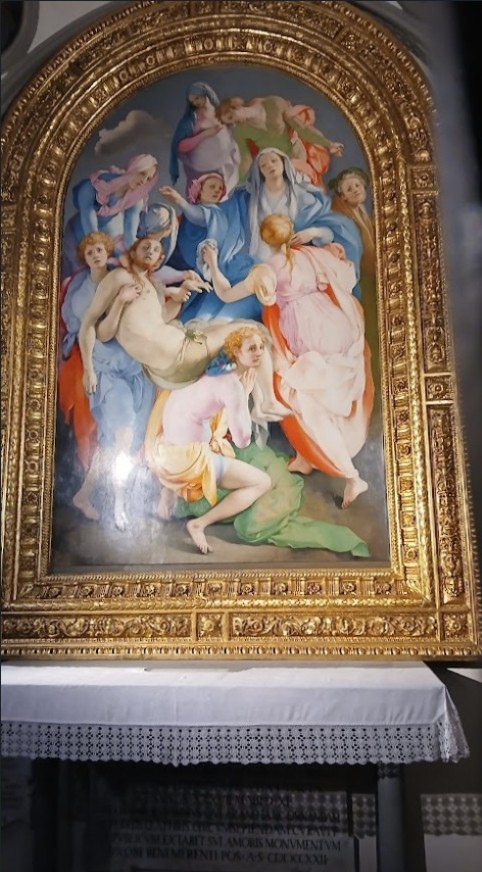
Osservando con attenzione, si nota un dettaglio: la Vergine è più grande rispetto agli altri personaggi. Non è un errore, ma una scelta precisa di Pontormo per sottolineare il suo ruolo centrale.
Maria è il fulcro emotivo dell’opera. Il suo corpo, sorretto dalle donne, sembra cedere sotto il peso della perdita. È un dolore universale, che travolge chi guarda.
Il volto di Cristo: la pace dopo la sofferenza
Il Cristo dipinto da Pontormo ha un volto morbido, sfumato, che richiama la tecnica di Leonardo da Vinci. Le delicate gradazioni di colore trasmettono una calma profonda.
Non c’è più lotta, non c’è più tensione: solo silenzio. È la quiete definitiva di un corpo ormai senza vita.
Dettagli nascosti e simboli sacri
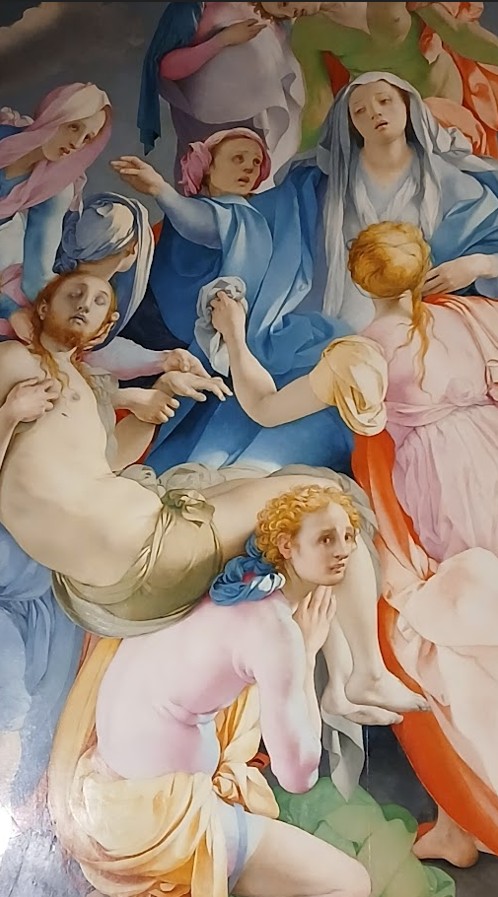
L’opera è ricca di riferimenti simbolici. In alto a sinistra, una donna tiene un sudario: un richiamo alla Sacra Sindone
Poco sotto, un’altra figura mostra un panno davanti al volto di Cristo: il velo della Veronica. Sulla destra, Pontormo inserisce se stesso: il volto di Giuseppe d’Arimatea è infatti il suo autoritratto.
Lo sguardo che interroga lo spettatore
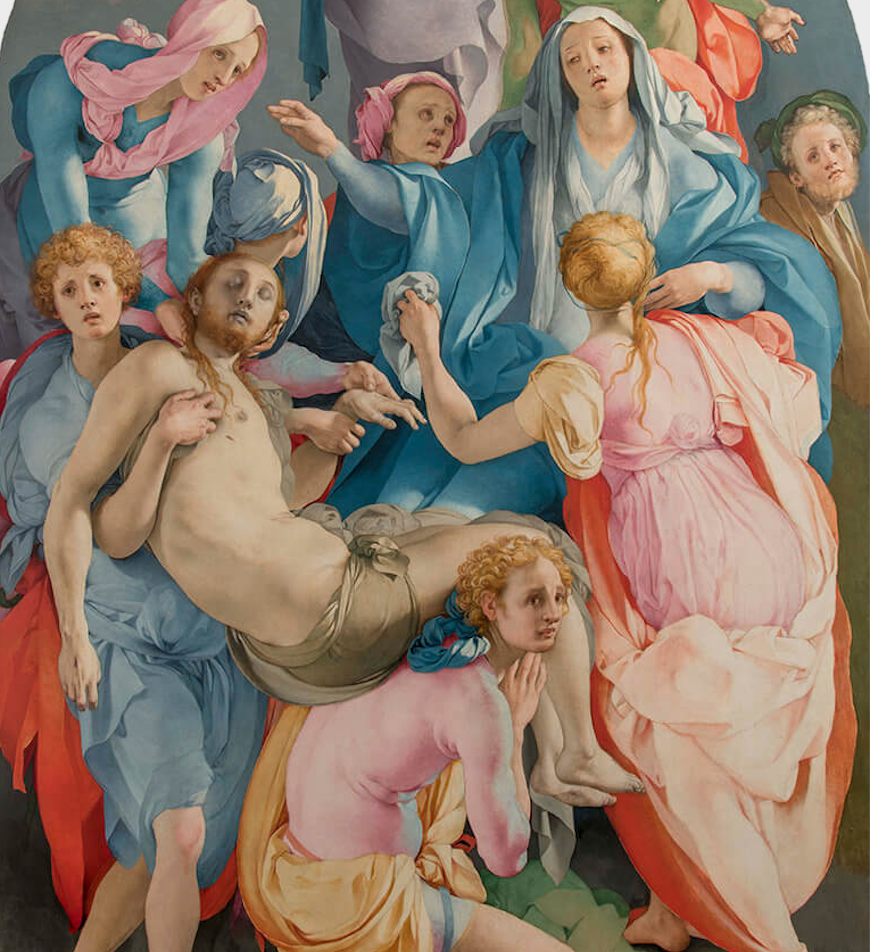
C’è un dettaglio che voglio ancora farvi notare: l’angelo in primo piano, che sostiene le gambe di Cristo, guarda direttamente negli occhi chi osserva. Non è uno sguardo neutro. È una domanda.
È come se dicesse: “Cosa gli avete fatto?”
Il corpo di Cristo ricorda chiaramente quello che scolpii anni prima per il Cristo della Pietà Vaticana. Ma Pontormo non copia: cita e reinterpreta in chiave manierista quel marmo scolpito.
Per il momento il sempre vostro Michelangelo Buonarroti vi saluta dandovi appuntamento ai prossimi post e sui social.
Pontormo’s Deposition: the unsettling masterpiece
It draws you in. It makes you uncomfortable. It forces you to feel.
It’s the Deposition from the Cross, painted by Jacopo Pontormo between 1525 and 1528 for the Capponi Chapel, inside the Church of Santa Felicita.
A tempera on panel work that represents one of the finest examples of Mannerism, the style that broke with Renaissance harmony to embrace artifice, tension, and emotion.
A vortex of pain and beauty
The scene is immediately striking: there is no visible cross, but a complex interweaving of bodies suspended in space. Two young apterous angels, or wingless ones, support the body of Christ, while a group of women surround the Virgin Mary, dressed in intense blue.
The figures seem to float, overlap, almost dancing in a fragile balance. Everything is movement, everything is emotion. It is pain taking shape.
Mary at the Center: Larger, More Human
Looking closely, one detail becomes apparent: the Virgin is larger than the other figures. This is not a mistake, but a deliberate choice by Pontormo to emphasize her central role.
Mary is the emotional center of the work. Her body, supported by the women, seems to yield under the weight of loss. It is a universal pain, overwhelming the viewer.
The Face of Christ: Peace After Suffering
The Christ painted by Pontormo has a soft, nuanced face, reminiscent of Leonardo da Vinci’s technique. The delicate gradations of color convey a profound calm.
There is no longer any struggle, no longer any tension: only silence. It is the definitive stillness of a now lifeless body.
Hidden Details and Sacred Symbols
The work is rich in symbolic references. At the top left, a woman holds a shroud: a reference to the Holy Shroud.
Just below, another figure holds a cloth before Christ’s face: Veronica’s veil. On the right, Pontormo inserts himself: the face of Joseph of Arimathea is, in fact, his self-portrait.
The gaze that questions the viewer
There’s one more detail I want to point out: the angel in the foreground, supporting Christ’s legs, looks the viewer directly in the eyes. It’s not a neutral gaze. It’s a question.
It’s as if he’s saying, “What have you done to him?”
Christ’s body clearly recalls the one I sculpted years earlier for the Christ in the Vatican Pietà. But Pontormo doesn’t copy: he quotes and reinterprets that carved marble in a Mannerist way.
For now, yours truly, Michelangelo Buonarroti bids you farewell and says he’ll see you in future posts and on social media.
Condividi:


Questo sono io




sostienici

Sostienici – Support Us
Se questo blog ti piace e ti appassiona, puoi aiutarci a farlo crescere sempre più sostenendoci in modo concreto condividendo i post, seguendo le pagine social e con un contributo che ci aiuta ad andare avanti con il nostro lavoro di divulgazione. . ENGLISH: If you like and are passionate about this blog, you can help us make it grow more and more by supporting us in a concrete way by sharing posts, following social pages and with a contribution that helps us to move forward with our dissemination work.
€10,00


