

Il lato oscuro della fama
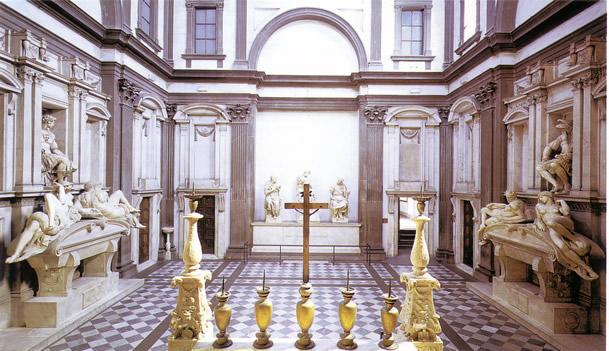
“La fama tiene gli epitaffi a giacere; non va né inanzi né indietro, perché son morti, e el loro operare è fermo”. Buttai su carta questa manciata di parole sotto un disegno che realizzai nei primi anni Venti del Cinquecento, mentre ero impegnato, testa e cuore, nel progetto della Sagrestia Nuova del San Lorenzo, a Firenze.
Su quel foglio avevo tracciato il segno di un’idea non compiuta: due sepolture affiancate, destinate a Lorenzo il Magnifico e al fratello Giuliano de’ Medici, concepite in una disposizione che poi non venne realizzata.
Quelle parole mi giravano nella testa da un po’ e interrogavano sul senso stesso della memoria e della gloria.

La fama
Quando parlo di fama, non intendo quella della lode fine a sé stessa ma l’eco vibrante e viva delle opere compiute. La fama nasce in fondo dall’azione, dalla fatica, dalla creazione e vive finché vive, resiste e l’opera racconta a chi la osserva.
Gli epitaffi, invece, sono parole scolpite per chi non agisce più. Giacciono, fermi, come i corpi che accompagnano. Non avanzano né arretrano, non accrescono né diminuiscono ciò che fu fatto in vita. Sono memoria, sì, ma memoria immobile, fissata nel tempo per sempre.
La fama non ha bisogno degli epitaffi: si fonda su ciò che già è stato compiuto e non può essere mutato.
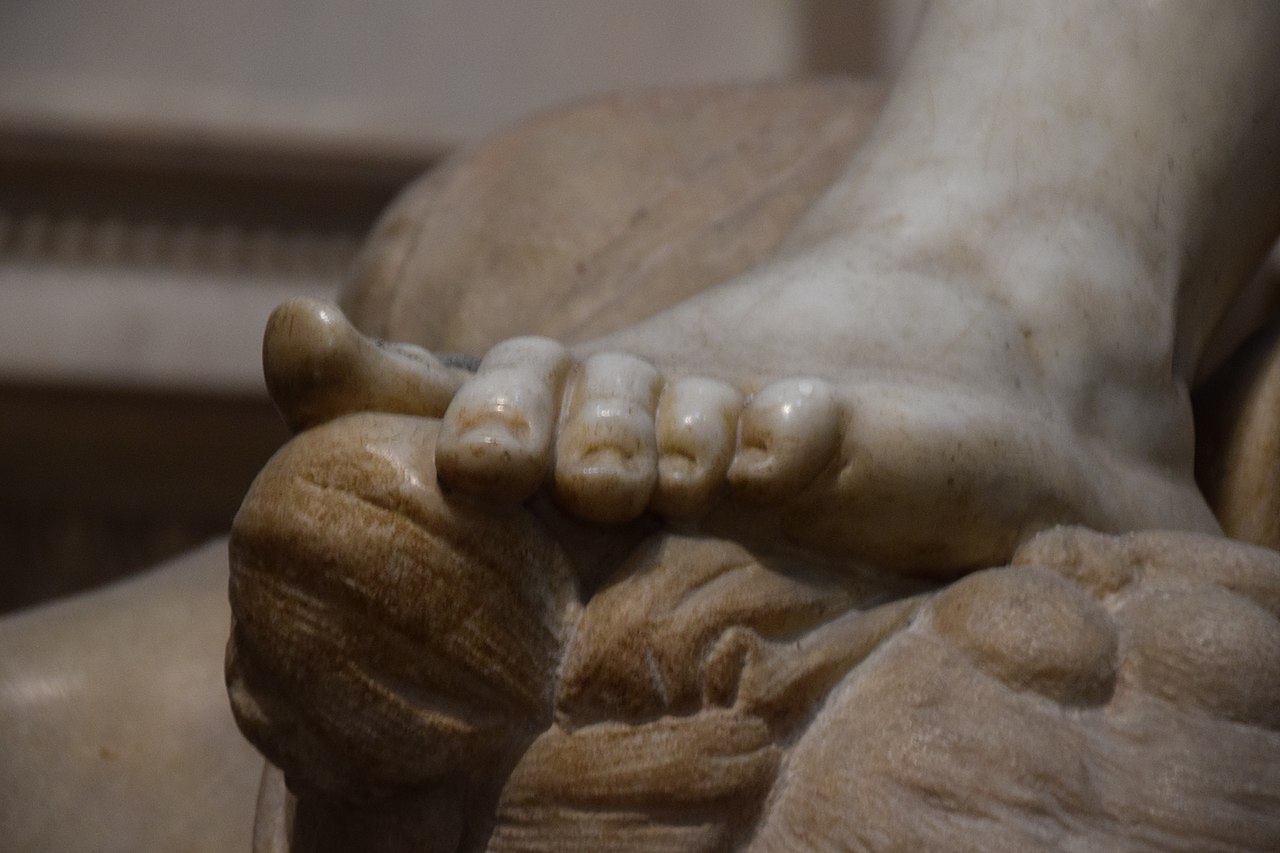
Il dialogo tra immagine e parola nel disegno
La fama tiene gli epitaffi, li mantiene in posizione, li lega al ricordo di chi non è più. Non li fa vivere, ma li custodisce.
Non è che volessi negare la valenza gli epitaffi ma mostrarne il limite: essi non agiscono, non trasformano, non creano. Restano fermi, come fermo è il destino di chi è morto.
L’immobilità della morte e il limite dell’arte
“Non va né inanzi né indietro”: dopo la morte ogni azione è terminata. L’operare è fermo e con lui ogni possibilità di mutamento.
L’arte può rappresentare, evocare, può rendere eterno un nome ma non può restituire il movimento della vita. Anche la fama, per quanto grande essa sia, è legata a ciò che è stato, non a ciò che sarà.

Fama ed epitaffi: relazione di interdipendenza
Non c’è un conflitto tra fama ed epitaffi, ma sono legati da una comune condizione: sono vincolati alla morte.
La fama nasce dalle opere, gli epitaffi le accompagnano. La prima vive nel ricordo attivo degli uomini, i secondi nella pietra e nella parola incisa. Ma entrambe sono fissate in una dimensione immutabile.
La gloria dell’uomo, una volta conclusa la sua vita, non cresce né diminuisce. Resta sospesa, come trattenuta da una forza che non è azione ma memoria.
In fondo ciò che davvero conta è l’operare mentre si è vivi. Dopo, resta solo ciò che è stato fatto. Né le parole incise, né la fama possono mutare quel destino.
La vera grandezza non sta in ciò che si dice di noi dopo la morte, ma in ciò che siamo stati capaci di fare prima che tutto si fermi.
Per il momento il sempre vostro Michelangelo Buonarroti vi saluta dandovi appuntamento ai prossimi post e sui social.
The Dark Side of Fame
La fama tiene gli epitaffi a giacere; non va né inanzi né indietro, perché son morti, e el loro operare è fermo.
I jotted down this handful of words beneath a drawing I made in the early 1500s, while I was deeply involved in the design of the New Sacristy of San Lorenzo in Florence.
On that sheet of paper, I had sketched the outline of an unfinished idea: two side-by-side tombs, intended for Lorenzo the Magnificent and his brother Giuliano de’ Medici, conceived in an arrangement that was never realized.
Those words had been swirling around in my head for a while, questioning the very meaning of memory and glory.
Fame
When I speak of fame, I don’t mean praise for its own sake, but the vibrant, living echo of accomplished works. Fame is ultimately born from action, from toil, from creation, and lives as long as it lives, resists, and the work tells its story to those who observe it.
Epitaphs, on the other hand, are words carved for those who no longer act. They lie, still, like the bodies they accompany. They neither advance nor retreat, they neither increase nor diminish what was accomplished in life. They are memory, yes, but immobile memory, fixed in time forever.
Fame has no need of epitaphs: it is founded on what has already been accomplished and cannot be changed.
The dialogue between image and word in drawing
Fame holds epitaphs, keeps them in place, binds them to the memory of those who are no longer there. It does not make them live, but preserves them.
It is not that I wanted to deny the value of epitaphs but to highlight their limits: they do not act, they do not transform, they do not create. They remain still, as the destiny of the dead is still.
The immobility of death and the limit of art
“It goes neither forward nor backward”: after death, every action is finished. Work is stopped, and with it every possibility of change.
Art can represent, evoke, and make a name eternal, but it cannot restore the movement of life. Even fame, however great, is tied to what has been, not what will be.
Fame and Epitaphs: A Relationship of Interdependence
There is no conflict between fame and epitaphs, but they are linked by a common condition: they are bound to death.
Fame is born from works, epitaphs accompany them. The former lives in the active memory of men, the latter in stone and in the engraved word. But both are fixed in an immutable dimension.
The glory of man, once his life is over, neither grows nor diminishes. It remains suspended, as if held by a force that is not action but memory.
Ultimately, what truly matters is the work done while alive. Afterward, only what has been done remains. Neither engraved words nor fame can change that destiny.
True greatness lies not in what is said of us after death, but in what we were capable of doing before everything stops.
For now, yours truly, Michelangelo Buonarroti, bids farewell and invites you to join him in future posts and on social media.

Sostienici – Support Us
Se questo blog ti piace e ti appassiona, puoi aiutarci a farlo crescere sempre più sostenendoci in modo concreto condividendo i post, seguendo le pagine social e con un contributo che ci aiuta ad andare avanti con il nostro lavoro di divulgazione. . ENGLISH: If you like and are passionate about this blog, you can help us make it grow more and more by supporting us in a concrete way by sharing posts, following social pages and with a contribution that helps us to move forward with our dissemination work.
10,00 €
Articoli
Condividi:


Questo sono io





sostienici

Sostienici – Support Us
Se questo blog ti piace e ti appassiona, puoi aiutarci a farlo crescere sempre più sostenendoci in modo concreto condividendo i post, seguendo le pagine social e con un contributo che ci aiuta ad andare avanti con il nostro lavoro di divulgazione. . ENGLISH: If you like and are passionate about this blog, you can help us make it grow more and more by supporting us in a concrete way by sharing posts, following social pages and with a contribution that helps us to move forward with our dissemination work.
€10,00


