
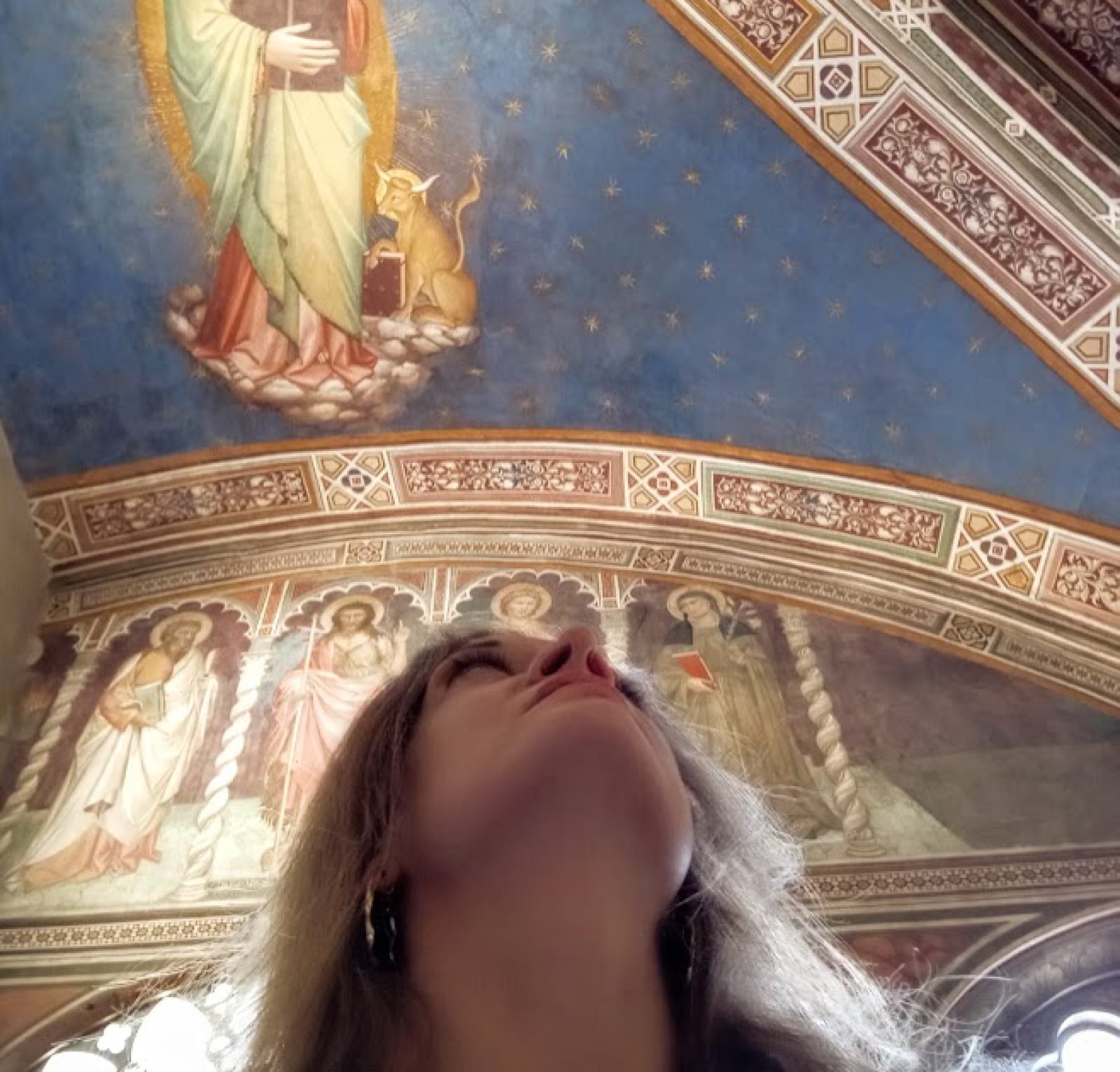
Il lato più ridicolo della censura
La censura non è mai una buona idea e spesso dimostra tutta la sua debolezza, andando a celare alla vista ciò che non esiste.
Proprio così, avete letto bene. Si è abbattuta come una mannaia sulle opere mie nel corso dei secoli e a volte si è dimostrata sommariamente stupida.
La censura più celebre senza dubbio è quella del Giudizio Universale a seguito della conclusione del Concilio di Trento. Quella delle braghe però fu una censura che contribuì a salvare l’intero affresco: coprendo le nudità considerate oscene dal Concilio, si evitò di far distruggere l’opera, triste destino riservato a molti altri capolavori in quel frangente.
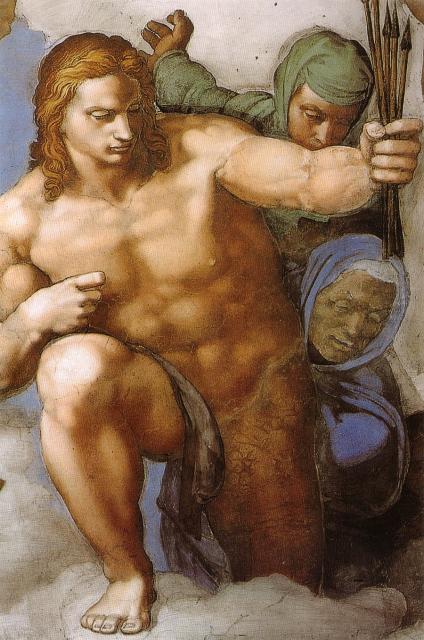
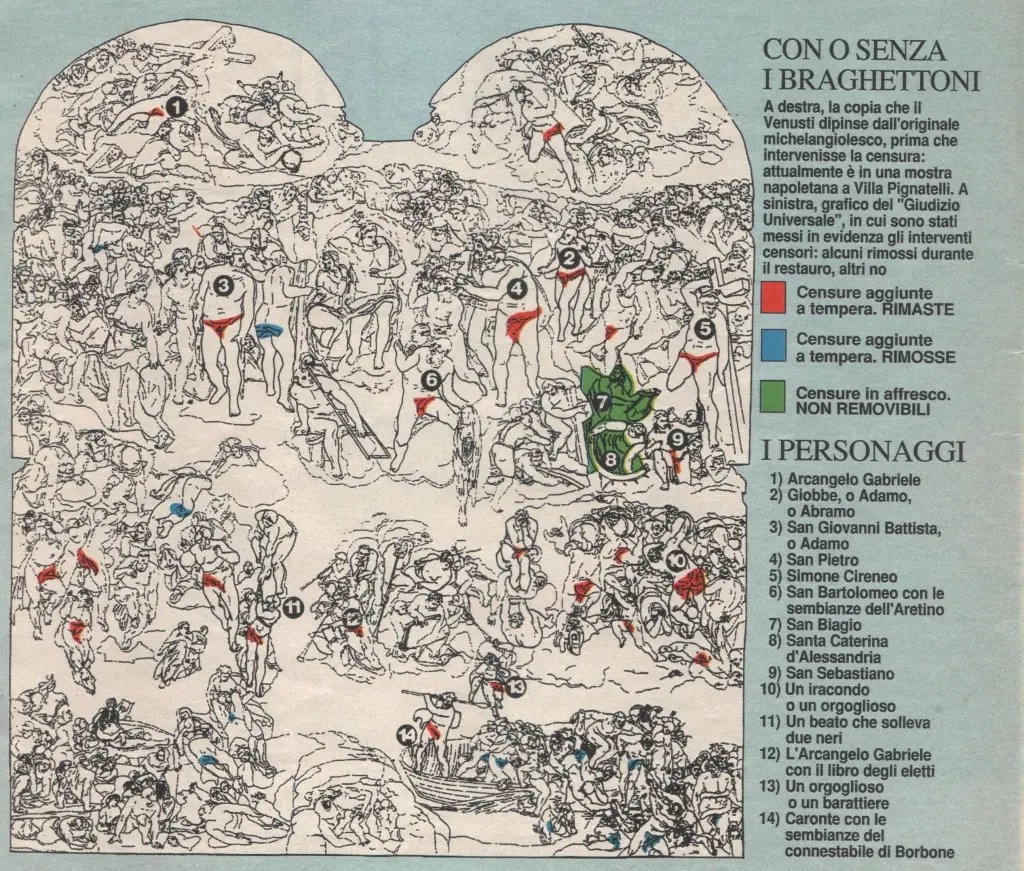
Accadde però che le braghe imposte dal Concilio erano solo 22, iniziate a realizzare dal mio amico, assistente e collaboratore Daniele da Volterra e dopo la sua morte proseguite da Domenico Carnevali.
Poi la questione sfuggì di mano e oltre ai peni coperti come previsto inizialmente, nei secoli successivi si esagerò coprendo pure i culi con braghe sempre più grandi intervenendo sull’opera fino a metà dell’Ottocento, arrivando così a 44 braghe.
Il David invece fu addobbato con una foglia di fico quando ancora ero in vita, dopo che partii alla volta di Roma in via definitiva nel settembre del 1534. Si trova traccia esplicita di questa censura in una lettera che mi scrisse Pietro Aretino. Nel momento in cui si scagliò contro il Giudizio Universale di fatto per non aver ottenuto da me alcun disegno come più volte richiesto, mi comunicò che al David era stata apposta la foglia per coprire il sesso.
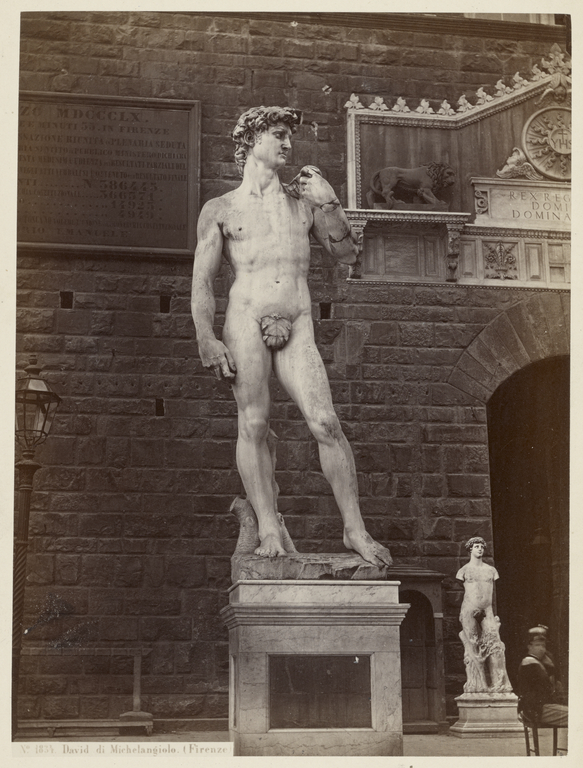
Quella foglia rimase in essere per secoli tanto che quando il gigante fu portato nella Galleria dell’Accademia, ancora la possedeva. Fu rimossa solo in un secondo momento.
Anche le quattro ore del giorno della Sagrestia Nuova furono censurate con dei panneggi posticci e addirittura il Genio della Vittoria di Palazzo Vecchio.
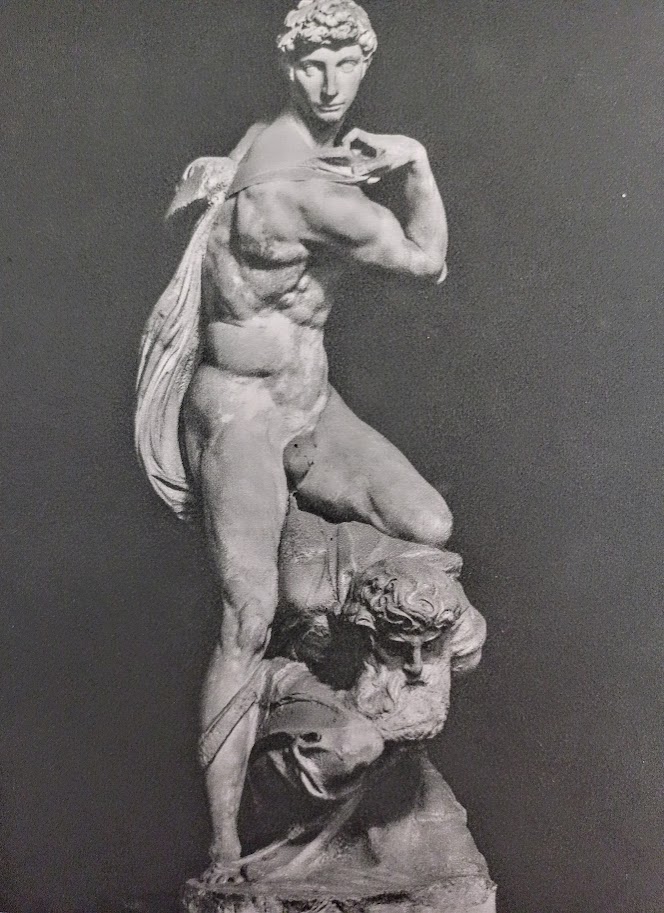
Sapete che furono censurate addirittura opere mie che il pisello avevano perduto a causa di differenti vicissitudini?
Mi domando cosa volessero censurare in tal caso visto che oramai ciò che era giudicato impudico non esisteva più.
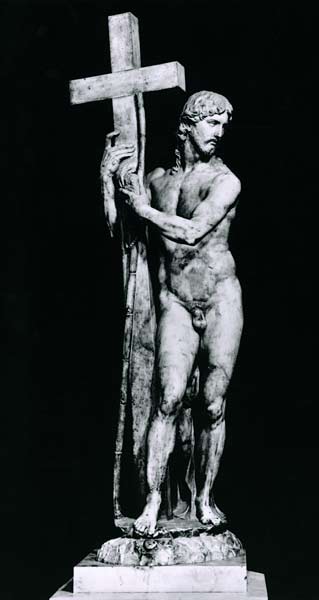
Fu il Cristo Portacroce di Santa Maria Sopra Minerva subire questa sorte con un brutto panneggio in metallo che tutt’oggi indossa ma da lungi i Giustiniani gli avevano fatto saltar via il membro con una martellata ben assestata. Quindi cos’era necessario nascondere? Per un breve tempo al Cristo furono rimossi tutti gli orpelli aggiungi arbitrariamente come l’aureola di metallo, la scarpetta che proteggeva il piede dai tocchi continui dai fedeli e pure l’osceno panneggio e nelle foto scattate in quel frangente, risalenti ai primi del Novecento, ben si osserva quella mancanza.
Ma non è finita qua.
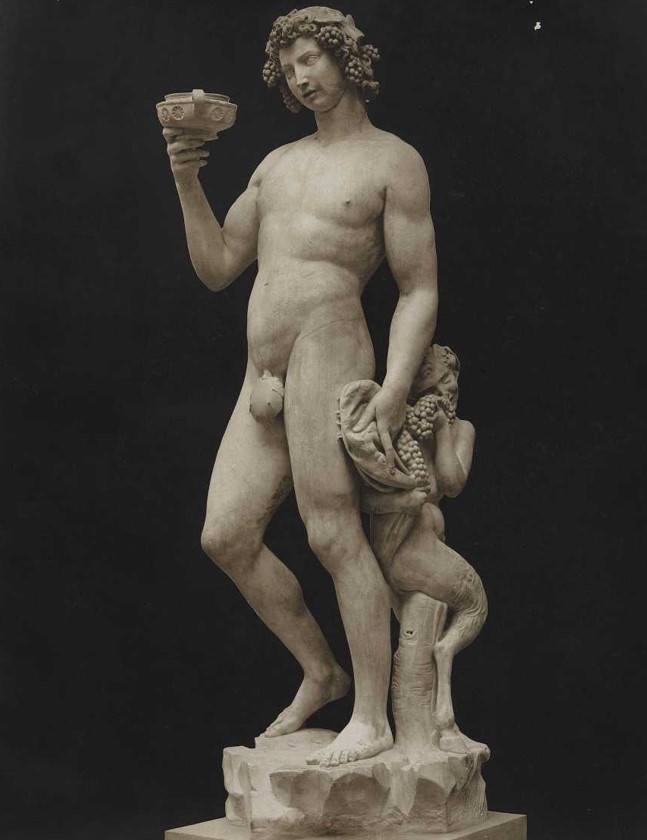
Al Bacco toccò la stessa sorte. Lui che da secoli era senza pene, già da quando si trovava nel giardino del Galli, fu sottoposto all’orribile pratica della censura.
Il fatto che l’opera fosse da lungi senza pene lo dimostra chiaramente un disegno appartenente oggi al Trinity College, realizzato attorno al 1550 circa. Esiste anche un’incisione più remota ma in quella non si vede la parte frontale dell’opera, essendo il Bacco posizionato di tre quarti.
In una foto di Anderson risalente agli anni Trenta del Novecento in cui si vede l’oscena foglia di fico apposta dinanzi al pube per coprire ciò che da lungi non esisteva più.
Come vedete la censura è capace di mostrare il suo lato ridicolo anche nelle circostanze più inaspettate.

Per il momento il sempre vostro Michelangelo Buonarroti vi saluta dandovi appuntamento ai prossimi post e sui social.


Sostienici – Support Us
Se questo blog ti piace e ti appassiona, puoi aiutarci a farlo crescere sempre più sostenendoci in modo concreto condividendo i post, seguendo le pagine social e con un contributo che ci aiuta ad andare avanti con il nostro lavoro di divulgazione. . ENGLISH: If you like and are passionate about this blog, you can help us make it grow more and more by supporting us in a concrete way by sharing posts, following social pages and with a contribution that helps us to move forward with our dissemination work.
10,00 €
The Ridiculous Side of Censorship
Censorship is never a good idea and often shows all its weakness, hiding from view what does not exist.
That’s right, you read it right. It has fallen like an axe on my works over the centuries and at times it has proven to be summarily stupid.
The most famous censorship is undoubtedly that of the Last Judgement following the conclusion of the Council of Trent. However, that of the trousers was a censorship that helped save the entire fresco: by covering the nudity considered obscene by the Council, the work was avoided from being destroyed, a sad fate reserved for many other works at that time.
However, it happened that the trousers imposed by the Council were only 22, started to be made by my friend, assistant and collaborator Daniele da Volterra and continued after his death by Carnevali. Then the matter got out of hand and in addition to the penises covered as initially planned, in the following centuries they exaggerated by also covering the asses with increasingly larger pants, intervening on the work until the mid-nineteenth century, thus arriving at 44 pants.
The David instead was decorated with a fig leaf when I was still alive, after I left for Rome permanently in September 1534. There is an explicit trace of this censorship in a letter that Pietro Aretino wrote to me. At the moment in which he lashed out against the Last Judgement in fact for not having obtained any drawing from me as repeatedly requested, he informed me that the leaf had been placed on the David to cover the sex.
That leaf remained in place for centuries so much so that when the giant was taken to the Galleria dell’Accademia, he still had it. It was removed only at a later time.
Even the four hours of the day of the New Sacristy were censored with false draperies and even the Genius of Victory in Palazzo Vecchio.
Did you know that even my works were censored that had lost their penis due to various vicissitudes?
I wonder what they wanted to censor in that case since what was considered immodest no longer existed.
It was the Cristo Portacroce di Santa Maria Sopra Minerva who suffered this fate with an ugly metal drapery that he still wears today but from afar the Giustiniani had knocked off his member with a well-placed hammer blow. So what was necessary to hide? For a short time all the arbitrarily added frills were removed from Christ, such as the metal halo, the shoe that protected the foot from the constant touches of the faithful and even the obscene drapery and in the photos taken at that time, dating back to the early twentieth century, that lack is clearly visible.
But it didn’t end there.
The same fate befell Bacchus. He who has been without a penis for centuries, probably since he was in the Galli garden, was subjected to the horrible practice of censorship. There is a photo of Anderson dating back to the 1930s in which you can see the obscene fig leaf placed in front of the pubis to cover what from afar no longer existed.
As you can see, censorship is capable of showing its ridiculous side even in the most unexpected circumstances.
For the moment, your ever Michelangelo Buonarroti bids you farewell, making an appointment with you in the next posts and on social media.
Sostienici – Support Us
Se questo blog ti piace e ti appassiona, puoi aiutarci a farlo crescere sempre più sostenendoci in modo concreto condividendo i post, seguendo le pagine social e con un contributo che ci aiuta ad andare avanti con il nostro lavoro di divulgazione. . ENGLISH: If you like and are passionate about this blog, you can help us make it grow more and more by supporting us in a concrete way by sharing posts, following social pages and with a contribution that helps us to move forward with our dissemination work.
10,00 €
-
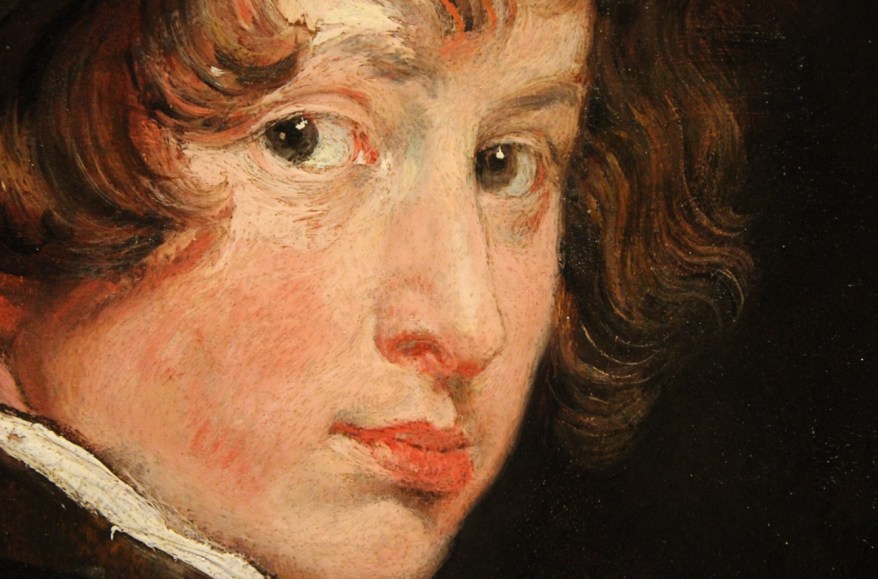
Van Dyck a Genova: la mostra che emoziona tra luce, mirabili dettagli e sguardi indimenticabili
🇮🇹Ho avuto modo di visitare la mostra “Van Dyck l’Europeo” a Genova: un viaggio emozionante tra Anversa, Genova e Londra attraverso dettagli, sguardi e capolavori senza tempo… 🇬🇧I had the opportunity to visit the exhibition “Van Dyck the European” in Genoa: an exciting journey between Antwerp, Genoa, and London through details, glances, and timeless masterpieces…
-
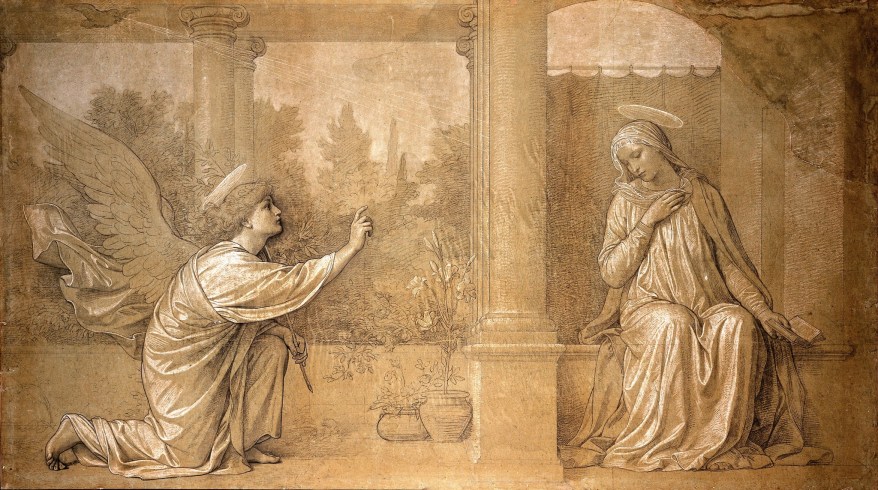
Quando il Capodanno cadeva il 25 marzo: l’Annunciazione di Alessandro Franchi
🇮🇹Il 25 marzo si celebra l’Annunciazione che per secoli, a Firenze e nel resto della Toscana, segnava l’inizio del nuovo anno. Tra le opere più suggestive che raffigurano l’Annunciazione, vi propongo il cartone realizzato da Alessandro Franchi intorno al 1884… 🇬🇧March 25th marks the celebration of the Annunciation, which for centuries marked the beginning of…
-
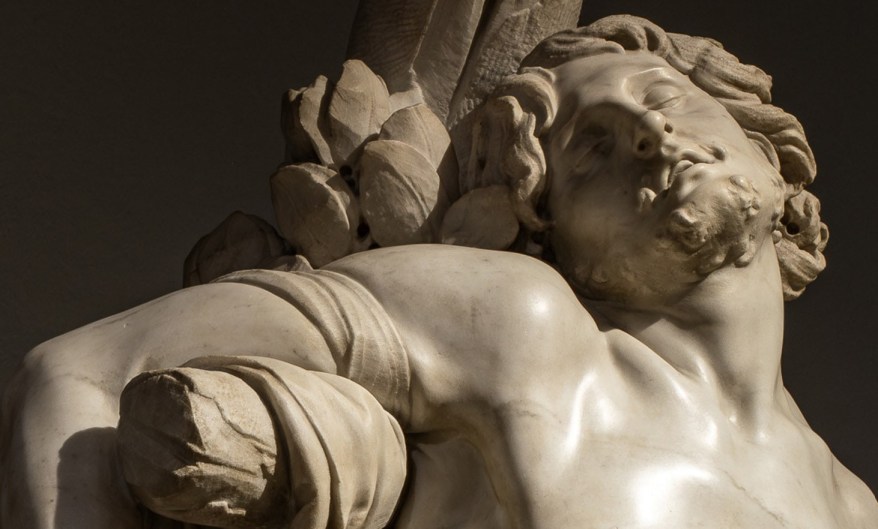
San Sebastiano del Bernini: il marmo che respira tra vita e morte
🇮🇹 Il San Sebastiano di Gian Lorenzo Bernini è un’opera che cattura l’attimo tra vita e morte: meno martirio, più emozione pura. Voluto da Maffeo Barberini, è uno dei capolavori giovanili più intensi del Barocco… 🇬🇧 Gian Lorenzo Bernini’s Saint Sebastian is a work that captures the moment between life and death: less martyrdom, more…
Condividi:


Questo sono io





sostienici

Sostienici - Support Us
Se questo blog ti piace e ti appassiona, puoi aiutarci a farlo crescere sempre più sostenendoci in modo concreto condividendo i post, seguendo le pagine social e con un contributo che ci aiuta ad andare avanti con il nostro lavoro di divulgazione. . ENGLISH: If you like and are passionate about this blog, you can help us make it grow more and more by supporting us in a concrete way by sharing posts, following social pages and with a contribution that helps us to move forward with our dissemination work.
€10,00


