
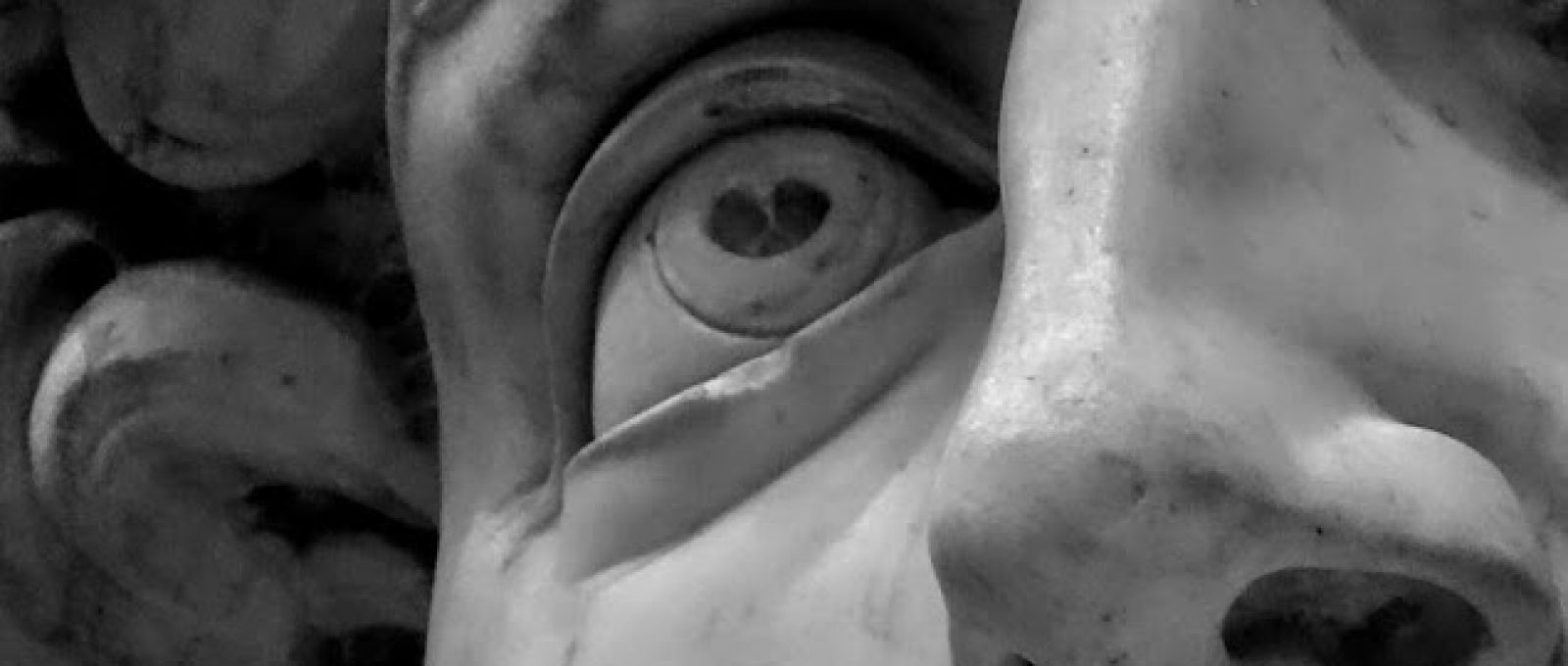
Quel malinconico ritratto che mi fece il Passarotti
Ho perso il conto di quanti ritratti m’han dedicato nel corso degli anni ma ogni tanto qualcuno di quelli più interessanti mi torna in mente e ve lo ripropongo molto volentieri.
Quello che vedete fu realizzato dal Bartolomeo Passarotti a inchiostro bruno su carta. Come potete leggere nella scritta fatta da chissà chi nell’angolo in basso a sinistra, per diversi anni il disegno fu erroneamente creduto ritrarre il Bandinelli.
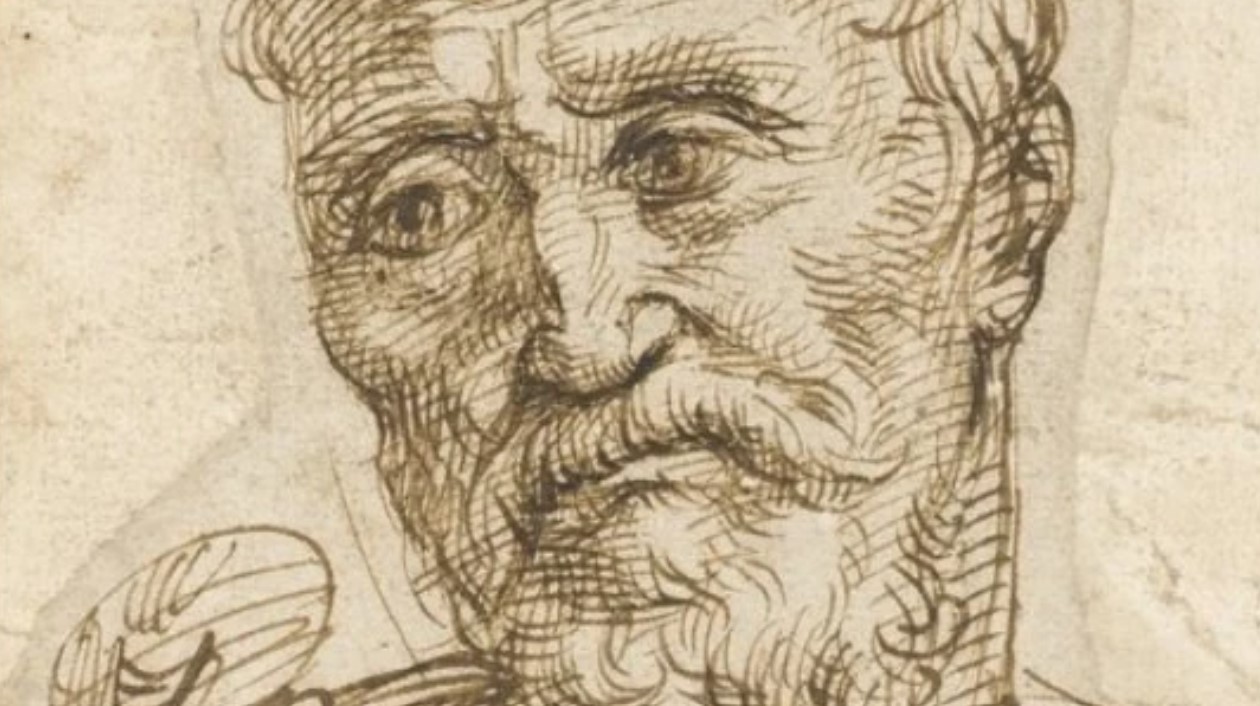
Il Passarotti, nato a Bologna il 28 giugno 1529, aveva 54 anni meno di me. Realizzò questo ritratto postumo riprendendo la fisionomia tracciata da Daniele da Volterra nei busti in bronzo che aveva realizzato.
Ora non è dato sapere se il disegno lo fece guardando direttamente uno dei busto o limitandosi a rilevare i miei tratti da disegni di quelle opere bronzee.
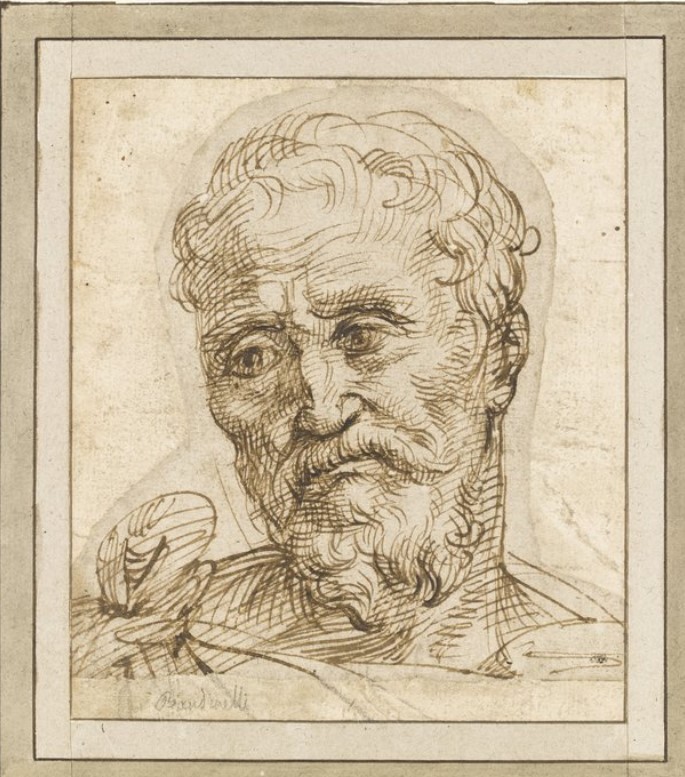
Mi preme precisare che il pittore realizzò altre due copie di questo disegno, assai più rifinite nei dettagli. Una di queste è custodite presso il British Museum di Londra mentre l’altra è in mano a collezionisti privati.
Il foglio che vi ho proposto io invece appartiene al dipartimento delle arti grafiche del Louvre.
Per il momento il sempre vostro Michelangelo Buonarroti vi saluta dandovi appuntamento ai prossimi post e sui social.
That melancholy portrait that Passarotti painted of me
I have lost count of how many portraits have been dedicated to me over the years but every now and then some of the most interesting ones come to mind and I am happy to present them to you again.
What you see was created by Bartolomeo Passarotti in brown ink on paper. As you can read in the writing made by who knows who in the lower left corner, for several years the drawing was mistakenly believed to portray Bandinelli.
Passarotti, born in Bologna on 28 June 1529, was 54 years younger than me. He created this posthumous portrait taking up the physiognomy traced by Daniele da Volterra in the bronze busts he had created.
Now it is not known whether the drawing was made by looking directly at one of the busts or by simply taking my features from drawings of those bronze works.
I would like to point out that the painter made two other copies of this drawing, with much more refined details. One of these is kept at the British Museum in London while the other is in the hands of private collectors.
The sheet that I proposed to you instead belongs to the graphic arts department of the Louvre.
For the moment, your always Michelangelo Buonarroti greets you and will meet you in the next posts and on social media.

Sostienici – Support Us
Se questo blog ti piace e ti appassiona, puoi aiutarci a farlo crescere sempre più sostenendoci in modo concreto condividendo i post, seguendo le pagine social e con un contributo che ci aiuta ad andare avanti con il nostro lavoro di divulgazione. . ENGLISH: If you like and are passionate about this blog, you can help us make it grow more and more by supporting us in a concrete way by sharing posts, following social pages and with a contribution that helps us to move forward with our dissemination work.
8,00 €
-
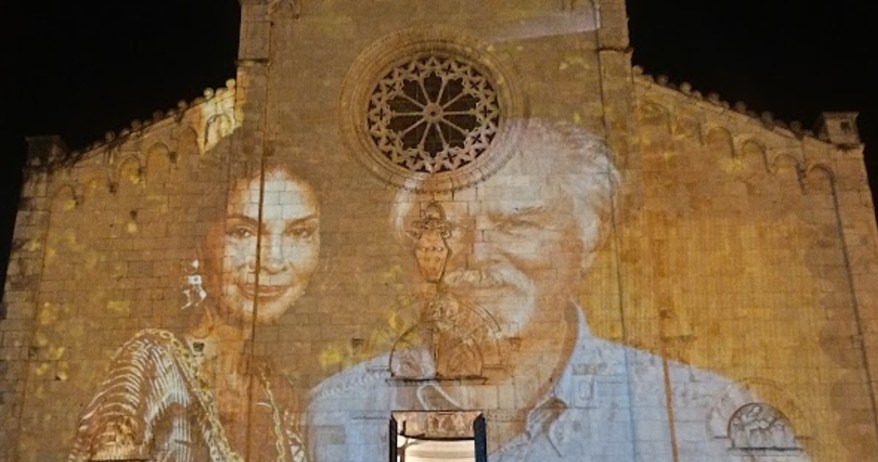
Pietrasanta: un museo per Fernando Botero
🇮🇹Pietrasanta prepara un museo dedicato a Fernando Botero con circa 90 bozzetti a Palazzo Panichi. Il legame con la città che lo nominò cittadino onorario nel 2001… 🇬🇧Pietrasanta is preparing a museum dedicated to Fernando Botero, featuring around 90 sketches at Palazzo Panichi. This reflects his connection to the city, which named him an honorary…
-

Il ritratto enigmatico di Petrus Christus
🇮🇹Chi è la giovane ritratta da Petrus Christus? Un volto misterioso, abiti preziosi e la luce del capolavoro fiammingo del 1470… 🇬🇧Who is the young woman portrayed by Petrus Christus? A mysterious face, exquisite attire, and the light of a Flemish masterpiece from 1470…
-
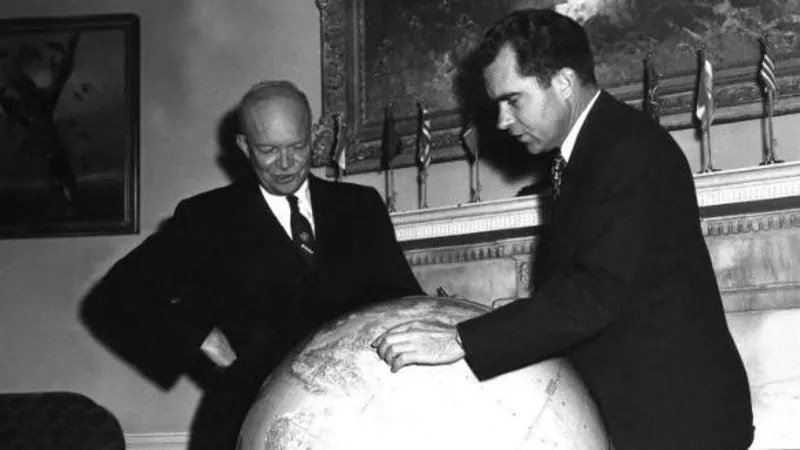
Pentagono, danneggiato il mappamondo legato a Eisenhower: era destinato all’ufficio di Hegseth
🇮🇹Il mappamondo di Eisenhower, cimelio della Seconda guerra mondiale conservato al Pentagono, è stato danneggiato durante un tentativo di trasferimento nell’ufficio di Pete Hegseth… 🇬🇧Eisenhower’s globe, a World War II relic kept at the Pentagon, was damaged during an attempt to move it to Pete Hegseth’s office…
Condividi:


Questo sono io




sostienici

Sostienici - Support Us
Se questo blog ti piace e ti appassiona, puoi aiutarci a farlo crescere sempre più sostenendoci in modo concreto condividendo i post, seguendo le pagine social e con un contributo che ci aiuta ad andare avanti con il nostro lavoro di divulgazione. . ENGLISH: If you like and are passionate about this blog, you can help us make it grow more and more by supporting us in a concrete way by sharing posts, following social pages and with a contribution that helps us to move forward with our dissemination work.
€10,00


