
Autoritratti d’artista nei dipinti celebri
Se osservando un dipinto famoso, vi accorgeste che il suo autore è proprio lì, davanti ai vostri occhi, nascosto tra i personaggi della scena?
A volte un pittore si inserisce in una folla, altre volte presta il proprio volto a un personaggio biblico o mitologico. Ci sono anche artisti che scelgono soluzioni originali, arrivando a vestire i panni di un Santo.
Nel corso della mia vita di autoritratti ne ho lasciati pochi ma uno in particolare è assai singolare. Potete ritrovare le mie sembianze nella pelle scuoiata di San Bartolomeo, nel Giudizio Universale. A tenere quella pelle con la mano è niente meno che Pietro Aretino, colui che Ludovico Ariosto non esitò a definire “il flagello dei principi”.
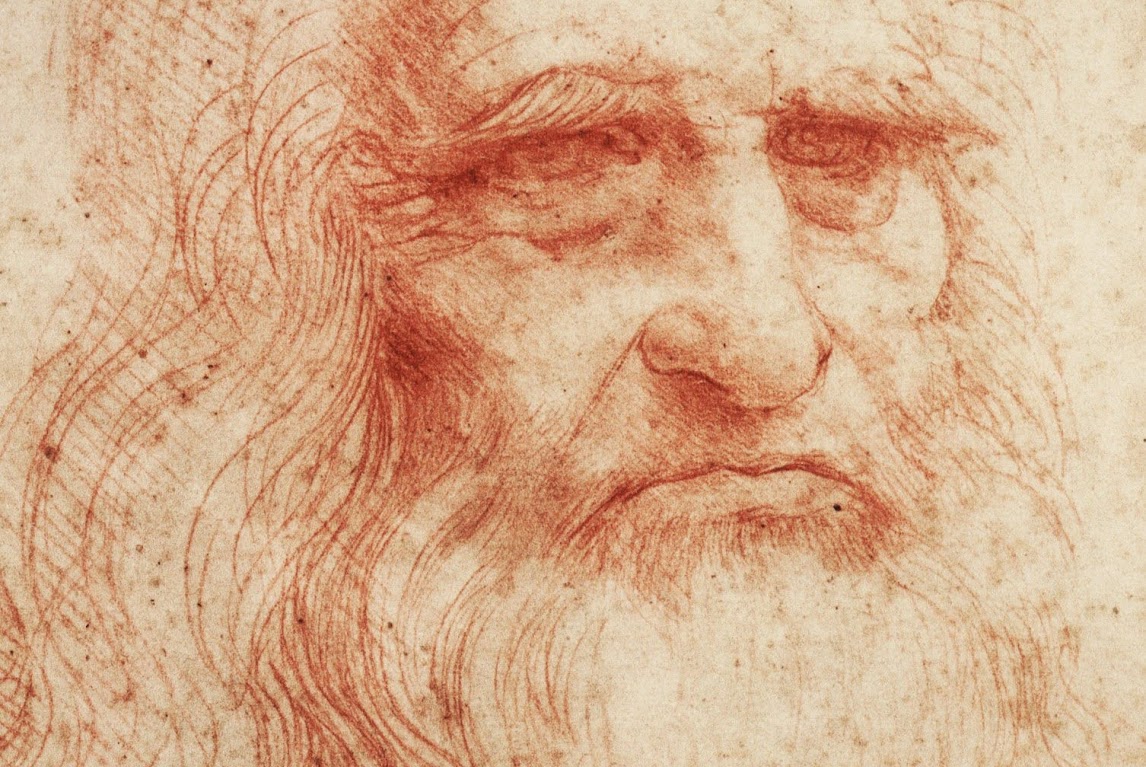
Sandro Botticelli, Albrecht Dürer, Caravaggio, Artemisia Gentileschi, Vincent van Gogh e molti altri artisti hanno trovato modi diversi per rappresentarsi, dichiarando la propria presenza oppure lasciando agli spettatori il piacere di riconoscerli.
Oggi vi accompagno alla scoperta di alcuni autoritratti nascosti e dipinti celebri che raccontano molto più di quanto sembri a una prima occhiata. Qualche volta, per incontrare un artista nelle sue opere, non occorre cercare un suo ritratto: basta imparare a guardare meglio.
1. Il mio volto nascosto nella pelle di san Bartolomeo nel Giudizio Universale
Comincio da me, naturalmente. Non per vanità, ma perché il mio caso è uno dei più singolari della storia dell’arte.
Quando affrescai il Giudizio Universale sulla parete dell’altare della Cappella Sistina, a Roma, tra il 1536 e il 1541 circa, tra le oltre trecento figure dipinte, lasciai anche un’immagine molto particolare di me stesso.
Guardate san Bartolomeo tra i santi, riconoscibile dal coltello e dalla pelle che tiene tra le mani. Secondo la tradizione cristiana, l’apostolo subì il martirio venendo scuoiato vivo. La pelle che mostra è il segno della sua sofferenza.
Eppure, se osservate attentamente quel volto svuotato, privo di consistenza e deformato, noterete qualcosa di insolito. La pelle di san Bartolomeo è comunemente interpretata come un mio autoritratto.

2. Albrecht Dürer e l’Autoritratto con pelliccia: un’immagine che sembra sacra
Nel 1500 Albrecht Dürer dipinse uno dei più celebri autoritratti della storia dell’arte, oggi conservato all’Alte Pinakothek di Monaco di Baviera.
Il pittore tedesco si rappresentò frontalmente, con i capelli lunghi, lo sguardo rivolto direttamente verso chi osserva e una veste bordata di pelliccia. La composizione è rigorosa, quasi simmetrica. Nulla è lasciato al caso.
La particolarità è la somiglianza la posa, tradizionalmente utilizzata nelle immagini di Cristo. Dürer costruì un’immagine solenne, nella quale la figura dell’artista assume una presenza fuori dal comune.
Anche l’iscrizione latina è fondamentale. Dürer dichiara di essersi dipinto con colori indelebili all’età di ventotto anni, rivendicando apertamente la propria identità e la capacità dell’arte di conservarla nel tempo.
Dürer ci ricorda che dipingere se stessi significa anche interrogarsi sul ruolo dell’artista, sulla propria dignità e sul desiderio di essere ricordati.

3. Caravaggio e il Bacchino malato: quando il volto racconta la sofferenza
Con Michelangelo Merisi, al secolo Caravaggio, entriamo in una dimensione diversa, nella quale la bellezza ideale lascia spazio alla realtà dei corpi e delle loro imperfezioni.
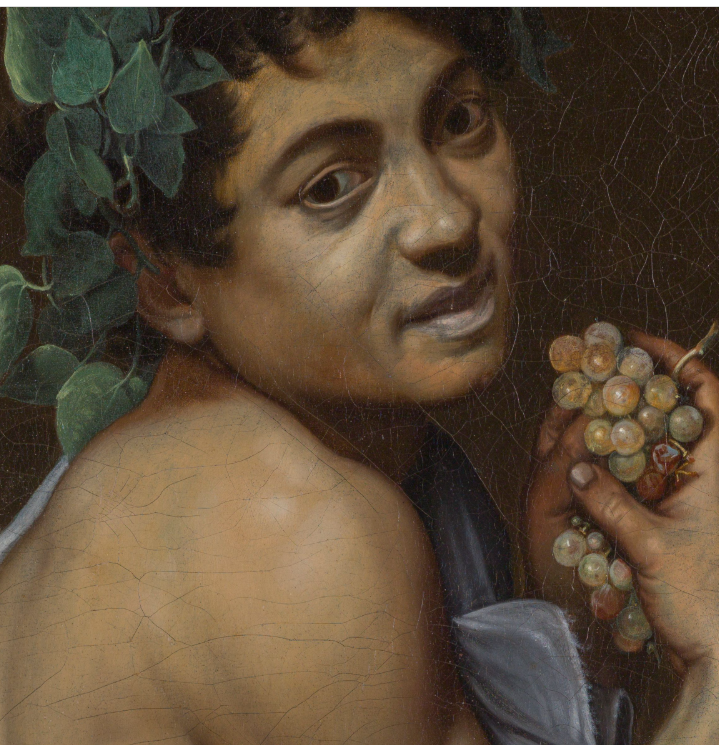
Il Bacchino malato, dipinto intorno al 1593-1594 e conservato alla Galleria Borghese di Roma, raffigura un giovane Bacco con una corona di foglie e un grappolo d’uva tra le mani.
Il volto ha un colorito pallido, tendente al verdastro, le labbra appaiono scolorite e l’espressione non trasmette la vitalità che ci aspetteremmo dal dio del vino. Anche la frutta, pur rigogliosa, contrasta con l’aspetto poco sano del protagonista.
Perché rappresentare una divinità in questo modo?
Una delle interpretazioni più note riconosce nel giovane Bacco un possibile autoritratto di Caravaggio, realizzato durante un periodo di malattia. La ricostruzione viene collegata anche alle notizie sul ricovero del pittore presso l’Ospedale della Consolazione a Roma.
Caravaggio non cerca di nascondere la fragilità: la porta in primo piano, trasformandola in una presenza impossibile da ignorare.
4. Sandro Botticelli si nasconde nell’Adorazione dei Magi
Nel Quattrocento fiorentino, inserire il proprio ritratto in una composizione religiosa era un modo per entrare nella scena senza esserne il protagonista dichiarato.
La scena rappresenta l’arrivo dei Magi davanti al Bambino Gesù, circondato dalla Vergine e da numerosi personaggi. Tra questi compaiono esponenti della famiglia Medici e altre figure legate all’ambiente fiorentino dell’epoca.
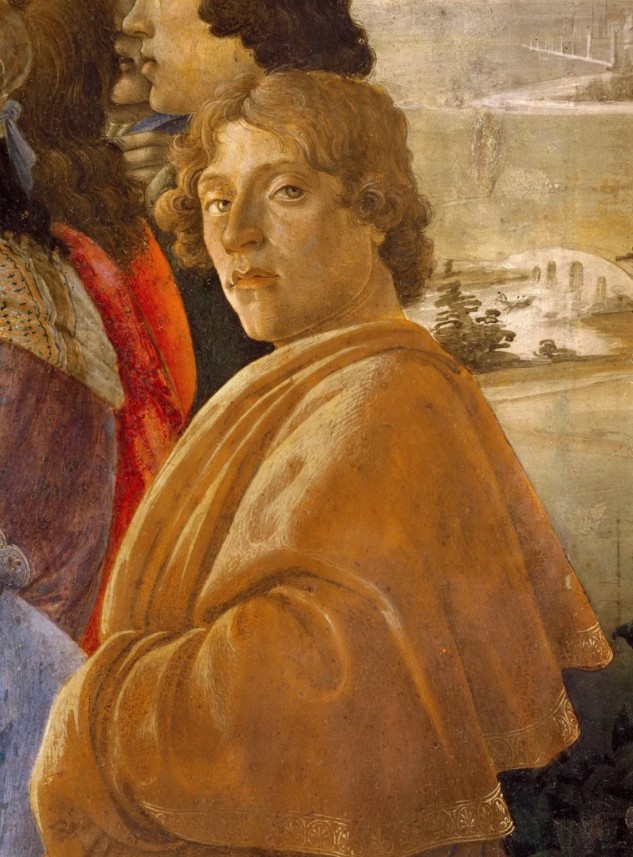
All’estrema destra della composizione, Botticelli si sarebbe raffigurato con una veste marrone, rivolto verso lo spettatore. Il suo sguardo sembra interrompere per un istante il racconto sacro, stabilendo un contatto diretto con chi si trova davanti al dipinto.
Nella pittura rinascimentale, gli artisti cominciarono sempre più spesso a rivendicare la propria presenza all’interno delle opere, in un’epoca in cui la loro figura professionale e intellettuale acquistava crescente riconoscimento.
Il bello di questo autoritratto è la sua discrezione: mentre tutti gli altri personaggi partecipano alla scena, il pittore sembra ricordarci silenziosamente che, dietro ogni immagine, c’è qualcuno che l’ha pensata e realizzata.
5. Francisco Goya: l’artista dentro la propria pittura
Francisco Goya non ebbe bisogno di nascondersi sempre tra figure anonime per lasciare una traccia di sé. Nel corso della sua carriera tornò più volte sulla propria immagine, utilizzandola per raccontare il passare del tempo, la propria posizione sociale e il rapporto con il mestiere di pittore.
Tra le opere da ricordare c’è l’Autoritratto nel suo studio, nel quale l’artista si presenta nel proprio ambiente di lavoro, circondato dagli strumenti e dagli elementi che definiscono la sua attività.
Qui il ritratto è anche un modo per mostrare la persona che sta dietro al ruolo pubblico, il professionista che lavora e l’uomo che attraversa una stagione storica ricca di cambiamenti.
Nelle immagini di sé, Goya seppe alternare sicurezza, osservazione e introspezione. Il suo sguardo non cerca necessariamente di piacere: sembra piuttosto voler stabilire un rapporto diretto con chi guarda.

6. Artemisia Gentileschi: quando la pittrice diventa protagonista
Nel caso di Artemisia Gentileschi, il rapporto tra identità personale e pittura assume un significato particolarmente interessante.
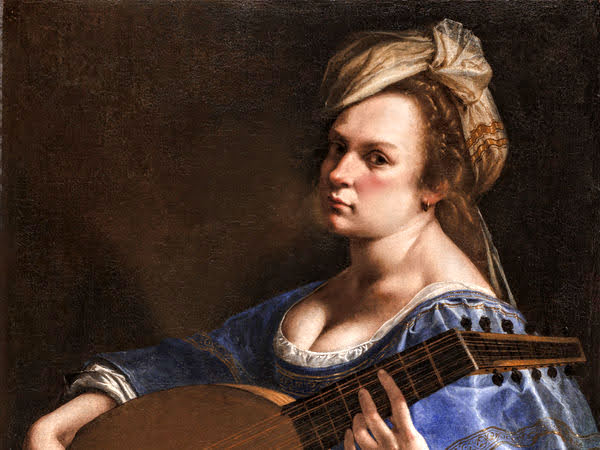
Attiva nel Seicento, Artemisia fu una delle pittrici più importanti della sua epoca. Si rappresentò in diverse opere, assumendo anche le sembianze di personaggi allegorici o musicali.
Tra gli esempi più noti c’è l’Autoritratto come suonatrice di liuto, realizzato probabilmente tra il 1615 e il 1618 e conservato al Wadsworth Atheneum Museum of Art di Hartford, negli Stati Uniti.
Artemisia appare mentre suona uno strumento, con il corpo ruotato e il viso rivolto verso lo spettatore. La posa non è quella rigida di un ritratto ufficiale: sembra piuttosto un momento colto durante un’attività.
L’opera ci permette di riflettere su una questione importante. Per una donna che lavorava in un ambiente artistico dominato dagli uomini, rappresentarsi significava anche affermare la propria identità professionale.
7. Vincent van Gogh: guardarsi negli occhi attraverso la pittura
Vincent van Gogh è uno degli artisti che più hanno esplorato la propria immagine.
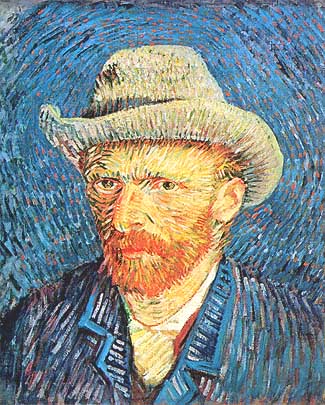
Nel corso della sua vita realizzò numerosi autoritratti, differenti per colori, espressione, abbigliamento e tecnica. In alcuni si presenta con il cappello di paglia, in altri con il cappello di feltro; talvolta indossa una giacca, altre volte appare con la benda che gli copre l’orecchio.
Non si tratta, in questo caso, di un volto nascosto in una composizione dedicata ad altro. Sono autoritratti dichiarati, nei quali l’artista utilizza se stesso come soggetto di ricerca.
Osservando queste opere una accanto all’altra, si ha quasi la sensazione di assistere a un racconto per immagini. Il viso rimane riconoscibile, ma cambiano la luce, i colori, la pennellata e il modo in cui lo sguardo incontra quello di chi osserva.
Van Gogh non dipingeva soltanto il proprio aspetto: sperimentava con la pittura, studiava gli effetti cromatici e metteva alla prova le possibilità espressive del ritratto.
8. Parmigianino e l’autoritratto nello specchio convesso
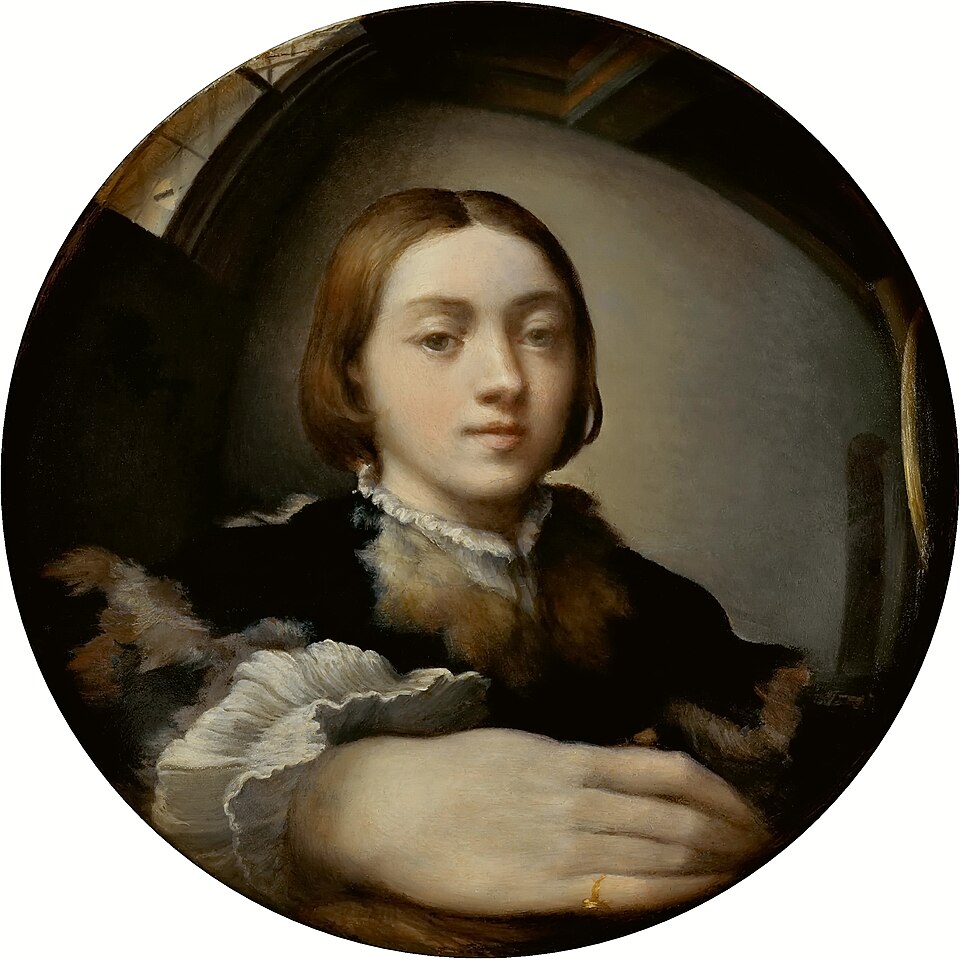
Nel 1524 circa, il giovane Parmigianino realizzò un autoritratto davvero singolare, oggi conservato al Kunsthistorisches Museum di Vienna.
La particolarità? Non dipinse se stesso su una normale tavola rettangolare, ma su una superficie di legno convessa, riproducendo l’effetto di uno specchio.
Il risultato è sorprendente. La mano in primo piano appare ingrandita, mentre il volto e lo sfondo si deformano secondo la curvatura della superficie riflettente.
Parmigianino trasformò così un problema ottico in una dimostrazione di abilità pittorica. La deformazione non è un errore da correggere: è proprio ciò che rende l’opera originale.
Secondo il racconto di Giorgio Vasari, il pittore avrebbe realizzato questo lavoro per mostrare il proprio talento in vista di un viaggio a Roma. L’opera sarebbe poi stata presentata a papa Clemente VII de’ Medici.
Non è un autoritratto nascosto, ma un’immagine che sembra nascere da un gioco di specchi.
9. Escher e l’autoritratto riflesso in una sfera
Passiamo al Novecento con Maurits Cornelis Escher, artista olandese celebre per le illusioni ottiche, le costruzioni impossibili e le superfici che sembrano contraddire le regole dello spazio.
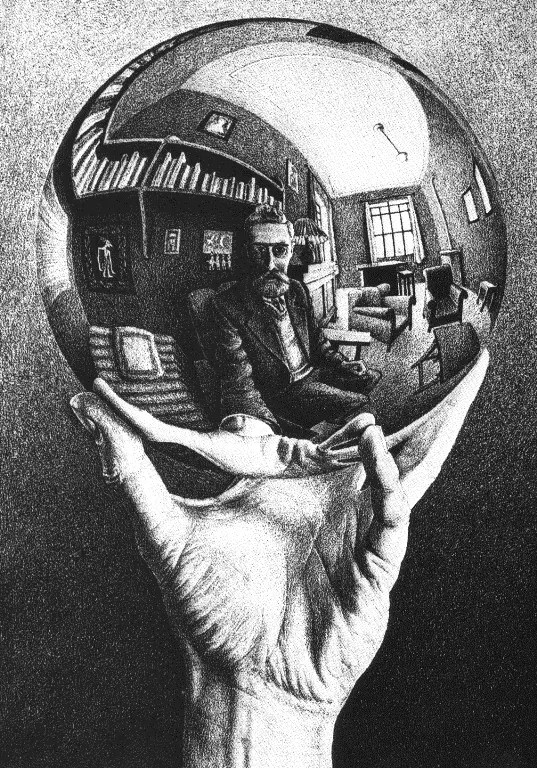
Tra le sue immagini più note c’è Mano con sfera riflettente, realizzata nel 1935. La mano che sostiene la sfera appartiene all’artista, mentre la superficie riflettente mostra l’ambiente circostante e lo stesso Escher al centro della scena.
L’autoritratto non è quindi dipinto nel modo tradizionale: emerge attraverso il riflesso di un oggetto che restituisce una visione deformata dello spazio.
La sfera raccoglie in una sola superficie lo studio, gli arredi, le pareti e la figura dell’artista. Chi guarda non si trova più davanti a un semplice ritratto, ma a un piccolo universo chiuso nel quale l’autore diventa parte dell’immagine e, nello stesso tempo, colui che la osserva.
È una soluzione che sembra porre una domanda: dove finisce il mondo rappresentato e dove comincia il punto di vista di chi lo dipinge?
10. Gustave Courbet: il volto dell’artista come dichiarazione d’identità
Gustave Courbet fece dell’autoritratto una componente importante della propria produzione, soprattutto negli anni giovanili.
Tra i dipinti più conosciuti c’è L’uomo disperato, realizzato intorno al 1843-1845, nel quale l’artista si rappresenta con le mani ai lati del volto, gli occhi spalancati e un’espressione carica di tensione.
Non è un’immagine nascosta tra altre figure, ma un autoritratto che porta l’attenzione direttamente sull’espressione e sul gesto.
Courbet utilizza il proprio volto per costruire una scena psicologica. La posa è teatrale, quasi sospesa, e lo spettatore viene coinvolto attraverso uno sguardo che sembra rivolgersi direttamente a lui.
Il pittore francese si rappresentò anche in opere più articolate, nelle quali la sua identità personale si intreccia con quella dell’artista e con il mondo sociale del suo tempo.
Nel suo caso, l’autoritratto non serve soltanto a conservare la propria fisionomia. Diventa uno strumento per sperimentare, provocare e affermare una precisa idea di pittura.

L’Autoritratto nelle opere
La prossima volta che vi troverete davanti a un dipinto, provate a osservare anche i personaggi sullo sfondo, gli sguardi rivolti verso l’esterno, i riflessi e i dettagli meno evidenti. Potreste scoprire che l’autore ha lasciato una traccia di sé proprio nel punto in cui non vi sareste aspettati di trovarlo.
L’opera allora smetterà di essere soltanto una scena da ammirare. Diventerà anche un incontro, a distanza di secoli, con la persona che lo ha creato.
Per il momento il sempre vostro Michelangelo Buonarroti vi saluta dandovi appuntamento ai prossimi post e sui social.
Artists’ Self-Portraits in Famous Paintings
What if, while observing a famous painting, you realized that the artist was right there before your eyes, hidden among the figures in the scene?
Sometimes a painter inserts themselves into a crowd; at other times, they lend their own face to a biblical or mythological character. Some artists even choose more unconventional approaches—going so far as to take on the guise of a saint.
Throughout my life, I produced only a few self-portraits, but one in particular is quite unique. You can find my likeness in the flayed skin of Saint Bartholomew within The Last Judgment. Holding that skin is none other than Pietro Aretino—the man whom Ludovico Ariosto did not hesitate to call “the scourge of princes.”
Sandro Botticelli, Albrecht Dürer, Caravaggio, Artemisia Gentileschi, Vincent van Gogh, and many other artists found various ways to represent themselves—sometimes declaring their presence openly, and at other times leaving it to the viewer to enjoy the discovery.
Today, I will guide you through a few hidden self-portraits found in famous paintings—works that reveal far more than what meets the eye at first glance. Sometimes, to encounter an artist within their own work, you don’t need to look for a formal portrait; you simply need to learn how to look more closely.
My face, hidden in the skin of Saint Bartholomew in The Last Judgment
I shall begin with myself, naturally—not out of vanity, but because my case is one of the most singular in the history of art.
When I painted The Last Judgment as a fresco on the altar wall of the Sistine Chapel in Rome—between approximately 1536 and 1541—I included a very particular image of myself among the more than three hundred figures depicted. Look at Saint Bartholomew among the saints; he is recognizable by the knife and the skin he holds in his hands. According to Christian tradition, the apostle suffered martyrdom by being flayed alive. The skin he displays is a sign of his suffering.
And yet, if you observe that hollowed-out, formless, and distorted face closely, you will notice something unusual. Saint Bartholomew’s skin is commonly interpreted as a self-portrait of mine.
Albrecht Dürer and the Self-Portrait with Fur-Trimmed Robe: An Image That Seems Sacred
In 1500, Albrecht Dürer painted one of the most famous self-portraits in the history of art, now housed at the Alte Pinakothek in Munich.
The German painter depicted himself frontally, with long hair, his gaze directed straight at the viewer, and wearing a fur-trimmed robe. The composition is rigorous—almost symmetrical—with nothing left to chance.
What is particularly striking is the resemblance to a pose traditionally used in depictions of Christ. Dürer crafted a solemn image, in which the artist’s figure takes on an extraordinary presence.
The Latin inscription is also essential. Dürer states that he painted himself using indelible colors at the age of twenty-eight, openly asserting his own identity and the power of art to preserve it through time.
Dürer reminds us that painting oneself also means reflecting on the role of the artist, one’s own dignity, and the desire to be remembered.
Caravaggio and the Sick Bacchus: When the Face Tells a Story of Suffering
With Michelangelo Merisi—known as Caravaggio—we enter a different dimension, one where idealized beauty gives way to the reality of the human body and its imperfections.
The Sick Bacchus (Bacchino malato), painted around 1593–1594 and housed in the Galleria Borghese in Rome, depicts a young Bacchus wearing a crown of leaves and holding a bunch of grapes.
His face has a pale, greenish hue; his lips appear drained of color; and his expression lacks the vitality one would expect from the god of wine. Even the fruit, though lush, stands in stark contrast to the protagonist’s sickly appearance.
Why depict a deity in this manner?
One of the most well-known interpretations suggests that this young Bacchus is, in fact, a self-portrait of Caravaggio, created during a period of illness. This theory is often linked to historical accounts of the painter’s hospitalization at the Ospedale della Consolazione in Rome.
Caravaggio makes no attempt to conceal this fragility; instead, he brings it to the forefront, transforming it into a presence that is impossible to ignore.
Sandro Botticelli Hides Himself in the Adoration of the Magi
In fifteenth-century Florence, incorporating one’s own portrait into a religious composition was a way to enter the scene without being its explicitly declared protagonist.
Sandro Botticelli did just this in his Adoration of the Magi, painted around 1475 and now held at the Uffizi Gallery in Florence.
The scene depicts the arrival of the Magi before the infant Jesus, who is surrounded by the Virgin Mary and a host of other figures. Among them are members of the Medici family, as well as other individuals associated with the Florentine milieu of the time. At the far right of the composition, Botticelli is thought to have depicted himself wearing a brown robe, turned toward the viewer. His gaze seems to interrupt the sacred narrative for a moment, establishing direct contact with the person standing before the painting.
In Renaissance art, artists increasingly began to assert their own presence within their works—a reflection of an era in which their professional and intellectual status was gaining growing recognition.
The beauty of this self-portrait lies in its subtlety: while all the other figures are engaged in the scene, the painter seems to silently remind us that, behind every image, there is someone who conceived and created it.
Francisco Goya: The Artist Within His Own Paintings
Francisco Goya did not always need to hide among anonymous figures to leave a trace of himself. Throughout his career, he returned to his own image time and again, using it to chronicle the passage of time, his social standing, and his relationship with his craft as a painter.
Among the works worth noting is his Self-Portrait in His Studio, in which the artist presents himself within his own workspace, surrounded by the tools and elements that define his profession.
Here, the portrait also serves as a way to reveal the person behind the public persona—the working professional and a man living through a historical era defined by profound change.
In his self-portraits, Goya skillfully balanced confidence, keen observation, and introspection. His gaze does not necessarily seek to please; rather, it seems intent on establishing a direct connection with the viewer.
Artemisia Gentileschi: When the Painter Becomes the Protagonist
In the case of Artemisia Gentileschi, the relationship between personal identity and painting takes on a particularly compelling significance.
Active in the 17th century, Artemisia was one of the most important painters of her time. She depicted herself in various works, often adopting the guise of allegorical or musical figures.
Among the best-known examples is her Self-Portrait as a Lute Player, likely created between 1615 and 1618 and held at the Wadsworth Atheneum Museum of Art in Hartford, United States.
Artemisia is shown playing an instrument, her body turned and her face directed toward the viewer. The pose lacks the rigidity of a formal, official portrait; instead, it captures a fleeting moment in the midst of an activity.
The work invites us to reflect on an important issue. For a woman working in a male-dominated artistic environment, representing herself also meant asserting her professional identity.
Vincent van Gogh: Looking into One’s Own Eyes Through Painting
Vincent van Gogh is among the artists who explored their own image most extensively.
Throughout his life, he created numerous self-portraits, varying in color, expression, attire, and technique. In some, he appears wearing a straw hat; in others, a felt hat. Sometimes he wears a jacket, while at other times, he is depicted with a bandage covering his ear.
These are not instances of a face hidden within a composition dedicated to another subject; rather, they are explicit self-portraits in which the artist uses himself as the subject of his inquiry.
Viewing these works side by side, one almost feels as though witnessing a narrative told through images. While his face remains recognizable, the light, colors, brushwork, and the way his gaze meets that of the viewer all shift.
Van Gogh did not merely paint his own appearance; he experimented with paint, studied chromatic effects, and tested the expressive potential of the portrait.
Parmigianino and the Self-Portrait in a Convex Mirror
Around 1524, the young Parmigianino created a truly unique self-portrait, now housed in the Kunsthistorisches Museum in Vienna.
What makes it so distinctive? He did not paint himself on a standard rectangular panel, but rather on a convex wooden surface, replicating the effect of a mirror.
The result is striking. The hand in the foreground appears enlarged, while his face and the background are distorted by the curvature of the reflective surface.
In this way, Parmigianino transformed an optical challenge into a demonstration of his painterly skill. The distortion is not an error to be corrected—it is precisely what makes the work original. According to Giorgio Vasari’s account, the painter created this work to showcase his talent in anticipation of a trip to Rome. The piece was subsequently presented to Pope Clement VII de’ Medici.
It is not a hidden self-portrait, but rather an image that appears to emerge from a play of mirrors.
Escher and the Self-Portrait Reflected in a Sphere
Moving into the twentieth century, we encounter Maurits Cornelis Escher, a Dutch artist renowned for his optical illusions, impossible constructions, and surfaces that seem to defy the laws of space.
Among his most famous works is Hand with Reflecting Sphere, created in 1935. The hand holding the sphere belongs to the artist, while the reflective surface reveals the surrounding environment—with Escher himself at the center of the scene.
The self-portrait, therefore, is not rendered in the traditional manner; rather, it emerges through the reflection in an object that presents a distorted view of space.
The sphere encapsulates the studio—its furnishings, walls, and the artist himself—within a single surface. The viewer is not merely looking at a standard portrait, but at a self-contained, miniature universe in which the creator is simultaneously a part of the image and the one observing it.
This approach seems to pose a question: where does the depicted world end, and where does the perspective of the painter begin?
Gustave Courbet: The Artist’s Face as a Declaration of Identity
Gustave Courbet made the self-portrait a significant element of his body of work, particularly during his early years.
Among his best-known paintings is The Desperate Man, created around 1843–1845, in which the artist depicts himself with his hands on either side of his face, his eyes wide open, and an expression charged with tension.
This is not an image tucked away among other figures; it is a self-portrait that directs full attention toward the artist’s expression and gesture.
Courbet uses his own face to construct a psychological scene. The pose is theatrical—almost suspended in time—and the viewer is drawn in by a gaze that appears to be directed straight at them. The French painter also depicted himself in more complex works, in which his personal identity intertwines with his identity as an artist and with the social world of his time.
In his case, the self-portrait serves a purpose beyond merely preserving his own likeness. It becomes a tool for experimentation, provocation, and the assertion of a specific vision of painting.
The Self-Portrait Within the Work
The next time you find yourself standing before a painting, try observing the figures in the background, the gazes directed outward, the reflections, and the less obvious details. You might discover that the artist has left a trace of himself in the very place you least expected to find it.
The work then ceases to be merely a scene to be admired; it becomes an encounter—across the centuries—with the person who created it.
For now, yours truly, Michelangelo Buonarroti, bids you farewell—until the next posts and over on social media.
Sostienici – Support Us
Se questo blog ti piace e ti appassiona, puoi aiutarci a farlo crescere sempre più sostenendoci in modo concreto condividendo i post, seguendo le pagine social e con un contributo che ci aiuta ad andare avanti con il nostro lavoro di divulgazione. . ENGLISH: If you like and are passionate about this blog, you can help us make it grow more and more by supporting us in a concrete way by sharing posts, following social pages and with a contribution that helps us to move forward with our dissemination work.
10,00 €
Condividi:


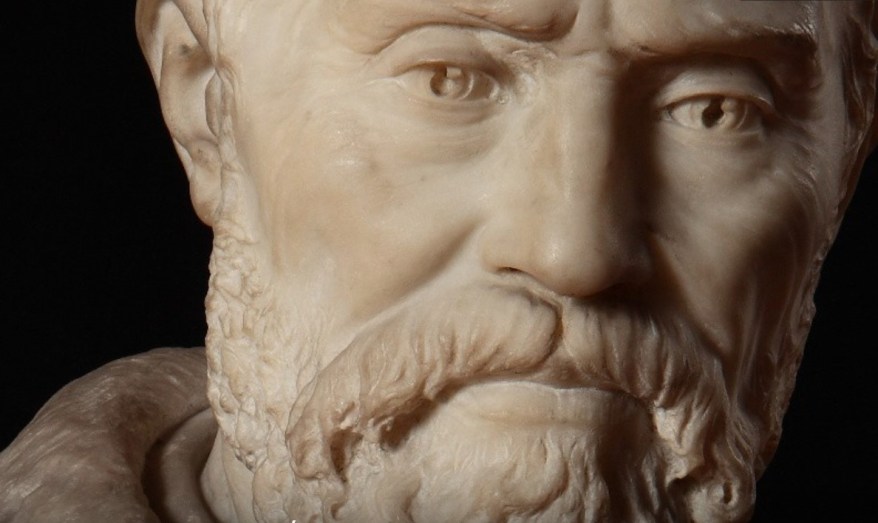
Questo sono io



sostienici

Sostienici - Support Us
Se questo blog ti piace e ti appassiona, puoi aiutarci a farlo crescere sempre più sostenendoci in modo concreto condividendo i post, seguendo le pagine social e con un contributo che ci aiuta ad andare avanti con il nostro lavoro di divulgazione. . ENGLISH: If you like and are passionate about this blog, you can help us make it grow more and more by supporting us in a concrete way by sharing posts, following social pages and with a contribution that helps us to move forward with our dissemination work.
€10,00


