
Giacobbe nella Cappella Sistina: vi racconto il mio affresco e i suoi dettagli
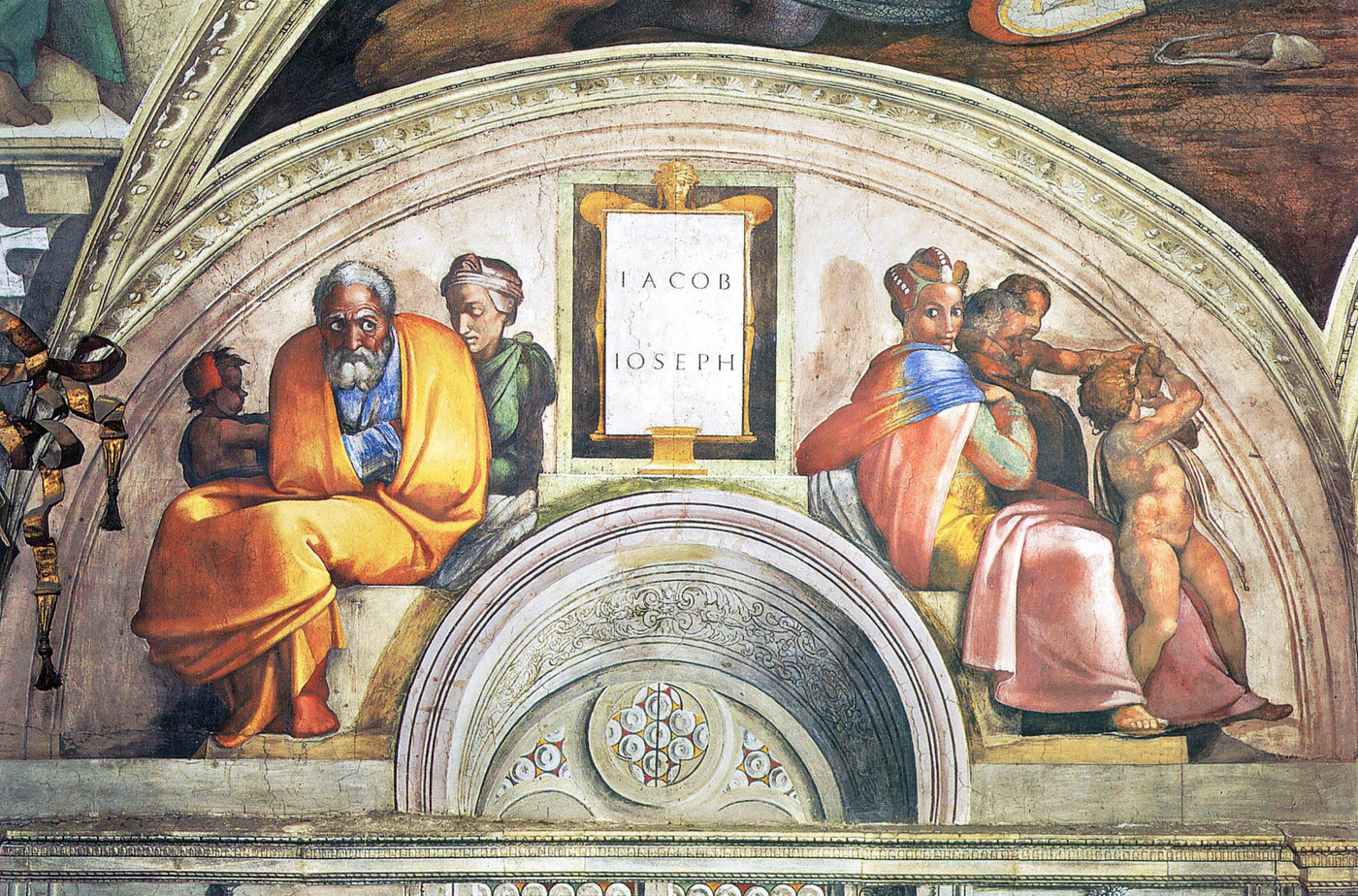
C’è un vecchio con la barba, avvolto in un manto giallo, che sembra guardare qualcosa con un’espressione a metà fra la preoccupazione e la curiosità. Si trova nella lunetta di Giacobbe, Giuseppe e Maria nella Cappella Sistina, proprio sopra la parete d’ingresso. Voglio raccontarvi la sua storia e alcuni dettagli della pittura che forse, guardando questo affresco dal basso, non avete mai notato.
Giacobbe, Giuseppe e Maria: gli antenati di Cristo nella Cappella Sistina
Il vecchio dalla barba folta, con le braccia raccolte davanti al corpo e il manto giallo che gli avvolge le spalle, è Giacobbe. La sua figura occupa una posizione importante nell’affresco: secondo la genealogia riportata nel Vangelo di Matteo, fu padre di Giuseppe, lo sposo di Maria e padre putativo di Cristo.

Accanto a lui compare Maria, riconoscibile dalla ricca acconciatura e dalla presenza del Bambino. Alle sue spalle si intravede Giuseppe, che tiene Gesù in braccio. Il piccolo ha in mano uno specchio che porge a una bambina appoggiata alle gambe della madre.
Dettagli che meritano attenzione. In una lunetta nella quale lo spazio è limitato dalla forma architettonica, ho cercato di dare vita a un piccolo gruppo di figure, ciascuna con la propria presenza e il proprio atteggiamento.
La posizione della lunetta non è casuale. Si trova sopra la parete d’ingresso della Cappella Sistina e conclude il ciclo degli antenati di Cristo dipinti lungo le pareti della volta. La genealogia, così, accompagna idealmente chi entra nello spazio della cappella.

Come ho dipinto Giacobbe in soli tre giorni
Non era un lavoro da poco: bisognava organizzare le figure, distribuire i colori e lavorare sull’intonaco fresco, senza perdere tempo.
La tecnica dell’affresco imponeva un ritmo preciso. Il colore doveva essere steso sull’intonaco ancora umido, affinché i pigmenti si legassero alla superficie durante l’asciugatura e avvenisse il processo di carbonatazione.
Ogni giornata richiedeva attenzione e una buona organizzazione delle porzioni da dipingere. Anche in uno spazio relativamente circoscritto come una lunetta, la resa finale dipendeva dalla capacità di stabilire in anticipo dove intervenire e con quale rapidità.
Se guardate Giacobbe con attenzione, noterete che la rapidità di esecuzione non significa affatto rinunciare alla cura dei particolari. Al contrario, è proprio nel modo in cui ho trattato la superficie pittorica che si nasconde uno degli aspetti più interessanti di questo affresco.
Il segreto della profondità: pennellate fitte in primo piano e più larghe sullo sfondo
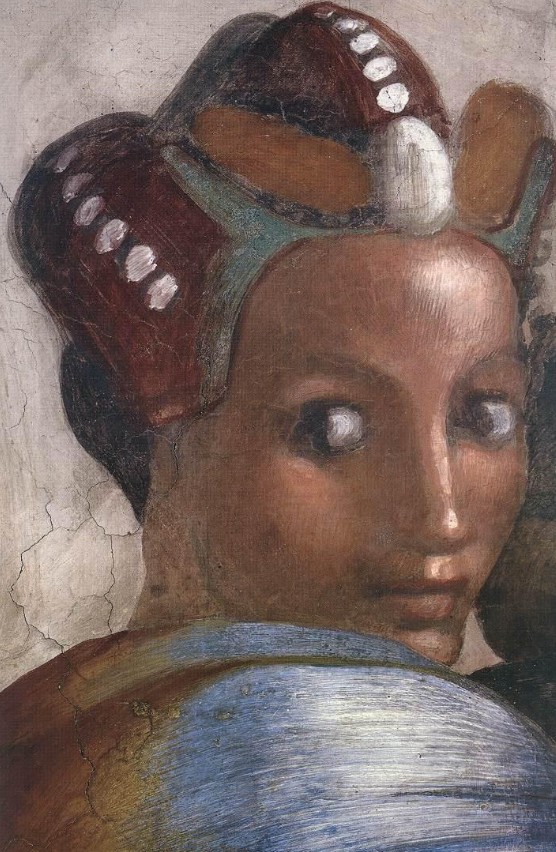
Avvicinatevi idealmente al volto di Giacobbe e osservate il naso, la fronte e le parti del corpo che sembrano avanzare verso chi guarda. In queste zone ho utilizzato una tessitura fitta di pennellate decise, capace di definire i volumi e rendere più incisiva la presenza della figura.
Le parti che arretrano, invece, sono trattate con pennellate più fluide e larghe. Non è una differenza casuale. Mi serviva a creare un effetto di profondità, facendo percepire ciò che si trova davanti e ciò che rimane indietro. Il modellato del volto e del corpo acquista così maggiore evidenza, mentre le zone retrostanti risultano meno definite.
Tenete presente, però, un aspetto fondamentale: la lunetta non era destinata a essere osservata da vicino: doveva essere leggibile da chi si trovava sul pavimento della Cappella Sistina, molti metri più in basso.
La pittura doveva funzionare anche a distanza. Per questo ho calibrato le pennellate pensando all’effetto complessivo che avrebbero prodotto dal punto di vista dello spettatore.
Le infiltrazioni d’acqua e il restauro della lunetta
La lunetta di Giacobbe ha attraversato secoli di storia e non è arrivata fino a noi senza aver subito gli effetti del tempo.
Prima del restauro, la superficie presentava alterazioni dovute anche alle salificazioni provocate dalle infiltrazioni d’acqua piovana verificatesi negli anni precedenti. I sali depositati sulla pittura avevano deturpato alcune zone dell’affresco, compromettendone la leggibilità.
Nonostante questi problemi, lo strato dipinto a buon fresco non aveva subito distacchi importanti né danni irreversibili tali da compromettere irrimediabilmente l’opera.
Il restauro ha permesso di recuperare la leggibilità della superficie e di apprezzare nuovamente i rapporti tra le figure, i colori e i diversi piani della composizione.
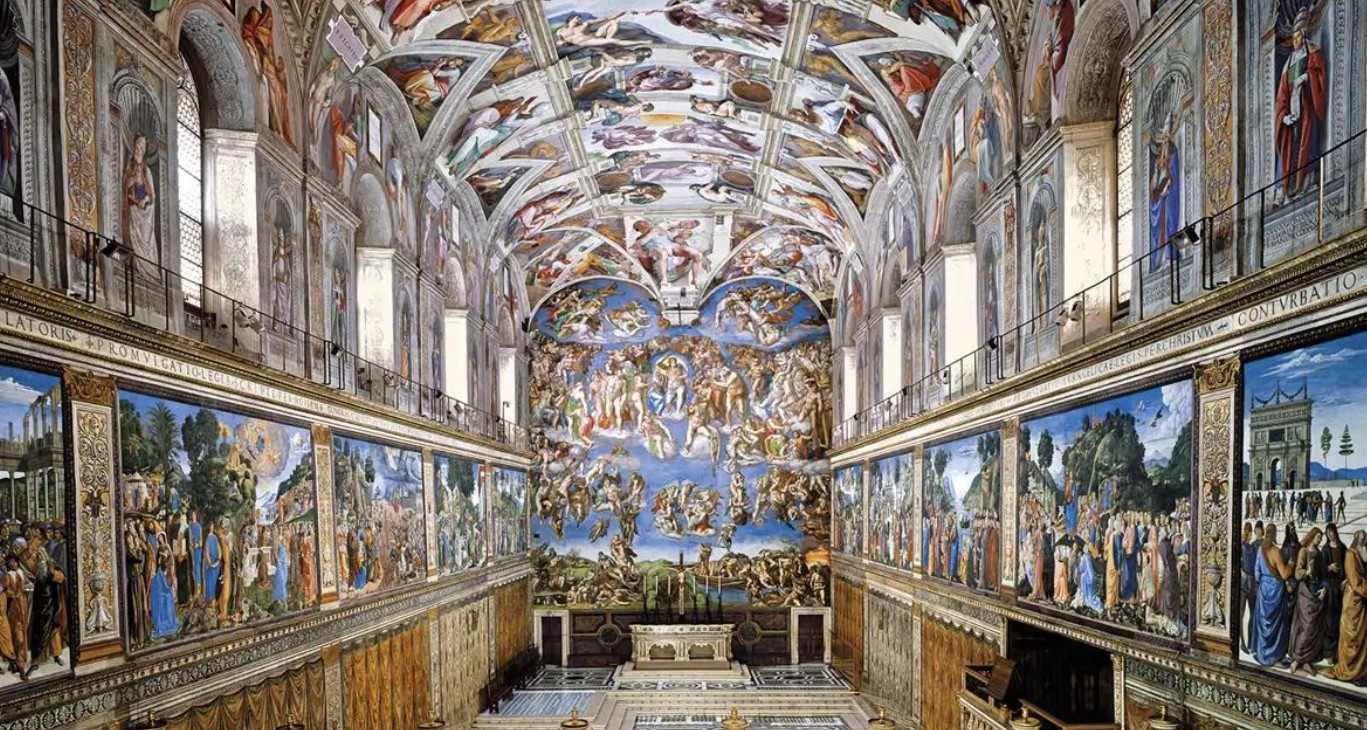
Lavorai su quell’intonaco fresco più di cinquecento anni fa ma le figure continuano a vivere e a raccontare le loro storie.
Per il momento il sempre vostro Michelangelo Buonarroti vi saluta dandovi appuntamento ai prossimi post e sui social.
Jacob in the Sistine Chapel: I’ll tell you about my fresco and its details
There is an old man with a beard, wrapped in a yellow cloak, who seems to be looking at something with an expression that is a mix of concern and curiosity. He appears in the lunette of Jacob, Joseph, and Mary in the Sistine Chapel, located just above the entrance wall. I would like to share his story with you, along with some details of the painting that you might never have noticed while looking up at this fresco from below.
Jacob, Joseph, and Mary: The Ancestors of Christ in the Sistine Chapel
The old man with the thick beard—his arms folded before him and a yellow cloak draped over his shoulders—is Jacob. His figure holds an important place in the fresco: according to the genealogy recorded in the Gospel of Matthew, he was the father of Joseph, the husband of Mary and the foster father of Christ.
Beside him is Mary, recognizable by her elaborate hairstyle and the presence of the Child. Behind her, one can glimpse Joseph, holding Jesus in his arms. The little one holds a mirror, which he offers to a young girl leaning against her mother’s legs.
Details that deserve attention. Within a lunette where space is constrained by the architectural form, I sought to bring to life a small group of figures, each with its own distinct presence and demeanor.
The placement of this lunette is no accident. It sits above the entrance wall of the Sistine Chapel, concluding the cycle of Christ’s ancestors painted along the walls beneath the vault. In this way, the genealogy serves as a symbolic accompaniment for those entering the chapel space.
How I Painted Jacob in Just Three Days
It was no small undertaking: I had to organize the figures, apply the colors, and work on the fresh plaster—all without a moment to waste. The fresco technique demanded a precise rhythm. The paint had to be applied to the plaster while it was still damp, allowing the pigments to bond with the surface as it dried—a process known as carbonation.
Each day required careful attention and a well-organized plan for the sections to be painted. Even within a relatively confined space like a lunette, the final result depended on the ability to determine in advance where to work and how quickly to proceed.
If you look closely at Jacob, you will notice that speed of execution does not in any way mean a lack of attention to detail. On the contrary, the way I treated the painted surface reveals one of the most compelling aspects of this fresco.
The secret to depth: dense brushstrokes in the foreground, broader ones in the background.
Imagine moving closer to Jacob’s face—observe his nose, his forehead, and the parts of his body that seem to project toward the viewer. In these areas, I employed a dense network of decisive brushstrokes, which serve to define the forms and give the figure a more striking, tangible presence.
Conversely, the parts that recede are rendered with more fluid, broader brushstrokes. This distinction is not accidental; it was a deliberate choice to create a sense of depth, allowing the viewer to perceive what lies in the foreground and what remains in the background. The modeling of the face and body thus gains greater prominence, while the areas further back appear less defined.
Keep in mind, however, one crucial point: this lunette was never intended to be viewed from up close. It had to be clearly legible to someone standing on the floor of the Sistine Chapel, many meters below.
The painting had to be effective even from a distance. For this reason, I calibrated my brushstrokes with the overall effect—as seen from the viewer’s perspective—firmly in mind.
Water Infiltration and the Restoration of the Lunette
The lunette of Jacob has spanned centuries of history, and it has not reached us without bearing the marks of time.
Before the restoration, the surface showed signs of deterioration, partly due to the formation of salts—a consequence of rainwater infiltration that had occurred over previous years. These salt deposits had disfigured parts of the fresco, making it difficult to discern the imagery.
Despite these issues, the buon fresco (true fresco) layer had not suffered any major detachments or irreversible damage that would have permanently compromised the work.
The restoration has made it possible to recover the legibility of the surface, allowing us once again to appreciate the relationships between the figures, the colors, and the various planes of the composition.
I worked on that fresh plaster more than five hundred years ago, yet the figures continue to live and tell their stories.
For now, your ever-faithful Michelangelo Buonarroti bids you farewell—until the next posts and our continued connection on social media.
Sostienici – Support Us
Se questo blog ti piace e ti appassiona, puoi aiutarci a farlo crescere sempre più sostenendoci in modo concreto condividendo i post, seguendo le pagine social e con un contributo che ci aiuta ad andare avanti con il nostro lavoro di divulgazione. . ENGLISH: If you like and are passionate about this blog, you can help us make it grow more and more by supporting us in a concrete way by sharing posts, following social pages and with a contribution that helps us to move forward with our dissemination work.
10,00 €
Condividi:


Questo sono io



sostienici

Sostienici - Support Us
Se questo blog ti piace e ti appassiona, puoi aiutarci a farlo crescere sempre più sostenendoci in modo concreto condividendo i post, seguendo le pagine social e con un contributo che ci aiuta ad andare avanti con il nostro lavoro di divulgazione. . ENGLISH: If you like and are passionate about this blog, you can help us make it grow more and more by supporting us in a concrete way by sharing posts, following social pages and with a contribution that helps us to move forward with our dissemination work.
€10,00


