
Incendio al municipio di Limoges, crolla la torre dell’orologio: distrutto storico palazzo dell’Ottocento
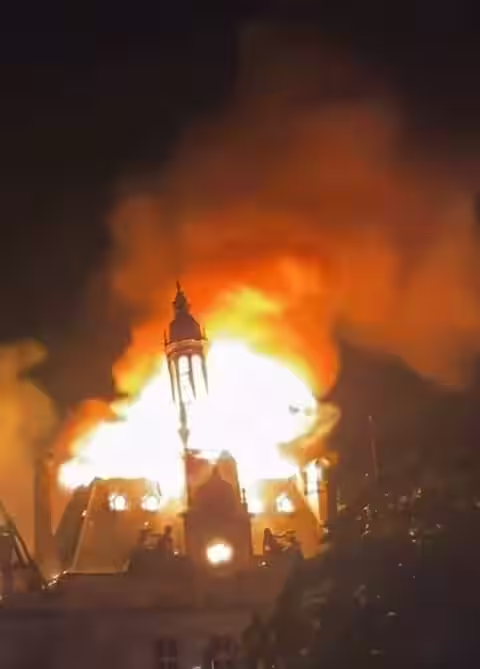
L’Hôtel de Ville di Limoges, inaugurato nel 1883 e tutelato come monumento storico dal 1975, è stato devastato da un incendio divampato durante le proteste del 17 ottobre in Francia.
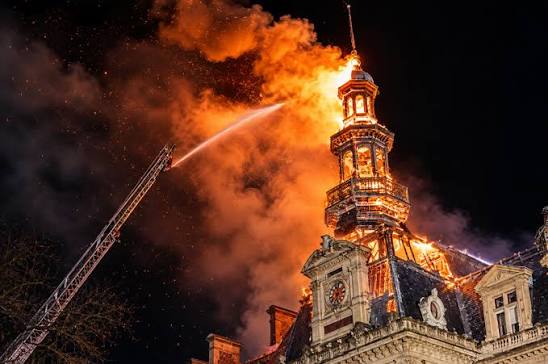
Crollati il tetto e la torre dell’orologio alta 43 metri, mentre gran parte della facciata è andata perduta. Danni gravissimi anche al patrimonio artistico custodito all’interno, ancora da quantificare.
Il rogo ha provocato il crollo del tetto sui piani inferiori e della torre dell’orologio, alta 43 metri, mentre una parte consistente della facciata è andata distrutta.
Il bilancio iniziale delle autorità francesi è drammatico. Il prefetto dell’Alta Vienne, Maurice Barate, ha parlato di una vera e propria «catastrofe per il patrimonio», mentre il sindaco Guillaume Guérin ha descritto con evidente commozione la gravità dei danni.
Secondo le prime dichiarazioni, l’edificio sarebbe in gran parte perduto. I vigili del fuoco hanno lottato contro le fiamme per ore, mentre il vento contribuiva ad alimentare l’incendio.
L’Hôtel de Ville era uno dei simboli architettonici di Limoges, un monumento nel quale la storia politica della città si intrecciava con quella delle sue arti e delle sue tradizioni manifatturiere.
Il municipio di Limoges in fiamme durante le proteste in Francia
L’incendio è divampato al termine di una manifestazione contro il costo della vita, in una giornata caratterizzata da proteste in numerose città francesi. Le rivendicazioni erano diverse e comprendevano anche la solidarietà con le mobilitazioni studentesche in corso da giorni.
A Limoges, alcuni individui hanno appiccato il fuoco al municipio. Le autorità hanno condannato duramente l’accaduto, distinguendo le responsabilità di chi ha compiuto il gesto da quelle dei manifestanti pacifici.
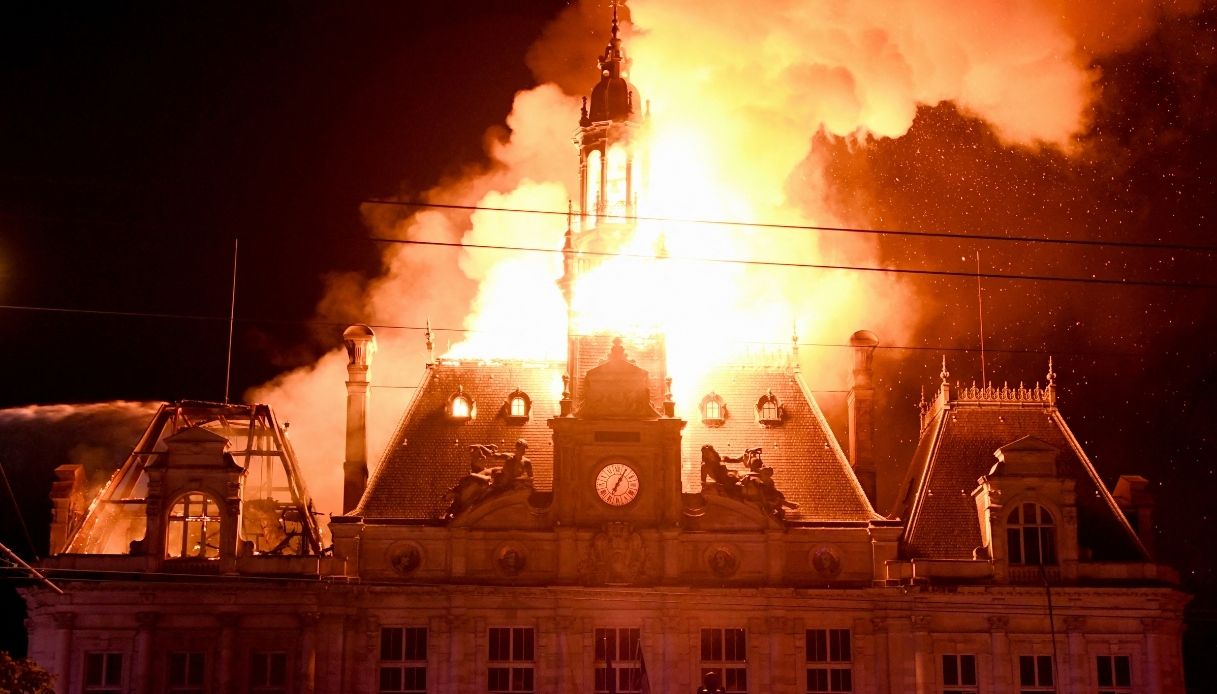
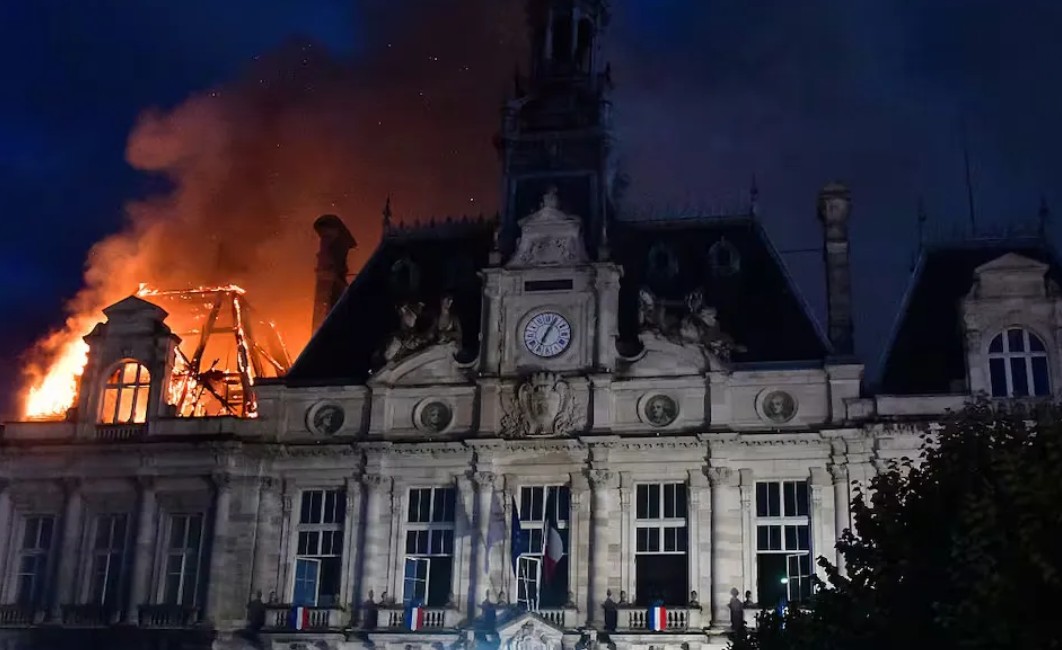
Il prefetto Maurice Barate ha riferito che il tetto è crollato sui piani inferiori, fatta eccezione per l’ala occidentale, e che circa due terzi della facciata erano già andati perduti nelle prime fasi dell’emergenza.
Il sindaco Guillaume Guérin ha confermato il crollo della torre dell’orologio, uno degli elementi più riconoscibili del palazzo. Il rogo ha inoltre distrutto la sala dei matrimoni e quella dell’anagrafe, ambienti legati alla vita quotidiana di migliaia di persone.
Secondo quanto riferito dalle autorità, nell’edificio si trovavano amministratori locali, agenti della polizia municipale e personale degli uffici. Non sono stati segnalati feriti nelle prime comunicazioni.
Resta ora da capire quanto sia possibile recuperare delle strutture superstiti e quale sia l’entità dei danni agli ambienti interni e alle opere d’arte che decoravano il municipio.
Hôtel de Ville di Limoges: la storia del palazzo inaugurato nel 1883
Per comprendere la portata di questa perdita bisogna tornare alla seconda metà dell’Ottocento, quando le città francesi investivano nella costruzione di edifici pubblici monumentali, destinati a rappresentare la solidità delle istituzioni e il prestigio delle comunità locali.
Il municipio di Limoges fu costruito tra il 1879 e il 1883 su progetto dell’architetto Charles-Alfred Leclerc. La sua inaugurazione avvenne il 14 luglio 1883, giorno della festa nazionale francese.
Il palazzo riprendeva il modello dell’Hôtel de Ville di Parigi, traducendolo in un linguaggio architettonico che combinava riferimenti neorinascimentali e caratteri riconducibili allo stile Luigi XIII.
La facciata monumentale era organizzata in undici campate, con grandi arcate al piano terreno, finestre di proporzioni imponenti e un articolato coronamento decorativo. Al centro si innalzava la torre dell’orologio, alta 43 metri, che dominava l’edificio e contribuiva a definirne il profilo urbano.
Proprio quella torre, per oltre un secolo punto di riferimento visivo per gli abitanti di Limoges, è crollata durante l’incendio.
La costruzione del municipio fu resa possibile anche grazie al lascito di Alfred Fournier, che nel 1875 destinò il proprio patrimonio alla città. La nuova sede sostituiva un precedente edificio municipale completato nel 1811 e rispondeva all’esigenza di dare a Limoges una rappresentanza architettonica adeguata alla sua importanza.
Il palazzo doveva raccontare la città attraverso le sue forme e le sue decorazioni, rendendo visibile il legame tra istituzioni, storia locale e attività artistiche.
La facciata raccontava la storia di Limoges attraverso l’arte
Uno degli aspetti più interessanti dell’Hôtel de Ville era proprio il programma decorativo della facciata, concepito per celebrare personaggi e tradizioni che avevano contribuito a costruire l’identità cittadina.
Sul prospetto principale comparivano quattro medaglioni realizzati da Giandomenico Facchina, dedicati a figure significative della storia francese e locale: Léonard Limosin, celebre maestro rinascimentale della smaltatura; Henri François d’Aguesseau, cancelliere di Francia; Pierre Victurnien Vergniaud, protagonista della Rivoluzione francese; e Jean-Baptiste Jourdan, generale dell’epoca napoleonica.
Nella parte superiore della facciata si trovavano inoltre sculture di Tony Noël dedicate all’oreficeria e alla lavorazione degli smalti.
Limoges è conosciuta internazionalmente per la porcellana, ma la sua storia artistica affonda le radici anche nella produzione di smalti, lavorati nelle botteghe cittadine fin dal Medioevo e destinati a circolare in tutta Europa.
Il municipio trasformava così la propria facciata in una sorta di racconto per immagini: da una parte le personalità che avevano segnato la storia, dall’altra le attività artigianali che avevano reso celebre la città.
Anche i materiali impiegati contribuivano a definire il carattere dell’edificio. Il basamento era realizzato in granito del Limosino, mentre per il piano superiore e gli interni era stato utilizzato calcare proveniente dal Poitou. Le coperture erano in ardesia e il campanile presentava una struttura metallica con rivestimenti ornamentali in zinco.
I dipinti all’interno del municipio: che cosa è successo alle opere d’arte?
La gravità dell’incendio riguarda anche il patrimonio artistico custodito all’interno dell’edificio. Prima del rogo, il municipio ospitava decorazioni pittoriche e scultoree che arricchivano gli ambienti di rappresentanza e lo scalone d’onore.
Tra le opere documentate figuravano dipinti di Henri-Paul Motte, dedicati a Léonard Limosin nel suo atelier e all’unione della viscontea di Limoges al Regno di Francia sotto Enrico IV.
I soffitti delle grandi sale erano decorati da Abel Trinocq, Jean-Joseph Weerts e Urbain Bourgeois. Alla decorazione scultorea contribuì anche Adolphe-Martial Thabard, accanto a Tony Noël.
Si tratta di un patrimonio che rendeva il palazzo qualcosa di più di un monumento architettonico. Gli ambienti pubblici erano stati concepiti come spazi di rappresentanza nei quali la pittura e la scultura contribuivano a costruire un’immagine della città e della sua storia.
Al momento, tuttavia, non è possibile stabilire con precisione quali dipinti, decorazioni e altri elementi artistici siano sopravvissuti alle fiamme. Per farlo saranno necessari sopralluoghi, verifiche sulla stabilità delle strutture e un inventario dei beni recuperabili.
Il crollo dei solai e del tetto rende particolarmente complessa la valutazione. Anche opere non direttamente raggiunte dal fuoco potrebbero aver subito danni a causa del calore, del fumo, dell’acqua utilizzata per spegnere l’incendio o dei cedimenti strutturali.
La fontana davanti al municipio e il riconoscimento come monumento storico
L’Hôtel de Ville si affacciava sulla piazza intitolata dal 2022 all’ex presidente francese Jacques Chirac. Davanti al palazzo si trovava una fontana monumentale progettata da Charles Genuys e installata nel 1893.
Anche questo elemento faceva parte dell’insieme storico e architettonico che caratterizza lo spazio urbano.
Nel 1975 il municipio e la fontana furono riconosciuti e tutelati nell’ambito della legislazione francese sui monumenti storici. Il provvedimento del 15 gennaio 1975 riguardava in particolare le facciate e le coperture dell’Hôtel de Ville, con esclusione di una successiva aggiunta degli anni Sessanta, oltre alla fontana antistante.
Il riconoscimento testimonia il valore attribuito all’edificio non soltanto come sede istituzionale, ma come elemento significativo del patrimonio architettonico francese.
La tutela, naturalmente, non poteva impedire un evento distruttivo di questa portata. Diventa però un riferimento importante per le successive operazioni di studio, messa in sicurezza e valutazione delle possibilità di recupero.
La fontana e le parti superstiti del complesso dovranno essere esaminate per comprendere quanto dell’insieme originario sia ancora conservato.
Ricostruire il municipio di Limoges: una sfida per il patrimonio francese
Adesso si apre la fase più difficile: quella che segue l’emergenza e nella quale occorrerà stabilire come intervenire su un edificio storico tanto gravemente danneggiato.
Prima di qualsiasi progetto di ricostruzione sarà necessario mettere in sicurezza le strutture, documentare ciò che resta e verificare le condizioni dei materiali e degli apparati decorativi. Sarà inoltre fondamentale recuperare, quando possibile, gli elementi architettonici e artistici che possono essere restaurati.
Non è ancora possibile stabilire quale forma assumerà l’eventuale ricostruzione, né quanto tempo sarà necessario per restituire alla città il suo municipio.
Ricostruire un monumento dell’Ottocento significa confrontarsi con la sua autenticità, con le tecniche costruttive originali e con la necessità di distinguere ciò che può essere conservato da ciò che dovrà eventualmente essere ricreato.
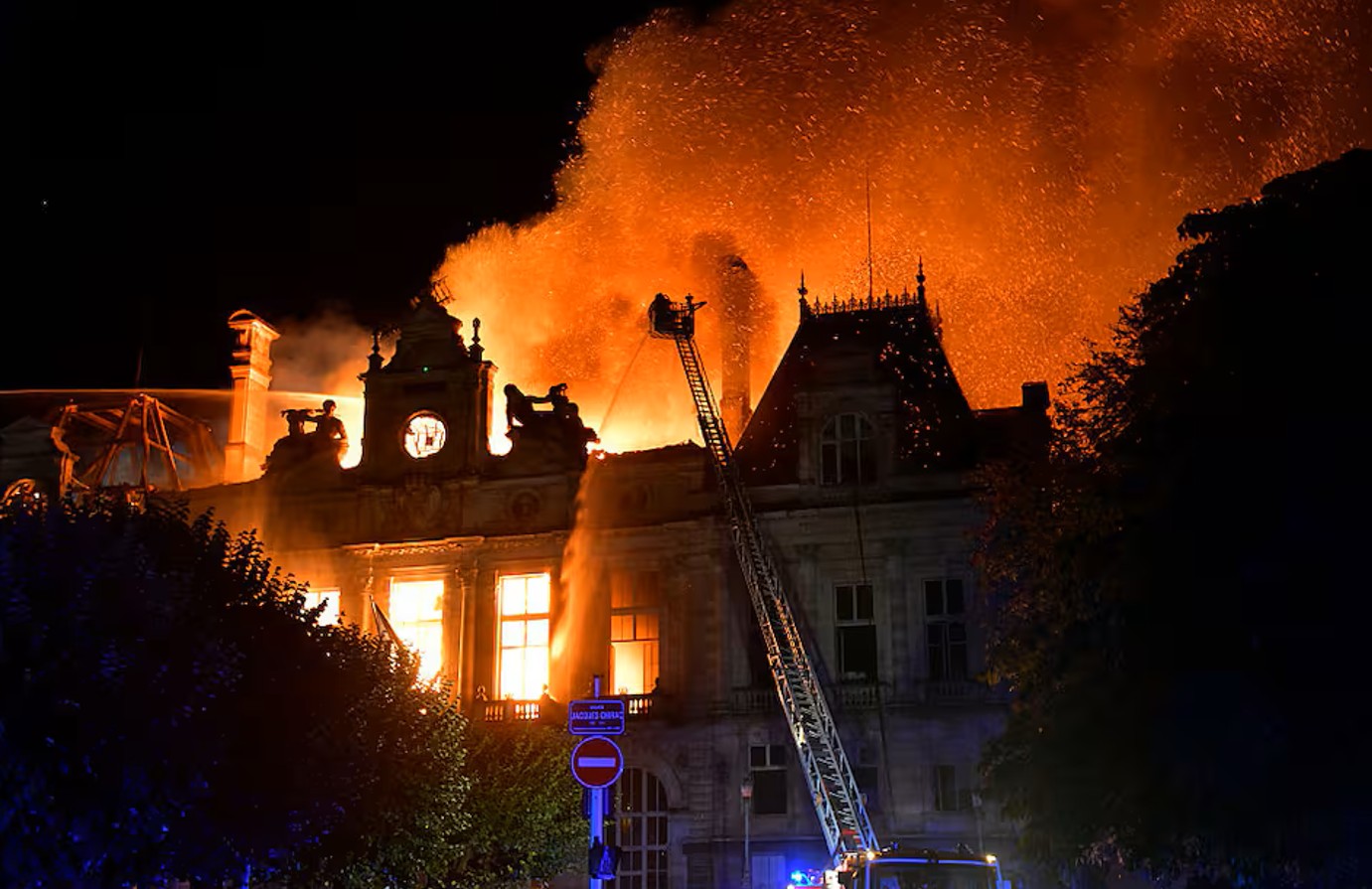
La perdita della torre dell’orologio e di gran parte della copertura segna già una ferita profonda nel paesaggio urbano di Limoges. L’incertezza sul destino delle decorazioni interne aggiunge un’altra questione, altrettanto importante, alla quale solo le verifiche successive potranno dare risposta.
Un edificio pubblico può essere ricostruito, almeno in parte. Più difficile è restituire tutto ciò che si era accumulato al suo interno nel corso di oltre un secolo: le opere, i materiali, i segni del tempo e i ricordi delle persone che lo hanno frequentato.
Le immagini del tetto crollato e della torre scomparsa raccontano già la dimensione della distruzione. Per conoscere davvero ciò che Limoges ha perduto, però, bisognerà aspettare che i tecnici possano entrare nell’edificio e verificare che cosa sia rimasto.
Per il momento il sempre vostro Michelangelo Buonarroti vi saluta dandovi appuntamento ai prossimi post e sui social.

Fire at Limoges City Hall; clock tower collapses—historic 19th-century building destroyed
The Limoges City Hall (Hôtel de Ville), inaugurated in 1883 and designated a historic monument in 1975, has been devastated by a fire that broke out during protests in France on October 17.
The roof and the 43-meter-tall clock tower have collapsed, and a large portion of the façade has been lost. The artistic heritage housed within the building has also suffered severe damage, the extent of which has yet to be fully assessed.
The blaze caused the roof to cave in onto the lower floors, and the 43-meter-tall clock tower collapsed; a significant section of the façade was also destroyed.
The initial assessment by French authorities is grim. The Prefect of Haute-Vienne, Maurice Barate, described the event as a true “catastrophe for our heritage,” while Mayor Guillaume Guérin, visibly moved, spoke of the gravity of the destruction.
According to preliminary statements, the building is largely lost. Firefighters battled the flames for hours, while strong winds fueled the fire.
The Hôtel de Ville was one of the architectural symbols of Limoges—a monument where the city’s political history was intertwined with its artistic legacy and manufacturing traditions.
Limoges City Hall in flames during protests in France
The fire broke out at the end of a demonstration against the rising cost of living, on a day marked by protests across numerous French cities. The demonstrators’ demands were varied and included expressions of solidarity with student mobilizations that have been ongoing for days.
In Limoges, individuals set fire to the City Hall. The authorities have strongly condemned the incident, distinguishing the actions of those responsible for the act from those of the peaceful protesters.
Prefect Maurice Barate reported that the roof collapsed onto the lower floors—with the exception of the western wing—and that approximately two-thirds of the façade had already been lost during the initial stages of the emergency.
Mayor Guillaume Guérin confirmed the collapse of the clock tower, one of the building’s most recognizable features. The fire also destroyed the wedding hall and the civil registry office—spaces deeply connected to the daily lives of thousands of people.
According to the authorities, local government officials, municipal police officers, and administrative staff were inside the building. Initial reports indicate no injuries.
It remains to be seen how much of the surviving structure can be salvaged, and the full extent of the damage to the interior spaces and the works of art that once adorned the town hall.
The Limoges Hôtel de Ville: The history of a building inaugurated in 1883
To grasp the magnitude of this loss, one must look back to the second half of the 19th century, a period when French cities invested in the construction of monumental public buildings intended to represent the stability of their institutions and the prestige of their local communities.
The Limoges town hall was built between 1879 and 1883, based on a design by architect Charles-Alfred Leclerc. It was inaugurated on July 14, 1883—the French national holiday.
The building drew inspiration from the Hôtel de Ville in Paris, translating that model into an architectural language that combined Neo-Renaissance references with elements characteristic of the Louis XIII style. The monumental façade was organized into eleven bays, featuring large arches on the ground floor, windows of imposing proportions, and an elaborate decorative crowning. At its center rose a 43-meter-tall clock tower, which dominated the building and helped define its urban profile.
That very tower—a visual landmark for the inhabitants of Limoges for over a century—collapsed during the fire.
The construction of the town hall was made possible in part by a bequest from Alfred Fournier, who left his estate to the city in 1875. This new seat replaced an earlier municipal building completed in 1811 and addressed the need to provide Limoges with an architectural presence befitting its importance.
The edifice was intended to tell the story of the city through its form and ornamentation, making visible the connection between its institutions, local history, and artistic endeavors.
The façade recounted the history of Limoges through art
One of the most compelling aspects of the Hôtel de Ville was the decorative program of its façade, conceived to celebrate the figures and traditions that had helped shape the city’s identity.
On the main elevation, there were four medallions created by Giandomenico Facchina, dedicated to significant figures in French and local history: Léonard Limosin, a renowned Renaissance master of enameling; Henri François d’Aguesseau, Chancellor of France; and Pierre Victurnien, a key figure in the French Revolution; and Jean-Baptiste Jourdan, a general from the Napoleonic era.
On the upper part of the façade, there were also sculptures by Tony Noël dedicated to the crafts of goldsmithing and enameling.
Limoges is internationally renowned for its porcelain, but its artistic history is also deeply rooted in the production of enamels—crafted in the city’s workshops since the Middle Ages and distributed throughout Europe.
In this way, the town hall transformed its façade into a visual narrative: on one side, the notable figures who shaped history; on the other, the artisanal trades that brought fame to the city.
The materials used also helped define the building’s character. The base was constructed from Limousin granite, while limestone from the Poitou region was used for the upper floor and the interiors. The roof was covered in slate, and the bell tower featured a metal structure with ornamental zinc cladding.
Paintings inside the town hall: what became of the artworks?
The severity of the fire also affected the artistic heritage housed within the building. Before the blaze, the town hall contained paintings and sculptures that adorned its ceremonial rooms and the grand staircase.
Documented works included paintings by Henri-Paul Motte, depicting Léonard Limosin in his studio and the incorporation of the Viscountcy of Limoges into the Kingdom of France under Henry IV.
The ceilings of the great halls were decorated by Abel Trinocq, Jean-Joseph Weerts, and Urbain Bourgeois. Adolphe-Martial Thabard also contributed to the sculptural decorations, alongside Tony Noël. This heritage rendered the building more than just an architectural monument. Its public areas were conceived as ceremonial spaces, where paintings and sculpture helped construct an image of the city and its history.
At present, however, it is impossible to determine precisely which paintings, decorations, and other artistic elements have survived the flames. Doing so will require on-site inspections, assessments of structural stability, and an inventory of salvageable assets.
The collapse of the floors and the roof makes such an assessment particularly complex. Even works not directly touched by the fire may have sustained damage from heat, smoke, the water used to extinguish the blaze, or structural failure.
The fountain in front of the town hall and its status as a historic monument
The Hôtel de Ville (town hall) faced a square that, since 2022, has been named after former French President Jacques Chirac. In front of the building stood a monumental fountain, designed by Charles Genuys and installed in 1893.
This feature was also part of the historical and architectural ensemble that defines the urban space.
In 1975, the town hall and the fountain were recognized and protected under French legislation concerning historic monuments. The decree of January 15, 1975, specifically covered the facades and roofing of the Hôtel de Ville—excluding a later addition from the 1960s—as well as the fountain in front of it.
This designation underscores the value attributed to the building, not merely as an institutional seat, but as a significant element of France’s architectural heritage.
While such protection could not, of course, prevent a destructive event of this magnitude, it serves as an essential reference point for subsequent efforts to study the site, secure the structure, and evaluate the possibilities for restoration. The fountain and the surviving parts of the complex must be examined to determine how much of the original ensemble remains intact.
Rebuilding the Limoges Town Hall: A Challenge for French Heritage
Now begins the most difficult phase—the period following the immediate emergency—during which it will be necessary to decide how to intervene on such a severely damaged historic building.
Before any reconstruction project can begin, the structures must be secured, the remaining elements documented, and the condition of the materials and decorative features assessed. It will also be essential to recover—wherever possible—architectural and artistic elements that can be restored.
It is not yet possible to determine what form any potential reconstruction might take, nor how long it will be before the town hall is returned to the city.
Rebuilding a 19th-century monument requires engaging with its authenticity, its original construction techniques, and the need to distinguish between what can be preserved and what may ultimately need to be recreated.
The loss of the clock tower and a large portion of the roof has already inflicted a deep wound on the urban landscape of Limoges. The uncertainty surrounding the fate of the interior decorations adds a further nother issue, equally important, is one to which only subsequent inspections will be able to provide an answer.
A public building can be rebuilt—at least in part. It is far more difficult to restore everything that had accumulated within it over the course of more than a century: the artworks, the materials, the traces of the passage of time, and the memories of the people who spent time there.
The images of the collapsed roof and the vanished tower already speak to the scale of the destruction. To truly understand what Limoges has lost, however, we must wait until experts can enter the building and assess what remains.
For now, yours truly, Michelangelo Buonarroti, bids you farewell—until the next posts and our continued connection on social media.

Sostienici – Support Us
Se questo blog ti piace e ti appassiona, puoi aiutarci a farlo crescere sempre più sostenendoci in modo concreto condividendo i post, seguendo le pagine social e con un contributo che ci aiuta ad andare avanti con il nostro lavoro di divulgazione. . ENGLISH: If you like and are passionate about this blog, you can help us make it grow more and more by supporting us in a concrete way by sharing posts, following social pages and with a contribution that helps us to move forward with our dissemination work.
10,00 €

Condividi:


Questo sono io




sostienici

Sostienici - Support Us
Se questo blog ti piace e ti appassiona, puoi aiutarci a farlo crescere sempre più sostenendoci in modo concreto condividendo i post, seguendo le pagine social e con un contributo che ci aiuta ad andare avanti con il nostro lavoro di divulgazione. . ENGLISH: If you like and are passionate about this blog, you can help us make it grow more and more by supporting us in a concrete way by sharing posts, following social pages and with a contribution that helps us to move forward with our dissemination work.
€10,00


