
18 ottobre 1634: nasce Luca Giordano, il pittore che dipingeva così in fretta da essere chiamato «Luca fa’ presto»
C’è un pittore che riusciva a riempire soffitti immensi di figure, cieli luminosi, divinità e personaggi in movimento con una rapidità che lasciava tutti a bocca aperta.
Si chiamava Luca Giordano e nacque a Napoli un giorno come oggi, il 18 ottobre 1634. Fu un artista instancabile, capace di passare dalle pale d’altare alle grandi decorazioni a fresco, dai soggetti mitologici alle storie sacre, costruendo una carriera che lo avrebbe portato dalle chiese napoletane fino alla corte di Spagna.
Ridurre Giordano alla sua velocità sarebbe un errore. Perché dietro quella straordinaria capacità di dipingere in tempi brevissimi c’erano anni di studio, una memoria visiva prodigiosa e la capacità di assimilare le lezioni dei grandi maestri senza rinunciare a una voce personale
La sua storia comincia proprio a Napoli, in una città che nel Seicento era uno dei centri artistici più vivaci d’Europa Lì che il giovane Luca imparò a trasformare pennellate veloci in immagini capaci di catturare lo sguardo, conquistare committenti potenti e lasciare il segno in alcuni dei più importanti palazzi del suo tempo.
Il bambino prodigio e la leggenda dell’affresco dipinto di nascosto
Luca Giordano crebbe in una famiglia legata alla pittura. Suo padre, Antonio Giordano, era pittore e gli permise di entrare presto in contatto con il mondo delle botteghe e del lavoro artistico.
Intorno alla sua infanzia circolano racconti che hanno contribuito a costruire la fama di bambino prodigio. Uno dei più noti sostiene che, quando era ancora giovanissimo, riuscì a completare di nascosto un affresco nella chiesa di Santa Maria la Nova, sorprendendo chi si accorse di ciò che aveva fatto.
Quello che sappiamo è che Giordano dimostrò molto presto una capacità fuori dal comune e che la sua formazione fu segnata dall’incontro con la pittura di Jusepe de Ribera, uno dei protagonisti della stagione caravaggesca a Napoli.
Ribera gli trasmise una lezione importante: osservare la realtà, studiare i corpi, comprendere la forza della luce e dare consistenza alle figure. Ma Giordano non rimase prigioniero di un solo modello. Guardò anche a Tiziano, Veronese, Rubens, Pietro da Cortona e ad altri grandi artisti, facendo della capacità di imparare dagli altri uno dei suoi punti di forza.
Perché tutti lo chiamavano ‘Luca fa’ presto’?
Il soprannome è diventato inseparabile dal suo nome. ‘Luca fa’ presto’ racconta qualcosa di essenziale del suo modo di lavorare: Giordano riusciva a produrre una quantità impressionante di dipinti, affrontando commissioni complesse e decorazioni monumentali con una velocità fuori dal comune.
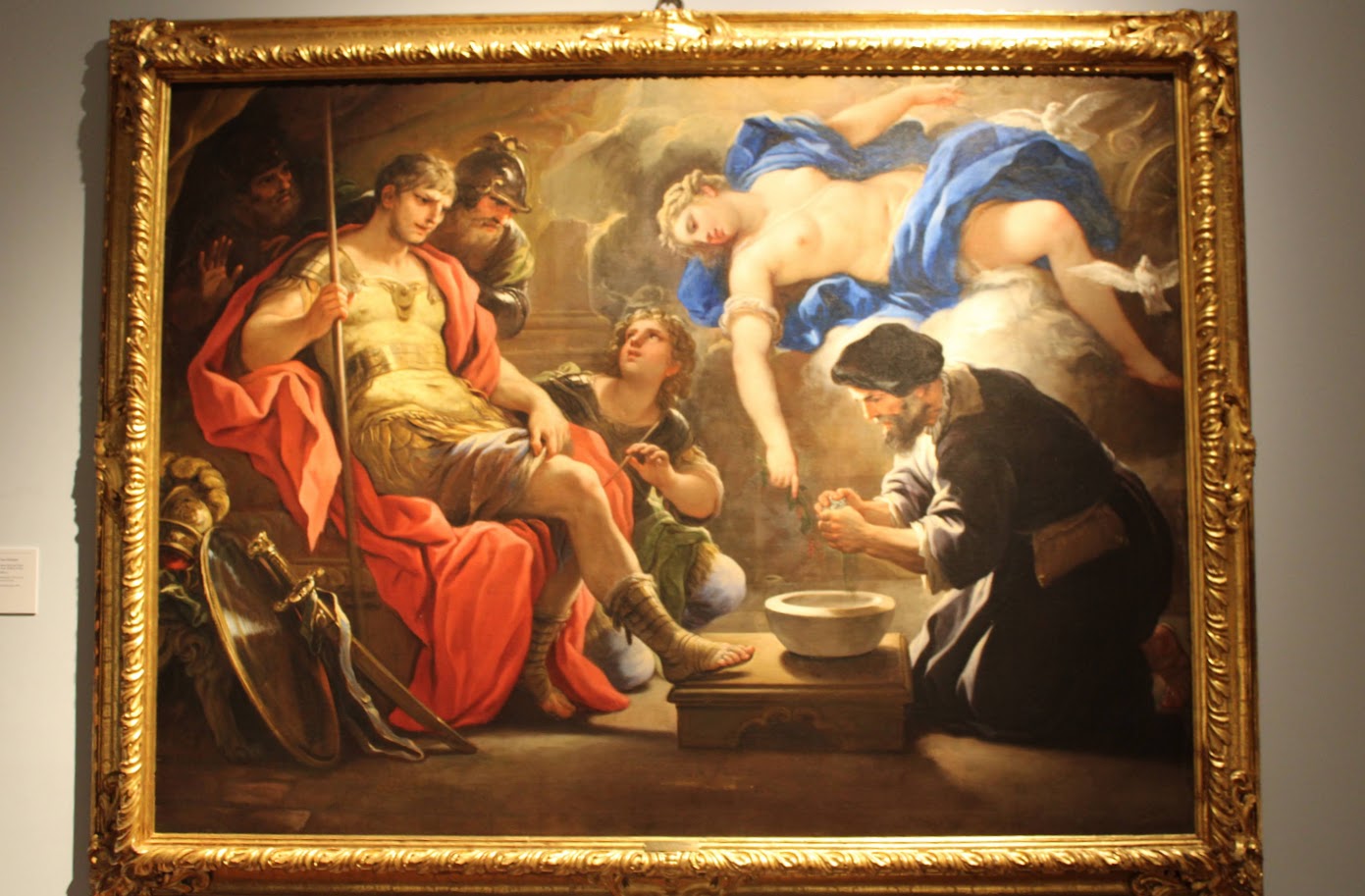
La sua rapidità era tale da diventare quasi un marchio. Ma non bisogna immaginare un pittore che si limitava a sbrigare il lavoro. La sua abilità stava proprio nel riuscire a mantenere energia, inventiva e qualità pittorica anche quando doveva affrontare superfici enormi, popolate da decine di figure.
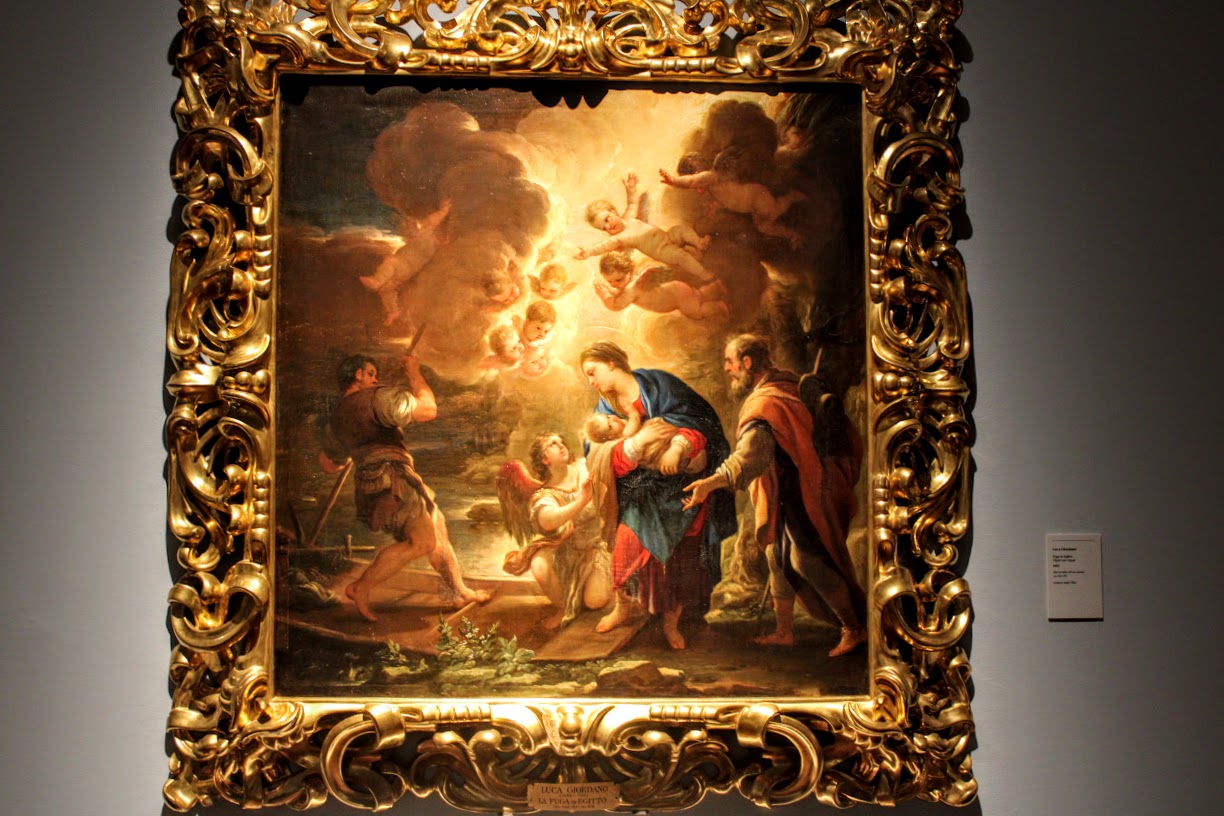
Il suo stile cambiò nel corso della carriera. Agli inizi si confrontò con la pittura intensa e drammatica di Ribera; in seguito sviluppò una tavolozza più chiara, una pennellata libera e una straordinaria sensibilità per gli effetti scenografici.
Nei suoi dipinti i personaggi sembrano spesso sul punto di uscire dalla tela. I panneggi si gonfiano, i corpi si intrecciano, le nuvole si aprono lasciando filtrare la luce e le composizioni acquistano una vitalità quasi teatrale.
È questa capacità di rendere la pittura movimento a fare di Giordano uno dei protagonisti del Barocco europeo.
Dalla pittura napoletana ai grandi viaggi: Roma, Venezia e Firenze
Per diventare un artista di respiro internazionale, Giordano non si accontentò di ciò che aveva imparato nella sua città.
I viaggi ebbero un ruolo fondamentale nella sua formazione. A Roma poté confrontarsi con la grande tradizione rinascimentale e con le novità della decorazione barocca. A Venezia rimase colpito dalla ricchezza cromatica dei maestri veneti, mentre Firenze gli offrì l’occasione di misurarsi con le grandi imprese decorative richieste dalle famiglie più potenti.
Giordano aveva una qualità preziosa: sapeva osservare, assimilare e trasformare. Non si limitava a riprodurre ciò che vedeva, ma rielaborava linguaggi differenti per costruire un modo di dipingere riconoscibile.
Questa versatilità gli permise di lavorare su soggetti molto diversi, dalla pittura religiosa alle scene mitologiche, dalle allegorie politiche alle decorazioni destinate a celebrare il prestigio delle grandi casate.
La sua carriera dimostra anche quanto fosse cambiato il ruolo del pittore nel Seicento. I grandi artisti non erano più chiamati soltanto a realizzare singole opere: potevano essere incaricati di trasformare interi ambienti, costruendo un racconto visivo capace di accompagnare e impressionare chi entrava in una sala o in una chiesa.

La Galleria degli Specchi di Palazzo Medici Riccardi: il capolavoro che lascia senza fiato
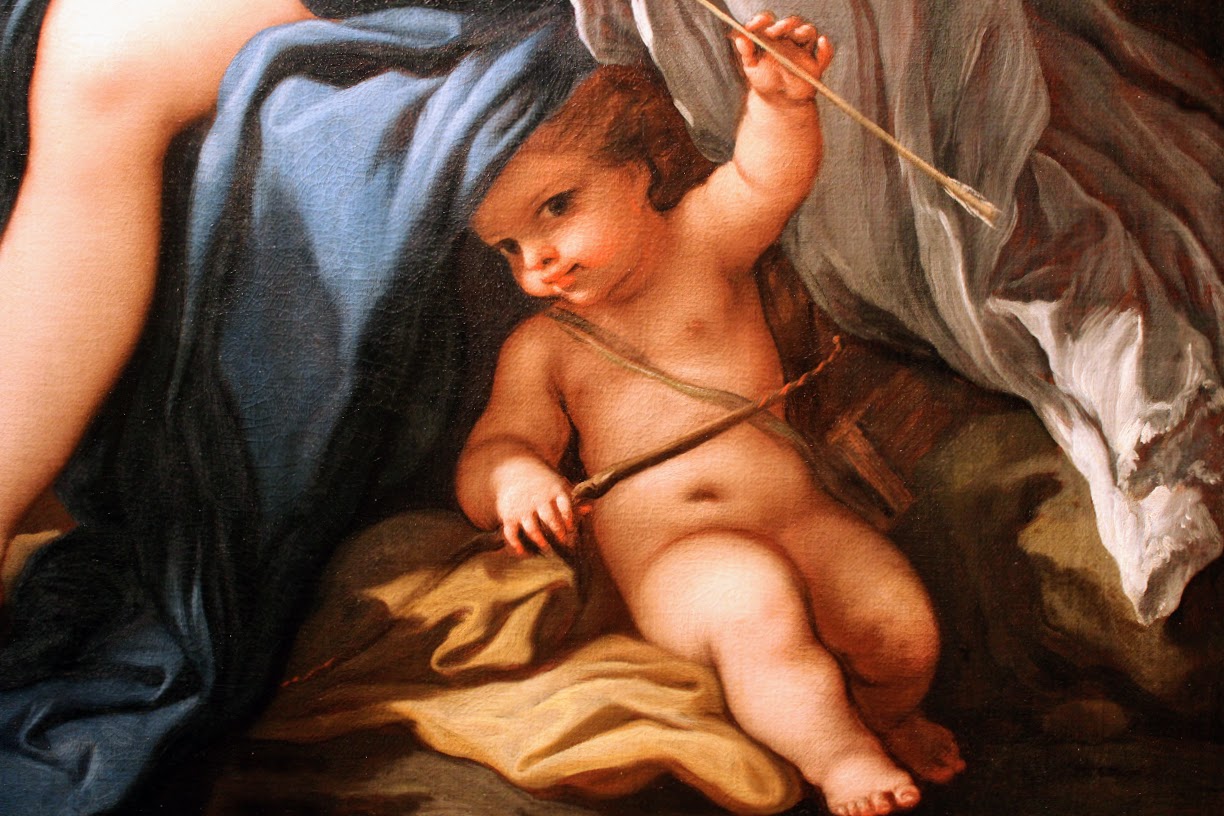
Se c’è un luogo in cui si comprende davvero la straordinaria immaginazione di Luca Giordano, è la Galleria degli Specchi di Palazzo Medici Riccardi, a Firenze.
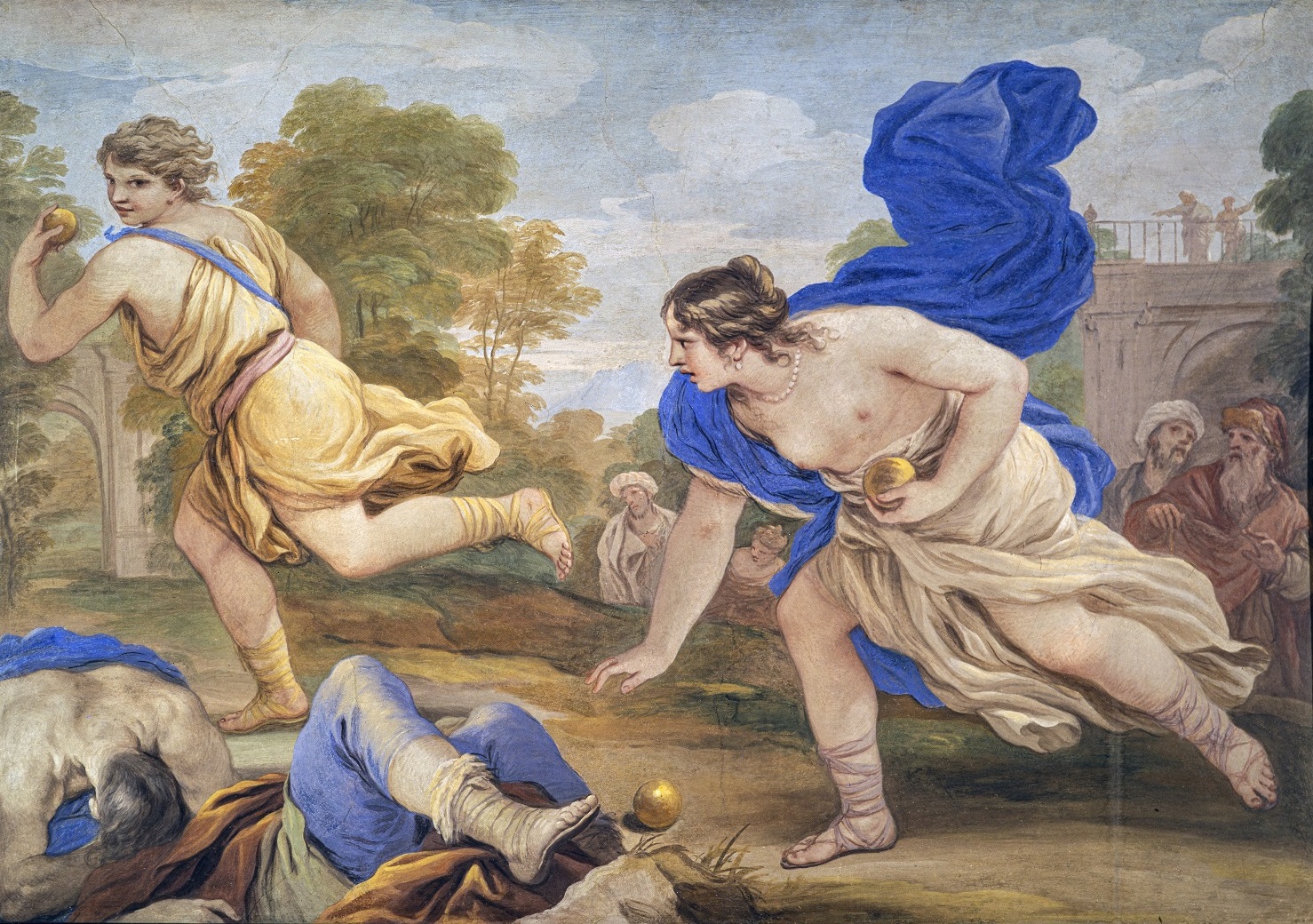
La decorazione della volta, commissionata dal marchese Francesco Riccardi, fu realizzata tra il 1682 e il 1685. È uno dei grandi esempi della pittura barocca fiorentina e mostra come Giordano fosse capace di trasformare un ambiente architettonico in un universo dipinto.
Alzando lo sguardo, ci si trova davanti a una composizione ricchissima, dove episodi mitologici, figure allegoriche e personaggi si distribuiscono lungo la superficie della volta. Le scene sono collegate da un ritmo continuo: lo spazio sembra dilatarsi e il soffitto perdere la propria consistenza materiale.
Al centro compare l’omaggio alla dinastia Medici, mentre ai quattro angoli sono rappresentate le Virtù cardinali. Il programma decorativo celebrava così la famiglia che aveva fatto grande Firenze e alla quale i Riccardi dovevano molto.
Non è soltanto una questione di bellezza. In una sala di rappresentanza come questa, la pittura aveva anche una funzione politica e sociale: raccontava prestigio, cultura e potere a chi veniva accolto nel palazzo.
La luce, i colori e la disposizione delle figure guidano lo sguardo senza lasciarlo fermo in un unico punto. È proprio qui che si riconosce il talento di Giordano: riuscire a organizzare una quantità enorme di elementi senza perdere la sensazione di leggerezza.
Cinque giorni per un’altra grande impresa
A Firenze, tra il 1685 e il 1686, Luca Giordano dipinse anche la volta della Biblioteca Riccardiana con l’Allegoria della Divina Sapienza, un’impresa che le fonti del Palazzo Medici Riccardi indicano come realizzata in appena cinque giorni.
È un dato impressionante, soprattutto se si pensa alla complessità di una decorazione di questo genere. Naturalmente, la rapidità nell’esecuzione non significa che l’artista non avesse studiato e preparato il proprio lavoro: dietro la sicurezza della pennellata c’erano una lunga esperienza e una capacità tecnica costruita negli anni.
La Galleria degli Specchi e la Biblioteca Riccardiana permettono di capire perché Giordano fosse tanto richiesto. Non solo era veloce ma sapeva adattare la pittura all’architettura e dare a ogni ambiente un’identità precisa.
Luca Giordano alla corte di Spagna: il pittore amato dai re
La fama di Giordano superò i confini italiani e arrivò fino alla corte spagnola. Nel 1692 il pittore si trasferì in Spagna, dove lavorò per la monarchia e ricevette importanti incarichi decorativi.
Fu chiamato a intervenire in residenze reali e chiese, portando con sé quella pittura luminosa, dinamica e spettacolare che aveva già conquistato i committenti italiani. A Madrid entrò in un ambiente nel quale l’arte era anche uno strumento per rappresentare la grandezza della Corona.
Il soggiorno spagnolo durò circa un decennio. Giordano lavorò con la consueta intensità, realizzando dipinti e affreschi destinati a lasciare un segno nella decorazione dei palazzi reali. La sua capacità di affrontare imprese monumentali lo rendeva particolarmente adatto a questo genere di commissioni
Non era più soltanto il pittore napoletano famoso per la sua rapidità. Era ormai un artista internazionale, capace di muoversi tra culture e tradizioni differenti e di soddisfare le richieste di committenti tra i più potenti d’Europa.
Nel 1702 tornò a Napoli, dove trascorse gli ultimi anni della sua vita. Morì nel 1705, lasciando un’eredità artistica vastissima.
Dove vedere oggi le opere di Luca Giordano
Per conoscere davvero Luca Giordano, il consiglio è di non fermarsi ai dipinti conservati nei musei. La sua pittura dà il meglio di sé quando la si osserva nel luogo per cui è stata pensata, soprattutto davanti a una volta affrescata o all’interno di una chiesa.
A Napoli si possono seguire le tracce dell’artista in diversi luoghi di culto e nelle collezioni del Museo e Real Bosco di Capodimonte, che conserva opere importanti per comprendere la pittura napoletana del Seicento.

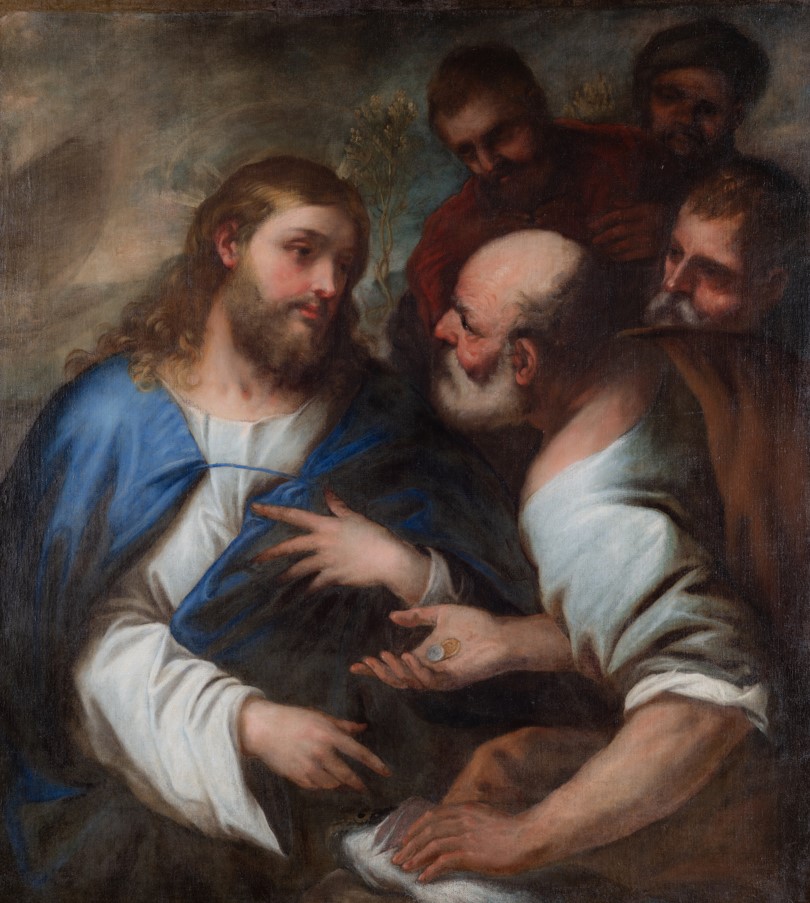
Tra i lavori da ricordare c’è Gesù che caccia i mercanti dal Tempio, realizzato per la controfacciata della chiesa dei Girolamini nel 1684. La scena è un ottimo esempio della capacità di Giordano di organizzare molte figure in una composizione movimentata, con gesti energici e un forte senso teatrale.
A Firenze, invece, Palazzo Medici Riccardi resta una tappa imprescindibile per ammirare le sue grandi decorazioni. La Galleria degli Specchi e la volta della Biblioteca Riccardiana mostrano due aspetti complementari del suo talento: la costruzione di un racconto mitologico monumentale e la capacità di trasformare la pittura in una visione allegorica.
La pittura di Luca Giordano non elaborava immagini pensate soltanto per essere osservate: dovevano conquistare lo spazio, accompagnare l’architettura e trasformare l’esperienza di chi entrava in una chiesa o in un palazzo.
Giordano riuscì a fare tutto questo grazie a una combinazione rara di talento, cultura visiva e velocità esecutiva. Aveva studiato i grandi maestri, ma non si era lasciato imprigionare da nessuno di loro. Aveva imparato a dipingere in modi diversi e a usare quella conoscenza per costruire un linguaggio personale.
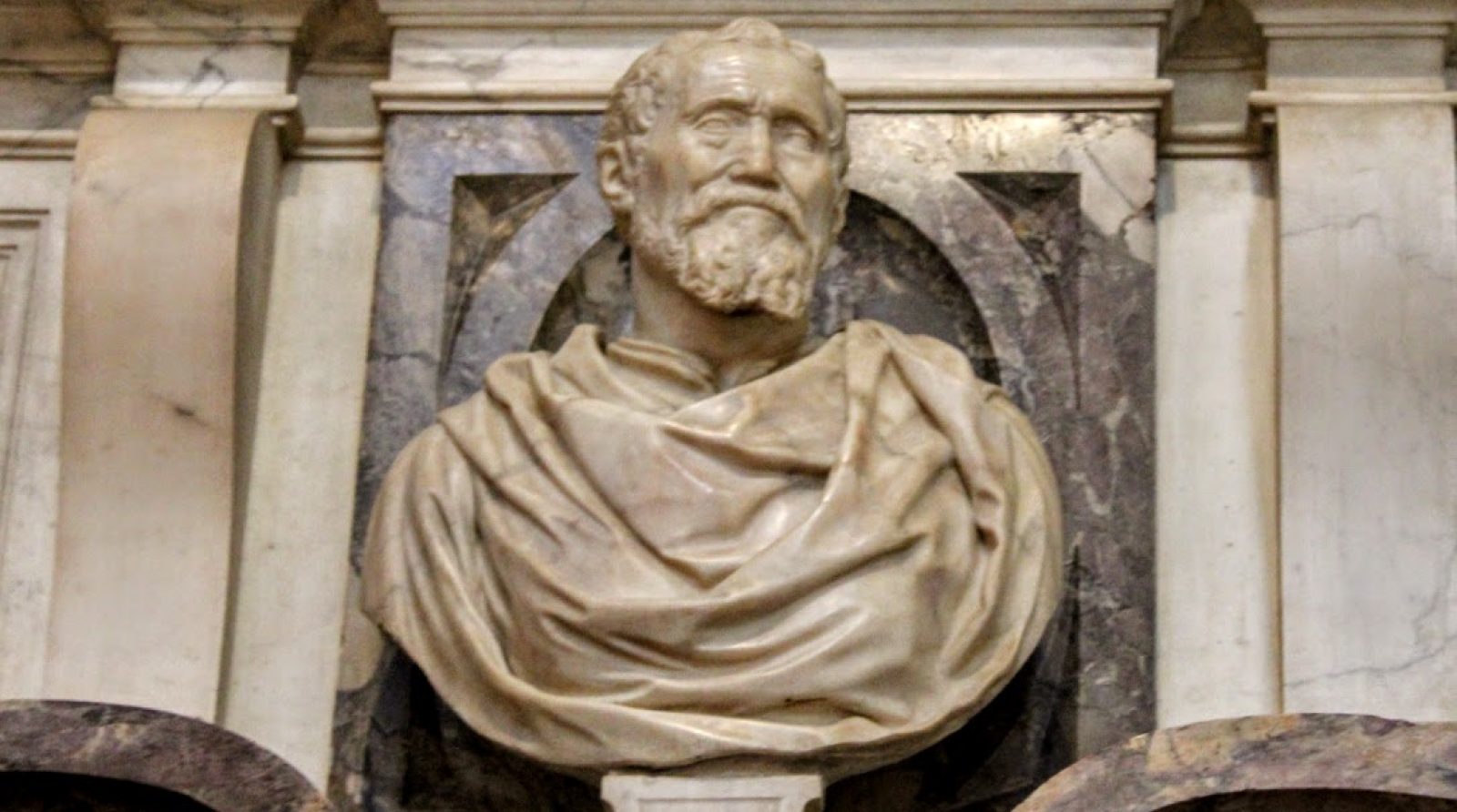
Per il momento il sempre vostro Michelangelo Buonarroti vi saluta dandovi appuntento ai prossimi post e sui social.
October 18, 1634: the birth of Luca Giordano, the painter who worked so quickly he earned the nickname “Luca fa’ presto” (“Luca, hurry up!”)
There was once a painter who could fill vast ceilings with figures, radiant skies, deities, and dynamic characters—all with a speed that left onlookers completely awestruck.
His name was Luca Giordano, and he was born in Naples on this very day, October 18, 1634. He was a tireless artist, equally adept at creating altarpieces, grand fresco cycles, mythological scenes, and sacred narratives—a career that would take him from the churches of Naples all the way to the Spanish royal court.
Yet, to define Giordano solely by his speed would be a mistake. Behind that extraordinary ability to paint with such remarkable haste lay years of rigorous study, a prodigious visual memory, and a unique talent for absorbing the lessons of the great masters while maintaining a distinct, personal voice.
His story begins in Naples—a city that, in the 17th century, stood as one of Europe’s most vibrant artistic hubs. It was there that young Luca learned to transform swift, decisive brushstrokes into captivating imagery—work that won over powerful patrons and left an indelible mark on some of the most significant palaces of his era.
The child prodigy and the legend of the secret fresco
Luca Giordano grew up in a family deeply connected to the world of painting. His father, Antonio Giordano, was himself a painter, which allowed Luca to become acquainted with the environment of artists’ workshops and professional creative work at a very young age.
Various tales surround his childhood, all of which helped cement his reputation as a child prodigy. One of the most famous accounts suggests that, while still very young, he managed to complete a fresco in the church of Santa Maria la Nova in secret—leaving those who discovered his handiwork completely astonished. What we know is that Giordano demonstrated an extraordinary talent at a very early age, and his artistic development was shaped by his encounter with the work of Jusepe de Ribera—a key figure in the Caravaggesque movement in Naples.
Ribera imparted an essential lesson: the importance of observing reality, studying the human form, understanding the power of light, and giving substance to figures. Yet, Giordano did not remain confined to a single influence. He also drew inspiration from Titian, Veronese, Rubens, Pietro da Cortona, and other great masters, turning his capacity to learn from others into one of his greatest strengths.
Why was he known as “Luca fa’ presto” (“Luca, work fast”)?
The nickname has become inseparable from his name. “Luca fa’ presto” speaks to something fundamental about his working method: Giordano was capable of producing an astonishing number of paintings, tackling complex commissions and monumental decorative projects with exceptional speed.
His swiftness became almost a trademark. However, this should not be mistaken for a painter merely rushing through his work. His true skill lay in his ability to sustain energy, inventiveness, and high artistic quality—even when working on vast surfaces populated by dozens of figures.
His style evolved throughout his career. In his early years, he engaged with the intense, dramatic style of Ribera; later, he adopted a brighter palette, a freer brushstroke, and an extraordinary sensitivity to theatrical, scenographic effects.
In his paintings, the figures often appear as though they are about to step right off the canvas. Drapery billows, bodies intertwine, clouds part to let light filter through, and his compositions take on an almost theatrical vitality.
It is this ability to imbue painting with movement that establishes Giordano as a leading figure of the European Baroque. From Neapolitan Painting to Grand Journeys: Rome, Venice, and Florence
To become an artist of international stature, Giordano was not content with what he had learned in his home city.
Travel played a fundamental role in his development. In Rome, he was able to engage with the great Renaissance tradition and the innovations of Baroque decoration. In Venice, he was struck by the rich color palette of the Venetian masters, while Florence offered him the opportunity to take on the ambitious decorative projects commissioned by the most powerful families.
Giordano possessed a valuable gift: the ability to observe, assimilate, and transform. He did not merely reproduce what he saw; rather, he reworked various artistic languages to forge a distinctive, recognizable style of painting.
This versatility enabled him to work on a wide range of subjects—from religious themes and mythological scenes to political allegories and decorative schemes designed to celebrate the prestige of great noble houses.
His career also illustrates how the role of the painter had evolved during the 17th century. Leading artists were no longer tasked solely with creating individual works; they were often commissioned to transform entire spaces, crafting a visual narrative designed to engage and impress anyone who entered a hall or a church.
The Gallery of Mirrors at Palazzo Medici Riccardi: a breathtaking masterpiece
If there is one place where the extraordinary imagination of Luca Giordano can truly be grasped, it is the Gallery of Mirrors in the Palazzo Medici Riccardi, in Florence.
The decoration of the vault, commissioned by the Marquis Francesco Riccardi, was executed between 1682 and 1685. It stands as a prime example of Florentine Baroque painting, demonstrating Giordano’s unique ability to transform an architectural space into a painted universe.
Looking upward, one is confronted with an incredibly rich composition, in which mythological episodes, allegorical figures, and various characters are distributed across the surface of the vault. The scenes are linked by a continuous rhythm; the space seems to expand, and the ceiling appears to lose its material substance.
At the center lies a tribute to the Medici dynasty, while the four corners feature the Cardinal Virtues. The decorative program thus celebrated the family that had brought greatness to Florence—a family to whom the Riccardi owed a great deal.
It is not merely a matter of beauty. In a formal reception hall such as this, painting also served a political and social function: it conveyed prestige, culture, and power to those welcomed into the palace.
The light, the colors, and the arrangement of the figures guide the eye, never allowing it to rest on a single point. This is precisely where Giordano’s talent shines: his capacity to organize a vast number of elements while maintaining an enduring sense of lightness.
Five days for another grand undertaking
Between 1685 and 1686, also in Florence, Luca Giordano painted the vault of the Biblioteca Riccardiana with an Allegory of Divine Wisdom—a feat that, according to records from the Palazzo Medici Riccardi, was accomplished in just five days.
This is an astonishing detail, especially when one considers the complexity involved in a decorative work of this nature. Naturally, the speed of his execution does not mean that the artist had not studied and prepared his work; behind the confidence of his brushstrokes lay long experience and technical skill built up over the years.
The Hall of Mirrors (Galleria degli Specchi) and the Riccardiana Library offer insight into why Giordano was in such high demand. He was not only fast, but also adept at adapting his painting to the architecture, giving each space a distinct identity.
Luca Giordano at the Spanish Court: The Painter Beloved by Kings
Giordano’s fame extended beyond Italy’s borders, reaching the Spanish court. In 1692, the painter moved to Spain, where he worked for the monarchy and received significant decorative commissions.
He was called upon to work in royal residences and churches, bringing with him the luminous, dynamic, and spectacular style of painting that had already won over his Italian patrons. In Madrid, he entered an environment where art served as a tool to represent the grandeur of the Crown.
His stay in Spain lasted about a decade. Giordano worked with his characteristic intensity, creating paintings and frescoes that would leave a lasting mark on the decoration of the royal palaces. His ability to undertake monumental projects made him particularly well-suited for such commissions.
He was no longer merely the Neapolitan painter known for his speed; he had become an international artist, capable of navigating different cultures and traditions and meeting the demands of some of the most powerful patrons in Europe.
In 1702, he returned to Naples, where he spent the final years of his life. He passed away in 1705, leaving behind an immense artistic legacy.
Where to See the Works of Luca Giordano Today
To truly get to know Luca Giordano, it is best not to limit yourself to the paintings held in museums. His painting is at its best when viewed in the setting for which it was conceived—most notably on a frescoed vault or within the interior of a church.
In Naples, one can trace the artist’s work across various places of worship, as well as within the collections of the Museo e Real Bosco di Capodimonte, which houses significant pieces essential to understanding 17th-century Neapolitan painting.
Among the notable works is Jesus Expelling the Merchants from the Temple, created in 1684 for the counter-façade of the Church of the Girolamini. The scene serves as an excellent example of Giordano’s ability to organize a multitude of figures into a dynamic composition, characterized by energetic gestures and a powerful sense of theatricality.
In Florence, meanwhile, Palazzo Medici Riccardi remains an essential destination for admiring his large-scale decorative works. The Hall of Mirrors and the vault of the Biblioteca Riccardiana reveal two complementary facets of his talent: the construction of monumental mythological narratives and the capacity to transform painting into an allegorical vision.
Luca Giordano’s art did not merely produce images intended for passive observation; rather, his works were designed to command the space, engage with the architecture, and fundamentally transform the experience of anyone entering a church or a palace.
Giordano succeeded in achieving all of this thanks to a rare combination of talent, visual culture, and speed of execution. He had studied the great masters, yet he never allowed himself to be constrained by any of them. He had learned to paint in various styles and used that knowledge to forge a personal language.
For now, yours truly, Michelangelo Buonarroti, bids you farewell—until the next posts and over on social media.
Sostienici – Support Us
Se questo blog ti piace e ti appassiona, puoi aiutarci a farlo crescere sempre più sostenendoci in modo concreto condividendo i post, seguendo le pagine social e con un contributo che ci aiuta ad andare avanti con il nostro lavoro di divulgazione. . ENGLISH: If you like and are passionate about this blog, you can help us make it grow more and more by supporting us in a concrete way by sharing posts, following social pages and with a contribution that helps us to move forward with our dissemination work.
10,00 €

Condividi:


Questo sono io



sostienici
Sostienici - Support Us
Se questo blog ti piace e ti appassiona, puoi aiutarci a farlo crescere sempre più sostenendoci in modo concreto condividendo i post, seguendo le pagine social e con un contributo che ci aiuta ad andare avanti con il nostro lavoro di divulgazione. . ENGLISH: If you like and are passionate about this blog, you can help us make it grow more and more by supporting us in a concrete way by sharing posts, following social pages and with a contribution that helps us to move forward with our dissemination work.
€10,00


