
Antonio Canova, 13 ottobre 1822: muore lo scultore che diede vita al marmo
Il 13 ottobre 1822, a Venezia, si spegneva Antonio Canova: uno dei protagonisti assoluti della storia dell’arte. Aveva 64 anni e alle spalle una carriera straordinaria, costruita grazie a un talento eccezionale, a una disciplina instancabile e a una conoscenza profondissima della scultura antica.
Le sue opere continuano a sorprenderci per la morbidezza delle superfici, la naturalezza dei gesti e quella capacità quasi impossibile di suggerire il calore della pelle attraverso la freddezza della pietra. Canova voleva raggiungere un ideale di bellezza capace di superare il tempo.
La sua storia però non è fatta soltanto di capolavori. È anche la storia di un ragazzo veneto che riuscì a imporsi nelle corti europee, di un artista corteggiato da papi e sovrani e di un italiano che si batté per riportare a casa le opere d’arte sottratte da Napoleone.
Dalle origini a Possagno alla conquista di Venezia
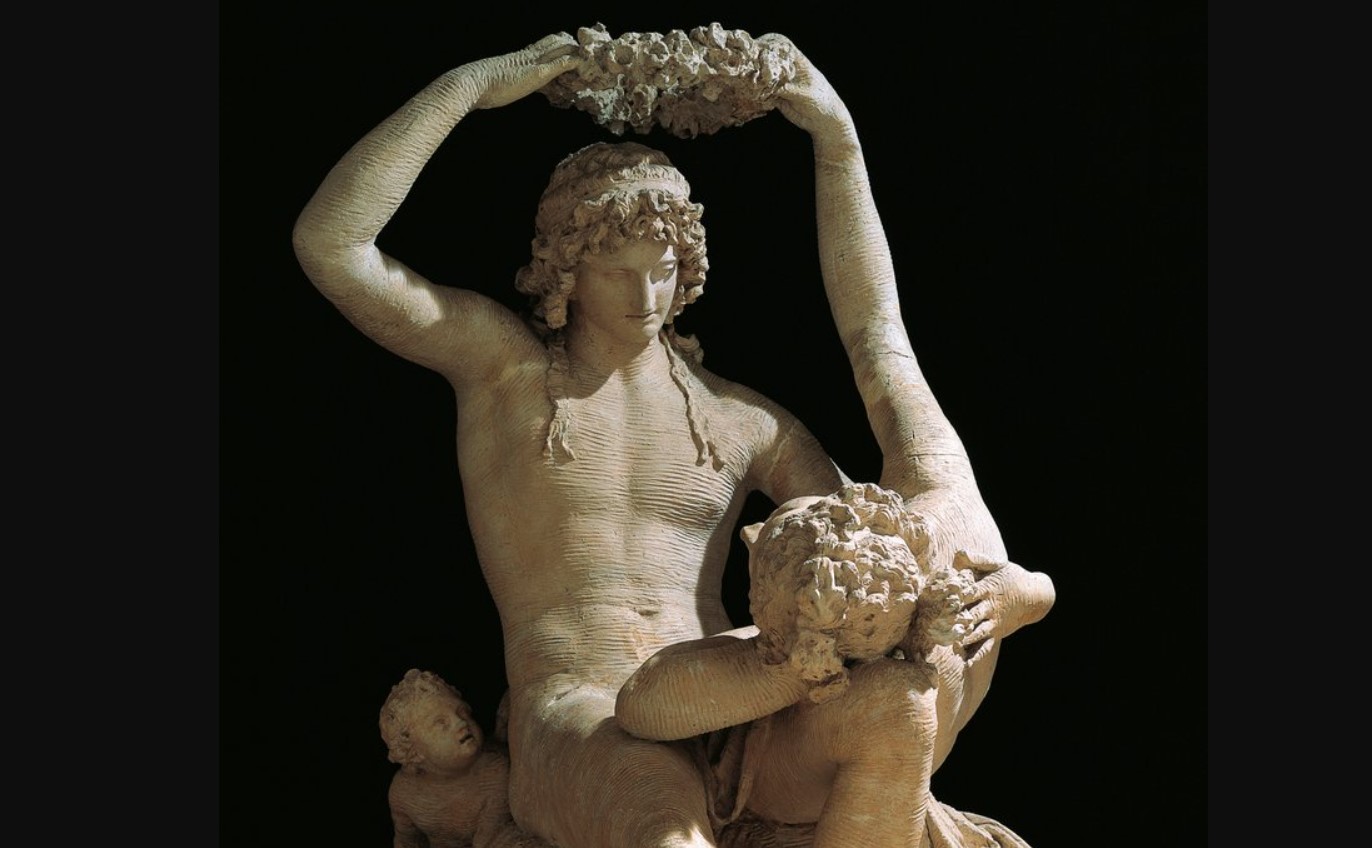
Antonio Canova nacque il 1º novembre 1757 a Possagno, un piccolo centro ai piedi del Monte Grappa, nell’attuale provincia di Treviso. La sua famiglia aveva una tradizione legata alla lavorazione della pietra e il giovane Antonio crebbe in un ambiente nel quale il lavoro manuale e la conoscenza dei materiali avevano un ruolo importante.
Rimasto orfano del padre quando era ancora bambino, fu affidato alle cure del nonno paterno, Pasino Canova, scalpellino e scultore. Proprio lui contribuì a indirizzarlo verso l’arte.
Secondo una tradizione biografica, il giovane Antonio avrebbe attirato l’attenzione del senatore veneziano Giovanni Falier durante un banchetto, scolpendo nel burro un piccolo leone. L’episodio, tramandato nelle biografie dell’artista, racconta bene quanto precocemente si fosse manifestata la sua abilità manuale.
Falier divenne uno dei suoi sostenitori e favorì il suo percorso di formazione.
Canova si trasferì quindi a Venezia, dove studiò l’arte antica e si confrontò con la tradizione scultorea della Serenissima. Qui realizzò le prime opere importanti e maturò progressivamente un linguaggio personale, capace di guardare alla classicità senza limitarsi a copiarla.
Nel 1779 visitò Roma, città fondamentale per la sua formazione. Davanti alle sculture antiche e ai capolavori del Rinascimento comprese che la grande arte non consisteva soltanto nella perfezione tecnica: occorreva dare forma a un ideale, trovare un equilibrio fra anatomia, espressione e sentimento.
Roma sarebbe divenuta la sua città d’elezione e il luogo dal quale avrebbe conquistato la fama internazionale.
Il Neoclassicismo e la sfida di rendere vivo il marmo
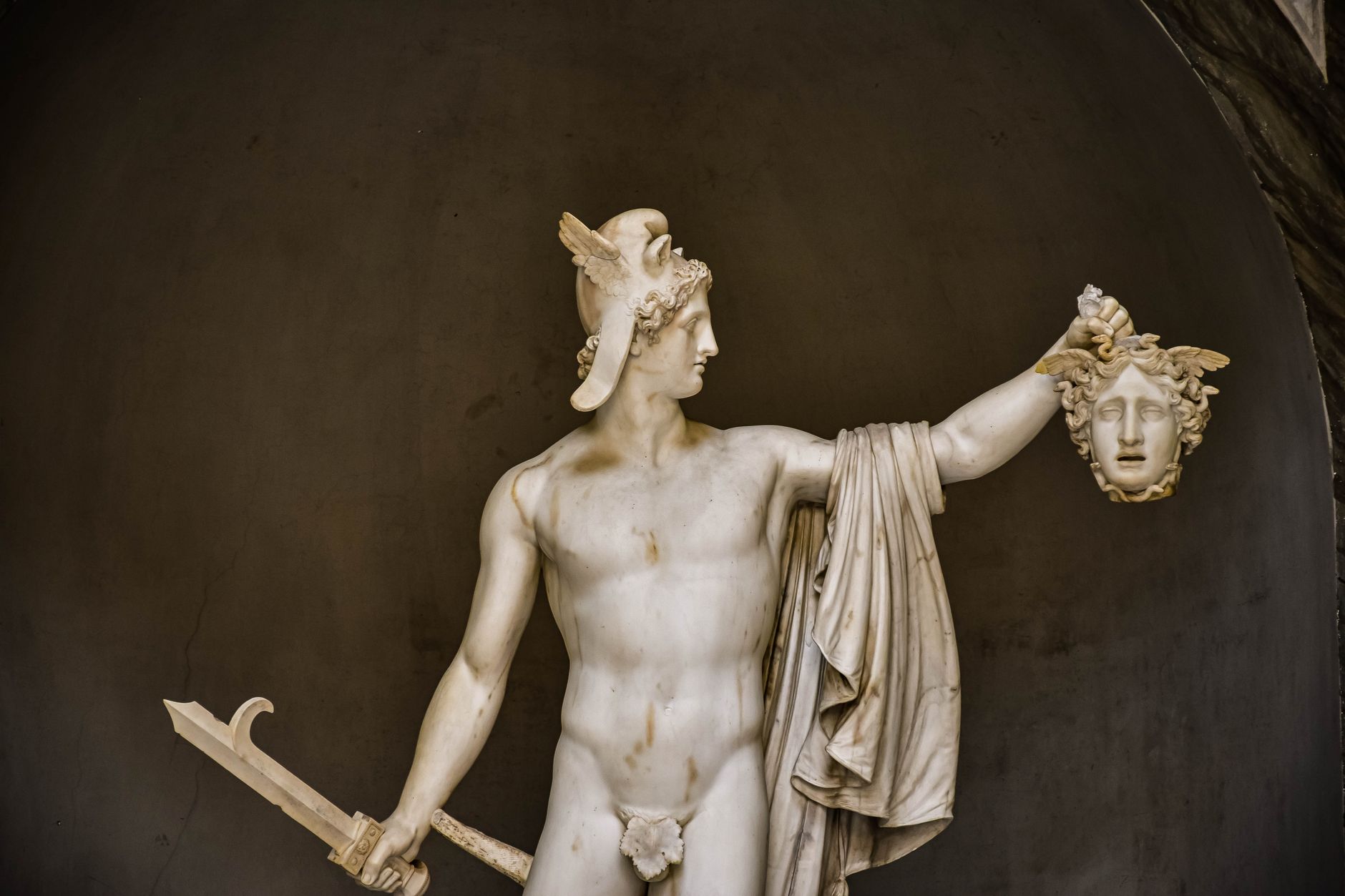
Alla fine del Settecento, l’Europa guardava con rinnovato interesse all’arte della Grecia e di Roma. Gli scavi archeologici, gli studi sull’antichità e le riflessioni teoriche sulla bellezza contribuirono alla diffusione del Neoclassicismo, che cercava nella cultura classica un modello di armonia, equilibrio e perfezione.
Canova divenne il suo interprete più celebre nella scultura.
Canova sapeva trasformare i modelli classici in immagini nuove, nelle quali la compostezza delle forme conviveva con una sensualità delicata e con una profonda attenzione agli affetti.
La sua tecnica era complessa. Il progetto prendeva forma attraverso disegni e modelli in argilla, dai quali ricavava modelli in gesso. Il trasferimento delle misure sul blocco di marmo consentiva poi di procedere alla lavorazione, spesso con l’aiuto di collaboratori.
Canova seguiva attentamente le fasi esecutive e interveniva nella rifinitura delle superfici, fondamentale per ottenere quella straordinaria morbidezza che ancora oggi distingue le sue sculture.
Il risultato era sorprendente: il marmo sembrava perdere la propria durezza e diventare pelle, stoffa, capelli, respiro. Canova sapeva suggerire un sentimento senza ricorrere a gesti teatrali, affidando l’emozione alla posizione delle mani, all’inclinazione di un volto e alla delicatezza di un contatto.
Amore e Psiche: il bacio che sembra sospeso nel tempo
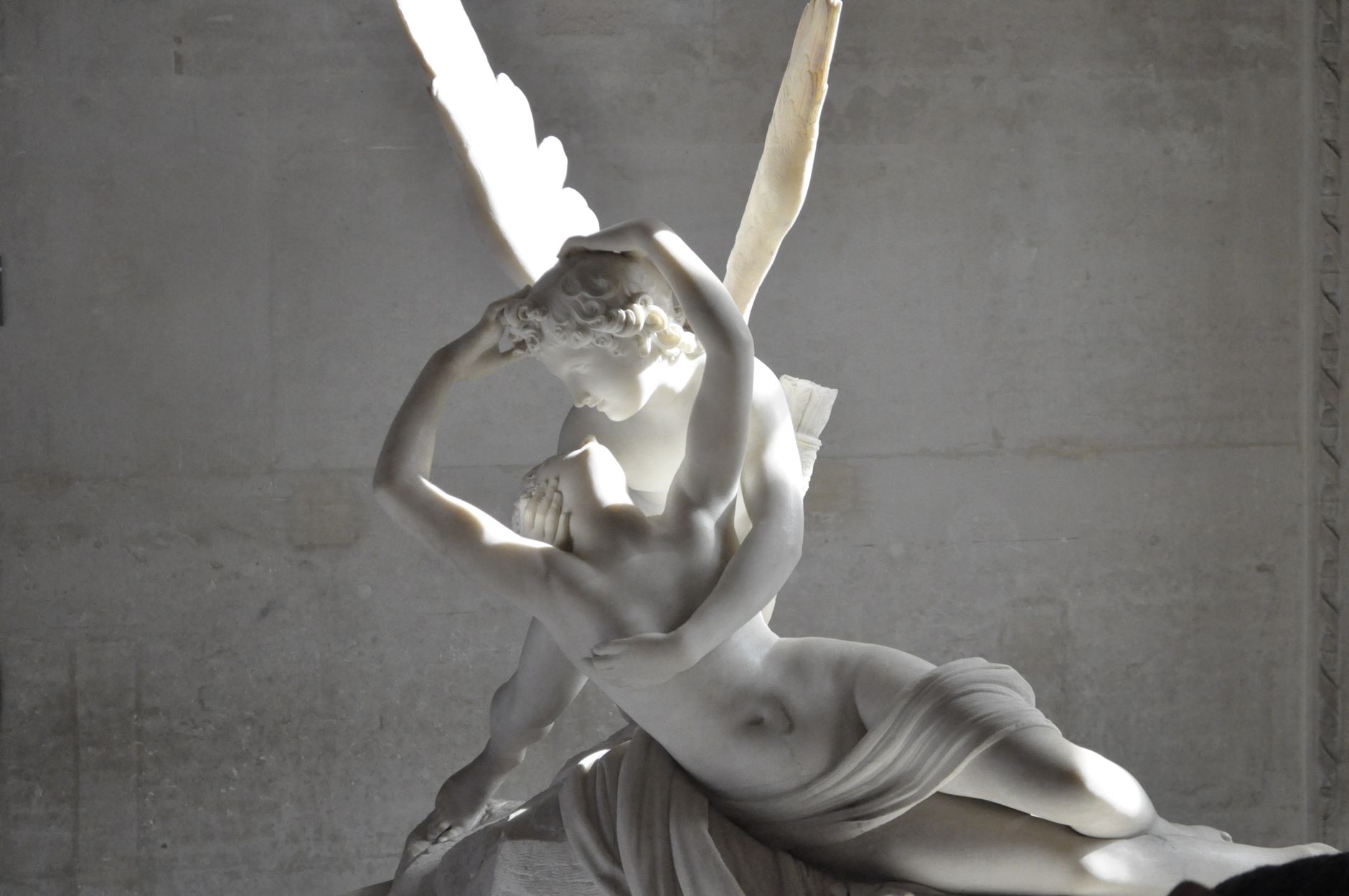
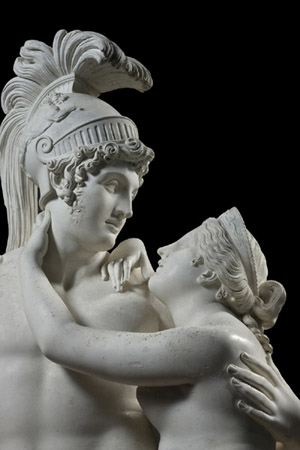
Fra i suoi capolavori più amati c’è Amore e Psiche, una delle sculture più celebri dell’intera storia dell’arte.
Canova affrontò più volte il soggetto tratto dalla favola narrata da Apuleio nelle Metamorfosi. La versione più famosa, oggi conservata al Museo del Louvre di Parigi, rappresenta Amore mentre si china su Psiche, appena risvegliata, in un momento di intensa intimità.
Le braccia dei due protagonisti si intrecciano e i loro corpi disegnano una composizione articolata, ma perfettamente equilibrata. Lo sguardo dello spettatore viene guidato verso il punto in cui i volti si avvicinano, poco prima del bacio.
Canova rappresenta l’amore catturando l’istante in cui il desiderio sta per trasformarsi in un gesto.
La superficie del marmo, levigata con una cura straordinaria, contribuisce a creare l’illusione di una pelle viva. Ogni movimento risponde a un preciso equilibrio compositivo.
Non è soltanto una dimostrazione di virtuosismo. È una scena nella quale il mito antico diventa un’esperienza emotiva universale.
Per approfondire, leggi anche Amore e Psiche di Canova.

Le Tre Grazie: la bellezza come armonia
Un altro capolavoro assoluto è il gruppo delle Tre Grazie, ispirato alle divinità della mitologia classica legate alla bellezza, alla grazia e alla gioia.
Le tre figure femminili sono disposte in modo da creare un insieme unitario, nel quale i corpi si avvicinano e si intrecciano senza perdere la propria individualità. Le braccia si appoggiano delicatamente sulle spalle e sulle schiene, mentre le teste inclinate stabiliscono un dialogo silenzioso.
Canova evita ogni rigidità. La composizione appare naturale, ma è frutto di uno studio attentissimo dei volumi, dei profili e dei rapporti fra le figure.
La sensualità non viene affidata a un’esibizione esplicita, bensì alla continuità delle forme e alla delicatezza dei contatti. La bellezza nasce dall’equilibrio e dalla relazione fra i corpi. Il gruppo esprime perfettamente l’ideale neoclassico, ma possiede anche una dolcezza che lo rende sorprendentemente moderno.
Puoi leggere anche l’approfondimento dedicato a Le Tre Grazie di Canova.

Paolina Borghese: quando una Bonaparte diventa Venere
Se c’è una scultura capace di raccontare il rapporto fra arte, potere e celebrità, è Paolina Borghese come Venere Vincitrice.
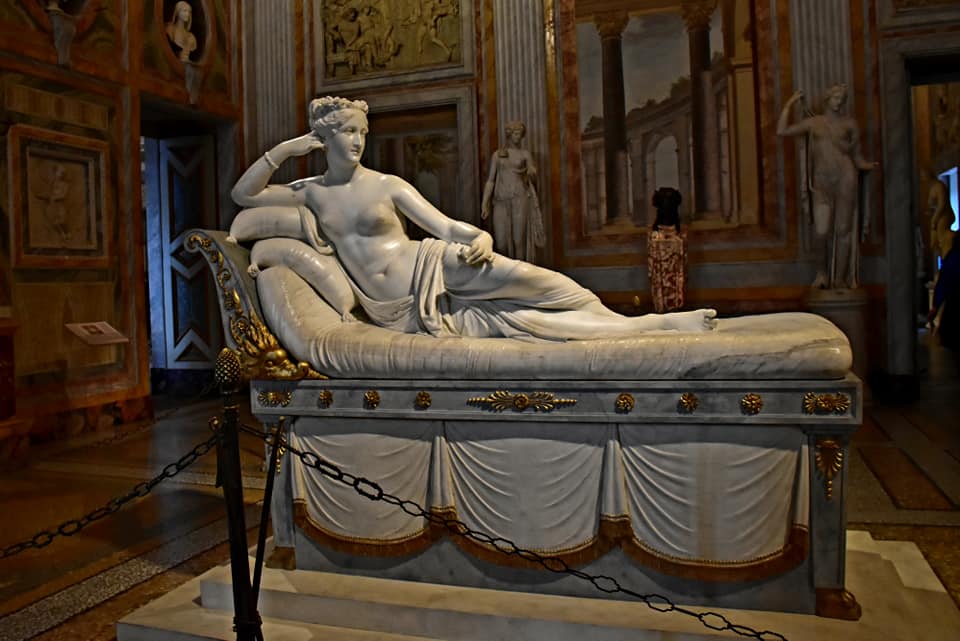
Realizzata fra il 1804 e il 1808, l’opera ritrae Paolina Bonaparte, sorella di Napoleone, nelle vesti della dea della bellezza. È rappresentata semisdraiata su un triclinio, con il busto nudo e il corpo avvolto da un drappo che lascia emergere la perfezione delle forme.
Nella mano sinistra tiene una mela, riferimento al giudizio di Paride, episodio mitologico nel quale Venere ottenne il riconoscimento della propria bellezza.
Il volto conserva i tratti della donna reale, ma la posa e l’iconografia la trasformano in una figura mitologica.
L’opera suscitò curiosità e discussioni anche per la scelta di rappresentare una donna appartenente alla famiglia imperiale in una posa tanto sensuale. Canova riuscì tuttavia a mantenere un equilibrio fra ritratto individuale e ideale classico, facendo convivere la riconoscibilità di Paolina con l’immagine eterna di Venere.
Ancora oggi la scultura, conservata alla Galleria Borghese di Roma, dimostra quanto il Neoclassicismo potesse essere raffinato e audace allo stesso tempo.
Scopri anche Paolina Borghese come Venere Vincitrice.
Napoleone, i papi e i potenti d’Europa
La fama di Canova si diffuse rapidamente oltre i confini italiani. Le sue opere furono richieste da papi, aristocratici, sovrani e collezionisti, desiderosi di possedere sculture capaci di esprimere prestigio, cultura e raffinatezza.
Fra i suoi committenti più importanti ci fu Napoleone Bonaparte, che gli affidò ritratti propri e dei membri della sua famiglia.
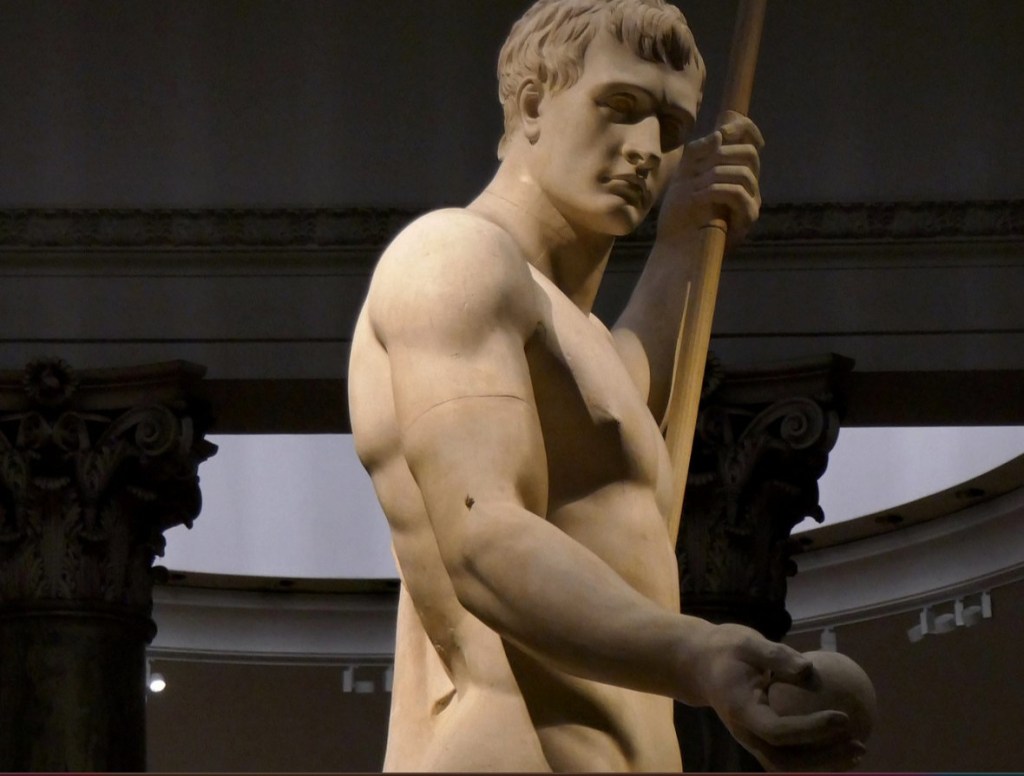
Canova rappresentò l’imperatore come Marte Pacificatore, trasformandolo in una figura eroica ispirata alla statuaria antica. Il condottiero francese appare nudo, con il corpo idealizzato e gli attributi del dio romano della guerra.
Napoleone, tuttavia, non fu l’unico protagonista del potere a rivolgersi allo scultore. Canova realizzò importanti monumenti funerari per i pontefici Clemente XIV e Clemente XIII, oltre a opere destinate a celebrare personalità illustri della cultura e della politica europea.
Il monumento a Clemente XIV, nella basilica romana dei Santi Apostoli, segnò una tappa importante della sua carriera. Quello dedicato a Clemente XIII, nella basilica di San Pietro in Vaticano, confermò invece la sua capacità di confrontarsi con una tradizione monumentale di grande prestigio.
Canova riuscì a rinnovare il linguaggio del monumento funerario, superando progressivamente le soluzioni più enfatiche del Barocco e introducendo un equilibrio nuovo fra architettura, figure allegoriche e commemorazione del defunto.
Il suo lavoro doveva raccontare la memoria, il rango e la virtù della persona celebrata.

Canova e Napoleone: il genio che non dimenticò le opere trafugate
Il rapporto fra Canova e Napoleone fu complesso. L’artista apprezzava la grandezza delle imprese militari francesi e riconosceva il prestigio che il regime napoleonico aveva contribuito ad attribuire alla sua carriera. Ma non per questo accettò senza riserve la politica culturale dell’imperatore.
Durante le campagne napoleoniche, numerose opere d’arte italiane furono trasferite in Francia, in particolare al Museo del Louvre, allora noto come Musée Napoléon.
Canova considerava quelle spoliazioni una grave perdita per l’Italia. Le opere non erano semplici oggetti da collezione: appartenevano alla storia, alla memoria e all’identità dei luoghi che le avevano custodite per secoli.
Dopo la caduta di Napoleone, nel 1815, Canova fu inviato a Parigi da papa Pio VII per contribuire alle trattative finalizzate al recupero dei capolavori sottratti allo Stato pontificio.
La missione richiese competenza artistica, capacità diplomatica e una notevole determinazione. Il rientro di molte opere fu possibile anche grazie al sostegno delle potenze alleate e al lavoro di altri diplomatici ed esperti, fra i quali il pittore e diplomatico francese Vivant Denon ebbe un ruolo nel contesto museale precedente.
Canova non riuscì a riportare in Italia tutto ciò che era stato sottratto, ma contribuì in maniera decisiva al recupero di un importante nucleo di opere.
Per il suo impegno, papa Pio VII gli conferì il titolo di marchese d’Ischia.
Il monumento a Maria Cristina d’Austria: un capolavoro che cambia il modo di ricordare i morti
Fra le opere più innovative di Canova c’è il monumento funebre a Maria Cristina d’Austria, realizzato fra il 1798 e il 1805 nella chiesa degli Agostiniani a Vienna.
La composizione si distingue per la forma piramidale e per la processione silenziosa di figure che avanza verso una porta scura, simbolo del passaggio dalla vita alla morte.
Non troviamo un semplice ritratto celebrativo della defunta. Canova costruisce una meditazione universale sulla fragilità dell’esistenza e sulla memoria.
Le figure procedono lentamente, accompagnando simbolicamente il ricordo di Maria Cristina verso la soglia dell’eternità. Il drappo, i gesti e il ritmo della processione creano un’atmosfera sospesa, lontana dalla retorica trionfale di molti monumenti precedenti.
È una delle dimostrazioni più alte della sua capacità di raccontare emozioni complesse attraverso la composizione e il linguaggio del corpo.
Canova non ha bisogno di rappresentare direttamente la morte in tutta la sua drammaticità. Gli basta suggerirne la presenza, affidando al silenzio delle figure il compito di parlare allo spettatore.
Il Tempio di Possagno: il ritorno alle origini
Nonostante il successo internazionale, Canova mantenne un legame profondo con il paese nel quale era nato.
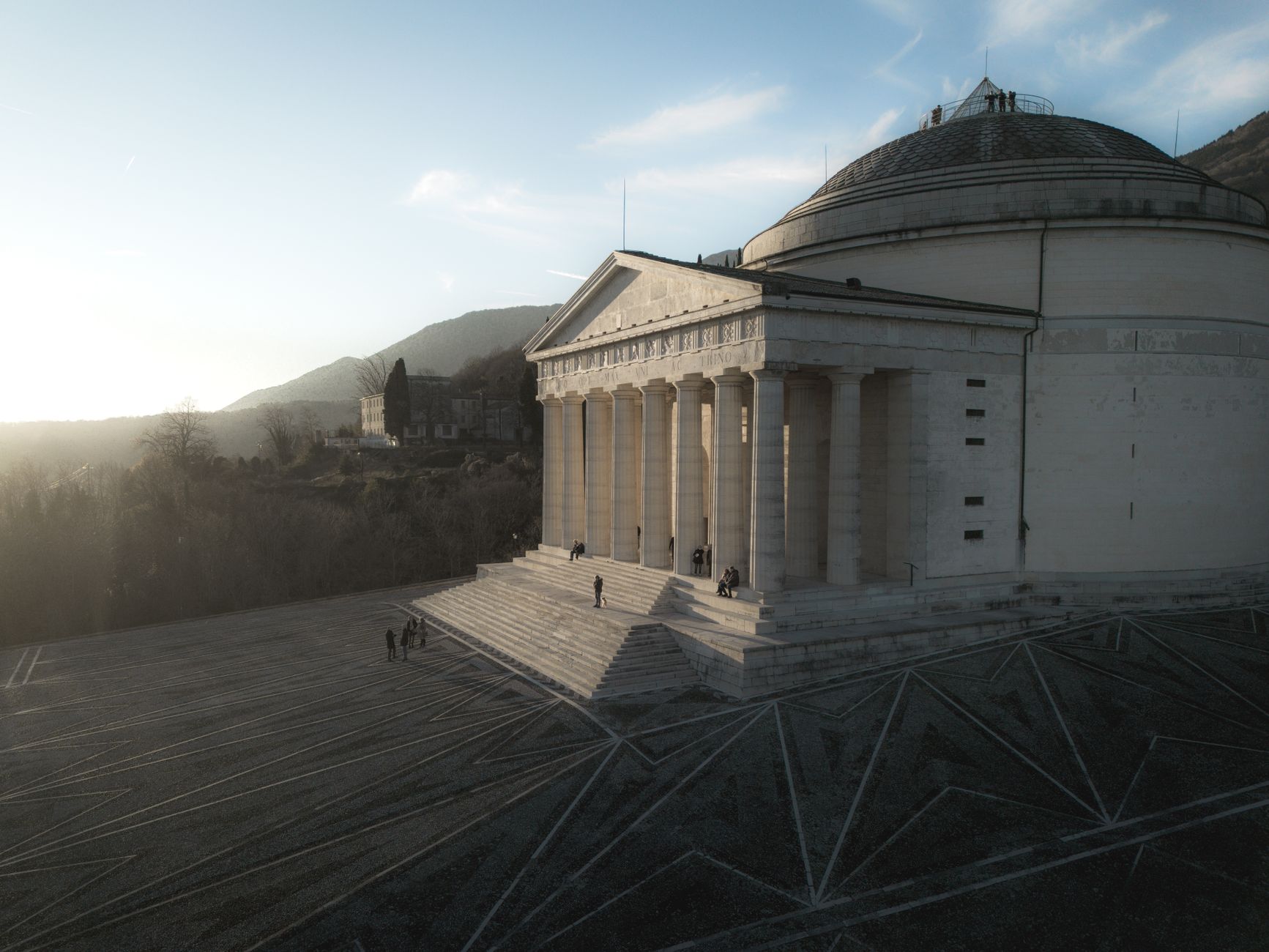
A Possagno volle realizzare un edificio destinato a diventare uno dei simboli più importanti della sua eredità: il Tempio Canoviano, progettato a partire dal 1818 e ispirato alla grande architettura classica.
L’edificio richiama la forma del Pantheon romano e quella dei templi antichi, fondendo elementi architettonici differenti in una costruzione di grande equilibrio monumentale.
Il pronao con le colonne, la cupola e il corpo absidale rivelano la volontà di creare un luogo nel quale arte, spiritualità e memoria potessero incontrarsi.
Il tempio fu concepito come dono alla comunità di Possagno e testimonia il legame dell’artista con le proprie origini. Canova non lo vide completato: la costruzione proseguì dopo la sua morte e l’edificio fu consacrato nel 1832.
Ancora oggi il Tempio Canoviano, insieme alla Gypsotheca che conserva numerosi modelli in gesso delle sue sculture, permette di comprendere quanto fosse articolata la sua attività artistica.
Il 13 ottobre 1822: la morte a Venezia e l’eredità di un maestro
Antonio Canova morì a Venezia il 13 ottobre 1822. Le circostanze della sua morte sono state tradizionalmente collegate a una malattia insorta durante un viaggio, ma le ricostruzioni biografiche non sono tutte concordi nei dettagli.
La sua scomparsa suscitò un’enorme commozione. La fama dell’artista era tale che il mondo culturale europeo riconobbe immediatamente la perdita di uno dei suoi protagonisti più illustri.
Il corpo fu oggetto di solenni commemorazioni. Il cuore venne conservato in un monumento funebre nella basilica di Santa Maria Gloriosa dei Frari a Venezia, mentre il corpo fu sepolto nel Tempio Canoviano di Possagno. Un monumento commemorativo a Firenze, nella basilica di Santa Croce, contribuì inoltre a celebrare la sua memoria.
La vicenda della sua sepoltura rispecchia la dimensione eccezionale raggiunta in vita: anche dopo la morte, Canova rimase al centro di una celebrazione che coinvolse città e istituzioni diverse.
Alcuni artisti sanno creare opere destinate a durare nei secoli. Canova riuscì a fare qualcosa di ancora più difficile: dare alla materia inerte l’apparenza della vita.
Per il momento il vostro Michelangelo Buonarroti vi saluta e vi dà appuntamento ai prossimi post e sui social, lasciandovi alcuni consigli di lettura per approfondire la conoscenza di questo straordinario artista.
Antonio Canova, October 13, 1822: The sculptor who brought marble to life passes away
On October 13, 1822, Antonio Canova—one of the absolute giants of art history—passed away in Venice. He was 64 years old and left behind an extraordinary career built on exceptional talent, tireless discipline, and a profound knowledge of ancient sculpture.
His works continue to amaze us with the softness of their surfaces, the naturalness of their gestures, and that almost impossible ability to evoke the warmth of skin through the coldness of stone. Canova sought to achieve an ideal of beauty capable of transcending time.
Yet his story is not defined solely by masterpieces. It is also the story of a young man from the Veneto who rose to prominence in European courts, an artist courted by popes and sovereigns, and an Italian who fought to bring home the artworks looted by Napoleon.
From his origins in Possagno to conquering Venice
Antonio Canova was born on November 1, 1757, in Possagno, a small town at the foot of Mount Grappa in what is now the province of Treviso. His family had a tradition of stoneworking, and the young Antonio grew up in an environment where manual craftsmanship and an understanding of materials played a vital role.
Left fatherless while still a child, he was placed in the care of his paternal grandfather, Pasino Canova, a stonemason and sculptor. It was his grandfather who helped steer him toward art.
According to biographical lore, the young Antonio caught the attention of the Venetian senator Giovanni Falier during a banquet by sculpting a small lion out of butter. This episode, recounted in the artist’s biographies, clearly illustrates how early his manual dexterity became apparent.
Falier became one of his patrons and supported his artistic training.
Canova subsequently moved to Venice, where he studied ancient art and engaged with the sculptural tradition of the Serenissima. There, he created his first major works and gradually developed a personal style—one capable of looking to classical antiquity without merely copying it.
In 1779, he visited Rome, a city crucial to his development. Confronted with ancient sculptures and Renaissance masterpieces, he realized that great art was not merely a matter of technical perfection; it required giving form to an ideal and striking a balance between anatomy, expression, and emotion.
Rome would become his adopted home and the base from which he would achieve international renown.
Neoclassicism and the challenge of bringing marble to life
In the late 18th century, Europe looked to the art of Greece and Rome with renewed interest. Archaeological excavations, studies of antiquity, and theoretical reflections on beauty fueled the spread of Neoclassicism, a movement that sought a model of harmony, balance, and perfection in classical culture.
Canova became its most celebrated sculptor.
He knew how to transform classical models into fresh images, in which the composure of form coexisted with a delicate sensuality and a profound sensitivity to human emotion.
His technique was complex. A project would take shape through drawings and clay models, from which he created plaster casts. Measurements were then transferred to the marble block, allowing the carving process to begin—often with the assistance of collaborators. Canova closely oversaw the execution process and personally refined the surfaces—a crucial step in achieving the extraordinary softness that still distinguishes his sculptures today.
The result was astonishing: the marble seemed to shed its hardness and transform into skin, fabric, hair, and breath. Canova knew how to evoke emotion without resorting to theatrical gestures, conveying feeling instead through the positioning of hands, the tilt of a face, and the delicacy of a touch.
Psyche Revived by Cupid’s Kiss: a kiss suspended in time
Among his most beloved masterpieces is Psyche Revived by Cupid’s Kiss (often simply known as Cupid and Psyche), one of the most famous sculptures in the history of art.
Canova revisited this subject—drawn from the tale told by Apuleius in The Golden Ass (or Metamorphoses)—on several occasions. The most famous version, now housed in the Louvre Museum in Paris, depicts Cupid bending over a newly awakened Psyche in a moment of profound intimacy.
The figures’ arms intertwine, and their bodies form a complex yet perfectly balanced composition. The viewer’s gaze is drawn to the point where their faces draw close, just moments before the kiss.
Canova portrays love by capturing the instant when desire is on the verge of becoming action.
The marble surface, polished with extraordinary care, helps create the illusion of living skin. Every movement adheres to a precise compositional balance.
It is not merely a display of virtuosity. It is a scene in which ancient myth transforms into a universal emotional experience.
To learn more, read also about Canova’s Cupid and Psyche.
The Three Graces: Beauty as Harmony
Another absolute masterpiece is the Three Graces group, inspired by the classical mythological deities associated with beauty, grace, and joy.
The three female figures are arranged to create a unified whole, in which their bodies draw close and intertwine without losing their individual identities. Their arms rest gently on one another’s shoulders and backs, while their tilted heads establish a silent dialogue.
Canova avoids any sense of rigidity. The composition appears natural, yet it is the result of meticulous study regarding volumes, profiles, and the relationships between the figures.
Sensuality is conveyed not through explicit display, but through the continuity of forms and the delicacy of physical contact. Beauty arises from the balance and interplay between the bodies. The group perfectly embodies the Neoclassical ideal, yet it also possesses a gentleness that makes it surprisingly modern.
You can also read the in-depth article dedicated to Canova’s Three Graces.
Pauline Borghese: When a Bonaparte Becomes Venus
If there is one sculpture capable of illustrating the relationship between art, power, and celebrity, it is Pauline Borghese as Venus Victrix.
Created between 1804 and 1808, the work portrays Pauline Bonaparte—Napoleon’s sister—in the guise of the goddess of beauty. She is depicted reclining on a triclinium (couch), her torso bare and her body wrapped in drapery that reveals the perfection of her form.
In her left hand, she holds an apple—a reference to the Judgment of Paris, the mythological episode in which Venus was acknowledged as the most beautiful of the goddesses. The face retains the features of the real woman, yet the pose and iconography transform her into a mythological figure.
The work sparked curiosity and debate, partly due to the decision to depict a woman of the imperial family in such a sensual pose. Nevertheless, Canova managed to strike a balance between individual portraiture and the classical ideal, harmonizing the recognizable likeness of Pauline with the timeless image of Venus.
To this day, the sculpture—housed in the Galleria Borghese in Rome—demonstrates just how refined and daring Neoclassicism could be.
Discover more about Pauline Borghese as Venus Victrix.
Napoleon, the Popes, and the Powers of Europe
Canova’s fame spread rapidly beyond Italy’s borders. His works were sought after by popes, aristocrats, monarchs, and collectors, all eager to own sculptures that embodied prestige, culture, and sophistication.
Among his most important patrons was Napoleon Bonaparte, who commissioned portraits of himself and his family members.
Canova depicted the Emperor as Mars the Peacemaker, transforming him into a heroic figure inspired by ancient statuary. The French leader appears nude, with an idealized physique and the attributes of the Roman god of war.
Napoleon, however, was not the only powerful figure to turn to the sculptor. Canova created significant funerary monuments for Popes Clement XIV and Clement XIII, as well as works celebrating illustrious figures from European culture and politics.
The monument to Clement XIV, located in the Roman Basilica of the Santi Apostoli, marked a major milestone in his career. Meanwhile, the monument dedicated to Clement XIII in St. Peter’s Basilica in the Vatican confirmed his ability to engage with a highly prestigious monumental tradition. Canova succeeded in renewing the language of the funerary monument, progressively moving beyond the more emphatic solutions of the Baroque and introducing a new balance between architecture, allegorical figures, and the commemoration of the deceased.
His work was intended to convey the memory, rank, and virtue of the person being celebrated.
Canova and Napoleon: the genius who did not forget the looted artworks
The relationship between Canova and Napoleon was complex. The artist appreciated the magnitude of French military achievements and acknowledged the prestige the Napoleonic regime had helped bring to his own career. Yet, this did not mean he accepted the Emperor’s cultural policies without reservation.
During the Napoleonic campaigns, numerous Italian artworks were transferred to France—specifically to the Louvre Museum, then known as the Musée Napoléon.
Canova viewed this plundering as a grave loss for Italy. The works were not merely collectors’ items; they belonged to the history, memory, and identity of the places that had safeguarded them for centuries.
Following Napoleon’s fall in 1815, Canova was sent to Paris by Pope Pius VII to assist in negotiations aimed at recovering the masterpieces that had been taken from the Papal States.
The mission demanded artistic expertise, diplomatic skill, and a remarkable determination. The return of many works was made possible thanks to the support of the Allied powers and the efforts of other diplomats and experts—including the French painter and diplomat Vivant Denon, who had played a role in the earlier museum context.
Canova did not succeed in bringing back everything that had been taken to Italy, but he played a decisive role in recovering a significant body of works.
In recognition of his efforts, Pope Pius VII conferred upon him the title of Marquis of Ischia.
The Monument to Maria Christina of Austria: a masterpiece that transforms how the dead are remembered
Among Canova’s most innovative works is the funerary monument to Maria Christina of Austria, created between 1798 and 1805 in the Augustinian Church in Vienna.
The composition is distinguished by its pyramidal shape and the silent procession of figures advancing toward a dark doorway—a symbol of the passage from life to death.
This is not merely a celebratory portrait of the deceased; Canova constructs a universal meditation on the fragility of existence and the nature of memory.
The figures move slowly, symbolically accompanying the memory of Maria Christina toward the threshold of eternity. The drapery, gestures, and rhythm of the procession create an atmosphere of suspended stillness, far removed from the triumphalist rhetoric of many earlier monuments.
It stands as one of the finest examples of his ability to convey complex emotions through composition and body language.
Canova does not need to depict death directly in all its dramatic intensity. It is enough for him to suggest its presence, entrusting the silent figures with the task of speaking to the viewer.
The Temple of Possagno: a return to his roots
Despite his international success, Canova maintained a deep bond with the village of his birth. In Possagno, he sought to create a building destined to become one of the most significant symbols of his legacy: the Canova Temple (Tempio Canoviano), designed starting in 1818 and inspired by great classical architecture.
The building echoes the form of the Roman Pantheon and ancient temples, blending diverse architectural elements into a structure of remarkable monumental balance.
Its columned portico, dome, and apse reveal a desire to create a space where art, spirituality, and memory could converge.
The temple was conceived as a gift to the community of Possagno and stands as a testament to the artist’s bond with his roots. Canova did not live to see its completion; construction continued after his death, and the building was consecrated in 1832.
To this day, the Canova Temple—alongside the Gypsotheca, which houses numerous plaster models of his sculptures—offers insight into the multifaceted nature of his artistic career.
October 13, 1822: Death in Venice and a Master’s Legacy
Antonio Canova died in Venice on October 13, 1822. While the circumstances of his death have traditionally been linked to an illness contracted during a journey, biographical accounts vary in their details.
His passing caused a profound outpouring of emotion. The artist’s renown was such that the European cultural world immediately recognized the loss of one of its most illustrious figures.
His remains were the subject of solemn commemorations. His heart was preserved in a funerary monument within the Basilica of Santa Maria Gloriosa dei Frari in Venice, while his body was interred in the Canova Temple in Possagno. A commemorative monument in Florence’s Basilica of Santa Croce further served to honor his memory. The story of his burial reflects the extraordinary stature he achieved during his lifetime: even after death, Canova remained at the heart of celebrations involving various cities and institutions.
Some artists create works destined to endure for centuries. Canova managed to do something even more difficult: to give inert matter the appearance of life.
For now, your Michelangelo Buonarroti bids you farewell and looks forward to seeing you in future posts and on social media, leaving you with some reading recommendations to learn more about this extraordinary artist.
Sostienici – Support Us
Se questo blog ti piace e ti appassiona, puoi aiutarci a farlo crescere sempre più sostenendoci in modo concreto condividendo i post, seguendo le pagine social e con un contributo che ci aiuta ad andare avanti con il nostro lavoro di divulgazione. . ENGLISH: If you like and are passionate about this blog, you can help us make it grow more and more by supporting us in a concrete way by sharing posts, following social pages and with a contribution that helps us to move forward with our dissemination work.
10,00 €
Condividi:


Questo sono io



sostienici

Sostienici - Support Us
Se questo blog ti piace e ti appassiona, puoi aiutarci a farlo crescere sempre più sostenendoci in modo concreto condividendo i post, seguendo le pagine social e con un contributo che ci aiuta ad andare avanti con il nostro lavoro di divulgazione. . ENGLISH: If you like and are passionate about this blog, you can help us make it grow more and more by supporting us in a concrete way by sharing posts, following social pages and with a contribution that helps us to move forward with our dissemination work.
€10,00


