
La Natività mistica di Botticelli: il significato nascosto del dipinto più enigmatico del Natale
C’è un dipinto di Natale che, a uno sguardo distratto, sembra celebrare la nascita di Gesù con tutta la grazia e la luminosità tipiche di Sandro Botticelli.
Basta però soffermarsi sui dettagli per accorgersi che qualcosa non torna: mentre gli angeli danzano sopra la capanna e alcuni uomini si abbracciano in primo piano, piccoli demoni cercano rifugio nelle spaccature del terreno. Non è esattamente la scena rassicurante che ci aspetteremmo da una Natività.
Eppure è proprio qui che si nasconde il significato più sorprendente della Natività mistica di Botticelli, un’opera realizzata intorno al 1500 nella quale il pittore fiorentino racconta molto più della nascita di Cristo. Tra profezie bibliche, inquietudini religiose e una Firenze attraversata da profonde tensioni politiche, il Natale diventa il simbolo di una speranza capace di sconfiggere il male.
Oggi conservato alla National Gallery di Londra, è uno dei lavori più enigmatici dell’ultima fase della carriera dell’artista. Per comprenderlo davvero bisogna guardare oltre la capanna, seguire i movimenti degli angeli e, soprattutto, leggere l’iscrizione in greco che Botticelli volle lasciare nella parte superiore della tela.
La Natività mistica di Botticelli: un Natale diverso da tutti gli altri
Siamo intorno al 1500. In Italia si stanno consumando profonde trasformazioni politiche e religiose, mentre a Firenze le prediche di Girolamo Savonarola hanno lasciato un segno importante nella vita spirituale della città anche se ormai, dal 23 maggio 1498, non poteva più dire la sua. È in questo clima inquieto che Botticelli realizza una delle sue composizioni più insolite.
La Natività mistica, dipinta su tela e alta poco più di un metro, si discosta dalle rappresentazioni tradizionali della nascita di Gesù.
L’artista costruisce una visione simbolica nella quale il mondo terreno e quello celeste sembrano incontrarsi. La nascita di Cristo è il centro di un avvenimento cosmico: il bene si manifesta, gli uomini possono riconciliarsi e le forze del male sono destinate alla sconfitta.
In molte Natività rinascimentali lo spettatore è invitato a contemplare il Bambino appena nato; qui, invece, è chiamato a interpretare una serie di segni che rimandano a un futuro di redenzione.
La Madonna e Gesù Bambino al centro di una visione celeste
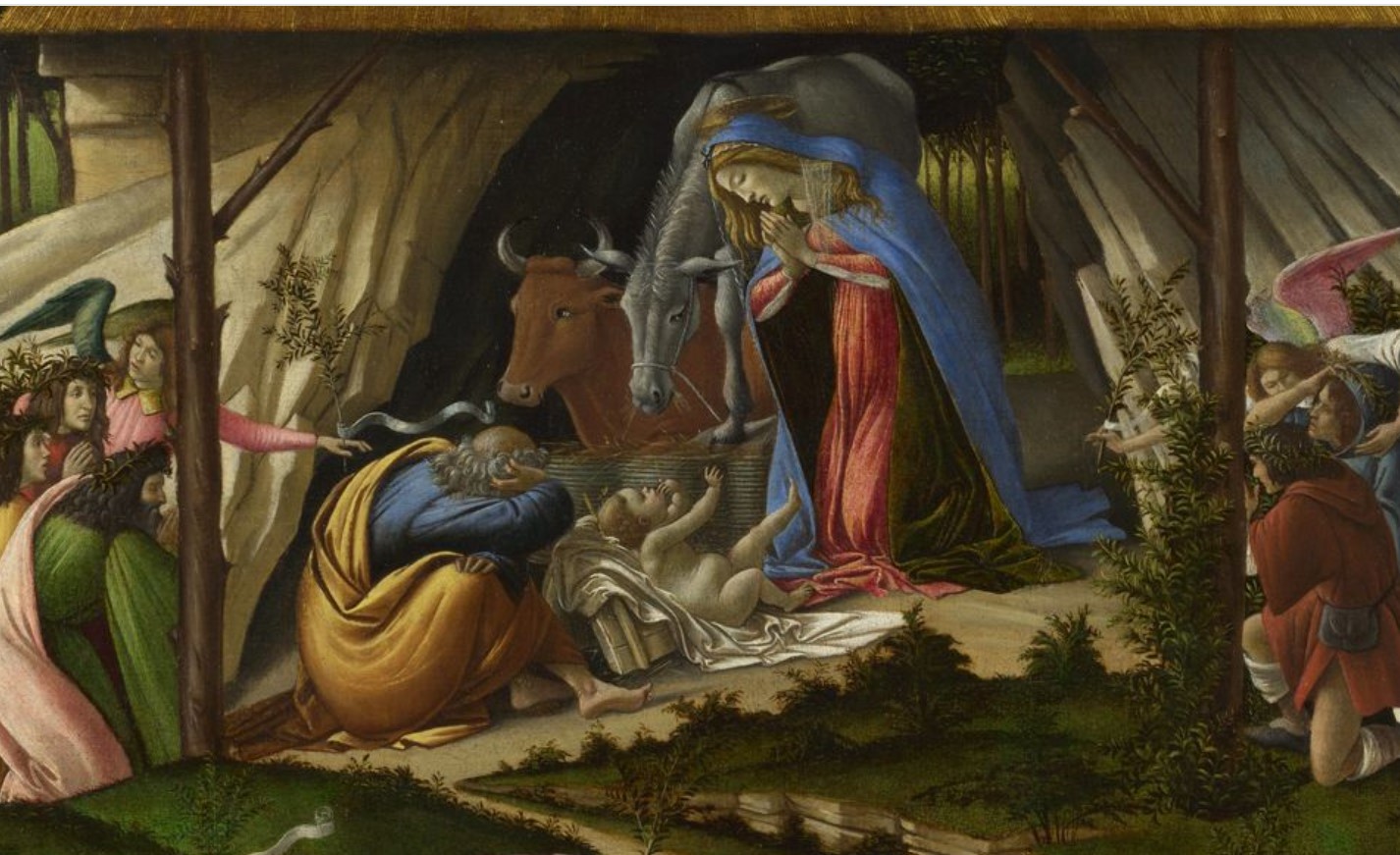
Al centro della composizione, Maria si china verso Gesù Bambino, raffigurato in una posizione che attira immediatamente lo sguardo. Il piccolo tende le braccia verso la madre, mentre Giuseppe si trova accanto a loro, all’interno di una costruzione rustica che sembra fondersi con il paesaggio roccioso.
La capanna è semplice, quasi fragile. Il suo tetto di paglia contrasta con lo splendore del cielo dorato che si apre sopra di essa. È come se l’umiltà del luogo in cui nasce Cristo fosse attraversata da una presenza divina impossibile da contenere entro i confini dello spazio terreno.
Da sinistra arrivano i Re Magi, mentre dalla parte opposta si avvicinano i pastori. Le loro figure partecipano alla scena, ma l’attenzione non si esaurisce nella tradizionale adorazione del Bambino.
Botticelli distribuisce infatti gli elementi del dipinto su più livelli di significato. La nascita di Gesù è un evento storico e religioso, ma diventa anche l’annuncio di una trasformazione destinata a coinvolgere l’intera umanità.
Gli angeli danzanti e il cielo che si apre sulla terra
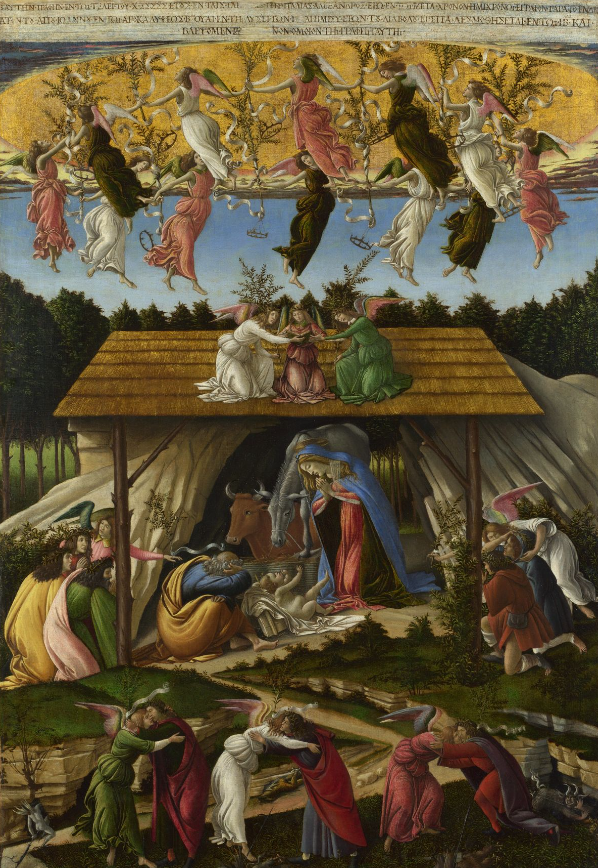
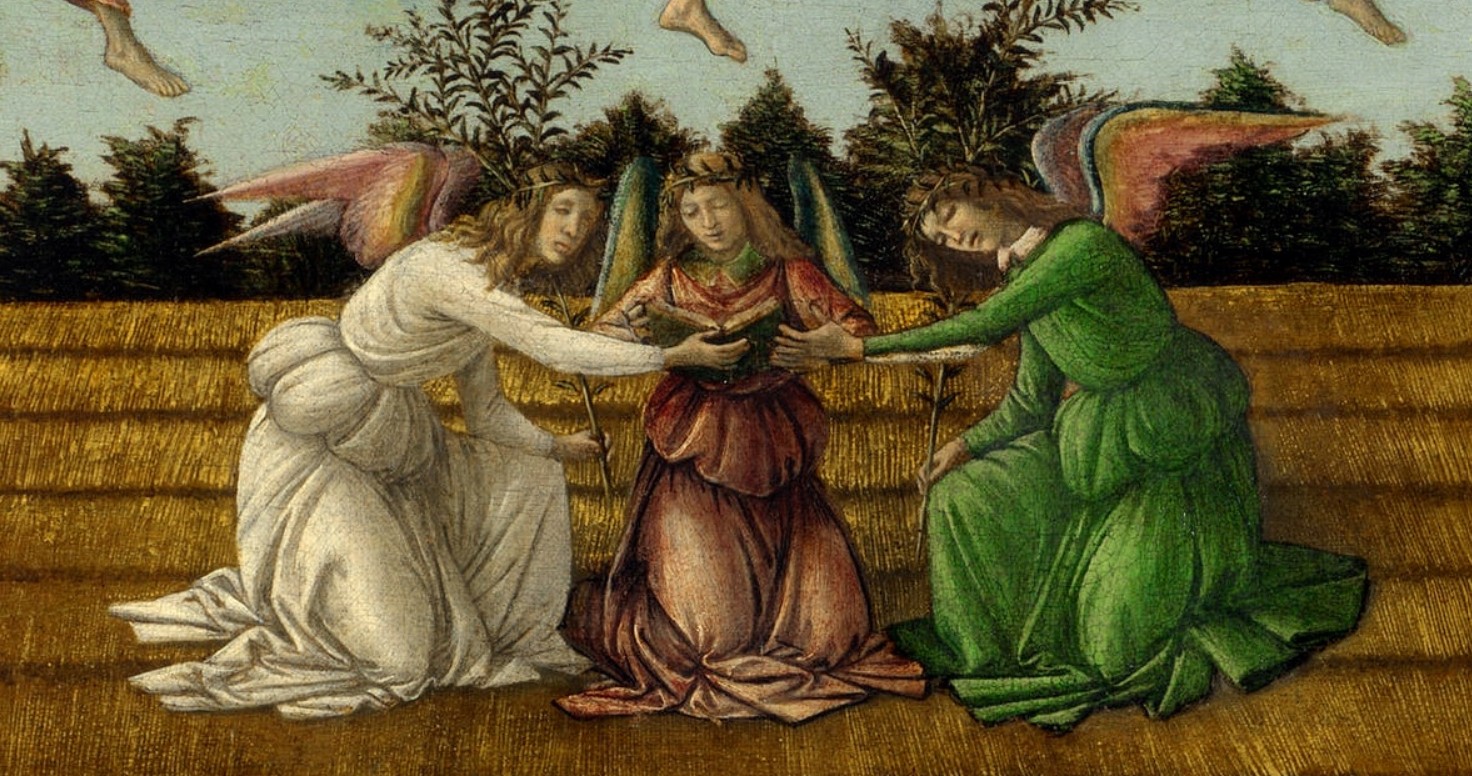
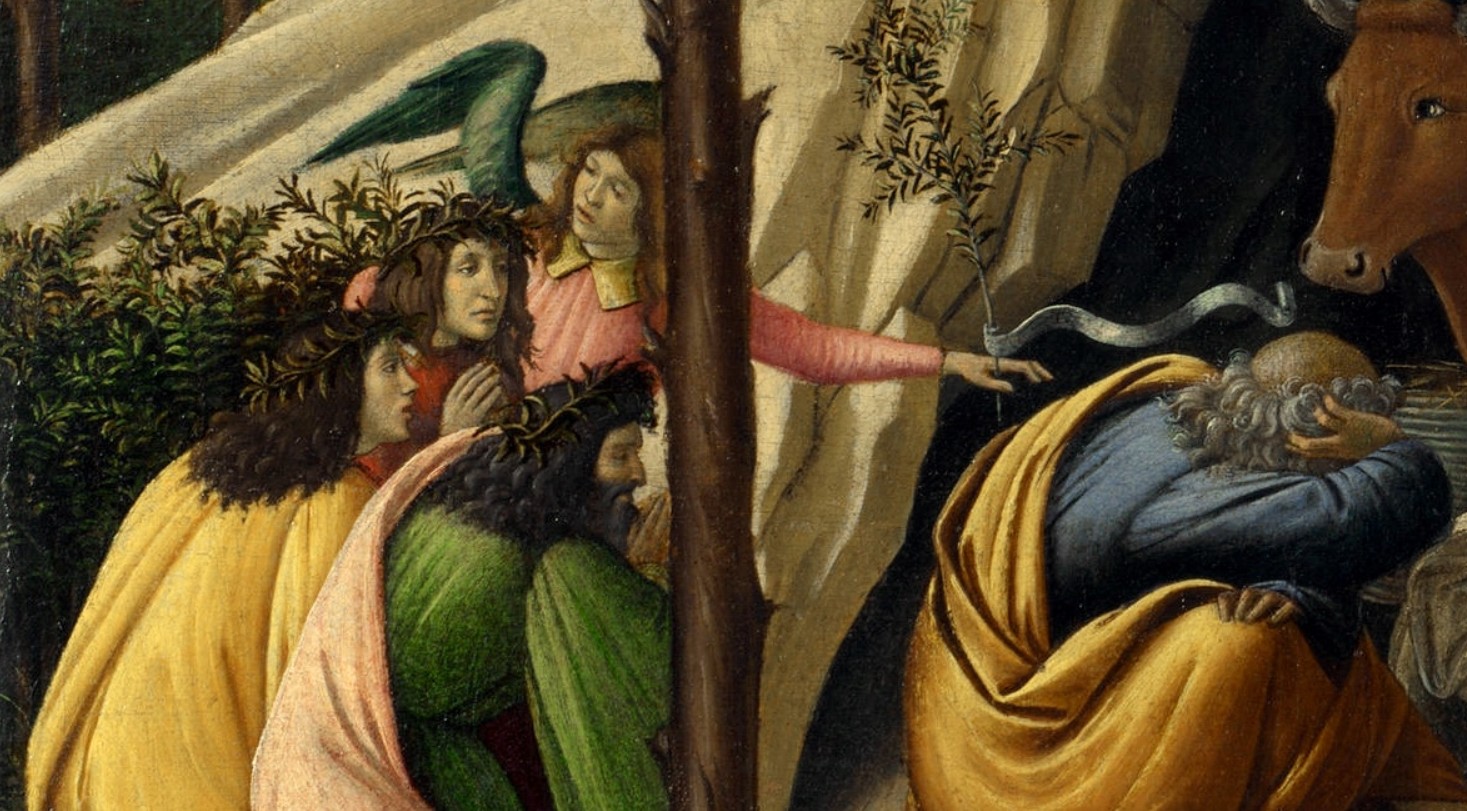
Dodici figure angeliche si dispongono nella parte superiore della composizione, intorno a una sorta di cupola dorata che sembra mettere in comunicazione il cielo con la terra. Gli angeli portano rami d’ulivo intrecciati con cartigli e accompagnati da corone, mentre i loro movimenti suggeriscono una danza collettiva.
Il numero dodici richiama una simbologia religiosa importante, associata anche agli apostoli e alla pienezza della comunità cristiana. I rami d’ulivo, invece, sono un segno di pace e riconciliazione.
Questi particolari non sono semplici ornamenti. Nella visione di Botticelli, il cielo sembra finalmente aprirsi sul mondo degli uomini e annunciare una nuova stagione, nella quale la divisione tra umano e divino potrà essere superata.
Anche i colori contribuiscono a questa atmosfera. Le vesti degli angeli si alternano in una sequenza vivace, creando un ritmo visivo che contrasta con la tensione presente nella parte inferiore del dipinto.
La loro danza suggerisce che qualcosa sta cambiando e che la pace, tanto desiderata in un’epoca tormentata, può ancora essere possibile.

Il dettaglio più inquietante: i demoni che fuggono nelle fessure della terra
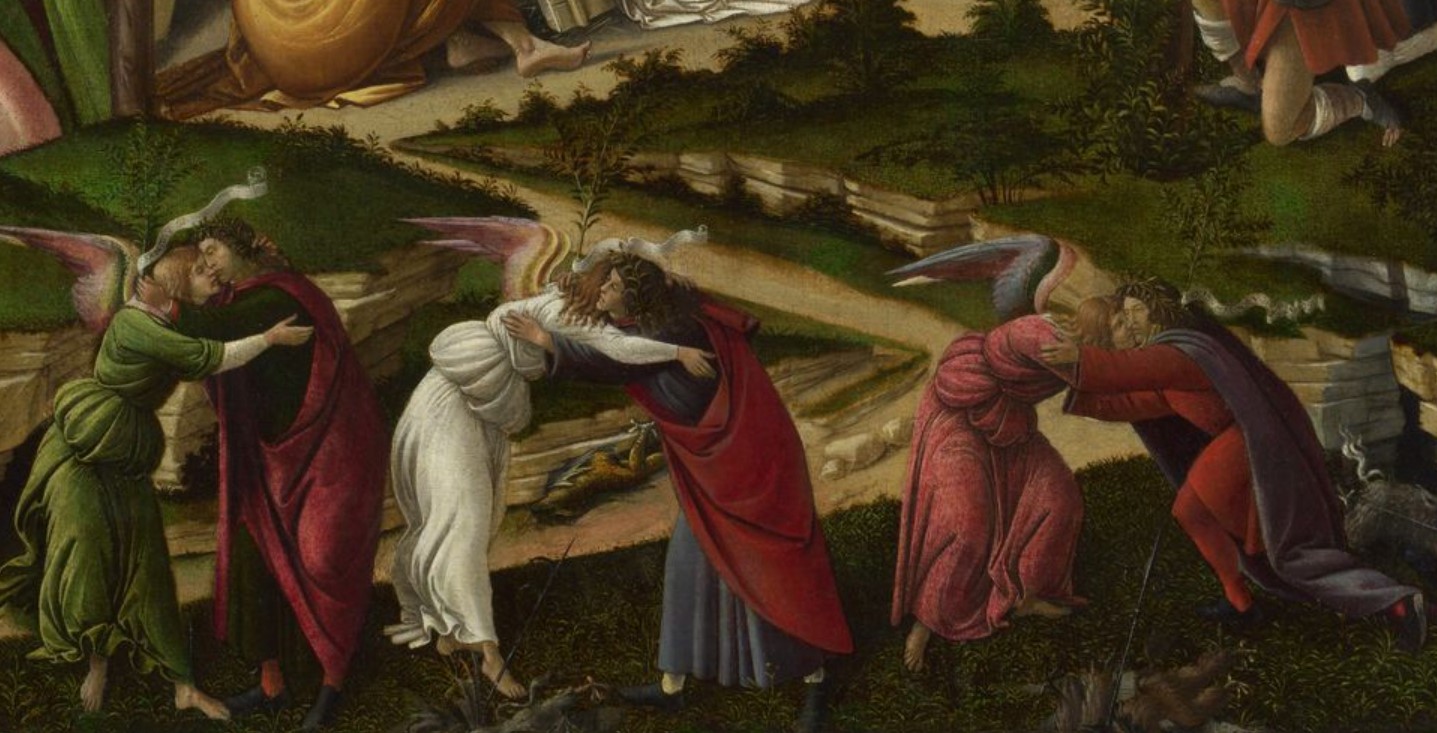
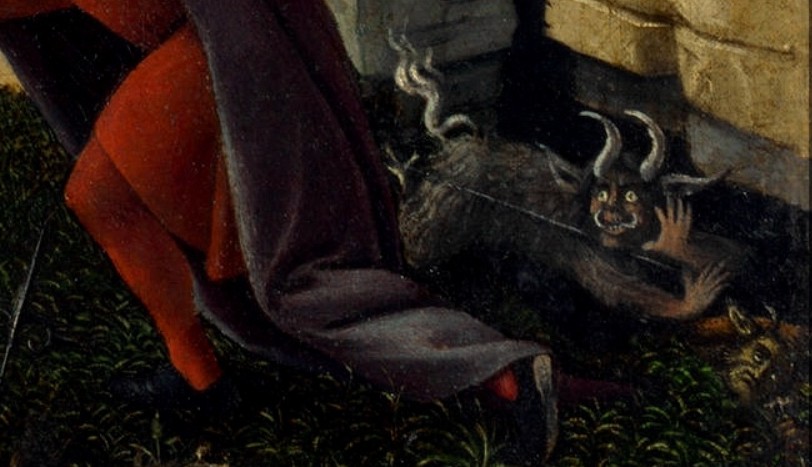
Nella parte bassa della tela tre coppie formate da angeli e uomini si abbracciano in primo piano. I gesti sono ravvicinati, quasi a sottolineare la ritrovata concordia tra il mondo celeste e quello umano. Intorno ai loro piedi, però, si muovono piccole creature demoniache, alcune alate, altre dotate di corna.
I demoni cercano riparo nelle fenditure del terreno, come se una forza irresistibile li stesse costringendo a scomparire.
Perché Botticelli inserisce queste presenze in una scena che dovrebbe celebrare il Natale?
La nascita di Cristo non rappresenta soltanto l’inizio della vita terrena del Salvatore: è anche il segno della vittoria futura sul male. La fuga dei demoni rende visibile questa idea e trasforma il paesaggio in una rappresentazione simbolica della lotta tra bene e male.
È un’immagine insolita, soprattutto se confrontata con le Natività più serene e contemplative del Rinascimento. Ma è proprio questo contrasto a rendere il dipinto tanto potente.
La pace che Botticelli mette in scena non è una condizione già conquistata. È una promessa che arriva dopo un periodo di conflitti, paure e disordine.
L’iscrizione in greco che svela il vero significato del dipinto
Se gli angeli e i demoni non fossero sufficienti a chiarire le intenzioni del pittore, nella parte superiore della tela compare un’iscrizione in greco che offre una chiave di lettura decisiva.
Botticelli vi fa riferimento alla fine dell’anno 1500, ai «torbidi d’Italia» e a passaggi dell’Apocalisse di San Giovanni. Il testo collega la realizzazione dell’opera a un periodo di tribolazioni e richiama la liberazione temporanea del diavolo, destinato successivamente a essere sconfitto.
L’iscrizione inserisce la Natività in una visione profetica della storia, nella quale le sofferenze del presente precedono una futura restaurazione dell’ordine divino.
Il riferimento all’Apocalisse è essenziale. Nel libro biblico, la lotta tra le forze del bene e quelle del male conduce al giudizio e alla vittoria finale di Dio. Botticelli trasferisce questa tensione nella scena della nascita di Gesù, facendo convivere il ricordo dell’Incarnazione e l’attesa di un futuro riscatto.
La Natività diventa un’immagine del tempo presente e, contemporaneamente, una promessa rivolta al futuro.
Savonarola, Firenze e la paura della fine dei tempi
Per comprendere fino in fondo il dipinto bisogna tornare alla Firenze di fine Quattrocento. La morte di Lorenzo il Magnifico nel 1492, l’espulsione dei Medici nel 1494 e le tensioni provocate dalle invasioni francesi contribuirono a creare un clima politico particolarmente instabile. In quegli anni Girolamo Savonarola, frate domenicano e predicatore, acquistò una notevole influenza sulla vita religiosa e civile della città.
Le sue prediche insistevano sulla necessità di una riforma morale e spirituale e presentavano le crisi del tempo come segni di un giudizio divino imminente. Savonarola fu giustiziato nel 1498, ma le sue idee avevano già contribuito a trasformare il modo in cui molti fiorentini interpretavano gli avvenimenti contemporanei.
La Natività mistica viene spesso letta in relazione a questo contesto. È plausibile che le inquietudini religiose diffuse nella Firenze di quegli anni abbiano influenzato la visione di Botticelli, anche se non possiamo ricostruire con certezza ogni passaggio delle sue convinzioni personali.
L’iscrizione apocalittica e la presenza dei demoni rendono comunque evidente che il pittore non voleva rappresentare soltanto un episodio sacro. Stava cercando di dare una forma visibile alle paure e alle speranze del suo tempo.
La nascita di Cristo diventa così una risposta alla crisi: non la negazione delle difficoltà, ma l’annuncio che il male non avrà l’ultima parola.
Dove si trova oggi la Natività mistica di Botticelli?
La Natività mistica è conservata alla National Gallery di Londra, dove è entrata nel 1878 grazie all’acquisto da parte del museo.
Il dipinto è datato intorno al 1500 ed è una delle opere più importanti della fase tarda di Botticelli. La sua iscrizione, la complessità iconografica e il rapporto con la storia religiosa e politica di Firenze ne fanno un caso particolarmente interessante per gli studiosi del Rinascimento
Davanti alla Natività mistica siamo abituati a riconoscere gli elementi familiari del Natale: Maria, Giuseppe, il Bambino, i pastori, i Magi e gli angeli. Ma Botticelli ci chiede di guardare più a fondo.
Ci invita a osservare le creature che fuggono nelle crepe del terreno, gli abbracci tra uomini e angeli, il cielo che sembra aprirsi e le parole in greco che raccontano un mondo attraversato dalla paura della fine.
Il risultato è una delle rappresentazioni più singolari della nascita di Gesù nella storia dell’arte.
Così, sotto la danza degli angeli e sopra la fuga dei demoni, il suo Natale continua a raccontare una speranza che attraversa i secoli.
Per il momento il sempre vostro Michelangelo Buonarroti vi saluta dandovi appuntamento ai prossimi post e sui social.

Botticelli’s Mystic Nativity: The Hidden Meaning Behind Christmas’s Most Enigmatic Painting
There is a Christmas painting that, at a casual glance, appears to celebrate the birth of Jesus with all the grace and luminosity typical of Sandro Botticelli.
Yet, one need only look closely at the details to realize that something is amiss: while angels dance above the stable and men embrace in the foreground, small demons seek refuge in the fissures of the earth. It is not exactly the reassuring scene one would expect from a Nativity.
And yet, it is precisely here that the most surprising meaning of Botticelli’s Mystic Nativity lies—a work created around 1500 in which the Florentine painter tells a story far greater than just the birth of Christ. Amidst biblical prophecies, religious anxieties, and a Florence gripped by deep political tensions, Christmas becomes a symbol of hope capable of conquering evil.
Now housed in London’s National Gallery, the painting is one of the most enigmatic works from the final phase of the artist’s career. To truly understand it, one must look beyond the stable, follow the movements of the angels, and—above all—read the Greek inscription Botticelli chose to include at the top of the canvas.
Botticelli’s Mystic Nativity: A Christmas Unlike Any Other
The time is around 1500. Italy is undergoing profound political and religious transformations; in Florence, the sermons of Girolamo Savonarola have left a significant mark on the city’s spiritual life, even though he had been silenced since his execution on May 23, 1498. It is against this backdrop of unrest that Botticelli creates one of his most unusual compositions. The Mystical Nativity, painted on canvas and standing just over a meter tall, departs from traditional depictions of the birth of Jesus.
The artist constructs a symbolic vision in which the earthly and celestial worlds seem to meet. The birth of Christ lies at the heart of a cosmic event: good manifests itself, reconciliation becomes possible for mankind, and the forces of evil are destined for defeat.
In many Renaissance Nativity scenes, the viewer is invited to contemplate the newborn Child; here, however, one is called upon to interpret a series of signs pointing toward a future of redemption.
The Madonna and the Christ Child at the center of a celestial vision
At the center of the composition, Mary leans toward the Christ Child, who is depicted in a pose that immediately draws the eye. The infant reaches out toward his mother, while Joseph stands beside them within a rustic structure that seems to blend into the rocky landscape.
The stable is simple—almost fragile. Its thatched roof contrasts with the splendor of the golden sky opening up above it. It is as if the humble setting of Christ’s birth were being permeated by a divine presence that cannot be contained within the boundaries of the earthly realm.
The Three Magi arrive from the left, while shepherds approach from the opposite side. Their figures are part of the scene, yet the focus extends beyond the traditional adoration of the Child.
Indeed, Botticelli distributes the painting’s elements across multiple layers of meaning. The birth of Jesus is both a historical and religious event, but it also heralds a transformation destined to encompass all of humanity.
Dancing angels and the sky opening onto the earth
Twelve angelic figures are arranged in the upper part of the composition, circling a sort of golden dome that seems to bridge heaven and earth. The angels carry olive branches intertwined with scrolls and accompanied by crowns, while their movements suggest a collective dance.
The number twelve evokes significant religious symbolism, associated with the apostles and the fullness of the Christian community. The olive branches, meanwhile, signify peace and reconciliation.
These details are not merely decorative. In Botticelli’s vision, the heavens seem finally to open upon the world of men, heralding a new era in which the divide between the human and the divine might be bridged.
The colors, too, contribute to this atmosphere. The angels’ garments alternate in a lively sequence, creating a visual rhythm that contrasts with the tension present in the lower section of the painting.
Their dance suggests that change is afoot and that peace—so deeply yearned for in a turbulent age—may yet be possible.
The most unsettling detail: demons fleeing into fissures in the earth
In the lower part of the canvas, three pairs of angels and humans embrace in the foreground. Their gestures are intimate, seemingly underscoring the restored harmony between the celestial and human realms. Yet, around their feet, small demonic creatures—some winged, others horned—scurry about.
The demons seeking shelter in the fissures of the ground, as if an irresistible force were compelling them to vanish.
Why does Botticelli include these figures in a scene meant to celebrate Christmas?
The birth of Christ represents not only the beginning of the Savior’s earthly life but also a sign of the future victory over evil. The flight of the demons makes this idea visible, transforming the landscape into a symbolic representation of the struggle between good and evil.
It is an unusual image, especially when compared to the more serene and contemplative Nativities of the Renaissance. Yet, it is precisely this contrast that gives the painting such power.
The peace Botticelli depicts is not a state already achieved; it is a promise that emerges after a period of conflict, fear, and disorder.
The Greek inscription revealing the painting’s true meaning
If the angels and demons were not enough to clarify the painter’s intentions, a Greek inscription appears at the top of the canvas, offering a crucial key to understanding the work.
In it, Botticelli refers to the end of the year 1500, the “troubles in Italy,” and passages from the Apocalypse of Saint John. The text links the creation of the painting to a time of tribulation and alludes to the temporary release of the devil—who is ultimately destined for defeat.
The inscription places the Nativity within a prophetic vision of history, wherein present suffering precedes the future restoration of divine order.
The reference to the Apocalypse is essential. In the biblical book, the struggle between the forces of good and evil leads to judgment and God’s final victory. Botticelli brings this tension into the scene of Jesus’s birth, juxtaposing the memory of the Incarnation with the anticipation of future redemption. The Nativity becomes an image of the present moment and, simultaneously, a promise directed toward the future.
Savonarola, Florence, and the fear of the End Times
To fully understand the painting, one must look back to late 15th-century Florence. The death of Lorenzo the Magnificent in 1492, the expulsion of the Medici in 1494, and the tensions caused by French invasions all contributed to a particularly unstable political climate. During those years, Girolamo Savonarola—a Dominican friar and preacher—gained significant influence over the city’s religious and civic life.
His sermons emphasized the need for moral and spiritual reform, framing the crises of the era as signs of imminent divine judgment. Although Savonarola was executed in 1498, his ideas had already helped transform how many Florentines interpreted contemporary events.
The Mystical Nativity is often interpreted within this context. It is plausible that the religious anxieties prevalent in Florence at the time influenced Botticelli’s vision, even if we cannot reconstruct the precise evolution of his personal convictions with certainty.
The apocalyptic inscription and the presence of demons make it clear that the painter did not intend merely to depict a sacred episode; he sought to give visible form to the fears and hopes of his age.
Thus, the birth of Christ becomes a response to the crisis: not a denial of the hardships, but a proclamation that evil will not have the final word.
Where is Botticelli’s Mystical Nativity located today?
The Mystical Nativity is housed at the National Gallery in London, having entered the collection in 1878 through a museum acquisition. Dating to around 1500, the painting is one of the most significant works of Botticelli’s late period. Its inscription, iconographic complexity, and connection to the religious and political history of Florence make it a subject of particular interest for Renaissance scholars.
When viewing the Mystic Nativity, we naturally recognize familiar Christmas elements: Mary, Joseph, the Christ Child, the shepherds, the Magi, and the angels. Yet, Botticelli asks us to look deeper.
He invites us to observe the creatures fleeing into the fissures of the earth, the embraces between humans and angels, the heavens seemingly opening up, and the Greek words that speak of a world gripped by the fear of the end times.
The result is one of the most unique depictions of the birth of Jesus in the history of art.
Thus, beneath the dancing angels and above the fleeing demons, his Nativity continues to convey a hope that endures across the centuries.
For now, yours truly, Michelangelo Buonarroti, bids you farewell and looks forward to seeing you in future posts and on social media.
Sostienici – Support Us
Se questo blog ti piace e ti appassiona, puoi aiutarci a farlo crescere sempre più sostenendoci in modo concreto condividendo i post, seguendo le pagine social e con un contributo che ci aiuta ad andare avanti con il nostro lavoro di divulgazione. . ENGLISH: If you like and are passionate about this blog, you can help us make it grow more and more by supporting us in a concrete way by sharing posts, following social pages and with a contribution that helps us to move forward with our dissemination work.
10,00 €
Condividi:


Questo sono io



sostienici

Sostienici - Support Us
Se questo blog ti piace e ti appassiona, puoi aiutarci a farlo crescere sempre più sostenendoci in modo concreto condividendo i post, seguendo le pagine social e con un contributo che ci aiuta ad andare avanti con il nostro lavoro di divulgazione. . ENGLISH: If you like and are passionate about this blog, you can help us make it grow more and more by supporting us in a concrete way by sharing posts, following social pages and with a contribution that helps us to move forward with our dissemination work.
€10,00


