
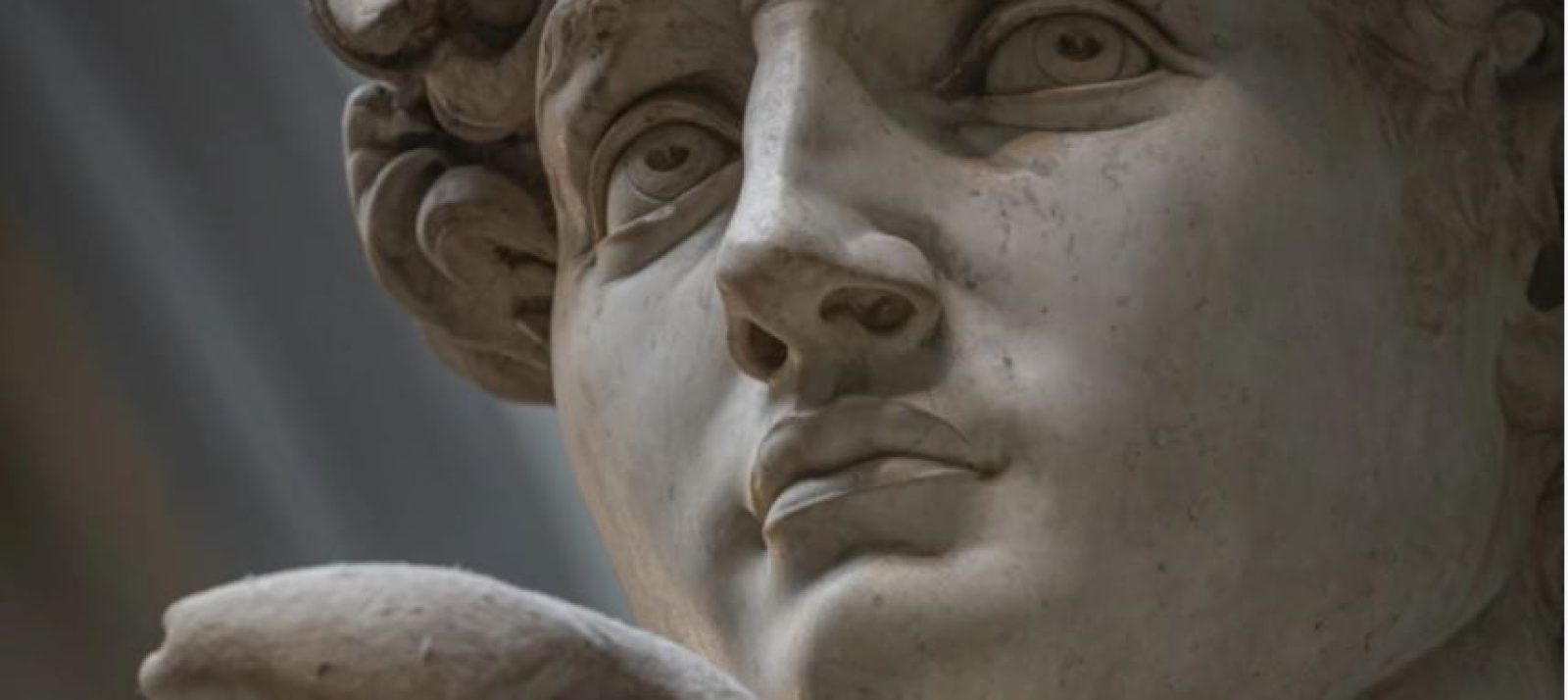
4 ottobre, San Francesco nel mondo dell’arte: da Cimabue a Giotto, da Caravaggio a Federico Barocci
Il 4 ottobre si celebra San Francesco d’Assisi, patrono d’Italia, protettore degli animali e della natura. È uno dei santi più amati e venerati della storia cristiana e, nel corso dei secoli, sono stati numerosi gli artisti che hanno scelto di raccontarne la vita, la spiritualità e i momenti più significativi attraverso dipinti e affreschi.
Dalla pittura medievale alla grande stagione barocca, San Francesco è diventato un soggetto iconografico straordinario, capace di ispirare interpretazioni molto diverse: dalla rappresentazione del suo volto alle scene della sua predicazione, fino al momento mistico delle stimmate.
Vediamo insieme alcune opere dedicate al Poverello d’Assisi.
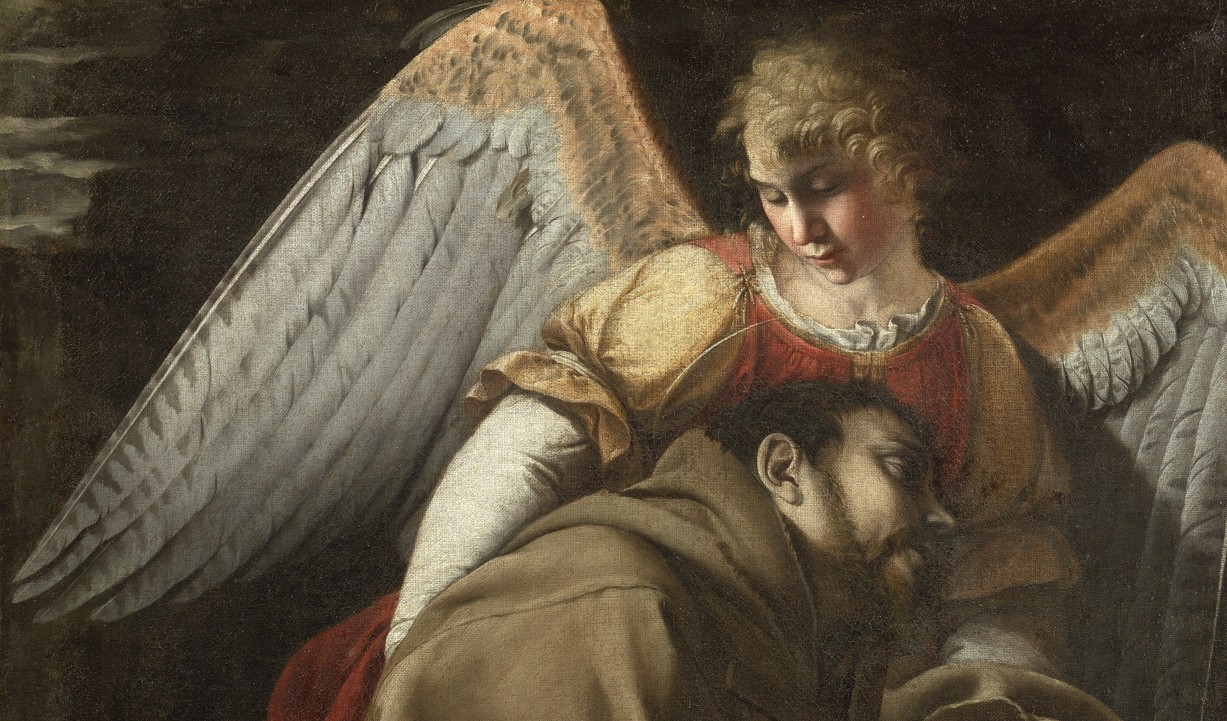
Il San Francesco di Berlinghieri
L’opera pittorica più antica giunta fino ai nostri giorni che racconta la vita di San Francesco è la tavola realizzata da Bonaventura Berlinghieri.
Pensate un po’: questo capolavoro fu dipinto appena nove anni dopo la morte del Santo, nel 1235, e si trova ancora oggi a Pescia, nella chiesa di San Francesco.
La tavola, organizzata attorno alla figura centrale del santo, presenta episodi della sua vita e dei suoi miracoli, offrendo una delle prime testimonianze visive della diffusione del suo culto.

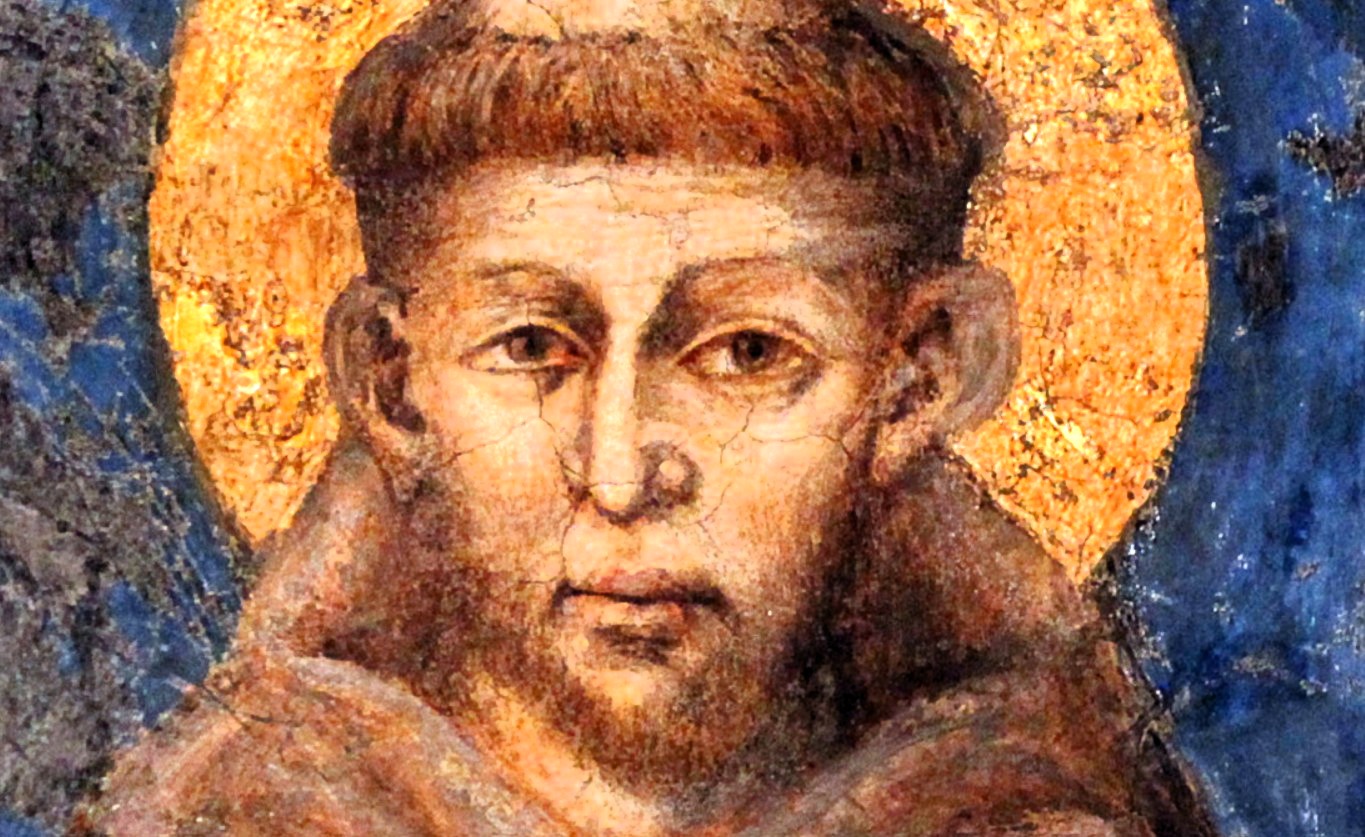
San Francesco di Cimabue
Non molti anni dopo Berlinghieri, fu il pittore fiorentino Cimabue a dedicare attenzione alla figura di San Francesco, lavorando a diversi affreschi della Basilica inferiore di Assisi.
Nella rappresentazione della Vergine in trono compare anche San Francesco, raffigurato in piedi.
Per ritrarre il Poverello, l’artista si rifece alla descrizione tramandata da Tommaso da Celano, il primo biografo del Santo, che aveva avuto modo di conoscerlo personalmente.
Facondissimo nel parlare, ilare d’aspetto, benigno di viso, di statura mediocre, piccoletto anziché no. Testa non grande e rotonda; faccia alquanto lunga e protesa; fronte piana e piccola; occhi di giusta misura, neri e semplici; capelli foschi; orecchie dritte ma piccole; lingua spedita, di fuoco ed acuta; voce veemente, dolce, chiara e sonora; denti uniti uguali e bianchi; barba nera ma rada; mani scarne, dita lunghe, gambe sottili, piedi piccoletti; pelle delicata; pochissima carne, ruvida la veste; sonno brevissimo; mano generosa.
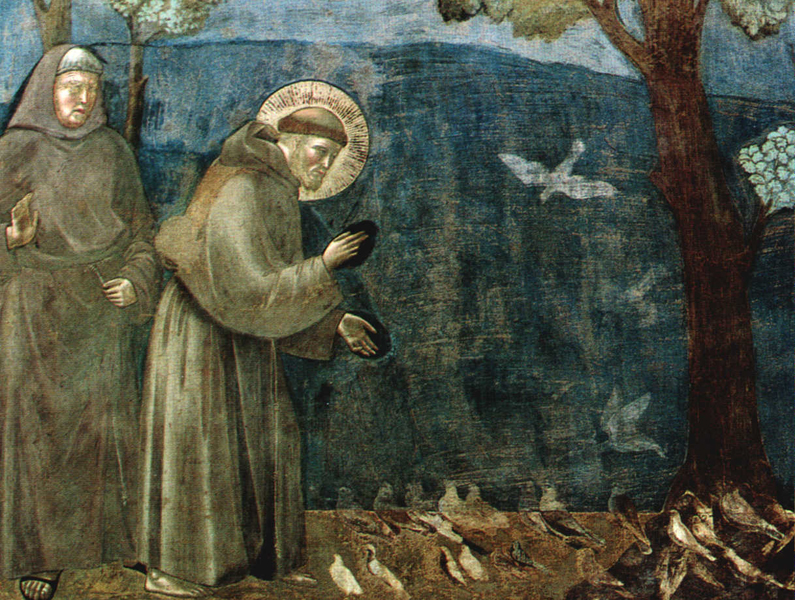
Il ciclo di affreschi dedicato a San Francesco di Giotto
Fra i cicli pittorici più celebri dedicati al Santo c’è sicuramente quello attribuito a Giotto nella Basilica superiore di Assisi, risalente agli ultimi anni del Duecento.
Ventotto scene raccontano la vita di Francesco in maniera dettagliata, seguendo alcuni degli episodi più importanti della sua esistenza, dalla rinuncia ai beni paterni fino alla morte.
Secondo Vasari, il ciclo fu commissionato da fra’ Giovanni Mincio da Morrovalle nel 1296, allora ministro generale dell’Ordine francescano, e venne portato a termine negli anni successivi anche con l’intervento degli allievi dell’artista.
Ve ne ho parlato nel dettaglio QUI.
Le Stimmate di San Francesco di Federico Barocci
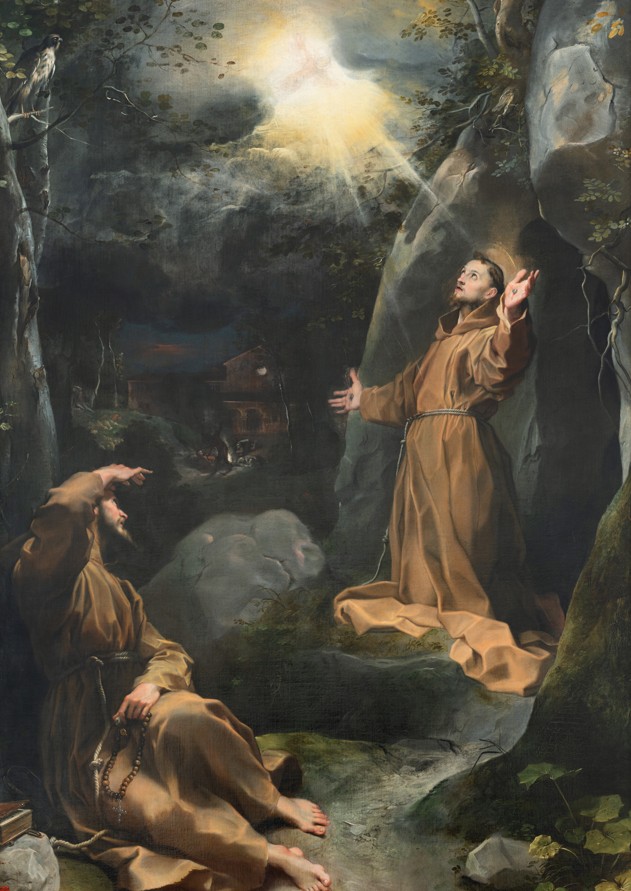
Fra le opere da ricordare c’è anche quella realizzata da Federico Barocci, intitolata Stimmate di San Francesco, oggi conservata a Urbino presso i Musei Nazionali delle Marche.
Il dipinto affronta uno degli episodi più intensi della vita del Santo: la ricezione delle stimmate sul monte della Verna, avvenuta nel settembre del 1224.
Secondo la tradizione, durante un’estasi mistica Francesco ebbe una visione di Cristo crocifisso sotto forma di serafino alato e ricevette nel proprio corpo i segni della Passione.
Barocci interpreta questo momento straordinario con quella sensibilità emotiva e quella raffinatezza cromatica che caratterizzano la sua pittura. La dimensione spirituale dell’episodio si intreccia con la delicatezza dei gesti e con la partecipazione della natura circostante, trasformando la scena in una rappresentazione intensa dell’esperienza mistica francescana.
San Francesco in meditazione di Caravaggio
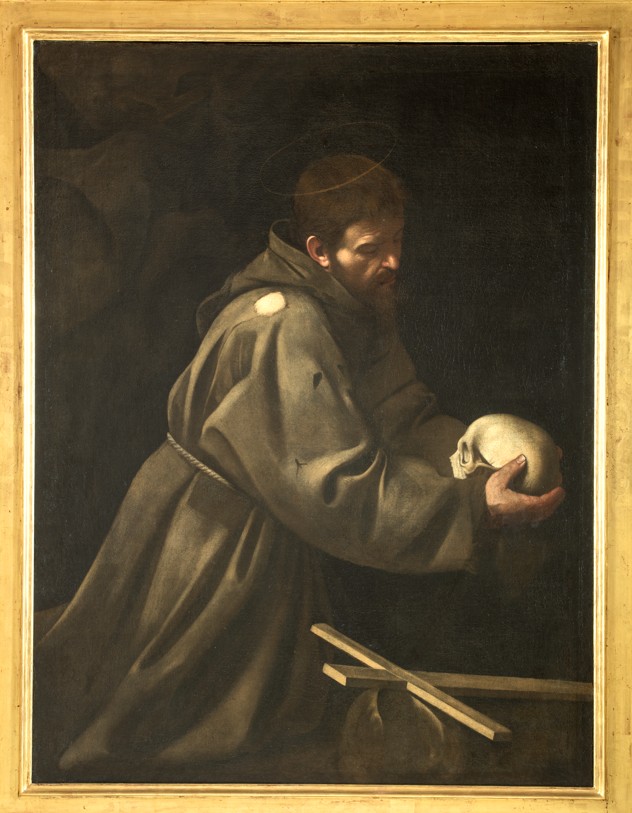
Anche Caravaggio dipinse San Francesco in meditazione, probabilmente intorno al 1606, in un periodo particolarmente significativo per la sua attività artistica.
L’opera, un olio su tela, è oggi custodita presso la Galleria Nazionale d’Arte Antica di Palazzo Barberini, a Roma.
Nel periodo della Controriforma era stata attribuita grande importanza alla raffigurazione dei santi e alla diffusione delle immagini devozionali. San Francesco, con la sua scelta radicale di povertà e la sua profonda spiritualità, rappresentava una figura particolarmente efficace per la sensibilità religiosa dell’epoca.
Caravaggio lo ritrae assorto nella meditazione, con il teschio fra le mani, in una scena raccolta e silenziosa. La luce illumina il saio e il volto scavato del santo, mentre il fondo scuro concentra tutta l’attenzione sulla sua dimensione interiore.
San Francesco in estasi di Orazio Gentileschi
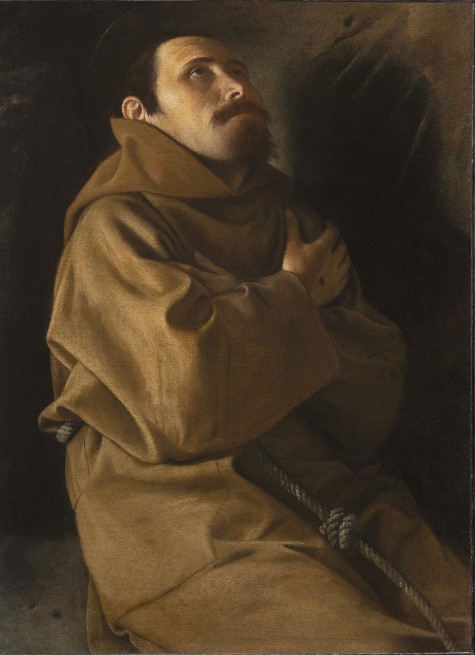
Il dipinto San Francesco in estasi testimonia il momento in cui Orazio Gentileschi, padre di Artemisia, si avvicinò idealmente al nuovo linguaggio pittorico di Caravaggio.
L’opera fu realizzata utilizzando un modello dal vero in posa, una metodologia che Gentileschi aveva già appreso fra il 1599 e il 1600 proprio dal grande Merisi.
È ipotizzabile che questo San Francesco sia stato dipinto negli anni del processo intentato da Giovanni Baglione contro Caravaggio, Filippo Trisegni, Onorio Longhi e lo stesso Orazio Gentileschi.
Durante il procedimento, Gentileschi aveva dichiarato di aver prestato a Caravaggio un abito da cappuccino e due ali. Probabilmente proprio il saio con il cappuccio a punta è quello che l’artista raffigura nel dipinto dedicato al Poverello.
Per il momento il sempre vostro Michelangelo Buonarroti vi saluta dandovi appuntamento ai prossimi post e sui social.
October 4th: Saint Francis in the World of Art—from Cimabue to Giotto, from Caravaggio to Federico Barocci
October 4th marks the feast of Saint Francis of Assisi, the patron saint of Italy and the protector of animals and nature. He is one of the most beloved and venerated saints in Christian history; over the centuries, numerous artists have chosen to depict his life, spirituality, and most significant moments through paintings and frescoes.
From medieval painting to the great Baroque era, Saint Francis has become an extraordinary iconographic subject, inspiring widely varied interpretations—ranging from portrayals of his face and scenes of his preaching to the mystical moment of the stigmata.
Let us look together at some works dedicated to the “Poor Man of Assisi.”
Berlinghieri’s Saint Francis
The oldest surviving painting depicting the life of Saint Francis is the panel created by Bonaventura Berlinghieri.
Remarkably, this masterpiece was painted just nine years after the Saint’s death, in 1235, and it can still be found today in the Church of San Francesco in Pescia.
Centered on the figure of the saint, the panel presents episodes from his life and miracles, offering one of the earliest visual records of the spread of his cult.
Cimabue’s Saint Francis
Not long after Berlinghieri, the Florentine painter Cimabue turned his attention to the figure of Saint Francis, working on several frescoes in the Lower Basilica of Assisi.
Saint Francis appears standing alongside the Virgin in the depiction of the Virgin Enthroned.
To portray the “Poor Man of Assisi,” the artist drew upon the description handed down by Thomas of Celano—the Saint’s first biographer—who had known him personally. He was most eloquent in speech, cheerful in appearance, and kindly of face; of average stature—or rather, on the small side. His head was round and not large; his face somewhat long and projecting; his forehead flat and small; his eyes well-proportioned, black, and guileless; his hair dark; his ears upright but small; his tongue fluent, fiery, and sharp; his voice vehement, sweet, clear, and resonant; his teeth even, uniform, and white; his beard black but sparse; his hands lean, fingers long, legs slender, and feet small; his skin delicate; his flesh spare; his clothing rough; his sleep very brief; and his hand generous.
Thomas of Celano
Giotto’s Fresco Cycle Dedicated to Saint Francis
Among the most celebrated pictorial cycles dedicated to the Saint is undoubtedly the one attributed to Giotto in the Upper Basilica of Assisi, dating back to the final years of the 13th century.
Twenty-eight scenes recount the life of Francis in detail, tracing some of the most significant episodes of his existence, from his renunciation of his father’s wealth to his death.
According to Vasari, the cycle was commissioned in 1296 by Friar Giovanni Mincio da Morrovalle—then Minister General of the Franciscan Order—and was completed in the following years with the assistance of the artist’s pupils.
I discussed this in detail HERE.
The Stigmatization of Saint Francis by Federico Barocci
Another noteworthy work is the one created by Federico Barocci, titled The Stigmatization of Saint Francis (Stimmate di San Francesco), which is currently housed in Urbino at the National Museums of the Marche. The painting depicts one of the most intense episodes in the Saint’s life: the reception of the stigmata on Mount La Verna, which took place in September 1224.
According to tradition, during a mystical ecstasy, Francis had a vision of the crucified Christ in the form of a winged seraph and received the marks of the Passion upon his own body.
Barocci interprets this extraordinary moment with the emotional sensitivity and chromatic refinement that characterize his painting. The spiritual dimension of the episode intertwines with the delicacy of the gestures and the participation of the surrounding nature, transforming the scene into an intense representation of the Franciscan mystical experience.
Saint Francis in Meditation by Caravaggio
Caravaggio also painted Saint Francis in Meditation, likely around 1606, during a particularly significant period of his artistic career.
The work, an oil on canvas, is currently housed at the Galleria Nazionale d’Arte Antica in Palazzo Barberini, Rome.
During the Counter-Reformation, great importance was placed on the depiction of saints and the dissemination of devotional images. Saint Francis, with his radical choice of poverty and his profound spirituality, was a figure who resonated deeply with the religious sensibilities of the era.
Caravaggio portrays him absorbed in meditation, holding a skull in his hands, in a quiet, intimate scene. Light illuminates the saint’s habit and gaunt face, while the dark background focuses all attention on his inner state.
Saint Francis in Ecstasy by Orazio Gentileschi
The painting Saint Francis in Ecstasy bears witness to the mom the point at which Orazio Gentileschi, Artemisia’s father, began to align himself with Caravaggio’s new pictorial style.
The work was created using a live model in pose—a method Gentileschi had learned between 1599 and 1600 from the great Merisi himself.
It is likely that this Saint Francis was painted during the years of the lawsuit brought by Giovanni Baglione against Caravaggio, Filippo Trisegni, Onorio Longhi, and Orazio Gentileschi himself.
During the proceedings, Gentileschi stated that he had lent Caravaggio a Capuchin habit and a pair of wings. The very habit with the pointed hood is likely the one the artist depicts in the painting dedicated to the Poverello (the “Little Poor Man” of Assisi).
For now, your ever-faithful Michelangelo Buonarroti bids you farewell and looks forward to seeing you in future posts and on social media.

Sostienici – Support Us
Se questo blog ti piace e ti appassiona, puoi aiutarci a farlo crescere sempre più sostenendoci in modo concreto condividendo i post, seguendo le pagine social e con un contributo che ci aiuta ad andare avanti con il nostro lavoro di divulgazione. . ENGLISH: If you like and are passionate about this blog, you can help us make it grow more and more by supporting us in a concrete way by sharing posts, following social pages and with a contribution that helps us to move forward with our dissemination work.
10,00 €
Condividi:


Questo sono io




sostienici

Sostienici – Support Us
Se questo blog ti piace e ti appassiona, puoi aiutarci a farlo crescere sempre più sostenendoci in modo concreto condividendo i post, seguendo le pagine social e con un contributo che ci aiuta ad andare avanti con il nostro lavoro di divulgazione. . ENGLISH: If you like and are passionate about this blog, you can help us make it grow more and more by supporting us in a concrete way by sharing posts, following social pages and with a contribution that helps us to move forward with our dissemination work.
€10,00


1 commento »