

Andrea Previtali e Giovanni Bellini: la mostra che ricostruisce il rapporto tra maestro e allievo
Dal 17 ottobre 2026 al 7 febbraio 2027 il Museo Villa Bassi Rathgeb di Abano Terme dedica una grande mostra ad Andrea Previtali, allievo di Giovanni Bellini.
“Andrea Previtali discepolo di Giovanni Bellini”, a cura di Raffaele Campion e Barbara Maria Savy è l’esposizione nata all’interno del ciclo espositivo inaugurato dal museo nel 2024 e dedicato alla valorizzazione delle proprie collezioni attraverso nuovi studi e approfondimenti.
Dopo “Donna musa artista. Ritratti di Cesare Tallone tra Otto e Novecento” e “Leonor Fini e la collezione grafica Bassi Rathgeb. Segni e invenzioni dal Rinascimento al Novecento”, il museo accende dunque i riflettori su uno dei protagonisti meno conosciuti, ma particolarmente interessanti, della pittura rinascimentale tra Venezia e Bergamo.
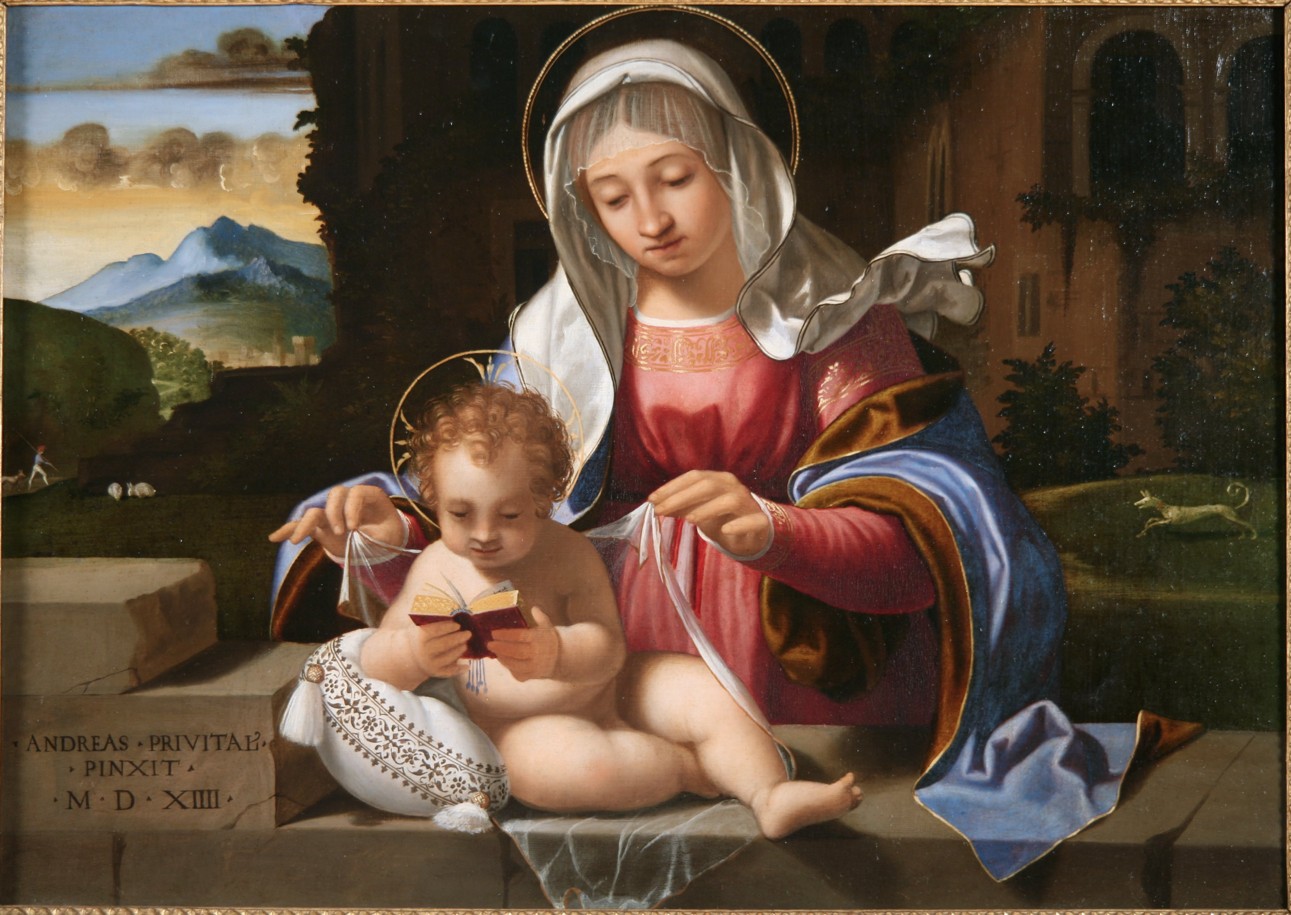
Chi era Andrea Previtali, il pittore che si definiva “discepolo” di Bellini
Andrea Previtali nacque intorno al 1480 in Valle Imagna. Ancora giovane si trasferì a Venezia, entrando nell’ambiente della bottega di Giovanni Bellini, uno dei massimi protagonisti del Rinascimento veneziano.
Il legame con il maestro non è soltanto una ricostruzione degli studiosi successivi. È lo stesso Previtali a rivendicarlo.
Nel 1502, infatti, l’artista si definiva “Ioanis Bellini dissipulus”, cioè “discepolo di Giovanni Bellini”. Una dichiarazione particolarmente significativa, soprattutto perché arriva direttamente dall’artista e restituisce la consapevolezza che Previtali aveva del proprio percorso di formazione.
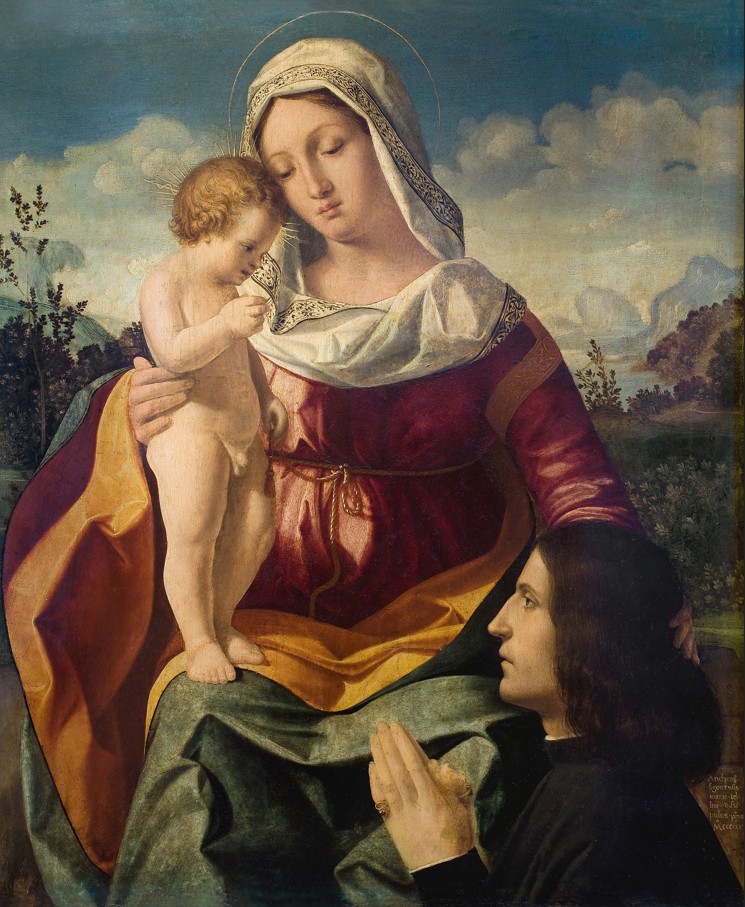
In mostra sarà possibile vedere la Madonna con Bambino e donatore, oggi conservata presso i Musei Civici di Padova, che rappresenta una delle testimonianze più importanti per comprendere questo rapporto.
Ma fermarsi all’etichetta di “allievo di Bellini” sarebbe riduttivo.
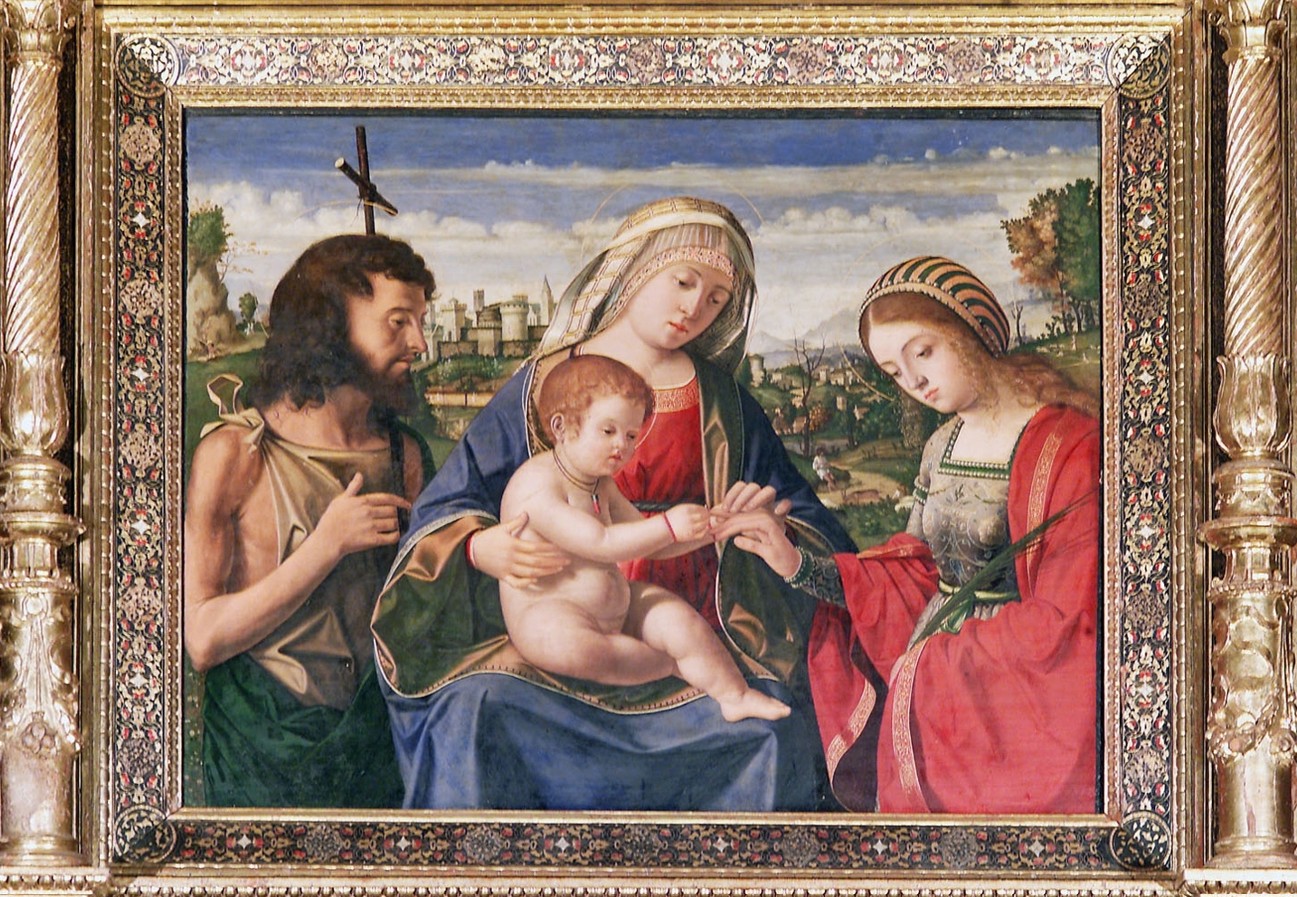
La pittura di Previtali nasce infatti dall’incontro di culture e suggestioni differenti. Accanto alla lezione belliniana emergono riferimenti a Vittore Carpaccio, Giorgione e Albrecht Dürer, mentre il ritorno a Bergamo lo porta successivamente a confrontarsi con la pittura moderna di Lorenzo Lotto.
È proprio questo intreccio a rendere interessante la sua vicenda: Previtali non appare semplicemente come il pittore che imita Bellini, ma come un artista che attraversa ambienti, esperienze e linguaggi diversi fino a costruire progressivamente una propria identità.
In mostra anche la Santa Giustina di Giovanni Bellini
Uno dei prestiti più importanti dell’esposizione sarà la Santa Giustina di Giovanni Bellini, proveniente dal Museo Bagatti Valsecchi di Milano.
L’opera permette di riportare fisicamente al centro della mostra la figura del maestro veneziano e di comprendere meglio quel repertorio di invenzioni figurative dal quale Previtali avrebbe attinto durante gli anni della sua formazione.
La santa appare monumentale e solenne, ma allo stesso tempo caratterizzata da una raffinata delicatezza. Il cielo attraversato dalle nubi, la luminosità dei colori, la cura dell’abito e dei dettagli restituiscono quella particolare sensibilità pittorica che avrebbe avuto un’influenza profonda sulla generazione di artisti cresciuta attorno a Bellini.
Il confronto diretto tra maestro e allievo diventa così uno degli assi portanti dell’intero percorso.
Il vero colpo di scena: il trittico di Serina torna insieme dopo secoli
Ma c’è un altro motivo per cui questa mostra promette di essere particolarmente interessante.
Al Museo Villa Bassi Rathgeb è conservato un dipinto di Andrea Previtali raffigurante un Santo vescovo, proveniente da un originale trittico realizzato per la Chiesa dell’Annunziata di Serina, in provincia di Bergamo, e databile intorno al 1515.
Per l’esposizione sarà possibile ricongiungere questo pannello con gli altri due sportelli del trittico.
Grazie alla collaborazione con la Diocesi di Bergamo, i tre elementi dell’opera saranno infatti riuniti nello stesso percorso espositivo, offrendo al pubblico l’opportunità di vedere nuovamente insieme una pala smembrata nel corso della sua storia.
È uno di quei momenti in cui una mostra temporanea assume un valore che va oltre la semplice esposizione di opere: permette infatti di ricostruire fisicamente e visivamente un’opera nella sua unità originaria.
Il Santo vescovo riveste inoltre un’importanza particolare per la storia stessa della collezione Bassi Rathgeb. Il dipinto fu studiato e pubblicato da Roberto Bassi Rathgeb nel 1955, prima di entrare a far parte della sua raccolta.
Roberto Bassi Rathgeb: il collezionista che contribuì alla riscoperta di Previtali
La mostra racconta quindi anche un’altra storia, parallela a quella dell’artista: quella del rapporto tra Roberto Bassi Rathgeb e Andrea Previtali.
La collezione Bassi Rathgeb, donata al Comune di Abano Terme tra il 1972 e il 1980, conserva infatti importanti testimonianze della pittura bresciana e bergamasca.
L’interesse di Bassi Rathgeb per Previtali nacque dall’acquisto sul mercato antiquario di un dipinto del pittore bergamasco e proseguì negli anni attraverso studi, segnalazioni, proposte attributive e approfondimenti.
Tra il 1955 e il 1959 il collezionista dedicò numerosi interventi all’artista, contribuendo alla sua riscoperta critica.
Questa vicenda permette di leggere Roberto Bassi Rathgeb non soltanto come un collezionista, ma come un vero conoscitore, capace di costruire il proprio metodo attraverso l’osservazione diretta delle opere, il confronto con la tradizione storico-artistica e la ricerca.
Una ricerca che, in alcuni casi, si trasformava in acquisizione: Bassi Rathgeb acquistava infatti opere che aveva contribuito a riportare all’attenzione degli studiosi.
Dalle Madonne ai ritratti: il mondo di Previtali
La produzione di Andrea Previtali è particolarmente legata alla pittura sacra.
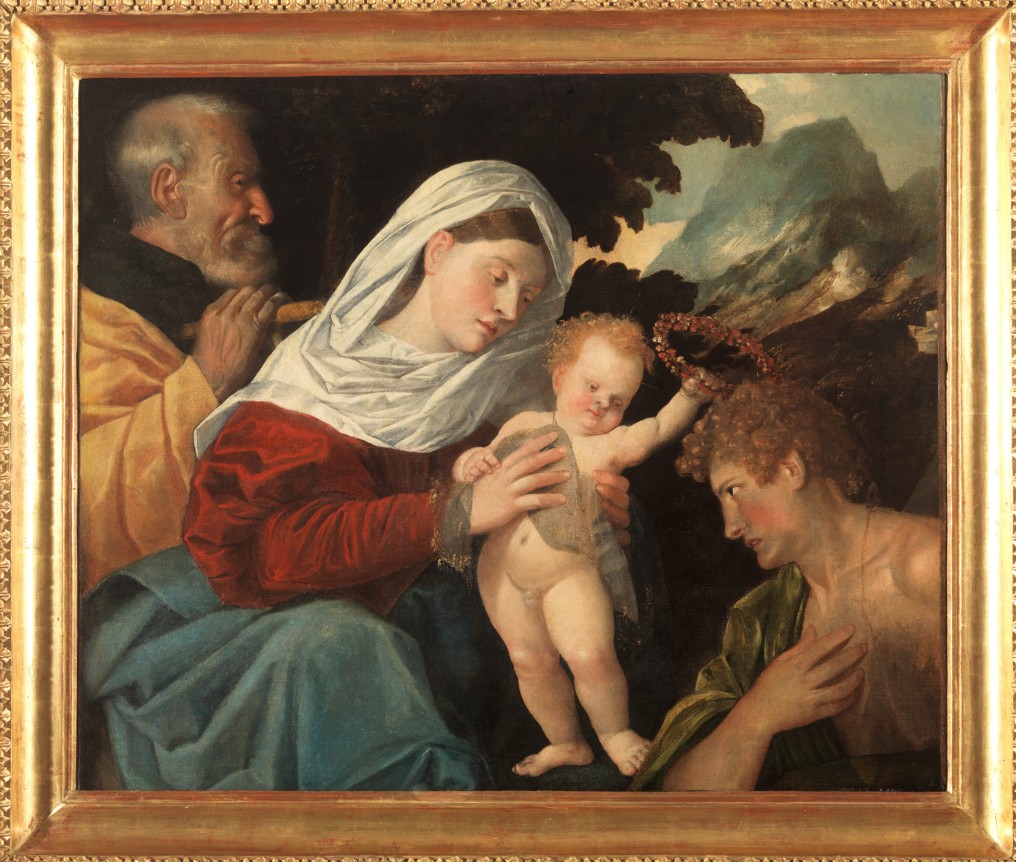
Madonne con Bambino, Sacre Conversazioni, santi e paesaggi costituiscono una parte importante del suo repertorio, nel quale si incontrano la tradizione lombarda, la cultura figurativa veneziana e le suggestioni provenienti da altri grandi protagonisti del Rinascimento.
La mostra allargherà però lo sguardo anche alla ritrattistica, presentando opere come il Ritratto dell’Accademia dei Concordi di Rovigo e il Ritratto di famiglia di Palazzo Moroni a Bergamo.
Ne emerge così un Previtali meno legato alla sola immagine del pittore di soggetti religiosi e più articolato, capace di confrontarsi con generi e richieste differenti.
La bottega rinascimentale diventa parte della mostra
Uno degli aspetti più interessanti del progetto riguarda inoltre il modo stesso di produrre arte nel Rinascimento.
Il cuore della mostra sarà infatti il rapporto tra Previtali e la pratica della bottega, attraverso un percorso che mette in dialogo le sue opere con quelle di altri pittori attivi tra Venezia, Bergamo e Brescia.
Tra i nomi presenti nel percorso figurano Francesco Bissolo, Girolamo da Santacroce, Palma il Vecchio e Giovanni Busi detto Cariani.
L’obiettivo non è dunque raccontare un artista isolato, ma ricostruire la fitta rete di rapporti, influenze, modelli e scambi che caratterizzava le botteghe rinascimentali.
Il pubblico potrà inoltre approfondire le tecniche artistiche attraverso materiali fisici e strumenti digitali dedicati ai processi di realizzazione delle opere.
Un modo per guardare il dipinto non soltanto come risultato finale, ma anche come prodotto di un lungo processo fatto di disegno, preparazione, pigmenti, stratificazioni e competenze condivise all’interno della bottega.
Una mostra nata dalla collezione Bassi Rathgeb
Il progetto espositivo non nasce casualmente all’interno di Villa Bassi Rathgeb.
La mostra prende infatti le mosse proprio dalla collezione donata al Comune di Abano Terme e dagli studi che Roberto Bassi Rathgeb dedicò ad Andrea Previtali.
È un percorso che mette quindi in relazione opera, collezione e ricerca scientifica, trasformando una raccolta permanente in un punto di partenza per nuove indagini.
Ed è forse proprio questo uno degli aspetti più interessanti dell’esposizione: non limitarsi a mostrare opere già note, ma utilizzare la collezione come strumento per porre nuove domande sulla storia dell’arte.
Il catalogo scientifico e il comitato scientifico
La mostra sarà accompagnata da un catalogo scientifico edito da Sagep Editori, nel quale confluiranno i risultati degli studi condotti in occasione del progetto.
Il volume raccoglierà saggi e schede firmati da studiosi, curatori e specialisti di arte rinascimentale, con particolare attenzione ad alcuni momenti della produzione più antica di Previtali e alle opere presenti nel territorio padovano.
Il comitato scientifico è composto, oltre che dai curatori, da Elisabetta Gastaldi dei Musei Civici di Padova, Marta Mazza della Soprintendenza ABAP Padova, Treviso e Belluno, Antonio Carlo Mazzotta dell’Università degli Studi di Milano, Paolo Plebani dell’Accademia Carrara di Bergamo e Alessia Vedova della Fondazione Cassa di Risparmio di Padova e Rovigo.
Andrea Previtali a Villa Bassi Rathgeb: quando il Rinascimento torna a parlare
La mostra di Abano Terme offre dunque l’occasione per guardare Andrea Previtali da una prospettiva più ampia.
Non soltanto il discepolo che nel 1502 dichiarava con orgoglio il proprio legame con Giovanni Bellini, ma un pittore capace di assorbire la lezione della Venezia rinascimentale, confrontarsi con artisti e culture differenti e sviluppare progressivamente un linguaggio personale.
E soprattutto un artista la cui storia torna oggi a intrecciarsi con quella di Roberto Bassi Rathgeb, il collezionista e conoscitore che contribuì alla sua riscoperta.
Dal 17 ottobre 2026 al 7 febbraio 2027, Villa Bassi Rathgeb diventa così il luogo in cui maestro, allievo, collezionista e ricerca scientifica tornano a incontrarsi.
E il ricongiungimento dei tre pannelli del trittico di Serina sarà uno dei momenti più significativi di questo viaggio nel Rinascimento tra Venezia e Bergamo.
Andrea Previtali discepolo di Giovanni Bellini
Museo Villa Bassi Rathgeb – Abano Terme
17 ottobre 2026 – 7 febbraio 2027
A cura di Raffaele Campion e Barbara Maria Savy
Per il momento il sempre vostro Michelangelo Buonarroti vi saluta dandovi appuntamento ai prossimi post e sui social.
Andrea Previtali and Giovanni Bellini: an exhibition reconstructing the relationship between master and pupil
From October 17, 2026, to February 7, 2027, the Villa Bassi Rathgeb Museum in Abano Terme is hosting a major exhibition dedicated to Andrea Previtali, a pupil of Giovanni Bellini.
“Andrea Previtali, Disciple of Giovanni Bellini”—curated by Raffaele Campion and Barbara Maria Savy—is part of an exhibition series launched by the museum in 2024, aimed at showcasing its collections through new research and in-depth study.
Following “Woman, Muse, Artist: Portraits by Cesare Tallone (19th–20th Century)” and “Leonor Fini and the Bassi Rathgeb Graphic Collection: Marks and Inventions from the Renaissance to the 20th Century,” the museum now turns the spotlight on one of the lesser-known yet particularly fascinating figures of Renaissance painting in the region between Venice and Bergamo.
Who was Andrea Previtali, the painter who described himself as a “disciple” of Bellini?
Andrea Previtali was born around 1480 in the Imagna Valley. While still young, he moved to Venice and joined the workshop of Giovanni Bellini, one of the leading figures of the Venetian Renaissance.
The connection to his master is not merely a later scholarly reconstruction; Previtali himself asserted it.
In 1502, the artist described himself as Ioanis Bellini discipulus—that is, “disciple of Giovanni Bellini.” This is a particularly significant statement, not least because it comes directly from the artist, revealing his own awareness of his training and artistic development.
The exhibition will feature the Madonna and Child with Donor—currently held at the Civic Museums of Padua—which stands as one of the most important pieces of evidence for understanding this relationship. However, stopping at the label of “Bellini’s pupil” would be reductive.
Previtali’s painting stems, in fact, from an encounter between different cultures and influences. Alongside the lessons learned from Bellini, references to Vittore Carpaccio, Giorgione, and Albrecht Dürer emerge, while his return to Bergamo later led him to engage with the modern style of Lorenzo Lotto.
It is precisely this interplay that makes his story so compelling: Previtali does not appear merely as a painter imitating Bellini, but as an artist who traverses diverse environments, experiences, and artistic languages, gradually forging his own unique identity.
Giovanni Bellini’s Saint Justina also on display
One of the exhibition’s most significant loans is Giovanni Bellini’s Saint Justina, on loan from the Museo Bagatti Valsecchi in Milan.
The work allows the figure of the Venetian master to be physically placed at the heart of the exhibition, offering a better understanding of the repertoire of pictorial inventions from which Previtali drew during his formative years.
The saint appears monumental and solemn, yet is simultaneously characterized by a refined delicacy. The cloud-streaked sky, the luminous colors, and the meticulous rendering of her attire and details convey that distinctive painterly sensibility which profoundly influenced the generation of artists who developed around Bellini.
Thus, the direct comparison between master and pupil becomes a central pillar of the entire exhibition.
The real highlight: the Serina triptych reunited after centuries
But there is another reason why this exhibition promises to be particularly interesting. The Villa Bassi Rathgeb Museum houses a painting by Andrea Previtali depicting a saintly bishop; it originated from a triptych created for the Church of the Annunziata in Serina (in the province of Bergamo) and dates to around 1515.
For this exhibition, it will be possible to reunite this panel with the triptych’s other two wings.
Thanks to a collaboration with the Diocese of Bergamo, the three elements of the work will be brought together in the same exhibition space, offering the public the chance to see—once again—an altarpiece that had been dismantled at some point in its history.
This is one of those instances where a temporary exhibition takes on significance beyond the mere display of artworks: it allows for the physical and visual reconstruction of a piece in its original, unified form.
The painting of the saintly bishop also holds particular importance for the history of the Bassi Rathgeb collection itself. Roberto Bassi Rathgeb studied and published the work in 1955, prior to acquiring it for his collection.
Roberto Bassi Rathgeb: the collector who helped rediscover Previtali
The exhibition thus tells a second story alongside that of the artist: the story of the relationship between Roberto Bassi Rathgeb and Andrea Previtali.
The Bassi Rathgeb collection—donated to the Municipality of Abano Terme between 1972 and 1980—preserves significant examples of painting from the Brescia and Bergamo regions.
Bassi Rathgeb’s interest in Previtali stemmed from the acqui regarding a painting by the painter from Bergamo on the art market, and continued over the years through studies, notifications, attribution proposals, and in-depth analysis.
Between 1955 and 1959, the collector devoted considerable attention to the artist, contributing to his critical rediscovery.
This story allows us to view Roberto Bassi Rathgeb not merely as a collector, but as a true connoisseur, capable of developing his own methodology through the direct observation of artworks, comparison with art-historical traditions, and research.
This research sometimes led to acquisitions; indeed, Bassi Rathgeb purchased works he had helped bring back to the attention of scholars.
From Madonnas to portraits: the world of Previtali
Andrea Previtali’s body of work is closely linked to religious painting.
Madonnas and Child, Sacra Conversazione (Sacred Conversation) scenes, saints, and landscapes form a significant part of his repertoire, which blends Lombard tradition, Venetian figurative culture, and influences from other great Renaissance masters.
However, the exhibition will also broaden its scope to include portraiture, presenting works such as the Portrait from the Accademia dei Concordi in Rovigo and the Family Portrait from Palazzo Moroni in Bergamo.
The result is a more multifaceted Previtali—one who transcends the image of a mere painter of religious subjects and demonstrates an ability to engage with diverse genres and commissions.
The Renaissance workshop becomes part of the exhibition
One of the project’s most compelling aspects concerns the very nature of art production during the Renaissance.
At the heart of the exhibition lies the relationship between Previtali and workshop practice, explored through a journey that places his works in dialogue with those of other painters active in the region spanning Venice, Bergamo, and Brescia. The exhibition features artists such as Francesco Bissolo, Girolamo da Santacroce, Palma il Vecchio, and Giovanni Busi, known as Cariani.
The aim is not merely to present an individual artist in isolation, but to reconstruct the intricate web of relationships, influences, models, and exchanges that characterized Renaissance workshops.
Visitors will also have the opportunity to explore artistic techniques in greater depth through physical materials and digital tools illustrating the processes behind the creation of the artworks.
This approach encourages viewing the painting not just as a finished product, but as the result of a lengthy process involving drawing, preparation, pigments, layering, and the shared expertise of the workshop.
An exhibition born from the Bassi Rathgeb collection
The choice of Villa Bassi Rathgeb as the venue for this exhibition project was no coincidence.
Indeed, the exhibition draws its inspiration directly from the collection donated to the Municipality of Abano Terme and from the research Roberto Bassi Rathgeb dedicated to Andrea Previtali.
It creates a connection between the artworks, the collection, and scholarly research, transforming a permanent collection into a starting point for new investigations.
This is perhaps one of the exhibition’s most compelling aspects: rather than simply displaying well-known works, it uses the collection as a tool to pose new questions about art history.
The scholarly catalogue and scientific committee
The exhibition will be accompanied by a scholarly catalogue published by Sagep Editori, presenting the findings of the research conducted for the project.
The volume will feature essays and entries by scholars, curators, and Renaissance art specialists, focusing in particular on specific phases of Previtali’s early career and on works located in the Padua area. In addition to the curators, the scientific committee comprises Elisabetta Gastaldi (Civic Museums of Padua), Marta Mazza (Superintendency for Archaeology, Fine Arts and Landscape for Padua, Treviso, and Belluno), Antonio Carlo Mazzotta (University of Milan), Paolo Plebani (Accademia Carrara, Bergamo), and Alessia Vedova (Fondazione Cassa di Risparmio di Padova e Rovigo).
Andrea Previtali at Villa Bassi Rathgeb: When the Renaissance Speaks Again
The exhibition in Abano Terme thus offers an opportunity to view Andrea Previtali from a broader perspective.
He appears not merely as the disciple who, in 1502, proudly declared his connection to Giovanni Bellini, but as a painter capable of absorbing the lessons of Renaissance Venice, engaging with diverse artists and cultures, and progressively developing a distinctive artistic voice.
Above all, he is an artist whose story once again intertwines with that of Roberto Bassi Rathgeb—the collector and connoisseur who played a pivotal role in his rediscovery.
From October 17, 2026, to February 7, 2027, Villa Bassi Rathgeb will thus become the setting where master, pupil, collector, and scholarly research converge once more.
The reunion of the three panels of the Serina triptych will mark one of the highlights of this journey into the Renaissance, spanning the worlds of Venice and Bergamo.

Sostienici – Support Us
Se questo blog ti piace e ti appassiona, puoi aiutarci a farlo crescere sempre più sostenendoci in modo concreto condividendo i post, seguendo le pagine social e con un contributo che ci aiuta ad andare avanti con il nostro lavoro di divulgazione. . ENGLISH: If you like and are passionate about this blog, you can help us make it grow more and more by supporting us in a concrete way by sharing posts, following social pages and with a contribution that helps us to move forward with our dissemination work.
10,00 €
-
Artemisia Gentileschi, Giuditta e l’ancella con la testa di Oloferne: il dramma biblico
🇮🇹Giuditta e l’ancella con la testa di Oloferne di Artemisia Gentileschi è in mostra al Museo degli Innocenti di Firenze: storia, dettagli e confronti con Orazio Gentileschi… 🇬🇧Judith and Her Maidservant with the Head of Holofernes* by Artemisia Gentileschi is on display at the Museo degli Innocenti in Florence: history, details, and comparisons with Orazio…
-
Il Cavallo colossale di Canova torna a casa in 10 casse: ecco quando si potrà ammirare
🇮🇹Il Cavallo colossale di Antonio Canova torna a Bassano il 27 ottobre 2026. Dopo il restauro, sarà visibile al Museo Civico dal 12 dicembre… 🇬🇧Antonio Canova’s colossal horse returns to Bassano on October 27, 2026. Following its restoration, it will be on display at the Civic Museum starting December 12…
-
La mano che disegna la mano: il disegno del Louvre che ha fatto discutere gli studiosi
🇮🇹Il disegno di una mano che ne disegna un’altra: il curioso foglio del Louvre, la storia delle attribuzioni e il mistero della sua paternità… 🇬🇧A drawing of a hand drawing another hand: the intriguing sheet at the Louvre, the history of its attributions, and the mystery of its authorship…
Condividi:


Questo sono io




sostienici

Sostienici – Support Us
Se questo blog ti piace e ti appassiona, puoi aiutarci a farlo crescere sempre più sostenendoci in modo concreto condividendo i post, seguendo le pagine social e con un contributo che ci aiuta ad andare avanti con il nostro lavoro di divulgazione. . ENGLISH: If you like and are passionate about this blog, you can help us make it grow more and more by supporting us in a concrete way by sharing posts, following social pages and with a contribution that helps us to move forward with our dissemination work.
€10,00


