
Arno o Tigri? Il mistero nei Musei Vaticani
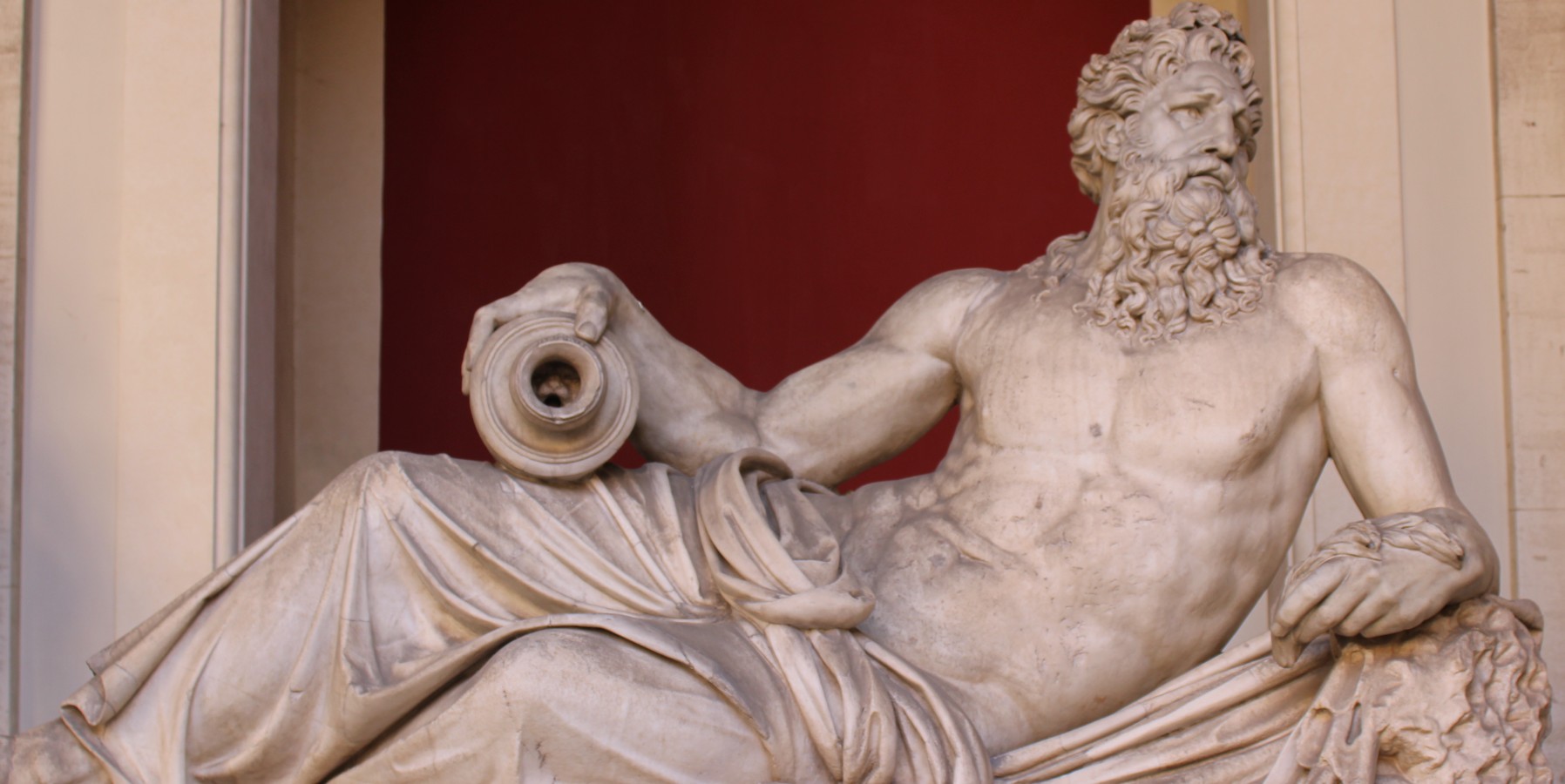
Nel cuore dei Musei Vaticani c’è una scultura che pare voler raccontare due storie diverse, a seconda di come la si guarda. È una divinità fluviale dalla posizione semisdraiata, apparentemente tranquilla, ma circondata da dettagli che hanno alimentato per secoli interrogativi sulla sua identità.
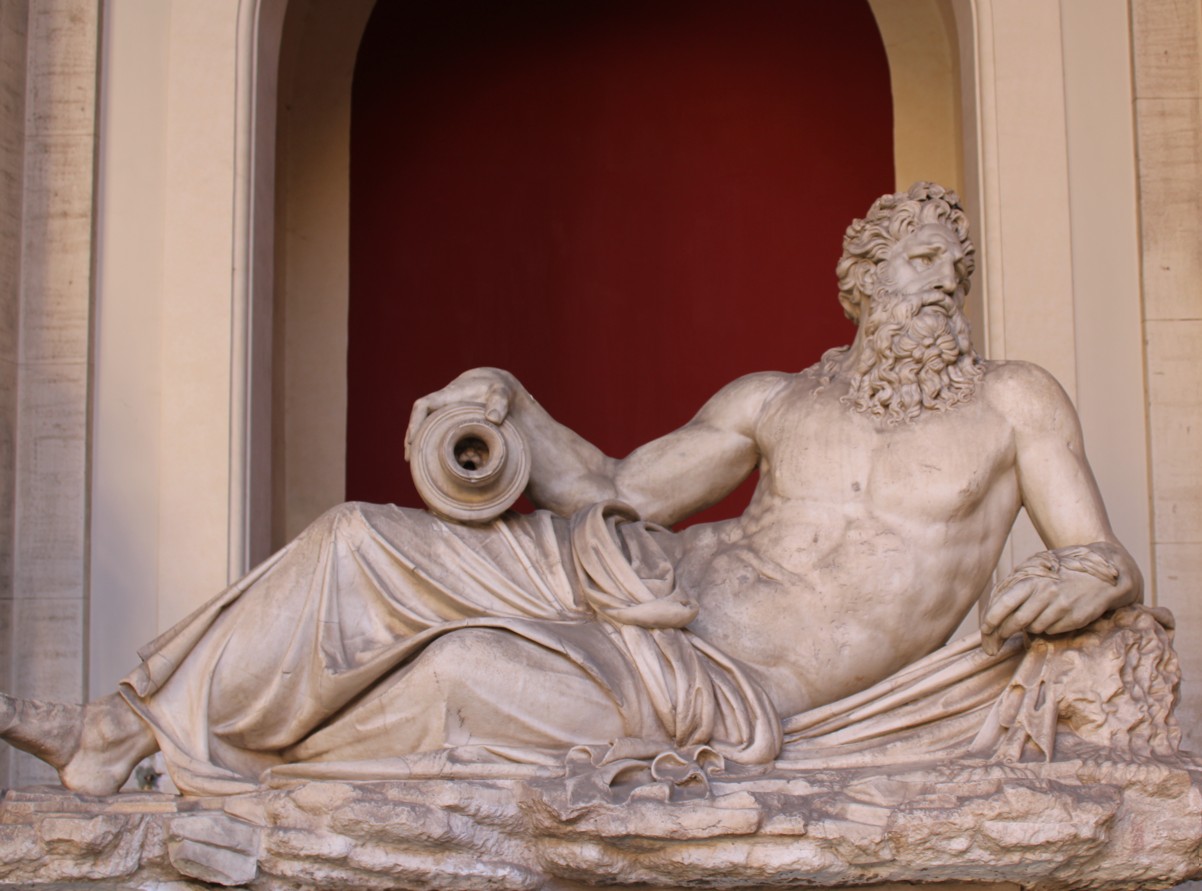
L’opera è collocata nel Cortile Ottagono, ambiente che fa da fulcro alle collezioni vaticane. Guardandola però è bene sapere che il suo l’aspetto attuale è il risultato di una complessa vicenda di restauri e integrazioni rinascimentali. Proprio alcuni di questi interventi potrebbero contenere la chiave di volta per comprendere quale fiume rappresentasse in origine.
Una divinità fluviale dall’aspetto antico
La scultura è databile all’età adrianea, al II secolo d.C., ed è ispirata a un’opera di origine ellenistica.
La posizione semi giacente è un elemento caratteristico delle personificazioni dei grandi fiumi nell’arte antica. Le divinità fluviali venivano spesso rappresentate come figure maschili imponenti, distese o appoggiate su un fianco, con il corpo accompagnato da attributi capaci di evocare l’acqua, la natura e la fertilità.
La testa barbuta però è il risultato di una significativa integrazione realizzata durante il Rinascimento.
Nel Cinquecento diventò una fontana
Nei primi decenni del XVI secolo la scultura non si trovava ancora nella sistemazione in cui la potete ammirare oggi.
Si trovava nel Cortile delle Statue, adoperata come elemento decorativo di una fontana. A completare la composizione c’era un antico sarcofago romano, databile tra il 170 e il 180 d.C., decorato con una spettacolare scena di battaglia tra Greci e Amazzoni.
Il riutilizzo di reperti antichi per creare nuove composizioni decorative era tutt’altro che insolito nella Roma rinascimentale. Statue, sarcofagi e frammenti provenienti dall’antichità venivano ricomposti e reinterpretati secondo il gusto dell’epoca. La divinità fluviale subì così ampi interventi di restauro.
Il più evidente riguarda proprio il volto.
Quel piccolo leone potrebbe essere la chiave
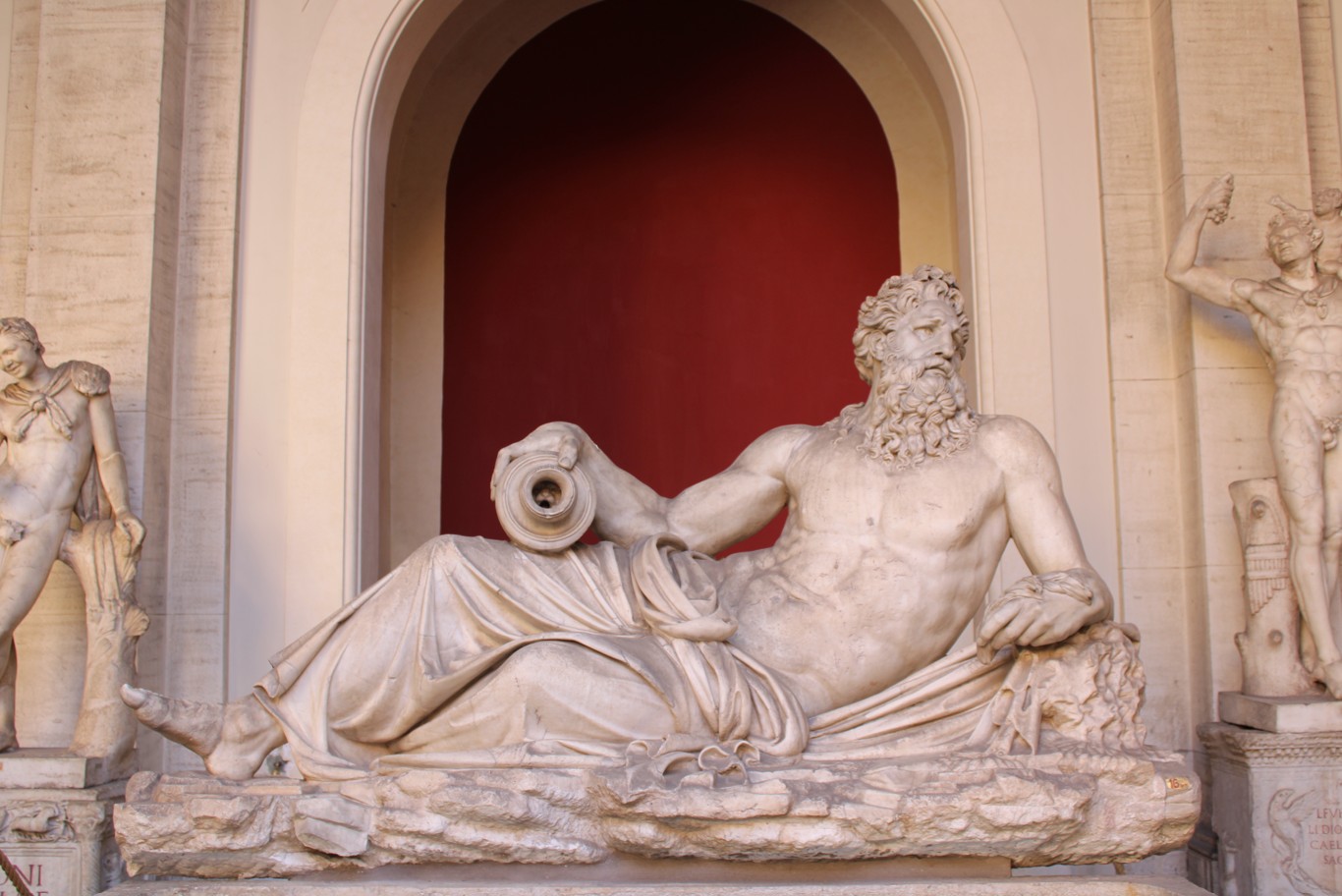
Nel vaso associato alla figura venne ricavata, sempre nell’ambito del restauro, una piccola testa di leone.A prima vista potrebbe sembrare soltanto un elemento decorativo. In realtà, potrebbe avere avuto un significato preciso.
L’intervento viene infatti generalmente collegato alla volontà di rendere omaggio a papa Leone X de’ Medici, che regnò dal 1513 al 1521. Il leone sarebbe dunque un possibile riferimento araldico al pontefice, il cui nome richiamava direttamente l’animale.
Questo felino però ha contribuito a complicare l’identificazione della divinità.
Arno o Tigri? Il dettaglio che ha creato il mistero
Gli elementi aggiunti durante il Rinascimento sembrano suggerire un’interpretazione affascinante: la figura potrebbe rappresentare il fiume Arno.
Il riferimento avrebbe senso soprattutto considerando il legame della famiglia Medici con Firenze e il significato simbolico che il principale fiume toscano poteva assumere in un contesto legato a un pontefice della famiglia.
Il felino però è stato interpretato in passato non come un leone, bensì come una tigre. E se si accetta questa lettura, l’identificazione della divinità cambia completamente prospettiva: la figura potrebbe infatti rappresentare il Tigri, uno dei grandi fiumi della Mesopotamia.
Quando il restauro diventa parte della storia dell’opera
La vicenda di questa divinità fluviale rende chiaro quanto sia complesso capire una scultura antica senza considerare ciò che le è accaduto nei secoli.
Quello che osserviamo oggi infatti non è ciò che vedeva un romano dell’età di Adriano. La scultura è arrivata fino a noi attraverso trasformazioni, restauri, ricomposizioni e interpretazioni successive.
Arno o Tigri dunque?
Per il momento il sempre vostro Michelangelo Buonarroti vi saluta dandovi appuntamento ai prossimi post e sui social.
Arno or Tigris? The Mystery in the Vatican Museums
In the heart of the Vatican Museums lies a sculpture that seems to tell two different stories, depending on how you look at it. It is a river deity in a semi-reclining position, seemingly calm, yet surrounded by details that have fueled questions about its identity for centuries.
The work is located in the Octagonal Courtyard, the hub of the Vatican collections. Looking at it, however, it’s important to understand that its current appearance is the result of a complex series of Renaissance restorations and additions. Some of these interventions may hold the key to understanding which river it originally represented.
A River Deity with an Ancient Look
The sculpture dates back to the time of Hadrianic rule, the 2nd century AD, and is inspired by a work of Hellenistic origin.
The semi-reclining position is a characteristic element of the personifications of great rivers in ancient art. River deities were often depicted as imposing male figures, reclining or leaning on one side, their bodies adorned with attributes evoking water, nature, and fertility.
The bearded head, however, is the result of a significant addition made during the Renaissance.
In the 16th century, it became a fountain
In the early decades of the 16th century, the sculpture was not yet in the position you see today.
It was located in the Courtyard of the Statues, used as a decorative element for a fountain. Completing the composition was an ancient Roman sarcophagus, dating to between 170 and 180 AD, decorated with a spectacular battle scene between Greeks and Amazons.
The reuse of ancient artifacts to create new decorative compositions was far from uncommon in Renaissance Rome. Statues, sarcophagi, and fragments from antiquity were reassembled and reinterpreted according to the tastes of the time. The river deity thus underwent extensive restoration work.
The most obvious concerns the face.
That small lion could be the key
A small lion’s head was also carved into the vase associated with the figure during the restoration. At first glance, it might seem merely a decorative element. In reality, it may have had a specific meaning.
The work is generally linked to a desire to pay homage to Pope Leo X de’ Medici, who reigned from 1513 to 1521. The lion could therefore be a possible heraldic reference to the pontiff, whose name directly recalled the animal.
This feline, however, has further complicated the identification of the deity.
Arno or Tigris? The detail that created the mystery
The elements added during the Renaissance seem to suggest a fascinating interpretation: the figure could represent the Arno River.
The reference would make sense, especially considering the Medici family’s ties to Florence and the symbolic meaning that Tuscany’s main river could have assumed in a context linked to a member of the family.
However, the feline has been interpreted in the past not as a lion, but as a tiger. And if we accept this interpretation, the identification of the deity changes completely: the figure could indeed represent the Tigris, one of the great rivers of Mesopotamia.
When restoration becomes part of the work’s history
The story of this river deity illustrates how complex it is to understand an ancient sculpture without considering what happened to it over the centuries.
What we observe today is not what a Roman in the age of Hadrian saw. The sculpture has come down to us through transformations, restorations, recompositions, and subsequent interpretations.
Arno or Tigris, then?
For now, yours truly, Michelangelo Buonarroti bids you farewell and invites you to join him in future posts and on social media.

Sostienici – Support Us
Se questo blog ti piace e ti appassiona, puoi aiutarci a farlo crescere sempre più sostenendoci in modo concreto condividendo i post, seguendo le pagine social e con un contributo che ci aiuta ad andare avanti con il nostro lavoro di divulgazione. . ENGLISH: If you like and are passionate about this blog, you can help us make it grow more and more by supporting us in a concrete way by sharing posts, following social pages and with a contribution that helps us to move forward with our dissemination work.
10,00 €
-
Il Louvre rischia la chiusura? Ecco cosa sta succedendo al museo dopo il furto da 88 milioni
🇮🇹Il Louvre rischia di chiudere senza una grande ristrutturazione. Dopo il furto dei gioielli della Corona, il direttore Christophe Leribault lancia l’allarme… 🇬🇧The Louvre risks closure without a major renovation. Following the theft of the Crown Jewels, director Christophe Leribault has raised the alarm…
-
Francesco Mochi, lo scultore che liberò il marmo e il bronzo dal silenzio prima di Bernini
🇮🇹Prima di Bernini, c’è stato Francesco Mochi: scultore straordinario del Seicento, Mochi anticipò il dinamismo barocco con figure che sembrano sul punto di uscire dalla pietra e cavalli di bronzo carichi di energia… 🇬🇧Before Bernini, there was Francesco Mochi—an extraordinary 17th-century sculptor who anticipated Baroque dynamism with figures that seem on the verge of stepping…
-
Kekova, Turchia: trovato un relitto di quasi 5.000 anni fa
🇮🇹Al largo di Kekova, in Turchia, un relitto che potrebbe risalire a 4.700 anni fa riporta l’attenzione sugli antichi commerci del Mediterraneo… 🇬🇧Off the coast of Kekova, in Türkiye, a shipwreck that may date back 4,700 years is drawing renewed attention to ancient Mediterranean trade…
Condividi:


Questo sono io




sostienici

Sostienici – Support Us
Se questo blog ti piace e ti appassiona, puoi aiutarci a farlo crescere sempre più sostenendoci in modo concreto condividendo i post, seguendo le pagine social e con un contributo che ci aiuta ad andare avanti con il nostro lavoro di divulgazione. . ENGLISH: If you like and are passionate about this blog, you can help us make it grow more and more by supporting us in a concrete way by sharing posts, following social pages and with a contribution that helps us to move forward with our dissemination work.
€10,00


