

Ci fissano da secoli: il mistero degli sguardi nei dipinti più celebri della storia dell’arte
Avete mai avuto la sensazione che un personaggio dipinto centinaia di anni fa vi stesse guardando? Ci spostiamo, osserviamo il quadro da un’altra angolazione, ci allontaniamo e poi torniamo vicino, ma quegli occhi sembrano mantenere un rapporto diretto con noi.
Lo sguardo, nella pittura, non è quasi mai un semplice dettaglio anatomico. Può essere una domanda, una provocazione, una dichiarazione d’amore, un segnale di potere, una confessione oppure un modo per coinvolgere chi osserva. Gli artisti hanno imparato nei secoli a trasformare gli occhi in uno strumento narrativo.
Alcuni dei dipinti più celebri della storia dell’arte riescono a raccontare storie interagendo con chi li guarda.
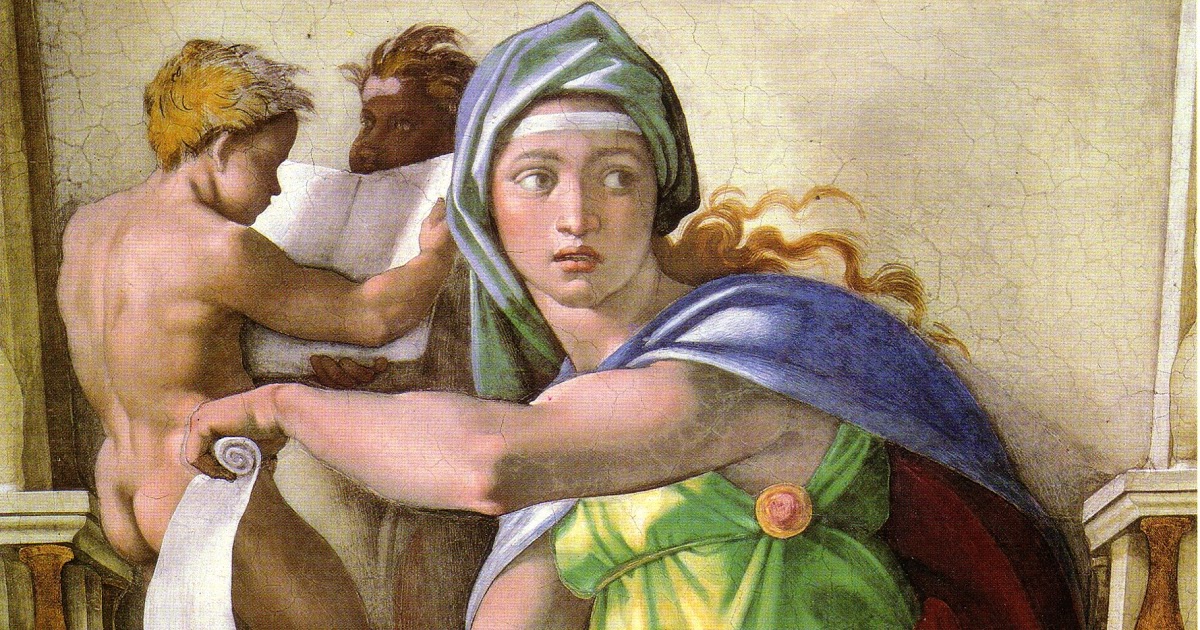
La mia Sibilla Delfica: lo sguardo che racconta il futuro
Volevo che gli occhi della Sibilla delfica che affrescai nella volta della Cappella Sistina, fossero capaci di raccontare qualcosa che lo spettatore non poteva vedere. La Sibilla sta leggendo quando all’improvviso si volta, come se avesse compreso qualcosa di straordinario.
La testa che ruota, le palpebre che si sollevano, lo sguardo che corre oltre il visibile. Non volevo spiegare che cosa avesse attirato la sua attenzione; ho preferito lasciarvi una domanda.
Che cosa ha visto la Sibilla? Quegli occhi costringono a cercare una risposta che sta scritta nel rotolo delle profezie che stringe nella mano destra.
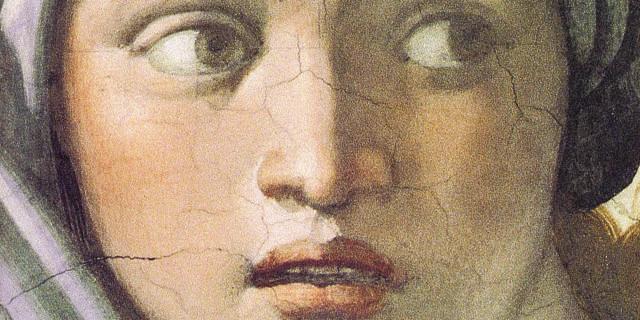
La Gioconda: lo sguardo che sembra seguirci
Il fascino della Gioconda dipende da tante cose e forse l’opera di Leonardo non sarebbe così celebre senza quel furto storico che venne messo a punto da Vincenzo Peruggia. Buona parte del suo fascino dipende però anche dalla relazione che l’opera sembra instaurare con chi la osserva.
La figura è rappresentata frontalmente, con il busto leggermente ruotato e il volto rivolto verso lo spettatore. Gli occhi sembrano accompagnare il movimenti di chi la guarda e contribuiscono a creare quella straordinaria sensazione di presenza che ha alimentato per secoli interpretazioni, studi e leggende.
Leonardo non aveva bisogno di rendere lo sguardo teatrale. Le transizioni morbide tra luce e ombra, il celebre sfumato e la precisione con cui vengono costruite le espressioni impediscono di fissare un’emozione definitiva. Sembra di non essere solo dinanzi a una donna ritratta ma davanti a qualcuno che sembra accorgersi della nostra presenza.
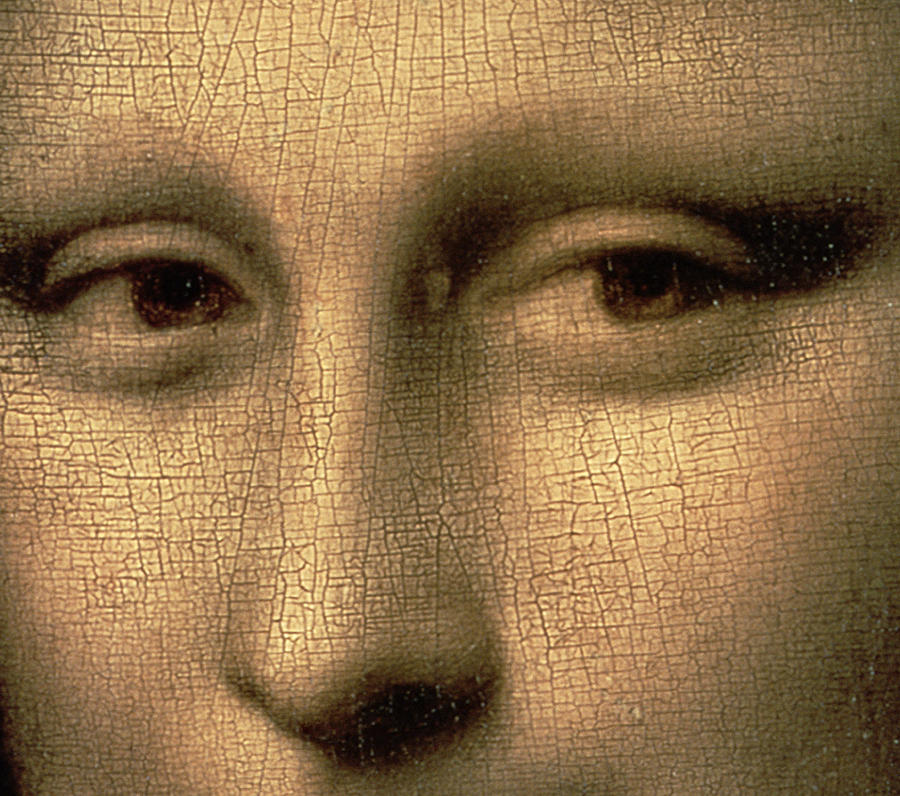
La Velata di Raffaello: uno sguardo che sembra appartenere a una persona reale
Nella Velata, Raffaello porta il ritratto verso una dimensione di straordinaria intimità. Il volto della donna emerge dal candore del velo e la direzione dello sguardo crea un rapporto immediato con chi si trova davanti al dipinto.
La donna sembra essere stata colta in un momento sospeso, quasi mentre sta per parlare o mentre ascolta qualcuno. Una presenza silenziosa ma fortissima.
Raffaello dimostra così che uno sguardo non deve necessariamente essere drammatico per diventare memorabile. A volte è sufficiente suggerire una relazione.
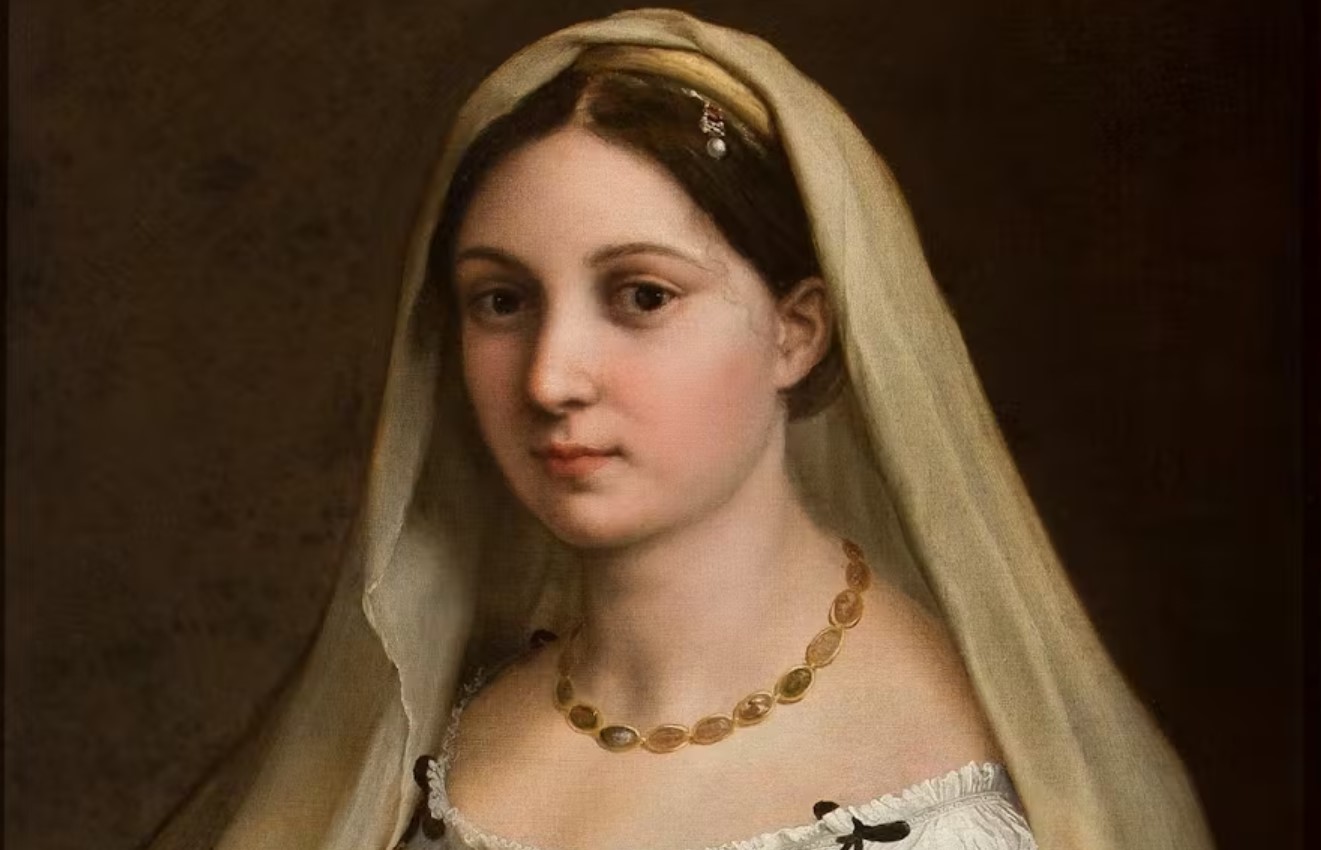
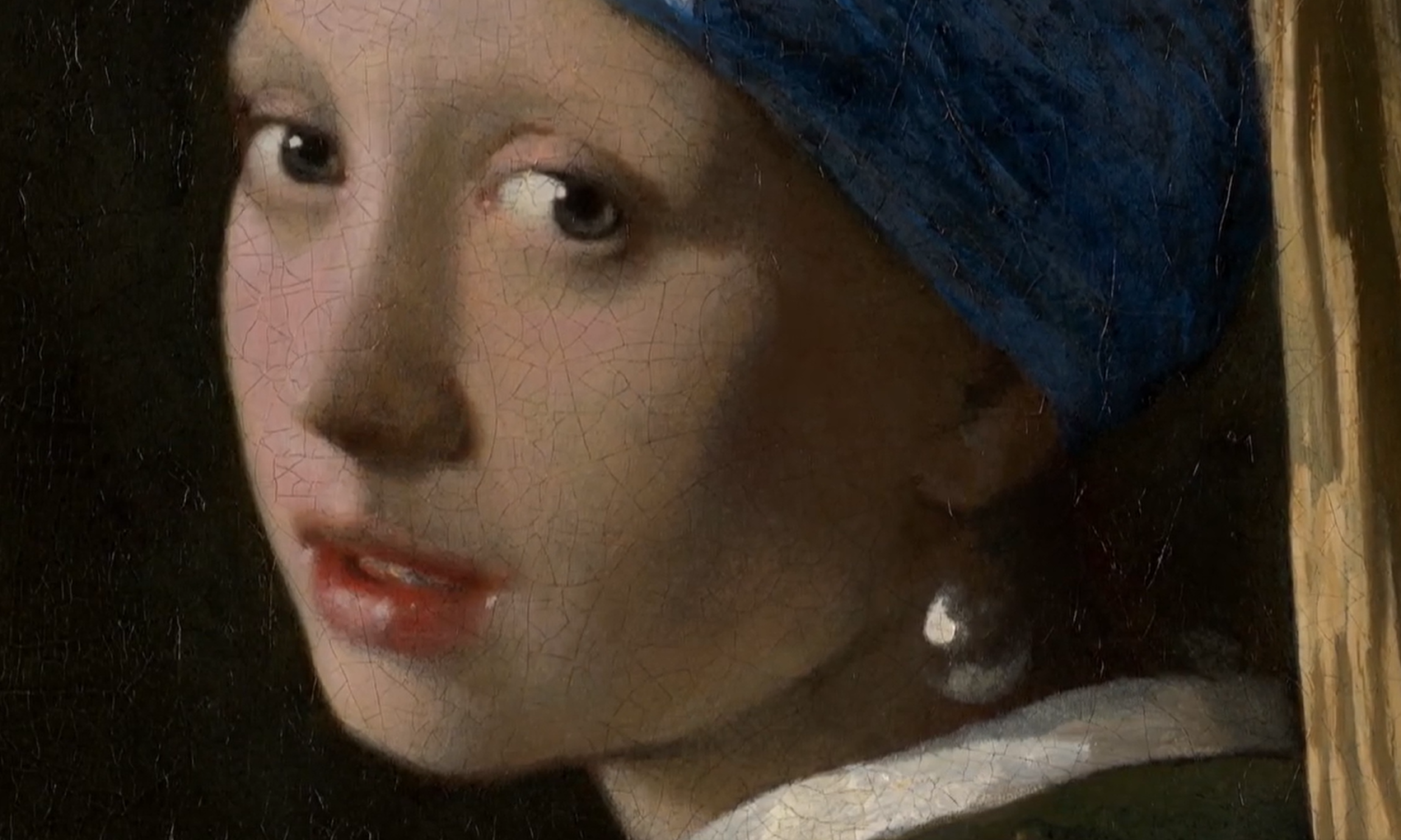
La ragazza con l’orecchino di perla: perché quello sguardo ci cattura?
C’è qualcosa di sorprendentemente contemporaneo nello sguardo della Ragazza con l’orecchino di perla di Johannes Vermeer.
La giovane si volta verso di noi. Le labbra sono leggermente dischiuse e gli occhi sembrano incontrare direttamente quelli dello spettatore. Non sappiamo chi sia, da dove venga né cosa stesse facendo un istante prima.
Ed è proprio l’assenza di una storia completamente definita a renderla così magnetica.
Vermeer costruisce una figura che sembra appartenere a un istante irripetibile. La luce accarezza il volto, illumina la celebre perla e si concentra sugli occhi, trasformando il dipinto in una sorta di incontro improvviso.
Per un attimo abbiamo l’impressione che la ragazza stia per dirci qualcosa ma a tutti gli effetti rimane in silenzio.
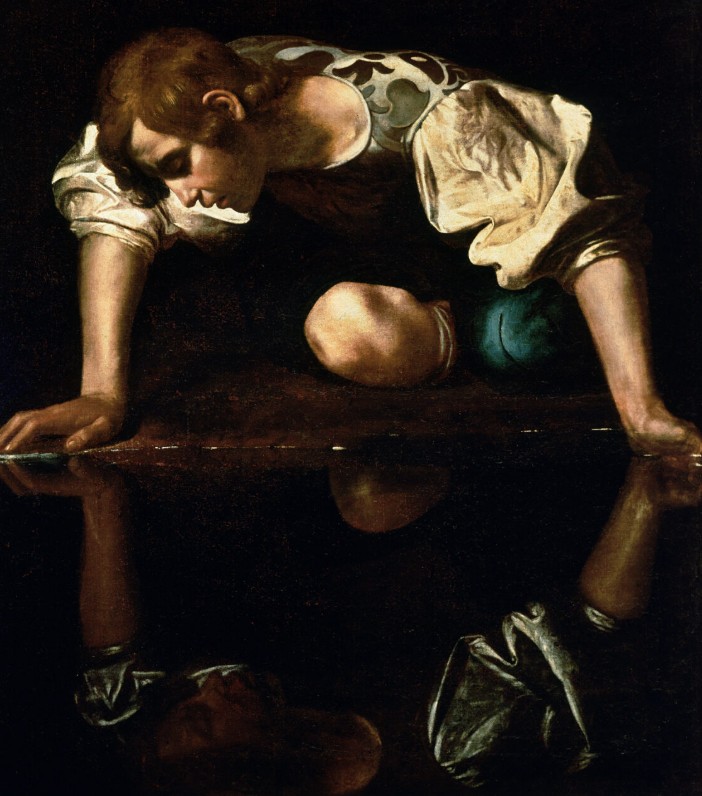
Caravaggio e Narciso: quando lo sguardo diventa ossessione
Con Caravaggio lo sguardo assume una dimensione completamente diversa.
Nel Narciso, il giovane è concentrato sulla propria immagine riflessa nell’acqua. Il mondo sembra essere scomparso. Tutta la sua attenzione è rivolta verso quel volto che vede davanti a sé.
Qui lo sguardo non serve a stabilire un rapporto con chi osserva il dipinto. Al contrario, ci esclude: dettaglio imprescindibile.
Lo spettatore assiste a una scena privata, quasi impossibile da interrompere. Narciso guarda se stesso e noi guardiamo Narciso mentre guarda se stesso. Si crea così una complessa catena di sguardi: il personaggio guarda il proprio riflesso, noi guardiamo il personaggio e il dipinto ci costringe a riflettere sul nostro stesso atto del guardare.
Caravaggio trasforma gli occhi in uno strumento psicologico.
Gli occhi di Medusa: lo sguardo che deve terrorizzare
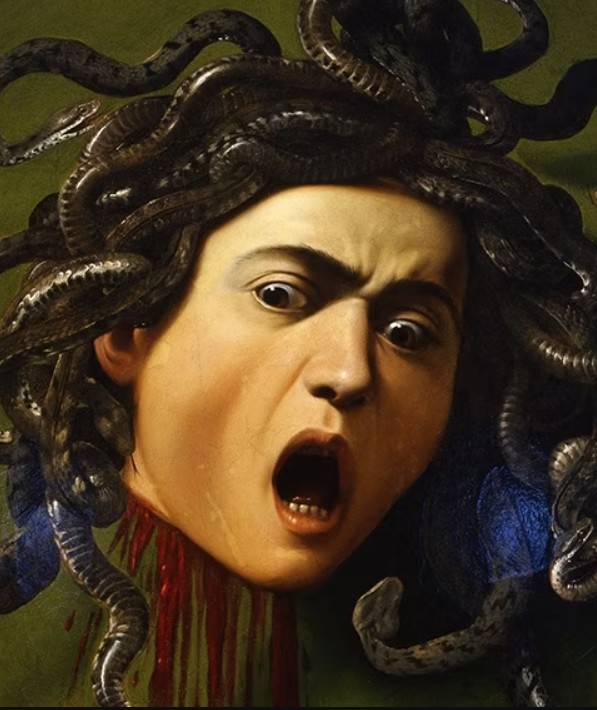
Se esiste uno sguardo pensato per colpire direttamente lo spettatore, è quello della Medusa di Caravaggio.
La testa mozzata sembra emergere davanti ai nostri occhi. La bocca è spalancata in un grido, i capelli diventano un groviglio di serpenti e gli occhi sono dilatati dal terrore.
Ma c’è un aspetto ancora più interessante: Medusa sta guardando chi la osserva.
Il mito raccontava che il suo sguardo fosse capace di trasformare in pietra chiunque lo incontrasse. Caravaggio porta questa idea dentro la pittura e costruisce un’immagine nella quale lo spettatore diventa quasi la vittima dello sguardo.
La forza dello sguardo nei dipinti religiosi
Nella pittura sacra gli occhi assumono poi un significato ancora più profondo.
Cristo che guarda lo spettatore, la Vergine che abbassa gli occhi, un santo che dirige lo sguardo verso il cielo o un personaggio che osserva il protagonista della scena: ogni direzione può avere un significato narrativo e spirituale.
Lo sguardo permette all’artista di guidare l’occhio di chi osserva. Un personaggio guarda un altro personaggio. Seguendo quella direzione scopriamo un gesto, un oggetto o una figura centrale.
La pittura diventa così una vera regia dello sguardo.

Perché alcuni sguardi sembrano seguirci?
La famosa sensazione di essere osservati da un ritratto dipende in gran parte dalla costruzione prospettica e dalla direzione dello sguardo rappresentato. Quando il volto e gli occhi sono orientati frontalmente verso lo spettatore, l’immagine mantiene un forte rapporto visivo anche quando cambiamo posizione davanti all’opera.
Lo sguardo che interagisce con lo spettatore, lo trasformano da osservatore a partecipante al momento, alla scena che viene raffigurata, chiamandolo in causa.
Le distanze si accorciano e il passato raffigurato entra a far parte dell’istante vissuto da chi si ferma e si lascia conquistare dall’opera.
Per il momento il sempre vostro Michelangelo Buonarroti vi saluta dandovi appuntamento ai prossimi post e sui social.
They’ve been staring at us for centuries: the mystery of the gazes in the most famous paintings in the history of art
Have you ever had the feeling that a figure painted hundreds of years ago is watching you? We move, we observe the painting from another angle, we move away and then come back closer, but those eyes seem to maintain a direct connection with us.
The gaze, in painting, is almost never a simple anatomical detail. It can be a question, a provocation, a declaration of love, a sign of power, a confession, or a way to engage the viewer. Artists have learned over the centuries to transform the eyes into a narrative tool.
Some of the most famous paintings in the history of art manage to tell stories by interacting with the viewer.
My Delphic Sibyl: the gaze that tells the future
I wanted the eyes of the Delphic Sibyl, which I frescoed in the Sistine Chapel ceiling, to be capable of conveying something the viewer couldn’t see. The Sibyl is reading when she suddenly turns, as if she’s understood something extraordinary.
Her head turns, her eyelids lift, her gaze wandering beyond the visible. I didn’t want to explain what had caught her attention; I preferred to leave you with a question.
What did the Sibyl see? Those eyes compel us to search for an answer written in the scroll of prophecies she holds in her right hand.
The Mona Lisa: the gaze that seems to follow us
The Mona Lisa’s allure depends on many things, and perhaps Leonardo’s work wouldn’t be so famous without the historic theft masterminded by Vincenzo Peruggia. Much of its appeal, however, also depends on the relationship the work seems to establish with the viewer.
The figure is depicted frontally, with her torso slightly turned and her face turned toward the viewer. Her eyes seem to follow the viewer’s movements and contribute to creating that extraordinary sense of presence that has fueled interpretations, studies, and legends for centuries.
Leonardo didn’t need to dramatize her gaze. The soft transitions between light and shadow, the famous sfumato, and the precision with which the expressions are constructed prevent us from capturing a definitive emotion. It feels like we’re not just standing before a portrayed woman, but before someone who seems to notice our presence.
Raphael’s La Velata: a gaze that seems to belong to a real person
In La Velata, Raphael takes portraiture to a dimension of extraordinary intimacy. The woman’s face emerges from the whiteness of the veil, and the direction of her gaze creates an immediate connection with the person standing before the painting.
The woman seems to have been captured in a suspended moment, almost as if about to speak or listen to someone. A silent yet powerful presence.
Raphael thus demonstrates that a gaze doesn’t necessarily have to be dramatic to be memorable. Sometimes, simply suggesting a relationship is enough.
Girl with a Pearl Earring: Why does that gaze captivate us?
There’s something surprisingly contemporary about the gaze of Johannes Vermeer’s Girl with a Pearl Earring.
The young woman turns toward us. Her lips are slightly parted, and her eyes seem to meet the viewer’s directly. We don’t know who she is, where she comes from, or what she was doing a moment before.
And it’s precisely the absence of a fully defined story that makes her so magnetic.
Vermeer constructs a figure that seems to belong to an unrepeatable moment. The light caresses the face, illuminates the famous pearl, and focuses on the eyes, transforming the painting into a sort of sudden encounter.
For a moment, we have the impression that the girl is about to say something to us, but for all intents and purposes, she remains silent.
Caravaggio and Narcissus: When the Gaze Becomes an Obsession
With Caravaggio, the gaze takes on a completely different dimension.
In Narcissus, the young man is focused on his own image reflected in the water. The world seems to have disappeared. His entire attention is focused on the face he sees before him.
Here, the gaze serves no purpose in establishing a relationship with the viewer of the painting. On the contrary, it excludes us: an essential detail.
The viewer witnesses a private scene, almost impossible to interrupt. Narcissus looks at himself, and we look at Narcissus looking at himself. This creates a complex chain of gazes: the character looks at his own reflection, we look at the character, and the painting forces us to reflect on our own act of looking.
Caravaggio transforms the eyes into a psychological instrument.
The Eyes of Medusa: A Gaze That Must Terrify
If there is a gaze designed to strike the viewer directly, it is that of Caravaggio’s Medusa.
The severed head seems to emerge before our eyes. The mouth is wide open in a scream, the hair becomes a tangle of snakes, and the eyes are dilated with terror.
But there is an even more interesting aspect: Medusa is looking at the viewer.
Legend has it that his gaze could turn anyone he encountered to stone. Caravaggio brings this idea to painting and constructs an image in which the viewer almost becomes the victim of the gaze.
The Power of the Gaze in Religious Paintings
In religious painting, the eyes take on an even deeper meaning.
Christ looking at the viewer, the Virgin lowering her eyes, a saint directing his gaze toward the sky, or a character observing the protagonist of the scene: every direction can have a narrative and spiritual meaning.
The gaze allows the artist to guide the viewer’s eye. One character looks at another. By following that direction, we discover a gesture, an object, or a central figure.
Painting thus becomes a true director of the gaze.
Why do some gazes seem to follow us?
The famous sensation of being observed by a portrait depends largely on the perspective construction and the direction of the depicted gaze. When the face and eyes are oriented frontally toward the viewer, the image maintains a strong visual connection even when we change position in front of the work.
The gaze that interacts with the viewer transforms them from observers to participants in the moment, in the scene being depicted, engaging them.
Distances are shortened, and the depicted past becomes part of the moment experienced by those who pause and allow themselves to be captivated by the work.
For now, yours truly, Michelangelo Buonarroti bids you farewell, saying he’ll see you in future posts and on social media.

Sostienici – Support Us
Se questo blog ti piace e ti appassiona, puoi aiutarci a farlo crescere sempre più sostenendoci in modo concreto condividendo i post, seguendo le pagine social e con un contributo che ci aiuta ad andare avanti con il nostro lavoro di divulgazione. . ENGLISH: If you like and are passionate about this blog, you can help us make it grow more and more by supporting us in a concrete way by sharing posts, following social pages and with a contribution that helps us to move forward with our dissemination work.
10,00 €
-
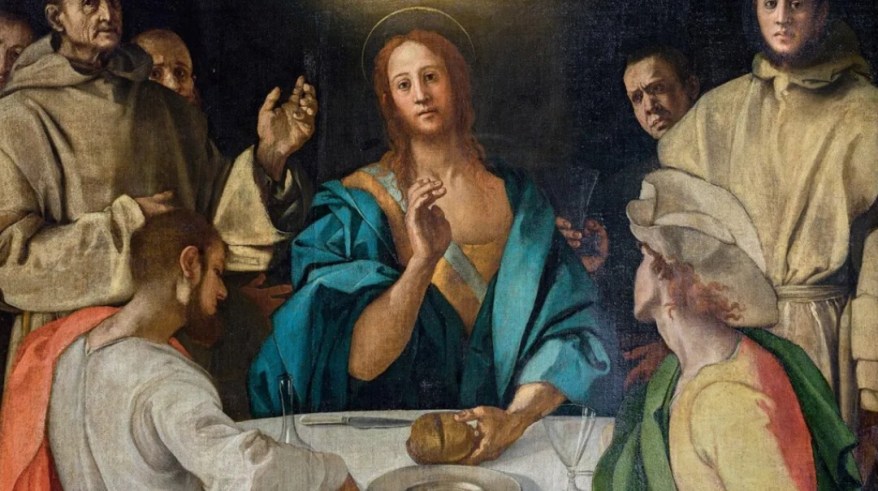
Cena in Emmaus di Pontormo: il pane, il gatto e il cane alle Scuderie del Quirinale
La Cena in Emmaus di Pontormo nasconde dettagli sorprendenti: il significato del pane, i simboli e il mistero della Resurrezione. Scopri il capolavoro del 1525 in mostra alle Scuderie del Quirinale a Roma… 🇬🇧Pontormo’s *Supper at Emmaus* conceals surprising details: the significance of the bread, various symbols, and the mystery of the Resurrection. Discover this…
-
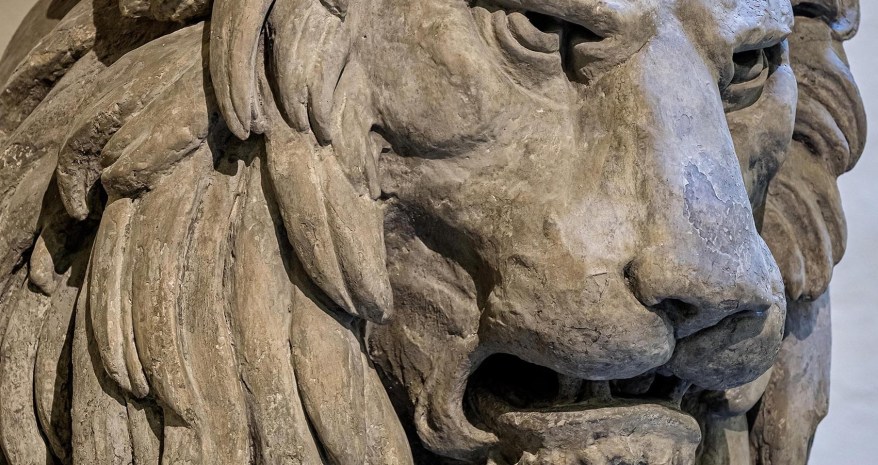
Palazzo Vecchio, il restauro svela la vera natura dei quattro leoni e il mistero della fontana greca
🇮🇹Restaurato il Cortile della Dogana di Palazzo Vecchio a Firenze: i quattro leoni sono calchi, una fontana conserva un’iscrizione greca da studiare e tornano a funzionare entrambe le fontane… 🇬🇧The Cortile della Dogana (Customs Courtyard) at Palazzo Vecchio in Florence has been restored: the four lions are casts, one fountain features a Greek inscription that…
-
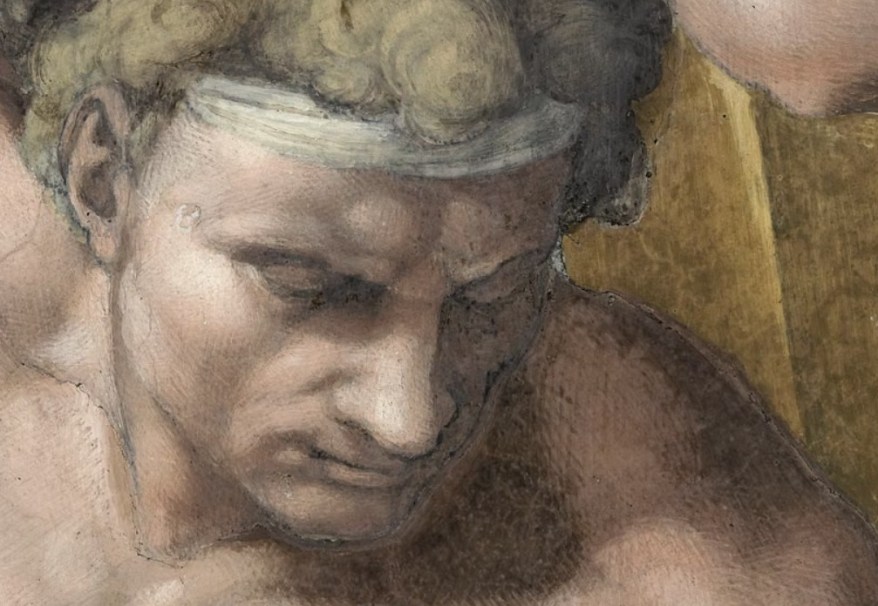
Disma, il buon ladrone nel Giudizio Universale: la misericordia e la giustizia divina
Nel Giudizio Universale della Cappella Sistina ci sono particolari che rischiano di passare inosservati, anche a chi ha avuto la fortuna di alzare gli occhi verso la mia grande parete. Tra i corpi che si sollevano, gli angeli che suonano le trombe e le anime che cercano di raggiungere il cielo, ci sono figure che…
Condividi:


Questo sono io




sostienici

Sostienici – Support Us
Se questo blog ti piace e ti appassiona, puoi aiutarci a farlo crescere sempre più sostenendoci in modo concreto condividendo i post, seguendo le pagine social e con un contributo che ci aiuta ad andare avanti con il nostro lavoro di divulgazione. . ENGLISH: If you like and are passionate about this blog, you can help us make it grow more and more by supporting us in a concrete way by sharing posts, following social pages and with a contribution that helps us to move forward with our dissemination work.
€10,00


Io rimango sempre incantato da quegli sguardi nei dipinti che sembrano seguirti, da qualunque parte li osservi loro ti fissano, incredibile!! 👍👌👌👌👌👌👌👏👏👏👏👏👏👏👏👏👏
"Mi piace"Piace a 1 persona
:-*
"Mi piace"Piace a 1 persona