

Lo studio della composizione delle Anime Dannate del Giudizio Universale
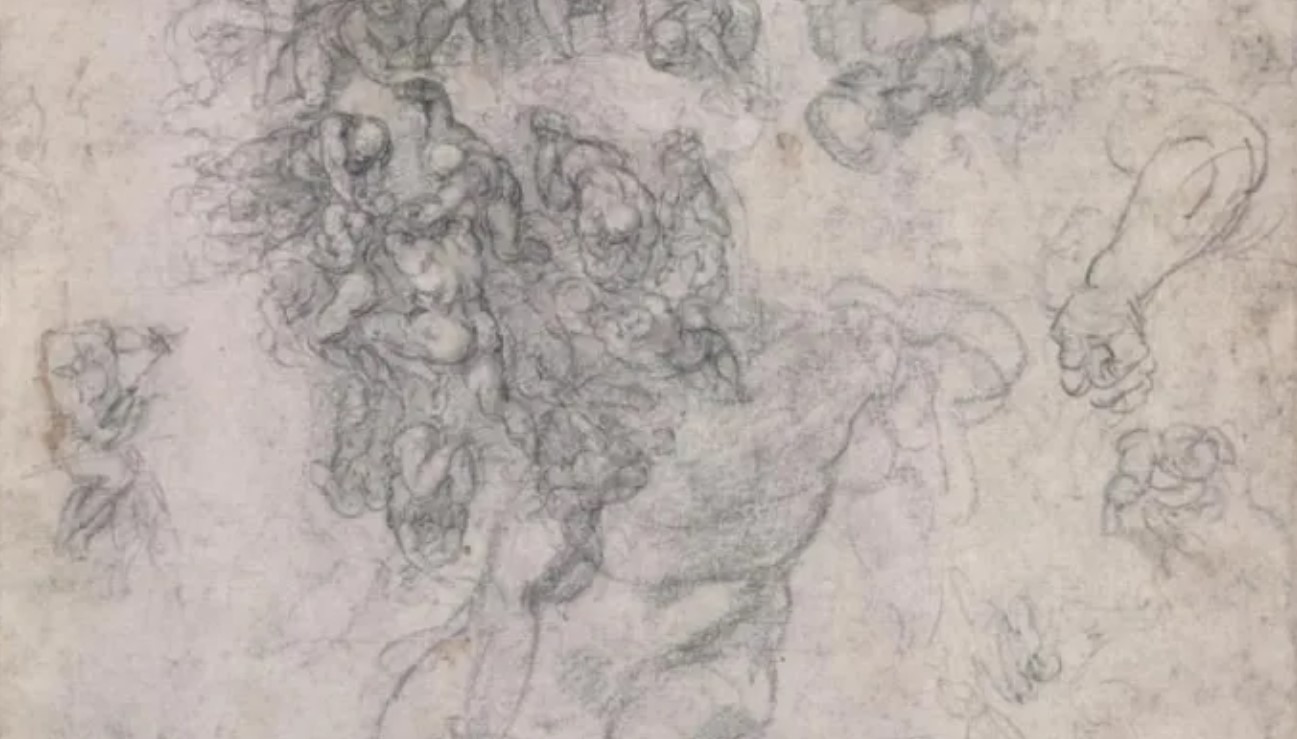
Il disegno che vi propongo a seguire è uno studio della composizioni per il Giudizio Universale, appartenente oggi al British Museum.
Se osservate bene non vi sarà difficile vedere gruppi di figure cadenti, le anime dannate insomma che scivolano verso gli inferi ma anche studi per figure singole.
Il Giudizio Universale mi fu commissionato da papa Clemente VII de’ Medici ma non ebbi modo di iniziare a metter mano agli affreschi prima che passasse a miglior vita.
Il successore papa Paolo III Farnese fu ben felice di rinnovarmi quella commissione: pure lui riteneva fosse cosa importante e che meritasse di essere realizzata.
La prima volta che compare una qualche citazione di questa commissione si trova in una lunga e dettagliata lettera che mi scrisse Sebastiano del Piombo nel luglio del 1533.
Papa Clemente VII, stando a quanto riporta il Condivi, ebbe comunque modo di vedere una prima composizione sommaria di quello che sarebbe stato il Giudizio Universale, prima di passare a miglior vita nel settembre del 1534.
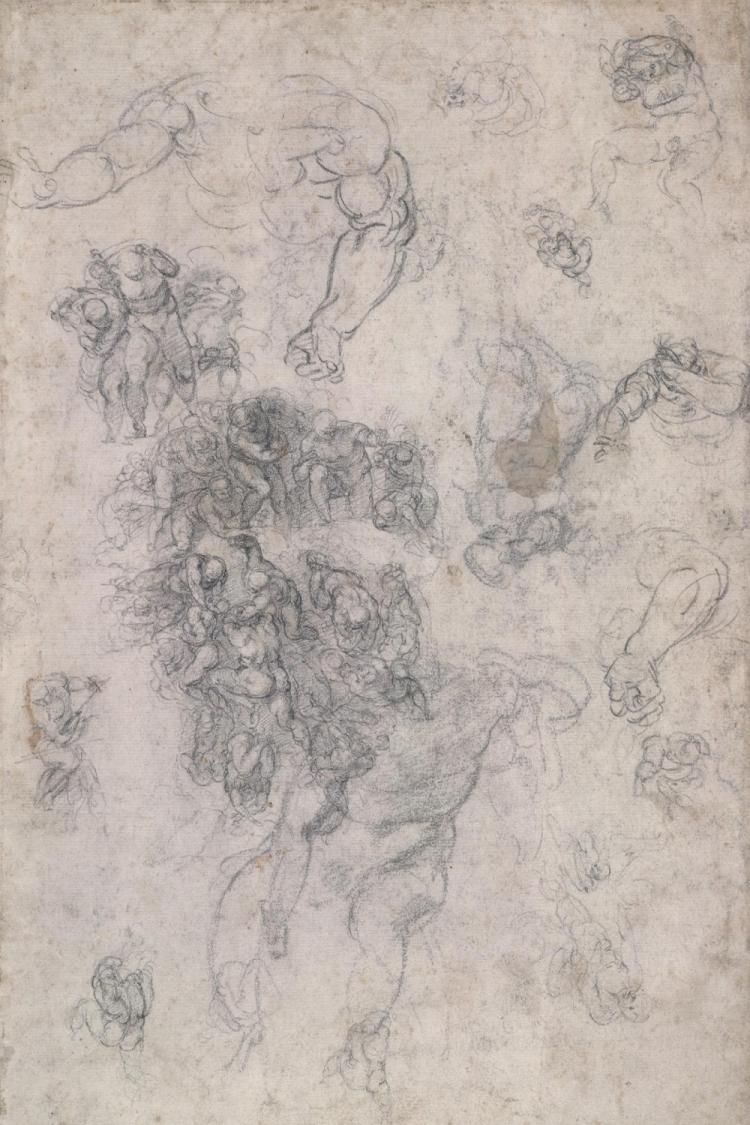
Nel foglio si possono riconoscere nettamente alcune figure che successivamente affrescai come ad esempio l‘angelo che con maniere poco ortodosse respinge un dannato che vuole ascendere al cielo.
La figura più grande non è altro che quella che tiene in mano il rosario a cui s’aggrappa un’anima che con fatica viene trascinata verso l’alto.
Il sempre vostro Michelangelo Buonarroti con i suoi racconti e i suoi discorsi per il momento vi saluta.
The study of the composition of the Last Judgment
The drawing that I propose to follow is a study of the compositions for the Last Judgment, now belonging to the British Museum.
If you look carefully it will not be difficult to see groups of falling figures, in short the damned souls sliding towards the underworld but also studies for single figures.
The Last Judgment was commissioned to me by Pope Clement VII de’ Medici but I did not have the opportunity to start working on the frescoes before he passed away.
His successor Pope Paul III Farnese was very happy to renew that commission for me: he also believed it was important and deserved to be carried out.
The first time any mention of this commission appears is found in a long and detailed letter that Sebastiano del Piombo wrote to me in July 1533.
Pope Clement VII, according to what Condivi reports, nevertheless had the opportunity to see a first summary composition of what would have been the Last Judgment, before passing away in September 1534.
In the sheet you can clearly recognize some figures that I subsequently frescoed, such as the angel who, with unorthodox manners, repels a damned man who wants to ascend to heaven.
The largest figure is none other than the one holding the rosary in his hand to which a soul is clinging which with difficulty is being dragged upwards.
Your always Michelangelo Buonarroti with his stories and speeches greets you for the moment.

Sostienici – Support Us
Se questo blog ti piace e ti appassiona, puoi aiutarci a farlo crescere sempre più sostenendoci in modo concreto condividendo i post, seguendo le pagine social e con un contributo che ci aiuta ad andare avanti con il nostro lavoro di divulgazione. . ENGLISH: If you like and are passionate about this blog, you can help us make it grow more and more by supporting us in a concrete way by sharing posts, following social pages and with a contribution that helps us to move forward with our dissemination work.
10,00 €
-
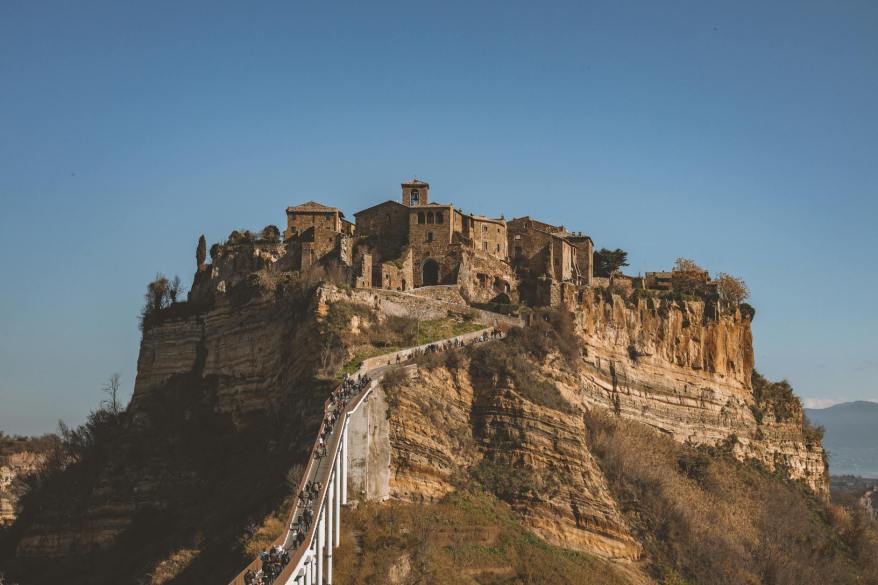
Civita di Bagnoregio e Bolsena Capitale italiana dell’Arte contemporanea 2028
🇮🇹Civita di Bagnoregio e Bolsena sono Capitale italiana dell’Arte contemporanea 2028 con il progetto Arte che viene, arte che va. Ecco cosa prevede… 🇬🇧Civita di Bagnoregio and Bolsena have been named the Italian Capital of Contemporary Art for 2028 with the project *Arte che viene, arte che va* (Art That Comes, Art That Goes). Here…
-
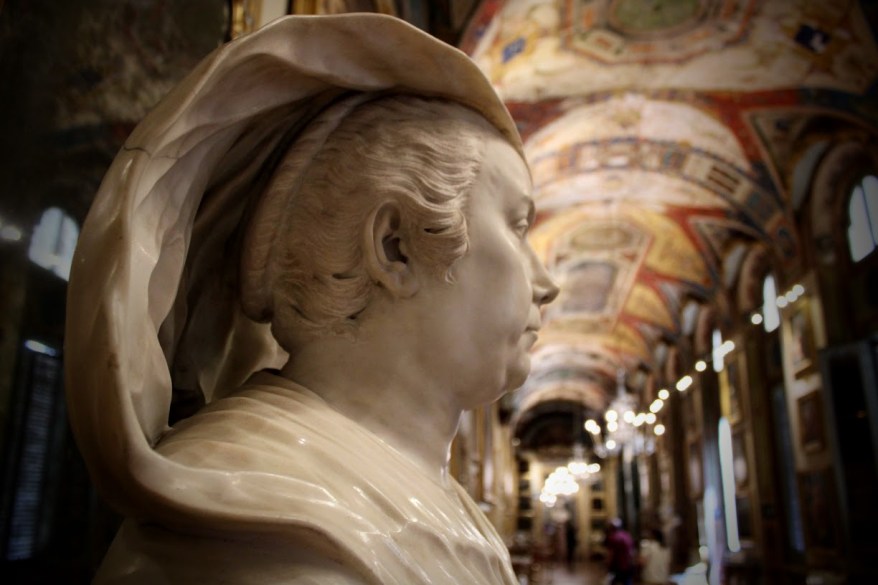
Alessandro Algardi: la risposta elegante al terremoto barocco
🇮🇹 Il Barocco non è solo movimento, spettacolo ed emozione portata all’estremo. Nella Roma del Seicento, mentre Gian Lorenzo Bernini trasformava il marmo in una materia capace di vibrare, Alessandro Algardi sceglieva una strada diversa: più misurata, elegante, legata all’equilibrio della tradizione classica… 🇬🇧The Baroque is not merely movement, spectacle, and emotion taken to the…
-
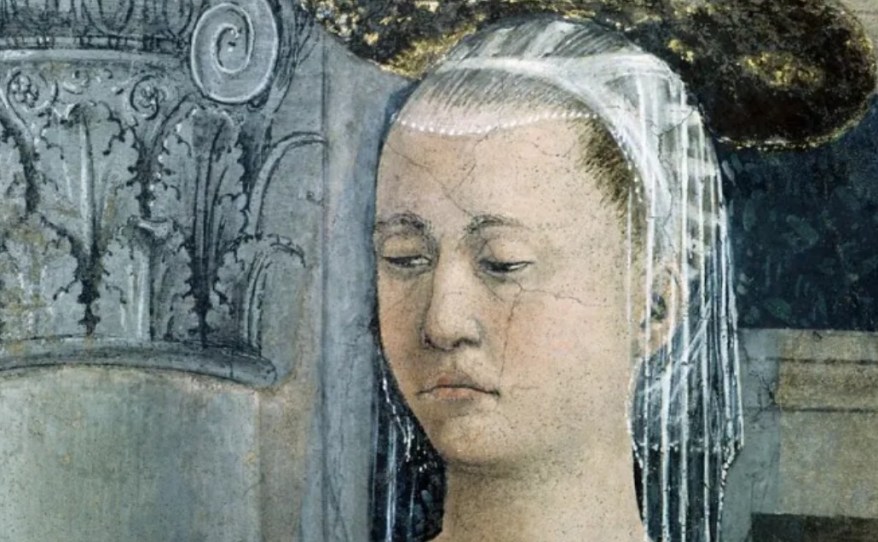
Piero della Francesca moriva il 12 ottobre 1492: il genio della prospettiva
🇮🇹Il 12 ottobre 1492, mentre Cristoforo Colombo approdava nel continente americano, a Sansepolcro si spegneva Piero della Francesca… 🇬🇧On October 12, 1492, while Christopher Columbus was landing on the American continent, Piero della Francesca passed away in Sansepolcro…
Condividi:


Questo sono io




sostienici

Sostienici - Support Us
Se questo blog ti piace e ti appassiona, puoi aiutarci a farlo crescere sempre più sostenendoci in modo concreto condividendo i post, seguendo le pagine social e con un contributo che ci aiuta ad andare avanti con il nostro lavoro di divulgazione. . ENGLISH: If you like and are passionate about this blog, you can help us make it grow more and more by supporting us in a concrete way by sharing posts, following social pages and with a contribution that helps us to move forward with our dissemination work.
€10,00


