
La Scultura del giorno: la Donna velata di Frans Stracké
La scultura del giorno che vi propongo oggi è il busto della Donna Velata scolpito dall’artista di origini tedesche naturalizzato olandese Frans Stracké.
L’opera realizzata a metà Ottocento mostra una giovane donna che pare avere lo sguardo concentrato su qualcosa o qualcuno.

Facendo tesoro della lezione berniniana, l’artista scolpì le sue labbra semi dischiuse, per aumentarne l’espressività e renderla più realistica possibile.
A colpire in modo particolare di quest’opera è il realismo del volto e il raffinato velo in pizzo che le copre il capo e la parte superiore del busto. Stracké scolpì con maestria quel tessuto che ricorda i preziosi fazzoletti in tulle del Sulcis, Sardegna, ricamati a mano
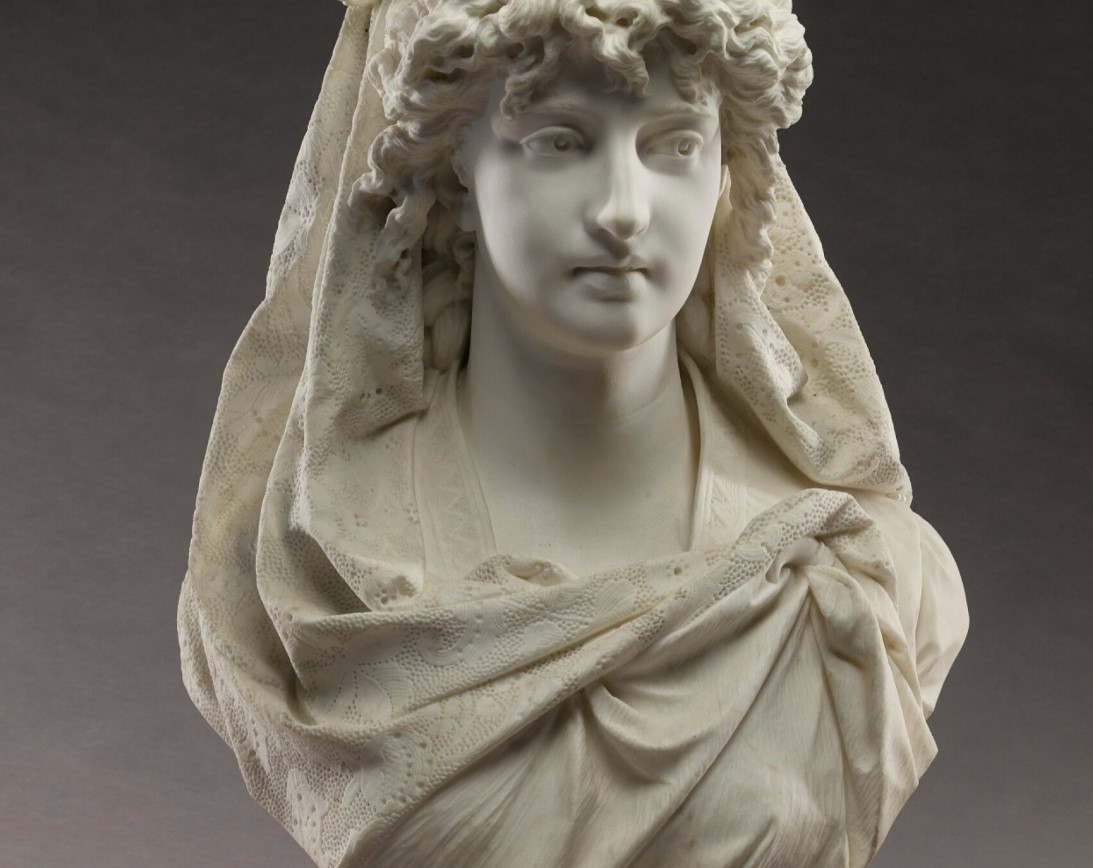
Il velo è fissato sui capelli mediante un fermaglio che si intuisce andare da una parte all’altra del capo. Sulla destra culmina con un decoro di forma rotonda mentre dall’altra parte è nascosto da due rose.
Il busto della giovane velata è firmato sulla base dalla dicitura F. Strack e appartiene a una collezione privata.

Dovete sapere che lo cultore Franciscus Xaverius Stracké era nato nel 1820 a Dorsten, in Germania nel 1820. Suo padre Ignatius Stracké era sia pittore che scultore e fu lui a impartire le prime lezioni d’arte al figlio ancora troppo piccolo per poter frequentare l’accademia.
Quando Franz compì 22 anni, tutta la famiglia si trasferì ad Arnhem, in Olanda mentre lui preferì spostarsi nella capitale, Amsterdam divenendo non molto tempo dopo professore di scultura presso l’Accademia della città.

Stracke nel corso della vita realizzò imponenti e grandiosi memoriali ma la sua produzione artistica non si fermò lì. Scolpì infatti anche opere intime come Le Due madri e la Bella Addormentata.
Per il momento il vostro Michelangelo Buonarroti vi saluta dandovi appuntamento ai prossimi post e sui social.
Sculpture of the day: the Veiled Woman by Frans Stracké
The sculpture of the day that I propose to you today is the bust of the Veiled Woman sculpted by the Dutch-born, German-born artist Frans Stracké.
The work created in the mid-nineteenth century shows a young woman who seems to have her gaze focused on something or someone. Taking advantage of Bernini’s lesson, the artist sculpted her half-opened lips, to increase their expressiveness and make it as realistic as possible.
What is particularly striking about this work is the realism of her face and the refined lace veil that covers her head and the upper part of her torso. Stracké masterfully sculpted that fabric which recalls the precious tulle handkerchiefs from Sulcis, Sardinia, embroidered by hand.
The veil is fixed on the hair with a clip that can be seen going from one side of the head to the other. On the right it culminates with a round-shaped decoration while on the other side it is hidden by two roses.
The bust of the veiled young woman is signed on the base with the words F. Strack and belongs to a private collection.
You should know that the cultist Franciscus academy.
When Franz turned 22, the whole family moved to Arnhem, Holland while he preferred to move to the capital, Amsterdam, becoming a sculpture professor at the city’s Academy not long after.
Stracke created impressive and grandiose memorials throughout his life but his artistic production did not stop there. In fact, he also sculpted intimate works such as The Two Mothers and Sleeping Beauty.
For the moment, your Michelangelo Buonarroti greets you and will meet you in future posts and on social media.

Sostienici – Support Us
Se questo blog ti piace e ti appassiona, puoi aiutarci a farlo crescere sempre più sostenendoci in modo concreto condividendo i post, seguendo le pagine social e con un contributo che ci aiuta ad andare avanti con il nostro lavoro di divulgazione. . ENGLISH: If you like and are passionate about this blog, you can help us make it grow more and more by supporting us in a concrete way by sharing posts, following social pages and with a contribution that helps us to move forward with our dissemination work.
8,00 €
-
Prima di Gesù Bambino viene l’Annunciazione: i dipinti che raccontano l’inizio della storia di Natale
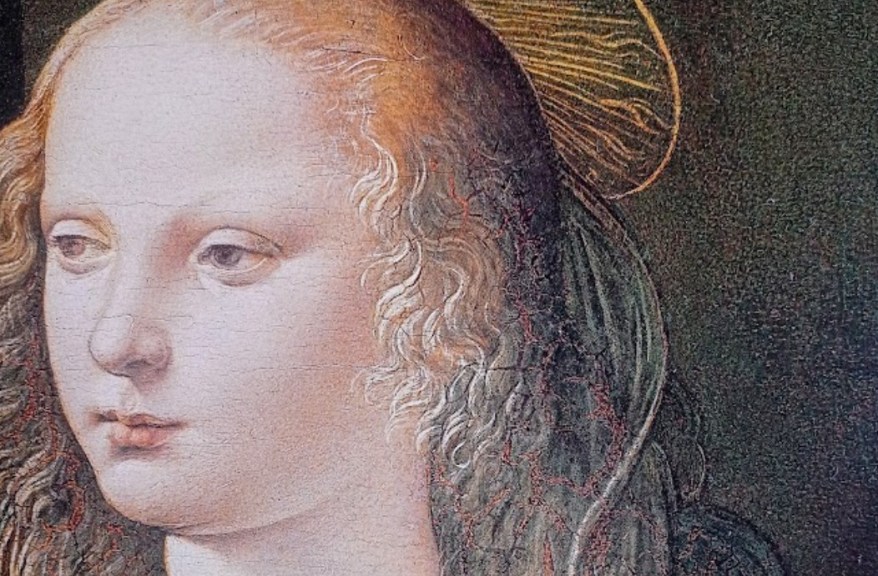
🇮🇹Prima di Gesù Bambino c’è l’Annunciazione: scopri i dipinti più celebri di Leonardo, Beato Angelico e Simone Martini e i simboli nascosti nell’arte cristiana… 🇬🇧Before the Christ Child comes the Annunciation: discover the most famous paintings by Leonardo, Fra Angelico, and Simone Martini, and the symbols hidden within Christian art…
-
Lo sguardo di San Francesco che emerge dal buio: il dipinto di Annibale Carracci
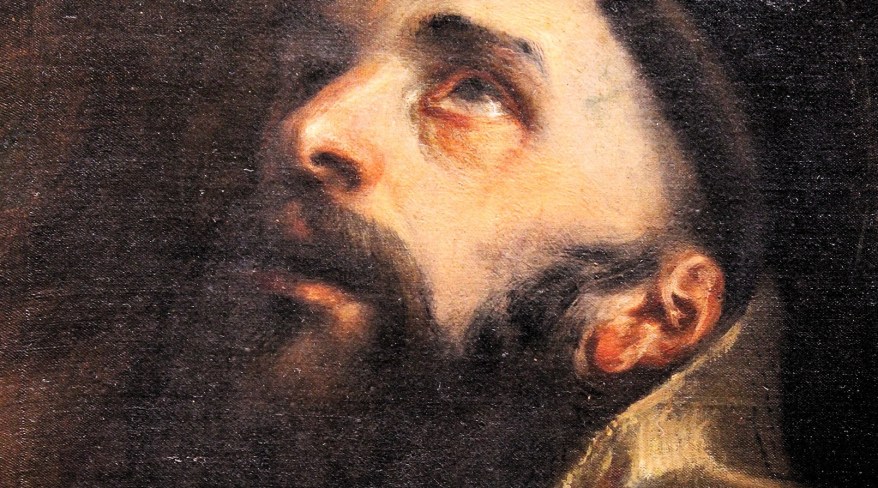
🇮🇹C’è uno sguardo, nel dipinto di Annibale Carracci, che sembra cercare qualcosa oltre ciò che possiamo vedere: è quello di San Francesco d’Assisi, ritratto con gli occhi rivolti al cielo… 🇬🇧In Annibale Carracci’s painting, there is a gaze that seems to be searching for something beyond what we can see: it is the gaze of…
-
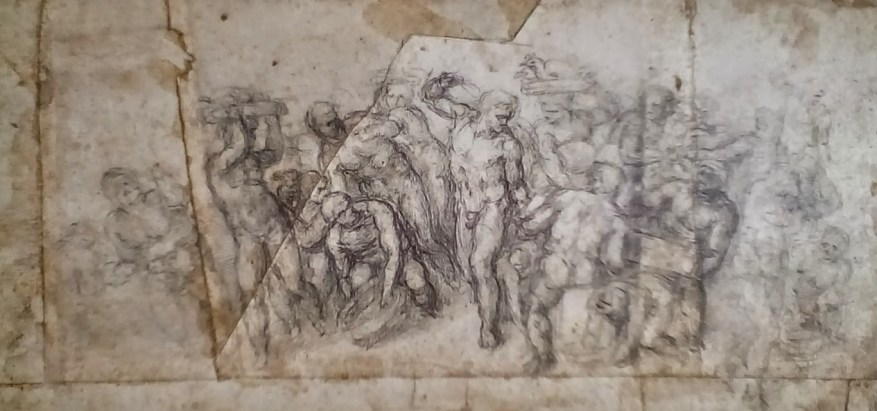
La Cacciata dei mercanti dal Tempio: quel disegno che forse nasconde un progetto incompiuto
🇮🇹Vi porto davanti al mio disegno della Cacciata dei mercanti dal Tempio, conservato al British Museum. Guardate il braccio destro di Cristo: la forza del suo gesto vi ricorda qualcosa? 🇮🇹 I am bringing you before my drawing of the Expulsion of the Money Changers from the Temple, held at the British Museum. Look at…
Condividi:


Questo sono io




sostienici

Sostienici – Support Us
Se questo blog ti piace e ti appassiona, puoi aiutarci a farlo crescere sempre più sostenendoci in modo concreto condividendo i post, seguendo le pagine social e con un contributo che ci aiuta ad andare avanti con il nostro lavoro di divulgazione. . ENGLISH: If you like and are passionate about this blog, you can help us make it grow more and more by supporting us in a concrete way by sharing posts, following social pages and with a contribution that helps us to move forward with our dissemination work.
€10,00


