
Le Opere del Natale: l’Adorazione dei Magi di Luca Giordano
L’opera del Natale che vi propongo oggi è l’Adorazione dei Magi dipinta a olio su tela da Luca Giordano fra il 1683 e il 1685, oggi custodita nella Galleria Palatina di Palazzo Pitti.
L’opera a sviluppo verticale fu realizzata dall’artista durante il suo ritorno a Napoli fra i due soggiorni fiorentini per l’altare della cappella di famiglia del viceré di Napoli, settimo marchese del Carpio. La tela poi arrivò a Firenze quando fu acquistata per arricchire le collezioni medicee del granduca Cosimo III.
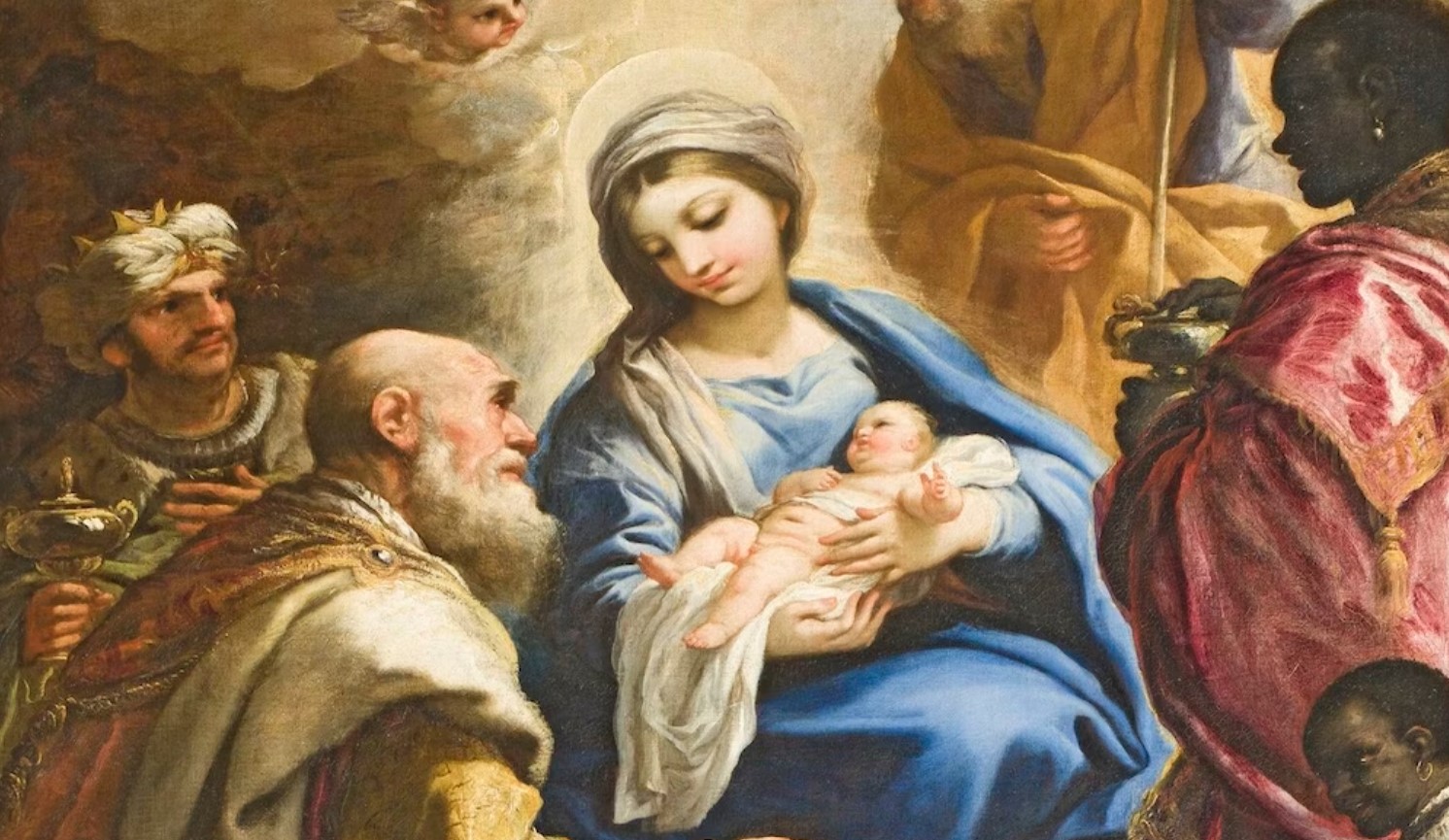
Giordano dipinse al centro della scena la Vergine che tiene il Bambino fra le braccia, adagiato sopra un panno bianco. Alle sue spalle, a sinistra, si vede San Giuseppe che, come tradizione vuole, ha un’età molto più avanzata rispetto a quella della giovane Maria.
Attorno alla Sacra Famiglia sono raccolti in adorazione i tre Magi riccamente abbigliati che offrono oro, incenso e mirra al Salvatore.
Il cielo appare dorato e popolato da angeli fanciulli che emergono dalle vaporose nuvole.
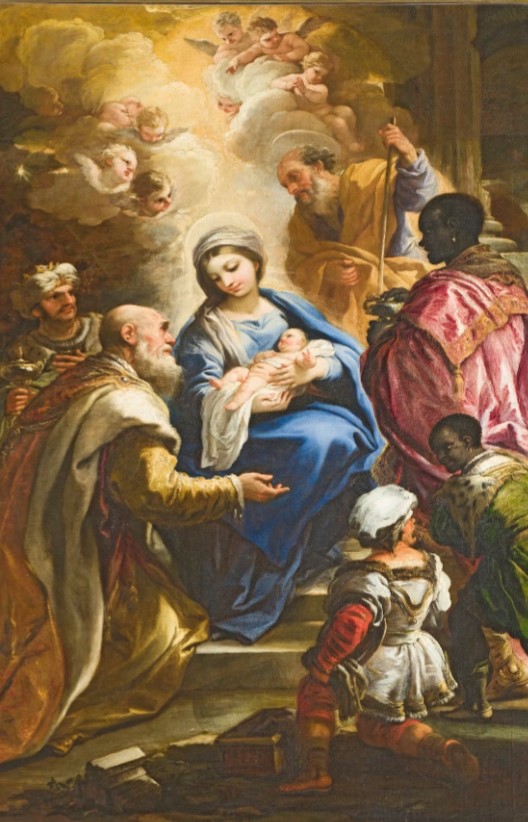
L’andamento ascensionale della composizione ha lo scopo primario di rendere partecipe lo spettatore a quel momento così significativo e di dare al dipinto un effetto scenografico, quasi come se ci si trovasse dinanzi a una rappresentazione teatrale.
I riflessi dorati del cielo che si rispecchiano sugli abiti e sui volti dei protagonisti scaldano l’atmosfera rendendola ancora più suggestiva.

In primo piano si notano due servitori, un uomo di colore e un nano che parlano fra di loro. Al tempo di Giordano erano presenze ricorrenti nelle corti europee e il pittore le inserì nell’opera proprio per mostrare uno spaccato della società dell’epoca.
Il re magio più prossimo alla Vergine, dipinto di profilo, è Gaspare e mostra tratti del volto molto naturalistici. Probabilmente Luca Giordano raffigurò proprio nelle vesti di quel re magio il committente dell’opera Gaspar.
Per il momento il vostro Michelangelo Buonarroti vi saluta dandovi appuntamento ai prossimi post e sui social.
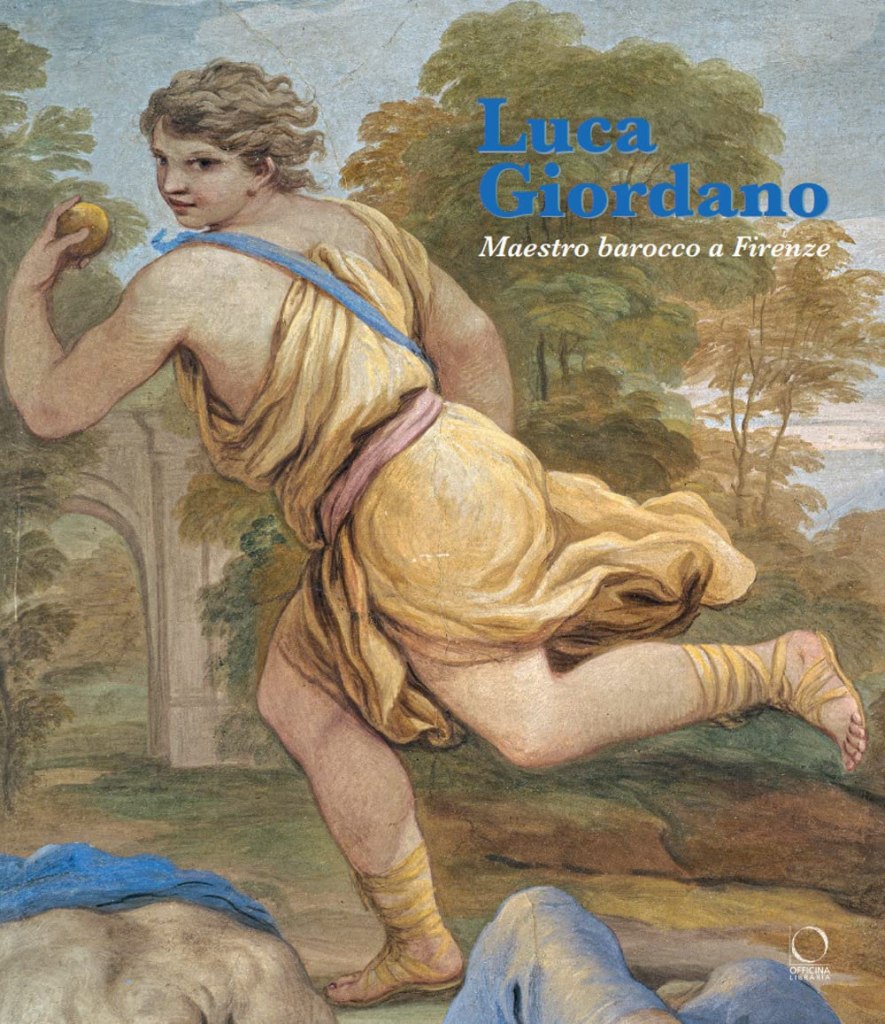
The Works of Christmas: the Adoration of the Magi by Luca Giordano
The Christmas work that I propose to you today is the Adoration of the Magi painted in oil on canvas by Luca Giordano between 1683 and 1685, today kept in the Palatine Gallery of Palazzo Pitti.
The vertical work was created by the artist during his return to Naples between the two Florentine stays for the altar of the family chapel of the viceroy of Naples, seventh marquis of Carpio. The canvas then arrived in Florence when it was purchased to enrich the Medici collections of Grand Duke Cosimo III.
Giordano painted the Virgin with the Child in her arms at the center of the scene, lying on a white cloth. Behind her, on the left, we see Saint Joseph who, as tradition dictates, is much older than the young Mary.
The three richly dressed Magi are gathered around the Holy Family in adoration and offer gold, incense and myrrh to the Savior.
The sky appears golden and populated by child angels emerging from the vaporous clouds.
The ascending progression of the composition has the primary purpose of making the spectator participate in that very significant moment and of giving the painting a scenographic effect, almost as if one were in front of a theatrical representation.
The golden reflections of the sky that are reflected on the clothes and faces of the protagonists warm the atmosphere making it even more evocative.
In the foreground you can see two servants, a black man and a dwarf talking to each other. At Giordano’s time they were recurring presences in European courts and the painter included them in his work precisely to show a cross-section of the society of the time.
The wise man closest to the Virgin, painted in profile, is Gaspar and shows very naturalistic facial features. Luca Giordano probably depicted the client of the work Gaspar in the guise of that wise man.
For the moment, your Michelangelo Buonarroti greets you and will meet you in future posts and on social media.

Sostienici – Support Us
Se questo blog ti piace e ti appassiona, puoi aiutarci a farlo crescere sempre più sostenendoci in modo concreto condividendo i post, seguendo le pagine social e con un contributo che ci aiuta ad andare avanti con il nostro lavoro di divulgazione. . ENGLISH: If you like and are passionate about this blog, you can help us make it grow more and more by supporting us in a concrete way by sharing posts, following social pages and with a contribution that helps us to move forward with our dissemination work.
8,00 €
-
Il Louvre rischia la chiusura? Ecco cosa sta succedendo al museo dopo il furto da 88 milioni
🇮🇹Il Louvre rischia di chiudere senza una grande ristrutturazione. Dopo il furto dei gioielli della Corona, il direttore Christophe Leribault lancia l’allarme… 🇬🇧The Louvre risks closure without a major renovation. Following the theft of the Crown Jewels, director Christophe Leribault has raised the alarm…
-
Francesco Mochi, lo scultore che liberò il marmo e il bronzo dal silenzio prima di Bernini
🇮🇹Prima di Bernini, c’è stato Francesco Mochi: scultore straordinario del Seicento, Mochi anticipò il dinamismo barocco con figure che sembrano sul punto di uscire dalla pietra e cavalli di bronzo carichi di energia… 🇬🇧Before Bernini, there was Francesco Mochi—an extraordinary 17th-century sculptor who anticipated Baroque dynamism with figures that seem on the verge of stepping…
-
Kekova, Turchia: trovato un relitto di quasi 5.000 anni fa
🇮🇹Al largo di Kekova, in Turchia, un relitto che potrebbe risalire a 4.700 anni fa riporta l’attenzione sugli antichi commerci del Mediterraneo… 🇬🇧Off the coast of Kekova, in Türkiye, a shipwreck that may date back 4,700 years is drawing renewed attention to ancient Mediterranean trade…
Condividi:


Questo sono io




sostienici

Sostienici – Support Us
Se questo blog ti piace e ti appassiona, puoi aiutarci a farlo crescere sempre più sostenendoci in modo concreto condividendo i post, seguendo le pagine social e con un contributo che ci aiuta ad andare avanti con il nostro lavoro di divulgazione. . ENGLISH: If you like and are passionate about this blog, you can help us make it grow more and more by supporting us in a concrete way by sharing posts, following social pages and with a contribution that helps us to move forward with our dissemination work.
€10,00


