
Antonio Canova: il 1° novembre 1757 nasceva il grande scultore del Neoclassicismo
Il 1° novembre 1757, nel piccolo paese di Possagno, in provincia di Treviso, nasceva Antonio Canova, destinato a diventare uno dei più grandi scultori della storia dell’arte. Era il giorno di Ognissanti quando venne al mondo quel bambino che, molti anni dopo, avrebbe conquistato le corti europee e sarebbe stato celebrato come il più importante interprete della scultura neoclassica.
La sua arte avrebbe riportato in vita la bellezza ideale dell’antichità classica, attraverso corpi perfetti, gesti delicati e superfici marmoree così levigate da sembrare pelle vera. Canova riuscì in un’impresa che ancora oggi lascia senza parole: dare al marmo una straordinaria sensazione di morbidezza, leggerezza e vitalità.
Scriveva Antonio d’Este, suo amico e biografo:
«Antonio Canova vide la luce in Possagno, diocesi di Treviso, nello Stato Veneto, sull’entrare del novembre del 1757. Il padre fu Pietro, la madre Angela Zardo, nata in Crespano».
Una nascita che avrebbe segnato profondamente la storia della scultura europea.

L’infanzia a Possagno e gli insegnamenti del nonno Pasino
Antonio Canova nacque in una famiglia legata da generazioni alla lavorazione della pietra. Il padre Pietro era scalpellino e architetto, ma morì quando Antonio non aveva ancora compiuto quattro anni. La madre, Angela Zardo, si risposò poco tempo dopo con Francesco Sartori e il bambino rimase a Possagno, affidato alle cure del nonno paterno, Pasino Canova.
Fu proprio il nonno a introdurlo ai segreti della lavorazione della pietra. Pasino era un abile scalpellino e capomastro, conosceva bene i materiali e gli strumenti del mestiere e portava spesso con sé il nipote nei luoghi in cui lavorava.
Antonio crebbe così a contatto con scalpelli, martelli e marmo, imparando fin da piccolo a riconoscere le potenzialità della materia.
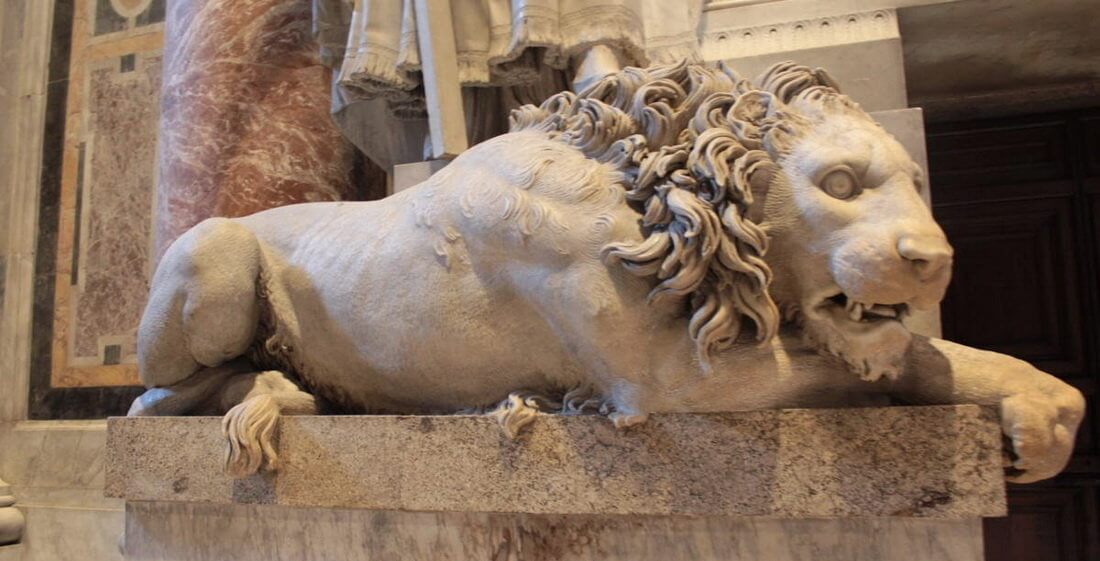
Il suo talento si manifestò molto presto. Una delle storie più conosciute della sua infanzia racconta che, durante un pranzo organizzato nella villa dei Falier ad Asolo, il giovanissimo Canova avrebbe modellato un leone di San Marco utilizzando il burro. Un episodio tramandato dalla tradizione biografica, che contribuì ad alimentare il racconto del suo talento precoce.
Il senatore Giovanni Falier, accortosi delle sue capacità, favorì il suo ingresso nella bottega dello scultore Giuseppe Bernardi, detto il Torretti.
Gli anni veneziani e le prime opere importanti
Nel 1768, quando aveva appena undici anni, Canova seguì il maestro Bernardi a Venezia, dove poté proseguire la propria formazione artistica. Frequentò la Pubblica Accademia del Nudo e approfondì lo studio del disegno, dell’anatomia e delle proporzioni del corpo umano.
Dopo la morte di Bernardi, avvenuta nel 1773, continuò la propria formazione nella bottega di Giovanni Ferrari. Nel frattempo cominciò a ricevere commissioni sempre più importanti.
Tra le prime opere che gli procurarono una certa notorietà ci furono i gruppi di Orfeo ed Euridice e soprattutto il celebre Dedalo e Icaro di Canova, realizzato tra il 1778 e il 1779 per il senatore Giovanni Falier.
In quest’ultimo gruppo Canova affrontò un episodio della mitologia greca, quello di Dedalo e del figlio Icaro, con una particolare attenzione alla resa anatomica e alla relazione tra le due figure. L’opera mostra già una notevole capacità di costruire una composizione articolata, nella quale il movimento e l’espressione dei personaggi diventano parte essenziale del racconto.

Roma e la riscoperta della scultura antica
Nel 1779 Canova intraprese un viaggio a Roma, sostenuto economicamente dal Senato Veneto. La città rappresentava allora una tappa fondamentale per qualsiasi artista che desiderasse confrontarsi con la grande tradizione classica.
A Roma ebbe l’occasione di studiare direttamente i capolavori dell’antichità, visitando le raccolte di scultura e osservando opere come l’Apollo del Belvedere e le sculture conservate nelle collezioni capitoline.
Canova cercava di comprendere le ragioni profonde di quella bellezza, studiando le proporzioni, l’equilibrio delle composizioni, la naturalezza dei movimenti e la capacità degli antichi di rappresentare il corpo umano.
Nel 1781 si stabilì definitivamente a Roma e aprì il proprio studio. Fu qui che cominciò a costruire quella fama internazionale che lo avrebbe accompagnato per tutta la vita.
Una delle prime opere fondamentali di questo periodo fu il Teseo sul Minotauro, realizzato tra il 1781 e il 1783 e oggi conservato al Victoria and Albert Museum di Londra.
Canova scelse di rappresentare Teseo dopo aver sconfitto il Minotauro, seduto sul corpo del mostro. Non volle immortalare il momento più violento dello scontro, ma quello successivo, quando la tensione si è ormai placata e il vincitore contempla il risultato della propria impresa.

Il metodo di Canova: come riusciva a rendere il marmo simile alla carne
Una delle ragioni del successo di Canova risiedeva nel suo metodo di lavoro, estremamente rigoroso e articolato.
Contrariamente a quanto si potrebbe immaginare, lo scultore non passava direttamente dall’idea iniziale al blocco di marmo. Il processo creativo prevedeva diverse fasi, ognuna delle quali aveva una funzione precisa.
Tutto cominciava con i disegni preparatori, attraverso i quali studiava le pose, le proporzioni e la disposizione delle figure. Successivamente realizzava piccoli modelli in argilla, che gli permettevano di verificare la composizione e correggere eventuali problemi.
Una volta definito il progetto, procedeva con modelli in gesso a grandezza naturale. Questi diventavano il riferimento per la trasposizione nel marmo, un’operazione complessa che richiedeva grande precisione e l’intervento di collaboratori specializzati.
Canova seguiva personalmente le diverse fasi, riservando a sé una parte fondamentale della lavorazione finale.
Era proprio nella rifinitura che riusciva a ottenere risultati straordinari. Levigava accuratamente le superfici, lavorando sul marmo fino a raggiungere quella particolare luminosità che rende le sue opere così riconoscibili.
La pelle sembra quasi trasparente, i corpi acquistano una morbidezza sorprendente e i tessuti paiono scivolare sulle forme senza appesantirle.
Questa capacità di trasformare una materia fredda e compatta in qualcosa che sembra vivo contribuì a renderlo celebre in tutta Europa.

I capolavori della maturità: Amore e Psiche, Ercole e Lica
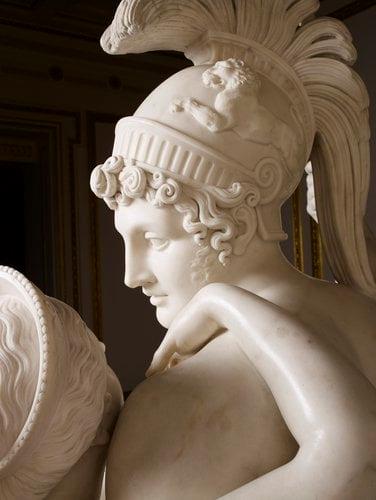
Tra queste spicca il gruppo di Amore e Psiche, una delle sue creazioni più conosciute. L’opera, commissionata dal collezionista inglese John Campbell e successivamente acquistata da Gioacchino Murat, rappresenta un momento particolarmente delicato della vicenda mitologica.
Amore si china su Psiche, che sta riprendendo conoscenza, mentre i loro corpi si avvicinano in un intreccio di braccia e sguardi. Le mani, i volti e le ali formano una composizione studiata con grande attenzione, nella quale ogni elemento contribuisce a creare un equilibrio quasi perfetto.
Canova non racconta semplicemente una storia d’amore tratta dalla mitologia: trasforma il mito in un’immagine universale di desiderio, tenerezza e bellezza.
Un’altra opera fondamentale è Ercole e Lica (1795-1815), oggi conservata alla Galleria Nazionale d’Arte Moderna e Contemporanea di Roma.
Qui il linguaggio cambia radicalmente. Canova affronta un episodio drammatico della mitologia: Ercole, impazzito per effetto della veste avvelenata di Nesso, afferra Lica e si prepara a scagliarlo lontano.
La composizione è attraversata da una forza impressionante. Il corpo possente di Ercole si torce in un movimento violento, mentre Lica cerca disperatamente di sottrarsi alla presa. È una delle dimostrazioni più evidenti della capacità dello scultore di rappresentare anche il dolore, la tensione e la brutalità senza rinunciare alla costruzione formale.

Canova e Napoleone: la bellezza al servizio del potere
Con l’inizio del XIX secolo la fama di Canova raggiunse livelli straordinari. Le sue opere erano richieste da sovrani, aristocratici, collezionisti e importanti personalità politiche europee.
Anche Napoleone Bonaparte volle servirsi del suo talento. Lo scultore ricevette commissioni per ritrarre l’imperatore e diversi membri della sua famiglia, entrando in contatto con uno dei protagonisti più importanti della storia europea del tempo.
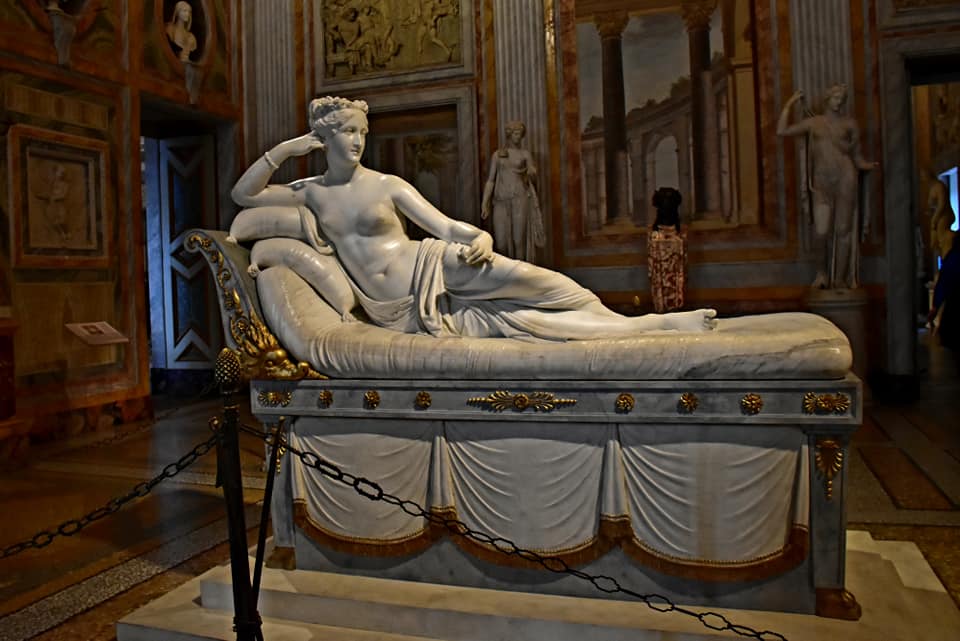
Tra le opere più celebri di questa stagione c’è la Paolina Borghese come Venere Vincitrice, realizzata tra il 1804 e il 1808.
Paolina Bonaparte, sorella di Napoleone e moglie del principe Camillo Borghese, viene rappresentata come Venere, distesa su un divano con una mela nella mano sinistra, attributo che richiama il giudizio di Paride.
L’opera suscitò grande curiosità anche per la scelta di rappresentare una donna appartenente a una delle famiglie più potenti d’Europa in una posa così sensuale e disinvolta.
Il risultato è un ritratto idealizzato, nel quale la fisionomia della principessa si fonde con l’immagine della dea. Canova riuscì a mantenere insieme la riconoscibilità della persona e la perfezione formale della tradizione classica.
La scultura divenne una delle testimonianze più significative della sua capacità di interpretare il gusto e le ambizioni dei grandi committenti del suo tempo.
Il ritorno delle opere d’arte sottratte durante le campagne napoleoniche
Nel 1815, dopo la caduta di Napoleone, Canova ricevette da papa Pio VII un incarico di enorme importanza. Fu inviato a Parigi come rappresentante diplomatico dello Stato Pontificio per cercare di recuperare le opere d’arte italiane trasferite in Francia durante le campagne napoleoniche.
Non era un compito semplice. Molti capolavori erano ormai entrati nelle collezioni francesi e il loro recupero richiedeva trattative diplomatiche, pressioni politiche e una profonda conoscenza del patrimonio artistico.
Canova si impegnò personalmente nella missione e riuscì a ottenere la restituzione di numerose opere. Non tutto poté tornare in Italia, ma il suo intervento fu determinante per il recupero di una parte importante del patrimonio sottratto.
La sua autorevolezza artistica, unita alla posizione di fiducia che ricopriva presso Pio VII, gli consentì di svolgere un ruolo che andava ben oltre quello di uno scultore.
In quegli anni era infatti diventato Ispettore generale delle Belle Arti e dei Musei dello Stato Pontificio, incarico che gli aveva affidato responsabilità importanti nella tutela del patrimonio.

Il Tempio Canoviano di Possagno e gli ultimi anni
Nonostante la fama internazionale e i numerosi incarichi ricevuti, Canova non dimenticò mai il proprio paese natale.
Negli ultimi anni della sua vita si dedicò anche alla progettazione del Tempio Canoviano di Possagno, un edificio destinato a diventare uno dei monumenti più significativi della sua eredità.
La costruzione iniziò nel 1819. Canova ne seguì il progetto architettonico, ispirandosi al Pantheon di Roma e alla tradizione dei templi classici. La struttura unisce elementi dell’architettura romana e greca, dando vita a un edificio di grande equilibrio e solennità.
Lo scultore, tuttavia, non riuscì a vederlo completato. Morì a Venezia il 13 ottobre 1822, all’età di 64 anni.
Le sue spoglie furono tumulate nel Tempio Canoviano di Possagno, mentre il cuore venne conservato a Venezia, nella basilica dei Frari, e una mano fu custodita presso l’Accademia di Belle Arti.
La costruzione del Tempio fu portata a termine dal fratellastro Giovanni Battista Sartori, che si occupò anche di trasferire a Possagno i modelli in gesso conservati nello studio romano dell’artista. Questo straordinario patrimonio costituisce oggi il nucleo della Gypsotheca e del Museo Canova.
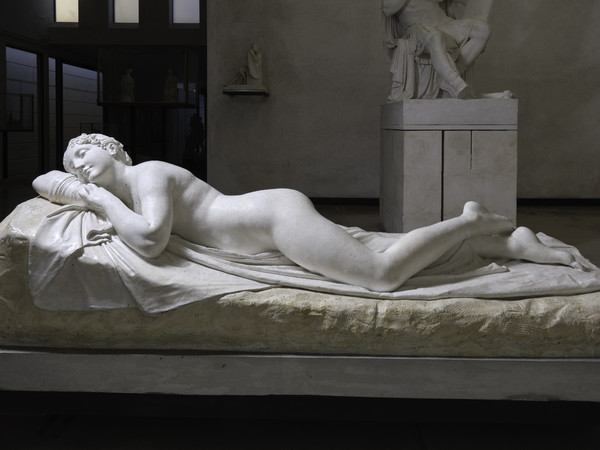
Antonio Canova, il maestro che seppe dare vita al marmo
A distanza di oltre due secoli dalla sua morte, Antonio Canova continua a essere considerato uno dei più grandi scultori di tutti i tempi.
La sua opera rappresenta uno dei momenti più alti del Neoclassicismo, movimento artistico che guardava alla Grecia e a Roma antiche come modelli di perfezione, armonia e bellezza.
Canovaseppe rinnovare profondamente il linguaggio della scultura, restituendo alla materia una sensibilità nuova e una capacità espressiva che ancora oggi sorprendono.
Dalle figure mitologiche ai ritratti, dai monumenti funerari ai gruppi più complessi, ogni sua creazione testimonia una ricerca instancabile della forma perfetta.
Per il momento il sempre vostro Michelangelo Buonarroti vi saluta dandovi appuntamento ai prossimi post e sui social.
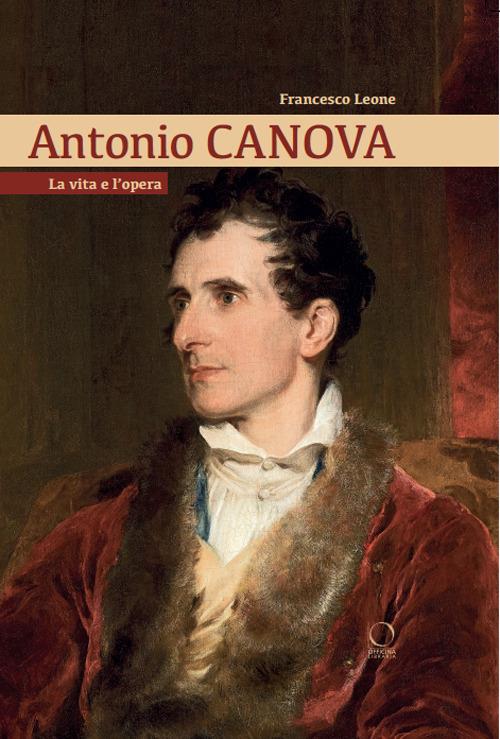

Creo post, reel, testi e articoli SEO e ti aiuto a promuovere i tuoi servizi online.
Lavoro con aziende, negozi, professionisti, strutture ricettive, musei, associazioni e privati, con soluzioni adatte alle tue esigenze.
✍️ Oltre 12 anni di esperienza nella creazione di contenuti e nella comunicazione online.
💬 Scrivimi in privato: raccontami cosa fai e troviamo il servizio più adatto a te.


Antonio Canova: The Great Neoclassical Sculptor Was Born on November 1, 1757
On November 1, 1757, in the small town of Possagno, in the province of Treviso, Antonio Canova was born—a man destined to become one of the greatest sculptors in the history of art. It was All Saints’ Day when this child entered the world; many years later, he would go on to captivate the royal courts of Europe and be celebrated as the preeminent figure of Neoclassical sculpture.
His art revived the ideal beauty of classical antiquity, characterized by perfect forms, delicate gestures, and marble surfaces so exquisitely polished that they resembled living skin. Canova achieved a feat that still leaves observers speechless today: imbuing marble with an extraordinary sense of softness, lightness, and vitality.
Antonio d’Este, his friend and biographer, wrote:
“Antonio Canova was born in Possagno, in the diocese of Treviso and the Venetian State, at the beginning of November 1757. His father was Pietro, and his mother was Angela Zardo, a native of Crespano.”
It was a birth that would profoundly shape the history of European sculpture.
Childhood in Possagno and the Lessons of His Grandfather, Pasino
Antonio Canova was born into a family that had been involved in stonework for generations. His father, Pietro—a stonemason and architect—passed away before Antonio had even turned four. His mother, Angela Zardo, remarried shortly thereafter to Francesco Sartori, and the boy remained in Possagno, placed under the care of his paternal grandfather, Pasino Canova.
It was his grandfather who introduced him to the secrets of working with stone. Pasino was a skilled stonemason and master builder; he was well-versed in the materials and tools of the trade and would often take his grandson along to his worksites.
Thus, Antonio grew up surrounded by chisels, hammers, and marble, learning from a very young age to recognize the potential inherent in the material.
His talent manifested itself quite early. One of the best-known anecdotes from his childhood recounts that, during a luncheon held at the Falier villa in Asolo, a very young Canova fashioned a Lion of Saint Mark out of butter—a story passed down through biographical tradition that helped fuel the legend of his precocious talent.
Senator Giovanni Falier, having recognized the boy’s abilities, facilitated his entry into the workshop of the sculptor Giuseppe Bernardi, known as “Il Torretti.”
His years in Venice and his first major works
In 1768, at just eleven years old, Canova followed his master, Bernardi, to Venice, where he was able to continue his artistic training. He attended the Pubblica Accademia del Nudo (Public Academy of the Nude), where he deepened his study of drawing, anatomy, and the proportions of the human body.
Following Bernardi’s death in 1773, Canova continued his training in the workshop of Giovanni Ferrari. Meanwhile, he began to receive increasingly significant commissions.
Among the early works that brought him a degree of renown were his sculptural groups of Orpheus and Eurydice and, most notably, the celebrated Daedalus and Icarus, created between 1778 and 1779 for Senator Giovanni Falier.
In this latter work, Canova explored an episode from Greek mythology—the story of Daedalus and his son Icarus—placing particular emphasis on anatomical precision and the relationship between the two figures. The work already demonstrates a remarkable ability to construct an intricate composition, in which the movement and expression of the characters become an essential part of the narrative.
Rome and the Rediscovery of Ancient Sculpture
In 1779, Canova undertook a journey to Rome, with financial support from the Venetian Senate. At the time, the city was an essential destination for any artist wishing to engage with the great classical tradition.
In Rome, he had the opportunity to study masterpieces of antiquity firsthand, visiting sculpture collections and observing works such as the Apollo Belvedere and the pieces housed in the Capitoline collections.
Canova sought to grasp the profound underpinnings of that beauty by studying proportions, the balance of compositions, the naturalness of movement, and the ancients’ mastery in representing the human body.
In 1781, he settled permanently in Rome and opened his own studio. It was here that he began to build the international reputation that would remain with him throughout his life.
One of the first seminal works from this period was Theseus and the Minotaur, created between 1781 and 1783—a piece now held at the Victoria and Albert Museum in London.
Canova chose to depict Theseus after his defeat of the Minotaur, shown seated upon the monster’s body. He opted not to immortalize the most violent moment of the conflict, but rather the aftermath—a point when the tension has subsided and the victor contemplates the outcome of his feat.
Canova’s Method: How He Made Marble Resemble Flesh
One of the reasons for Canova’s success lay in his working method, which was exceptionally rigorous and structured.
Contrary to what one might imagine, the sculptor did not move directly from an initial idea to a block of marble. His creative process involved several stages, each serving a specific purpose.
It all began with preparatory drawings, through which he studied poses, proportions, and the arrangement of figures. Next, he would create small clay models, allowing him to test the composition and address any potential issues.
Once the design was finalized, he would produce full-scale plaster models. These served as the reference for the transfer into marble—a complex operation requiring great precision and the involvement of specialized assistants.
Canova personally oversaw each stage, reserving a crucial part of the final execution for himself.
It was in the finishing touches that he achieved truly extraordinary results. He would meticulously polish the surfaces, refining the marble until it attained that distinctive luminosity that makes his works so instantly recognizable.
The skin appears almost translucent, the bodies take on a surprising softness, and the drapery seems to glide over the forms without ever weighing them down.
This ability to transform cold, solid material into something that appears alive helped make him famous throughout Europe.
Masterpieces of His Maturity: Psyche Revived by Cupid’s Kiss and Hercules and Lichas
Among these, the group Psyche Revived by Cupid’s Kiss stands out as one of his most renowned creations. Commissioned by the English collector John Campbell and later acquired by Joachim Murat, the work depicts a particularly delicate moment from the mythological tale. Cupid leans over Psyche, who is regaining consciousness, as their bodies draw near in an intertwining of arms and gazes. Their hands, faces, and wings form a meticulously studied composition, in which every element contributes to an almost perfect balance.
Canova does not merely recount a love story from mythology; he transforms the myth into a universal image of desire, tenderness, and beauty.
Another fundamental work is Hercules and Lichas (1795–1815), currently housed at the National Gallery of Modern and Contemporary Art in Rome.
Here, the artistic language shifts radically. Canova addresses a dramatic episode from mythology: Hercules, driven mad by the poisoned tunic of Nessus, seizes Lichas and prepares to hurl him away.
The composition is imbued with an impressive force. The powerful body of Hercules twists in a violent motion, while Lichas struggles desperately to escape his grasp. It stands as one of the clearest demonstrations of the sculptor’s ability to depict pain, tension, and brutality—all without compromising the formal structure of the work.
Canova and Napoleon: Beauty in the Service of Power
By the beginning of the 19th century, Canova’s fame had reached extraordinary heights. His works were sought after by sovereigns, aristocrats, collectors, and prominent European political figures.
Napoleon Bonaparte, too, sought to make use of his talent. The sculptor received commissions to portray the Emperor and several members of his family, bringing him into contact with one of the most significant figures in the European history of that era.
Among the most celebrated works from this period is Pauline Borghese as Venus Victrix, created between 1804 and 1808.
Pauline Bonaparte—Napoleon’s sister and the wife of Prince Camillo Borghese—is depicted as Venus, reclining on a couch and holding an apple in her left hand, an attribute that alludes to the Judgment of Paris.
The piece sparked great curiosity, not least because it portrayed a woman from one of Europe’s most powerful families in such a sensual and relaxed pose.
The result is an idealized portrait in which the princess’s features merge with the image of the goddess. Canova succeeded in balancing the recognizability of the individual with the formal perfection of the classical tradition.
The sculpture stands as one of the most significant testaments to his ability to interpret the tastes and ambitions of the great patrons of his time.
The Return of Artworks Seized During the Napoleonic Campaigns
In 1815, following the fall of Napoleon, Canova received a task of immense importance from Pope Pius VII. He was sent to Paris as a diplomatic representative of the Papal States to seek the recovery of Italian artworks that had been transferred to France during the Napoleonic campaigns.
It was no simple task. Many masterpieces had by then become part of French collections, and their recovery required diplomatic negotiations, political pressure, and a profound knowledge of the artistic heritage.
Canova committed himself personally to the mission and succeeded in securing the return of numerous works. While not everything could be brought back to Italy, his intervention was instrumental in recovering a significant portion of the looted heritage.
His artistic authority, combined with the trust placed in him by Pius VII, allowed him to fulfill a role that extended well beyond that of a sculptor.
During those years, he had, in fact, become the Inspector General of Fine Arts and Museums for the Papal States—a position that entrusted him with major responsibilities regarding the preservation of cultural heritage.
The Canovian Temple in Possagno and His Final Years
Despite his international fame and the numerous commissions he received, Canova never forgot his birthplace.
In the final years of his life, he dedicated himself to the design of the Canovian Temple in Possagno—a structure destined to become one of the most significant monuments of his legacy.
Construction began in 1819. Canova oversaw the architectural design, drawing inspiration from the Pantheon in Rome and the tradition of classical temples. The structure combines elements of Roman and Greek architecture, resulting in a building of great balance and solemnity.
The sculptor, however, did not live to see its completion. He died in Venice on October 13, 1822, at the age of 64.
His remains were interred in the Tempio Canoviano in Possagno, while his heart was kept in Venice, in the Basilica dei Frari, and one of his hands was preserved at the Accademia di Belle Arti.
The construction of the Temple was completed by his half-brother, Giovanni Battista Sartori, who also oversaw the transfer of the plaster models—housed in the artist’s Roman studio—to Possagno. This extraordinary collection now forms the core of the Gypsotheca and the Canova Museum.
Antonio Canova, the master who knew how to bring marble to life
More than two centuries after his death, Antonio Canova continues to be regarded as one of the greatest sculptors of all time.
His work represents one of the pinnacles of Neoclassicism—an artistic movement that looked to ancient Greece and Rome as models of perfection, harmony, and beauty.
Canova profoundly renewed the language of sculpture, imbuing the material with a fresh sensibility and an expressive power that remain astonishing even today.
From mythological figures to portraits, and from funerary monuments to complex sculptural groups, every one of his creations bears witness to an untiring pursuit of the perfect form.
For now, yours truly, Michelangelo Buonarroti, bids you farewell—until the next posts and over on social media.
Sostienici – Support Us
Se questo blog ti piace e ti appassiona, puoi aiutarci a farlo crescere sempre più sostenendoci in modo concreto condividendo i post, seguendo le pagine social e con un contributo che ci aiuta ad andare avanti con il nostro lavoro di divulgazione. . ENGLISH: If you like and are passionate about this blog, you can help us make it grow more and more by supporting us in a concrete way by sharing posts, following social pages and with a contribution that helps us to move forward with our dissemination work.
10,00 €
Condividi:


Questo sono io



sostienici

Sostienici - Support Us
Se questo blog ti piace e ti appassiona, puoi aiutarci a farlo crescere sempre più sostenendoci in modo concreto condividendo i post, seguendo le pagine social e con un contributo che ci aiuta ad andare avanti con il nostro lavoro di divulgazione. . ENGLISH: If you like and are passionate about this blog, you can help us make it grow more and more by supporting us in a concrete way by sharing posts, following social pages and with a contribution that helps us to move forward with our dissemination work.
€10,00


