

Disma, il buon ladrone nel Giudizio Universale: la misericordia e la giustizia divina
Nel Giudizio Universale della Cappella Sistina ci sono particolari che rischiano di passare inosservati, anche a chi ha avuto la fortuna di alzare gli occhi verso la mia grande parete.
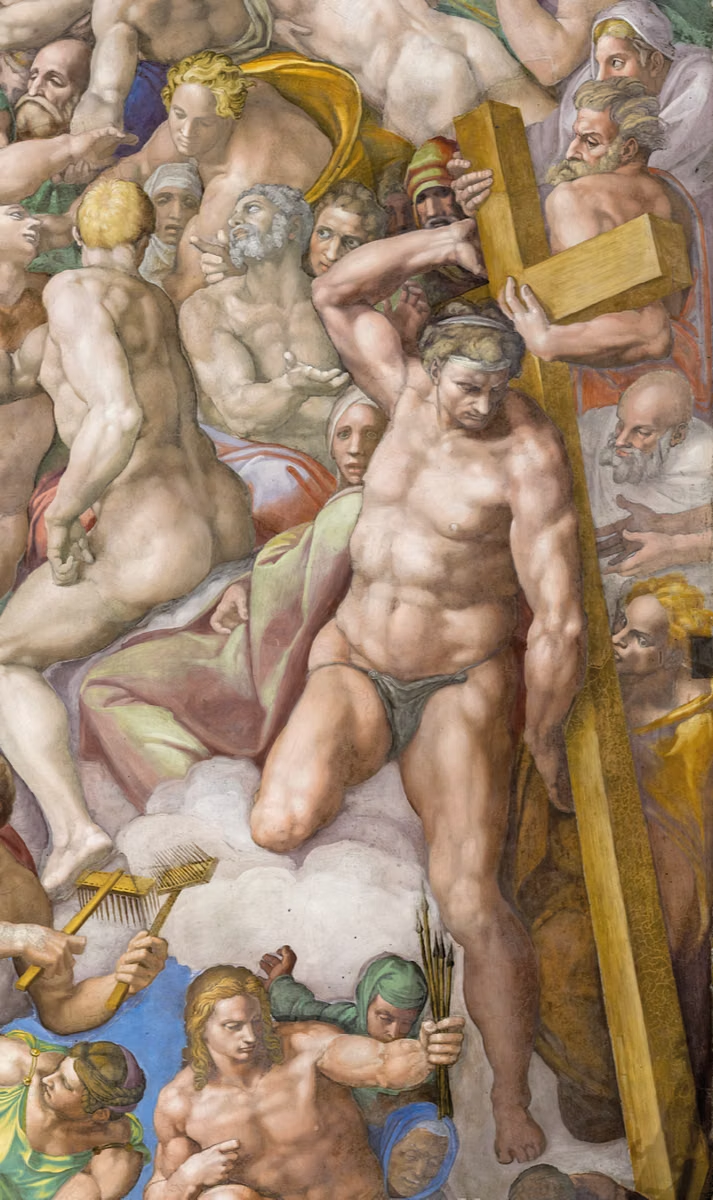
Tra i corpi che si sollevano, gli angeli che suonano le trombe e le anime che cercano di raggiungere il cielo, ci sono figure che portano con sé oggetti capaci di raccontare una storia intera. Una di queste è Disma, il buon ladrone, che ho raffigurato con una croce.
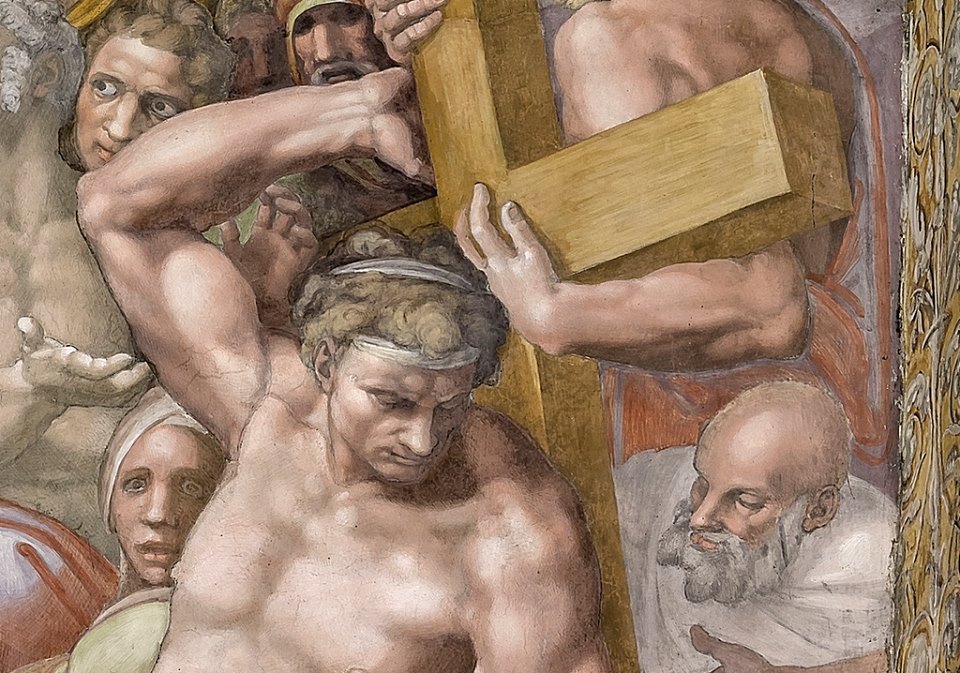
Non è l’unico personaggio a portarne una. Nella lunetta sinistra, alcuni angeli apteri, cioè privi di ali, sostengono la croce di Cristo. Altre due figure che riconoscerete facilmente per questo attributo sono Simone lo Zelota e sant’Andrea, raffigurato di spalle.
Disma è il condannato che, secondo la tradizione cristiana, ebbe la possibilità di entrare in paradiso proprio mentre stava morendo sulla croce.
Ma chi era davvero questo personaggio? E perché la sua presenza nel Giudizio Universale merita un’attenzione particolare?
Chi era Disma, il buon ladrone crocifisso accanto a Cristo?
La storia di Disma è legata agli ultimi momenti della vita di Gesù. Secondo la tradizione cristiana, era uno dei due malfattori crocifissi sul Golgota insieme a Cristo. Disma sarebbe stato quello collocato alla sua destra, mentre l’altro, ricordato come il cattivo ladrone, lo insultava e lo provocava.
Il nome Disma non compare nei quattro Vangeli canonici. La sua identificazione deriva dalla tradizione apocrifa, in particolare dal Vangelo di Nicodemo, mentre l’episodio del dialogo con Gesù è raccontato nel Vangelo secondo Luca.
L’evangelista non ci dice come si chiamasse quell’uomo. Ci consegna, invece, le parole che lo distinguono dall’altro condannato: parole di riconoscimento, pentimento e fiducia proprio quando tutto sembra perduto.
Questo passaggio rende il buon ladrone una figura tanto significativa nell’immaginario cristiano. Non è un uomo che abbia avuto una vita esemplare, né qualcuno che possa vantare opere meritorie. È un condannato che, nel momento estremo, riconosce l’innocenza di Cristo e gli affida la propria speranza.
“Oggi sarai con me nel paradiso”: le parole del Vangelo di Luca
Nel Vangelo secondo Luca, al capitolo 23, versetti 39-43, si legge il dialogo tra Gesù e i due malfattori crocifissi ai suoi lati.
Uno dei due lo provoca, chiedendogli di salvare se stesso e loro. L’altro lo rimprovera, riconoscendo che la loro condanna è giusta, mentre Gesù non ha commesso alcun male. Poi si rivolge a lui:
“Gesù, ricordati di me quando entrerai nel tuo regno”.
La risposta di Cristo è una delle promesse più conosciute del racconto evangelico: “In verità ti dico, oggi sarai con me nel paradiso”.
In quelle parole c’è tutto ciò che ha reso il buon ladrone un simbolo di redenzione. Non gli viene chiesto di dimostrare di essere diventato un altro uomo attraverso una lunga serie di azioni. È il riconoscimento di Cristo e la fiducia riposta in lui a segnare il momento decisivo della sua storia.
Disma è diventato il simbolo della misericordia divina e della possibilità di salvezza anche nell’ultima ora.
La croce di Disma nel Giudizio Universale della Cappella Sistina
Quando dipinsi il Giudizio Universale sulla parete d’altare della Cappella Sistina, tra il 1536 e il 1541, scelsi di riempire lo spazio con una moltitudine di figure in movimento. Corpi che salgono, che precipitano, che si aggrappano ad altri corpi o sembrano lottare contro una forza invisibile.
In questa grande composizione, gli attributi dei personaggi aiutano a riconoscere storie, identità e significati. La croce portata da Disma richiama direttamente la sua vicenda evangelica e la promessa del paradiso ricevuta da Cristo.
Il buon ladrone è l’uomo che, pur avendo conosciuto la colpa e la condanna, riceve una promessa di salvezza. La sua storia introduce nella scena il tema della misericordia, accanto a quello della giustizia divina.
Simone lo Zelota e sant’Andrea: gli altri personaggi con la croce
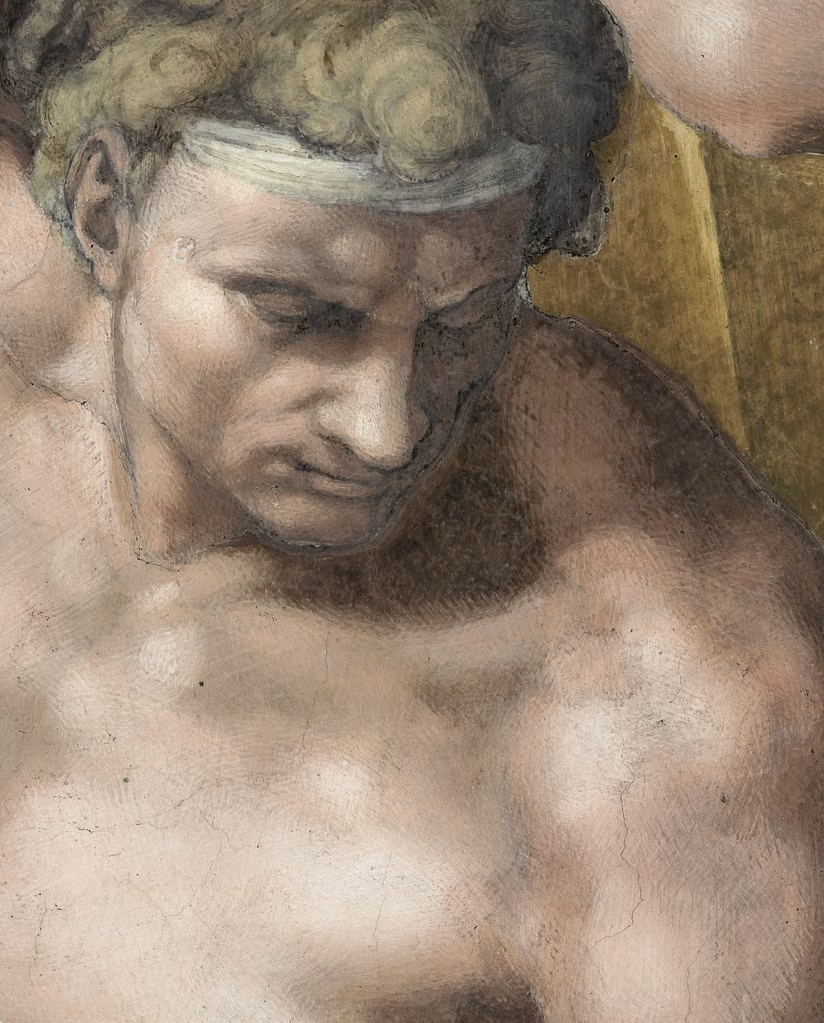
Disma non è l’unico personaggio del Giudizio Universale a essere associato a una croce. Come anticipato, anche Simone lo Zelota e sant’Andrea portano questo attributo.
Nel caso di sant’Andrea rimanda alla tradizione del suo martirio; per Simone lo Zelota è legata all’identificazione tradizionale dell’apostolo e al suo destino nella tradizione cristiana. Per Disma, invece, il riferimento è alla crocifissione sul Golgota e al dialogo con Gesù.
Sono dettagli che aiutano a orientarsi nella moltitudine di figure dipinte sulla parete, ma che invitano anche a fermarsi. Dinanzi a un’opera così affollata di corpi e gesti, basta talvolta un solo attributo per aprire una storia che attraversa i secoli.
Per il momento il sempre vostro Michelangelo Buonarroti vi saluta dandovi appuntamento ai prossimi post e sui social.
Dismas, the Good Thief in the Last Judgment: Divine Mercy and Justice
In the Last Judgment in the Sistine Chapel, there are details that might easily go unnoticed, even by those fortunate enough to cast their gaze upon my great wall.
Amidst the rising bodies, the angels sounding their trumpets, and the souls striving to reach heaven, there are figures bearing objects that tell an entire story. One such figure is Dismas—the “good thief”—whom I have depicted holding a cross.
He is not the only character to carry one. In the lunette on the left, several wingless angels support the cross of Christ. Two other figures, easily recognizable by this same attribute, are Simon the Zealot and Saint Andrew, the latter shown from behind.
Dismas is the condemned man who, according to Christian tradition, was granted the chance to enter Paradise even as he lay dying upon the cross.
But who was this man, really? And why does his presence in the Last Judgment merit special attention?
Who was Dismas, the good thief crucified alongside Christ?
The story of Dismas is tied to the final moments of Jesus’s life. According to Christian tradition, he was one of two evildoers crucified on Golgotha alongside Christ. Dismas was the one positioned to His right, while the other—known as the “bad thief”—insulted and taunted Him.
The name “Dismas” does not appear in the four canonical Gospels. His identification stems from apocryphal tradition—specifically the Gospel of Nicodemus—while the account of his dialogue with Jesus is found in the Gospel of Luke.
The Evangelist does not tell us the man’s name. Instead, he offers us words that set him apart from the other condemned man—words of recognition, repentance, and trust, spoken precisely when all seems lost.
This passage makes the “good thief” a highly significant figure in the Christian imagination. He is not a man who led an exemplary life, nor can he boast of any meritorious deeds. He is a condemned man who, in his final moments, recognizes Christ’s innocence and places his hope in Him.
“Today you will be with me in Paradise”: words from the Gospel of Luke
In the Gospel according to Luke, chapter 23, verses 39–43, we find the dialogue between Jesus and the two evildoers crucified on either side of Him.
One of them taunts Him, demanding that He save both Himself and them. The other rebukes him, acknowledging that their own condemnation is just, whereas Jesus has done no wrong. He then turns to Jesus:
“Jesus, remember me when You come into Your kingdom.”
Christ’s response is one of the best-known promises in the Gospel narrative: “Truly I tell you, today you will be with me in Paradise.”
Contained within those words is everything that has made the good thief a symbol of redemption. He is not asked to prove that he has become a different man through a long series of actions; rather, it is his recognition of Christ—and the trust he places in Him—that marks the decisive turning point in his story.
Dismas has become a symbol of divine mercy and the possibility of salvation, even in one’s final hour.
The cross of Dismas in the Last Judgment of the Sistine Chapel
When I painted the Last Judgment on the altar wall of the Sistine Chapel, between 1536 and 1541, I chose to fill the space with a multitude of figures in motion. Bodies rising, plummeting, clinging to other bodies, or seemingly struggling against an invisible force.
In this grand composition, the attributes held by the figures help us recognize their stories, identities, and deeper meanings. The cross carried by Dismas directly evokes his biblical narrative and the promise of paradise he received from Christ.
The “good thief” is a man who, despite having known guilt and condemnation, receives a promise of salvation. His story introduces the theme of mercy into the scene, alongside that of divine justice.
Simon the Zealot and Saint Andrew: other figures bearing a cross
Dismas is not the only figure in the Last Judgment associated with a cross. As previously mentioned, Simon the Zealot and Saint Andrew also bear this attribute.
In the case of Saint Andrew, it refers to the tradition surrounding his martyrdom; for Simon the Zealot, it is linked to the traditional identification of the apostle and his fate within Christian lore. For Dismas, however, the reference is to the crucifixion on Golgotha and his dialogue with Jesus.
These details help one navigate the multitude of figures painted on the wall, while also inviting the viewer to pause. Before a work so crowded with bodies and gestures, a single attribute is sometimes enough to unfold a story that spans the centuries.
For now, your ever-faithful Michelangelo Buonarroti bids you farewell—until the next posts and on social media.

Sostienici – Support Us
Se questo blog ti piace e ti appassiona, puoi aiutarci a farlo crescere sempre più sostenendoci in modo concreto condividendo i post, seguendo le pagine social e con un contributo che ci aiuta ad andare avanti con il nostro lavoro di divulgazione. . ENGLISH: If you like and are passionate about this blog, you can help us make it grow more and more by supporting us in a concrete way by sharing posts, following social pages and with a contribution that helps us to move forward with our dissemination work.
10,00 €

Condividi:


Questo sono io





sostienici

Sostienici - Support Us
Se questo blog ti piace e ti appassiona, puoi aiutarci a farlo crescere sempre più sostenendoci in modo concreto condividendo i post, seguendo le pagine social e con un contributo che ci aiuta ad andare avanti con il nostro lavoro di divulgazione. . ENGLISH: If you like and are passionate about this blog, you can help us make it grow more and more by supporting us in a concrete way by sharing posts, following social pages and with a contribution that helps us to move forward with our dissemination work.
€10,00


